Commissioner of the Environment and Sustainable Development reports
Protection of critical habitat for species at risk undermined by incomplete information and insufficient monitoring
Protection of critical habitat for species at risk undermined by incomplete information and insufficient monitoring
The loss and degradation of habitat is the primary threat for most species at risk. To address this threat, it is important to identify the location of the critical habitat that species use. Environment and Climate Change Canada, Fisheries and Oceans Canada, and Parks Canada identified critical habitat using the best available information at the time. In most cases, additional information was needed to further identify the critical habitat through a schedule of studies. However, most studies necessary for the full identification of critical habitat were not completed on time, which could jeopardize the recovery of species at risk.
Environment and Climate Change Canada and Fisheries and Oceans Canada did limited monitoring of the implementation of planned actions from action plans to conserve critical habitat on federal land. The organizations clearly linked only 57% of the planned actions to documentation on activities undertaken. This resulted in a lack of focused effort to get conservation actions completed to conserve and restore critical habitat, which is important to the recovery of most species at risk. This could affect the federal government’s ability to meet its commitment to take urgent action to halt and reverse biodiversity loss by 2030.
Activities resulting in the harmful alteration, disruption, or destruction of fish habitat are prohibited unless otherwise authorized. As a last resort, offset measures to counterbalance the harm done to the critical habitat must be considered. Even though Fisheries and Oceans Canada followed its processes to approve authorizations for activities that destroy or degrade critical habitat, we identified an offset implementation risk when there is no finalized offsetting plan in place prior to granting an authorization. In addition, the department did not have an assessment of how the offsetting plans performed overall.

This donut chart shows the number of the 120 studies that were overdue, completed late, not yet due, and completed on time as of 31 August 2024.
Of the 120 studies,

This bar graph shows the number of studies that were completed late or overdue as of 31 August 2024 by the amount of time that they were late by.
There were 6 studies that were completed late or overdue by 1 year or less. Of these, 5 were completed late and 1 was overdue.
There were 6 studies that were completed late or overdue by more than 1 year to less than 3 years. Of these, 2 were completed late and 4 were overdue.
There were 50 studies that were completed late or overdue by 3 or more years. Of these, 14 were completed late and 36 were overdue.

This bar graph shows the percentage of planned actions from action plans that each organization clearly monitored.
Environment and Climate Change Canada clearly monitored 15% of the planned actions.
Fisheries and Oceans Canada clearly monitored 13% of the planned actions.
Parks Canada clearly monitored 100% of the planned actions.
Collectively, the organizations clearly monitored 57% of the planned actions.
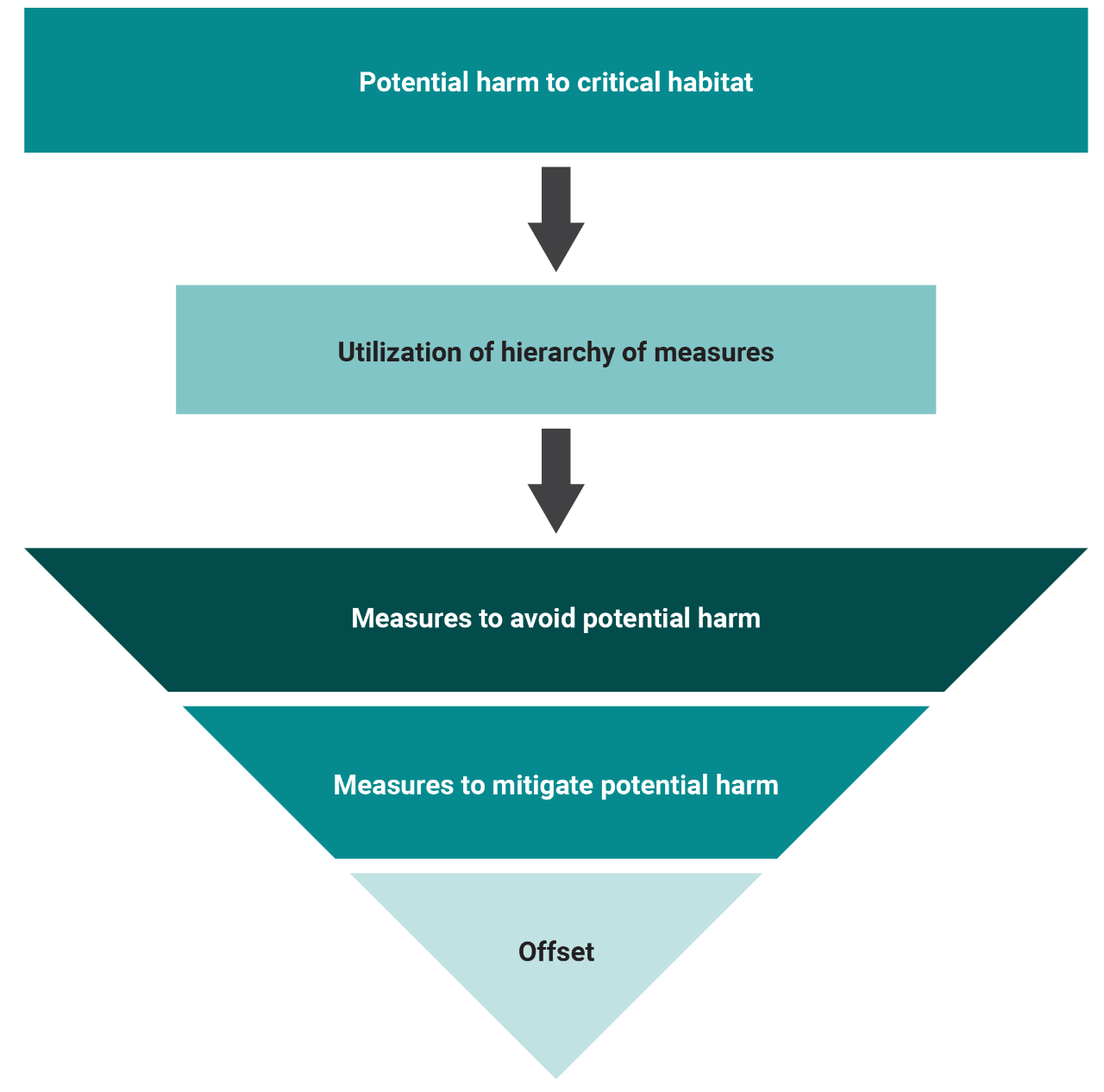
This flow chart shows Fisheries and Oceans Canada’s mitigation hierarchy.
If there is potential harm to critical habitat, the organization uses the following hierarchy of measures in the following order: