Critique de livre - Urban Operations: War, Crime, and Conflict - John P. Sullivan, Nathan P. Jones and Daniel Weisz Argomedo
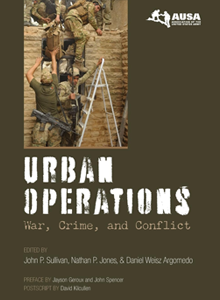
SULLIVAN, John P., JONES, Nathan P., and WEISZ ARGOMEDO, Daniel, eds. Boulder, CO: KeyPoint Press, 2024, 421 pages. ISBN: 979-8990915831
Critique préparée par le lieutenant-colonel (à la retraite) Steve MacBeth, CSM, MSM(2), CD2.
Le Rapport mondial sur les villes de 2022 des Nations Unies indique que la moitié de la population mondiale vivait dans les villes en 2020, et ce chiffre devrait atteindre 60 % d’ici 2070. Les zones urbanisées absorberont 3 milliards de nouvelles personnes au cours de la prochaine génération, dont beaucoup déménageront dans des villes sous-gouvernées et aux ressources limitées. Au cours des dernières années, la guerre urbaine s’est intensifiée, avec des batailles destructrices dans des endroits comme Mossoul (2016-2017) et des villes ukrainiennes (de 2022 à aujourd’hui) ainsi que dans le conflit Israël-Hamas (2023-présent), mettant en évidence les défis pour les forces militaires, les risques pour les civils et la dynamique juridique et informationnelle complexe. Les villes, qui sont maintenant des plaques tournantes clés pour les marchés, le pouvoir politique, les réseaux criminels et les bouleversements sociaux, resteront des terrains critiques dans les conflits futurs.
Dans le livre Le choc du futur, Alvin Toffler prévient qu’à mesure que les situations évoluent, nous devons nous adapter en acquérant de nouvelles connaissances et en rejetant ce qui n’est plus vital. Certains militaires suggèrent d’éviter les confrontations en zone urbaine en raison du risque de batailles coûteuses qui exigent des ressources, du temps et des engagements importants. Les opérations urbaines sont souvent considérées comme des opérations particulières et en dehors de guerre de manoeuvre conventionnelle, ce qui est difficile à s’entraîner à grande échelle. Le livre Urban Operations: War, Crime, and Conflict, publié sous la direction de John P. Sullivan, de Nathan P. Jones et de Daniel Weisz Argomedo, présente une analyse complète des défis de la guerre urbaine et de ses répercussions sur la sécurité, la gouvernance et la stratégie militaire, ce qui met l’accent sur le fait que les combats en zone urbaine seront probablement au centre des conflits futurs.
Le travail guide le lectorat à travers des exemples historiques de guerre urbaine et des considérations contemporaines, suscitant la réflexion sur l’idée de Toffler de devoir « apprendre, désapprendre et réapprendre » pour s’adapter à la nature évolutive du conflit urbain. Le livre présente des essais sur l’évolution de la guerre urbaine, l’interaction entre les menaces traditionnelles et irrégulières et la dynamique sociopolitique qui façonne les champs de bataille urbains. À l’aide d’une approche interdisciplinaire, il examine les considérations tactiques, opérationnelles et stratégiques, tout en intégrant les technologies émergentes et les aspects juridiques pour obtenir une nouvelle perspective. Cet examen résumera le travail et utilisera le concept de Toffler comme cadre pour discuter des domaines dans lesquels le livre pourrait approfondir la compréhension de la guerre urbaine. La collection est précieuse pour les professionnels militaires, les décideurs politiques et les universitaires, offrant des leçons récentes et de nouvelles perspectives tout en renforçant les concepts de base.
Organisation du contenu et sommaire du livre
Le livre comporte trois sections : les perspectives historiques, les dynamiques modernes et les considérations futures. La thèse centrale indique que les environnements urbains seront de plus en plus des points centraux de la guerre. Elle soutient que les questions comme l’infrastructure, la densité de population et l’interconnectivité nécessiteront des solutions de sécurité novatrices adaptées aux terrains physiques, informationnels, juridiques et humains des conflits en zone urbaine. Le livre offre de la souplesse, ce qui permet aux lectorats de se concentrer sur des intérêts particuliers ou de le lire de façon plus générale. La préface, l’introduction et la conclusion fournissent un contexte utile pour les études de cas et présentent le livre comme un point de départ pour une exploration plus approfondie de la guerre urbaine. Les études de cas portent sur des sujets tels que les interactions civilo-militaires, l’application de la loi, l’intelligence artificielle, la surveillance, les jeux de guerre, les sièges modernes et les défis juridiques, allant de la Seconde Guerre mondiale aux conflits contemporains. La préface de Geroux et Spencer établit un lien entre les études de cas et des thèmes plus généraux, tandis que la conclusion de David Kilcullen met l’accent sur l’interrelation des enjeux, encourageant les lectorats à les considérer comme faisant partie d’un système complexe. Le livre intègre harmonieusement des stratégies historiques, contemporaines et d’avant-garde.
Réapprendre, apprendre et désapprendre des opérations urbaines : guerre, crime et conflit
RÉAPPRENTISSAGE
Le livre renforce les leçons fondamentales sur les opérations urbaines qui ont émergé au cours des 25 dernières années, soulignant la nécessité de conserver ces leçons dans des circonstances changeantes. D’abord et avant tout, il est entendu que bien que le caractère de la guerre (urbaine) change en raison de l’adaptation technologique, les personnes chargées de pouvoirs décisionnels civils et militaires doivent comprendre que l’exécution réussie des batailles urbaines nécessitera des ressources extraordinaires. Si la décision de s’engager est prise, les opérations modernes sont plus susceptibles de ressembler à des opérations de « siège » d’une génération antérieure qu’à des opérations rapides fondées sur des munitions de précision et une connaissance parfaite de la situation fournie par les capacités émergentes de renseignement, de surveillance et de reconnaissance. Les auteurs s’efforcent de faire comprendre aux lectorats non seulement la leçon des ressources, du temps et des risques, mais aussi la nécessité pour les praticiens, les décideurs et les chercheurs de comprendre que les opérations urbaines, peut-être plus que toute autre en raison de la concentration de la population, nécessitent une coordination civile et militaire étroite et une capacité de se déplacer sans heurts ou d’agir simultanément pour mener des combats de haute intensité tout en instaurant la primauté du droit et en interagissant avec les populations civiles.
L’une des principales forces du livre est son approche interdisciplinaire, qui combine les points de vue de l’histoire militaire, de la criminologie, de la sociologie et des études urbaines, offrant une perspective nuancée sur les opérations urbaines. Le troisième chapitre, rédigé par Russell W. Glenn, illustre bien cela en utilisant la bataille de Manille pour mettre en évidence le coût civil de la guerre et rappeler aux lectorats que la population est une considération opérationnelle, non seulement une question humanitaire.
Dans l’ensemble du livre, le concept de « guerre à trois volets » du général Charles Krulak – selon lequel une unité tactique peut se trouver engagée dans des tâches de combat, de stabilité et d’aide humanitaire dans un rayon de trois pâtés de maisons – est mise en avant. Compte tenu des leçons présentées dans le livre, ce concept était très pertinent au début du XXIe siècle, mais il pourrait nécessiter d’être réappris. Le livre fournit une plateforme pour revoir les concepts établis et offre une perspective approfondie des nouvelles tendances que les lectorats peuvent prendre en considération lorsqu’ils examinent les opérations urbaines.
Apprentissage
La plus grande force du livre réside dans sa capacité à présenter et à regrouper du nouveau contenu, considérations et perspectives sur le champ de bataille urbain pour un public professionnel. Il fournit des renseignements sur les tactiques novatrices comme les tactiques de saturation; les systèmes technologiques émergents, comme l’imagerie du mouvement sur zones étendues, qui modifieront la façon dont les formations, les unités et les individus peuvent être détectés dans le terrain urbain; la façon dont l’intelligence artificielle améliorera le soutien à la prise de décision et augmentera la vitesse de combat; et la façon dont le lectorat peut utiliser efficacement les jeux de guerre pour aider à conceptualiser efficacement les batailles urbaines tout en relevant les défis liés aux environnements littoraux et souterrains.
Désapprentissage
Les leçons apprises et réapprises dans le livre sont instructives, mais ce qui devrait être « désappris » est tout aussi important. Les lectorats sont invités à tenir compte de deux principes clés : chaque problème urbain est unique, ce qui rend inefficaces les solutions modèles et la reconstruction qui doit être considérée comme le suivi immédiat des opérations urbaines. Des opérations récentes ont séparé la reconstruction de la planification tactique, mais Glenn souligne qu’elle devrait être envisagée avant les batailles urbaines. Il compare les efforts déployés par l’Allemagne après la Seconde Guerre mondiale à ceux de l’Ukraine moderne, soulignant l’ampleur de l’engagement requis – une leçon souvent négligée dans la communauté professionnelle. Cette perspective historique, combinée aux leçons tirées de l’Iraq et de l’Afghanistan, souligne les dangers de la corruption et le fossé entre les objectifs militaires et la planification de la stabilité. Un autre thème clé est l’avertissement contre la modélisation des opérations urbaines. Compte tenu des différences en matière d’infrastructure, de population et de culture dans chaque ville, les modèles historiques ne peuvent servir que de point de départ, nécessitant des mises à jour pour chaque nouvel environnement. Le livre souligne que la vision de la reprise à court terme et le désir d’établir un modèle de guerre doivent être « désappris » pour réussir dans les conflits urbains futurs.
Bien que le livre excelle dans de nombreux domaines, il comporte certaines limites. Il cerne bien les problèmes, les innovations et les changements, mais ses recommandations manquent de clarté. Par exemple, l’appel à une plus grande coopération interorganismes est valide, mais le livre offre peu de conseils sur la façon de la mettre en oeuvre efficacement. Des solutions plus concrètes auraient amélioré l’utilité pratique pour les praticiens et les décideurs. Dans l’ensemble, le livre est accessible à un vaste public, bien que certaines sections, en particulier celles sur la politique juridique et la théorie urbaine, puissent être trop complexes pour les lectorats sans connaissances spécialisées. Cependant, ces problèmes sont mineurs et les lectorats qui souhaitent le faire peuvent approfondir des concepts ou des théories précis.
Le livre Urban Operations: War, Crime, and Conflict est une contribution opportune et inspirante aux écrits sur la guerre moderne. Son analyse interdisciplinaire et ses études de cas convaincantes en font une ressource précieuse pour ceux qui s’intéressent à la sécurité et aux conflits urbains. Il est très pertinent pour le personnel des Forces armées canadiennes, en particulier les dirigeants de l’Armée canadienne, car les opérations urbaines sont de plus en plus au coeur de la stratégie militaire moderne. Les observations du livre sur l’interaction entre les acteurs militaires et non militaires sont inestimables pour comprendre ces environnements complexes. Il a également de la valeur pour les décideurs et les publics civils, soulignant que les opérations urbaines nécessitent une approche pangouvernementale, car les solutions militaires à elles seules sont insuffisantes : le développement, la diplomatie et la gouvernance doivent faire partie intégrante des efforts de combat en zone urbaine.
Cet article a été publié pour la première fois dans l’édition de novembre 2025 du Journal de l’Armée canadienne (21.2).