
The Administrative Tribunals Support Service of Canada 2026-27 Departmental Plan
On this page
At a glance
This departmental plan details the Administrative Tribunals Support Service of Canada’s (ATSSC) priorities, plans, and associated costs for the upcoming three fiscal years.
These plans align with the priorities outlined in the Mandate Letter, as well as the ATSSC’s Vision, mission, raison d’être and operating context.
Key priorities
The ATSSC identified the following key priorities for 2026-27:
- Implement a new organizational structure to align with government priorities and strengthen service delivery
- Modernize digital solutions and explore artificial intelligence (AI) opportunities to improve efficiency, user experience, and access to justice
- Adapt support services to evolving mandates and caseloads
- Promote accessibility and inclusivity across programs, services, and internal services
- Enhance engagement with tribunals to ensure services respond to their unique needs
Comprehensive Expenditure Review
The government is committed to restraining the growth of day-to-day operational spending to make investments that will grow the economy and benefit Canadians.
As part of meeting this commitment, the ATSSC is planning the following spending reductions:
- 2026-27: $5,200,000
- 2027-28: $6,900,000
- 2028-29: $10,300,000
It is anticipated that these spending reductions will involve a decrease of approximately 28 full-time equivalents by 2028-29.
The ATSSC will achieve these reductions by doing the following:
- the implementation of a new organizational structure
- a reduction in services provided by the ATSSC to the 12 tribunals and the National Joint Council
The figures in this departmental plan reflect these reductions.
Highlights for the ATSSC in 2026-27
In 2026-27, the ATSSC will advance several initiatives that reflect these priorities. We will continue to optimize our organizational structure by progressively integrating business units with similar functions. We will modernize digital solutions and enhance data analytics to improve efficiency, planning, and user experience. We will also explore innovative technologies such as AI and improved e-filing platforms to strengthen access to justice and streamline processes. At the same time, we will maintain strong cyber security measures to ensure the secure delivery of digital services and protect the integrity of our systems.
Beyond modernization, we will prepare to potentially support additional organizations, building on our expertise to deliver consistent, high-quality services across Canada’s administrative justice system. We will optimize workspaces through long-term accommodation strategies and strengthen security frameworks. These efforts will ensure our organization remains agile, inclusive, and well equipped to meet evolving needs.
In 2026-27, total planned spending (including internal services) for the ATSSC is $79,351,598 and total planned full-time equivalent staff (including internal services) is 661.
Summary of planned results
The following provides a summary of the results the department plans to achieve in 2026-27 under its main areas of activity, called “core responsibilities.”
Core responsibility 1: Support services and facilities to federal administrative tribunals and its members
In 2026-27, we will focus on moving away from an organizational structure based on individual tribunals or clusters of tribunals to a service delivery model based on service streams, including the creation of an integrated registry services branch, a legal services branch, and an alternate dispute resolution services branch. We will also focus on modernizing digital solutions to improve efficiency and user experience, and adapting services to legislative changes, dynamic caseloads, and available resources. We will promote accessibility and inclusivity in service design and delivery, while exploring innovative approaches such as AI to increase efficiency or enhance access to justice.
Planned spending: $55,900,001
Planned human resources: 525
More information about Support services and facilities to federal administrative tribunals and its members can be found in the full plan.
For complete information on the ATSSC’s total planned spending and human resources, read the Planned spending and human resources section of the full plan.
From the Chief Administrator

Orlando Da Silva, LSM
Chief Administrator
I am pleased to present the Administrative Tribunals Support Services of Canada’s (ATSSC) Departmental Plan 2026-27.
The ATSSC provides facilities and administrative support to administrative tribunals and other supported bodies, enabling them to carry out their responsibilities and make decisions in line with the laws and procedures that govern their work. In 2026-27, we look forward to advancing this important role, guided by 3 strategic themes: tribunal leadership engagement, operational and service excellence, and empowering our people.
In the year ahead, we will review and optimize our organizational structure, modernize digital tools and case management systems, adapt our services to tribunals’ evolving mandates and legislative changes, and further embed accessibility and inclusive practices across our operations.
We will position the ATSSC for the future by preparing for the potential expansion of support to additional administrative bodies, enhance our corporate services processes, optimize workspaces, strengthen security and foster a holistic approach to people management. Together, these actions will ensure that our organization remains agile, inclusive and well equipped to meet evolving needs.
Innovation will continue to play a central role in our work. The ATSSC will expand the responsible use of artificial intelligence (AI) to improve productivity and service delivery by providing access to approved AI tools, promoting digital innovation, providing training, and developing a new AI Transformation Strategy. These actions will reaffirm our commitment to modernized operations, strengthen digital skills and provide innovative solutions to improve access to justice.
I invite you to explore this report to learn how the ATSSC is positioning itself for the future by strengthening our services, empowering our people, and driving innovation to better support the administrative tribunals and organizations that rely on us.
Orlando Da Silva, LSM
Chief Administrator
Administrative Tribunals Support Service of Canada
Plans to deliver on core responsibilities and internal services
Core responsibilities and internal services
Core responsibility 1: Support services and facilities to federal administrative tribunals and their members
Description
The ATSSC is responsible for providing support services required by each tribunal by way of a single, integrated organization.

Image 1 description: A series of white icons inside blue circles are linked by a yellow dotted line leading to a paper airplane symbolizing moving toward future goals. The icons represent some of the services and support the ATSSC provides to the organizations it serves, including mediation, security, telephone enquiry services, information technology, registry services, innovation and continuous improvement, and human resources.
Quality of life impacts
The activities outlined in the ATSSC’s core responsibility description contribute to the “Good Governance” domain of the Quality of Life Framework for Canada and, more specifically, to the “Democracy and institutions” subdomain and the “Confidence in institutions” indicator.
Indicators, results and targets
This section presents details on the department’s indicators, the actual results from the three most recently reported fiscal years, the targets and target dates for Support services and facilities to federal administrative tribunals and its members. Details are presented by departmental result.
Table 1: Tribunal members receive the specialized support services they require to hear matters, to resolve files, or to render decisions
Table 1 provides a summary of the target and actual results for each indicator associated with the results under Support services and facilities to federal administrative tribunals and its members.
Departmental Result Indicators | Actual Results | Target | Date to achieve |
|---|---|---|---|
Percentage of files examined where the preparatory information was deemed complete and provided within the timeframes established by Chairpersons‡ | 85% | March 31, 2027 | |
Level of satisfaction of tribunal members with the quality of the specialized services offered by their assigned secretariats | 85% | March 31, 2027 |
‡ – Established timeframes are set for each individual tribunal as the timing for the receipt of preparatory information varies by tribunal. Timeframes are established by Chairpersons in collaboration with the relevant secretariat and, if applicable, in accordance with legislative or regulatory requirements.
1 – Percentage is based on the average results of 11 out of 12 tribunals. One tribunal had not finalized their methodology by the end of the fiscal year.
2 – Percentage is based on the average results of 10 out of 12 tribunals. Of the two remaining tribunals, one had no cases to report, and the other had not finalized their methodology by the end of the fiscal year.
3 – Percentage is based on the average results of 11 out of 12 tribunals. One tribunal had not finalized their methodology by the end of the fiscal year.
4 – In 2023-24, the ATSSC implemented the client satisfaction score (CSAT) to calculate tribunal members’ level of satisfaction.
Additional information on the detailed results and performance information for the ATSSC’s program inventory is available on GC InfoBase.
Plans to achieve results
The following section describes the planned results for Support services and facilities to federal administrative tribunals and its members in 2026-27.
Tribunal members receive the specialized support services they require to hear matters, to resolve files, or to render decisions
In 2026-27, the ATSSC will ensure tribunal members receive specialized, timely, and accessible support services that enable them to hear matters, resolve files, and render decisions efficiently. To achieve this, we will optimize our organizational structure, modernize digital solutions and case management systems, and adapt services to legislative changes, dynamic caseloads, and available resources. We will also promote accessibility and inclusivity in service design and delivery, while exploring innovative approaches to enhancing access to justice.
Results we plan to achieve
- Implement a new organizational structure
- Implement an organizational structure aligned with government priorities
- Identify opportunities to streamline workflows and optimize resource allocation
- Modernize digital solutions and explore AI opportunities
- Upgrade and enhance digital solutions to improve efficiency and user experience
- Advance our digital strategy by strengthening data analytics and exploring AI solutions
- Use innovative technologies to streamline processes and improve access to justice, such as user-friendly electronic filing solutions to simplify document exchange
- Maintain strong cyber security measures to protect our digital environments and ensure the secure delivery of services
- Adapt services to evolving mandates and legislative changes
- Help tribunals respond to rising caseloads, legislative changes and new policy directions to support effective implementation of these changes and ensure high-quality service delivery for staff, decision-makers, and Canadians
- Renew engagement with tribunals and explore harmonizing service standards to strengthen collaboration and responsiveness
- Ensure services remain adaptable to complex and dynamic workloads and resources levels
- Promote accessibility, equity, diversity, official languages, and inclusive practices
- Design and deliver services with accessibility and diversity in mind
- Foster inclusive practices that support tribunal members, staff, and the public
- Ensure hearing environments are safe, respectful, and barrier-free
Gender-based Analysis Plus
The ATSSC remains committed to applying Gender-based Analysis Plus (GBA Plus) principles across its operations and decision-making, as required by the Canadian Gender Budgeting Act. In 2026-27, we will continue to build our capacity to apply GBA Plus principles across our organization by strengthening governance and awareness, and collaborating with our GBA Plus Champion, as well as our champions for Equity, Diversity, and Inclusion, Accessibility, and Workplace Well-Being. We will also support initiatives that foster an inclusive and respectful workplace.
We will consider GBA Plus in program design, service delivery, and internal processes to ensure we meet the diverse needs of tribunal members, staff, and the public. While data collection remains limited in some areas, we will look for ways to close gaps and improve reporting on gender and diversity impacts over time. The Social Security Tribunal (SST) of Canada will continue to collect socio-demographic data from appellants to better understand their diverse needs and reduce barriers in areas such as hearings, document processes, and access to representation. This work will help us design more inclusive and accessible services.
We will apply GBA Plus and accessibility principles when developing digital solutions and case management systems. This includes developing digital-first and AI-enabled solutions that improve access to justice, enhance productivity, and strengthen operational efficiency. We will design modernization initiatives—such as case management and e-filing systems, improved data and analytics capabilities, and structured pilot projects with partners—following Government of Canada standards for inclusive and equitable access.
Planned resources to achieve results
Table 2: Planned resources to achieve results for support services and facilities to federal administrative tribunals and their members
Table 2 provides a summary of the planned spending and full-time equivalents required to achieve results.
Resource | Planned |
|---|---|
Spending | $55,900,001 |
Full-time equivalents | 525 |
Complete financial and human resources information for the ATSSC’s program inventory is available on GC InfoBase.
Program inventory
Support services and facilities to federal administrative tribunals and its members is supported by the following programs:
- Program 1.1: Registry Services
- Program 1.2: Legal Services
- Program 1.3: Mandate and Members Services
Additional information related to the program inventory for support services and facilities to federal administrative tribunals and their members is available on the Results page on GC InfoBase.
Internal services
Description
Internal services are the services that are provided within a department so that it can meet its corporate obligations and deliver its programs. There are 10 categories of internal services:
- acquisition management services
- communications services
- financial management services
- human resources management services
- information management services
- information technology services
- legal services
- material management services
- management and oversight services
- real property management services
Plans to achieve results
This section presents details the department’s plans to achieve results and meet targets for internal services.
- Continue to improve internal services processes
- Review and refine internal services processes to ensure they are efficient, client-centric, accessible, and inclusive
- Modernize corporate systems and workflows to support operational excellence
- Ensure compliance with the new Information and Communication Technologies (ICT) standards and communications policies
- Optimize workspaces and strengthen security
- Create safe, secure, and efficient work environments that meet evolving organizational needs
- Strengthen physical and information security while supporting flexible and sustainable workplace solutions
- Foster a holistic people management approach
- Implement a comprehensive People Management Strategy that integrates mental health and well-being, diversity and inclusion, official languages, accessibility, and values and ethics
- Give clear, consistent direction for people management to strengthen employee engagement and support an inclusive workplace
- Strengthen privacy protection
- Strengthen privacy management practices to safeguard personal information throughout its lifecycle
- Ensure continuous compliance with the Privacy Act and related policies through improved guidance and oversight
- Promote organization-wide privacy awareness to support responsible information handling
- Enhance digital modernization
- Modernize digital solutions and case management systems, including e-filing
- Explore opportunities to leverage artificial intelligence (AI) as part of our Digital Strategy and AI Transformation Strategy
- Advance accessible, bilingual, and inclusive digital-first solutions to enhance productivity and operational efficiency
- Strengthen data governance, analytics, and reporting
- Leverage partnerships and pilot initiatives to support innovation and evidence-based decision-making
Planned resources to achieve results
Table 3: Planned resources to achieve results for internal services this year
Table 3 provides a summary of the planned spending and full-time equivalents required to achieve results.
Resource | Planned |
|---|---|
Spending | $23,451,597 |
Full-time equivalents | 136 |
Complete financial and human resources information for the ATSSC’s program inventory is available on GC InfoBase.
Planning for contracts awarded to Indigenous businesses
We continue to improve our procurement strategy by considering qualified Indigenous suppliers for procurement—where Indigenous business capacity exists—and encouraging our clients to do the same.
To support the government’s commitment, we will:
- include Indigenous procurement in our Annual Procurement Plan, monitor contracting activity, and adjust as needed to meet the 5% target
- identify Indigenous businesses that have the market capacity to deliver goods and services and ensure clients know about qualified Indigenous suppliers
- require new procurement officers to complete Indigenous procurement training within six months of joining the ATSSC
- participate in intergovernmental working groups and training sessions on Indigenous procurement, and collaborate with government departments and other central agencies on related initiatives
Table 4: Percentage of contracts planned and awarded to Indigenous businesses
Table 4 presents the current, actual results with forecasted and planned results for the total percentage of contracts the department awarded to Indigenous businesses.
5% Reporting Field | 2024-25 Actual Result | 2025-26 Forecasted Result | 2026-27 Planned Result |
|---|---|---|---|
Total percentage of contracts with Indigenous businesses | 9.47% | >5% | >5% |
Department-wide considerations
-
In this section
Related government priorities
Artificial Intelligence
Through the ATSSC AI Transformation Strategy, we are advancing the use of AI to modernize operations and improve access to justice. We will continue to pilot machine learning translation tools to support bilingualism and enhance efficiency. We will also continue to pilot AI for legal research and participate in Shared Services Canada’s CANChat generative AI pilot.
We are preparing for broader AI adoption by promoting digital innovation and building organizational readiness through training and change management initiatives. These efforts reflect our commitment to modernizing operations, building digital skills, and exploring innovative solutions to improve access to justice.
Key risks
The ATSSC faces resource capacity and operational continuity risks as tribunal mandates and caseloads evolve. Resource constraints could affect our ability to deliver timely and efficient services at levels that the tribunals and the parties appearing before them are accustomed to. External factors—such as legislative changes or fluctuations in the timing of appointments—may also create pressures beyond our control.
To mitigate these risks, we will continue to monitor emerging needs, adopt digital solutions, and explore operational efficiencies. We will also optimize our organizational structure to ensure it is as efficient as possible.
Planned spending and human resources
This section provides an overview of the ATSSC’s planned spending and human resources for the next three fiscal years and of planned spending for 2026-27 with actual spending from previous years.
Spending
This section presents an overview of the department’s planned expenditures from 2023-24 to 2028-29.
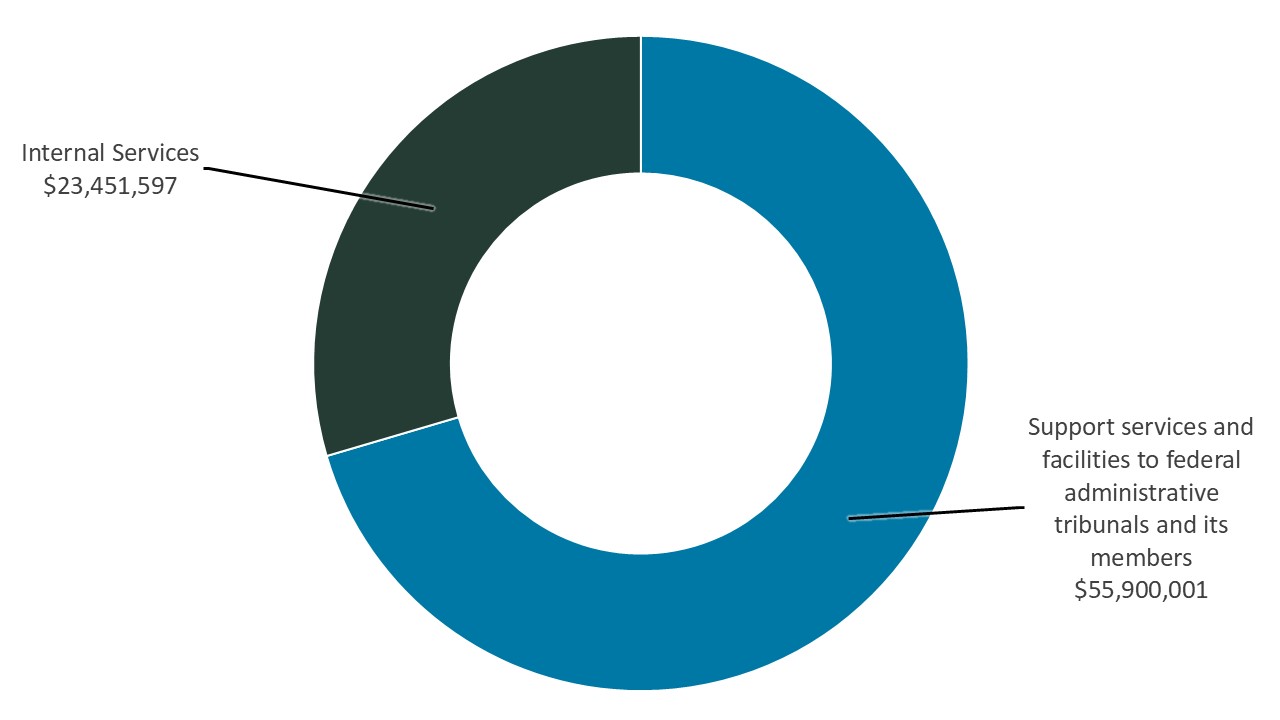
Graph 1 presents the department’s planned spending in 2026-27 by core responsibility and for internal services.
Text description of Graph 1
Core responsibilities and internal services | 2026-27 planned spending |
|---|---|
Support services and facilities to federal administrative tribunals and its members | $55,900,001 |
Internal services | $23,451,597 |
Analysis of planned spending by core responsibility
This table summarizes the ATSSC’s planned spending for its core responsibility and internal services for the upcoming fiscal year. In fiscal year 2026-27, planned spending for support services and facilities to federal administrative tribunals and their members is $55,900,001, making up 70.45% of planned spending. Planned spending for internal services is $23,451,597, making up 29.55% of planned spending. All numbers presented are net of vote-netted revenue (planned spending is reduced by the revenues collected from providing these services).
Budgetary performance summary
Table 5 Three-year spending summary for core responsibilities and internal services (dollars)
Table 5 presents the ATSSC’s spending over the past three years to carry out its core responsibilities and for internal services. Amounts for the 2025–26 fiscal year are forecasted based on spending to date.
Core responsibilities and Internal services | 2023-24 Actual Expenditures | 2024-25 Actual Expenditures | 2025-26 Forecast Spending |
|---|---|---|---|
Support services and facilities to federal administrative tribunals and its members | $62,893,574 | $60,153,920 | $57,598,126 |
Subtotal(s) | $62,893,574 | $60,153,920 | $57,598,126 |
Internal services | $25,798,987 | $25,804,760 | $24,164,008 |
Total(s) | $88,692,561 | $85,958,680 | $81,762,134 |
Analysis of the past three years of spending
In 2024-25, actual spending was $2.7 million lower than in 2023-24. This was mainly due to changes in tribunal caseloads and the Refocusing Government Spending initiative.
Spending is expected to further decrease in 2025-26 due to the continued implementation of the Refocusing Government Spending initiative.
More financial information from previous years is available on the Finances section of GC Infobase.
Table 6 Planned three-year spending on core responsibilities and internal services (dollars)
Table 6 presents the ATSSC’s planned spending over the next three years by core responsibilities and for internal services.
Core responsibilities and Internal services | 2026-27 Planned Spending | 2027-28 Planned Spending | 2028-29 Planned Spending |
|---|---|---|---|
Support services and facilities to federal administrative tribunals and its members | $55,900,001 | $53,562,737 | $51,165,030 |
Subtotal | $55,900,001 | $53,562,737 | $51,165,030 |
Internal services | $23,451,597 | $22,471,051 | $21,465,146 |
Total(s) | $79,351,598 | $76,033,788 | $72,630,176 |
Analysis of the next three years of spending
Spending is expected to decrease in 2026-27 and the following years due to the implementation of the Comprehensive Expenditure Review announced in Budget 2025.
More detailed financial information on planned spending is available on the Finances section of GC Infobase.
Table 7: Budgetary gross and net planned spending summary (dollars)
Table 7 reconciles gross planned spending with net spending for 2026-27.
Core responsibilities and Internal services | 2026-27 Gross planned spending (dollars) | 2026-27 Planned revenues netted against spending (dollars) | 2026-27 Planned net spending (authorities used) |
|---|---|---|---|
Support services and facilities to federal administrative tribunals and its members | $90,753,392 | $34,853,391 | $55,900,001 |
Subtotal | $90,753,392 | $34,853,391 | $55,900,001 |
Internal services | $26,501,681 | $3,050,084 | $23,451,597 |
Total | $117,255,073 | $37,903,475 | $79,351,598 |
Analysis of budgetary gross and net planned spending summary
The ATSSC is partially funded by vote-netted revenue (a cost recovery mechanism) for SST operations. As the SST’s expenses increase, so does the revenue, which reduces the net cost of its operations. These planned expenses are authorized for expenditure on behalf of the Canada Pension Plan and the Employment Insurance Operating Account.
Information on the alignment of the ATSSC’s spending with Government of Canada’s spending and activities is available on GC InfoBase.
Funding
This section provides an overview of the department’s voted and statutory funding for its core responsibilities and for internal services. For further information on funding authorities, consult the Government of Canada budgets and expenditures.
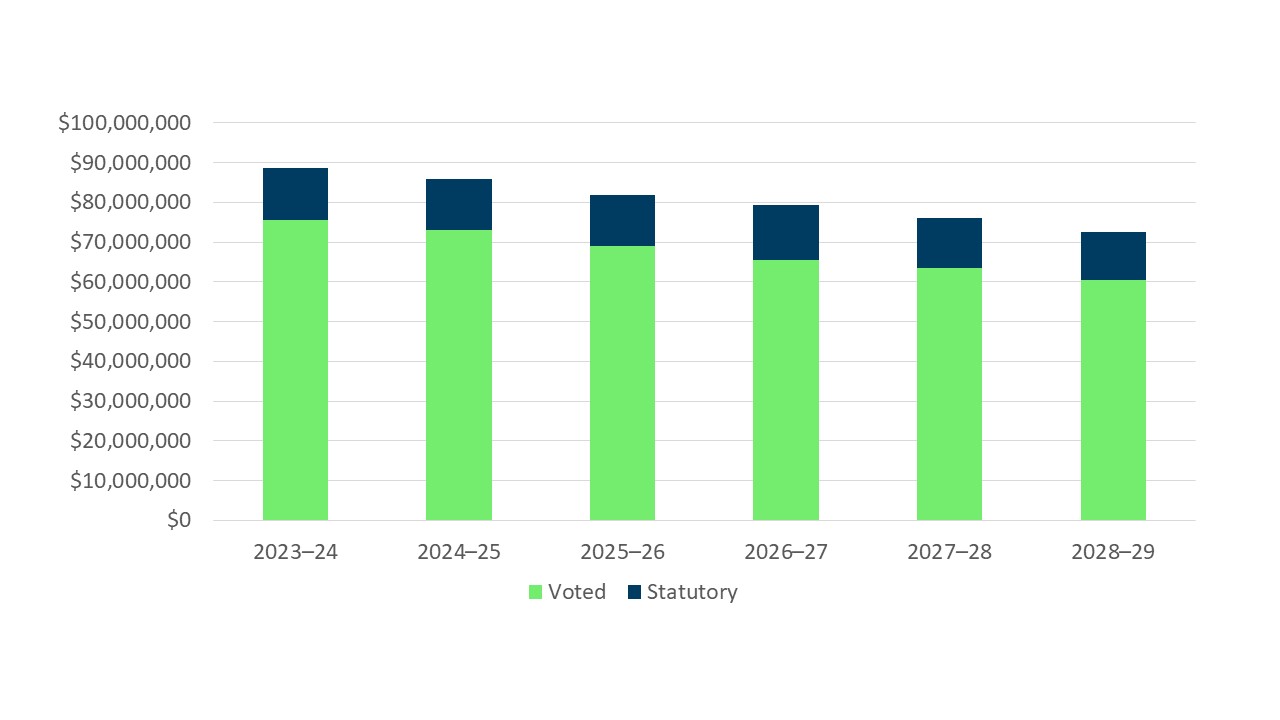
Graph 2 summarizes the department’s approved voted and statutory funding from 2023-24 to 2028-29.
Text description of Graph 2
Fiscal year | Total | Voted | Statutory |
|---|---|---|---|
2023-24 | $88,692,561 | $75,557,474 | $13,135,087 |
2024-25 | $85,958,680 | $72,960,811 | $12,997,869 |
2025-26 | $81,762,134 | $68,916,691 | $12,845,443 |
2026-27 | $79,351,598 | $65,396,288 | $13,955,310 |
2027-28 | $76,033,788 | $63,548,384 | $12,485,404 |
2028-29 | $72,630,176 | $60,485,378 | $12,144,798 |
Analysis of statutory and voted funding over a six-year period
This graph illustrates the ATSSC’s actual and funding over a six-year period. The fiscal years 2023-24 and 2024-25 show actual expenditures as reported in the Public Accounts of Canada, while 2025-26 presents the forecast for the current fiscal year.
Forecast spending in fiscal year 2025-26 is lower than 2024-25 actual expenditures by $4.2 million, primarily due to the continued implementation of the Refocusing Government Spending initiative.
Funding will decrease in 2026-27 and the following years due to the implementation of the Comprehensive Expenditure Review announced in Budget 2025.
All numbers presented are net of vote-netted revenue.
For further information on the ATSSC’s departmental appropriations, consult the 2026-27 Main Estimates.
Future-oriented condensed statement of operations
The future-oriented condensed statement of operations provides an overview of the ATSSC’s operations for 2025-26 to 2026-27.
Table 8 Future-oriented condensed statement of operations for the year ended March 31, 2027 (dollars)
Table 8 summarizes the expenses and revenues which net to the cost of operations before government funding and transfers for 2025-26 to 2026-27. The forecast and planned amounts in this statement of operations were prepared on an accrual basis. The forecast and planned amounts presented in other sections of the Departmental Plan were prepared on an expenditure basis. Amounts may therefore differ.
Financial information | 2025-26 Forecast results | 2026-27 Planned results | Difference (Planned results minus forecasted) |
|---|---|---|---|
Total expenses | $124,913,324 | $128,271,051 | $3,357,727 |
Total revenues | $30,927,857 | $37,903,475 | $6,975,618 |
Net cost of operations before government funding and transfers | $93,985,467 | $90,367,576 | -$3,617,891 |
Analysis of forecasted and planned results
The $3.6M reduction in expenses is primarily due to the implementation of the Comprehensive Expenditure Review.
A more detailed Future-Oriented Statement of Operations and associated Notes for 2026-27, including a reconciliation of the net cost of operations with the requested authorities, is available on the ATSSC’s website.
Human resources
This section presents an overview of the department’s actual and planned human resources from 2023-24 to 2028-29.
Table 9: Actual human resources for core responsibilities and internal services
Table 9 shows a summary of human resources, in full-time equivalents, for the ATSSC’s core responsibilities and for its internal services for the previous three fiscal years. Human resources for the 2025–26 fiscal year are forecasted based on year to date.
Core responsibilities and internal services | 2023-24 actual full-time equivalents | 2024-25 actual full-time equivalents | 2025-26 forecasted full-time equivalents |
|---|---|---|---|
Support services and facilities to federal administrative tribunals and its members | 586 | 562 | 539 |
Subtotal | 586 | 562 | 539 |
Internal services | 157 | 155 | 143 |
Total | 743 | 717 | 682 |
Analysis of human resources over the last three years
Full-time equivalents are expected to decrease in 2025-26 due to the continued implementation of the Refocusing Government Spending initiative.
Table 10: Human resources planning summary for core responsibilities and internal services
Table 10 shows information on human resources, in full-time equivalents, for each of the ATSSC’s core responsibilities and for its internal services planned for the next three years.
Core responsibilities and internal services | 2026-27 planned full-time equivalents | 2027-28 planned full-time equivalents | 2028-29 planned full-time equivalents |
|---|---|---|---|
Support services and facilities to federal administrative tribunals and its members | 525 | 518 | 504 |
Subtotal | 525 | 518 | 504 |
Internal services | 136 | 134 | 131 |
Total | 661 | 652 | 635 |
Analysis of human resources for the next three years
Full-time equivalents are expected to decrease in 2026-27 and in the following years, due to the end of program integrity funding, the implementation of the Comprehensive Expenditure Review, and because the General Division Employment Insurance appeal function handled by the SST will be replaced by the Employment Insurance Board of Appeal at Employment and Social Development Canada.
Federal tax expenditures
The ATSSC’s Departmental Plan does not include information on tax expenditures.
The tax system can be used to achieve public policy objectives through the application of special measures such as low tax rates, exemptions, deductions, deferrals and credits. The Department of Finance Canada publishes cost estimates and projections for these measures each year in the Report on Federal Tax Expenditures.
This report also provides detailed background information on tax expenditures, including descriptions, objectives, historical information and references to related federal spending programs as well as evaluations and GBA Plus of tax expenditures.
Corporate information
Departmental profile
Appropriate minister(s):
The Honourable Sean Fraser, M.P
Minister of Justice and Attorney General of Canada and Minister responsible for the Atlantic Canada Opportunities Agency
Institutional head:
Orlando Da Silva, LSM, Chief Administrator
Ministerial portfolio:
Department of Justice
Enabling instrument(s):
Year of incorporation / commencement:
2014
Departmental contact information
Mailing address:
Administrative Tribunals Support Service of Canada
240 Sparks Street, 4th Floor
Ottawa, Ontario, K1A 0E1
Canada
Telephone:
613-954-6350
Fax:
613-957-3170
Email:
Website(s):
www.canada.ca/en/administrative-tribunals-support-service.html
Definitions
List of terms
- appropriation (crédit)
- Any authority of Parliament to pay money out of the Consolidated Revenue Fund.
- budgetary expenditures (dépenses budgétaires)
- Operating and capital expenditures; transfer payments to other levels of government, departments or individuals; and payments to Crown corporations.
- core responsibility (responsabilité essentielle)
- An enduring function or role performed by a department. The intentions of the department with respect to a core responsibility are reflected in one or more related departmental results that the department seeks to contribute to or influence.
- Departmental Plan (plan ministériel)
- A report on the plans and expected performance of an appropriated department over a 3year period. Departmental Plans are usually tabled in Parliament each spring.
- departmental result (résultat ministériel)
- A consequence or outcome that a department seeks to achieve. A departmental result is often outside departments’ immediate control, but it should be influenced by program-level outcomes.
- departmental result indicator (indicateur de résultat ministériel)
- A quantitative measure of progress on a departmental result.
- departmental results framework (cadre ministériel des résultats)
- A framework that connects the department’s core responsibilities to its departmental results and departmental result indicators.
- Departmental Results Report (rapport sur les résultats ministériels)
- A report on a department’s actual accomplishments against the plans, priorities and expected results set out in the corresponding Departmental Plan.
- full-time equivalent (équivalent temps plein)
- A measure of the extent to which an employee represents a full person-year charge against a departmental budget. For a particular position, the full-time equivalent figure is the ratio of number of hours the person actually works divided by the standard number of hours set out in the person’s collective agreement.
- gender-based analysis plus (GBA Plus) (analyse comparative entre les sexes plus [ACS Plus])
Is an analytical tool used to support the development of responsive and inclusive policies, programs, and other initiatives. GBA Plus is a process for understanding who is impacted by the issue or opportunity being addressed by the initiative; identifying how the initiative could be tailored to meet diverse needs of the people most impacted; and anticipating and mitigating any barriers to accessing or benefitting from the initiative. GBA Plus is an intersectional analysis that goes beyond biological (sex) and socio-cultural (gender) differences to consider other factors, such as age, disability, education, ethnicity, economic status, geography (including rurality), language, race, religion, and sexual orientation.
Using GBA Plus involves taking a gender- and diversity-sensitive approach to our work. Considering all intersecting identity factors as part of GBA Plus, not only sex and gender, is a Government of Canada commitment.
- government priorities (priorités gouvernementales)
For the purpose of the 2026-27 Departmental Plan, government priorities are the high-level themes outlining the government’s agenda in the 2025 Speech from the Throne.
- horizontal initiative (initiative horizontale)
- An initiative where two or more federal departments are given funding to pursue a shared outcome, often linked to a government priority.
- Indigenous business (entreprise autochtones)
- For the purpose of the Directive on the Management of Procurement Appendix E: Mandatory Procedures for Contracts Awarded to Indigenous Businesses and the Government of Canada’s commitment that a mandatory minimum target of 5% of the total value of contracts is awarded to Indigenous businesses, a department that meets the definition and requirements as defined by the Indigenous Business Directory.
- non budgetary expenditures (non budgetary expenditure)
- Non-budgetary authorities that comprise assets and liabilities transactions for loans, investments and advances, or specified purpose accounts, that have been established under specific statutes or under non-statutory authorities in the Estimates and elsewhere. Non-budgetary transactions are those expenditures and receipts related to the government’s financial claims on, and obligations to, outside parties. These consist of transactions in loans, investments and advances; in cash and accounts receivable; in public money received or collected for specified purposes; and in all other assets and liabilities. Other assets and liabilities, not specifically defined in G to P authority codes are to be recorded to an R authority code, which is the residual authority code for all other assets and liabilities.
- performance (rendement)
- What a department did with its resources to achieve its results, how well those results compare to what the department intended to achieve, and how well lessons learned have been identified.
- performance indicator (indicateur de rendement)
- A qualitative or quantitative means of measuring an output or outcome, with the intention of gauging the performance of a department, program, policy or initiative respecting expected results.
- plan (plan)
- The articulation of strategic choices, which provides information on how a department intends to achieve its priorities and associated results. Generally, a plan will explain the logic behind the strategies chosen and tend to focus on actions that lead to the expected result.
- planned spending (dépenses prévues)
For Departmental Plans and Departmental Results Reports, planned spending refers to those amounts presented in Main Estimates.
A department is expected to be aware of the authorities that it has sought and received. The determination of planned spending is a departmental responsibility, and departments must be able to defend the expenditure and accrual numbers presented in their Departmental Plans and Departmental Results Reports.
- program (programme)
- Individual or groups of services, activities or combinations thereof that are managed together within the department and focus on a specific set of outputs, outcomes or service levels.
- program inventory (répertoire des programmes)
- Identifies all the department’s programs and describes how resources are organized to contribute to the department’s core responsibilities and results.
- result (résultat)
- A consequence attributed, in part, to a department, policy, program or initiative. Results are not within the control of a single department, policy, program or initiative; instead they are within the area of the department’s influence.
- statutory expenditures (dépenses législatives)
- Expenditures that Parliament has approved through legislation other than appropriation acts. The legislation sets out the purpose of the expenditures and the terms and conditions under which they may be made.
- target (cible)
- A measurable performance or success level that a department, program or initiative plans to achieve within a specified time period. Targets can be either quantitative or qualitative.
- voted expenditures (dépenses votées)
- Expenditures that Parliament approves annually through an appropriation act. The vote wording becomes the governing conditions under which these expenditures may be made.