
2025 Annual science report
On this page
- Message from the Acting President and Chief Executive Officer
- Overview
- Our pillars and supporting work
- One Health
- Energy, technology and cold climate innovations
- Climate, biodiversity and shifting landscapes
- Scientific publications in 2025
- Our partnerships
- Visitors to CHARS
- Our funding initiatives
- Our future
- Annex A: POLAR publications in 2025
-
Copyright information
© His Majesty the King in Right of Canada, represented by the President and Chief Executive Officer of Polar Knowledge Canada, 2026.
Catalogue number
- R101-16E-PDF - Polar Knowledge Canada annual science report
- R101-16F-PDF - Savoir polaire Canada Rapport scientifique annuel
ISSN
- 3111-167X - Annual science report (Polar Knowledge Canada)
- 3111-1688 - Rapport scientifique annuel (Savoir polaire Canada)
Cet ouvrage est publié en français sous le titre : Rapport scientifique annuel (Savoir polaire Canada).
Message from the Acting President and Chief Executive Officer
POLAR remains committed to advancing polar research, strengthening partnerships with Indigenous Peoples and Northern communities, and ensuring that knowledge generated in the polar regions contributes to a more sustainable, equitable and resilient future for all.
Polar Knowledge Canada (POLAR) celebrated its 10-year anniversary in June 2025. It was an opportunity to reflect on how far we have come and to reaffirm the vital connection between polar science and our shared future.
Throughout 2025, our researchers, partners, and Northern collaborators advanced understanding of a rapidly changing climate and its impacts to ecosystems, health, and innovation. Their work has generated insights that inform policy and stewardship, support evidence-based decision-making, and strengthened international cooperation. Yet, the true measure of our progress lies not only in publications, reports or datasets, but in the relationships, we have built across disciplines, communities, and nations.
Arctic science is inseparable from Northern communities. Food security, infrastructure, health, culture, livelihoods, and environmental change, all shape the daily lives and future well-being of Northerners. POLAR recognizes that scientific knowledge is strongest when it is co-developed with Indigenous and local knowledge holders, that Indigenous Knowledge systems are important ways of knowing, and that research outcomes must be responsive to community priorities and challenges.
The challenges facing the polar regions in the next decade are profound, but so too are the opportunities. We must act with purpose, humility and determination to address the impacts of climate change, to support the resilience and prosperity of Northern communities, and harness the power of collaborative science. POLAR remains committed to advancing polar research, strengthening partnerships with Indigenous Peoples and Northern communities, and ensuring that knowledge generated in the polar regions contributes to a more sustainable, equitable and resilient future for all.
I would like to thank our staff, researchers, community partners, Indigenous organizations, academic institutions, and international partners whose dedication and expertise have made this work possible. As we mark a decade of accomplishments, we also recognize that 2025 has laid essential groundwork for the next years to come.

Overview
POLAR is the federal agency responsible for advancing Canada’s knowledge of the Arctic and for strengthening Canadian leadership, partnerships, and collaborations in polar science and technology. POLAR is headquartered at the Canadian High Arctic Research Station (CHARS) in Cambridge Bay, Nunavut, and maintains satellite offices in Whitehorse, Yukon, and Ottawa, Ontario.
POLAR’s activities are guided by its Science and Technology (S&T) Framework. The Framework aligns with the Government of Canada’s current Arctic policies and priorities as well as those of northern and Indigenous governments, organizations and communities. Specifically, POLAR is focused on increasing understanding, innovation, and advancing technology to address the growing challenges and opportunities faced by Northern communities. POLAR supports a collaborative approach to research that responds to the evolving needs of Canada’s local, national, and international polar research priorities, reinforcing POLAR's role as Canada’s operational focal point for polar research within Canada and around the world.
In keeping with the principles of the Arctic and Northern Policy Framework, POLAR advances research that is co-developed with Northern and Indigenous partners, recognizing the importance of Indigenous leadership in setting research priorities and shaping knowledge creation. The Framework also promotes the integration of Indigenous knowledge and scientific research to support evidence-informed decision-making, strengthen community resilience, and address the environmental, social, and economic challenges facing the Arctic.
POLAR supports a collaborative approach to research that responds to the evolving needs of Canada’s local, national, and international polar research priorities, reinforcing POLAR's role as Canada’s operational focal point for polar research within Canada and around the world.
POLAR’s 2026–2029 S&T Framework is organized around three research and knowledge pillars that reflect the priorities and opportunities facing Arctic and northern regions:
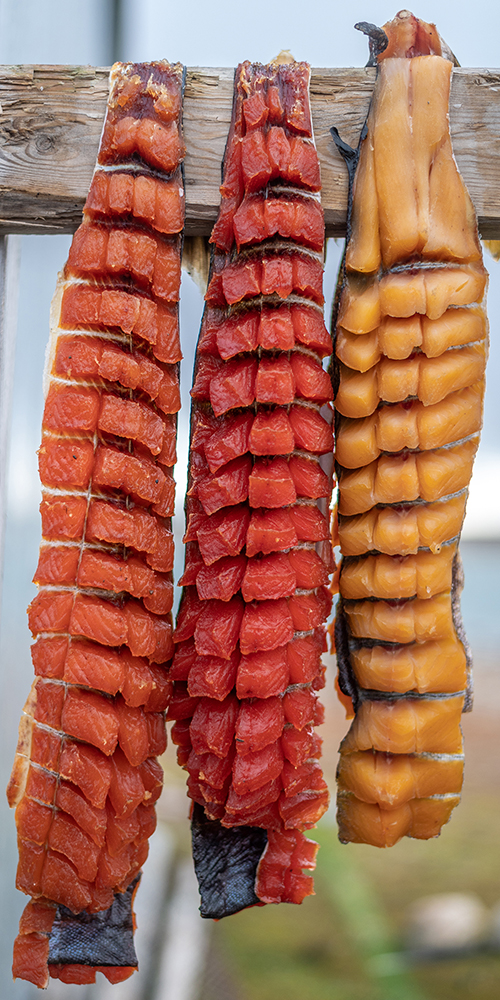
One Health
Advancing understanding of the interconnected health of people, animals, and ecosystems.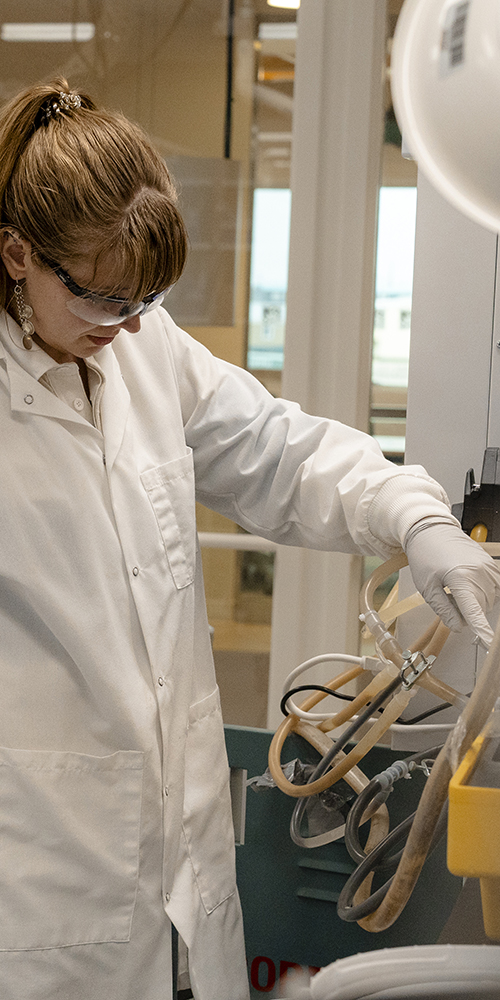
Energy, technology and cold climate innovations
Supporting the development and application of technologies and solutions that enhance sustainability, resilience, and quality of life in northern environments.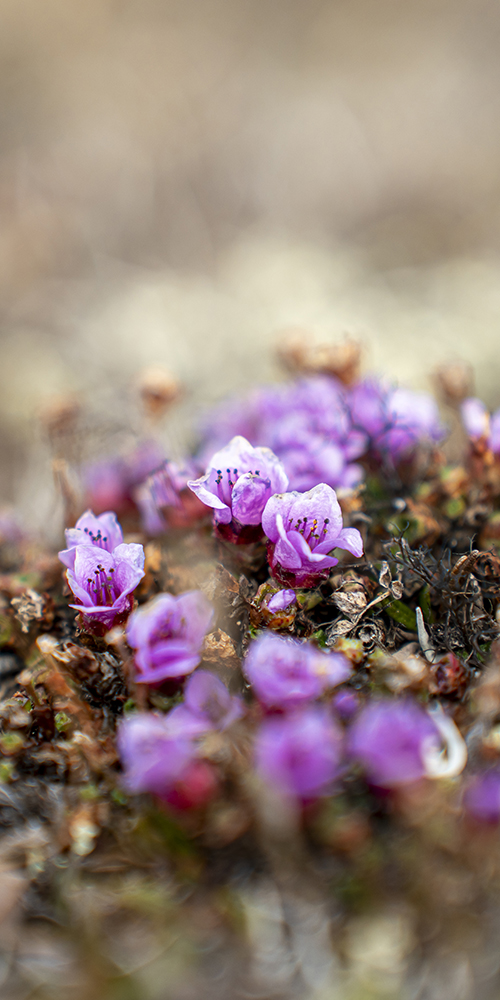
Climate, biodiversity, and shifting landscapes
Improving knowledge of environmental change and its impacts on ecosystems, species, and northern communities.
Our pillars and supporting work
Our funded projects, published research, and collaboration are aligned with our pillars.
One Health
“One Health” is an integrated approach to understanding wildlife health, human health and ecosystem health. A top priority of One Health is to help address food insecurity in the North through research linking wildlife harvests, sustainable northern supply chains, food safety, and new transportation technologies.

One Health includes environmental health, animal health, and human health.
Featured project: Avian influenza in the Arctic
In 2025, POLAR continued to strengthen northern capacity for wildlife health assessments and disease surveillance, while improving access to information on wildlife diseases and zoonotic risks. Through its support of Highly Pathogenic Avian Influenza (HPAI) surveillance and community-based wildlife health monitoring initiatives, POLAR provided information that helped inform decision-makers related to the harvest and consumption of country foods.
POLAR coordinated its 2025 avian influenza in Canada updates with federal, territorial, and Inuit organizations. Information was made available in multiple languages and tailored to the needs of Northerners, providing timely guidance on wildlife health risks and safe harvesting practices.
Featured project: Community-based wildlife health monitoring program in the Arctic
POLAR also worked with the Ekaluktutiak Hunters and Trappers Organization (EHTO) and academic partners to co-develop a community-based wildlife health monitoring program in Cambridge Bay, Nunavut. This initiative enhanced local monitoring capacity and improved data collection, analysis and reporting related to the health of caribous, muskoxen and their predators on southeastern Victoria Island.
As part of the project, samples collection from wolf and wolverine were analysed to establish baseline indicators of animal health, parasite presence, and diet. These data will contribute to long-term monitoring efforts, support community understanding of wildlife health trends, and inform local decision-making regarding wildlife management and food security.
Energy, technology and cold climate innovations
This pillar focuses on advancing solutions to energy, infrastructure, and transportation challenges associated with remote northern regions and extreme cold climates. Through CHARS, POLAR provides a platform for testing and evaluating innovative technologies related to renewable energy, housing, transportation, waste management and climate resilience in high-latitude environments.
Featured project: Solar Resource Monitoring Station
In collaboration with CanmetENERGY (CANMET), POLAR procured and will install a solar resource monitoring station near Cambridge Bay as part of a multi-year project. Installation is planned for the summer of 2026, with data collection continuing over multiple years.
This station will collect measurements of solar radiation such as infrared radiation, global and diffuse horizontal irradiance (GHI, DHI), and albedo, and record other meteorological data including air temperature, humidity, pressure, snow depth, and precipitation. Because high-quality ground observations in the Arctic are limited, the station will fill an important data gap and contribute to a more robust understanding of northern solar resources and atmospheric conditions.
The data generated will provide a critical benchmark to calibrate and improve weather and radiation models and reduce polar biases in Arctic climate and forecasting systems. This information will also support renewable energy assessments and be publicly disseminated.
Climate, biodiversity and shifting landscapes
This pillar supports research on the impacts of climate change across the Arctic’s terrestrial, freshwater and marine environments. Its objective is to identify environmental changes and long-term trends affecting these ecosystems and to generate knowledge that informs Canada’s response to a rapidly changing Arctic.
Key areas of focus include greenhouse gas emissions from northern landscapes, permafrost thaw, glaciers and sea ice loss, shifts in wildlife and vegetation distributions, and the increasing frequency and severity of wildfires and extreme weather events. Understanding this interconnected process is essential to supporting adaptation, as Canada responds to landscape-level pressures in Arctic environments.
Featured project: Permafrost Dynamics and Landscape Evolution in Nunavut
The Coastal Erosion and Shoreline Evolution Analysis project intends to understand permafrost conditions and quantify environmental change across Nunavut. Current areas of interest include the western Kitikmeot (Kugluktuk and Cambridge Bay) and Grise Fiord in the Qikiqtaaluk region. This project integrates episodic field work with the development of a long-term monitoring network to generate high-resolution data on permafrost dynamics, hydrological processes, shoreline change, and impacts on freshwater and nearshore ecosystems.
During 2025, POLAR expanded its monitoring capacity by installing new shallow and deep permafrost monitoring stations in Cambridge Bay and Grise Fiord. The project also enhanced coastal, lake, and river monitoring through additional sensor deployments, conducted geophysical surveys, and used drone-based mapping technologies to update landscape assessments. In February 2025, POLAR also hosted a permafrost workshop in Cambridge Bay to ensure the research remained relevant to the community and identified future sampling and monitoring priorities.
Scientific publications in 2025
POLAR researchers led or contributed to 18 peer-reviewed publications. These publications examined a wide-range of topics related to POLAR’s mandate, including shoreline dynamics and erosion in the Coppermine River estuary, innovations supporting energy autonomy in the Canadian High-Arctic, and participatory research and community engagement principles to wildlife health monitoring and community engagement. A complete list of the publications is provided in Annex A: POLAR publications in 2025.
Our partnerships
Partnerships are central to POLAR’s ability to advance Arctic science and technology and to address complex challenges facing northern communities and ecosystems. Through collaboration with Indigenous organizations, northern communities, academic institutions, government departments, and international partners, POLAR leverages expertise, infrastructure, and resources to support high-priority research and innovation across the North.
POLAR’s advanced technical and scientific services enable innovative research areas such as energy, infrastructure and environmental monitoring and climate adaptation. Through these partnerships, POLAR supports the design and enhancement of research support systems, expands technical service capacity, and establishes formal strategic collaborations that strengthen Canada’s Arctic research ecosystem.
By strengthening operational capabilities and fostering coordinated partnerships, POLAR increases access to high-quality science data, builds Northern research capacity, and supports long-term monitoring and assessment of rapidly changing Arctic systems. Together, we ensure that Northerners, Canadians, and POLAR’s partners are positively affected by and have access to robust scientific outcomes and informed policy development.
Partners
- Environment and Climate Change Canada
- Natural Resources Canada
- Motus Wildlife Tracking System
- Carleton University
- Instituto Antártico Chileno
- Royal Canadian Navy
- Australian Antarctic Division
- Nordic Energy Research
Featured partnerships
ECCC Automated Radiosonde Launching System (Upper Air Monitoring Station)
POLAR continues to support the operation of the Environment and Climate Change Canada (ECCC) Automated Radiosonde Launching System (ARLS) at CHARS. The ARLS provides critical upper air atmospheric observations that support weather forecasting, climate monitoring and environmental research. There are over 30 upper air monitoring stations across Canada.
Twice daily, the system launches radiosondes to collect vertically resolved profiles of temperature, humidity, pressure and winds, which are essential for numerical weather prediction and operational meteorology helping to improve the accuracy of weather forecasts and strengthen understanding of Arctic atmospheric process.
The Cambridge Bay installation is one of thirteen such automated systems operating across Canada and plays an important role in enhancing observational coverage in the Arctic, where atmospheric monitoring data remain relatively limited compared with lower latitudes. The data generated by the system contribute to national weather forecasting efforts and long-term climate monitoring programs.
Through its partnership with ECCC, POLAR supports the ongoing operation and reliability of the station by providing routine servicing, preventative maintenance, hydrogen generator (HOGEN) system inspections, inventory management, facility operations support, snow removal, and monthly reporting. This collaboration demonstrates how shared infrastructure and expertise can strengthen Canada's capacity to monitor environmental change and support scientific research in the North.
Motus Wildlife Tracking System
The Motus Wildlife Tracking System (Motus) is a collaborative global network that uses automated radio telemetry to track the movements of small flying organisms, including birds, bats, and insects. Led by Birds Canada in partnership with POLAR and Environment and Climate Change Canada, Motus supports research that advances understanding of animal movement, migration, ecology, and behaviour while informing conservation efforts at local, regional, and global scales.
POLAR contributes to this initiative by hosting a Motus telemetry tower at the CHARS. POLAR supports the operation of the tower through the seasonal installation and removal of equipment seasonally, routine maintenance activities and data quality management. These efforts help ensure the continued collection of reliable information on wildlife movements in the Arctic.
Since its launch in 2014, Motus has grown into a network of more than 25802 stations across 34 countries. Publicly accessible data from the program supports research and conservation initiatives worldwide.
CanmetENERGY
CHARS provides a high-latitude testing site for clean energy technologies. Through its Cold Climate Innovations program, POLAR works with research, academic government, territories and industry partners to evaluate existing and emerging technologies under real-world under Arctic conditions, helping to identify solutions that can improve energy security, reduce emissions and enhance community resilience across the North.
POLAR partnered with CANMET Ottawa to support the deployment and assessment of renewable energy and energy-efficiency technologies in northern environments. Building on this collaboration, POLAR initiated the planning and procurement for a solar resource monitoring station in Cambridge Bay in 2025.
Solar-driven Adsorption Thermal Energy Storage
POLAR also continued its collaboration with Carleton University by preparing a site to host a Solar-driven Adsorption Thermal Energy Storage (SATES) system at CHARS. This innovative technology is designed to capture and store thermal energy for later use, providing a potential pathway to improving building energy efficiency and reducing reliance on conventional heating systems in northern communities.
Canadian Antarctic Research Expedition 2025
Canada’s Antarctic research priorities build on the expertise in Arctic science, technology and logistics. Research in Antarctica complements Arctic studies, strengthening understanding of the shared challenges facing both polar regions.
Polar Knowledge Canada supports research in both the Arctic and Antarctic and as part of its mandate, promotes the development and dissemination of knowledge about Canada’s Norther and other circumpolar regions, including the Antarctic.
Polar Knowledge Canada researchers also partnered with scientists at the Instituto Antártico Chileno (INACH) to conduct glaciological research at Union Glacier during November and December 2025. These studies complement studies being conducted in the Canadian Arctic. Canada's Antarctic research enhances collaboration with government, academic, and international partners, and provides valuable experience to support future polar research and conservation efforts in both the Arctic and Antarctic.
Launching from Punta Arenas, Chile, the expedition brought together 15 Canadian scientists who conducted research in the South Shetland Islands and along the west coast of the Antarctic Peninsula. The CARE 2025 Science Program conducted research into three broad scientific disciplines: geology, oceanography, and contaminants research. Together, these activities contribute to a better understanding of the direct and indirect impacts of human activity on the Antarctic environment arising from human-induced climate change and the long-range dispersal of human-generated chemicals and particles.
The expedition achieved significant scientific outcomes collecting a total of 2,185 samples. These included 1,873 water samples for oceanographic research, 263 samples (68 snow, 30 air, and 165 water) for contaminants research and 49 geological samples (including 26 sediment cores). In addition, researched completed multibeam seafloor mapping and LIDAR coastline mapping to improve the understanding of Antarctic marine and coastal environments.
CARE 2025 strengthened Canada's contribution to Antarctic research, enhanced collaboration with government, academic, and international partners, and provided valuable experience to support future polar research and conservation efforts in both the Arctic and Antarctic.
Canada-Australia Arctic/Antarctic Environmental Monitoring
POLAR is working on a research initiative with the Australian Antarctic Division, to advance climate and environmental monitoring across the world’s polar regions. This science partnership is an opportunity to strengthen international collaboration on research designed to improve understanding how environmental change is affecting sensitive Arctic and Antarctic ecosystems.
This initiative will support the installation of environmental monitoring instruments in both regions, enabling comparative observations of ecological and environmental processes occurring at opposite poles. By generating standardized datasets across Arctic and Antarctic environments, researchers will be better positioned to identify common trends, regional differences, and emerging impacts associated with climate change.
In the Antarctic, instruments will be deployed by the Australian Antarctic Division as part of the Antarctic Near-Shore Terrestrial Observation System (ANTOS) project. In the Arctic, POLAR will install comparable instruments at CHARS in Cambridge Bay, Nunavut, as part of the Kitikmeot Environmental Monitoring program. These instruments will provide comparative observations about environmental factors influencing productivity or ‘greening’ in the Arctic and Antarctic due to climate change.
This partnership demonstrates the importance of international scientific cooperation in addressing global environmental challenges and reinforces Canada's role in advancing knowledge of rapidly changing polar ecosystems.
Nordic Energy Research
POLAR and Nordic Energy Research have signed a Memorandum of Understanding to strengthen transatlantic cooperation on sustainable energy solutions for Arctic and remote communities. The partnership aims to foster knowledge exchange between the Nordic region and the Canadian Arctic, supporting the development of resilient, reliable, and sustainable energy systems that respond to the unique challenges of northern environments.
As an initial step, the two organizations are jointly funding the first phase of a scoping project to map and document renewable energy initiatives across the Nordic and Canadian Arctic. This work will identify common opportunities, challenges, and lessons learned from projects operating in remote and cold-climate settings.
Building on the findings of the scoping phase, the partners intend to develop a case-based best practices report that will provide recommendations to inform future research, policy development, and community energy planning. Throughout the project, POLAR and Nordic Energy Research will engage governments, utilities, researchers, Indigenous organizations, and other energy stakeholders to ensure that the resulting knowledge products reflect local experience, practical realities, and established best practices.
This partnership highlights the value of international collaboration in accelerating the transition to sustainable energy systems and strengthening the resilience of northern and remote communities across the Arctic.
Visitors to CHARS
POLAR welcomed more than 85 international visitors from 25 different countries at CHARS in Cambridge Bay, Nunavut. While some visitors toured the facility as part of an organized delegation while others accessed laboratories, field equipment, technicians and on-site accommodations to support research and monitoring activities in the Arctic. In addition, CHARS saw hundreds of visitors from around the globe as cruise ships visited Cambridge Bay on Northern tours.
Global Affairs Canada organized a Northern Tour that brought Foreign Heads of Mission from 22 countries to CHARS on June 25 and 26. The visit provided an opportunity to strengthen international cooperation, represent Northerners in international Arctic affairs, and advance the rights and perspectives of Indigenous Peoples in Canada. During the visit, POLAR highlighted the achievements and impacts of its Science and Technology Program and encouraged future collaboration with international partners on shared Arctic priorities and challenges.
At the end of August, POLAR welcomed participants from UiT The Arctic University of Norway’s student course “Arctic Futures Pathfinders – A journey through the Northwest Passage” to CHARS. POLAR provided meeting and learning space for the program, which brought together 29 students and 20 educators from Norway, Greenland, Sweden, Finland, and Canada.
Our funding initiatives
Like all Government of Canada departments and agencies, POLAR operates on the fiscal year of April 1-March 31. POLAR’s grants and contributions program operates on this cycle as this reflects budget realities. While this report covers many of the highlights in the 2025 calendar year, it is for this reason that the amount of funding provided annually can only be reported during the fiscal year of April 1, 2025 – March 31, 2026.
POLAR provided approximately $7.8M of funding through its grants and contributions program during the April 2025– March 2026 fiscal year. This funding supports individuals and organizations performing valuable research that align with POLAR’s Science and Technology Framework, notably, to create opportunities that benefit Northern communities, and encourage projects that include Indigenous Knowledge and co-development. Some of our funding programs also support early career researchers and help develop future leaders in polar science.
In the 2025 calendar year, there were 49 active contribution agreements supporting science and technology activities, 96 grants supporting regional science and knowledge activities including 16 scholarships and awards which were presented to support and celebrate excellence in polar science and technology.
Consult the Open Government portal for a full listing of POLAR’s funding recipients. POLAR updates its Proactive Disclosure quarterly in accordance with Government of Canada policies on transparency and accountability.
POLAR funding at a glance (2025)
- $7.8M invested
- 49 science and technology initiatives funded
- 80 grants supporting regional science and knowledge activities
- 16 scholarships and awards recognizing excellence in polar science and technology
Grants
During the 2025 calendar year, 96 grants were distributed in which POLAR awarded almost $1.8 million in funding support. As part of its mandate to support Arctic and Antarctic research, knowledge mobilization and capacity-building initiatives, we launched our new POLAR Travel Grant to support Arctic and Antarctic research activities that aligns with the Science and Technology Framework.
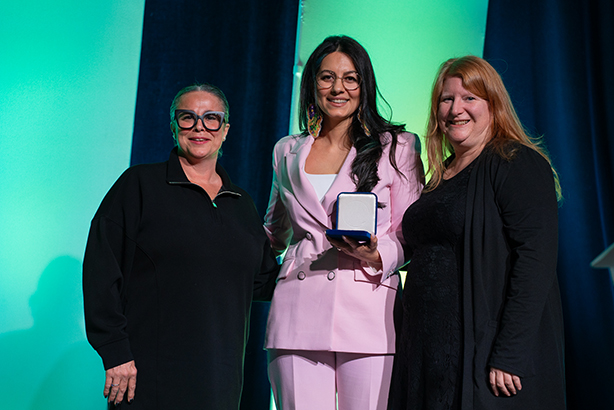
Dr Homa Kheyrollah Pour (centre) receives the 2025 Northern Science Award from Nathalie Robillard-Bergeron (left) and Suzanne Kerr (right).
POLAR Travel Grant
In 2025, POLAR launched a new Travel Grant program to support Indigenous and Northern residents of the Canadian North and Arctic travelling to attend important conferences and research meetings. Priority was given to applicants associated with an Indigenous organization and those applying for participating in an international event.
This grant supports the inclusion of Indigenous Peoples and Northerners in research, their participation in the governance of research, and the sharing of local and Indigenous Knowledge with Canadians in the south as well as internationally.
Contributions
During the 2025 calendar year, there were 49 active contribution agreements through which POLAR provided $6 million in funding to support research, monitoring, knowledge mobilization and capacity-building initiatives across the North.
More than half of this funding was directed to supported 25 new projects across all northern regions and Inuit Nunangat. The remaining contribution funds supported ongoing multi-year projects previously approved through POLAR’s funding program.
POLAR International Partnership Research Development Program
In 2025, POLAR launched the International Partnership Research Development Program to strengthen international collaboration in Arctic and Antarctic research. The program supports Canadian researchers and principal investigators leading projects in the Canadian Arctic or in the Antarctic by providing funding to develop, expand or sustain international research partnerships. Through this support, recipients can enhance collaboration with international institutions and experts, facilitate knowledge exchange, and build networks that strengthen the scope and impact of their research.
POLAR-funded projects
The following maps indicate the location of POLAR funded projects in 2025, both in the Arctic and the Antarctic.
Map 1 Grants and contributions 2025 map stereographic projection (Arctic)
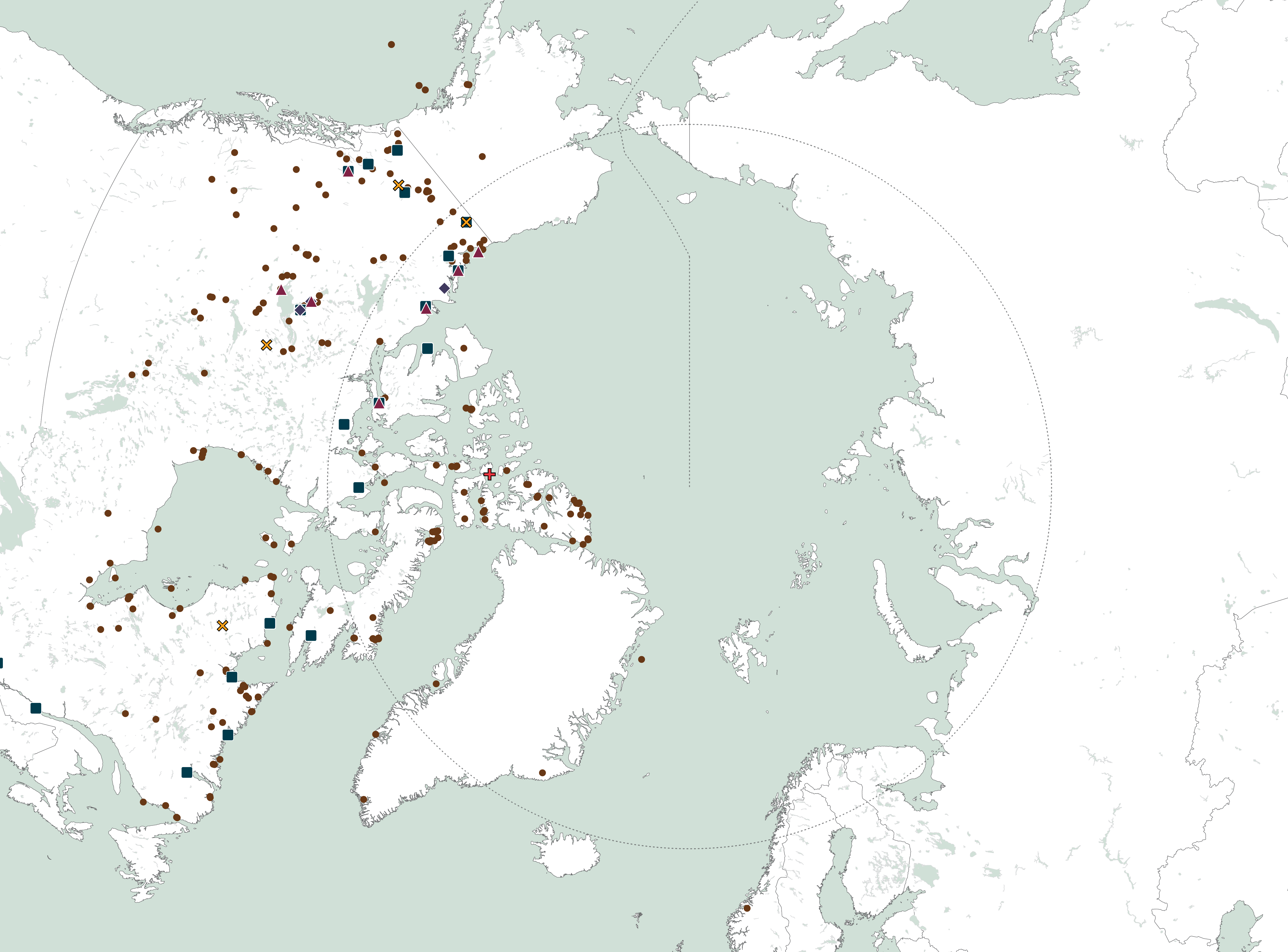
Legend
- Contribution calls [Blue square]
- Northern Scientific Training Program [Brown circle]
- Polar Knowledge Canada Scholarship [Purple diamond]
- Polar Knowledge Canada Fellowship Program [Brown triangle]
- POLAR Northern Resident Award [Orange X sign]
- POLAR Northern Resident Scholarship [Red plus sign]
Map 2 Grants and contributions 2025 map stereographic projection (Antarctic)
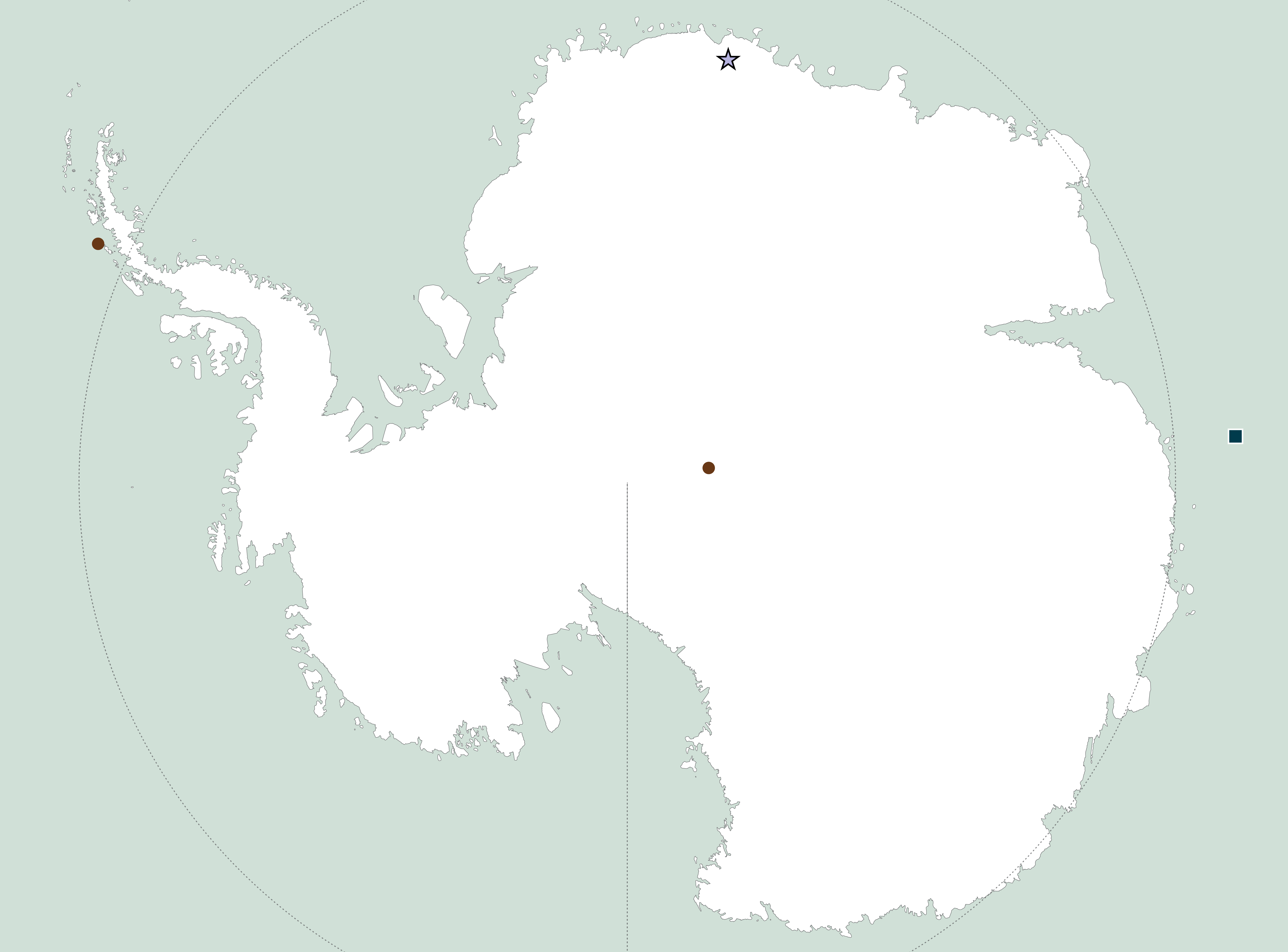
Legend
- Contribution calls [Blue square]
- Northern Scientific Training Program [Brown circle]
- POLAR Antarctic Scholarship [Purple star]
Our future
As the Arctic continues to experience rapid environmental, social and technological change, POLAR remains committed to supporting research that advances understanding of polar systems and informs responses to emerging challenges and opportunities. Through its funding programs, scientific and technical expertise and research support services at CHARS, POLAR will continue to support multidisciplinary research, mobilize knowledge for evidence-based decision-making, and foster collaboration among Indigenous Knowledge holders, academic institutions, governments, and international partners for years to come.
Annex A: POLAR publications in 2025
- Barrio, I. C., Vuorinen, K. E. M., Barbero-Palacios, L., Defourneaux, M., Bon, M. P., Greer, E. A., Anderson, H. B., Horstkotte, T., Lecomte, N., Windirsch, T., Ferraro, K., Forbes, B. C., Forbey, J. S., García Criado, M., Hagenberg, L., Hik, D. S., Kater, I., Macek, P., Moen, J., Sundqvist, M. K., Szejgis, J., Villoslada, M., Zaja, E., Berthelot, F., Björnsdóttir, K., Cunow, J., den Herder, M., Eskelinen, A., Hayes, K., Hollister, R. D., í Haraldsstovu, K., Jónsdóttir, I. S., Kristensen, J. A., Lameris, T. K., Oksanen, L., Oksanen, T., Olofsson, J., Park, T., Pedersen, Å. Ø., Ramirez, J. I., Ravolainen, V. T., Roy, A., Ryde, I., Schmidt, N. M., Schrofner-Brunner, B., Skarin, A., Speed, J. D. M., te Beest, M., Simmonds, M., Torres, R. T., Traylor, W., Virtanen, R., Wheeler, H. C., Alatalo, J. M., Axmacher, J. C., Filella, J. B., Cooper, E. J., Geange, S. R., Gilg, O., Grogan, P., Hernández-Castellano, C., Høye, T. T., Kerby, J. T., Klanderud, K., Koltz, A. M., Lang, J., Le Moullec, M., Loonen, M. J. J. E., Macias-Fauria, M., Post, E., Serrano, E., Siewert, M., Sokolov, A., Sokolova, N., Suominen, O., Tamayo, M., Terekhina, A., Volkovitskiy, A., & Kamenova, S. (2025). Emerging priorities in terrestrial herbivory research in the Arctic. Arctic Science, 11: 1–26. Canadian Science Publishing. https://doi.org/10.1139/as-2024-0080
- Binette, S., Didier, D., Coulombe, S., Akana, R., Jourdain-Bonneau, C., Zouaghi, F., Boisson, A., Lafosse, L., & Stolle, J. (2025). Shoreline dynamics and erosion in the Coppermine River estuary, Kugluktuk, Nunavut. Northern and Arctic Coastal Research Lab, Université du Québec à Rimouski; Polar Knowledge Canada; Institut national de la recherche scientifique.
- Coulombe, S., Fortier, D., Lacelle, D., St-Onge, G., Guertin-Pasquier, A. (2025). Early Pleistocene glacier ice preserved in permafrost in the eastern Canadian Arctic. Geological Society of America. 53 (1): 50-54. https://doi.org/10.1130/G52446.1
- Dragone, NP, M. Childress, C. Vanderburgh, R. Willmore, ID. Hogg, LG. Sancho, CK. Lee, JE. Barrett, CA Quandt, JJ. LeMonte, BJ. Adams, N. Fierer. (2025). A comprehensive survey of soil microbial diversity across the Antarctic continent. Polar Biology 48: 50. https://doi.org/10.1007/s00300-025-03372-y
- Gagnon, S., Coulombe, S., Didier, D., Binette, S., Chaillou, G., Kurylyk, B., Maksagak, I., Evetalegak, J. (2025). Coastal gullies formed by piping on a permafrost marine terrace near Iqaluktuuttiaq (Cambridge Bay), Nunavut, Canada. Geomorphology, 486, 109905. https://doi.org/10.1016/j.geomorph.2025.109905.
- Kindstedt, I., Winski, D., Stevens, C. M., Skelton, E., Copland, L., Kreutz, K., Mannello, M., Clavette, R., Holmes, J., Albert, M., & Williamson, S. N. (2025). Ongoing firn warming at Eclipse Icefield, Yukon, indicates potential widespread meltwater percolation and retention in firn pack across the St. Elias Range. The Cryosphere, 19, 3655–3680. https://doi.org/10.5194/tc-19-3655-2025
- Madelon, R., Kimball, J. S., Endsley, A. K., De Lannoy, G., Sonnentag, O., Alcock, H., Virkkala, A. M., Mavrovic, A., Williamson, S. N., Humphreys, E., Mialon, A., & Roy, A. (2025). Assessing the SMAP Level-4 carbon product over the Arctic and subarctic zones. IEEE Journal of Selected Topics in Applied Earth Observations and Remote Sensing, 18, 9850–9864.
- Miller, C.E., Green, R.O., Thompson, D.R., Thorpe, A.J., Eastwood, E.L., Mccubbin, I.B., Oslon-Duvall, W., Bernas, M.A., Sarture, C.M., Rios, L.M., Hernandez, M.A., Bue, B.D., Lundeen, S.R., Pavlick, R., Chapman, J.W., Brodrick, P.G., Eckert, R.F., Coleman, R.W., Baskaran, L., Elder, C., Townsend, P.A., Kovach, K.R., Serbin, S., Huemmrich, K.F., Nelson, P.R., Bhatt, U., Macander, M.J., Singh, D., Thornton, M., Yang, D., Myers-Smith, I., Goetz, S.J., Hoy, E., Larsen, E., Hodkinson, D., Margolis, H., Falkowski, M., Applejohn, A., Griffith, P.C. (2025). Airborne Imaging Spectroscopy Surveys of Arctic and Boreal Alaska and Northwestern Canada, 2017-2023. Sci Data 12, https://doi.org/10.1038/s41597-025-04898-w
- Omonigbehin, O., Ben Said, H., Stolle, J., Francus, P., Kurylyk, B. L., Guimond, J. A., Didier, D., & Coulombe, S. (2025). Physical modeling of coastal permafrost erosion: A new model for predicting niche depth evolution. Journal of Geophysical Research: Earth Surface, 130(10), e2025JF008528. https://doi.org/10.1029/2025JF008528
- Omonigbehin, O., Ben Said, H., Stolle, J., Francus, P., Kurylyk, B. L., Guimond, J. A., Didier, D., Coulombe, S., & Goseberg, N. (2026). Experimental investigation of wave-forced heat convection across water-permafrost boundaries. Cold Regions Science and Technology, 242, 104718. https://doi.org/10.1016/j.coldregions.2025.104718
- Pepin, N., Apple, M., Knowles, J., Terzago, S., Arnone, E., Hänchen, L., Napoli, A., Potter, E., Steiner, J., Williamson, S. N., Ahrens, B., Dhar, T., Dimri, A. P., Palazzi, E., Rameshan, A., Salzmann, N., Shahgedanova, M., Vidal, J. de D., & Zardi, D. (2025). Elevation-dependent climate change in mountain environments. Nature Reviews Earth & Environment, 6, 772–788. https://doi.org/10.1038/s43017-025-00740-4
- Phelps, H., Radić, V., & Williamson, S. N. (2025). Regional glacier melt modeling: Insights from surface energy balance and positive-degree-day comparisons. Journal of Glaciology, 71, e91, 1–17.
- Redr, D., A. Cirtwill, R. Kaartinen, A. Grunsky, I. Hogg, D. McLennan, C. Rasmussen, N. Martin Schmidt, M. Tiusanen, J. Wagner, H. Wirta, T. Roslin. (2025). Increasing variability in resource supply over time disrupts Arctic plant-pollinator interactions. Ecological Monographs. 95: e1637. https://doi.org/10.1002/ecm.1637
- Tanguay-Rioux, F., Maas, J., Nikolaeva, A., Matteau Lebrun, F., Frigon, J.-C., & Spreutels, L. (2025). Advancing energy autonomy in Canadian Arctic: Using a UASB digester for biogas production from food waste. Arctic Science, 11, 1–15. https://doi.org/10.1139/as-2025-0039
- The Kugluk Project Team, Allard, M., Coulombe, S., Marc-André Ducharme, Samuel Bilodeau, Larry Adjun, Leesee Papatsie, Gerry Attatahak, and Samuel Gagnon. (2025). Permafrost characterization, mapping, modelling, and knowledge sharing in support of construction of community roads and trails over sensitive tundra. Arctic Science, 11: 1-19. https://doi.org/10.1139/as-2025-0004
- Tomaselli, M., Hogg, I., & Checkley, S. (2025, open access publication). Participatory research and community engagement in the Arctic. In S. Cork & D. P. Whiteside (Eds.), Case studies in ecohealth: Examining the interaction between animals and their environment (Chap. 21). 5m Books Ltd. https://doi.org/10.52517/9781789183313.021
- Virkkala, A. M., Wargowsky, I., Vogt, J., Kuhn, M. K. A., Madaan, S., O’Keefe, R., & others. (2025). ABCFlux v2: Arctic–boreal CO₂ and CH₄ monthly flux observations and ancillary information across terrestrial and freshwater ecosystems. Earth System Science Data Discussions, 1–86.
- Williamson, S. N., Marshall, S., & Menounos, B. (2025). Temperature mediated albedo decline portends increasing North American glacier mass loss. Communications Earth & Environment, 6, 555.