
How Government of Canada supercomputers turn clouds into forecasts
Early weather warnings save lives. On World Meteorological Day, we celebrate the people, their work and the technology that make those warnings possible.
Across Canada’s coasts, prairies, forests and oceans, weather sensors and satellites are hard at work. They measure temperature, wind, rain, snow and ocean currents. They track cloud movement and storm development, and detect lightning strikes and smoke plumes from wildfires.
The heartbeat behind every forecast
This constant flow of data is the heartbeat of Canada’s weather system. But raw data isn’t enough—transforming it into accurate forecasts requires deep meteorological science and modelling expertise from Environment and Climate Change Canada (ECCC). That’s where Shared Services Canada (SSC) steps in, providing the digital tools and infrastructure to help ECCC deliver reliable weather information for Canadians.
Every second of every day, data collected from satellites, sensors and radar travels to SSC’s data centres, where the Government of Canada’s high-performance computing infrastructure takes over. A secure system called Sarracenia ensures that data moves instantly and continuously, so it is ready for real-time processing and analysis.
TECH101
What is high-performance computing?
High-performance computing (HPC) is a powerful system that can process huge amounts of data very quickly—much faster than an ordinary computer. The Government of Canada uses HPC to run complex simulations for weather, climate and environmental predictions, helping produce accurate forecasts, alerts and long-term climate projections that keep Canadians safe.
Within the HPC infrastructure, four computing clusters power the process:
- one cluster prepares the gathered data (also known as pre-processing)
- two supercomputers run simulations to model weather and climate patterns
- another cluster organizes and formats simulation results so scientists and reporting tools can use them (also known as post-processing)
A computer the size of a hockey rink
The scale of this computing power is hard to imagine.
As Jamal Ayach, who leads SSC’s HPC Solutions team, explains: “My computer is the size of a hockey rink and can perform 10 quadrillion calculations per second at peak performance.”
To put that into perspective, it’s enough calculations to track every raindrop, cloud and gust of wind across Canada—all in real time, every second.
SSC also stores decades of weather and climate data—now approaching 1 exabyte. That’s roughly enough data to fill every home in Canada with hundreds of high-definition movies, all organized and easily available when needed.
Turning data into action
Once processed, SSC securely delivers the data to ECCC. Their meteorologists analyze the data and issue forecasts and warnings to keep Canadians informed and safe. In severe weather, Canadians receive alerts through ECCC’s WeatherCAN application and other channels.
Even if you don’t see the technology behind those alerts, SSC’s supercomputers and dedicated teams across our organization make them possible. This is what we do.
Weather beyond borders
Beyond supporting forecasts and alerts at home, SSC also helps Canada share weather and climate data globally. Using our HPC infrastructure and secure Sarracenia system, processed forecasts and climate simulations are securely shared with international partners, such as:
- the World Meteorological Organization
- the United Nations Intergovernmental Panel on Climate Change
- the Arctic Council
By contributing high-quality data, Canada supports global climate research, improves forecasting worldwide and helps countries prepare for extreme weather.
Investing in the future
Recent commitments in Budget 2025 are helping the Government of Canada expand supercomputing capacity, boost network speed, enhance storage and improve cyber security. These upgrades will enable:
- more detailed weather and climate simulations
- faster early warnings
- critical data being delivered exactly when needed
Every weather alert Canadians receive is the result of teamwork:
- SSC provides the technological muscle
- ECCC provides the scientific know-how
Together, we turn raw weather data into life-saving forecasts.
On World Meteorological Day, we celebrate not just weather forecasts, but the people and technology keeping Canada safe.
Related links
From wildfires to weather apps: Kevin Comeau and his team deliver when it matters most
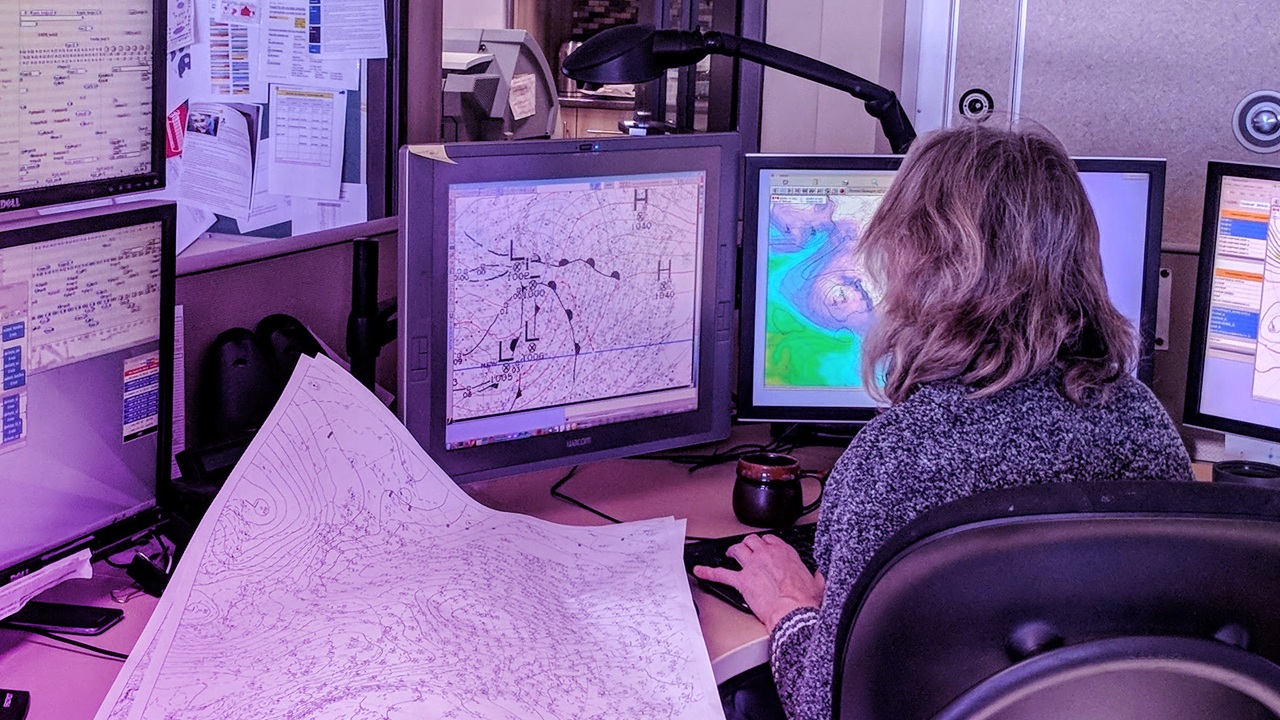
SSC’s HPC infrastructure supports ECCC’s climate modelling and forecasting.
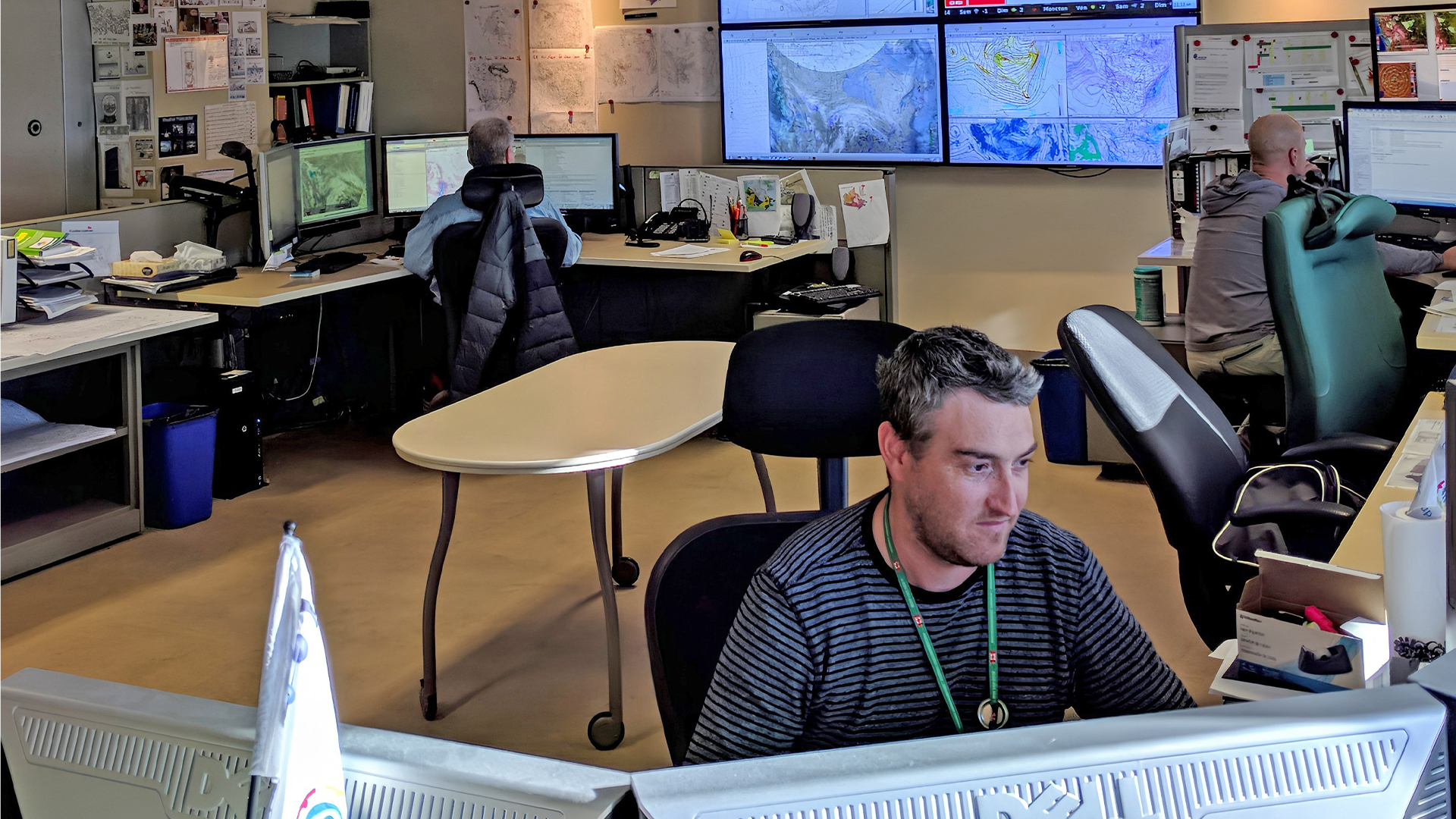
SSC’s HPC infrastructure supports ECCC’s climate modelling and forecasting.