
Impact Assessments Led by a Review Panel: A Guide for Review Panel Chairpersons and Members
© His Majesty the King in Right of Canada, as represented by the Minister of the Environment, Climate Change and Nature, 2025.
This publication may be reproduced for personal or internal use without permission, provided the source is fully acknowledged. However, multiple copy reproduction of this publication in whole or in part for purposes of redistribution requires the prior written permission from the Impact Assessment Agency of Canada, Ottawa, Ontario K1A 0H3, or information@iaac-aeic.gc.ca.
Catalogue Number: En106-288/2025E-PDF
Published December 2025
ISBN 978-0-660-79221-7
This document has been issued in French under the title: Évaluations d’impact dirigées par une commission d’examen: Guide à l’intention des président(e)s et des membres des commissions d’examen.
Contents
- List of figures
- List of abbreviations and acronyms
- Glossary
- 1. Purpose and objectives of the guide
- 2. Overview
- 3. Administrative tribunals
- 4. Review panel secretariat
- 5. Review panel administration
- 6. Conduct of the impact assessment
List of figures
- Figure 1: Roles and Responsibilities of the Secretariat
- Figure 2: From the Common Definitions on Cultural Safety: Chief Public Health Officer Health Professional Forum
List of abbreviations and acronyms
- CER
- Canada Energy Regulator
- CNSC
- Canadian Nuclear Safety Commission
- IAA
- Impact Assessment Act (S.C. 2019, c. 28, s.1)
- IAAC
- Impact Assessment Agency of Canada
- MOU
- Memorandum of Understanding
Glossary
- Adverse federal effects
- Refers to both (as applicable), "adverse effects within federal jurisdiction" and "direct or incidental adverse effects", as defined in section 2 of the Impact Assessment Act
- Crown
- Refers to the Government of Canada
- Federal Authorities
-
Federal departments or agencies possessing specialist or expert information or knowledge with respect to a project. Upon request, they must:
- make information available to IAAC, review panel or body conducting the impact assessment; and
- engage with the proponent.
Their expertise may be used at any stage of the impact assessment process.
- Impact Assessment
- An assessment of the effects of a designated project that is conducted in accordance with the Impact Assessment Act
- Impact Assessment Report
- Document produced by IAAC or by a review panel which is the basis for decision-making. The report must summarize the impact assessment process, set out the effects that are likely to be caused by the carrying out of the project, and provide sufficient information to the Minister or Cabinet to make a decision. The report must take into consideration the information and analysis by the proponent, and associated perspectives of expert federal departments, Indigenous groups, the public and provincial, territorial, or Indigenous jurisdictions.
- Impact Statement
- Detailed technical document prepared by the proponent per the requirements set out in the Tailored Impact Statement Guidelines.
- Indigenous Knowledge
-
A set of complex knowledge systems based on the worldviews of Indigenous Peoples. Although there are many different definitions of Indigenous Knowledge by various Indigenous groups and organizations and in academic or international literature, there is no one universally accepted definition.
For the purposes of the impact assessment, generally, Indigenous Knowledge is considered as a body of knowledge built up by a group of Indigenous Peoples through generations of living in close contact with the land. While the term 'traditional knowledge’ is often used, the Impact Assessment Act uses the term 'Indigenous Knowledge’ in order to recognize that the knowledge system evolves and is not set in the past, as the word 'traditional’ may imply.
- Indigenous Peoples
- The term 'Indigenous Peoples’ has the same meaning as 'Aboriginal peoples of Canada’ which include First Nations, Inuit and Métis peoples as defined in section 35(2) of the Constitution Act, 1982.
- Integrated Review Panel
- When an impact assessment is required for a designated project regulated by a lifecycle regulator under the Nuclear Safety and Control Act or the Canadian Energy Regulator Act, the Minister must refer the assessment to an integrated review panel. The impact assessment will integrate the requirements of those Acts into the process.
- Joint Review Panel
- When a designated project requires an assessment by another provincial, territorial, or Indigenous jurisdiction, the Minister may enter into an agreement or arrangement with the other jurisdiction for the conduct of the impact assessment. In this case, IAAC, in consultation with the relevant jurisdiction, develops a Joint Review Panel Agreement which establishes the mandate and authority of a joint review panel. The joint review panel must meet the requirements of all jurisdictions it represents in its assessment of the proposed project. A joint review panel may have decision-making responsibilities, depending on the legislation of the partner jurisdiction.
- Lifecycle Regulator
- Under the Impact Assessment Act, lifecycle regulators include, but are not limited to, the Canadian Nuclear Safety Commission (CNSC) and the Canada Energy Regulator (CER). IAAC will draw upon the expert knowledge of these regulators, and ensure that safety, licensing requirements, international obligations, and other key regulatory factors are considered as part of a single assessment, as appropriate. The CNSC and CER collaborate with IAAC through an integrated assessment process that meets the Impact Assessment Act (IAA) and their own regulatory requirements.
- Minister
- Minister of the Environment, Climate Change and Nature
- Proponent
- A person or entity that proposes the carrying out of, or carries out, a designated project.
- Registry
- The Canadian Impact Assessment Registry (the Registry) is a website where IAAC stores records, including documents and comments, from federal impact assessments. IAAC and other organizations responsible for completing federal assessments are required by the Impact Assessment Act to ensure that records of assessments are posted and maintained on the Registry so that the public can access them.
- Review panel
- A review panel is a group of independent experts appointed by IAAC to conduct an impact assessment. Individuals are appointed to a review panel based on their knowledge or expertise related to the proposed project, Indigenous matters, or the impact assessment process. Members of a review panel must be free from bias or conflict of interest relative to the proposed project. The review panel is responsible for conducting the impact assessment, which includes collecting information, holding a public hearing, and preparing the Impact Assessment Report.
- Secretariat
- Staff members from IAAC who support the review panel in fulfilling its work and responsibilities. In the case of a joint or integrated panel, the secretariat may also include staff from another jurisdiction or lifecycle regulator.
- Terms of Reference
- The terms of reference are established by the Minister and provide direction and guidance to the review panel. The terms of reference set out the mandate and specific obligations of the review panel, the procedures and boundaries for the review, and the time limit for the review panel to submit its Impact Assessment Report to the Minister.
1. Purpose and objectives of the guide
"Impact Assessments led by a Review Panel: A Guide for Review Panel Chairpersons and Members" (the guide) has been prepared for current and potential chairpersons and members of review panels established under the Impact Assessment Act (IAA). The guide is intended to:
- provide potential review panel chairpersons and members with an overview of their potential roles and responsibilities in advance of accepting an appointment; and
- serve as a reference guide to support review panel chairpersons and members in successfully fulfilling their mandate under the IAA and the review panel’s terms of reference.
The objectives of this guide are to provide:
- an introduction to the IAA;
- an introduction to the principles of administrative justice;
- an understanding of the roles and responsibilities of the review panel chairpersons and members;
- a description of the roles and responsibilities of the review panel support staff (the secretariat); and
- general guidance on how to conduct the review panel process.
More detailed information regarding the IAA and the conduct of an impact assessment can be found in the hyperlinks provided throughout the guide.
This guide will be updated as necessary to remain reflective of the roles and responsibilities of review panel chairpersons and members.
2. Overview
2.1 The Impact Assessment Act
The Impact Assessment Act and its regulationsFootnote 1 form the legal framework for federal impact assessments. The IAA came into force in August 2019, replacing the Canadian Environmental Assessment Act, 2012. The IAA was amended on June 20, 2024. The IAA lays out the impact assessment process and identifies the factors that must be taken into account during the impact assessment.
Federal impact assessment applies only to designated projects that are the most likely to have significant adverse federal effects. The purpose of the IAA is to prevent or mitigate significant adverse effects within federal jurisdiction that may be caused by the carrying out of projects. The IAA is focused on the likely effects of projects that are within federal jurisdiction (i.e. within the legislative authority of Parliament) and the IAA requires decision-making to be focused on adverse effects within federal jurisdiction. The IAA includes a number of factors that must be considered in an impact assessment (section 22).
"Adverse effects within federal jurisdiction" is defined in section 2 of the IAA. The terms means, with respect to a physical activity or a designated project:
- a non-negligible adverse change to the following components of the environment that are within the legislative authority of Parliament,
- Fish and fish habitat, as defined in subsection 2(1) of the Fisheries Act,
- Aquatic species, as defined in subsection 2(1) of the Species at Risk Act,
- Migratory birds, as defined in subsection 2(1) of the Migratory Birds Convention Act, 1994, and iv) Any other component of the environment that is set out in Schedule 3;
- a non-negligible adverse change to the environment that would occur on federal lands;
- a non-negligible adverse change to the marine environment that is caused by pollution and that would occur outside Canada;
- a non-negligible adverse change – that is caused by pollution – to boundary waters or international waters, as those terms are defined in subsection 2(1) of the Canada Water Act, or interprovincial waters;
- with respect to the Indigenous Peoples of Canada, non-negligible adverse impact – occurring in Canada and resulting from any change to the environment – on
- physical and cultural heritage,
- the current use of lands and resources for traditional purposes, or
- any structure, site, or thing that is of historical, archaeological, paleontological or architectural significance;
- a non-negligible adverse change occurring in Canada to the health, social or economic conditions of the Indigenous Peoples of Canada; and
- a non-negligible adverse change to a health, social or economic matter that is within the legislative authority of Parliament that is set out in Schedule 3. Footnote 2
The IAA also defines "direct or incidental adverse effects" as:
- non-negligible adverse effects that are directly linked or necessarily incidental to a federal authority’s right to exercise of a power or performance of a duty or function that would permit the carrying out, in whole or in part, of a physical activity or designated project, or to a federal authority’s provision of financial assistance to a person for the purpose of enabling that activity or project to be carried out, in whole or in part.
The IAA requires the Impact Assessment Report to identify the adverse effects within federal jurisdiction (including direct or incidental adverse effects), identify whether the adverse federal effects are significant, and if so, the extent of significance.
The IAA also recognizes the special constitutional relationship between the Crown and Indigenous Peoples and the perspectives and interests Indigenous Peoples bring to the assessment process (see section 6.3.1). Any action taken under the IAA must be taken in a manner that respects the rights of Indigenous Peoples and takes into account Indigenous Knowledge.
The Impact Assessment Agency of Canada (IAAC) is a federal body responsible for the implementation of the IAA. IAAC delivers federal impact assessments (unless conducted by a review panel) that evaluate the positive and adverse effects of potential projects. In conducting impact assessments, IAAC will engage with the public and other government authorities and conduct Indigenous consultation. If a project is approved, IAAC is generally responsible for compliance and enforcement.
2.2 Review panels
Under the IAA, an assessment is carried out either by IAAC or by a review panel. A review panel is an independent body appointed for the purpose of conducting the impact assessment process.
For most impact assessments, the Minister must determine whether it is in the public interest to refer the impact assessment of a project to a review panel (section 36 of the IAA). In making that determination, the Minister must consider the extent to which the federal effects of the project may be adverse, the public concern related to those effects, the opportunities for cooperation with a jurisdiction, and the potential adverse impacts of the project on Indigenous rights. In cases where a project is also subject to review by a lifecycle regulator, such as the Canadian Nuclear Safety Commission (CNSC) or the Canada Energy Regulator (CER), the Minister is obliged to refer the impact assessment to an integrated review panel (section 43 of the IAA).
If the impact assessment of a project is referred to a review panel, the members of the review panel will be appointed as outlined in the IAA, or jointly as specified in agreements with other jurisdictions. Individuals are appointed to a review panel based on their knowledge or expertise related to the proposed project, Indigenous matters, or the impact assessment process.
A review panel is established to analyze, in an impartial and objective manner, the potential for a designated project to cause adverse federal effects. The specific scope of the review panel’s work will be set out in its terms of reference (see section 5.1). In general, the role of the review panel is to receive and analyze submissions, review documents, hold public hearings, and prepare and submit a report.
The review panel’s required duties are outlined in subsection 51(1) of the IAA. A review panel must:
- conduct an impact assessment of the designated project;
- ensure that the information that it uses when conducting the impact assessment is made available to the public;
- hold hearings in a manner that offers the public an opportunity to participate meaningfully, in the manner that the review panel considers appropriate and within the time period that it specifies, in the impact assessment;
- prepare a report with respect to the impact assessment that:
- sets out the effects that, in the opinion of the review panel, are likely to be caused by the carrying out of the project;
- indicates which of the effects referred to in subparagraph (i) are adverse effects within federal jurisdiction and which are direct or incidental adverse effects, and specifies, from among those adverse effects within federal jurisdiction and direct or incidental adverse effects, the ones that are likely to be, to some extent, significant and the extent to which they are significant;
- subject to section 119 of the IAA, sets out how the review panel, in determining the effects that are likely to be caused by the carrying out of the project, took into account and used any Indigenous Knowledge provided with respect to the project;
- sets out a summary of any comments received from the public; and
- sets out the review panel’s rationale, conclusions, and recommendations, including conclusions and recommendations with respect to any mitigation measures and follow-up program;
- submit the report with respect to the impact assessment to the Minister; and
- on the Minister’s request, clarify any of the conclusions and recommendations set out in its report with respect to the impact assessment.
In addition, subsections 51(2) and 51(3) state that integrated review panels would also have additional responsibilities as required under the Nuclear Safety and Control Act and the Canada Energy Regulator Act, respectively. Joint review panels may also have additional requirements and responsibilities based on the other jurisdiction’s legislation.
2.3 Types of review panels
The establishment and composition of a review panel can vary. A review panel member may be appointed to a federal-only review panel or a review panel that is in cooperation with one or more jurisdictions, or lifecycle regulators.
2.3.1 Federal review panel
A federal review panel is established to assess the impacts of a proposed project under the jurisdiction of the IAA. Members of a federal review panel are guided by the requirements of the IAA and their terms of reference, and are generally focused exclusively on effects within federal jurisdiction.
Matters that fall under provincial or territorial jurisdiction are generally assessed by a separate assessment process and not considered by a federal review panel. However, there may be cases when IAAC has an agreement with another jurisdiction to include matters of provincial/territorial jurisdiction in the review panel’s terms of reference to allow that jurisdiction to use the panel’s conclusions in its decision making. In addition, there may be an agreement in place with one or more jurisdictions to coordinate timing or procedures of the assessment to support the goal of 'one project, one review’ to the extent possible.
Impact assessments conducted by a review panel under the IAA are advisory rather than decision-making processes. Federal review panels submit recommendations to the federal government for decision.
2.3.2 Joint review panel
When the Minister refers the impact assessment of a designated project to a review panel, the Minister may enter into a project-specific agreement with a provincial, territorial, or Indigenous jurisdiction that also has powers, duties or functions in relation to an assessment of the impacts of the project. Cooperation with other jurisdictions has the benefit of reducing duplication and increasing efficiency and certainty in the process.
An agreement to establish a joint review panel, along with the panel’s terms of reference, establish the statutory requirements and the mandate of the joint review panel, including its composition, procedures and timelines for the review, and decision-making process. IAAC and the joint jurisdiction(s) agree on the terms of reference and jointly appoint review panel members to conduct the assessment. The joint review panel must meet the requirements of all jurisdictions it represents in its assessment of the proposed project. A joint review panel may have decision-making responsibilities, depending on the legislation of the partner jurisdiction.
2.3.3 Integrated review panel
If the proposed designated project includes physical activities that are regulated under the Nuclear Safety and Control Act or the Canada Energy Regulator Act, the Minister must refer the impact assessment to an integrated review panel. Integrated assessments integrate the requirements of the lifecycle regulator and their respective Acts into the assessment process, to the extent possible. The integrated review panel must include representatives from the respective lifecycle regulator, but the regulator cannot form the majority of review panel members on the integrated review panel. This process benefits from the lifecycle regulator’s experience and expertise, while ensuring the principle of "one project, one review".
IAAC has signed memorandums of understanding (MOUs) with the Canadian Nuclear Safety Commission and the Canada Energy Regulator that provide the framework for conducting integrated assessments. The MOUs outline the roles, responsibilities, and outcomes for specific aspects of an integrated assessment.
An integrated review panel will have additional responsibilities beyond those of the IAA. As such, some procedures outlined in this guide may be varied to ensure the requirements of the lifecycle regulator are met. Variations of the procedures will be detailed in the integrated review panel’s terms of reference and in their appointment letters.
A joint integrated review panel may also be established when another jurisdiction such as a province has powers, duties, or functions in relation to the integrated assessment and is interested in reducing duplication. This panel would meet the requirements of the jurisdictions it represents as well as the lifecycle regulator, with the details outlined in the review panel terms of reference as well as the agreement that establishes the joint integrated review panel.
2.4 Impact assessment process
The impact assessment process studies the potential impacts that major projects may have in areas for which the federal government is responsible. The process ensures understanding of potential impacts and helps reduce negative impacts before projects get built. Details on the steps, outputs and key participants can be found on IAAC’s website, and a general description is below. Further details on the review panel’s specific roles and responsibilities are in section 6. Throughout the process, meaningful public and Indigenous participation are essential to understand the potential impacts of a project on people and the environment.
2.4.1 Prior to establishment of review panel
The impact assessment process officially begins when the proponent submits an Initial Project Description. IAAC then determines whether a comprehensive impact assessment is required and, if so, sets out the documents and plans that will guide the remainder of the impact assessment. Within 45 days from posting the Notice of Commencement on the Registry, the Minister may refer the impact assessment to a review panel, if it is in the public interest to do so.
The proponent will then develop and submit an impact statement, based on the requirements set out in the Tailored Impact Statement Guidelines (the Guidelines). IAAC will review the impact statement alongside Federal Authorities (and other jurisdictions and lifecycle regulators, as applicable), and in consultation with Indigenous groups, to determine if the impact statement meets the requirement of the Guidelines. Once all of the necessary information or studies have been provided, IAAC is required to post a notice on the Registry.
The review panel is established when the Minister formally issues its Terms of Reference. For efficiency purposes, the review panel may be appointed early to initiate training and orientation activities.
2.4.2 Following establishment of review panel
Once IAAC has posted notice that all the information or studies have been provided, the review panel takes over responsibility for the conduct of the impact assessment. The review panel will prepare hearing materials (potentially including draft conditions), hold a public hearing, and receive submissions from participants. Upon completion of the public hearing, the review panel will prepare and submit its Impact Assessment Report to the Minister.
After submission of the review panel’s Impact Assessment Report, IAAC will finalize conditions and the Consultation and Accommodation Report and submit these recommendations to the Minister. Review panels do not typically have a role after submission of the Impact Assessment Report, although, if requested by the Minister, the review panel could be asked to clarify any of the conclusions or recommendations set out in its report.
For an impact assessment conducted by a review panel, the Minister must refer the decision to the Governor in Council (Cabinet). Once Cabinet has made its determination, the Minister will issue a decision statement with detailed reasons and, should the project be approved, any conditions. For integrated review panels, if the project is approved under the IAA, the panel will reconvene to make the licensing decision as the decision-making body for the lifecycle regulator.
The review panel will be formally disbanded once its mandate is complete.
2.5 Roles and responsibilities in administration of a review panel
Below is a high-level overview of the roles and responsibilities of key parties involved in establishing and administrating a review panel. Detailed information on the additional roles of these parties during the assessment are provided throughout this guide.
2.5.1 Governor in Council
- For integrated review panels, approves cross-appointment of panel members who are not on the roster of the lifecycle regulator.
- Makes determination on whether a project’s adverse federal effects are likely to be, to some extent, significant and, if so, whether those significant adverse federal effects are justified in the public interest.
2.5.2 The Minister
- Determines whether to refer the impact assessment of a project to a review panel.
- Establishes the review panel’s terms of reference.
- Receives and makes public the review panel’s Impact Assessment Report.
- Refers the decision to Governor in Council.
- Issues the decision statement to the proponent.
2.5.3 IAAC
- Determines whether the Impact Statement meets the requirements of the Guidelines.
- Appoints the review panel members.
- Provides staff that will constitute the review panel secretariat.
- Develops the preliminary budget for the panel review.
- Upon request of the review panel, arranges for the hiring of independent legal counsel for the panel.
- Finalizes decision statement and conditions after submission of the review panel’s report.
- Disbands the review panel following completion of their mandate and the issuance of a decision statement.
2.5.4 Other jurisdictions or lifecycle regulators
For joint review panels (other jurisdictions)
- Negotiate and sign Joint Review Panel Agreement and panel terms of reference.
- Jointly appoint review panel members.
- Provide staff for the review panel secretariat.
For integrated review panels (lifecycle regulators):
- Recommend appointment of review panel members from their roster of commissioners or members.
- Review and provide input into the review panel terms of reference.
- Provide staff for the review panel secretariat.
2.5.5 Review panel members
- Undertake the duties and responsibilities outlined in their terms of reference and required by the IAA.
- For integrated or joint review panels, undertake additional duties and responsibilities as required by the Nuclear Safety and Control Act, the Canadian Energy Regulator Act (see section 2.3.3), or provincial/territorial or other legislation.
- Conduct the impact assessment in a fair and impartial manner, in accordance with the principles of administrative justice (see section 3).
- Draft an Impact Assessment Report that reflects the views of each review panel member and that addresses the key issues as required by the terms of reference, the IAA and, if applicable, a Joint Review Panel Agreement or other legislation.
2.5.6 Review panel secretariat
- Provides technical, administrative, and logistical support for the review panel (see section 4).
- Serves as main point of contact between the review panel and other participants in the panel review process.
- Maintains an ethical wall between the work of the panel/secretariat and IAAC (see section 3.3).
- Coordinates the provision of any third-party services required (for example editing services, technical experts).
3. Administrative tribunals
3.1 Administrative justice and procedural fairness
Review panels are administrative tribunals established by the government to conduct independent work that assists in administering the business of the government.
The independence of a review panel allows it to set its own rules of evidence and procedures, but a review panel must follow the principles of administrative justice and procedural fairness.
Administrative justice and procedural fairness require that review panels:
- be independent in matters of governance and in decision-making;
- be impartial and free from improper influence and interference;
- be without conflicts of interest or bias;
- be transparent and accountable; and
- apply the rules of natural justice.
As an administrative tribunal, review panels must act within the scope of the powers delegated to them by the IAA and the panel’s terms of reference.
3.2 Principles of natural justice
Natural justice is the duty to act fairly. The principles of natural justice help to ensure that the decision maker follows the proper procedures in arriving at their decision and therefore, the duty applies to the procedures followed by tribunals in decision-making, not the substance or merits of their decision. The principles of natural justice are based on the idea that the substance of a decision is more likely to be fair if the procedure through which that decision was made has been just. In the case of a review panel, its decision is the conclusions and recommendations it provides to the Minister for consideration in the overall decision under the IAA.
There are four basic components of natural justice relating to the work of review panels.
- A person affected by an administrative decision has the right to know the case against them, and must be given the opportunity to reply:
- Information available to the review panel must be posted on the Registry for the project,
- Participants involved in the impact assessment have the right to legal counsel, though this is not required, and
- The review panel must provide reasonable opportunities for the proponent and other participants to make submissions and to respond to other parties’ comments or presentations.
- A person is entitled to a decision from an unbiased decision-maker:
- Members of the review panel must be free from a personal interest in the outcome of the impact assessment,
- The review panel must not make conclusions before hearing all the evidence or arguments,
- The review panel must not have prejudicial attitudes towards a party or the position they are presenting in the impact assessment,
- The review panel must not meet privately with one party in the absence of other parties, other than when confidential information is being presented based on a publicly available process set out by the review panel’s confidentiality procedures, and
- A review panel should have legal counsel that is independent from IAAC and Justice Canada to avoid conflict of interest and perception of bias.
- The person who hears the case must decide the case:
- The review panel must not delegate their responsibilities to set out the review panel’s rationale, conclusions and recommendations, including conclusions and recommendations with respect to any mitigation measures and follow-up program in the Impact Assessment Report, and
- The review panel can seek opinions of others, seek legal advice from its legal counsel, or seek assistance in drafting reasons for a decision, as long as such assistance does not impede the ability of the review panel to make its own conclusions and recommendations to the Minister, as it sees fit.
- A person is entitled to reasons for the decision:
- The review panel must prepare the Impact Assessment Report with its conclusions and recommendations, and
- The review panel’s conclusions and recommendations must be transparent and reasons or justification must be provided.
3.3 Independence and the ethical wall
The independence of the review panel shields it from various sources of interference or influence in the decision-making process such as government, lobbyists, public interest groups, or industry. Independence requires that the administrative matters essential to the functioning of the review panel are set by the IAA and associated terms of reference, and internally by the review panel itself.
IAAC is responsible for ensuring the integrity and independence of the review panel. IAAC assigns staff to the review panel’s secretariat to provide technical, procedural and logistical advice. To support the review panel’s independence, the work of the secretariat is directed fully by the review panel and protected by an ethical wall which prevents members of the secretariat from disclosing information about the review panel’s work and deliberations to others in IAAC. IAAC cannot be in the position of advising both the Minister and a review panel concurrently on the same assessment. The 'ethical wall’ is a virtual, information barrier implemented to block the exchange of information within IAAC and preserve the independence of the review panel.
3.4 Deliberative privilege and transparency
Deliberative privilege is a legal principle where the internal processes of coming to a decision are immune from disclosure of information. Review panels are not subject to the Access to Information Act which protects the review panel’s deliberative privilege. The Access to Information Act applies to government institutions; a review panel is not an entity within IAAC.
Deliberative privilege ensures confidentiality in the decision-making process. Review panel deliberations often require frank exchanges among review panel members exploring ways to characterize and resolve issues. To ensure that review panel members feel free to express their views, such exchanges must remain confidential. Review panel members must not make oral or written communications, or communicate in private, about matters under review with anyone except other review panel members and the secretariat.
Although the review panel’s decision-making process is subject to deliberative privilege, the review panel is still bound to ensure that it is transparent about its process and decision-making. A transparent decision-making process, which allows the public and other parties to see how, by whom, and on what basis a decision was made, helps ensure that the decision-making process is fair.
Being transparent requires a review panel to:
- be clear about the process they intend to follow to fulfill their mandate;
- make decisions on procedural matters and communicate those decisions to the public;
- provide notification on opportunities to participate in the impact assessment process;
- inform participants how they are interpreting and applying the legislation or their terms of reference; and,
- use only information submitted to the review panel and posted on the Registry (or accepted in confidence in accordance with confidentiality procedures) in decision-making. Review panel members are not permitted to conduct independent research on matters related to the assessment. Independent research on matters related to the assessment by review panel members is not permitted.
4. Review panel secretariat
IAAC will provide the review panel with a secretariat composed of IAAC staff including a panel manager, analysts, and administrative and communications support staff who will support the review panel throughout the assessment process. For integrated or joint review panels, the secretariat would be established in consultation with the other jurisdiction or lifecycle regulator and may vary from what is described in sections 4.1-4.4 below.
The secretariat, under the leadership of the panel manager, helps ensure the review panel fulfills its mandate as set out in the IAA and terms of reference. The panel secretariat and the review panel work as a team to complete the impact assessment in a timely and efficient manner. The roles and responsibilities of the panel secretariat are based on IAAC’s responsibility set out in the IAA and established policies and guidance, as well as any procedures created by the review panel. Figure 1 provides an overview of the key responsibilities of the secretariat.
A collaborative and respectful working relationship between the review panel chairperson and members, the panel manager, and the secretariat staff is essential to the effectiveness and efficiency of the panel review and fundamental to the review panel’s success. The panel should establish up front how it envisions the working relationship, communication, and division of labour and tasks with the secretariat to ensure clear roles and responsibilities for all.
4.1 Panel manager
The panel manager is the senior IAAC representative on the secretariat and manages the secretariat on behalf of IAAC and the review panel, with respect to workload and administrative issues. The panel manager acts as the liaison between the review panel and the rest of the panel secretariat, the public, the communications officer, and IAAC. The panel manager will develop the overall budget and timelines for the assessment and will manage these in an appropriate cost-effective manner, in accordance with the Cost Recovery Regulations. The panel manager is available to provide the review panel advice on matters including the impact assessment process, administrative and financial procedures, and interpretation or clarification of its terms of reference.
4.2 Analysts
The secretariat will include several analysts who are IAAC staff or, in the case of a joint or integrated review panel, may be staff from another jurisdiction or lifecycle regulator. All analysts will report to the review panel – either directly or through the panel manager – on technical and administrative matters related to the assessment. The role of analysts is largely in synthesizing the large amounts of information generated during the assessment and providing analytical support and advice to the review panel to understand the issues, information gaps, and effectiveness of proposed mitigation measures. Analysts will also provide support and advice to the review panel on IAAC policy, guidance, and legislation, as well as administrative and logistical support in organizing the public hearing or other events.
4.3 Communications advisor
IAAC will appoint a communications advisor to advise the panel and its secretariat. The communications advisor can support in drafting or reviewing public notices and news releases. The communications advisor will also manage media relations on behalf of the review panel. Additionally, the communications advisor will provide advice regarding public outreach and communications strategies, including when and where to advertise, and whether key documents should be translated into languages other than English or French.
4.4 Independent legal counsel
Over the course of an impact assessment the review panel may need legal advice on various issues relevant to the panel’s mandate. If legal counsel is required, IAAC will retain independent legal counsel for the review panel.
Figure 1: An informational diagram explaining the roles and responsibilities of a review panel secretariat
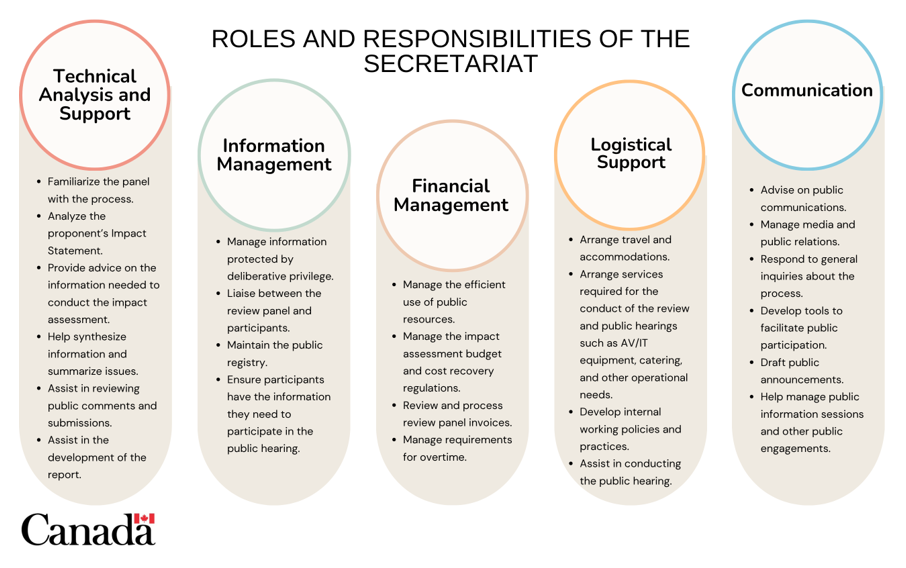
Figure 1: An informational diagram explaining the roles and responsibilities of a review panel secretariat
The infographic titled "Roles and Responsibilities of the Secretariat" shows five vertical sections, each with a colored circle heading and a short list of responsibilities. The Technical Analysis and Support section describes how the Secretariat familiarizes the panel with the process, analyzes the Impact Statement, provides advice, summarizes issues, reviews public input, and supports report development. Information Management covers managing privileged information, liaising between the panel and participants, maintaining the public registry, and ensuring participants have the information they need. Financial Management focuses on managing public resources, overseeing budgets and cost recovery, processing invoices, and handling overtime requirements. Logistical Support includes arranging travel, accommodations, AV/IT services, catering, and other operational needs, as well as assisting with public hearings. Communication involves advising on communications, managing media relations, responding to inquiries, supporting public participation, drafting announcements, and helping deliver public information sessions.
5. Review panel administration
5.1 Review panel terms of reference
5.1.1 Purpose
The roles and responsibilities of each specific review panel will be outlined in its terms of reference. The terms of reference provide the panel with its mandate and authority, and outline the process and timelines to complete the review. The Minister establishes the terms of reference, which at a minimum contain:
- A brief description of the proposed project;
- Scope of assessment and the factors to be considered in the impact assessment;
- Statutory jurisdiction and mandate of the review panel;
- Authority and responsibilities of the review panel;
- Time limit for completing the impact assessment;
- Principles of public and Indigenous engagement and participation; and,
- Process for clarifying or amending the terms of reference.
Participants will be provided with an opportunity to provide comments on the draft terms of reference prior to the establishment of the review panel. The terms of reference will be established in consideration of issues raised by participants and the scope of the assessment set by IAAC during the Planning phase.
The review panel should use the terms of reference as its primary piece of guidance during the impact assessment process. While the review panel has flexibility in its approach, any actions or decisions that the review panel takes must be in line with the direction provided in the terms of reference, the IAA, and any other relevant legislation for review panels conducted in collaboration with regulators or other jurisdictions.
5.1.2 Clarification and amendments
The review panel may require clarification of its terms of reference at some point during the assessment. The terms of reference will outline how the panel should seek clarification or amendment to its terms of reference. For example, the review panel may wish to confirm how it should interpret particular direction in the terms of reference or may ask for the Minister to provide guidance on a particular subject if none is publicly available to the review panel. Generally, if a review panel chooses to seek clarification on its terms of reference, it should do so by way of a letter to the Minister or the President of IAAC. Seeking clarification, and especially amendment, should be a last resort only after internal discussions with the secretariat and/or legal counsel.
5.2 Review panel members
All review panel members share the responsibility of conducting the business of the review panel in a professional, timely, and cost-effective manner. Review panel members are also expected to strive for consensus and to make decisions collaboratively.
All review panel members, including the chairperson, are responsible for:
- Working to ensure that the panel review is impartial, transparent, equitable, unbiased, and free of any conflict of interest;
- Sharing responsibility to conduct review panel business in a professional, collaborative, timely, and cost-effective manner;
- Gaining a detailed understanding of the project, its effects, proposed mitigation measures, and how the Impact Assessment Report contributes to the federal decision-making process;
- Attending and participating in all review panel meetings, public hearings, and other activities, as well as contributing to meaningful discussions of pertinent issues; and,
- Contributing to producing the Impact Assessment Report that addresses the key issues raised in the assessment and meets the requirements of the terms of reference and IAA.
Throughout the assessment, review panel members must demonstrate respect for each other, the secretariat staff, and all participants in the assessment. Review panel members must work in a dignified and transparent manner.
5.2.1 Review panel chairperson
The chair of the review panel has additional responsibilities related to the leadership and management of the assessment conducted by the review panel. It is imperative that the chairperson demonstrate and model a professional and collaborative relationship with the other review panel members and the secretariat.
Administratively, the chairperson is expected to:
- prepare, in consultation with the panel manager, an agenda for all meetings;
- oversee the development and administration of the review panel work plans jointly with the panel manager and in consultation with the review panel members;
- promote an efficient operation that respects the allocated budget and avoids unnecessary expenditures;
- chair the public hearing and any other public events to ensure smooth and efficient proceedings;
- conduct meetings in a democratic and professional manner to enable all review panel members to express their opinions and suggest creative solutions to issues presented before them; and,
- ensure that the review panel’s deliberations maximize the opportunity for consensus building.
It is important that any public events are chaired in a fair, considerate, and efficient manner. During the public hearing, the review panel is exposed to scrutiny and attention from the public and the media. It is the role of the chairperson to demonstrate and set the tone for the review panel’s public persona towards participants in the impact assessment process.
5.3 Internal review panel policies
While the IAA and the review panel’s terms of reference form the legal requirements of the review panel’s responsibilities, the chairperson and review panel members, in cooperation with the panel manager, should develop internal policies and documents to guide their work. This can include developing workplans or communications strategies, outlining how work will be divided and prioritized among the review panel and/or secretariat, as well as mapping out goals and timelines.
5.4 Behavioural expectations
Review panel chairpersons and members must uphold the highest standards of integrity and demonstrate behaviors in the workplace that afford respect, equality, and dignity to everyone they interact with. The Values and Ethics Code for the Public Sector outlines the values and expected behaviors for public servants, including valuing diversity and creating workplaces free from harassment and discrimination. Although not considered to be employees of the public service, review panel members are expected to uphold and respect these values and principles in a positive and active manner.
Review panel members must be unbiased relative to the project prior to their appointment and throughout the course of their official duties. Review panel members need to remain objective and impartial in their conduct of the impact assessment. Review panel members must avoid informal contact with the proponent and participants in the assessment.
5.5 Time limit management
As required by section 37 of the IAA, IAAC will establish the time limit for each review panel to conduct its work. The time limit will be outlined in the review panel’s terms of reference, as well as in a notice posted on the Registry.
The review panel is responsible for managing its process within the time limit established by IAAC. The time limit established for the review panel runs continuously and includes any time taken by the proponent or other parties to provide information. The review panel will need to carefully manage how it uses the time available to it. The secretariat will provide guidance to the review panel on managing the time limit.
5.6 Public registry and the use of information
Under the IAA, IAAC administers the Canadian Impact Assessment Registry Internet Site (the Registry), to facilitate convenient public access to records relating to the assessment. Every project subject to an impact assessment will have its own page on the Registry. Participants can use the Registry to find information relating to impact assessments, how to get involved in an assessment, and applications for available participant funding.
An impact assessment by review panel is a public process. The Registry contains records produced, collected, or submitted as part of the assessment of a proposed project. This includes the panel’s terms of reference, public notices, information, and studies received by the review panel, public comments, hearing transcripts, and the Impact Assessment Report. One exception to information that must be publicly available is information provided in confidence, such as Indigenous Knowledge. However, there must be procedures in place for receipt of confidential information, and a notice on the Registry that confidential information has been received.
The review panel, with secretariat support, is responsible for posting information on the Registry. In addition, the information posted to the Registry must be read by the review panel members and given consideration in its deliberations.
5.7 Remuneration
The IAA provides IAAC with the authority to recover from the proponent certain costs incurred over the course of an impact assessment referred to a review panel. IAAC recovers costs from the proponent as authorized by the Cost Recovery Regulations which outline the relevant time periods, services, and amounts eligible to be recovered by IAAC.
Remuneration costs and travel expenses related to the exercise of the responsibilities of members of a review panel are subject to cost recovery. Review panel members are responsible for providing monthly invoices of their expenses to the panel manager. Review panel members can collect remuneration at a rate of $650 per day for the chairperson, and $500 per day for the review panel members. If appointed to an integrated review panel with the CER or the CNSC, the rate of remuneration may vary.
For travel expenses, review panel members must claim the rates provided within the National Joint Council Travel Directive.
6. Conduct of the impact assessment
For integrated or joint review panels, the conduct of the impact assessment would be established in consultation with the other jurisdiction or lifecycle regulator and may vary from what is described in sections 6.1 – 6.9 below.
6.1 Orientation
During orientation it is essential that the review panel members familiarize themselves with, and understand, the project as well as the review panel’s terms of reference. It is imperative that all review panel members review all the material on the Registry for the proposed project, especially the impact statement and associated submissions and comments.
The secretariat will provide an orientation for the review panel on the project, the IAA and associated regulations and guidance, administrative tribunals, and avoiding any conflict of interest. The secretariat may also organize cultural training sessions with relevant Indigenous groups, as well as training with federal authorities or other relevant experts. As part of its orientation, the review panel may also visit the project site.
The review panel and secretariat can explore other relevant training opportunities that would support the panel’s understanding of the proposed project and/or the impact assessment process.
6.2 Public participation
Public participation is a defining feature of the review panel process, and the integration of the public’s views is an important aspect of the review panel’s work. Participants’ contributions can help inform project design, lead to better outcomes, and assist with follow-up and monitoring. The review panel must ensure that it provides the opportunity for the public to provide input into the assessment. Methods for public participation are flexible, innovative and consider the assessment context and legislated timelines. The panel must also display inclusivity and be open to diverse participants.
6.3 Engagement with Indigenous Peoples
Indigenous peoples have a unique role in the Crown’s assessment of the impacts of major projects. The IAA recognizes the special Constitutional relationship between the Crown and Indigenous peoples and the perspectives and interests they bring to the process. Given Indigenous Peoples’ unique connection to, and constitutionally protected interest in their lands, participation of Indigenous Peoples in impact assessment must extend beyond the requirements of public participation.
6.3.1 IAAC’s commitment to Indigenous Peoples
IAAC seeks to work with Indigenous Peoples in a way that advances reconciliation, respects the rights and culture of Indigenous Peoples, and protects and ensures consideration of Indigenous Knowledge.
IAAC commits to build and strengthen partnerships with Indigenous groups, including opportunities to collaborate and maximize Indigenous leadership in impact assessments. IAAC uses a model of consultation and engagement with Indigenous Peoples that reflects the Government of Canada’s commitment to implementing the United Nations Declaration on the Rights of Indigenous Peoples and advancing reconciliation through a renewed, nation-to-nation, government-to-government and Inuit-Crown relationship based on the recognition of rights, respect, cooperation, and partnership.
6.3.2 Review panel responsibilities
The review panel is expected to work with Indigenous Peoples in a manner that respects IAAC and the Government of Canada’s commitments. The review panel members should familiarize themselves with IAAC’s Reconciliation Framework and Guidance: Indigenous Participation in Impact Assessment.
The IAA requires the Impact Assessment Report include an assessment of project impacts on the exercise of Indigenous rights and interests and an assessment of potential adverse effects on Indigenous Peoples, including adverse effects on the current use of lands and resources for traditional purposes, physical and cultural heritage, and health, social and economic conditions of Indigenous Peoples. The assessment should be conducted to the extent possible in collaboration with potentially impacted Indigenous groups.
The review panel will be responsible for conducting the assessment in a way that respects the concept of cultural safety (see figure 2).
A culturally safe approach to working with Indigenous groups involves a review panel creating a consultation and engagement process that is respectful and appropriate to the unique Indigenous groups in the project area. Review panel members should refrain from making assumptions about Indigenous groups’ preferred means of participating in the assessment and endeavor to create a process that, to the extent that it can, reflects the views of the individual communities. Where possible, the review panel should seek opportunities to participate in cultural training with Indigenous groups to better understand their histories, protocols, communication preferences and styles, lived realities, priorities, and cumulative impacts experienced to date.
The review panel should reach out to First Nations, Métis, and Inuit groups to confirm what terminology is most respectful to use in project specific work and documents. IAAC uses the terms Indigenous group and Indigenous Peoples; however, these terms can be changed to terms such as Indigenous communities and Indigenous Nations as requested.
The review panel should make efforts to hold information sessions or public hearing sessions in-person, in the communities that request them. When working with Indigenous groups for a community event, the review panel should inquire whether there are any cultural protocols that should be followed, and work to ensure that there is a common understanding of what is required to create a culturally safe space for the Indigenous group. The review panel should also consider any requests for translation into Indigenous languages and view it as a key component of the assessment process, whenever possible.
When seeking information from Indigenous groups, the review panel should be flexible in how information is received and should consider accepting videos, pictures, food, cultural and/or ceremonial items, or information shared orally by knowledge holders. The review panel should develop confidentiality procedures for working with and receiving confidential Indigenous Knowledge, using guidance from IAAC and/or other assessment partners. Throughout the assessment, the review panel should request clarification directly from Indigenous groups if there are questions or concerns about understanding or receiving Indigenous Knowledge.
Figure 2 provides review panel members some guidance on what considerations to keep in mind when working with Indigenous Peoples on an impact assessment. The review panel will be guided through its terms of reference as well as IAAC policy and guidance, to work with Indigenous Peoples in a way that creates culturally safe spaces for Indigenous voices and perspectives on the potential impacts of the designated project on Indigenous rights and interests.
Figure 2: From the Common Definitions on Cultural Safety: Chief Public Health Officer Health Professional Forum
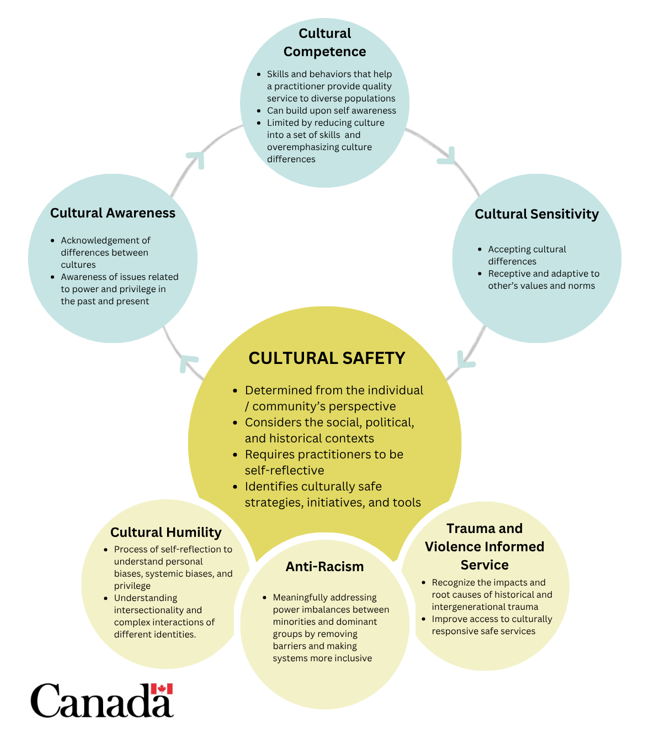
Figure 2: From the Common Definitions on Cultural Safety: Chief Public Health Officer Health Professional Forum
A circular infographic shows Cultural Safety at the center, described as being defined by individuals or communities, considering social and historical contexts, requiring practitioner self-reflection, and guiding culturally safe strategies. Surrounding it are six connected circles: Cultural Competence (skills for working with diverse populations and limits of skill-based approaches), Cultural Sensitivity (accepting and adapting to cultural differences), Trauma and Violence Informed Service (recognizing impacts of trauma and improving access to safe services), Anti-Racism (addressing power imbalances and removing systemic barriers), Cultural Humility (self-reflection on biases and intersectionality), and Cultural Awareness (recognizing cultural differences and issues of power and privilege.
6.4 Sufficiency of information
The review panel will be responsible for determining if it has sufficient information to conduct the impact assessment and hold the public hearing. The review panel should consider if the information available is sufficient to support meaningful discussion of the issues at the public hearing. While conducting its sufficiency review, the panel can follow a process it deems appropriate. The panel may also reach out to participants or the proponent to ask questions or seek additional information.
It is critical that the review panel focuses on the information it has identified as most important for conducting the assessment and meeting the requirements of its terms of reference. If the review panel determines that the information it has is not sufficient, it should direct the proponent, publicly and in writing, to provide the missing information before proceeding to the public hearing. This additional information will then be made available for review by the public, and the review panel will determine whether it now has sufficient information to proceed to the public hearing. Because the time limit includes the time taken by the proponent or other parties to provide information, when requesting additional information, it is good practice that the review panel indicate clearly how much time is available for the party to provide a response.
There may be cases where the project design may change after the submission of an impact statement. If the review panel concludes that the change in the project design falls outside the project scope, as described in the review panel’s terms of reference, or that the changes will require substantial additional time to analyze the effects, the review panel must inform the Minister of this and seek direction.
6.5 Use of independent technical experts
The review panel should depend, as much as possible, on its own technical expertise and that of the participants in the impact assessment. The review panel can direct questions or information requests to governmental authorities and other participants and experts; any such requests must be posted on the Registry. Any advice received forms part of the public record.
In addition, the review panel may consider retaining the services of independent experts to provide advice on certain subjects within the review panel’s terms of reference. If the review panel is interested in hiring independent experts, the panel should commence the process as early as possible.
The review panel should consider hiring technical experts only when advice from such experts is regarded as essential in responding to its terms of reference and where the review panel is satisfied that the required expertise cannot be obtained within the public service. These individuals should be hired only for the purpose of advising on the adequacy of core information provided to the review panel by the proponent, or to provide another opinion on a key subject where there is significant disagreement among experts. Experts must not be engaged to conduct original research or to complete the impact statement.
Experts could also be used to provide the review panel with an orientation on certain subjects. This could include providing a workshop for the review panel and participants on a highly specialized subject relevant to the project. Any such orientation materials or presentations should be made publicly available.
The list of experts retained by the review panel will be made public by the review panel. All documents obtained or created by the experts must be made publicly available upon receipt by the review panel, except for information subject to solicitor-client privilege. The expert(s) will likely be expected to participate at the public hearing.
6.6 Public hearing
Once a review panel determines that it has adequate information to proceed to a public hearing, it must issue a hearing notice prior to the commencement of the hearing within the minimum period of notice identified in the terms of reference. The hearing is the main opportunity for Indigenous groups, participants and members of the public to raise issues and convey their views about the project to the review panel.
The objective of the public hearing is to provide opportunities for:
- the proponent to explain the designated project and respond to concerns and questions raised by participants;
- participants to provide their views and seek clarification on the likely effects of the designated project; and,
- the review panel to ask questions and gain clarity on any outstanding issues in order to complete its assessment of the likely effects of the designated project.
The review panel’s responsibility is to hear the information and conduct the hearing in a manner that promotes a thorough examination of relevant issues and encourages participation and input from participants. In advance of the hearing, the review panel should develop and release hearing procedures which provide direction to participants on participating in the public hearing. Where feasible, the review panel should be flexible and willing to adjust hearing procedures and logistical considerations as requested by Indigenous groups.
The public hearing should follow a fair and orderly process but should also be as flexible and informal as possible. The review panel is generally not bound by the strict rules of procedure and evidence applicable to judicial proceedings; however, procedures and formality may vary if there is a partner jurisdiction. Some partner jurisdictions and lifecycle regulators are quasi-judicial tribunals or courts of record and often have more formal hearing proceedings. In these cases, the panel terms of reference or a project-specific joint review panel agreement will describe how the federal and quasi-judicial procedures will function. The participation of legal counsel during the public hearing is generally minimal for federal review panels but, may vary if the assessment is being conducted with a jurisdiction that holds more formal, court-like proceedings.
The public hearing is to be public unless the panel is satisfied that "specific, direct and substantial harm would be caused to the witness" (subsection 35(3) of the IAA) by the disclosure of certain evidence. In rare circumstances, a review panel may choose to hold a closed, confidential hearing session to avoid such harm.
If necessary, the review panel has the power to summon any person to appear as a witness before it (subsection 53(1) of the IAA). The witness can be compelled to give evidence orally or in writing, or to produce any records and other things that the panel considers necessary for conducting the impact assessment of the project.
6.7 Types of hearing sessions
The IAA requires the review panel to hold hearings but provides discretion to the panel to determine the appropriate manner of hearing. There are different types of hearing sessions that can be held to facilitate public participation, accessibility, cultural sensitivity, and/or topic-specific and focused discussions. The review panel can incorporate some or all types of sessions into the hearing schedule, time permitting. The format of the public hearing will largely depend on the location of the project, the nature of the impacts, and who is participating in the assessment. Specific requests or requirements of the proponent, Indigenous groups, government departments, and the public should be taken into consideration.
Typically review panels hold a combination of community sessions, general sessions, and/or technical sessions. All sessions are generally open to the public and a transcript and other records are kept.
6.7.1 Community hearing session
Community sessions are designed to encourage participation of people living in or adjacent to the area potentially affected by the project. Presentation priority is given to local residents and pre-registration is usually optional. Generally, community sessions are more informal and community members are able to make presentations to the review panel on any matters within the scope of the review.
Community hearing sessions can also include sessions in Indigenous communities. These sessions provide an opportunity for Indigenous Peoples and experts to share their views and experiences related to the project directly with the review panel. Indigenous community hearing sessions should be set up in a time and place that creates a culturally safe hearing environment.
6.7.2 General hearing session
General hearing sessions provide the opportunity for the proponent and participants to make presentations to the review panel on any aspect (both technical and non-technical subjects) within the scope of the panel review. They also provide the opportunity for participants to question the information submitted during the assessment. At these hearing sessions, the review panel may also designate certain times and dates for the discussion of specific issues.
6.7.3 Technical hearing session
Technical hearing sessions provide an opportunity for participants who possess specialized knowledge or expertise in a specific topic to present information on the potential environmental and other effects of the project to the review panel. The specific topic for each technical session is identified in the hearing schedule. Not all technical topics will necessarily require a technical hearing session.
6.7.4 Virtual hearing
The panel should consider holding the public hearing in a manner that combines both an in person and virtual approach. Public hearings can, and have been, held over virtual meeting platforms as well as in a hybrid format. The panel may consider whether a virtual or hybrid hearing provides a more convenient or cost effective method for facilitating participation from various locations. In doing so, the panel should give careful consideration to existing internet infrastructure and bandwidth, and whether virtual hearings are likely to reduce, or improve, accessibility in Indigenous and remote communities.
6.8 Report writing
Following the close of the hearing, the review panel must draft its Impact Assessment Report.
The report must set out the rationale, conclusions and recommendations of the review panel relating to the impact assessment of the project, including any mitigation measures and follow-up program, and a summary of the comments received from Indigenous groups and the public. All recommendations must respond clearly and directly to issues and information requirements set out in the review panel’s terms of reference. In its report, the review panel must indicate, from among the effects set out in the report, those that are adverse federal effects and specify the ones that are likely to be significant and the extent to which they are significant. The review panel must also include conclusions and recommendations related to the project impacts on the exercise of Indigenous rights. It is important to note that the review panel’s recommendations can be implemented only within the constitutional and legislative capabilities of the governments to which they are addressed or technically and economically feasible mitigation measures that IAAC can turn into conditions for proponents.
The report must reflect the views of each member of the review panel. Consensus among review panel members is highly encouraged. However, if one or more members of the review panel disagree with the conclusions and recommendations of the majority (in whole or in part) the report must also reflect that position so that the review panel members can all sign the report.
The review panel must also submit with its report an executive summary in both official languages of Canada. The review panel should consider any requests made by Indigenous Peoples to have the executive summary of the report translated into Indigenous languages. If the review panel agrees to such a request, IAAC must endeavor to provide translation services in a timely manner.
Once complete, the review panel will submit the Impact Assessment Report to the Minister. It is the Minister’s responsibility to make the report public and advise all parties, including the proponent, of its availability.
6.9 Post report submission
Following submission of the Impact Assessment Report to the Minister, the review panel’s work is generally complete, but the review panel is not yet disbanded. The IAA allows for the Minister to seek clarity on the Impact Assessment Report or conclusions, so review panel members should be prepared to act should that situation arise. It is possible that the Minister could ask for clarification anytime following receipt of the Impact Assessment Report until a decision is made on the project.
Review panel members are expected to continue to protect the deliberative privilege of the review panel after submission of the report and issuance of a decision. Review panel members must refrain from speaking publicly about the report and must allow the content and conclusions of the report to speak for itself.
After the review panel submits its Impact Assessment Report, IAAC will likely conduct interviews with the review panel members to request that they provide feedback on the assessment process and the work of the panel and secretariat. Information gathered in these interviews will remain confidential and be used to make improvements for future review panels.
Once the Minister has issued a decision statement for the designated project, the work and mandate of the review panel are officially complete, with the exception of integrated review panels. An integrated review panel will reconvene and make the licensing decision that was considered as part of the assessment, should the project be approved under the IAA.
The review panel will be formally disbanded by way of a letter to each review panel member from the President of IAAC.