
2025 Annual Report
© His Majesty the King in Right of Canada, represented by the Minister of National Defence, 2026.
Cat. No. DG1-1E-PDF
ISSN 2368-9986
Annual Report 2025
Table of contents
Message from the Chairperson and Chief Executive Officer

Kelly Walsh
Chairperson and Chief Executive Officer
I am pleased to present the 2025 Annual Report of the Military Grievances External Review Committee (Committee). This past year marked a period of purposeful transformation, as the Committee advanced an ambitious agenda, focused on responsiveness in an era of significant institutional change.
In 2024, I set a renewed vision for the Committee, to embody a modern and agile quasijudicial tribunal that instills confidence in the Canadian Armed Forces (CAF) grievance system through the independent review of grievances. In 2025, we accelerated our efforts to align with this vision, undertaking a coordinated program of change that strengthened operational performance, enhanced service delivery, and built institutional resilience.
The pace and scope of this work required meaningful adaptation across the Committee. Our employees demonstrated exceptional agility and commitment in embracing new approaches to reviewing grievances and contributing to significant improvements in caseload management. In 2025, we completed 394 Findings and Recommendations (F&R) reports, the highest number issued in a single year. We achieved a clearance rate of 153%, and reduced our active portfolio by 34%, from 431 cases at the start of the year to 285 by year-end. The average age of active files declined from 10.8 months to 8.3 months. This measurable progress reflects the unwavering dedication of our staff and a shared organizational commitment to excellence.
At the same time, we strengthened our performance measurement by updating our Departmental Results Framework to align with newly established service standards. This work included the development of revised performance indicators that will support enhanced performance oversight, reinforce accountability, and enable evidence-based decision-making beginning in April 2026.
These efforts coincided with our organization’s 25th anniversary, an important milestone that provided an opportunity to reflect on our evolution as an independent administrative tribunal. The anniversary was marked by a commemorative event attended by the Chief of the Defence Staff (CDS), members of the CAF leadership team, formers Chairs and Members as well as all currently serving Committee personnel. The success of this event affirms the strength of our sustained institutional relationships and the continued confidence placed in our independent review function.
Finally, we looked towards the future through initial strategic investments in the exploration of emerging technologies, including Artificial Intelligence (AI). Embracing innovation responsibly and supporting the modernization of internal tools and processes is a fascinating area of development with great potential to enhance our capacity and improve the efficiency of our independent review program over time.
Together, the improvements advanced in 2025, along with a continued commitment to innovation and expertise, position us to meet current operational demands while strengthening our ability to adapt to future requirements within the CAF grievance system. I look forward to continuing this renewed focus and momentum in 2026.
Kelly Walsh
Chairperson and Chief Executive Officer
About the Committee
Mandate
The Military Grievances External Review Committee (the Committee) is an independent administrative tribunal reporting to Parliament through the Minister of National Defence. The Committee reviews military grievances referred to it pursuant to section 29 of the National Defence Act (NDA), and provides F&Rs to the CDS and the CAF member who submitted the grievance.
Since beginning operations in 2000, the Committee has been an integral but external and independent component of the CAF grievance system. The CDS is the final decision-maker and is not bound by the Committee’s F&Rs. In any case where the Committee’s F&Rs are not accepted, the CDS must provide the reasoning in writing.
The Committee’s F&Rs provide the CAF with an external and independent perspective on a variety of issues associated with the administration of the CAF. This perspective adds transparency, fairness and strengthens the confidence of members in the CAF grievance system and ultimately, their confidence in the institution.
Vision
The Committee will be a modern and agile quasi-judicial tribunal, that instills confidence in the CAF grievance system through its independent review of grievances.
The Work, the Workforce and the Expenditures: A Snapshot
Work
- 258 Grievances received in 2025
- 394 Findings and Recommendations reports issued in 2025
- 79 Parliamentary enquiries completed in 2025
Workforce
- 46 Full-time employees
- 5 Committee Members
Expenditures
- $6,513,373 for salaries, wages and other operation costs
- $1,109,100 for contributions to employee benefit plans
- $1,017,104 for other operating expenses
- $8,639,577 Total expenditures
Operating context
Throughout its history, the Committee has established a solid reputation for producing high quality F&Rs, based on thorough analysis and independent review. It is proud to have the respect and appreciation of both the CAF members and CAF authorities, namely the decisionmakers at the Final Authority (FA) stage in the grievance process.
To continue to flourish as a high-performing, modern and agile quasi-judicial tribunal, the Committee – a micro-organization of approximately 50 employees – must constantly focus on its human resource capacity, its infrastructure and its operations.
Internal
The Committee's internal operating context reflects the strength of its processes and corporate knowledge. At the grievance review level, the organization has robust, agile processes flexible enough to withstand the fluctuations in the volume of referred grievances. In terms of human resources, the Committee deals with staff turnover like any organization. It must remain competitive and at the forefront of best practices in talent acquisition, onboarding employees, and, above all, in employee retention.
The Committee enjoys a positive work environment. Employees have expressed satisfaction with their work-life balance, which continues to improve thanks to an excellent virtual environment that promotes mobile, collaborative and remote working.
External
As a demand-driven organization, the Committee does not control the volume of grievances referred for its independent review. Additionally, the Committee does not have any control over the staffing of Governor in Council (GIC) Member appointments. These two realities place significant pressure on the Committee’s ability to deliver on its mandate.
By adopting a continuous improvement philosophy, the Committee benefits from the intellectual capacity of its staff to deliver results in challenging circumstances. The net effect provides the resilience needed to deal with uncertainty while remaining fixed on our core output – quality and timely F&R reports.
Structure
The Committee consists of independent Committee Members appointed by the GIC, who are responsible for reviewing grievances and issuing F&R reports. This high-level appointment process ensures the Committee remains independent from the Department of National Defence and the CAF and empowers the Committee to provide fair, impartial, timely, and expert review of military grievances. Under the NDA, the GIC must appoint a full-time Chairperson and at least two Vice-Chairpersons. In addition, the GIC may appoint any other Committee Members that the Committee may require to carry out its functions. Appointments are for up to four years and can be renewed.
Information about GIC appointments can be found at Governor in Council appointments.
The Committee Members work with a team of specialists consisting of Legal Counsels, Team Leaders, Grievance Officers and a Registrar who provide detailed analysis and advice on a wide range of issues. The Committee’s Corporate Services team offer the following services: acquisitions, management and oversight services, communications services, human resources management, financial management, information management, information technology, real property, material, travel and other administrative services.
Organizational chart
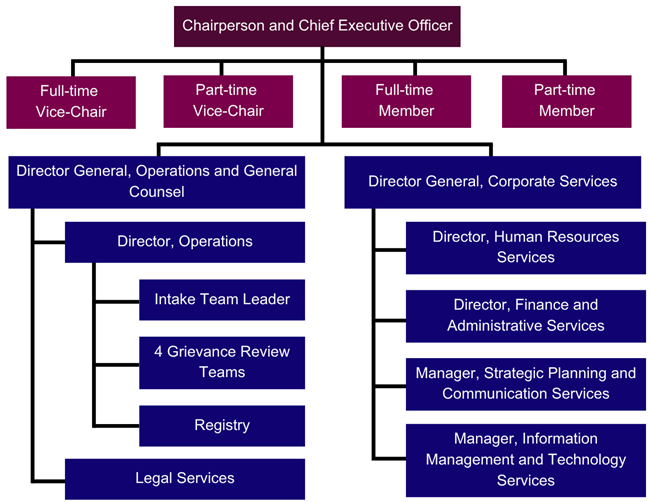
Text description
1 Chairperson and Chief Executive Officer
1 Full-time Vice-Chair, 1 Part-time Vice-Chair, Full-time Member, Part-time Member
1 Director General of Operations and General Counsel, with 1 Director of Operations, 1 Intake Team Leader, 4 Grievance Review Teams, the Registry team and the Legal Services team
1 Director General of Corporate Services, with 1 Director of Human Resources Services, 1 Director of Finance and Administrative Services, 1 Manager of Strategic Planning and Communication Services, 1 Manager of Information Management and Technology Services
Grievance process
Canadian Armed Forces grievance process
The National Defence Act gives serving CAF members the right to make a formal complaint called a "grievance" about any decision, act or omission which affects them personally and results from service in the CAF. The CAF grievance process consists of a two-level system established under the NDA.
Level I: Review by the Initial Authority (IA)
Step 1: The grievor submits a grievance in writing to their Commanding Officer (CO) within 90 days of the ocurrence or when they reasonably should have known about it.
Step 2: The CO acts as the IA if they can grant the redress sought. Otherwise, the Canadian Forces Grievance Authority assigns an appropriate IA. Should the grievance relate to a personal action or decision of an officer who would otherwise be the IA, the grievance is forwarded directly to the next superior officer who is able to act as IA.
Step 3: The IA renders a decision and, if the grievor is satisfied, the grievance process ends. The IA has four months to provide a written decision to the grievor. If the IA has not rendered a decision within that initial four-month period, the grievor can elect to have their grievance forwarded directly to the second level of review, without an IA decision.
Level II: Review by the Final Authority (FA)
A grievor, who is dissatisfied with the IA’s decision, is entitled to have their grievance reviewed by the FA, which is the CDS or their delegate.
Step 1: The grievor submits their grievance to the CDS (or their delegate) for FA-level consideration and determination within 90 days of receiving the IA's decision.
Step 2: Depending on the subject matter of the grievance, the CDS may be obligated to, or may at their discretion, refer it to the Committee. If the grievance is referred for consideration, the Committee conducts a review and provides its F&R report to the CDS and the grievor. Ultimately, the FA makes the final decision on the grievance and although not bound by the Committee's recommendations, it must provide a written explanation if they disagree with the F&Rs.
Committee grievance process
The Committee’s internal review process consists of three steps: grievance intake, review and analysis, and the drafting of F&R reports.
1. Grievance intake
Upon receipt of a grievance, the grievor is contacted and invited to submit additional comments or other documents relevant to their case. The grievance file is reviewed for completeness and additional information or documents required for the Committee’s review are gathered and added to the grievance file for the Committee Member’s consideration.
2. Review
The assigned Committee Member holds a case conference where the grievance is reviewed and the issues are identified and discussed. If necessary, additional documentation is obtained and added to the file, and subsequently disclosed to the grievor. Although rare, it is possible a hearing may be held.
3. Findings and Recommendations
The Committee Member issues an F&R report, which is then sent simultaneously to both the CDS and the grievor. At this point, the Committee no longer has jurisdiction over the grievance. The grievor receives a final decision directly from the FA.
Types of grievances referred to the Committee
1) Mandatory referrals
Mandatory referrals include all grievances relating to one or more of the following matters and must be referred to the Committee for an independent review:
- Administrative action resulting in the forfeiture of or deductions from pay and allowances, reversion to a lower rank or release from the Canadian Forces;
- The application or interpretation of Canadian Forces policies relating to the expression of personal opinions, political activities, candidature for office, civil employment, conflict of interest and post-employment compliance measures, harassment or racist conduct;
- Pay, allowances and other financial benefits;
- The entitlement to medical care or dental treatment; and
- Any decision, act or omission of the CDS in respect of a particular officer or noncommissioned member.
See article 7.21 of the Queen’s Regulations and Orders for the Canadian Forces which sets out the types of grievances that must be referred to the Committee once they reach the FA level.
2) Discretionary referrals
Under subsection 29.12 (1) of the NDA, the CDS may refer any other grievance to the Committee if they feel the case would benefit from an external, independent review.
2025 AT A GLANCE
The Program: Independent Review of Military Grievances

Vihar Joshi
Director General of Operations and General Counsel
Message from the Director General of Operations and General Counsel
For the Committee, 2025 represented a pivotal period of assessment and reflection. Building on the previous year’s journey of renewal, we focused on planning for future sustainability by updating our departmental results, performance indicators, and service standards. This modernization effort included the development of four new indicators, which received approval from the Treasury Board Secretariat. This new framework, set to take effect on April 1, 2026, ensures that our performance remains measurable and aligned with our core mandate.
Optimizing the Grievance Review Process
Through process review, we identified opportunities to improve the efficiency of our core program. In April, we made significant strides in realizing these process efficiencies as we piloted a streamlined version of our grievance review process, specifically targeting a reduction in the time required to draft F&R reports. A key component of this initiative was the creation of a new Intake Team Leader role. Ensuring file completeness before assignment and conducting impact analyses of FA decisions has helped alleviate administrative bottlenecks and provided our Operations team with the critical information to review their grievance files with minimal delays. Feedback sessions held throughout the year confirmed the success of these changes, and we are moving to formalize this new grievance review process in early 2026.
Every initiative implemented this year serves a singular purpose: to maximize grievance analysis efficiencies within our current process and resource levels. The impact of these improvements, supported by temporary funding to augment our Operations team, is clearly reflected in this year’s operational data:
- Referrals and Completions: In 2025, we received 258 grievance referrals and issued 394 F&R reports.
- Clearance Rate: We achieved a notable clearance rate of 153%, successfully closing significantly more cases than were received.
- Caseload Reduction: By year-end, our active portfolio was reduced to 285 cases, down from 431 at the start of the year; a reduction of 34%.
- Timeliness: The average age of active files dropped from 10.8 months to 8.3 months.
Additionally, grievor survey results received in 2025 highlighted the following:
- 83% of respondents answered that it was essential that their grievance be reviewed by an independent body prior to a decision being made by the FA. This underscores the crucial role that the Committee plays in the CAF grievance system.
- 89% of respondents indicated that the Committee’s F&R report was clear and easy to understand.
- 57% of respondents felt that the review of their grievance was completed in a reasonable amount of time. The Committee understands the importance of timely grievance reviews and that is why it has made significant changes to ensure a more efficient completion of F&R reports.
These results underscore the success of our process optimizations and demonstrate that our additional temporary investment in full-time equivalents (FTEs) was vital to reducing our caseload and improving the timeliness of grievance file reviews. However, given that the temporary funding in place is set to sunset at the end of 2026 and decisions regarding future funding remain pending, our ability to sustain our 2025 productivity levels will ultimately depend on the resources available. A reduction in funds leads directly to a reduction in FTEs, which will inevitably impact the volume of files we can review. To ensure continuous improvement, we also began refining our F&R format to align with judicial best practices and provided staff with targeted training in digital competencies as we strive to remain a modern, agile workplace.
Strengthening Stakeholder Collaboration and Outreach
Maintaining transparent and collaborative relationships with stakeholders remained a priority of the Committee’s work in 2025. We established a formal outreach calendar to ensure consistent engagement with the CAF. This included bilateral meetings with the Director General Canadian Forces Grievance Authority staff to remain current on evolving policies. Furthermore, the implementation of quarterly meetings with the CAF Ombuds has fostered a deeper understanding of systemic issues within the military community.
This proactive outreach serves to promote the value of our independent role while ensuring that the CAF grievance system operates as effectively as possible. The advancements made this year will enable us to continue strengthening confidence in the fairness and integrity of the grievance process for all CAF members.
Vihar Joshi
Director General of Operations and General Counsel
Active Caseload: A Snapshot
This section of the Annual Report provides an overview of the Committee’s active case reduction efforts undertaken throughout this year, and the record-breaking number of completed F&R reports delivered to the FA and grievors.
How many active cases where in the Committee's portfolio and what was their average age?
| As of January 1, 2025 | As of December 31, 2025 | |
|---|---|---|
| Number of active cases in the Committee's portfolio | 431 | 286 |
| Average age of active cases in the Committee's portfolio (in months) | 10.8 | 8.3 |
This resulted in a caseload reduction of 34% by the end of 2025, and a clearance rate of 153%.
Statistics
How many grievances did the Committee receive and how many F&R reports did the Committee complete?
| 2023 | 2024 | 2025 | |
|---|---|---|---|
| Grievances received from the CAF | 168 | 341 | 258 |
| F&R reports delivered to the CAF and grievors | 215 | 208 | 394 |
How many active grievances did the Committee have in its portfolio at the end of the year and how many were awaiting an FA decision?
| 2023 | 2024 | 2025 | |
|---|---|---|---|
| Active grievances awaiting an F&R report from the Committee | 315 | 445 | 286 |
| Grievances awaiting an FA decision after the F&R has been issued | 439 | 455 | 360 |
What is the average number of months to review a grievance at the Committee?
| 2023 | 2024 | 2025 | |
|---|---|---|---|
| From the date received at the Committee to the date the F&R report was delivered to the CAF | 16.3 | 18.2 | 18.1 |
| From the date assigned to a team to the date the F&R report was delivered to the CAF | 9.7 | 9 | 9.6 |
What category of grievance referrals did the Committee receive?
| 2023 | 2024 | 2025 | |
|---|---|---|---|
| Careers | 50% | 23% | 26% |
| Harassment | 9% | 11% | 19% |
| Medical and dental care | 2% | 4% | 1% |
| Others | 2% | 1% | 1% |
| Pay and benefits | 33% | 54% | 43% |
| Releases | 3% | 7% | 10% |
Note: Totals may not add to 100% due to rounding.
How many mandatory and discretionary grievance referrals did the Committee receive?
| 2021 | 2022 | 2023 | 2024 | 2025 | |
|---|---|---|---|---|---|
| Mandatory referrals | 189 (58%) | 273 (79%) | 157 (93%) | 334 (98%) | 239 (93%) |
| Discretionary referrals | 138 (42%) | 72 (21%) | 11 (7%) | 7 (2%) | 19 (7%) |
Note: Totals may not add to 100% due to rounding.
Impact in Action: Systemic Issues and Observations Raised by the Committee
Through its independence and its core mandate of grievance review, the Committee is uniquely positioned to identify significant and recurring grievance subjects of concern and bring them to the attention of the CAF Chain of Command by way of either observations or systemic recommendations. This allows the CAF to have increased visibility on problem areas and leverage external advice on how they could potentially be resolved. In 2025, the significant issues that were raised with the CAF included:
Overpayment and remissions
In several grievance files where the CAF initiated the recovery of overpayments, the Committee observed a recurring pattern in which recovery actions were applied automatically once an overpayment was identified. The Committee noted that this practice is problematic, as it effectively bypasses seeking a remission of debt, which is an important recourse intended to prevent undue hardship or unfairness, and may apply when specific criteria are met. By proceeding with an automatic recovery, the CAF risk depriving members of an option to mitigate the consequences of errors beyond their control.
The Committee also emphasized that in many files, accountability for the overpayment was placed entirely on the grievor. Little or no examination was conducted into whether the overpayment arose from administrative mistakes, procedural deficiencies, or failures of internal controls within the CAF’s pay systems. As a result, members had to repay for overpayments even when the errors stemmed from institutional shortcomings rather than personal actions. This approach not only raises fairness concerns but undermines the confidence in the transparency of the CAF’s administrative processes.
Given these observations, the Committee recommended that the CAF establish a formal review mechanism to assess all relevant circumstances before initiating any recovery action. Such a mechanism should evaluate the origins of the overpayment, the member’s level of responsibility, the potential applicability of debt remission, and any impacts on the member’s financial well‑being. The Committee further recommended that all ongoing recovery actions be suspended while the review is being conducted. This safeguard would ensure that members are not subjected to premature or unjust financial recovery and that all considerations are fully examined prior to any final decision.
Policy interpretation at the unit level
The Committee has reviewed numerous compensation‑related grievances in which the application of policy differed significantly from how CAF units interpreted or understood that policy. These discrepancies often resulted in members receiving inaccurate information and, in some cases, experiencing the maladministration of their compensation and benefits. Such situations illustrate a systemic challenge: unit‑level administrators frequently rely on interpretations that may not align with the intent or precise wording of the governing policies.
This issue has, for instance, been noticed in cases involving Reserve Force – Compensation (RFC) during a period of injury, disease or illness. The Committee observed that the circumstances leading to RFC claims can vary widely, which can make it difficult for units to determine how the policy, specifically Compensation and Benefits Instructions 210.72, is meant to be applied. As a result, members sometimes encounter inconsistent determinations about their entitlements or denials that stem from misunderstandings rather than from the policy itself.
Given these recurring issues, the Committee noted the importance of ensuring that units have timely and accurate access to authoritative policy guidance. To prevent misinterpretation and ensure fair and consistent administration of benefits, the Committee advised that the CAF adopt a more proactive approach: specifically, units should consult the policy administrator to confirm their interpretation in relation to the facts of the case, rather than relying solely on internal interpretations or precedent. This would help ensure that both unit-level administrators and CAF members are properly informed and supported, reducing avoidable errors and strengthening confidence in the compensation system.
Compensation policy implementation and communication strategy
The Committee has reviewed numerous grievance files where the implementation of compensation and benefits policies was not sufficiently planned, coordinated, or communicated across the CAF. Examples include implementation of the revised maternity and parental allowance framework, pilot pay framework, and special forces and search and rescue specialist pay framework. These deficiencies often led to inconsistent application of entitlements and misunderstandings among members. In several cases, the absence of a structured implementation plan resulted in disparities within occupations, ranks and units, ultimately contributing to reduced morale, delayed career progression, and challenges related to retention. The Committee also noted that the absence of a coordinated communication strategy has led to the perception, if not the reality, of inequity.
The Committee observed that when policy changes are implemented without being clearly communicated in a timely manner, some members benefit from the prompt and accurate application of new benefits while others, doing similar work under similar circumstances, experience delays or denials due solely to differences in how information is shared and interpreted.
The Committee recommended that the CAF proceed with better planning and communication when implementing revisions to the compensation and benefits frameworks.
To explore summaries of grievance cases reviewed by the Committee, including systemic recommendations made to the CAF, please visit our website.
Corporate Services

Miguel Adam
Director General of Corporate Services and Chief Financial Officer
Message from the Director General of Corporate Services and Chief Financial Officer
2025 was a landmark year for the Committee, and I am honored to have been nominated as Director General of Corporate Services and Chief Financial Officer during this period of transformation. Over the past twelve months, Corporate Services worked closely with the Operations Branch, supporting their evolution by ensuring they were equipped with the tools, technology, and assist needed to fulfil our mandate.
The Corporate Services Branch includes employees that support the needs of the Committee’s program: the independent review of military grievances and other corporate obligations of the organization. Our Branch is comprised of four teams:
- Human Resources;
- Finance, Security and Administrative Services;
- Information Management and Information Technology Services; and
- Strategic Planning and Communications Services.
Together, these teams played a central role in advancing the Committee’s corporate agenda in 2025. Their combined efforts laid the groundwork for continued progress in employee development, wellness and engagement, reconciliation, equity and inclusion, technology innovation, and the redefinition of organizational priorities and objectives.
Equipping Employees to Deliver
In 2025, notable progress was achieved in recruiting, developing and retaining diverse talent at all levels and creating succession plans for key positions. This included hiring employees from specialized Employment Equity (EE) inventories and putting an Information Services classification development plan in place. Most notably, we launched our own Leadership Program for managers which entails monthly training and coaching sessions with a qualified facilitator. In addition, a Hazard Prevention Program was established and provided to employees, sharing clear guidelines to uphold workplace health and safety at the Committee.
With the increased on-site presence of employees, we undertook targeted investments in 2025 to modernize our workplace environment and ensure it supports a collaborative, accessible and hybrid-ready operating model. A comprehensive assessment of shared spaces, including our boardrooms, was conducted to evaluate ergonomic standards, capacity requirements and health and safety considerations. As a result, enhancements were implemented to ensure these spaces can safely and effectively accommodate all employees during all-staff meetings, training sessions and key governance activities. In parallel, improvements were made to individual office spaces, including the modernization of the Chairperson’s office and the introduction of a new office door identification system featuring interchangeable nameplates. These changes improve wayfinding, supports flexible workspace use, and improves overall accessibility in the workplace.
Exploring New Technology
We began exploring solutions to modernize our work tools and processes with the goal of being more efficient. For example, we examined how AI could be utilized within the grievance review process. A roadmap was developed to determine the steps required to incorporate AI in our program, which will be further explored in 2026. A new AI webpage was created and shared on our intranet, providing employees with useful terminology and resources related to AI, as well as tips to using it responsibly.
Fostering Wellness and Engagement in the Workplace
Efforts went into analyzing the Public Service Employee Survey (PSES) results, culminating in the development of a PSES action plan. In line with this plan, we launched the “Wellbeing in the Workplace Pulse Survey,” an internal biannual survey that will provide further feedback on action items identified in the PSES action plan. During the year, we introduced a new virtual suggestion box on our intranet homepage. This feedback form provides a central space for employees to easily share comments or concerns with senior management. Collectively, these two new initiatives allow for more opportunities to benefit from employee insights and to foster engagement, as highlighted in the PSES action plan, and will help us promptly address any arising or persistent issues in the workplace.
We continued to strengthen our internal communications and employee engagement by enhancing the functionality and accessibility of our intranet site. A new GC Networks and Communities page was introduced, alongside updates to homepage sections, menus, and hub pages to streamline content and improve navigation and overall user experience. We also updated key pages on our public-facing website, including the Statistics and Transparency pages, and removed outdated information that was no longer relevant.
To encourage and foster open dialogue, we organized a mediated discussion amongst employees on “Embodying Public Service Values and Ethics”. Finally, an internal report was published on “Addressing Misconduct and Wrongdoing at the Committee.”
Advancing Reconciliation, Anti-Racism, Equity, Inclusion and Accessibility
We routinely promoted relevant Government of Canada (GC) events and kept mandatory training requirements up to date. We published our “Self-assessment on the forward direction of the Call to Action on Anti-Racism, Equity, and Inclusion in the Federal Public Service”, and drafted an EE action plan for managers related to staffing barriers. At the start of the year, we launched an accessibility working group. This group was established to promote open dialogue with persons with a disability and invite internal consultations to support drafting the 2026-29 Accessibility Plan, which was published at the end of 2025. This plan incorporated Genderbased Analysis Plus considerations and upholds the GC’s principle of "Nothing Without Us," ensuring thoughtful consultation with employees at every level. Lastly, we promoted the launch of the digital Accessibility Passport.
Redefining Priorities
Additionally, we supported GC priorities, including the Comprehensive Expenditure Review, by conducting a thorough review of our operational spending and resource management practices and ensuring it aligns with the spirit of the exercise.
Recognizing the increase in grievance files referred to the Committee in recent years, and the potential for further growth due to recent investments in National Defence, we strengthened our engagement with strategic partners to reinforce organizational stability and better understand future resource pressures. This work initiated in 2025 laid an important foundation to explore long term fiscal sustainability, including examining options to enhance the Committee’s resources to remain capable of delivering our mandate effectively.
Miguel Adam
Director General of Corporate Services and Chief Financial Officer
Recognition
In 2025, the Committee was listed as one of the “Best Public Service Workplaces.” These results, stemming from the data collected in the 2024 PSES, were shared by local media in two articles which ranked 84 federal departments and agencies. Here are the highlights:
- Work-Life Balance: The Committee received the best score in the work-life balance key performance indicator (KPI) with a score of 8.35 out of 10*.
- Overall Standing: The Committee ranked 6th out of 84 organizations, with accessibility cited as our area of strength.
*This KPI was based on an analysis of the results of PSES question #7: “I have support at work to balance my work and personal life.”
Chairperson's Merit Award recipients
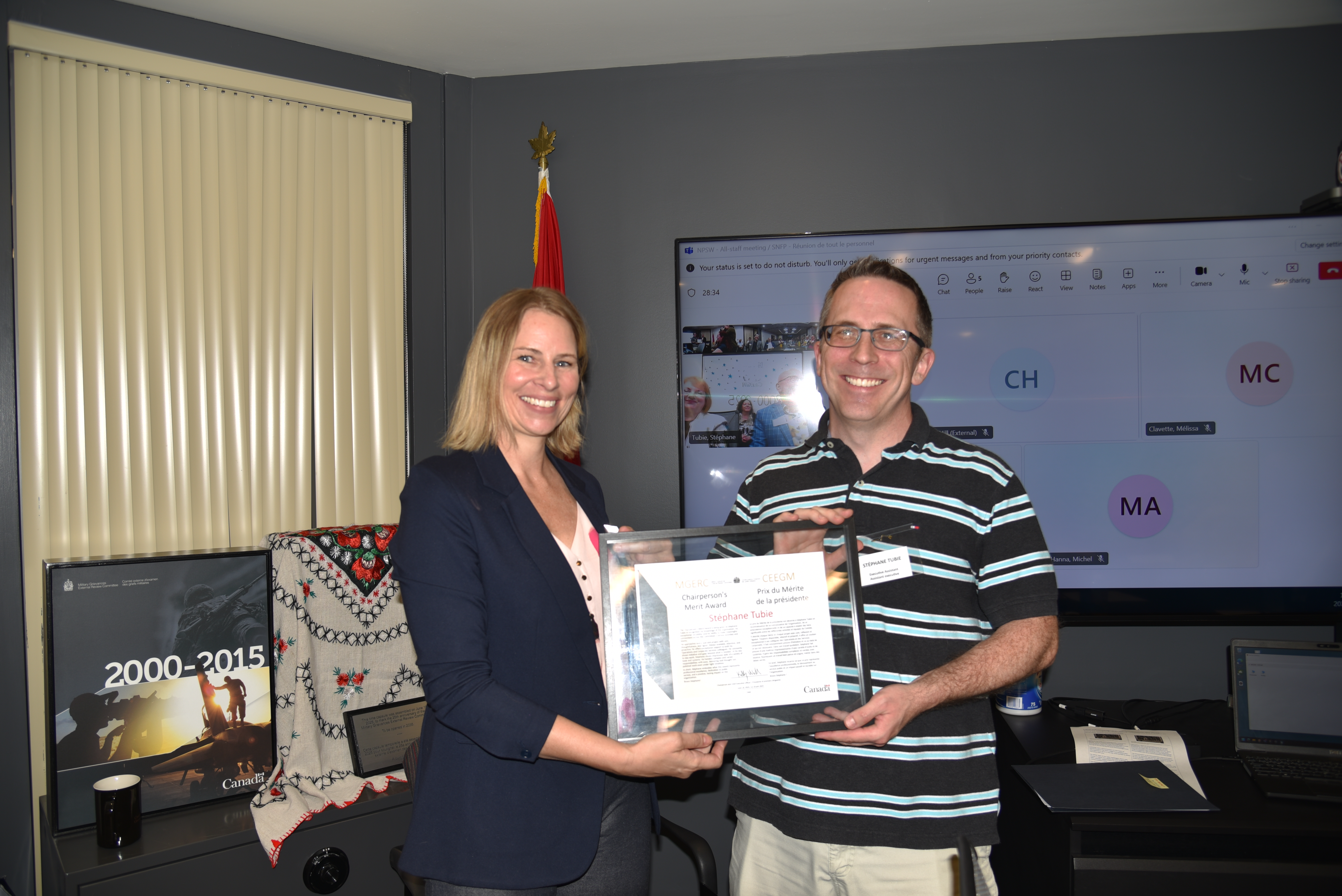
The Chairperson’s Merit Award was presented to Stéphane Tubie in recognition of his deep organizational knowledge, exceptional versatility, and ability to build meaningful connections across the Committee’s activities and teams. Thoughtful, rigorous, and proactive, Stéphane provides outstanding support to both Operations and Corporate Services. He consistently shows initiative, mastering a range of tools and systems, and delivers polished, well considered work even under tight deadlines.
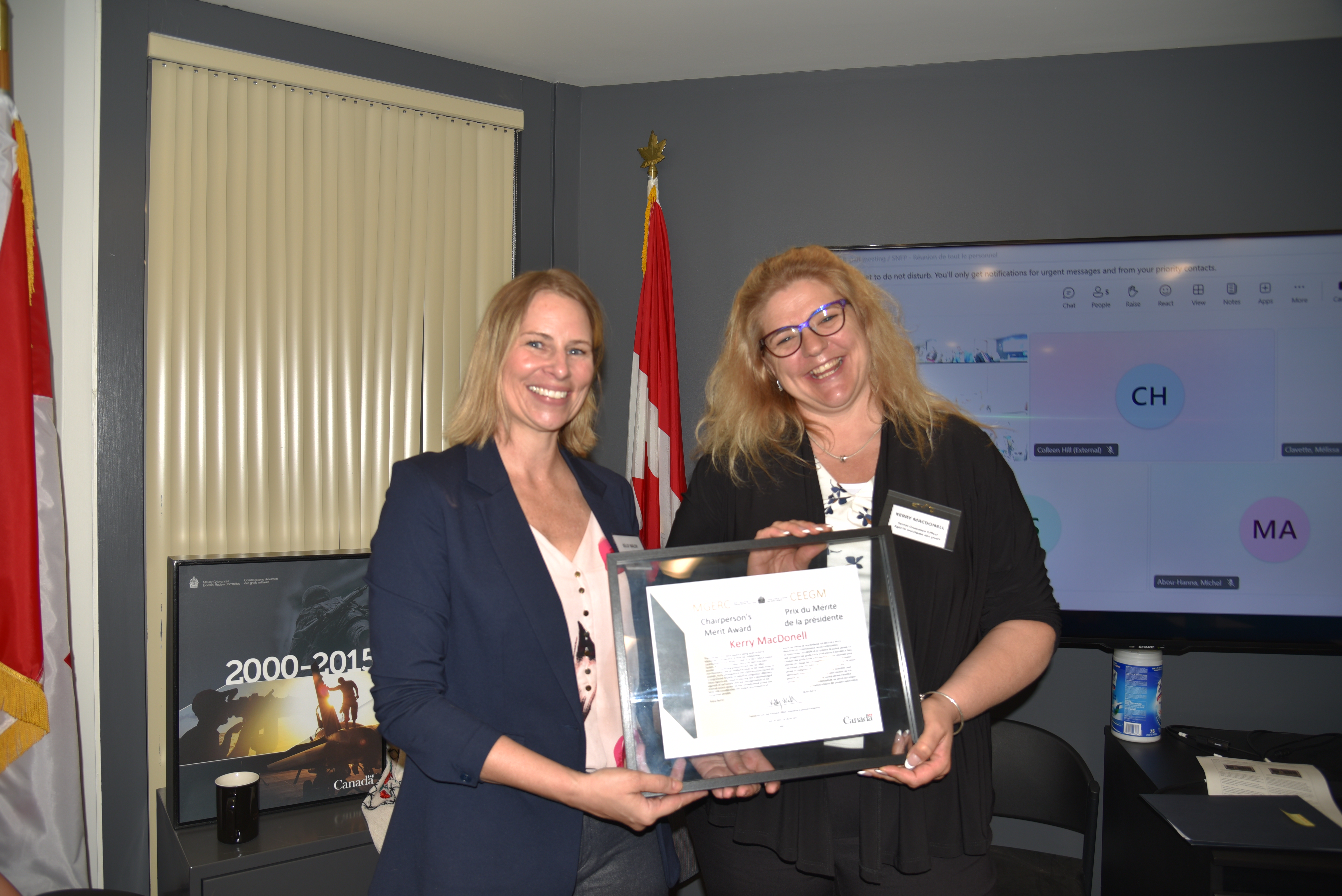
The Chairperson’s Merit Award was presented to Kerry MacDonell in recognition of her outstanding contributions to the Committee and the Criminal Justice System. As a grievance officer, Kerry has shown exceptional skill in analyzing grievances and frequently volunteers for additional cases. She also contributes to the Criminal Justice System by writing Gladue Reports on behalf of Indigenous offenders - critical documents that help ensure fair, contextualized justice for a disadvantaged group overrepresented in the criminal justice system.
King Charles III Coronation Medal Recipient
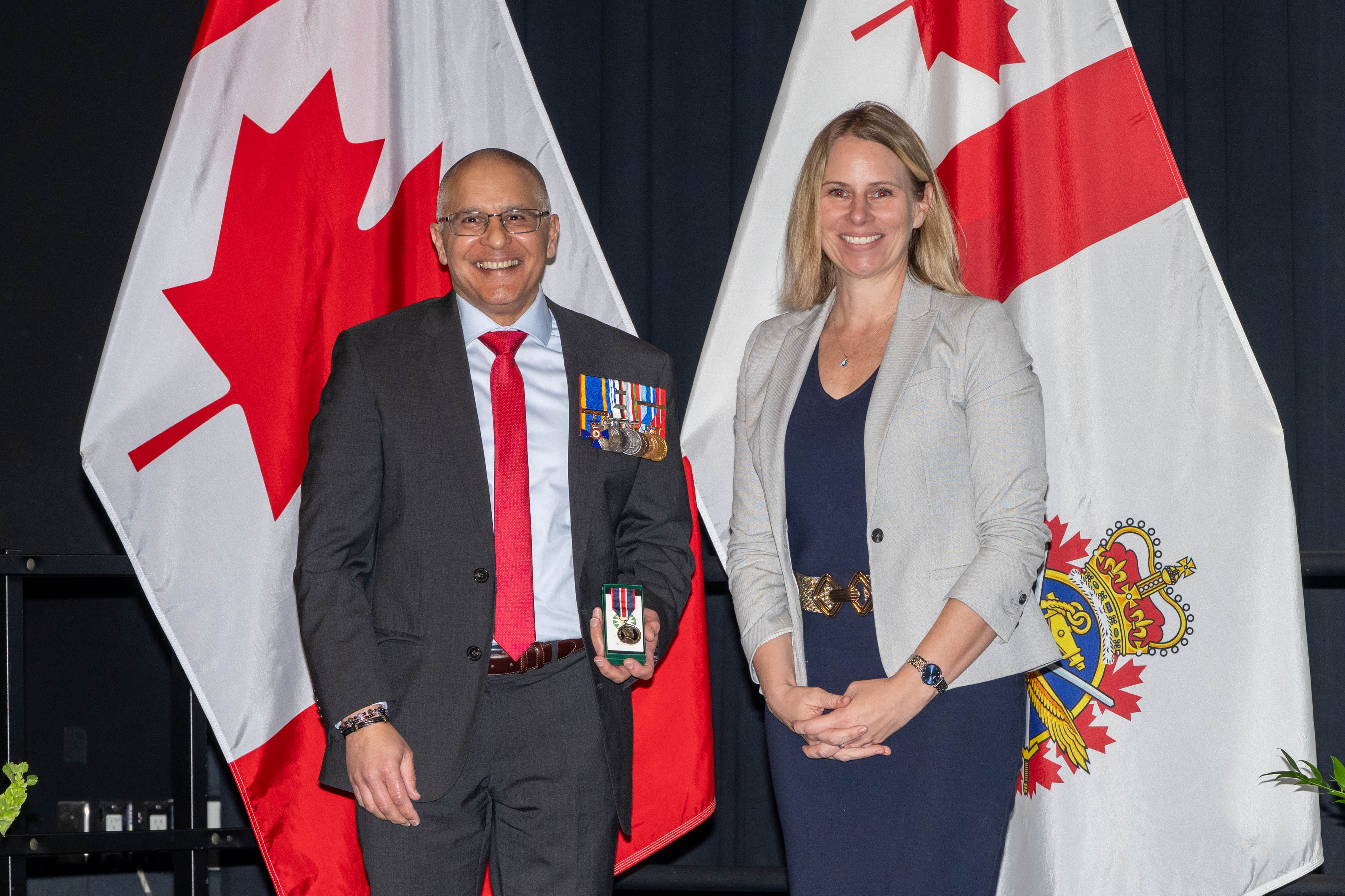
The King Charles III Coronation Medal recognizes individuals who have made significant contributions to Canada or achieved distinction abroad that brings honour to the country.
Vihar Joshi served as a Legal Officer in the CAF for 28 years, holding senior roles including Director of Legislative and Regulatory Services, Director of Law in several domains, Assistant Deputy Judge Advocate General/Operations, and finally Deputy Judge Advocate General/Administrative Law, a position he held for nine years.
His operational deployments included Haiti (1996), Bosnia (2002), and Afghanistan (2007), where he advised the Afghan Minister of Justice and was awarded the Meritorious Service Medal for his work.
Vihar’s exceptional service has been recognized with numerous honours, including his appointment as an Officer of the Order of Military Merit (2013), designation as Queen’s Counsel (now King’s Counsel, 2014), and receipt of the Law Society Medal (2020).
Following his retirement from the CAF, Vihar joined the Committee in 2018 as Director General of Operations and General Counsel. He served as Interim Chairperson and Chief Executive Officer from December 2022 to May 2024 before returning to his Director General of Operations and General Counsel role.
The Committee is proud to celebrate Vihar’s remarkable achievements and enduring contributions by bestowing him with The King Charles III Coronation Medal.
The Committee's 25th anniversary
In 2025, the Committee reached a significant milestone: 25 years of excellence and dedication to the fair and impartial review of military grievances.
On June 18th, 2025, the Committee officially celebrated this anniversary, as both a commemoration of the progress and accomplishments made since its origin, but also as an opportunity to look ahead together with renewed purpose.
The Committee welcomed General Jennie Carignan, the CDS, to its celebration where she expressed her pride in the work of the Committee and its employees, and affirmed that its work instills confidence and trust in the CAF itself. Along with the Committee’s current personnel, previous Committee Members were also in attendance as well as other CAF grievance officials.


The Committee Members
Kelly Walsh
Chairperson and Chief Executive Officer

William Quinn
Full-time Vice-Chairperson

François Malo
Part-time Vice-Chairperson

Nina Frid
Full-time Committee Member

Eric Strong
Part-time Committee Member
(term ended June 1, 2025)