
CAFCYBERCOM delivers cyber security training to the Armed Forces of the Philippines
February 5, 2026 – Defence Stories
Estimated read time – 2:30
By Major Christopher Daniel, CAFCYBERCOM Senior Public Affairs Officer
Caption
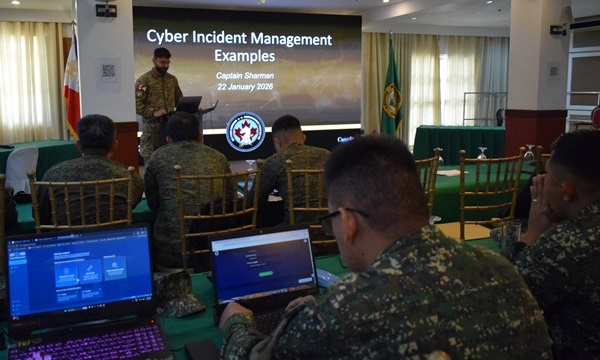
Captain Shivom Sharman of CAFCYBERCOM delivers cyber incident management training during the Military Cyber Security Operations Course in Manila.
In an era where cyber threats move faster than borders, strong partnerships matter as much as strong defences. From January 19 to 23, 2026, the Canadian Armed Forces Cyber Command (CAFCYBERCOM) delivered the Military Cyber Security Operations Course in the Philippines, bringing together Canadian and Filipino military cyber professionals to strengthen defensive skills, deepen cooperation, and support shared security in the Indo-Pacific.
Delivered under the Department of National Defence’s Military Training and Cooperation Program and in partnership with the Philippines’ Department of National Defense, the course focused on building practical defensive cyber capabilities and improving interoperability between CAFCYBERCOM and the Armed Forces of the Philippines.
“Cyber security is a shared responsibility, and strong partnerships are essential to defending our networks in an increasingly contested digital environment,” said Major-General Dave Yarker, Commander CAFCYBERCOM. “By delivering this course in the Philippines, Canada is investing in practical cooperation that strengthens regional resilience, improves interoperability, and supports a free, open, and secure Indo-Pacific.”
Caption
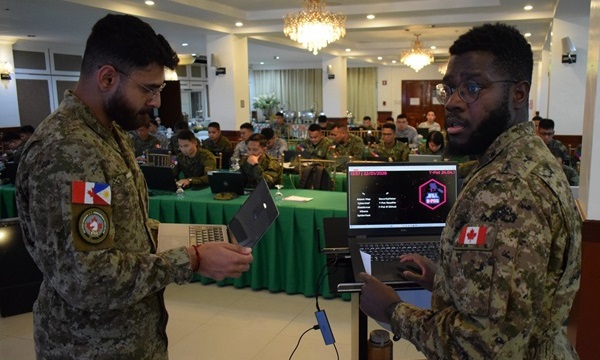
CAFCYBERCOM cyber instructors coordinate and provide technical support during a practical exercise at the Military Cyber Security Operations Course in Manila.
The five-day course provided foundational knowledge in Defensive Cyber Operations, with a strong emphasis on practical skills to detect, assess, and respond to malicious cyber activity targeting government and military networks. Through classroom instruction, scenario-based discussions, and applied exercises, participants examined real-world cyber challenges while exchanging operational perspectives and best practices.
“This introductory course helps participants better understand emerging cyber threats and apply current best practices in defence,” said Captain Luka Normandin from the Directorate of Military Training and Cooperation.
The training supports Canada’s defence priorities under Our North, Strong and Free and aligns with Canada’s Indo-Pacific Strategy, which emphasizes cyber readiness, trusted partnerships, and regional stability. It also builds on the momentum of the recently signed Canada–Philippines Status of Visiting Forces Agreement, which enables closer and more predictable defence cooperation between the two countries.
Caption
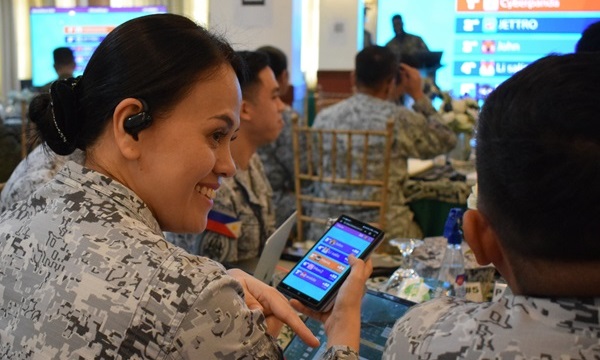
Armed Forces of the Philippines personnel participate in a validation exercise during the culminating phase of the Military Cyber Security Operations Course in Manila.
Participants included members of the Cyber Command, Armed Forces of the Philippines (AFP), the Philippine Army Signal Regiment Cyber Battalion, the Philippine Navy, the Philippine Marine Corps, and the Philippine Air Force. Their engagement throughout the week reflected strong interest in practical, skills-based training and deeper collaboration in the cyber domain.
“The course strengthened our understanding of the dynamics of cyber environment and our ability to integrate the different cyber disciplines into planning and operations,” said Colonel Paul Cris V. Agustin, Chief of Staff of Cyber Command, AFP. “It highlighted how cyber operations shape decision making at all levels and reinforced the importance of grounding cyber operations in sound legal and technical frameworks. The training also underscored the need for close coordination across joint, interagency, multinational, and public partnerships, recognizing that even tactical cyber actions can have strategic consequences.”
The course was delivered by CAFCYBERCOM members with operational experience in defensive cyber operations. Legal instruction was integrated throughout the program, with support from the Office of the Judge Advocate General, to examine domestic and international legal frameworks governing cyber operations and emerging issues in cyber law.
By delivering the Military Cyber Security Operations Course, CAFCYBERCOM continues to support partners in developing resilient cyber forces while advancing Canada’s commitment to collective security in the Indo-Pacific.
Caption
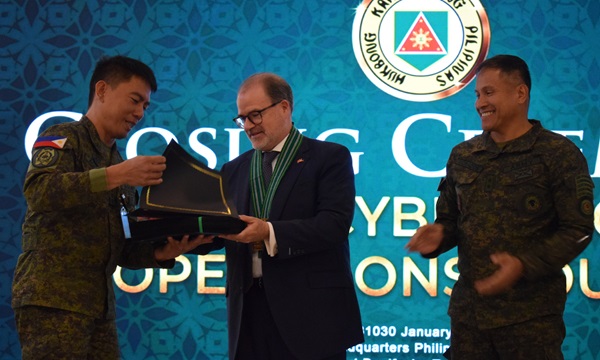
Canadian Ambassador David Hartman, together with Major General Efren F. Morados, Vice Commander of the Philippine Army, present a course completion certificate to Colonel Paul Cris V. Agustin, Chief of Staff of the Cyber Command, Armed Forces of the Philippines.
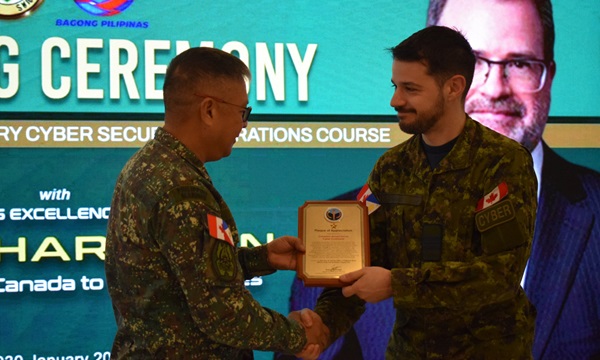
Caption
Major Mathieu Drolet receives a memento on behalf of CAFCYBERCOM during the closing ceremony of the Military Cyber Security Operations Course in Manila.