See It, Hear It, Suspect It – Reporting security incidents
February 3, 2026 - Defence Stories
We often hear about improving our security culture — but did you know that simply reporting something you see, or suspect can make a real difference? Security incidents happen more often than they should in our large DND-CAF organization. Understanding the difference between a security violation and a breach can mean the difference between protecting sensitive information and compromising it.
But what does this mean exactly?
The infographic below breaks down common scenarios and highlights the different types of security incidents that can occur. It also provides guidance on which reporting channels to use to ensure incidents are contained and mitigated effectively.
By staying aware, we can reduce risks and prevent incidents before they happen.
Watch the video and review the key points in the infographic to see how
even small actions could trigger a breach and why every detail counts.
For more information on a variety of security topics, visit the Security Awareness Toolkit, available through the Director General Defence Security (DGDS) intranet page.
Video / February 03, 2026
Transcript
See It, Hear It, Suspect It — Report It!
Security threats don’t always start with outsiders — sometimes, they start with us.
Have you ever seen a SECRET document left out on a desk — only to be read by someone without clearance?
Or a PROTECTED B file shared in a large unit Teams chat — downloaded by people who didn’t need to see it?
Or a CAF member in uniform discussing deployment details in a coffee shop — overheard by strangers?
Security incidents happen more often than one would think — and even one small slip can have big consequences, putting DND/CAF information, services, and assets at risk.
If you see it, hear it, or suspect it — report it – immediately.
Report it either to:
- Your Chain of Command
- Your Unit Security Supervisor
- Your Information System Security Officer
- Area, Formation, or Local Help/Service Desk
- Your local Military Police
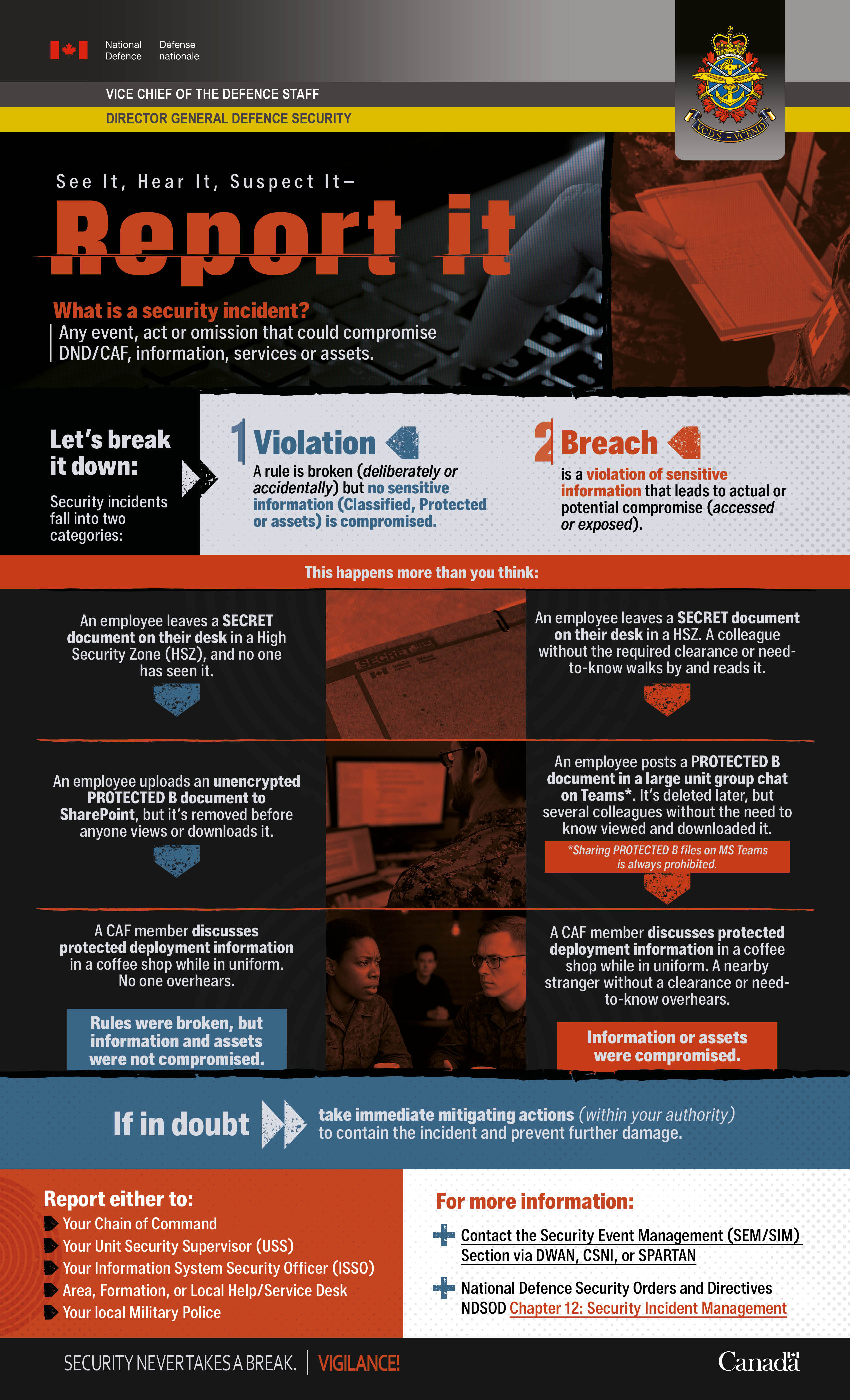
Infographic - Text version
See It, Hear It, Suspect It — Report It!
What is a security incident?
Any event, act or omission that could compromise DND/CAF, information, services or assets.
Let’s break it down:
Security incidents fall into two categories:
- Violation — A rule is broken (deliberately or accidentally) but no sensitive information (Classified, Protected or assets) is compromised.
- Breach — is a violation of sensitive information that leads to actual or potential compromise (accessed or exposed).
This happens more than you think:
|
|
|
If in doubt - take immediate mitigating actions (within your authority) to contain the incident and prevent further damage.
Report either to:
- Your Chain of Command
- Your Unit Security Supervisor (USS)
- Your Information System Security Officer (ISSO)
- Area, Formation, or Local Help/Service Desk
- Your local Military Police
For more information:
Contact the Security Event Management (SEM/SIM) Section via DWAN, CSNI, or SPARTAN
National Defence Security Orders and Directives NDSOD — Chapter 12: Security Incident Management