
Canada’s first steps in peacekeeping: The Canadian Armed Forces in Cambodia, 1954–1955
July 10, 2026 – Defence Stories
Estimated read time: 1:52
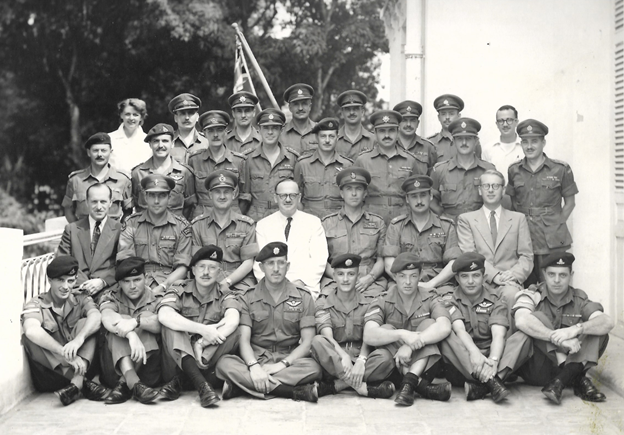
Caption
ICSC team at Battambang, north-west Cambodia.
Source: H. Taylor, 5/55, LAC.
This article is part of a new history series launched by the Directorate of History and Heritage (DHH) showcasing current research projects. Through this new series, DHH offers Defence Team members a sneak peek into the Directorate’s ongoing work, using excerpts from larger projects.
The fourth in this series is from Dr. John MacFarlane and Dr. Jean-Michel Turcotte’s Patience Training in Cambodia: Canadian military and the first months of the International Commission for Supervision and Control (ICSC), 1954-1955.
On July 21, 1954, the Democratic Republic of Vietnam, France, the People’s Republic of China, the Soviet Union, and the United Kingdom signed the Geneva Agreements ending the first Indochina War (1946-1954). The former French colony was divided into three states: Vietnam, Laos, and Cambodia. The text stipulated that the International Commissions for Supervision and Control (ICSC) were to observe the implementation of the agreements in the three countries. Canada, with Poland and India, were invited to take part in the ICSC.
From 1954 to 1970, more than 139 Canadians were deployed to Cambodia, including 85 military personnel. As this article shows, the Canadian military played a predominant role in the often-ill-defined work of the ICSC, particularly during the first two years of the commission (1954-1955). A review of the first few months of this complex mission conducted outside the United Nations reveals that Canadians helped their Ally, France, to withdraw peacefully from the territory and ensure peacekeeping in the region by helping to separate the combatants, to observe the ceasefire conditions, and to participate in exchanges of prisoners of war. They also ensured the cooperation of the Cambodian government.
Read the full article: Patience Training in Cambodia: Canadian military and the first months of the International Commission for Supervision and Control (ICSC), 1954-1955.
DHH’s core mission
DHH’s core mission is to preserve and share the official history of Canada’s armed forces. In pursuit of this, our team of historians work full time on a wide variety of in-depth research projects, often resulting in book-length narratives about CAF operations. Ranging from post-1945 histories of the navy and the air force, to various peace support operations, to the more recent operations in Afghanistan, these projects require years of intensive research and writing. Historians delve deeply into war diaries, oral testimonies, and other unique, archival sources. Canada has employed official historians dating back to 1918, and past publications by DHH and its predecessors have proved invaluable to people seeking to understand Canada’s relationship with war.
Through this series, DHH is pleased to be able to highlight current research into the history of CAF operations.