
Recognize them. Respond fast. Prevent heat-related illnesses.
July 6, 2026 – Defence Stories
Estimated read time: 2:04
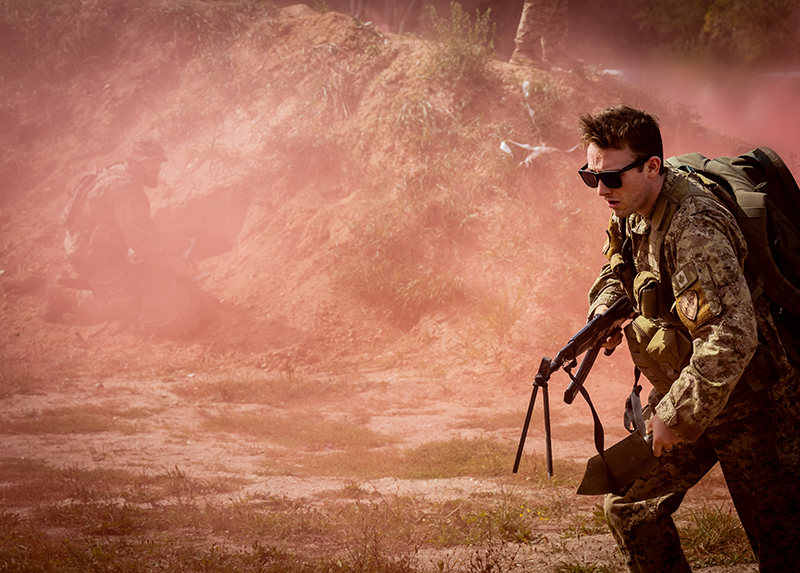
Caption
A Canadian Armed Forces member deployed on Operation UNIFIER performs an obstacle removal demonstration during the Advanced Sapper course in Europe on August 30, 2025.
Image credit: Canadian Armed Forces Imagery Technician.
As summer temperatures rise, so does the risk of heat-related illnesses (HRI). While these conditions can range from mild to life threatening, many HRIs are preventable through awareness, early recognition, and appropriate precautions.
What are heat-related illnesses (HRIs)?
HRIs happen when the body gets too hot and cannot cool itself effectively.
While some individuals may be more susceptible, HRIs can affect anyone when they are exposed to excessive heat or heat stress.
Understanding the factors that contribute to HRIs can help you recognize risks and take preventative action early. Some factors that can increase risk include:
- Environmental: High temperatures, humidity, and direct sun exposure.
- Operational: Strenuous physical activity, heavy clothing and equipment, and a lack of proper work-rest cycles.
- Personal: Inadequate hydration or sleep, not being fully acclimatized to the local climate, and certain medical conditions or medications.
What are the key types of HRIs?
From mild to more severe:
- Heat exhaustion occurs when the body loses too much water and salt and can no longer cool itself effectively. Signs and symptoms include heavy sweating, headache, dizziness, nausea, weakness, fatigue, and cool, clammy skin.
- Heat injury occurs when the body overheats, leading to organ damage (typically without cognitive changes). Signs and symptoms vary and can include tea-colored urine or severe muscle pain or weakness.
- Heat stroke can be a life-threatening medical emergency. It occurs when the body's core temperature becomes dangerously high and it can no longer cool itself. Signs and symptoms include cognitive or neurological changes (e.g., unusual changes in thinking or awareness, seizures), loss of consciousness, and can include skin that is either hot, dry, and red or profusely sweating.
Other milder conditions include heat rash, heat edema (or swelling), heat cramps, and heat syncope (i.e., fainting), and may be signs that more serious HRIs could develop.

Caption
Canadian Armed Forces members of 3rd Battalion, Princess Patricia’s Canadian Light Infantry Bravo Company deployed on Operation HORIZON from April 20 to May 8, 2026 participate in Exercise BALIKATAN alongside Armed Forces of the Philippines and United States military personnel in the Philippines.
Photo Credit: Corporal Alexander Ward, Imagery Technician, Canadian Armed Forces Combat Camera
How to respond to an HRI
If you suspect that you or someone around you may be experiencing an HRI:
- Stop activity
- Notify emergency medical services immediately
- Begin rapid cooling while waiting for help:
- Move to a cool or shaded area
- Loosen or remove excess clothing/equipment
- Help cool the body
- If able to drink, provide fluids
- Notify the chain of command
How to reduce the risk of HRIs
One of the most effective ways to reduce HRI risk is gradual exposure to heat, also known as heat acclimatization. This allows the body to adapt to hotter conditions over time and improve its ability to regulate and manage heat stress.
Other important measures include:
- Maintaining hydration
- Appropriate work-rest cycles
- Regular breaks in cool or shaded areas
- Adjusting physical activity, clothing, or gear where appropriate
- Recognizing early signs and symptoms and acting quickly
By understanding the risks, recognizing the warning signs, and taking preventive measures, we can all help reduce the risk of HRI and prevent serious illness.