
Soldiers take flight with inaugural first-person view drone course
July 29, 2026 – Defence Stories
Estimated read time – 1:50
Caption
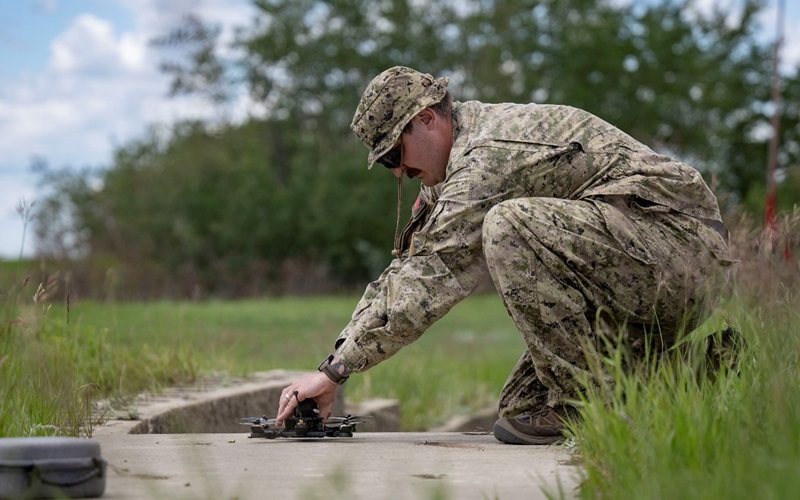
Canadian Armed Forces members partake in the Full Manual Uncrewed Aerial Systems (FMUAS) operator course on 24 June 2026 in Wainwright, Alberta, Canada.
As of June, the Army Training Centre – West in Wainwright, Alberta is now the home of the inaugural Full Manual Uncrewed Aircraft System (FMUAS) Operator Course, equipping the Army with a capability that is increasingly common in modern battlefields.
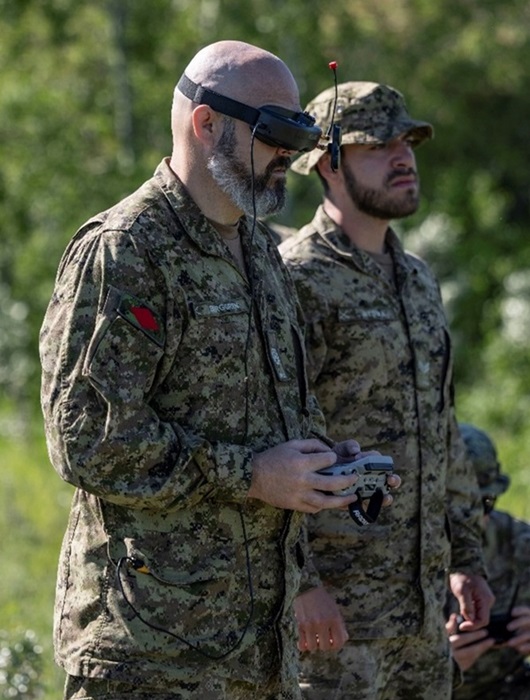
It may look like these soldiers are playing a video game, but the operators can attest that it is not as simple as picking up a controller and flying. Wearing first-person view (FPV) goggles, operators are learning to pilot drones in real time, navigating terrain and obstacles as if they were onboard, while also fighting the dizzying feeling the goggles can leave you with.
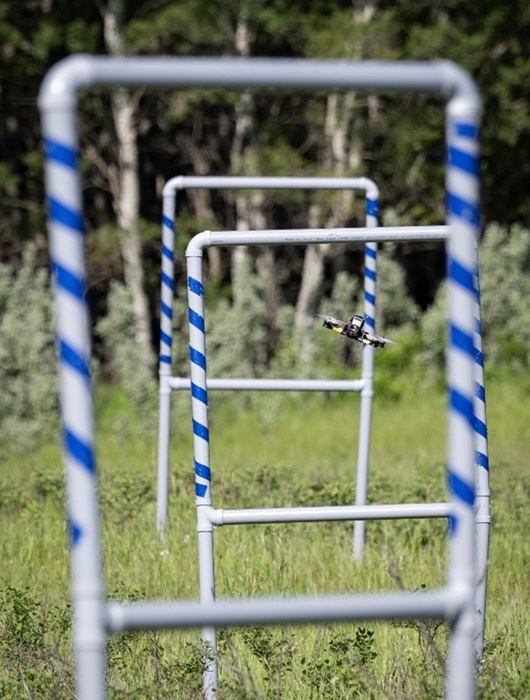
Imagine yourself being a drone, moving at high speeds, stopping and turning on a dime, manoeuvring through a variety of obstacles. Now do these tasks while trying to communicate to your section what you are seeing and doing in real time.
Sensitive to every minor touch of the controller, the drone demands extremely precise movements to maintain proper flight, while the pilot tries to maintain not only their situational awareness, but also the signal between the controller, the goggles, and the drone which enables it to keep flying.
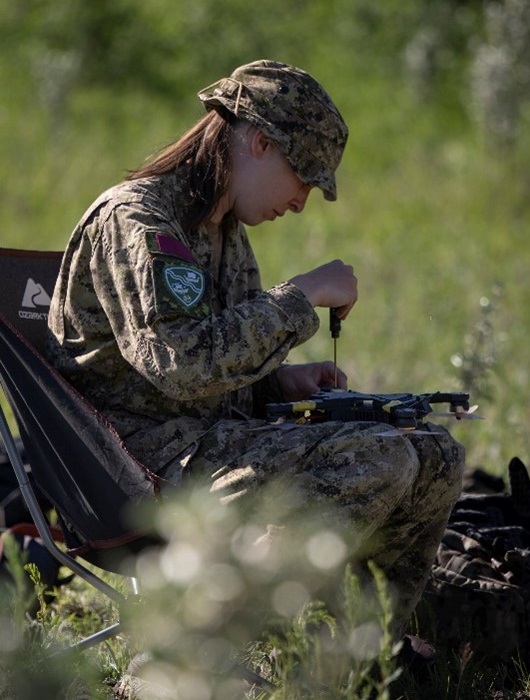
These are only part of the challenges FMUAS drone operators face. They are also expected to troubleshoot and maintain their drones with basic programming, soldering, and mechanical repair skills. These are the variety of teaching points of the FMUAS Operator Course.
As for the tactical application of drones, it is fairly obvious: FPV drones extend a unit’s reach beyond line of sight, allowing soldiers to identify threats, confirm routes, observe enemy activity without exposing themselves, and of course, strike the enemy from range. Lethality, troop security, battlefield awareness, decision-making – all enabled through relatively inexpensive drones.
The FMUAS Operator Course exemplifies the Canadian Army’s broader modernization efforts. By integrating emerging technologies, the Army is building a force that is both technologically adept and operationally agile. FPV drones specifically complement existing capabilities while empowering soldiers at every level with tools that can influence outcomes in real time.
With each new cohort of trained operators, there is an expectation that they will continue to shape how UAS capabilities are integrated across the Army, at every level. Their experience will inform future training, doctrine, and employment concepts. They are now the front line for drone innovation.
As the character of warfare continues to evolve, the Canadian Army is ensuring it evolves with it. Through the FMUAS Operator Course, soldiers are not only gaining a new capability—they are redefining how the Army fights, survives, and wins on the battlefield.
Caption
Canadian Armed Forces members partake in the Full Manual Uncrewed Aerial Systems (FMUAS) operator course on 24 June 2026 in Wainwright, Alberta, Canada.
Caption
Canadian Armed Forces members partake in the Full Manual Uncrewed Aerial Systems (FMUAS) operator course on 24 June 2026 in Wainwright, Alberta, Canada.
Caption
Canadian Armed Forces members partake in the Full Manual Uncrewed Aerial Systems (FMUAS) operator course on 24 June 2026 in Wainwright, Alberta, Canada.