
How occupational therapy helps CAF members get back to living their lives
October 5, 2026 – Defence Stories
Estimated read time: 2:02
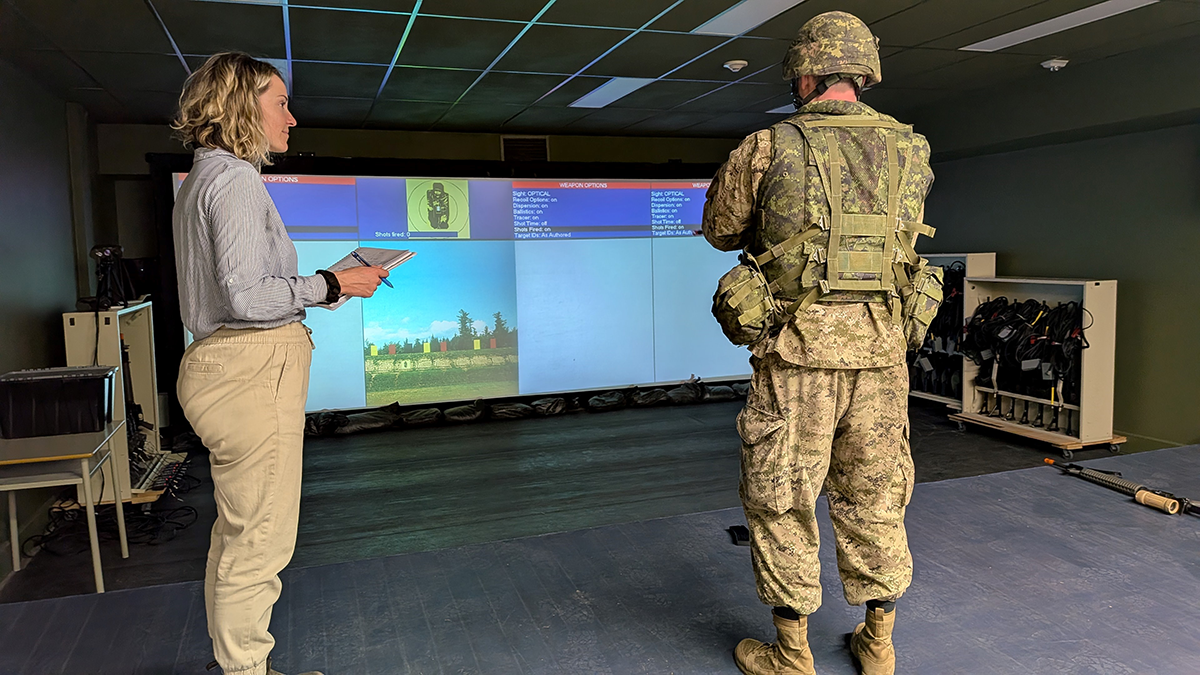
Caption
An Occupational Therapist observes a member performing a military task in a virtual environment.
A broken bone can heal. A concussion can resolve. But returning to everyday life is often the hardest part of recovery. That gap between recovery and real-world function is where occupational therapy makes a difference. October is Occupational Therapy Month, a time to recognize a profession that helps Canadian Armed Forces (CAF) members regain independence and return to the activities that matter most after injury or illness.
When recovery meets real life
When most people think about rehabilitation, they picture healing an injury or rebuilding strength after surgery. Occupational therapists (OTs) play a role in that process, but their focus is different. They help people translate recovery into the ability to participate safely and independently in the activities they need and want to do.
Imagine a CAF member recovering from a serious injury. Before they can return home or to military duties, important questions need to be answered. Can they safely climb the stairs to their bedroom? Shower independently? Prepare meals, drive a vehicle, carry equipment, or complete the tasks required of their occupation?
OTs assess how an injury or illness affects a member’s ability to function at home, in the community, and during military activities. Working with the member and healthcare team, they develop individualized rehabilitation plans that may include skills training, activity-based rehabilitation, task modification, environmental adaptations, and adaptive equipment. The goal is to address barriers and leading to greater independence in everyday life and military service.
Supporting the return to home and duty
Recovery is not defined solely by improvements in pain, strength, range of motion, or other clinical measures. OTs assess how those improvements translate into functional ability and whether a member can safely perform their required tasks and activities. For a combat arms member, that may mean carrying a rucksack or operating weapons systems. For a sailor, it may involve navigating steep shipboard ladders and confined spaces. For an aviator, it may mean maintaining the physical and cognitive abilities required for operational tasks. OTs assess these demands and compare them to a member’s current abilities to identify barriers, help guide rehabilitation, and facilitate a gradual return to duty.
Occupational therapy provides treatment for a wide range of injuries and health conditions, including musculoskeletal injuries, chronic pain, and neurological conditions. While some limitations are visible, others such as fatigue, pain, difficulty concentrating, or reduced tolerance for activity can be less obvious but still significantly impact daily function.
What makes occupational therapy unique is its focus on function. OTs do not simply ask whether an injury has healed. They ask whether a member can safely perform the activities required at home, in the community, and at work.
Healing is only one part of recovery. This Occupational Therapy Month, we recognize the OTs, Occupational Therapy Assistants, and support personnel who help CAF members turn recovery into real-world function, whether that means returning home safely, regaining independence, or returning to military service.