
Dieppe profile of courage: Stirling David Banks
News Article / August 14, 2019
Click on the photo under “Image Gallery” to see more photos.
By Major (retired) William March
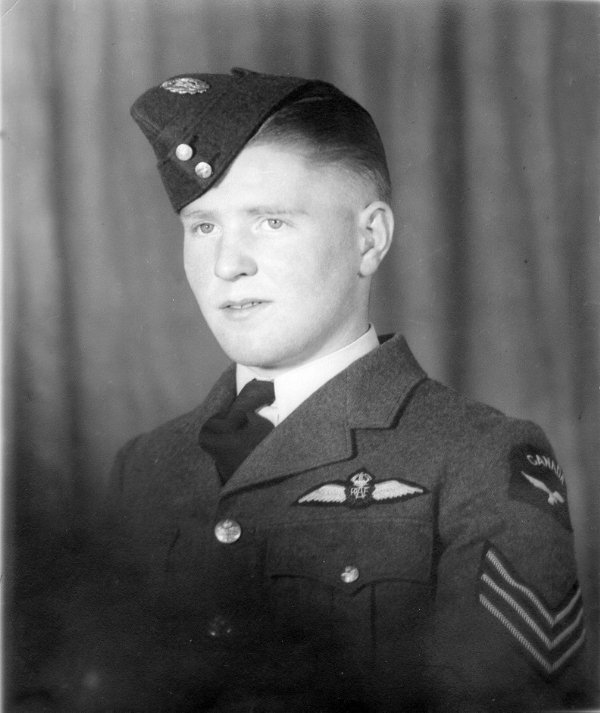
Stirling David Banks was born on April 7, 1923, in Popular Grove, Prince Edward Island. His life would end 19 short years later, lost during Operation Jubilee, the disastrous raid on Dieppe in France.
The third of eight children, David began his education in the one-room local schoolhouse before he moved on to Prince of Wales College in Charlottetown. A few days after his 18th birthday, on April 10, 1941, he enlisted in the Royal Canadian Air Force (RCAF).
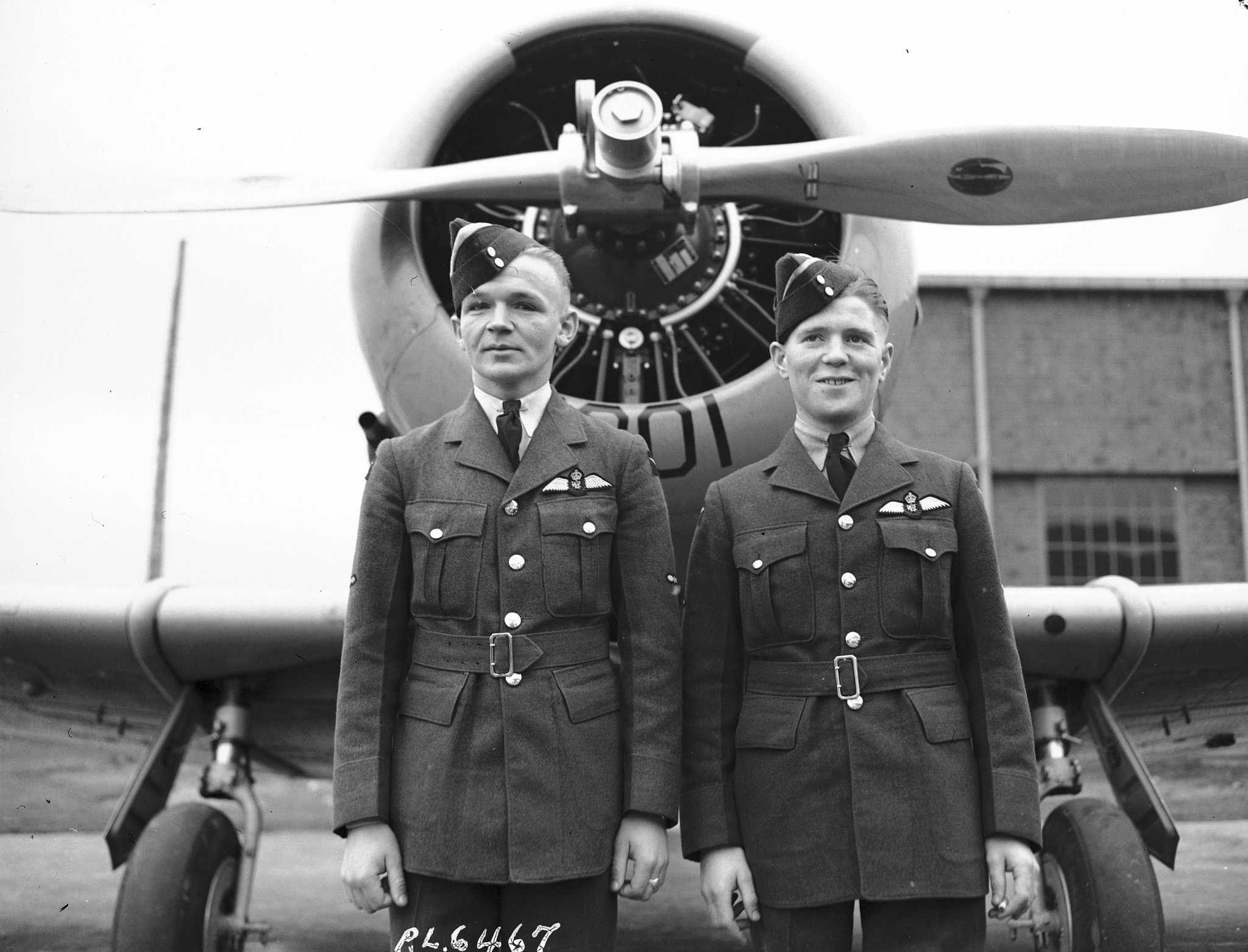
He began his flight training at No. 3. Elementary Flying Training School located at London, Ontario, where he went solo for the first time in a Fleet Finch on August 12. Within a few weeks, the young man found himself posted to No. 14 Service Flying Training School, Aylmer, Ontario, mastering the intricacies of the Harvard aircraft. After receiving his wings on December 11, he was fortunate to be able to celebrate what would be his last Christmas at home with his family before leaving for England on January 2, 1942.
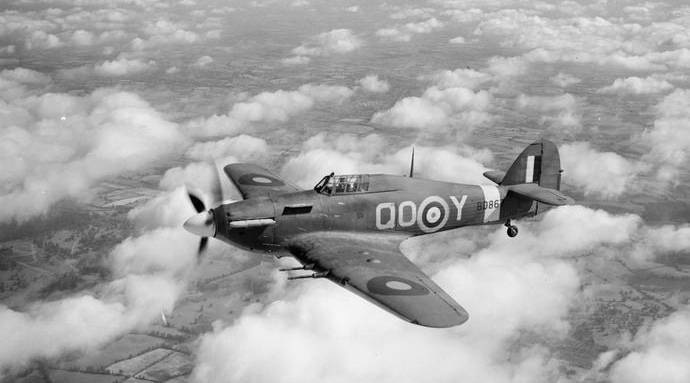
The training that followed centered on multi-engine aircraft, but the young Islander was determined to fly fighters. Then on June 10, 1942, his wish was fulfilled when he found himself transferred to Royal Air Force (RAF) Station Crosby-on-Eden as a student at No. 59 Operational Training Unit (OTU). Part of Fighter Command, the OTU provided training on Hurricane fighters that, despite having been replaced as a front-line fighter, still found employment in many different roles, including ground support. Less than two weeks later, on June 23, newly-promoted Flight Sergeant Banks was posted to his first operation unit—No. 3 Squadron at RAF Station Hunsdon, Hertfordshire.
Things were pretty quiet at the new squadron but, as he noted in a letter to his mother on July 2, Flight Sergeant Banks made the most of the down time.
“I haven’t been doing much flying since I got on this squadron, but am having a wonderful time. The English officer and the other Canadian [Sergeant F.S. Armstrong], that came here with me, and I go swimming every afternoon, and then into town in the evening. The Englishman, Bob Walmsley (Pilot Officer), has a lovely little car so we have quite a good time…” Still, the young pilot managed to get some training, in mostly in formation flying and air-to-air and air-to-ground firing, and by the second week of August had amassed some 300 hours flying time on Hurricanes
His quiet tour of duty ended abruptly on August 14 when he and the rest of the squadron were transferred to RAF Station Shoreham, just outside of Bristol in West Sussex. Writing to his family the day after his arrival, Banks said, “Well, everything is very quiet as usual. By for now. Love to all.”
Still, the young pilot must have known that “something was up” as aircraft from other squadrons continued to arrive. Operational security may have prevented the air and ground crew from being briefed on Operation Jubilee until August 18, but there would have been no doubt in his mind that he was about to have his first “go at Jerry”.
It would have dark when Flight Sergeant Banks left his quarters on the morning of August 19. He knew from the briefing he had received the day before that he would be part of a three-squadron strong attack on the beaches and headlands of the French port of Dieppe. Their Hurricanes, armed with four 20-millimetre cannon, were to provide close support for a “raid in force” by several thousand Allied troops, mostly Canadian, during the initial assault. The launch order had been received at 0329 hours giving the squadron its takeoff time and ordering it to strafe the beach defences just as the Canadian troops were coming ashore.
Over a hurried breakfast and the short walk to his waiting Hurricane, a thousand details would have swirled around in his head. Frequencies, terrain features, and target characteristics mixed with adrenaline, excitement and fear. With the pilots’ pre-flight checks complete, the roar of the Rolls-Royce Merlin engines of the assembled Hurricanes cut through the quiet of the early morning.
With wheels-up at 0445 hours, the attack package of 24 aircraft, eight each from 3, 43 and 245 Squadrons, quickly assembled and made their way eastward towards occupied France. Concentrating on keeping his place within the formation, a process complicated both by the limited light and minimal experience in night flying, Flight Sergeant Banks might have noticed the occasional flash from the sea below as an Allied warship fired over the landing craft. Then at 0514 hours, following a firm command by the strike leader over the wireless (radio), it was his turn to join the fight.
Coming in low over the assault boats, it is doubtful that Flight Sergeant Banks would have been able to discern the faces of the equally young soldiers below. At that moment his focus would have been directed towards the targets ahead of him on the enemy beach and in Dieppe itself. Smoke from naval gunfire and an earlier attack by light bombers was both a curse and a blessing, making targets hard to see yet partially obscuring the aircraft from German gunners. Flak was intense, with tracers cutting through the sky from multiple directions. His aircraft rocking from near misses and super-heated air rising from burning buildings, Flight Sergeant Banks fired his cannon, scoring hits on the buildings most likely to hold enemy emplacements. In mere seconds he and the rest of the squadron completed their attack run, clawing their way to a higher altitude, gasping with relief that they had survived.
Quickly, however, the relief would have turned to dread as the squadron’s commanding officer, Squadron Leader Alex Berry, DFC, who would be killed later that day, ordered the Hurricanes down for a second pass. Once again, the strafing run lasted an eternity of seconds, but fate dealt a severe blow to the young Canadian and his Hurricane was badly damaged.
He was last seen approximately 10 miles (16 kilometres) north of Dieppe, apparently trying to nurse his stricken aircraft back to England.
At the end of the day, Flight Sergeant Banks joined a long list of Allied aircrew designated as “missing”. Flight Lieutenant Herbert Edward Tappin wrote to Flight Sergeant Banks’ family on August 29, offering them a glimmer of hope.
“Stirling has not been with the Squadron very long, but during the short period he has been with us, he has proved himself to be a hard-working and efficient pilot. He was an outstanding example of a happy carefree Canadian who showed courage and ability to carry out operations against the enemy. The members of my Squadron and myself sincerely hope that your son is safe, and should any further information be received, I will communicate with you immediately.”
Given the secrecy surrounding Operation Jubilee, not much information reached the Banks family other than their son was missing. Finally, on March 23, 1943, they were informed that the Germans had recovered his body on September 25 the previous year. Initially buried near where his body was recovered, Flight Sergeant Banks was moved to his final resting place in the Abbeville Community Cemetery Extension in 1949.
He was 19 years old.
From the website of Veterans Affairs Canada
The Raid on Dieppe, France, on August 19, 1942, was a pivotal moment in the Second World War. With virtually all of continental Europe under German occupation, the Allied forces faced a well-entrenched enemy. Some method had to be found to create a foothold on the continent, and the Raid on Dieppe offered invaluable lessons for the successful D-Day invasion in 1944, saving countless lives in that momentous offensive.
Canadians made up the great majority of the attackers in the raid. Nearly 5,000 of the 6,100 troops were Canadians. The raid was supported by eight Allied destroyers and 74 Allied air squadrons, eight belonging to the Royal Canadian Air Force. Although extremely valuable lessons were learned in the Raid on Dieppe, a steep price was paid. Of the 4,963 Canadians who embarked for the operation, only 2,210 returned to England, and many of these were wounded. There were 3,367 casualties, including 1,946 prisoners of war; 916 Canadians lost their lives. (From the website of Veterans Affairs Canada)