
Métis Major Projects Summit: What We Heard Report
August 7, 2025

Executive summary
On August 7, 2025, Prime Minister Mark Carney convened the Métis Major Projects Summit at the Royal Canadian Geographic Society in Ottawa, Ontario, to have a dialogue with Métis leadership on the implementation of the Building Canada Act.
The Summit assembled the Presidents of seven Métis governments and organizations alongside the Prime Minister, a number of federal Cabinet Ministers, and senior Government of Canada officials.
This “What We Heard” report summarizes the views expressed by participants, which will help inform next steps, including future work on the implementation of the Building Canada Act and project-specific consultations.
The tone of the Summit was collaborative and forward-looking. Métis leadership affirmed their readiness to lead and partner in shaping Canada’s economic future. They emphasized the need for distinctions-based engagement, recognition of Métis governments as rights-holders, and inclusion in all stages of project development. They called for clarity on funding eligibility, flexible equity models, and tailored approaches that reflect the unique governance structures of Métis governments.
In response, federal representatives made the following commitments at the Summit:
- To advance multiple major projects at the same time, rather than sequentially, to reduce delays and create more timely opportunities for Métis participation.
- To establish a Major Projects Office and Indigenous Advisory Council by September 1, 2025, with Métis representation and input on membership.
- To provide $40 million in new funding to support capacity-building, technical readiness, and engagement on the implementation of the Building Canada Act.
- To include Métis governments in the Indigenous Loan Guarantee Program, enabling access to financing for equity participation in major projects.
- To engage in follow-up discussions with Métis leadership on consultation protocols, economic participation, and land-related issues, including tailored approaches for governments at different stages of Section 35 recognition.
Purpose and context
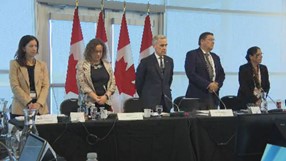
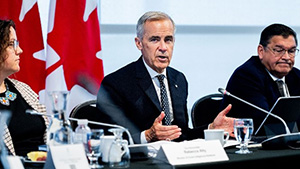
“We are turning challenge into opportunity – and we’re doing so in partnership. Bill C-5 is enabling legislation that allows for new ways of working together. Through Indigenous equity and resource management, we will build ports, bridges, highways, and other major infrastructure projects in partnership with Indigenous Peoples and communities. This Summit marked an important step forward in that effort as we work to build transformative projects in true partnership with Métis.”
The Rt. Hon. Mark Carney,
Prime Minister of Canada
On June 20, 2025, the Prime Minister made a commitment to “organize full-day summits with First Nations, Inuit, and Métis rights-holders, leadership, and experts,” in order to launch the implementation of the Building Canada Act “the right way.” This commitment was in response to calls from Indigenous leadership for more fulsome discussions on the Act, its implementation, and impact on Indigenous Peoples and communities.
In keeping with this commitment, the Métis Summit was held on August 7, 2025, from 10:00 am to 2:15 pm EST, in Ottawa, Ontario.
The purpose of the Summit was to engage Métis leadership in dialogue with the Government of Canada on the implementation of the Building Canada Act, with a focus on ensuring Métis perspectives inform how Canada advances major projects deemed to be in the national interest.
Bill C-5, the One Canadian Economy Act, came into effect on June 26, 2025, and consists of two parts that lay the foundation for a stronger more unified economy:
- Part 1 – Free Trade and Labour Mobility in Canada Act focuses on reducing barriers to the movement of goods, services, and workers across provincial and territorial borders to facilitate trade; and,
- Part 2 – Building Canada Act seeks to advance projects in the national interest through an accelerated review process.
The Building Canada Act (the Act) accelerates major nation-building projects by:
- identifying a list of national interest projects through consultation with provinces, territories, and Indigenous rights-holders;
- streamlining multiple decision points for federal approval via an upfront decision from the Governor in Council;
- requiring proponents to meet clear federal standards for transparency, regulatory compliance, and engagement with Indigenous communities; and,
- issuing a single “conditions document” that, once published, would constitute a permit, decision, or authorization under all applicable federal statues.
The Act requires meaningful consultation with Indigenous Peoples, including Métis, throughout the regulatory process, including determining which major projects are in the national interest and the conditions that must be met for them to advance.
In deciding whether to list the project as a national interest project, the Governor in Council may consider any factor considered relevant, including the extent to which the project can advance the interests of Indigenous peoples.
“Right now, Canada has a tremendous opportunity to strengthen our economy and secure our sovereignty in a way that advances reconciliation with Indigenous Peoples and will provide prosperity for generations of Métis. With meaningful collaboration, we can create opportunity in Métis communities across the country as we enhance our energy security and develop our resources.”
The Hon. Tim Hodgson,
Minister of Energy and Natural Resources
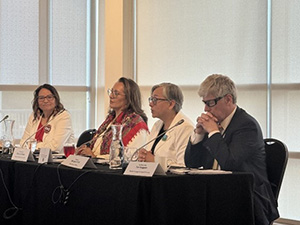
Initial engagement with Métis on Bill C-5 highlighted cautioned support for the Act, While they welcomed the opportunities to engage with the Government, they were clear that the need for meaningful consultation would be required.
To ensure that major projects are built in partnership, the Government of Canada increased the amount of the Indigenous Loan Guarantee Program from $5 billion to $10 billion and is moving forward with the following new measures:
- Standing up a new Major Projects Office to coordinate reviews of national interest projects;
- Establishing an Indigenous Advisory Council with First Nations, Métis, Inuit, and Modern Treaty and Self-Governing representatives;
- Administering $40 million over two years to increase capacity funding for Indigenous peoples to engage on projects early and consistently;
- Achieving one-project one review informed by cooperation agreements with provinces and territories within six months; and,
- Achieving two-year decisions for all major projects through broader legislative and regulatory reform, starting with the 60-day red-tape review.
Participants
“Métis communities have long demonstrated strength, innovation, and leadership in shaping this country – and their voices, priorities, and economic aspirations are vital to our future. The work we’re doing here together is helping build a more resilient and inclusive Canada, grounded in partnership, sustainability, and shared prosperity.”
The Hon. Rebecca Alty,
Minister of Crown-Indigenous Relations
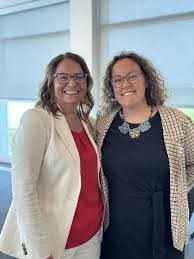
The Métis Major Projects Summit brought together the Presidents of six Métis governments in person and virtually. A single support staff accompanied the Presidents of each government. The Métis governments in attendance were:
- President Andrea Sandmaier, Otipemisiwak Métis Government (OMG) [the Government of the Métis Nation within Alberta];
- President Glen McCallum, Métis Nation-Saskatchewan (MN-S);
- President Margaret Froh, Métis Nation of Ontario (MNO);
- President Dave Lamouche, Métis Settlements General Council (MSGC);
- President Garry Bailey, Northwest Territory Métis Nation (NWTMN); and,
- President Marc Whitford, North Slave Métis Alliance (NSMA).
The Manitoba Métis Federation (MMF) was invited but they respectfully declined to attend.
The Métis National Council (MNC) attended as an in-person observer. The Métis Nation British Columbia (MNBC) was invited to attend as a virtual observer but also respectively declined to participate.
Federal leadership and senior Government of Canada officials participated, including:
- The Right Honourable Mark Carney, Prime Minister of Canada;
- The Honourable Dominic LeBlanc, President of the King’s Privy Council for Canada and Minister responsible for Canada-U.S. Trade, Intergovernmental Affairs, Internal Trade and One Canadian Economy;
- The Honourable Rebecca Alty, Minister of Crown-Indigenous Relations;
- The Honourable Rebecca Chartrand, Minister of Northern and Arctic Affairs and Minister responsible for the Canadian Northern Economic Development Agency;
- The Honourable Mandy Gull-Masty, Minister of Indigenous Services;
- The Honourable Tim Hodgson, Minister of Energy and Natural Resources; and,
- The Honourable Buckley Belanger, Secretary of State (Rural Development).
Elder Veda Weselake, a Métis knowledge keeper, provided the opening and closing prayers. Deputy Minister of Crown-Indigenous Relations and Northern Affairs Canada, Valerie Gideon, was the Summit facilitator.
For a full participant list see Annex A.
Setting the stage: Initial perspectives on the Building Canada Act
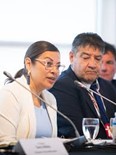
“I know first-hand the determination, perseverance and entrepreneurial spirit that runs through our communities. Métis are ready to play an active role in shaping and strengthening Canada’s economy. Together, we will work with Métis communities to drive impactful change.”
The Hon. Rebecca Chartrand,
Minister of Northern and Arctic Affairs and Minister responsible for the Canadian Northern Economic Development Agency
“Partnerships with Indigenous Peoples are at the heart of the One Canadian Economy Act. The Métis Major Projects Summit marks a crucial step in making Canada the strongest economy in the G7 while ensuring that Métis rights holders, and all Indigenous Peoples, are direct and meaningful participants in reaching that objective.”
The Hon. Dominic LeBlanc,
President of the King’s Privy Council for Canada and Minister responsible for Canada-U.S. Trade, Intergovernmental Affairs, Internal Trade and One Canadian Economy
Prior to the Summit, Métis leadership expressed the following perspectives on the One Canadian Economy Act and the Building Canada Act:
- In a public statement issued on August 5, 2025, the Otipemisiwak Métis Government (OMG) identified infrastructure, economic development, self-government, and federal-provincial collaboration as key priorities for the Summit. President Andrea Sandmaier emphasized the importance of Métis inclusion in decision-making processes “from the very beginning and throughout the entire process”, and reaffirmed OMG’s commitment to working across all levels of government to deliver results. The statement highlighted “the role of Métis Citizens and businesses in supporting national projects” and framed OMG as a historic and ongoing partner in building bridges, commerce, and community.
- The Métis Nation–Saskatchewan (MN-S) made no public comments prior to Summit on the One Canadian Economy Act or the Building Canada Act. MN-S, jointly with MNBC, provided written comments to the federal government in advance of the Summit. They recognized the opportunities for Indigenous involvement in nationally beneficial infrastructure projects but noted that Indigenous governments have not had adequate time to fully review and consider the implications of implementation.
- In remarks to the Senate on June 16, 2025, Manitoba Métis Federation (MMF) President David Chartrand expressed conditional support for Bill C-5, the One Canadian Economy Act, emphasizing the importance of rebuilding trust between Canada and the Red River Métis. He highlighted the MMF’s role as a nation-building partner and called for the implementation of the 2024 Self-Government Treaty and resolution of the Red River Métis land claim. The MMF underscored its readiness to invest in infrastructure and major projects, while noting that access to capital remains a barrier. The remarks also framed the legislation within a broader context of reconciliation, economic development, and national sovereignty.
- In a public statement issued ahead of the Summit on August 6, 2025, the Métis Nation of Ontario (MNO) emphasized advancing shared priorities including advancing distinctions-based approaches to economic reconciliation, expanding infrastructure, and strengthening Métis self-government in Ontario. MNO President Margaret Froh highlighted the importance of Métis inclusion in federal decision-making and the role of Métis governments in supporting reconciliation, regional development, and good governance. The statement also referenced MNO’s long-standing engagement with industry and affirmed its citizens’ entrepreneurial heritage and contributions to Canada’s economy.
- Prior to the Summit, the Metis Settlements General Council (MSGC) made no public comments on the One Canadian Economy Act or the Building Canada Act. The MSGC did, however, provide written comments to the federal government in advance. The MSGC identified the fact that they were the only Metis organization with a legislated land base. In theory, they are fully supportive of the Act but require a better understand the details.
- Neither the Northwest Territory Métis Nation (NWTMN) nor the North Slave Métis Alliance (NSMA) made public statements or provided written comments to the federal government on the One Canadian Economy Act or the Building Canada Act.
What we heard: Key themes
“Our Nation will always support projects that deliver economic growth—so long as they are developed responsibly and in close partnership with our citizens.”
President Glen McCallum,
Métis Nation-Saskatchewan
“We are here to be part of the solution, to help move projects forward, to grow our economy, and to make sure Métis voices are at the table from the very beginning and throughout the entire process.”
President Andrea Sandmaier,
Otipemisiwak Métis Government
“We came to the Summit today to ensure that Métis voices, priorities, and perspectives help shape the path forward for all Canadians. We leave with a commitment to continue this important work with Canada, so our Métis Citizens can have a bright, prosperous future ahead.”
President Margaret Froh,
Métis Nation of Ontario
Governance and recognition
Recognition of Métis governments
All Métis leaders expressed a unified stance that Métis governments must be recognized and engaged as governments, not merely as stakeholders. They emphasized the importance of having a meaningful and equal presence in decision-making processes. There was strong advocacy for distinctions-based recognition, respect for self-government agreements, and equitable treatment alongside First Nations in governance.
Jurisdiction and citizenship
The importance of recognizing Métis jurisdiction and citizenship as central to meaningful engagement was highlighted. President McCallum stressed the need for this recognition, particularly within provincial contexts, while President Sandmaier pointed to the strength of the OMG’s verified registry and district-based governance model as a solid foundation for such engagement. President Froh reinforced these points by referencing the Powley decision and underscoring the significance of Section 35 rights in affirming Métis citizenship and jurisdiction. Together, their comments reflect a unified call for respect, clarity, and accountability in government-to-government relations.
Consultation and engagement
Early, structured, and supported consultation
All Métis leadership emphasized the critical importance of early and meaningful consultation with Métis governments. President Froh highlighted the MNO’s one-window consultation model with Ontario and Canada as a best practice for coordinated engagement. President Sandmaier reinforced the need for Métis governments to be involved from the outset as true partners in decision-making. Presidents McCallum and Lamouche advocated for the establishment of designated provincial and federal liaisons to facilitate consistent and effective consultation processes. President Bailey further stressed that consultation must begin at the earliest stage, when development is first considered on Métis lands, underscoring the need for proactive and respectful engagement.
On consultation and engagement, the Prime Minister clarified that the meeting was intended to discuss the overall approach, not to initiate formal consultation. Minister LeBlanc emphasized that the duty to consult goes beyond legal obligations, ensuring the full and meaningful involvement of Métis people in decision-making. He further noted that the advisory group is not a substitute for the duty to consult, but is rather a tool to support respectful and effective engagement. Secretary of State Belanger reiterated that meaningful Métis participation in major infrastructure projects is foundational and non-negotiable. Minister Hodgson added that projects will proceed only with the full participation of Métis, First Nations, and Inuit communities, emphasizing respect for Métis governance structures and the central role of Métis perspectives in decision-making.
Legal and constitutional foundations
Section 35 and the United Nations Declaration on the Rights of Indigenous Peoples (UNDRIP)
Métis leadership raised the foundational role of legal frameworks, both domestic and international, in affirming Métis rights and guiding legislative implementation as a key interest. President Froh underscored the importance of respecting the rule of law to ensuring the Act’s success, while President Bailey pointed to key articles of UNDRIP as essential to Métis participation and recognition. President Whitford stressed that Métis rights must be protected on equal footing with those of First Nations, reinforcing the need for fairness and consistency. President McCallum called for greater clarity around jurisdiction and citizenship, particularly in the context of treaty discussions, highlighting the importance of precision and accountability in government-to-government relations.
Minister Gull-Masty stressed her support for the process under the new government, emphasizing the importance of respecting Canada’s constitutional commitments while implementing mechanisms to enhance operational efficiency. Similarly, the Prime Minister highlighted in his opening remarks that these processes are legal requirements honoring Section 35 of the Constitution and the duty to consult, reinforcing the government’s commitment to upholding free, prior, and informed consent.
Economic participation and capacity
Capacity funding and readiness
Capacity-building was identified as a vital pillar of reconciliation and long-term prosperity for Métis communities. President Sandmaier emphasized that investing in capacity should be viewed as a strategic partnership, not a handout. President Froh advocated for the creation of a federal equivalent to Ontario’s New Relationship Fund to support sustained engagement and development. President Bailey highlighted the importance of placing economic development officers directly within communities to foster local growth and opportunity. President McCallum pointed to education as a key measure of capacity-building, citing the success of 11,000 Métis postsecondary students as evidence of a skilled and growing population poised to lead in governance, economic development, and reconciliation efforts.
Equity and investment models
Métis leadership expressed strong support for advancing Métis economic participation through innovative and inclusive financing models. President Froh endorsed the Indigenous Loan Guarantee Program, while advocating for greater flexibility, including “earn-as-an-owner” approaches that allow Métis communities to build equity over time. President Sandmaier proposed the creation of a Crown–Métis Corporation model, which would serve as a legislatively-recognized partner in major projects, ensuring Métis governments have a formal role in development.
President Lamouche emphasized the need for clear guidelines around thresholds and eligibility for equity participation, highlighting the importance of transparency and accessibility in economic initiatives. He also highlighted the potential of Métis-led ventures in emerging sectors such as satellite connectivity, oil blending, and tourism, highlighting the community’s entrepreneurial vision. President McCallum emphasized the critical role of community-driven research and data in shaping effective policy and guiding investment decisions, reinforcing the need for evidence-based approaches rooted in Métis priorities.
The Prime Minister expressed interest in the reference to a potential Métis-Crown partnership, recognizing the value of exploring such models further. He noted that these could serve as supplemental approaches, deserving further consideration.
Support for Métis entrepreneurs
Métis leadership highlighted the strength and impact of Métis-owned financial institutions in driving economic development and entrepreneurship across the Métis Nation. President Sandmaier pointed to Apeetogosan (Métis) Development Inc., which has issued over $100 million in loans since 1988, as a powerful example of long-term investment in Alberta. President McCallum referenced Saskatchewan’s SaskMétis Economic Development Corporation (SMEDCO) and the Clarence Campeau Development Fund (CCDF), both of which have demonstrated strong track records in supporting Métis-owned small businesses. President Froh emphasized the importance of continuing this momentum through targeted support, such as the Métis Voyager Development Fund, to ensure Métis entrepreneurs have the tools and capital needed to thrive.
Minister Chartrand highlighted the significant federal investments supporting Manitoba Métis entrepreneurs, including a $20 million, five-year commitment through the Indigenous Entrepreneurship Program in partnership with the Louis Riel Capital Corporation. She also noted an upcoming five-year agreement with all five Métis capital corporations to further deliver entrepreneurship support and business recapitalization. These initiatives aim to promote economic growth, particularly for women and young business owners, by streamlining federal coordination, reducing administrative barriers, and addressing funding gaps.
Land claims and economic certainty
Calls for a Métis-specific claims process
Métis leadership heavily emphasized the need for a more equitable and tailored approach to addressing Métis claims. President Bailey called for the creation of a Métis-specific claims process, highlighting the lack of parity with First Nations and the limitations of the current Reconciliation of Rights Policy (RAP) model. President Whitford emphasized the importance of redress and compensation for historical harms, including the displacement of Métis communities from the Taltson River area. Presidents Froh and Sandmaier noted that land certainty is a foundational requirement for meaningful economic participation and reconciliation, and stressed that unresolved land issues continue to hinder progress and partnership.
Infrastructure and nation-building projects
Readiness to participate
Strong support was expressed for Métis involvement in resource development, emphasizing their readiness to contribute as proactive and capable partners. President Sandmaier affirmed that Métis governments are committed to advancing projects, positioning themselves as solution-oriented collaborators. President McCallum highlighted successful partnerships with major uranium companies, Cameco, NexGen, and Denison Mines, as evidence of the value Métis governments bring to industry relationships in northern Saskatchewan. President Lamouche reinforced this message by pointing to the MSGC's longstanding history of equity partnerships and its clear pro-development stance, underscoring the community’s commitment to economic growth through meaningful participation.
The Prime Minister highlighted NexGen as an example of the complexity of federal project approvals, which involve multiple layers of oversight, and has provided valuable lessons to help streamline future projects. He noted how Bill C-5 brings federal approvals together on a single, coordinated timeline and allows for the delegation of certain responsibilities, while simultaneously ensuring appropriate Indigenous participation.
Project criteria and clarity
The need for greater transparency and clarity in funding and equity participation processes was raised. President Lamouche called for clear definitions around thresholds and eligibility criteria to ensure Métis governments can engage effectively. Building on this, Presidents McCallum and Bailey stressed the importance of transparent timelines and accessible pathways to funding, highlighting that predictable and inclusive processes are essential for meaningful participation in economic development initiatives.
Meeting format and discussion outcomes
Meeting format
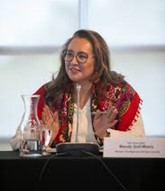
“As we move forward in this chapter of our country’s history, we will ensure our work with Métis holds their decision-making, innovation, and values at the forefront. I am pleased to participate in today’s dialogue to discuss openly about the Building Canada Act. An inclusive economy is essential to a strong, shared future built with and for Indigenous Peoples."
The Hon. Mandy Gull-Masty,
Minister of Indigenous Services
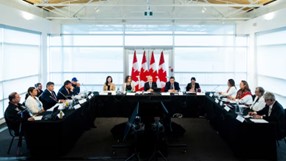
The Métis Major Project Summit followed a hybrid format, with in-person participation by Métis Presidents, the Prime Minister, and Cabinet Ministers, and virtual access provided to additional observers. Simultaneous interpretation (English and French) and technical support ensured accessibility across languages and formats. The meeting followed the agenda in Annex B and was held in a single room, with all participants present for the full duration. A presentation prepared by the Privy Council Office was shared with participants ahead of the meeting to support informed discussion on the Building Canada Act (Annex C).
The day began with an opening prayer and land acknowledgement from Elder Veda Weselake, followed by opening remarks from the Prime Minister. Each Métis President was invited to deliver a five-minute opening statement, followed by brief introductions by each Cabinet Minister.
Following the opening remarks, the Summit moved into two structured working sessions, each followed by an open discussion and Q&A, and concluded with a closing roundtable.
Working Session 1
Working session 1 focused on meaningful consultation, the Major Projects Office, and the Indigenous Advisory Council. Ministers opened the session with framing remarks, followed by responses from Métis Presidents. The session included a moderated Q&A with Ministers LeBlanc, Alty, and Hodgson, and a brief intervention from Prime Minister Carney prior to the lunch break.
Working Session 2
Working session 2 focused on Métis economic prosperity, partnership, and participation. Métis Presidents shared their experiences with major projects and proposed new models for inclusion. The Prime Minister and Ministers responded to questions and outlined available tools. This session also included open discussion and Q&A.
Closing roundtable
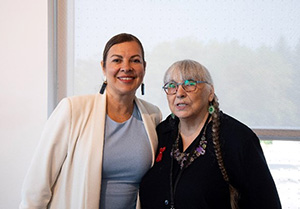
The closing roundtable provided space for final reflections. Métis leaders reiterated their readiness to partner on major projects of national interest and emphasized the importance of ongoing engagement. The Prime Minister responded to comments and affirmed that the Building Canada Act is enabling legislation designed to support Indigenous-led nation-building.
The meeting concluded with a closing prayer from Elder Weselake.
Discussion outcomes
The Prime Minister confirmed that the Building Canada Act is enabling legislation and committed to advancing multiple projects concurrently. He emphasized that the Act does not replace consultation and that Métis governments will be engaged throughout project development, including on conditions and implementation.
The Prime Minister, along with Ministers LeBlanc and Alty, committed to establishing a Major Projects Office and an Indigenous Advisory Council by September 1, 2025. They emphasized that the Indigenous Advisory Council would include Métis representation and invited Métis leaders to propose candidates. They noted that the Major Projects Office will serve as a single federal point of contact for project proponents and Indigenous governments.
The Prime Minister and Minister Alty noted that there will be $40 million to support Indigenous consultation in the implementation of the Building Canada Act, including funding for capacity-building, technical readiness, and engagement. Métis leaders welcomed the announcement and requested clarity on how this funding will be accessed and administered. During the Summit, Métis leaders also expressed shared concerns about eligibility, implementation, and the need for distinctions-based approaches, particularly for governments at different stages of Section 35 recognition.
The Prime Minister and Ministers Hodgson and Alty confirmed that Métis governments are eligible for the Indigenous Loan Guarantee Program, which has been expanded to $10 billion. Métis leaders proposed flexible equity models and requested further discussion on eligibility, thresholds, and implementation.
The Prime Minister and Ministers Alty and LeBlanc committed to follow-up discussions on consultation protocols, economic participation, and land-related issues. These commitments responded to calls made by Métis leaders during the Summit for tailored, distinctions-based engagement that reflects the unique governance structures and rights of Métis governments.
The Summit concluded with closing remarks from the Prime Minister, who emphasized the urgency of the work ahead, the need for bold action, and the importance of bringing all Métis governments forward together through flexible, distinctions-based models.
Elder Veda Weselake closed the meeting with a prayer, affirming Métis leaders’ readiness to initiate and respond quickly to nation-building opportunities.
Conclusion
The Métis Major Projects Summit provided a forum for federal ministers and Métis leadership to discuss the implementation of the Building Canada Act. Métis leaders emphasized the need for distinctions-based engagement, recognition of Métis governments as rights-holders, and inclusion in all stages of project development. They called for clarity on funding eligibility, flexible equity models, and tailored approaches that reflect the unique governance structures of Métis governments.
Federal representatives responded with the following commitments:
- To advance multiple major projects at the same time, rather than sequentially, to reduce delays and create more timely opportunities for Métis participation.
- To establish a Major Projects Office and Indigenous Advisory Council by Labour Day.
- $40 million in new funding to support capacity-building, technical readiness, and engagement in the implementation of the Building Canada Act.
- Inclusion of Métis governments in the Indigenous Loan Guarantee Program enabling access to financing for equity participation in major projects.
- To engage in follow-up discussions with Métis governments on consultation protocols, economic participation, and land-related issues, including tailored approaches for governments at different stages of Section 35 recognition.
The meeting closed with final reflections from Métis Presidents and a prayer from Elder Veda Weselake. The tone was collaborative and forward-looking, with a shared understanding that implementation must begin immediately, and that ongoing engagement will be essential. Métis leaders affirmed their readiness to lead and partner in shaping Canada’s economic future.
Annexes
Annex A: Participant list
Federal participants
- The Right Honourable Mark Carney, Prime Minister of Canada;
- The Honourable Dominic LeBlanc, President of the King’s Privy Council for Canada and Minister responsible for Canada-U.S. Trade, Intergovernmental Affairs and One Canadian Economy;
- The Honourable Rebecca Alty, Minister of Crown-Indigenous Relations;
- The Honourable Rebecca Chartrand, Minister of Northern and Arctic Affairs and Minister responsible for the Canadian Northern Economic Development Agency
- The Honourable Mandy Gull-Masty, Minister of Indigenous Services;
- The Honourable Tim Hodgson, Minister of Energy and Natural Resources; and
- The Honourable Buckley Belanger, Secretary of State (Rural Development)
Métis Nations participants
Otipemisiwak Métis Government (OMG)
- President Andrea Sandmaier
- Senior Executive Officer Aaron Barner
Métis Nation-Saskatchewan (MN-S)
- President Glen McCallum
- Chief Executive Officer Richard Quintal
Manitoba Métis Federation (MMF)
- President David Chartrand (Invitation declined)
Métis Nation of Ontario (MNO)
- President Margaret Froh
- Secretary for Métis Rights, Intergovernmental Relations & Communications Mitch Case
Metis Settlements General Council (MSGC)
- President Dave Lamouche
- Executive Director Catherine Keill
Northwest Territory Métis Nation (NWTMN)
- President Garry Bailey
- Advisor James Heron
North Slave Métis Alliance (NSMA)
- President Marc Whitford (virtual)
Other
- Veda Weselake, Elder
- CIRNAC Deputy Minister Valerie Gideon, Moderator
Métis National Council (MNC) (In Person Observer)
- President Victoria Pruden
- Senior Director, Intergovernmental Relations Krista Clement
- Former President Cassidy Caron
Regrets
Manitoba Métis Federation (MMF)
- President David Chartrand (Invitation declined)
Métis Nation British Columbia (MNBC) (Virtual Observer)
- President Walter Mineault, (Invitation declined)
Annex B: Agenda
1. Opening prayer An opening prayer will be delivered by Elder Veda Weselake |
10:00 – 10:10 |
|---|---|
2. Opening remarks from the Prime Minister |
10:10 – 10:20 |
3. Opening remarks and introductions by members of the ministry and métis leadership |
10:20 – 10:50 |
4. Working session 1: Open dialogue on meaningful consultation, the Major Projects Office and the Indigenous Advisory Council |
10:50 – 11:50 |
5. Lunch |
11:50 – 12:40 |
6. Working session 2: Métis economic prosperity, partnership and participation |
12:40 – 13:30 |
7. Working together |
13:30 – 14:05 |
8. Closing prayer A closing prayer will be delivered by Elder Veda Weselake |
14:05 – 14:15 |
Note: Working Sessions will be moderated by Deputy Minister Valerie Gideon (Crown-Indigenous Relations).
Annex C: Presentation on the Building Canada Act
Slide 1: Bill C-5, One Canadian Economy Act
Presentation by the Privy Council Office
Métis Summit
August 7, 2025
Slide 2: Overview of presentation
- Context for Bill C-5, One Canadian Economy Act
- Part 1: Free Trade and Labour Mobility in Canada Act
- Part 2: Building Canada Act
- What We Heard
- Next steps
Slide 3: A transformational moment for Canada
- Canada is facing a generational challenge that demands bold action and national coordination.
- To safeguard our long-term economic security we must:
- Accelerate economic growth
- Diversify and deepen trade relationships
- Increase domestic productivity and competitiveness
- Bill C- 5 equips Canada to respond decisively by driving economic growth and unlocking Canada's full potential
Slide 4: Bill C- 5, the One Canadian Economy Act
Bill C-5 consists of two parts that lay the foundation for a stronger more unified economy:
- Part 1 – Free Trade and Labour Mobility in Canada Act focuses on reducing barriers to the movement of goods, services and workers across provincial and territorial borders to facilitate trade
- Part 2 – Building Canada Act seeks to advance projects in the national interest through an accelerated review process
Slide 5: Part 1 of the One Canadian Economy Act
The Free Trade and Labour Mobility in Canada Act
Slide 6: What does the Free Trade and Labour Mobility in Canada Act do?
The Act aims to:
- Promote free trade and labour mobility while protecting the health, safety, security, social and economic well-being of Canadians and the environment
- Remove federal barriers to the movement of goods, services, and workers across provincial and territorial borders
- Eliminate duplication and red tape for businesses
Slide 7: How does the Free Trade and Labour Mobility in Canada Act improve trade and labour mobility?
The Act applies to:
- Goods and services:
- When a good or a service is subjected to both a federal and a provincial or territorial requirement and when the federal requirement pertains to interprovincial trade
- Provincial and territorial requirements must be comparable to federal requirements
- Labour mobility:
- Provincial and territorial work authorizations will be recognized federally for the same occupation
Slide 8: How will the Free Trade and Labour Mobility in Canada Act be implemented?
The Act requires regulations that will provide:
- Clarity on comparability – set extra guidelines for deciding when federal rules match those of provinces and territories
- Conditions or obligations – for instance, a worker needs to be in good standing to receive the work authorization
- Carve-out for exceptions – areas where the law doesn’t apply because the risks to people’s safety, security, or the environment are too high
Regulations will be informed by engagement with federal regulators, Indigenous partners and external stakeholders.
Slide 9: Part 2 of One Canadian Economy Act
The Building Canada Act
Slide 10: What does the Building Canada Act do?
The Act accelerates major nation-building projects by:
- Identifying a list of national interest projects through consultation with provinces, territories and Indigenous rights holders
- Streamlining multiple decision points for federal approval via an upfront decision from the Governor in Council
- Requiring proponents to meet clear federal standards for transparency, regulatory compliance and engagement with Indigenous communities
- Issuing a single “conditions document”, that once published, would constitute a permit, decision, or authorization under all applicable statues
Slide 11: What does the Building Canada Act do?
The Act provides for the designation of national interest projects using the following factors, subject to consultation:
- Strengthen Canada’s autonomy, resilience, and security
- Provide economic or other benefits to Canada
- Have a high likelihood of successful execution
- Contribute to clean growth and to meeting Canada’s objectives with respect to climate change
- Advance the interests of Indigenous peoples
Slide 12: What does the Building Canada Act do?
The Act ensures consultation with Metis and other Indigenous peoples is built into the process for:
- Determining whether a project is in the national interest
- The development of the conditions document for permits and authorizations under all applicable federal statutes
- Any amendments to the conditions document
- Consultation required: On project recommendations and understanding of Indigenous interests > Governor in Council Order to determine project in the national interest
- Consultation required: Throughout the federal regulatory process and on the Conditions Document > Minister issues conditions document
- Consultation required: On amendments to Conditions Document
Slide 13: What does the Building Canada Act do?
The Act ensures transparency and parliamentary oversight with requirements for:
- 30-day notice before adding the project to Schedule 1 of the Act, by publishing name and description of a project in Canada Gazette
- Indigenous consultation and consultation with provinces and territories before listing projects
- Parliamentary Review Committee and reporting requirements with legislated timelines
- Online publication of project status, Indigenous consultation results, and information used to develop project conditions
Slide 14: What we heard
During engagement on Bill C-5, we heard concerns about the:
- Inadequate time to consult
- Importance of respecting Indigenous rights and UNDRIP
- Importance of economic participation of Indigenous peoples
- Need for enforcement, monitoring, and accountability
- Importance of environmental stewardship and need to address cumulative effects
- Critical need to protect Indigenous women and girls in the development of major projects
Slide 15: How we’re responding
- Updated the legislation to reflect the interests of Indigenous peoples more clearly as a key factor
- Announced the intention to establish an Indigenous Advisory Council with First Nation, Inuit, and Metis representatives
- Announced $40 million over two years to increase capacity funding for Indigenous peoples to engage on projects early and consistently
- Increased the amount of the Indigenous Loan Guarantee Program from $5B to $10B
Slide 16: Next steps
Work in partnership with Indigenous peoples on implementation, including:
- Standing up Major Projects Office to coordinate reviews of national interest projects
- Establishing the Indigenous Advisory Council
- Administering $40M in capacity funding
- Achieving one-project one review informed by cooperation agreements with provinces and territories within 6 months
- Achieving 2-year decisions for all major projects through broader legislative and regulatory reform, starting with the 60-day red-tape review
Slide 17: Discussion questions
- How do we work together to implement the One Canadian Economy Act?
- What tools, investments, or supports could facilitate greater Metis prosperity and partnership in major projects?
- What principles should guide the selection of projects in the national interest?
- What should the mandate of the Indigenous Advisory Council be?
We want to hear from you.