
Call for Applications
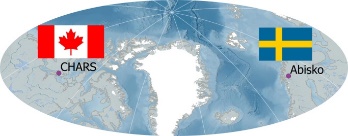
Canada-Sweden Arctic Research Station
Early Career Scientist Exchange Program
Early Career Scientist Exchange Program
Where: Canadian High Arctic Research Station and Abisko Scientific Research Station
Who can apply: PhD-students or scientists holding a PhD degree not older than five years, employed by a university or research organisation in Canada or Sweden
Included: Travel to each research station and accommodation are provided free of charge
Deadline: March 15, 2018
The Arctic is undergoing climate and environmental change at an unprecedented rate. Research that takes a circumpolar perspective is critical to understanding these changes and mitigating the effects they have on natural and social systems. Canada and Sweden are two strong Arctic research nations with a long tradition of bilateral cooperation, including several successful joint field initiatives in the past. Both nations have Arctic Indigenous populations whose communities are facing a variety of challenges in a rapidly changing Arctic.
To encourage a circumpolar research perspective and to foster future Canadian-Swedish Arctic research cooperation, Polar Knowledge Canada (POLAR) and the Swedish Polar Research Secretariat (SPRS) will offer early career scientists (ECS) the opportunity to take part in an exchange program between the two organisations’ Arctic research stations. Selected scientists will conduct research at both stations and establish links between Canadian and Swedish Arctic research institutions.
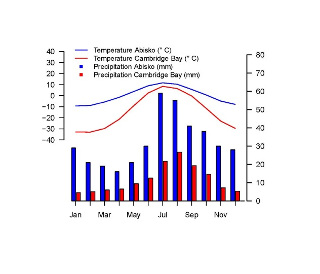
The stations are located at similar latitudes but in different ecozones. The Canadian High Arctic Research Station (CHARS) campus is located in an Arctic tundra ecozone, while the Abisko Scientific Research Station (ANS) is located in a sub-Arctic ecozone. The two stations combined provide an opportunity for comparative studies under different climatic regimes.

The Research Stations
The CHARS campus is located in Cambridge Bay, Nunavut [69°N]. The campus is a year-round world-class hub for science and technology in Canada’s North and a major node in the network of national research infrastructure across the North. The CHARS campus consists of a Main Research Building, a Field and Maintenance Building and triplex accommodation units for visiting researchers. The research campus will provide a broad range of services, including a technology development centre, mechanical and electrical workshops, a knowledge-sharing centre, and advanced laboratories. The CHARS campus will have office and laboratory space to host visitors. POLAR staff can provide general logistical support as well as equipment for scientists going into the field and working in the research labs.
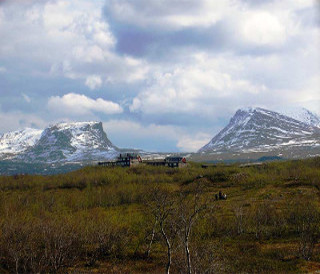
ANS is located in Swedish Lapland [68°N]. The station opened 1913. Abisko provides easy access to the Scandinavian Arctic and Alpine environments. The station offers laboratories, greenhouses, and experimental gardens and can host approximately 100 people. A major asset is its long-term environmental records, some extending more than 100-years back in time, which provide a unique basis to study natural and anthropogenic changes in the Arctic.
The Exchange Program
The exchange program is directed towards early career scientists with an interest in science and technology projects that align with at least one of POLAR’s science and technology priorities and/or one of ANS’ focus areas. It is based on mutual exchange between projects with activities in the CHARS campus and ANS. The selected candidates will take part in fieldwork with a research team at the other nation’s research station, and in outreach activities arranged by POLAR and SPRS. Applicants should be involved in, or are invited to propose, a project with a field component at the home nation’s station, and be willing to invite a candidate from the other country to join the project’s field campaign. Successful candidates will be selected as a pair and work together during the two field campaigns at the CHARS campus and ANS. Selected candidates will receive access to each station’s regular research services (laboratories, staff support, etc) and will have accommodation and both the travel expenses to the CHARS campus and ANS covered both for the domestic and international field work placement.
| POLAR Science and Technology Priorities | ANS Focus Areas |
|---|---|
| Alternative and renewable energy for the North | Impact of climate change on ecosystems |
| Predicting the impacts of changing ice, permafrost and snow on shipping, infrastructure and communities | Permafrost and greenhouse gases |
| Catalyzing improved design, construction and maintenance of northern built infrastructure | Sustainable ecosystem services |
| Ecosystems monitoring (baseline monitoring to support sustainability) | Long-term environmental monitoring and historical climate |
Timing
Successful applicants will participate in field work placements at ANS and the CHARS campus during 2018 and 2019. The first field work placement may begin as early as May 2018; both placements must be concluded by December 2019. Duration of field work placements will be 3 to 6 weeks, depending on the research being conducted and availability of facilities.
Who Can Apply?
PhD-students, or scientists holding a PhD degree not older than five years are eligible to apply. The applicant must be employed by a university or other research organisation in Canada or Sweden. Applicants based in Sweden should apply to SPRS and applicants based in Canada to POLAR.
Applicants may identify a potential exchange partner in their applications, or apply with a project and be matched with an appropriate project partner by POLAR and SPRS from the other country. One candidate from each nation will be selected for the 2018-19 program.
Selection Criteria
Applications will be selected based upon:
- Demonstrated field work experience in the Arctic or involvement in Arctic research
- Existing or proposed research project(s) that are aligned with at least one POLAR science and technology priority and/or one focus areas of ANS.
- Availability of the ECS to participate in two field project placements, and for the project team to host an ECS from the other country in the project’s field campaign
- Experience with community outreach and involvement of communities in the research process and science communication will be considered an asset.
Expected outcome
The program is designed to strengthen Canadian-Swedish research links in the following ways:
- Sharing of field methods and research knowledge; introduction to the other country’s research community and priorities; advancing further bilateral research collaboration
- Enlargement of research teams’ networks for potential collaboration
- Creation of a channel for bilateral exchange of best practice, and potential exchange of technical personnel and managers at the research stations
What to include in application?
The application should include:
- Completed application form
- Research plan (maximum 3 pages) containing sections on
- research interests
- outline of research project and field work plan, and how the project will benefit from taking place at both research stations
- research funding currently assigned, or potentially allocated, for the project
- Arctic field experience of the research team
- Resume of the applicant
- A letter of support from the project leader
Applications must be received not later than March 15, 2018. Canadian-based ECS will submit to info@polar.gc.ca and Swedish based applications will submit to office@polar.se.

Polar Knowledge Canada (POLAR) is a Canadian government agency established on June 1st, 2015. POLAR’s mandate is to advance Canada’s knowledge of the Arctic and strengthen Canadian leadership in polar science and technology.

Swedish Polar Research Secretariat is a government agency that promotes and coordinates Swedish polar research. This includes to follow and plan research and development, as well as to organize and lead research expeditions to the Arctic and Antarctic regions.