
AI and Digital Defence: Canada Among the Global Elite
Article / January 29, 2026 / National Defence
By Lt Marcellin Breault, Directorate Army Public Affairs
The digital domain is now central to modern life, and rapid technological evolution demands constant adaptation and collaboration. NATO Allied Command Transformation hosts events that bring together participants from private industry, academia, and member nations to explore innovative solutions for today’s battle space.
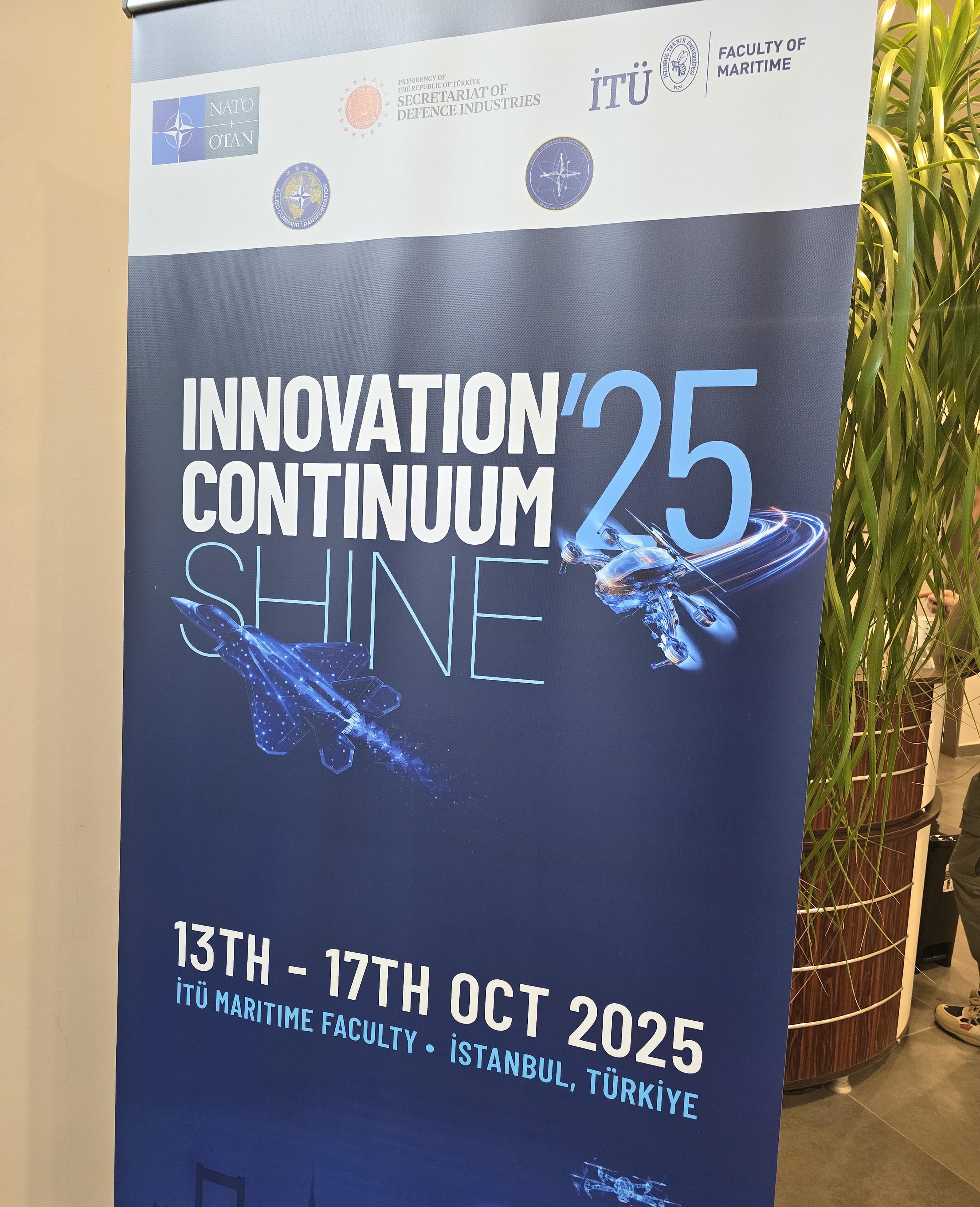
One such event, Innovation Continuum ’25, held in Istanbul from October 13–17, focused on emerging challenges such as quantum-resistant communications, counter-drone technologies, and multi-domain uncrewed operations. A Canadian Army team attended the event and showcased their AI-powered cyber defence system, which earned first prize at the NATO TIDE Hackathon in France earlier this year.
The team, composed of Private Grant Smith, Master Corporals Thilina Ratnayake and Riasat Rahman, and Major Saajan Sarai, members of the 39 Signal Regiment and the Director Digital Army and Combat Systems Integration (DDACSI), developed a system designed to autonomously detect AI-driven cyber-attacks and adaptively protect enterprise and institutional networks against such attacks.. This achievement underscores Canada’s role in shaping the future of cybersecurity alongside global leaders.
Major Sarai shared his thoughts on the experience: "I am incredibly proud of what the Canadian Army team accomplished throughout this engagement with NATO. These events prove that Canada’s soldiers possess world-class skills in software development and cybersecurity. Competing alongside other nations provided an excellent opportunity to represent Canada and demonstrate our commitment to innovation with our NATO allies. Observing other nations’ technologies reinforced that the Canadian Army’s integrated command and control network already embrace many principles driving modernization within the Canadian Army and elsewhere."
These engagements also highlight the exceptional talent within the Canadian Army Reserve, which formed the bulk of the team at both the NATO TIDE Hackathon and the NATO SHINE event. Many Army Reserve units include members with highly technical, sought-after skills, such as software development, that are critical to the Army’s ongoing modernization efforts.
Participating in these events offers undeniable advantages: bringing together some of the brightest minds worldwide, fostering collaboration with NATO allies and partners, and creating opportunities to develop innovative solutions to complex challenges. However, the real test lies in operationalizing these concepts to deliver modern capabilities.
The Canadian Army is committed to transforming its structures and digital capabilities, prioritizing the integration of digital technologies, like the prototype developed by Major Sarai’s team. While the Canadian Army is currently looking at how to transition prototypes developed at a Hackathon like TIDE into operational capabilities, it is working towards making this innovation pipeline a reality in the not-too-distant future.
Another good example is CloudTAK, now deployed across Regular and Reserve Forces. This secure, scalable cloud platform enhances connectivity and reinforces the “One Army” concept. Additional efforts are underway to integrate sensors—including Uncrewed Aircraft System (UAS) platforms—alongside fire support decision software, AI technologies, and field-deployable systems within CloudTAK. Together, these innovations will enable soldiers to operate more effectively in real time within today’s complex environment.
Image Gallery



Caption
AI and Digital Defence: Canada Among the Global Elite