
Evaluation of the Court Challenges Program 2017-18 to 2022-23
Evaluation Services Directorate
May 31, 2024
On this page
- List of tables
- List of figures
- List of acronyms and abbreviations
- Summary
- 1. Introduction
- 2. Program profile
- 3. Evaluation approach and methodology
- 4. Findings
- 5. Conclusions
- 6. Recommendations, management response and action plan
- Appendix A: evaluation matrix
- Appendix B: rights covered by the CCP
- Appendix C: bibliography
List of tables
- Table 1: types of activities funded and levels of funding available ($)
- Table 2: program objectives and expected results
- Table 3: PCH actual spending on the CCP ($), 2017-18 to 2022-23
- Table 4: evaluation questions by core issue
- Table 5: summary of methodology
- Table 6: limitations and mitigation strategies
- Table 7: the University of Ottawa’s actual CCP administrative expenditures 2017-18 to 2022-23
- Table 8: recommendation 1 — Action plan
- Table 9: recommendation 2 — Action plan
List of figures
- Figure 1: funding applications submitted to the CCP by fiscal year
- Figure 2: overview of received and funded applications related to human rights (2018-19 to 2022-23)
- Figure 3: overview of received and funded applications related to language rights (2018-19 to 2022-23)
List of acronyms and abbreviations
- 2SLGBTQI+
- Two-Spirit, Lesbian, Gay, Bisexual, Transgender, Queer, Intersex, Plus
- GBA Plus
- Gender-based Analysis Plus
- ESD
- Evaluation Services Directorate
- PCH
- Canadian Heritage
- CCP
- Court Challenges Program
Alternate format

Evaluation of the Court Challenges Program 2017-18 to 2022-23 [PDF version - 1.27 MB]
Summary
This document is the final report on the evaluation of the Court Challenges Program (CCP). The objective of this program is to support Canadians in bringing test cases of national significance before the courts to clarify and assert certain constitutional and quasi-constitutional official language rights and human rights. The CCP, reinstated in 2017 to the Canadian Heritage (PCH) portfolio, is funded by the federal government and managed by the University of Ottawa using a further distribution funding model.
The evaluation covers the period from 2017-18 to 2022-23 and examines issues of relevance, effectiveness and efficiency. Data collection and analysis is based on a document and administrative data review, a literature review, key informant interviews and case studies.
Relevance
The evaluation indicates that the CCP plays a decisive role in clarifying and ensuring respect for the rights covered within its scope. The program enables individuals and groups to undertake the complex and often lengthy steps required to advance certain fundamental rights. These actions would be largely beyond their reach without the CCP support. The CCP’s objectives are also well aligned with the federal government’s priorities for official languages and inclusion, diversity, equity and accessibility.
There are needs that remain unmet. The program excludes certain fundamental rights, such as those of Indigenous peoples, and judicial proceedings related to human rights that are within provincial or territorial jurisdictions. However, the parameters and scope of the program are anchored in a policy framework established by the government and therefore not under the control of the program.
Effectiveness
During the evaluation period, the University of Ottawa successfully set up and delivered the CCP. The two expert panels supported all eligible cases by funding 275 projects. While the COVID-19 pandemic had only a limited impact on CCP operations, it reduced the capacity of groups eligible for program funding and the operations of the courts to hear these cases.
The evaluation confirms that the program has had a considerable long-term impact on the clarification and advancement of the rights covered by its mandate. Despite limitations on the information available on cases funded by the CCP, the evaluation identifies several landmark decisions in the areas of human rights and language rights that involved parties that received financial support from the program. The ability of groups covered by these fundamental rights to pursue judicial proceedings has also provided better balanced relations with public authorities, who are aware of the availability of such proceedings.
Efficiency
The University of Ottawa has effectively implemented and managed the CCP during the evaluation period, including supporting the deliberative work of the expert panels that have fulfilled their mandates. However, the evaluation identified opportunities to strengthen the capacity of these two panels. In particular, the expert panels have gaps in expertise on litigation costs in different regions of the country and different types of courts.
In general, the University of Ottawa has complied with the provisions of the contribution agreement it signed with PCH. Nonetheless, the CCP’s annual reports do not yet include the names of funded cases and the outcome of litigation, which limits the reporting on results.
The University of Ottawa has undertaken activities to promote the program, particularly through its website and promotional tools. However, although the CCP is well known in the legal community, associations and school boards, it remains less visible to the general public.
Recommendations
Based on the findings described in this report, the evaluation makes the following recommendations:
Recommendation 1
The evaluation recommends that the Assistant Deputy Minister, Strategic Policy, Planning and Corporate Affairs, in collaboration with the University of Ottawa, ensures that both expert panels have access to expertise on litigation costs in different regions of the country and different types of courts.
Recommendation 2
The evaluation recommends that the Assistant Deputy Minister, Strategic Policy, Planning and Corporate Affairs, in collaboration with the University of Ottawa, confirms reporting requirements to adequately document funded cases, including their outcomes and their impacts on the clarification of the rights covered by the program.
1. Introduction
This report presents the findings, conclusions and recommendations of the evaluation of the CCP. The evaluation was conducted in accordance with the evaluation requirements of the Policy on Results (2016) as well as the information needs of senior management.
The evaluation was conducted in accordance with the PCH Departmental Evaluation Plan 2022-23 to 2026-27. It covers a period of six fiscal years, from 2017-18 to 2022-23, and examines the program’s relevance, effectiveness and efficiency.
2. Program profile
The CCP is a program funded by the federal government and managed by the University of Ottawa. The objective of this program is to provide financial support to eligible individuals or organizations to enable them to bring before the courts test cases of national significance seeking to clarify and assert certain constitutional and quasi-constitutional official language rights and human rights.
2.1. Program history
The first version of the CCP was created in 1978 and its funding was intended to support legal proceedings relating to language rights under the Constitution Act, 1867.
Following the adoption of the Canadian Charter of Rights and Freedoms (hereinafter the Charter) in 1982, the mandate of the CCP was expanded to include certain provisions of the Charter relating to human rights and language rights. This was supplemented by the language provisions of the Manitoba Act, 1870.
The government ended its funding of the CCP in 1992, triggering wide-spread objections in civil society that led to the program’s reinstatement in 1994. The federal government again eliminated funding for the CCP in 2006. In response to the protests that followed, including a lawsuit before the Federal Court, the federal government reinstated a modified version of the program in 2008 that covered only certain language provisions and excluded support for human rights judicial proceedings.
In 2017, the federal government announced the reinstatement of the CCP in its current state. The contribution agreement between PCH and the University of Ottawa was signed in March 2018, and the program received the first funding applications in January 2019.
The financial support provided by the CCP not only targets language rights and human rights historically covered by the program, but also includes judicial proceedings based on the Official Languages Act.Footnote 1 For reference, Appendix B describes all language rights and human rights under which such proceedings may be subject to financial support from the CCP.
2.2. Activities, objectives and expected results of the CCP
Activities of the CCP
The primary purpose of the CCP is to provide financial support for certain legal proceedings based on one of the language rights or human rights covered by its mandate. To be considered, the proceedings must represent a “test case”, which, in this case, means a case that concerns:
- a problem or issue that has never been addressed by a court; or
- an issue that has already been decided by a lower-level court, but is likely to further proceed following a leave to appeal; or
- an issue that has already been addressed more than once by the courts, but the judgments rendered remain contradictory.
The case must also be of national significance and must be aimed at asserting and clarifying the rights within the scope of the CCP.
Finally, language rights cases may challenge laws, policies or practices under federal, provincial or territorial jurisdiction, while human rights cases may only challenge laws, policies or practices under federal jurisdiction.
Eligible individuals or groups who undertake such legal proceedings are invited to submit an application for funding. Table 1 describes the type of activities that may be eligible for funding, as well as the maximum amount of funding that may be allocated.
| Activities | Description | Maximum funding ($) (official languages) | Maximum funding ($) (human rights) |
|---|---|---|---|
| Development of test cases | Funding may be used for legal research and development of points of law, consultation with other stakeholders, or the development of evidence in support of the case. | 20,000 | 20,000 |
| Litigation | Litigation may be a trial at first instance or on appeal at each level, up to the Supreme Court of Canada if necessary. | Trial: 150,000 Leave to appeal: 15,000 Appeal: 50,000 |
Trial: 200,000 Leave to appeal: 10,000 Appeal: 50,000 |
| Legal intervention | A legal intervention is expected to present broader arguments, which complement those presented by the main parties. | Leave to intervene: 10,000 Intervention: 40,000 |
Leave to intervene: 10,000 Intervention: 35,000 |
A Panel of Experts in Language Rights and a Panel of Experts in Human Rights are responsible for analyzing and, where appropriate, allocating funding in response to the applications submitted to them respectively. If necessary, the panels may allocate additional funding when the amount of an initial application is less than the maximum funding available. They may also, on an exceptional basis, grant extraordinary funding to allocate funding exceeding the normal maximum level.
The CCP staffFootnote 2 supports both applicants and members of the expert panels in their efforts and processes.
Objectives and expected results
Table 2 summarizes the objectives and results associated with the CCP. Essentially, the implementation of the activities of the CCP should, in principle, enable eligible individuals and groups who wish to undertake legal proceedings based on one of the rights covered by the CCP to access available funds and to have their perspectives considered by the courts. This, in turn, should contribute to the jurisprudence relating to these rights and enable the entire Canadian population to better understand its scope.
| Objectives | Immediate results | Medium-term result | Long-term result |
|---|---|---|---|
| To provide financial support to Canadians to bring test cases of national significance before the courts. | Funding is available for individuals or groups who wish to undertake or participate in test cases pertaining to rights and freedoms covered by the program. | The rights and freedoms covered by the program are clarified. | The constitutional rights covered by the program are strengthened. |
| To help assert and clarify certain constitutional and quasi-constitutional official language rights and human rights in Canada. | The perspectives of individuals or groups who receive funding are presented before the courts in test cases. |
2.3. Program management and governance
PCH funds the CCP and, to this end, manages the contribution agreement it signed with the University of Ottawa. In addition, with the support of a selection committee, the Ministers for Canadian Heritage and for Official Languages are responsible for appointing the members of the two expert panels.
Within the parameters set out in the contribution agreement, the CCP operates completely independently of the Department and the federal government as a whole. This approach is justified by the fact, among other things, that the federal government may be subject to, or intervene in a case financially supported by the CCP.
In accordance with the contribution agreement it signed with PCH, the University of Ottawa is responsible for the day-to-day management and governance of the CCP. In this respect, the University of Ottawa has established a management committee chaired by the President and Vice-Chancellor of the University of Ottawa, whose mandate is to define the strategic direction of the CCP and ensure that its objectives as defined in the contribution agreement are achieved. The management committee has no access to the records of the funding applications received by the CCP.
2.4. Program resources
As shown in Table 3, an amount of $24 million was allocated to the University of Ottawa for the administration of the CCP and funding of test cases during the period covered by the evaluation. The sum of $786,583 was allocated for the Department’s operating and maintenance expenses related to its activities in support of the program.
| Resources | 2017-18 | 2018-19 | 2019-20 | 2020-21 | 2021-22 | 2022-23 | Total |
|---|---|---|---|---|---|---|---|
| Operation and maintenance | 251,834 | 119,121 | 742 | 30,905 | 281,543 | 102,438 | 786,583 |
| Contributions | 228,628 | 4,907,234 | 4,979,734 | 4,979,734 | 4,979,734 | 4,074,584 | 24,149,648 |
| Total | 480,462 | 5,026,355 | 4,980,476 | 5,010,639 | 5,261,277 | 4,177,022 | 24,936,231 |
Source: PCH Financial Management Branch
Note: The Contributions for 2017-2018 includes $110,500 allocated to the University of Ottawa, as well as $118,000 to the former program administrator, the Court Challenges Program of Canada.
3. Evaluation approach and methodology
3.1. Evaluation scope
The evaluation covers all CCP activities from 2017-18 to 2022-23. It focuses on the implementation of the CCP and its impact. On this last point, to provide a more complete picture, the evaluation includes certain considerations regarding the results that the program achieved since its inception in 1978, particularly related to the development of jurisprudence on language rights and human rights.
3.2. Calibration
To best meet the Department’s information needs, the evaluation addressed the relevance of the CCP to determine how well the program has adapted to its evolving context and to the federal government’s priorities. The evaluation addressed the issues of effectiveness by including not only the results achieved since its reinstatement in 2017, but also the broader impact of the program since its inception in 1978. Finally, an emphasis was placed on the theme of efficiency, given that this is the first evaluation since the CCP was reinstated in its current form.
3.3. Evaluation questions
Table 4 describes the six evaluation questions grouped under the themes of relevance, effectiveness and efficiency. The evaluation matrix outlining the indicators for each question is presented in Appendix A.
| Issue | Evaluation questions |
|---|---|
| Relevance | 1. To what extent does the CCP meet the current and changing needs of Canadians? |
| Effectiveness | 2. To what extent has the CCP achieved its short-, medium- and long-term results? 3. What barriers and catalysts have affected the achievement of results? |
| Efficiency | 4. To what extent does the agreement between PCH and the program administrator allow for the most efficient implementation of the CCP? 5. To what extent is the program managed efficiently? Are there barriers to the full use of resources? 6. Could the CCP’s performance measures be optimized, while respecting the independence of the program? |
3.4. Data collection methods
The evaluation of the CCP was based on four methods, which are briefly described in Table 5.
| Methodology | Description |
|---|---|
| Document review and administrative data review | The review included existing program documents, as well as the two surveys administered by the University of Ottawa in 2023 (of members of expert panels and beneficiaries). To avoid duplication of effort, the methodology did not include surveys of CCP recipients since such a survey was conducted by the University of Ottawa. After reviewing the methodology used for this survey, the evaluation team concluded that the resulting data were relevant and credible, and the report prepared by the University of Ottawa was therefore considered in the literature review. The University of Ottawa also conducted a survey of the members of the two expert panels, and these results were also considered in the literature review. |
| Literature review | The literature review included an analysis of case law and grey and scientific literature on the context of court challenges in Canada, combined with a review of government publications relevant to the evaluation questions. |
| Key informant interviews | A total of 35 interviews with 38 individuals were completed. The list of individuals consulted includes program staff, administrators within the University of Ottawa, members of expert panels, independent experts, legal counsel representing the Department of Justice, lawyers, as well as stakeholders. |
| Case studies | Case studies were undertaken to document the impact of the CCP on the clarification of three rights recognized in the Canadian Charter of Rights and Freedoms (s. 15 – Equality rights, s. 23 – Minority language educational rights and s. 28 – Gender equality rights). |
3.5. Evaluation limitations and mitigation strategies
Overall, the evaluation proceeded as planned and this report addresses all evaluation issues. Table 6 summarizes the limitations the evaluation team faced and the mitigation strategies adopted.
| Methodological limitations | Mitigation strategies |
|---|---|
| In its current form, the CCP has been in place since 2017, which limits the experience to date. | The evaluation focuses on the period from 2017-18 to 2022-23, but also includes an analysis of the longer-term impact of the program since its inception in 1978, which provides a richer perspective on its longer-term contribution. |
| The CCP’s policies on the confidentiality of information related to funding applications limit the ability to measure the impact of the program. | Although the current information confidentiality policies limit the ability to provide a comprehensive picture of the impact of the CCP, data collection nonetheless allowed for sufficient information to be gathered on the program’s contribution to the achievement of its expected results. The evaluation also examined the impact of the policies on the confidentiality of information. |
| The COVID-19 pandemic affected not only the operations of the CCP, but also those of the courts called upon to hear cases that the program financially supports. | The data collection specifically considered the impact of COVID-19, while recognizing that this was an exceptional situation. Although the impact of this pandemic was felt in four of the six fiscal years covered by the evaluation, the analysis also considers the longer-term impact of the program. |
4. Findings
4.1. Relevance
The analysis of the CCP’s relevance focused on its ability to meet the needs of Canadians and its alignment with federal government priorities.
4.1.1. Relevance: ongoing need for the CCP
Evaluation question: To what extent does the CCP meet the current and changing needs of Canadians?
Key findings:
- Access to justice remains a challenge in Canada and judicial proceedings for constitutional rights are particularly complex. The CCP makes it possible to take steps that would be largely inaccessible without the program’s financial support.
- The interpretation of the fundamental rights covered by the CCP is, like all constitutional texts, constantly evolving and the CCP enables the courts to update their scope and application.
- The CCP reflects the federal government’s priorities in promoting official languages, and equity, diversity and inclusion. The CCP contributes to reconciliation but could better reflect its commitment to the United Nations Declaration on the Rights of Indigenous Peoples.
- Some factors that limit the relevance of the CCP include the list of rights covered by the program, the actions that may be challenged with program support and questions about the definition of a test case of national significance.
Access to justice, including judicial proceedings to clarify fundamental human rights, remains important but difficult
The analysis of the CCP’s relevance must consider the widely recognized fact that access to justice is difficult in Canada and in many other countries. In a speech delivered in 2018, the Chief Justice of the Supreme Court of Canada acknowledged the inequities in the justice system:
“Whenever I think about access to justice, a quote from Honoré de Balzac comes to mind. ‘Laws are spider webs through which the big flies pass and the little ones get caught.’ To me, that image perfectly illustrates not only the inequities in our justice system, but also the concrete effects of these inequities on people.”Footnote 3
The Chief Justice emphasized that the first obstacle to such access is the costs associated with legal proceedings.
Throughout the consultations conducted as part of the evaluation of the CCP, as well as in the published literature on the subject, stakeholders and authors have highlighted this financial barrier, which is even more significant when it comes to judicial proceedings concerning the interpretation of constitutional texts. These proceedings raise particularly complex issues that regularly involve courts of appeal and the Supreme Court of Canada.
The evolving nature of constitutional texts
As noted by the experts consulted, the complexity of legal proceedings that raise constitutional issues stems, among others, from the fact that these provisions are constantly evolving. Citing the well-established “living tree” doctrine, the Supreme Court of Canada has pointed out that “[a] large and liberal, or progressive, interpretation ensures the continued relevance and, indeed, legitimacy of Canada’s constituting document.”Footnote 4
In this context, the interviews and the review of documents make it possible to understand the nature and scope of new legal issues:
- In terms of human rights, the list of issues includes, among others, those relating to economic insecurity, the environment and climate change, reconciliation with Indigenous peoples and colonialism, immigration and population displacement, racism, as well as the emergence of artificial intelligence and other related technologies.
- In terms of language rights, the list of these issues includes, among others, the respect for and the enforcement of recognized rights, particularly those set out in section 23 of the Charter on education, new concepts included in the Official Languages Act arising from Bill C-13, as well as issues relating to early childhood and the continuum of education to post-secondary education, Francophone immigration outside Quebec, and the protection of Indigenous languages.
During the period covered by the evaluation, the CCP approved 275 funding applications. This sustained level of activity illustrates the current and anticipated need for the type of financial support offered by the CCP. As noted by the stakeholders consulted, this is also a period when the COVID-19 pandemic has exacerbated the precarious situation of certain already vulnerable groups, in addition to slowing down the activities of an already overburdened judicial system.
In sum, the evaluation indicates that the relevance of the CCP is closely linked to the fact that the legitimacy of the fundamental rights recognized in the Canadian constitution is based on their evolving nature. Recognizing that there is no right without recourse, the CCP plays a key role in supporting this essential updating process.
There is an alignment with certain federal government priorities
The federal government’s decision to fund the CCP reflects a number of its priorities.
During the period covered by the evaluation, the federal government introduced Bill C-13, which made significant changes to the legislative framework in the Official Languages Act. The CCP contributes directly to efforts aimed at promoting the substantive equality of French and English, as well as to the vitality of official language communities.
Another priority of the federal government is to promote equity, diversity and inclusion in all of its activities, including the management of the public service, the funding it provides, and the implementation of its programs. The funding provided by the CCP is specifically intended to protect and guarantee the fundamental rights of Canadians, particularly by enabling vulnerable groups to access the justice system to clarify and assert their rights.
The evaluation nevertheless identified certain factors that could limit the relevance of the CCP.
There are questions about the list of rights covered by the CCP
The CCP provides financial support for judicial proceedings based on certain fundamental rights contained in the Canadian Constitution (see Appendix B for a list of these rights). By retaining certain rights to the exclusion of other fundamental rights, the CCP creates a hierarchy in the support it offers, a finding that certain stakeholders consulted as part of the evaluation noted and questioned. Why provide funding in support of a case that raises an issue related to freedom of expression (section 2 of the Charter), but exclude support for a case that raises an issue related to mobility rights (section 6 of the Charter)?
On this basis, several stakeholders consulted, as well as authors who have published on the subject, suggested broadening the scope of the rights covered to include all the fundamental rights contained in the Charter. This approach, however defensible, nevertheless raises operational challenges that were also noted during the interviews. The inclusion of a broader range of fundamental rights would have a direct impact on the level of funding required by the CCP, the number of funding applications submitted, and the expertise required to process these applications. For all practical purposes, the parameters and scope of the program are anchored in a policy framework established by the government and are therefore outside the program’s control.
The case of Indigenous rights raises unique issues. At this time, it is possible for the CCP to support a case that raises Indigenous issues, provided that the case is based on one of the rights covered by the program, such as section 15 of the Charter on equality rights. However, the CCP cannot fund judicial proceedings based specifically on section 25 of the Charter or section 35 of the Constitution Act, 1982, which directly concern Indigenous rights and freedoms.Footnote 5
The federal government, however, considers reconciliation with Indigenous peoples to be one of its highest priorities and “recognizes that reconciliation is a fundamental purpose of section 35 of the Constitution Act, 1982.”Footnote 6 This recognition is part of the Government’s action plan to implement the United Nations Declaration on the Rights of Indigenous Peoples.
In light of these findings, several stakeholders consulted and authors pointed out that the CCP could be better aligned with the federal government’s objectives of reconciliation with Indigenous peoples if it supported judicial proceedings based on section 25 of the Charter or section 35 of the Constitution Act, 1982.
There is an asymmetry regarding provincial or territorial actions that may be challenged with the support of the CCP
As noted in the program description, the CCP makes a distinction regarding the type of laws, policies or practices that may receive financial support for challenges affecting rights related to:
- languages - the CCP may provide financial support judicial proceedings targeting laws, policies or practices under federal, provincial or territorial jurisdiction; and
- human - the CCP may financially support judicial proceedings targeting laws, policies or practices under federal jurisdiction.
The interviews and the review of documents indicate that this distinction reflects considerations related to federal-provincial-territorial relations. Allowing the CCP to fund human rights-based judicial proceedings challenging provincial or territorial legislation could generate political tensions.
This issue was addressed by the House of Commons Standing Committee on Justice and Human Rights in its 2016 study in support of the reintroduction of the CCP. The Committee had recognized the political logic of this distinction. However, it noted that the inclusion of provincial and territorial laws in human rights-based judicial proceedings that could be funded by the CCP would allow the program to be, “more responsive to the laws that most directly and most often impact the majority of Canadians, such as family law and access to social services legislation.”Footnote 7 On this basis, the Committee made the following recommendation: “The eligibility criteria for funding under the renewed CCP should also include challenging provincial and territorial laws, providing that the cases are national in scope and impact.”Footnote 8
Several stakeholders and experts consulted as part of the evaluation echoed these statements. In this context, human rights, and most specifically those of minorities, must be fully protected, which necessarily involves the financial capacity to undertake the judicial proceedings needed to ensure their respect by all levels of government. This statement is even more important because the Charter is neither a federal document nor a provincial or territorial document. It is a bill that covers all levels of government without distinction.
Recognizing again that there is no right without recourse, the exclusion of provincial or territorial actions from court challenges over human rights that may be subject to financial support by the CCP has a disproportionate impact on certain groups of citizens whose fundamental rights may have been infringed by a provincial or territorial action. Since there are no other programs that offer similar support to the CCP, these groups find themselves facing a barrier that considerably reduces their ability to initiate a judicial proceeding and, therefore, assert their rights.
While acknowledging the sensitivity surrounding this issue, several stakeholders consulted stated that a more uniform approach between language rights and human rights would allow the CCP itself to be more aligned with the objectives of equity, diversity and inclusion supported by the federal government.
The definition of a test case of national significance is not specific
The operational definition used to date by the CCPFootnote 9 of what constitutes a test case of national significance has raised and continues to raise questions. This definition creates certain confusion or uncertainty as to what can and cannot be the subject of financial support by the program. As mentioned during the interviews, some perceive the CCP as being strictly limited to clarifying the rights covered, thus allowing case law to evolve, while others believe that the CCP must also make it possible to push, where necessary, public authorities to respect these rights. In the latter case, it is a question of combining the theoretical and practical dimensions of the CCP.
The ongoing ambiguity regarding the definition of a test case of national significance poses a challenge not only for members of expert panels in the application of this definition, but also for individuals or organizations who apply for funding, particularly if their situation reflects both aspects of clarification and aspects of implementation or respect, in practice, of recognized rights.
An example cited by the stakeholders and experts consulted concerns section 23 of the Charter on minority language education rights. This section has already been the subject of several decisions that have clarified the nature and scope of this right. However, questions remain regarding the judicial proceedings available to official language communities to ensure that the guarantees found in this provision are respected in practice. All of these approaches share the objective of clarifying and asserting a constitutional right, which is the main focus of the CCP’s mandate.
4.2. Effectiveness
The analysis of the CCP’s effectiveness focused on the CCP’s achievement of results during the evaluation period, but also in the longer term. The evaluation also identified barriers or catalysts related to the achievement of these results.
Evaluation question: To what extent has the CCP achieved its short-, medium- and long-term results?
Key findings:
- The University of Ottawa successfully re-established the CCP, which was able to receive funding applications starting in January 2019. Despite the impact of COVID-19, the program received 529 funding applications, of which o 275 were approved.
- Unfunded applications did not meet the funding criteria. Meritorious applications were not rejected because the CCP did not have sufficient funds available to support them.
- The CCP has undertaken promotional activities, but it remains less known among certain groups that could benefit from its support.
- Although information on funded cases is only partially available, the evaluation confirms that the CCP played a unique and decisive role in clarifying and respecting the rights covered by the program.
4.2.1. Effectiveness: Results achieved since the reinstatement of the CCP in 2017
Cases affecting all components were funded
During the period covered by the evaluation, the University of Ottawa successfully completed the phase to operationalize the CCP, which was able to receive and process a substantial number of funding applications affecting all available funding components.
As stated in subsection 2.1, PCH and the University of Ottawa signed the CCP contribution agreement in March 2018, and the program was able to receive the first funding applications in January 2019. A little over a year later, the COVID-19 pandemic forced the CCP to adjust its operations and it limited the capacity of funding applicants who also had to adapt to the impacts of the pandemic, as did the courts.
Despite this difficult context, the CCP received 529 funding applications during the five fiscal years from 2018-19 to 2022-23. Figure 1 shows that, from the first fiscal year in which it was fully operational (2019-20), the CCP received 171 funding applications, followed by a slowdown largely attributable to COVID-19.

Figure 1: finding applications submitted to the CCP by fiscal year – text version
| Fiscal year | Human rights | Language rights |
|---|---|---|
| 2018-19 | 34 | 27 |
| 2019-20 | 130 | 41 |
| 2020-21 | 66 | 26 |
| 2021-22 | 62 | 21 |
| 2022-23 | 76 | 46 |
Source: Annual CCP reports and administrative data
Program data confirms that these funding applications cover all types of funded activities, from test case development to trial and appeal litigation, as well as legal interventions. These applications were from all regions of the country (except Nunavut), and the volume of applications by province or territory largely reflects their respective demographic weight.
Of the 529 applications submitted to the CCP, 368 (or 70%) concerned human rights. As illustrated in Figure 2, 168 of these applications were funded, with an approval rate of 46%. All types of activities were funded.
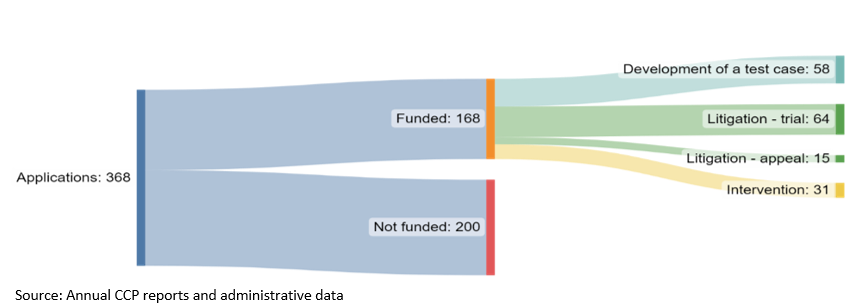
Figure 2: overview of received and funded applications related to human rights (2018-19 to 2022-23)– text version
The CCP received 368 applications. Of these, 168 were funded and 200 were unfunded. Of the 168 funded applications, 58 were for development of a test case, 64 for litigation at trial, 15 for litigation on appeal and 31 for legal intervention.
Source: Annual CCP reports and administrative data
In terms of language rights, the approval rate was higher, at 66%. As shown in Figure 3, case development represented a smaller proportion of funded cases, at 19% compared to 35% of cases relating to human rights.
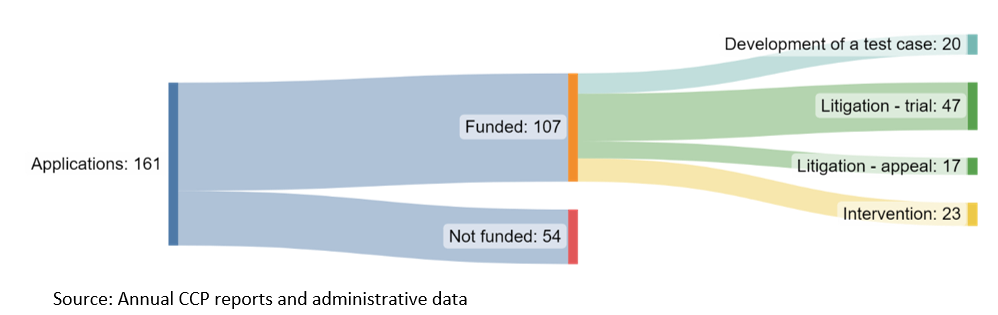
Figure 3: overview of received and funded applications related to human rights (2018-19 to 2022-23) – text version
The CCP received 161 applications. Of these, 107 were funded and 54 were unfunded. Of the 107 funded applications, 20 were for development of a test case, 47 for litigation at trial, 17 for litigation on appeal and 23 for legal intervention.
Source: Annual CCP reports and administrative data
Unfunded cases did not meet the eligibility criteria
Overall, the CCP was able to fund applications that met the funding criteria and which were confirmed as relevant by the expert panel that reviewed the application. During their interviews, members of the expert panels indicated that they had access to sufficient funds to carry out their mandate. In other words, meritorious applications were not rejected because the CCP did not have sufficient funds available.
In that respect, the list of main reasons why an application was not funded includes:
- the issue has already been funded;
- this is not a test case;
- the application does not concern a right covered by the CCP; and
- the application does not meet the eligibility criteria
Furthermore, during the period covered by the evaluation, nearly a quarter of the human rights applications were rejected because they did not propose a challenge to a federal law.
Activities to promote the CCP were undertaken
In accordance with the contribution agreement, the University of Ottawa successfully undertook a series of activities to promote the CCP. Since January 2019, the CCP had a website in place, as well as a brand image and promotional material in both official languages. Administrative data confirm that visits to the CCP website increased annually, particularly since the impact of the pandemic subsided.
While the presence of a website is essential, the evaluation indicates that most applicants learned about the CCP through a lawyer or by word of mouth. The evaluation indicates that in the absence of communication with a lawyer or other individuals or organizations with knowledge of the CCP, access to the program would be less.
Overall, funding recipients are satisfied with the information on the CCP website, and their ability to find and understand this information. The satisfaction rate for the information offered is higher among applicants who received funding than those whose applications were rejected. The latter offered suggestions for improving the application process, including:
- the possibility of providing direct assistance in the development of a funding application;
- simplification of application forms;
- the possibility of appealing a rejected application;
- expediting the decision-making process; and
- a more detailed explanation of the reasons for the rejection of a funding application.
4.2.2. The CCP’s historic contribution to the clarification and respect of the rights covered
Some factors limited the measurement of long-term results
Some barriers systematically limited the ability to measure the long-term impact of the CCP. Since its inception in 1978, the program has taken different forms and been managed by several entities, ranging from federal departments to the University of Ottawa, the Canadian Council on Social Development, and a period during which the program was managed by a dedicated non-profit entity, the CCP of Canada. Each of these entities has adopted rules or policies regarding the management of information on applications submitted and activities funded.
For these reasons, there is no exhaustive list of all the cases that the CCP has funded since 1978. The literature review undertaken as part of this evaluation indicates that, to date, at least 1,600 applications submitted to the CCP have received funding. However, it can be assumed that the actual number of applications funded is higher than this figure since the information related to certain periods of operation of the CCP is incomplete. It should also be noted that between 1978 and 1985, and between 2008 and 2016, the program only funded applications related to language rights.
Despite these constraints, there is sufficient information that provides an informed perspective on the CCP’s historical impact.
The Program has made a significant contribution to the advancement of language rights
The case studies conducted as part of this evaluation, as well as the interviews and literature of the language rights experts consulted, all indicated that the CCP had made an exceptional contribution to the advancement of the language rights covered by its mandate.
This contribution is particularly marked with respect to section 23 of the Charter on minority language educational rights. A series of decisions by the Supreme Court of Canada, beginning with Mahé v. Alberta (1990), transformed minority language education and led to the establishment of a vast network of institutions enabling official language minority communities to manage their education. All landmark judicial proceedings for section 23 of the Charter received financial support from the CCP. They helped clarify several aspects of this constitutional provision, including the following:
- The right for official language minority communities to manage their educational institutions (Mahé v. Canada). Alberta, 1990)Footnote 10.
- The right of management and control exercised by a minority school board with respect to the location of schools (Arsenault-Cameron v. Prince Edward Island, 2000)Footnote 11.
- The power of the courts to order actions that may constitute effective remedy depending on the circumstances (Doucet-Boudreau v. Nova Scotia, 2003)Footnote 12.
- The concept of substantive equality between minority and majority language instruction (Association des parents de l’école Rose-des-vents v. British Columbia, 2015)Footnote 13.
- The level of funding required for minority language education (Conseil scolaire francophone de la Colombie-Britannique v. British Columbia, 2020)Footnote 14.
Several stakeholders expect that other steps will be taken to further clarify the scope of section 23 of the Charter, including, for example, judicial proceedings in the event of non-compliance with provincial or territorial government obligations, the impact of the right recognized in section 23 of the Charter on early childhood or post-secondary education, or the concept of rights holders.
Other key decisions on language rights received financial support from the CCP. Examples include the Supreme Court of Canada’s judgment in Bilodeau v. Manitoba (1986), Mercure v. Saskatchewan (1988) on the language obligations of the provinces, and the Ontario Court of Appeal’s judgment in Lalonde v. The Ontario Health Services Restructuring Committee regarding the closure of Montfort Hospital in Ottawa. As Professor Cardinal summarized:
“Over the course of thirty years, the courts have gradually transformed Canada’s language regime. In ruling after ruling, they have forced federal and provincial governments to adopt policies and initiate actions favourable to official languages.”Footnote 15
This sustained level of activity in the courts has also transformed the relationship between official language minority communities and the various levels of government. As community stakeholders pointed out in interviews, provincial and territorial governments are very aware that official language minority communities can seek legal judicial proceedings when necessary. They also noted that every judicial proceeding, even when it concerns a particular province or territory, has a pan-Canadian impact because the principles emerging from these decisions should guide all governments.
The Program has contributed to the clarification of human rights
It is difficult to clearly define the relative contribution of the CCP to human rights enshrined in the Charter. These rights have been the subject of several judicial proceedings that have helped to develop the case law and, by the same token, to foster Canadians’ understanding of the scope of these rights. The limits on access to information for funded cases, combined with the fact that the program only funds cases related to a federal action and that it had stopped funding this type of judicial proceedings between 2006 and 2017, limit such an analysis.
Despite these constraints, the information collected as part of the evaluation indicates that the CCP has directly contributed to the clarification of human rights. As Professor Levesque summarized:
“[Translation] Several major human rights gains in this country have been made with the support of the CCP, including the adaptation of VIA Rail cars for persons with reduced mobility, recognizing the rights of same-sex couples, and maintaining the prohibition against revealing the identity of a sexual assault victim.”Footnote 16
With specific reference to section 15 of the Charter on equality rights, court decisions have addressed, among other things, issues relating to:
- the discrimination based on Canadian citizenship status;
- the provision of sign language interpretation services in the health sector;
- rights of same-sex couples;
- Indigenous fishing rights; and
- pension plans.
In doing so, the courts have introduced the principle of substantive equality, and have expanded the grounds of discrimination that may be raised in such proceedings.
The experts consulted in the case studies identified several issues that need to be clarified in relation to equality rights, including:
- the intersection between section 15 of the Charter and section 35 of the Constitution Act, 1982, on Indigenous rights;
- the overlap between section 15 and section 2 of the Charter concerning the freedom of religion, expression, peaceful assembly and association;
- the concept of indirect or adverse-effect discrimination; and
- gender equality rights to encompass the 2SLGBTQI+ community.
Overall, the evaluation indicates that human rights are constantly evolving. The CCP has a role to play in funding cases that allow these rights to evolve and be updated, so that these rights can be established and respected by governments.
4.2.3. Effectiveness: Barriers and catalysts
Evaluation question: What barriers and catalysts have affected the achievement of results?
Key findings:
- The results achieved by the CCP were facilitated by its administrative team, which provided sustained support to applicants and members of both expert panels.
- The COVID-19 pandemic had a relatively limited impact on the operations of the CCP, but it affected applicants for funding and the courts hearing cases funded by the program.
- Access to the CCP remains difficult for certain groups, due in part to the complexity of constitutional rights issues and the fact that it may be necessary to access additional funds to those provided by the program.
The CCP team at the University of Ottawa was a decisive and sustained factor in achieving results
Having a strong administrative team in place was an important factor in contributing to the results achieved by the CCP during the period covered by the evaluation. The interviews conducted as part of the evaluation, as well as surveys conducted by the University of Ottawa with expert panel members and funding applicants, indicate that the CCP team was able to offer professional, helpful and respectful support.
The COVID-19 pandemic had an impact on the number of applications
Overall, the impact of the COVID-19 pandemic on the CCP’s ability to achieve its results has been relatively limited. The main challenge faced by the CCP was dealing with the pandemic only a few months after officially starting its operations.
Like all organizations in the country, the CCP had to modify its operations to comply with public health guidelines. The evaluation indicates that this process went well. The CCP’s administrative team, as well as the two expert panels, was able to operate remotely, limiting the delays for processing funding applications.
The uncertainty that marked this period forced many applicants to change their priorities. As previously noted, the number of funding applications declined, particularly at the beginning of the pandemic. The courts also had to adapt, which resulted in delays in the progress of cases.
Access to the program is difficult for certain groups
The CCP is generally accessible, but some barriers exist.
Initiating legal proceedings raising constitutional issues is in itself a complex process that requires expertise on procedure and substantive law applicable to each case. It is therefore not surprising to note that applicants supported by a lawyer have been more successful. The survey conducted by the University of Ottawa indicates that, for applicants who were funded, 76% of them were supported by a lawyer. As for the applicants who were not funded, only 23% were supported by a lawyer. While some groups of beneficiaries already have links with lawyers specializing in their respective fields of intervention, this is not the case for other groups, particularly those that have been historically marginalized.
Another factor limiting access to the CCP is obtaining additional financial resources that complement those of the CCP. In fact, the evaluation indicates that the majority of funded applicants must themselves cover part of the costs associated with their process. An important variable in this regard is the status of a fund applicant. If the applicant is the primary party of record, it is likely that other funds will have to be secured throughout the legal process. If it is a party seeking to intervene in a case, or if the application involves the development of the case, it is more likely that the funds provided by the CCP will be sufficient.
Additional financial support tends to come from pro bono advice provided by lawyers and self-funding by the applicant organization. If such options are not available, access to the CCP is inevitably reduced.
4.3. Efficiency
The analysis of the CCP’s efficiency focused on the extent to which the University of Ottawa met the obligations outlined in the contribution agreement it signed with PCH, the effectiveness of administrative processes, particularly those related to expert panels, and the CCP’s approach to performance measurement.
4.3.1. Efficiency: Implementation of the CCP
Evaluation questions:
- To what extent does the agreement between PCH and the program administrator allow for the most efficient implementation of the CCP?
- To what extent is the program managed efficiently? Are there barriers to the full use of resources?
Key findings:
- Overall, the CCP is effectively managed, and the provisions of the contribution agreement between PCH and the University of Ottawa are respected.
- While the expert panels work in accordance with their mandates, the evaluation identifies opportunities to improve their capacity.
Administrative efficiency in program implementation
The evaluation indicates that the University of Ottawa has largely respected the commitments outlined in the contribution agreement it signed with the Department of PCH. It has put in place the administrative team, the required administrative policies and practices, the website, the management panel and other components necessary for the proper administration of the program. The administrative team was also able to provide the necessary support for the work of the two expert panels.
Experience to date indicates that the model in place largely meets the needs of expert panels and funding applicants. No alternatives to the existing model that would improve program efficiency were identified or suggested.
The only concern raised was the uncertainty regarding the sustainability of the program. The fact that the CCP has been abolished twice in the past is the root of these concerns. However, the consultations conducted as part of the evaluation took place prior to the passage of Bill C-13, an Act to amend the Official Languages Act and the Department of Canadian Heritage Act, which enshrines in this legislation the existence of a program such as the CCP.
As shown in Table 7, during the evaluation period, the program provided an annual average of 80.3% of its budget to funding judicial proceedings and 19.7% to program administration, which is aligned with the provisions of the contribution agreement.
| Fiscal year | Administration of the CCP ($) | Support for judicial proceedings ($) | Total ($) | % of administrative costs |
|---|---|---|---|---|
| 2017-18 | 110,500 | 0 | 110,500 | - |
| 2018-19 | 797,319 | 2,319,175 | 3,116,494 | 25.6 |
| 2019-20 | 820,833 | 4,216,094 | 5,036,927 | 16.3 |
| 2020-21 | 824,647 | 3,993,076 | 4,817,723 | 17.1 |
| 2021-22 | 812,639 | 3,258,113 | 4,070,752 | 20.0 |
| 2022-23 | 896,420 | 3,740,356 | 4,636,776 | 19.3 |
| Total | 4,262,358 | 17,526,814 | 21,789,172 | 19.7 |
Source: Annual CCP reports and administrative data
Note: The amounts for judicial proceedings in 2021-22 and 2022-23 do not include funds returned at the conclusion of previously funded cases (including cases funded under the former CCP and the Language Rights Support Program).
Opportunities to strengthen the capacity of expert panels
Both expert panels were able to carry out their respective mandates. They held regular meetings, adapted to the requirements of the COVID-19 pandemic, and allocated funds in accordance with the provisions of the contribution agreement. During the interviews, no concerns were raised regarding the relevance or adequacy of the expert panels’ decisions. It therefore appears that the members of these two panels carried out their duties diligently.
The evaluation did, however, identify some challenges that the panels faced:
- Expertise on legal costs: The primary function of members of expert panels is to allocate funds in support of judicial proceedings. It is therefore reasonable to expect that members of expert panels will not only have expertise in the areas of rights covered by their respective panels (language rights or human rights), but also on the costs associated with judicial proceedings. These costs vary not only according to the nature of the legal proceedings (e.g., a trial at first instance or an appeal hearing), but also depending on the jurisdiction in which the proceeding is conducted and the nature of the legal issues raised. However, at the time of the evaluation, no actions were in place to ensure that such expertise on legal costs is found, either among the panels themselves or in support of their work. This issue is even more relevant given that the two panels are responsible for determining the maximum amounts to be paid for the different types of activities funded.
- Appointment of panel members: Overall, the process used by the federal government to select the members of the two expert panels was described as thorough, structured and effective. However, this process encountered difficulties in managing the replacement of members when a position became vacant, as extended delays occurred, which reduced the capacity and expertise of these two panels.
- Frequency of meetings: The evaluation indicates that holding more frequent meetings of expert panels would better meet some of the needs of applicants, particularly those whose legal proceedings are ongoing and who may have to submit applications for additional funds.
4.3.2. Efficiency: Performance measurement
Evaluation question: Could the CCP’s performance measures be optimized, while respecting the independence of the program?
Key finding:
Although the CCP submits the documents required by the contribution agreement, the program performance information provides only a partial picture of the program’s activities and their impact.
Reports required by the contribution agreement
In accordance with the provisions of the contribution agreement, the CCP team submits to PCH the required work plans, interim and final reports, as well as file summaries. The University of Ottawa also diligently publishes the CCP’s annual reports.
The CCP team and PCH representatives have developed a close working relationship that allows the CCP to fulfill its mandate while maintaining strict independence. In this regard, the evaluation indicates that PCH, like the federal government as a whole, has no influence on the cases submitted to the CCP and on the decisions of the two expert panels. It is through activity reports and evaluations that the government ensures that the program complies with the parameters of its mandate.
The performance measurement strategy is incomplete and insufficient
While the required reports are in fact submitted in accordance with the contribution agreement, the evaluation concludes that the CCP’s performance information is incomplete and insufficient. The information provides a partial and sometimes confusing picture of program activities undertaken and results achieved.
The primary purpose of the CCP is to fund test cases of national significance. However, currently, the information submitted by the CCP is largely focused on the number of “applications” for funding rather than the number of cases funded. This distinction is important because several funding applications can be linked to a single case. It is reasonable for the federal government and the general public, to know how many cases are funded under the various provisions covered by the CCP’s mandate.
In addition, the contribution agreement outlines that the CCP will publish in its annual report the names of the cases funded, as well as the outcome of the litigation once the CCP team is satisfied that all appeals have been exhausted or that the case has been abandoned. At present, this information is not included in the annual reports, which are limited to providing a few examples of funded cases. This approach is insufficient. As noted throughout this report, it remains difficult to fully understand which judicial proceedings the CCP supported.
5. Conclusions
The evaluation indicates that the University of Ottawa has successfully established the CCP in its current form and that the program has been able to support judicial proceedings to clarify and assert the rights covered by its mandate. Experience to date also makes it possible to identify opportunities to maximize the achievement of the program’s expected results.
The objectives pursued by the CCP remain relevant and well aligned with the federal government’s priorities. Like all constitutional rights, language rights and human rights continue to evolve and Canadian courts will be called upon to address several dimensions of these rights that reflect emerging social, economic or environmental issues. In the absence of the CCP, several groups would face economic barriers preventing them from accessing the legal process that would allow them to clarify and assert their fundamental rights.
Since its inception in 1978, the CCP has supported important judicial proceedings that have profoundly impacted the evolution of language rights and human rights. However, the current context is quite different from that which prevailed in 1978. The evaluation indicates that the scope of the program is questioned by various stakeholders.
The CCP’s asymmetrical approach to judicial proceedings challenging the validity of a provincial or territorial action raises concerns among several stakeholders. While such proceedings are covered for language rights, they are excluded for human rights. This approach has a direct impact on certain groups of citizens, particularly since many human rights issues stem from provincial or territorial actions. However, as mentioned above, the parameters and scope of the program are anchored in a policy framework established by the government and are therefore outside the program’s control.
The evaluation indicates that both expert panels carried out their role diligently and in accordance with their mandate. They were strongly supported by the University of Ottawa’s administrative team and had access to the necessary resources to support meritorious cases. To strengthen the capacity of these two panels, the evaluation indicates that it would be important to ensure that they have expertise on litigation costs in different regions of the country and different types of courts.
Although the University of Ottawa meets the reporting obligations set out in the contribution agreement it signed with the Department, the approach adopted for performance measurement does not provide an adequate picture of the results achieved by the program. It is important for the program to clearly document the judicial proceedings it supported and the extent to which these proceedings helped clarify the various rights covered by the program.
6. Recommendations, management response and action plan
In light of the findings, guided by the principles of feasibility and utility, the evaluation makes two recommendations.
Recommendation 1
The evaluation recommends that the Assistant Deputy Minister, Strategic Policy, Planning and Corporate Affairs, in collaboration with the University of Ottawa, ensures that both expert panels have access to expertise on litigation costs in different regions of the country and different types of courts.
Management response
The Strategic Policy and International Affairs Directorate accepts this recommendation, which is consistent with the program’s adherence to the highest standards in the decision-making process of expert panels. Recognizing the importance of having up-to-date information on litigation costs, we agree that this data is useful in the funding allocation process.
To respond to this recommendation, we are committed to working closely with the CCP administration at the University of Ottawa to ensure that expert panels have timely access to expertise on litigation costs and thus ensure a well-balanced perspective on funding considerations.
| Action plan item | Deliverable | Timeline | Authority |
|---|---|---|---|
| 1.1 Identify the best mechanism in consultation with the beneficiary allowing the expert panels access to the necessary expertise on the litigation cost. | 1.1.1 Report containing descriptions of potential options and recommendations. | September 2024 | Director General, Strategic Policy and International Affairs Directorate |
| 1.2 Implement the new mechanism, including possible modification of the program contribution agreement, if necessary. | 1.2.1 Update of the contribution agreement and the mechanism for access by expert panels to the necessary expertise. | November 2024 | Director General, Strategic Policy and International Affairs Directorate |
Full implementation date: November 2024
Recommendation 2
The evaluation recommends that the Assistant Deputy Minister, Strategic Policy, Planning and Corporate Affairs, in collaboration with the University of Ottawa, confirms reporting requirements to adequately document the funded cases, including their outcomes and their impacts on the clarification of the rights covered by the program.
Management response
The Strategic Policy and International Affairs Directorate agrees with the recommendation.
Due to client-lawyer confidentiality, under the current contribution agreement, information on funded litigation is limited until the recipient is satisfied that all avenues of appeal have been exhausted or the case has been abandoned. Nevertheless, we recognize the importance of providing clear and detailed information to the public in order to deepen understanding of the impact of funded litigation on rights clarification.
A full report on funded litigation is to be submitted by the University of Ottawa in 2024. We will continue to actively engage with the University of Ottawa to further clarify the conditions governing reporting processes, to ensure that future reports meet public expectations in terms of transparency.
| Action plan item | Deliverable | Timeline | Authority |
|---|---|---|---|
| 2.1 Continued discussions with the recipient and the Centre of Excellence for Grants and Contributions of PCH, in order to clarify the provisions of the contribution agreement relating to information on funded litigation. | 2.1.1 Review of the contribution agreement, noting any changes that may need to be made. | March 2025 under the new contribution agreement | Director General, Strategic Policy and International Affairs Directorate |
| 2.2 Complete and publish a comprehensive list of prior funded litigation. | 2.2.1 Integration of litigations funded during the current year in the annual report. | Annually (when the annual report is made public, the next annual report will be published in November 2024) | Director General, Strategic Policy and International Affairs Directorate |
| 2.2.2 Publication of litigations funded for the period 2017-24. | As soon as possible in 2024 (as soon as the beneficiary has finalized the list of funded litigations), and at the latest in the context of the publication of the 2024 annual report |
Full implementation date: March 2025
Appendix A: evaluation matrix
| Evaluation questions | Indicators | Data sources |
|---|---|---|
| Relevance | ||
| 1. To what extent does the CCP meet the current and changing needs of Canadians? | 1.1. Evidence and perceptions that the CCP is taking into account the current and future needs of Canadians in terms of court challenges, including those associated with the COVID-19 pandemic | Document review (internal documents), literature review, interviews |
| 1.2. Number and percentage of applications received and accepted by the CCP | Document review (internal documents) | |
| 1.3. Changes observed since 2016-17 in the needs of beneficiaries in terms of court challenges | Document review (internal documents and survey), literature review, interviews | |
| 1.4. Evidence and perceptions of alignment between the CCP’s objectives and the federal government’s priorities, including commitments to GBA Plus and Inclusion, Diversity, Equity and Accessibility | Document review (internal documents and survey), interviews | |
| Effectiveness | ||
| 2. To what extent has the CCP achieved its short-, medium- and long-term results? | 2.1. Evidence and perceptions of the achievement of the CCP’s current short-term results (by component):
|
Document review (internal documents and survey), interviews |
2.2. Evidence and perceptions of the achievement of medium- and long-term results:
|
Literature review, interviews, case studies | |
| 2.3. Evidence and perceptions of the historical contribution of earlier versions of the CCP to clarify and strengthen rights in Canada | Literature review, interviews, case studies | |
| 2.4. Number of activities and promotional products performed and Internet statistics (number of visits to the CCP website, etc.) | Document review (internal documents) | |
| 3. What barriers and catalysts have affected the achievement of results? | 3.1. Presence and extent of barriers and catalysts related to the CCP’s activities | Document review (internal documents), literature review, interviews, case studies |
| 3.2. The CCP stakeholders’ perceptions of barriers and catalysts | Interviews | |
| 3.3. Impacts (documented and perceived) of the COVID-19 pandemic on the achievement of the CCP’s results | Document review (survey), interviews | |
| Efficiency | ||
| 4. To what extent does the agreement between PCH and the program administrator allow for the most efficient implementation of the CCP? | 4.1. Evidence and perceptions regarding the University of Ottawa’s implementation of the program | Document review (internal documents and survey), literature review, interviews |
| 4.2. Compliance with contribution agreement commitments by the University of Ottawa | Document review (internal documents), interviews | |
4.3. Perceptions of stakeholders and beneficiaries regarding the implementation of certain components of the CCP:
|
Document review (internal documents and survey), interviews | |
| 4.4. Level of satisfaction of the CCP recipients with its operation/implementation | Document review (internal documents and survey) | |
| 5. To what extent is the program managed efficiently? Are there barriers to the full use of resources? | 5.1. Evidence that the program administrator is meeting its resource management commitments (administrative cost ratio, expected costs vs. actual costs and trends, comparison of costs with results achieved) | Document review (survey), literature review, interviews |
| 5.2. Evidence and perceptions that the program administrator has the capacity to use all the funds provided | Document review (internal documents), interviews | |
| 5.3. Number and percentage of cases rejected by the CCP (and reasons/rational for rejecting them) | Document review (internal documents), literature review, interviews | |
| 5.4. Evidence of the CCP’s efficiency (application response time, approval, funding) | Document review (internal documents and survey) | |
| 5.5. Evidence of actions implemented to foster good collaboration in the delivery of the program | Document review (internal documents), interviews | |
| 6. Could the CCP’s performance measures be optimized, while respecting the independence of the program? | 6.1. Perceptions of reporting and potential improvements to the CCP | Document review (survey), interviews |
| 6.2. Evidence and perceptions of the adequacy and usefulness of data on the results and impact of the program | Document review (internal documents and survey), interviews | |
Appendix B: rights covered by the CCP
The CCP can financially support judicial proceedings based on the following constitutional and quasi-constitutional rights:
Language rights
Official language rights that are protected by:
- sections 93 and 133 of the Constitution Act, 1867;
- section 23 of the Manitoba Act, 1870;
- sections 16 to 23 of the Canadian Charter of Rights and Freedoms (the “Charter”);
- any parallel constitutional provision; and
- the language aspect of the freedom of expression in section 2 of the Charter when invoked in a case related to official language minorities.
The parts subject to the Official Languages Act, including:
- section 4 of Part I (Proceedings of Parliament);
- sections 5 to 7 and 10 to 13 of Part II (Legislative and Other Instruments);
- Part IV (Communications with and Services to the Public);
- Part V (Language of Work);
- Part VII (Promotion of French and English); and
- section 91 (Staffing generally).
Human rights
Human rights that are protected by the following provisions of the Charter:
- section 2 (fundamental freedoms, including freedom of religion, expression, peaceful assembly and association);
- section 3 (democratic rights);
- section 7 (life, liberty and security of person);
- section 15 (equality rights);
- section 27 (multicultural heritage) – in support of arguments based on equality rights; and
- section 28 (gender equality rights).
Appendix C: bibliography
Cardinal, L. (2015). State Tradition and Language Regime in Canada. In L. Cardinal & S. K. Sonntag (Eds.), State Traditions and Language Regimes (pp. 29–43). McGill-Queen’s Press.
Department of Canadian Heritage. (2016). Evaluation of the Language Rights Support Program, [PDF document]
Department of Canadian Heritage. (2003). Summative evaluation of the Court Challenges Program, [PDF document]
Government of Canada. (2023). Principles respecting the Government of Canada’s relationship with Indigenous peoples.
Levesque, A. (2020). Comprendre le Programme de contestation judiciaire. Options Politiques, March 10,.
Supreme Court of Canada. (2018). Access to Justice: A Societal Imperative. Remarks of the Right Honourable Richard Wagner, P.C., Chief Justice of Canada,
Supreme Court of Canada. (2004). Reference re Same-Sex Marriage. 3 S.C.R. 698, 2004 SCC 79, para. 23.
© His Majesty the King in Right of Canada, as represented by the Minister of Canadian Heritage, 2024
Catalogue No.: CH7-74/1-2024E-PDF
ISBN: 978-0-660-73149-0