
Evaluation of Offender Case Management: Readiness for Parole
Internal Audit and Evaluation Sector
March 2026
Alternate format

© His Majesty the King in Right of Canada, as represented by the Minister of Public Safety Canada, 2026
Catalogue number PS84-262/2026E-PDF
ISSN 978-0-660-99913-5
List of acronyms
- ACCOP
- Assistant Commissioner, Correctional Operations and Programs
- CCRA
- Corrections and Conditional Release Act
- CCRR
- Corrections and Conditional Release Regulations
- CD
- Commissioner's Directive
- CSC
- Correctional Service of Canada
- DPED
- Day Parole Eligibility Date
- ETA
- Escorted Temporary Absence
- FPED
- Full Parole Eligibility Date
- GBA Plus
- Gender-based Analysis Plus
- OMS
- Offender Management System
- PBC
- Parole Board of Canada
- PO
- Parole Officer
- POCD
- Parole Officer Continuous Development
- 2SLGBTQI+
- Two-Spirit, Lesbian, Gay, Bisexual, Transgender, Queer, Intersex, Plus
- UTA
- Unescorted Temporary Absence
List of figures
- Percentage of interventions completed by full parole eligibility date (FPED) during the evaluation period
- Percentage of correctional program completions by day parole eligibility date (DPED) and full parole eligibility date (FPED)
- Number of registered volunteers at men’s and women’s institutions across the country on September 5, 2024, by activity type
- Information about offender releases
- Percentage of offenders granted discretionary release who had completed a successful UTA or work release
- The number of UTAs ending during the reporting period decreased during the COVID pandemic
- Correctional Service Canada’s Mental Health Strategy
- Percentage of offenders granted a discretionary release at the time of their first release
- Percentage of offenders granted parole, by subpopulation
- Percentage of Indigenous offenders who completed a Section 84 plan before release
- Number of offenders who had a Section 84 release plan in place by first release, by type of release
Introduction
Context
About offender case management
The offender case management process begins at an offender’s sentencing and continues throughout their time spent in an institution and the community. The process involves the Parole Officer (PO) and other members of the Case Management Team. It includes ongoing assessments of risk and need, orientation and referral to specialized services, targeted interventions, and assessments and recommendations for the correctional decision-making process.
Evaluation background
The Evaluation of Offender Case Management: Readiness for Parole was completed as part of the requirements of the Correctional Service of Canada (CSC) 5-year Risk-Based Audit and Evaluation Plan and in accordance with the Treasury Board Policy on Results.
Evaluation purpose and scope
The purpose of the evaluation was to assess the performance of the CSC Case Preparation and Pre-Release Framework, specifically case file preparation for parole review. It focused on activities related to case file preparation of federal offenders for parole review; the coordination and information-sharing between CSC and the Parole Board of Canada (PBC) to prepare cases; and considerations for Gender-Based Analysis Plus (GBA Plus) populations in preparing for review. The evaluation was scoped to focus on the objectives and questions presented below.
Evaluation objectives
- Examine the effectiveness and efficiency (timeliness) of the CSC case preparation and pre-release processes and activities
- Examine the effectiveness of the relationship between the PBC and CSC in supporting offender readiness for parole
Evaluation questions
- To what extent does CSC enable offenders to be prepared for their PBC parole hearings?
- How do CSC and PBC coordinate the parole process?
- Are there additional considerations for GBA Plus populations?
Offender case management
The Evaluation of Offender Case Management: Readiness for Parole is the second of 3 evaluations on offender case management.
- The Evaluation of Offender Case Management: Offender Intake Assessment and Institutional SupervisionFootnote 1 was published in 2023.
- The current evaluation examined the Case Preparation and Pre-release component for parole review focusing on the period from April 2018 to March 2024.
- The final evaluation (underway) will be the Evaluation of Offender Case Management: Community Transitions, which will consider Community Supervision.
The components of offender case management include:
Sentence Management: establishes the framework for the management of court-ordered sentences and long-term supervision orders for offenders.
Offender Intake Assessment: assesses offenders’ level of risk and need. Involves the development of an initial Correctional Plan that outlines the level of intervention required to address offenders’ needs, interventions to manage risk, and court-ordered obligations.
Institutional Supervision: outlines the institutional case management process for the whole incarceration period. Includes monitoring the offender’s progress towards meeting the objectives of their Correctional Plan.
Case Preparation and Pre-Release: involves pre-release decision-making, including submitting and presenting cases to the PBC, and undertaking the pre-release process to prepare for the offender’s release.
Community Supervision: supervises offenders in the community and provides structure and services related to parole, statutory release, and long-term supervision orders to support the offender’s safe and successful reintegration.
Methodology
Data were collected using the following approaches:
Literature and document reviews
Reviewed 280 documents including peer-reviewed articles, CSC research reports, reports from government oversight bodies, and available meeting minutes of CSC Regional Management Committees and CSC-PBC Interlinkages CommitteesFootnote 2 between April 2018 and December 2023.
Interviews
44 interviews with CSC staff and management (38) and PBC management (6) across all regions.
- CSC institutional staff and management (POs; Indigenous Liaison Officers; Managers, Assessment and Intervention; Assistant Wardens, Interventions at minimum and medium-security units to reach those who were most familiar with case preparation for parole review and release decisions)
- CSC regional management and CSC staff and management at national headquarters
- PBC regional and national management
File review
Reviewed 50 PBC parole decisions made between January 2023 and June 2024Footnote 3 to identify factors influencing the decision to grant or deny parole.
Administrative data
Examined Offender Management System (OMS) data from April 2018 to March 2024. Included data on the number of volunteers registered as active in the Human Resources Management System on September 5, 2024Footnote 4 .
Limitations
Administrative data on the percentage of offenders who had a parole review by their parole eligibility dates were not used due to data quality issues.
COVID-related restrictions occurred during the evaluation period and impacted operating procedures, including for program delivery.
Interviews were held with institutional staff and management from minimum and medium-security units since there were few decisions to grant parole from maximum-security and treatment facilities. As a result, interview findings may be limited in their applicability to maximum units, treatment centres, and community correctional settings where perspectives may differ.
Case preparation and pre-release
Process for parole applications
- Offender applies for day parole/automatically scheduled for full parole review
- PO completes and submits documentations to PBC
- PBC reviews documentation
- PBC conducts parole hearing (in-person) or file/paper review
- PBC grants or denies parole
Parole
Parole is a form of conditional release that allows an eligible offender to serve part of their sentence in the community. Eligibility is determined by the type and length of the sentence. The Corrections and Conditional Release Act (CCRA) establishes the criteria for eligibility and authorizes the PBC exclusive authority to grant, deny, or revoke parole. CSC collaborates with the PBC to provide case file documentation for consideration by the PBC. The PBC grants parole when it determines that the offender will not “present an undue risk to society” prior to the end of their sentence, and their release “will contribute to the protection of society by facilitating the reintegration of the offender into society as a law-abiding citizen” (CCRA, 1992, s. 102). Offenders released on parole continue to serve their sentence under CSC supervision. They must follow conditions set by the PBC.
There are 2 types of parole:
Day Parole: With day parole, offenders can engage in community activities and typically live in a community-based residential facilityFootnote 5 or correctional institution, or they can be granted release to an “other location,” such as a private home. Day parole is granted for a maximum of 6 months at a time (CCRA, 1992, s. 122[5]). Offenders are normally eligible for day parole the “greater of six months before full parole eligibility date (FPED) or six months from the date of sentence,” with some exceptions (for example, life and indeterminate sentences). See Commissioner’s Directive (CD) 712-1 - Pre-Release Decision-Making, 2019.
Full Parole: Offenders on full parole live in the community. In some cases, they have a residency condition that specifies where they reside. They are normally eligible for full parole after serving a third of their sentence, with some exceptions (for example, life and indeterminate sentences). See CD 712-1 - Pre-Release Decision-Making, 2019.
Section 84
For offenders interested in release to an Indigenous community, Section 84 of the CCRA provides the community’s Indigenous governing body the chance to contribute to a plan for the offender’s release and reintegration.
To what extent does CSC enable offenders to be prepared for their Parole Board of Canada parole hearings?
What we examined:
To address this question, the evaluation examined:
- whether offenders were having their parole hearings on time
- the activities that were provided to offenders to prepare for release
- the third-party community services offered to offenders in the institution
- whether there was anything CSC could do better to prepare offenders for parole
Timing of parole reviews
Finding: Due to quality issues in the administrative data, the evaluation could not confirm the extent to which reviews occurred by parole eligibility dates. However, other lines of evidence indicated that parole reviews were scheduled as per process and were reportedly happening on time.
Case preparation practices reflected consideration of parole eligibility dates.
Case preparation processes are triggered by proximity to parole eligibility dates. Offenders are automatically scheduled for a full parole review 1 month before their FPED. CDs establish conditions for case preparation based on earliest dates for parole eligibility. For example, pre-release case preparation timelines are established in accordance with applicable parole eligibility dates. In addition, guidance to prioritize access to programming identified parole eligibility dates as a key consideration. Accurate sentence timelines were noted to be “critical to CSC’s daily operations” in internal documentation describing sentence management at CSC.
Interviewees reported that parole reviews were happening on time.
According to interviewees, parole reviews were scheduled in accordance with eligibility dates, or in response to day parole applications. Interviewees reported that changes to respond to offender requests for waiver, postponement or withdrawal occurred, particularly for offenders with short sentences. Administrative adjournments were also a factor prompting rescheduling.
Data issues limited confirmation of extent to which reviews occurred by parole eligibility dates.
CSC administrative data on variances between parole eligibility dates and hearing dates were not examined due to data quality issues. These included changes to the hearing status and decision codes in OMS that rendered the results inconclusive. These data would have been central to confirming the timeliness of reviews.
Requirements and offender rights: timing of parole reviews.
Full parole reviews are to occur within the 6 months prior to the FPED (Corrections and Conditional Release Regulations [CCRR], 1992, s. 158). Offenders are typically eligible for day parole 6 months prior to FPED but are considered only on application. Day parole reviews are to occur within 6 months of the PBC receiving an application.
Offenders can decide to waive or postpone their parole reviews, or withdraw a submitted parole application, with some exceptions (CD 712-3 - Parole Board of Canada Reviews, 2017).
Reviews can also be delayed if PBC members administratively adjourn a review prior to the scheduled date to obtain required information or adjourn a review that has begun when additional information or time are required (Decision-Making Policy Manual for Board Members, 2025). They must be rescheduled within 2 months (CCRR, 1992).
Interviewees cited several reasons, particularly incomplete programming, for which offenders withdrew, postponed, or waived parole reviews.
Interviewees indicated that changes in the timing of parole reviews were often due to offender-generated requests (for example, for postponements). However, administrative adjournments remained a reason for delays. Based on interviews and supported by the literature and document reviews, the following reasons for postponements, waivers, and withdrawals were identified:
- Incomplete correctional programming (for example, offender wants to finish the program prior to the review, difficulty finishing program prior to the eligibility date for short sentences)
- Administrative (for example, need to complete numerous documents, incomplete documentation, information not submitted or received on time)
- Lack of support for offender’s release (for example, lack of case management team support, avoiding a negative decision, lack of support from community organizations and residential facilities)
- Offender-related (for example, offender not feeling prepared for parole, decision to wait for statutory release, offender not following the Correctional Plan)
Changes in review dates impacted offenders, as well as CSC and PBC resources.
According to interviewees, the impacts of review delays on offenders included loss of motivation, discouragement, and increased stress. They might be released only on statutory release or at the end of their sentence. Delays could also provide offenders with the opportunity to demonstrate change prior to their review.
Administratively, the impacts reported were typically negative for CSC (for example, additional work for the PO, bed space is not made available). PBC interviewees reported that the impact on PBC resources depended on the timing of the delay notification. Notice provided before PBC cut-off dates for receiving case documents had minimal impact. Closer to the date, the negative impact increased (for example, time spent reviewing the file, inability to substitute another case). PBC interviewees encouraged CSC to request changes to the timing of hearings in a timelier manner when delays were foreseeable.
Interventions and activities
Finding: Engagement in activities provided within institutions had a positive impact on offender preparation for release. Fewer than half of offenders with a need had completed a correctional program by FPED. Various factors impacted completion rates and the availability and accessibility of programming and activities.
CSC offered a range of interventions to support preparation for parole.
To prepare offenders for release, CSC offered several streams of correctional programming to address criminogenic needs (for example, Multi-Target, Sex Offender, Indigenous) and also provided educational upgrading and vocational programming.
Policy has identified parole eligibility dates as a key consideration in prioritization for programming, in conjunction with other variables (Guideline 726-3 – National Correctional Program Management Guidelines, 2021).
Interviewees reported that parole eligibility dates and sentence length were considerations in prioritizing offenders for correctional programming.
CSC-offered interventions were considered effective in supporting offenders in obtaining parole.
The literature shows that completion of correctional programs and participation in CORCAN, temporary absences, Indigenous Intervention Centres, and the Pathways Initiative were associated with an increased likelihood for offenders obtaining parole. Participation in education programs was associated with lower recidivism and revocation rates.
Feedback from interviewees aligned with these findings. They largely considered CSC-offered interventions and programs successful, a good indicator of potential for release and provided offenders with much needed support and opportunity.
Most offenders with a correctional program need had not completed correctional programming prior to their FPED.
- CSC research suggested that correctional program completion just prior to day parole eligibility date (DPED) was optimal.
- However, as shown in the administrative data presented to the right, the completion rate for correctional programming was only 44% by FPED, whereas 51% had done vocational training or certification and 59% upgraded their education. Completion rates were lowest during the pandemic.

Long description
This graph shows the percentage of interventions completed by full parole eligibility date (FPED).
- 59% of offenders upgraded their education
- 51% participated in vocational skills training or obtained certification
- 44% completed a correctional program
Completion rates for correctional programing were associated with sentence length and increased as sentence progressed.
Higher completion rates among those with sentences of more than 4 years were noted in the administrative data examined.
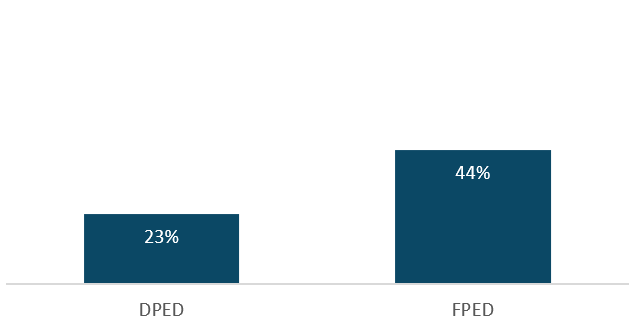
Completion of CSC correctional programming increased as the sentence progressed. For example, completion of correctional programming increased by 21 percentage points between DPED and FPED, typically a 6-month period, as shown in the graph below.
Long description
This graph shows that 23% of offenders completed a correctional program by day parole eligibility date (DPED) and 44% completed one by full parole eligibility date (FPED). FPED is typically 6 months later than DPED but can vary based on the sentence.
Typically 6 months later (can vary based on sentence).
Completion of programming differed by gender and race.
Greater percentages of women than men participated in and completed correctional, educational, and vocational interventions.
Indigenous men and women had the lowest rates of completion of correctional programs by FPED (compared with offenders who were Black, White, or grouped as ‘Other’). Among women, completion by DPED was also lower for Indigenous women, but no discernable differences were found by race, including Indigeneity, among men.
Factors impacting the completion of programming included individual case factors, program availability, and operational challenges.
Interviewees spoke about offender-related factors that interfere with program completion, such as:
- shorter sentences allowing less time to complete program
- low motivation level among some offenders
- responsivity factors, such as language barriers and cognitive difficulties
Challenges with program delivery included:
- lack of space and availability of some programs
- lack of staff
- limited access for offenders with longer sentences when those with shorter sentences were prioritized
There were also operational challenges, such as, inability to deliver programs during lockdowns and due to population management.
CSC has implemented a series of actions to address the timely delivery of programming in response to recommendations from previous oversight reports. Additional actions are in progress.
Third-party activities and supports
Finding: There was a wide range of activities provided by volunteers and community partners and they varied across institutions. Additional activities would be beneficial in specific areas.
Faith-based activities had the most volunteers in men’s and women’s institutions.
Faith-based supports were common, as were self-help (for example, Narcotics Anonymous/Alcoholics Anonymous), according to interviews and the number of registered volunteers. Activities fostering a connection with the community had many registered volunteers in all regions (for example, non-security escort, Citizen Advisory Committee). Interviewees reported a wide variety in the numbers of services offered in the institutions Footnote 6 (as seen in the graph).
Women's institutions and men’s minimum-security sites/units had a higher level of engagement from registered volunteers than men’s medium or maximum-security sites, or treatment centers.
COVID impacted the number of these services, according to interviewees. Some services were offered by volunteers, some were funded by CSC, and others were delivered by contractors. Partners such as the John Howard Society and the Elizabeth Fry Society provided in-reach. There were specific programs targeted to women, Indigenous, and ethnocultural offenders.

Long description
This image shows the number of registered volunteers by activity type for men’s and women’s institutions. The activity types are as reported in the Human Resources Management System (HRMS).
- Religious programs
- 1,240 in men’s institutions
- 427 in women’s institutions
- Self-help
- 343 in men’s institutions
- 80 in women’s institutions
- Non-security escort
- 252 in men’s institutions
- 102 in women’s institutions
- Social/cultural development
- 112 in men’s institutions
- 36 in women’s institutions
- Citizen Advisory Committee
- 107 in men’s institutions
- 22 in women’s institutions
- Instruction/education
- 83 in men’s institutions
- 66 in women’s institutions
- Recreation/entertainment
- 54 in men’s institutions
- 99 in women’s institutions
- Individual counselling
- 26 in men’s institutions
- 18 in women’s institutions
- Indigenous development
- 20 in men’s institutions
- 10 in women’s institutions
- Ethnocultural development
- 16 in men’s institutions
- 7 in women’s institutions
- Accompaniment
- 6 in men’s institutions
- 23 in women’s institutions
- Administrative
- 5 in men’s institutions
- 1 in women’s institutions
- Arts and crafts
- 2 in men’s institutions
- 17 in women’s institution
- Working with women
- 1 in men’s institutions
- 115 in women’s institutions
- Translation
- 0 in men’s institutions
- 2 in women’s institutions
Overall, third-party activities were perceived as being important to preparation for parole.
Interviewees reported that these activities:
- Complemented existing CSC services and programming
- Allowed offenders to demonstrate change and have positive connections and interactions with non-CSC staff
- Kept people engaged in pro-social activities
However, some interviewees said that there was limited research on their impact compared to evidence-based correctional programs.
Interviewees described a good relationship with community partners but noted some challenges.
The relationship between CSC and community partners was perceived as positive, however, many interviewees had limited interaction with community organizations as it was outside of their case management role. Challenges within the relationship included:
- Tracking offender progress on the Correctional Plan related to their participation in third-party activities
- The security screening and application process for volunteers
- Access to the institution for community organizations
- The technology to support the activities
- Inconsistent outreach to community organizations
- Staff and financial resources available for outreach
Additional third-party activities in CSC institutions would be beneficial in specific areas.
Interviewees and the literature review indicated areas in which additional services and supports would be beneficial, offender populations that could benefit from targeted activities, and where community partners could help fill the gaps.
Areas included:
- Mental health
- Substance use
- Gang disaffiliation
- Employment and education
- Release support
- Technology skills
- Assistance with government services (taxes, government identification)
- Faith-based support
Specific offender groups that would benefit from additional third-party activities and supports were Indigenous, Black, ethnocultural, lifers, and aging offenders as well as those who identified as part of sexual and gender diverse communities, such as Two-Spirit, lesbian, gay, bisexual, transgender, queer, intersex, plus others (2SLGBTQI+).
Gradual and progressive release measures
Finding: Gradual and progressive release measures contributed to successful reintegration. Temporary absences and work releases allowed offenders to demonstrate their preparedness for parole release. However, temporary absences and work releases could be used more.
Parole releases support better outcomes in the community.
From the literature review, most offenders granted parole tended to successfully complete their release. In addition, those released on statutory release were more likely to return to custody compared to those released on parole. In a review of parole decisions, full parole was most commonly granted after the successful completion of day parole.
Gradual and progressive release measures include temporary absences, work releases, and parole.
Temporary absences occur when an offender leaves the institution for a period of time. They are granted for reasons such as administrative, medical, family contact, and personal development for rehabilitative purposes. During an escorted temporary absence (ETA), the offender is accompanied by a security or non-security escort. For an unescorted temporary absence (UTA), the offender is not accompanied by CSC staff.
A work release entails work or community service in the community and is supervised by CSC staff or an authorized person or organization. Note that offenders classified as maximum-security are ineligible for UTAs or work releases.
Long description
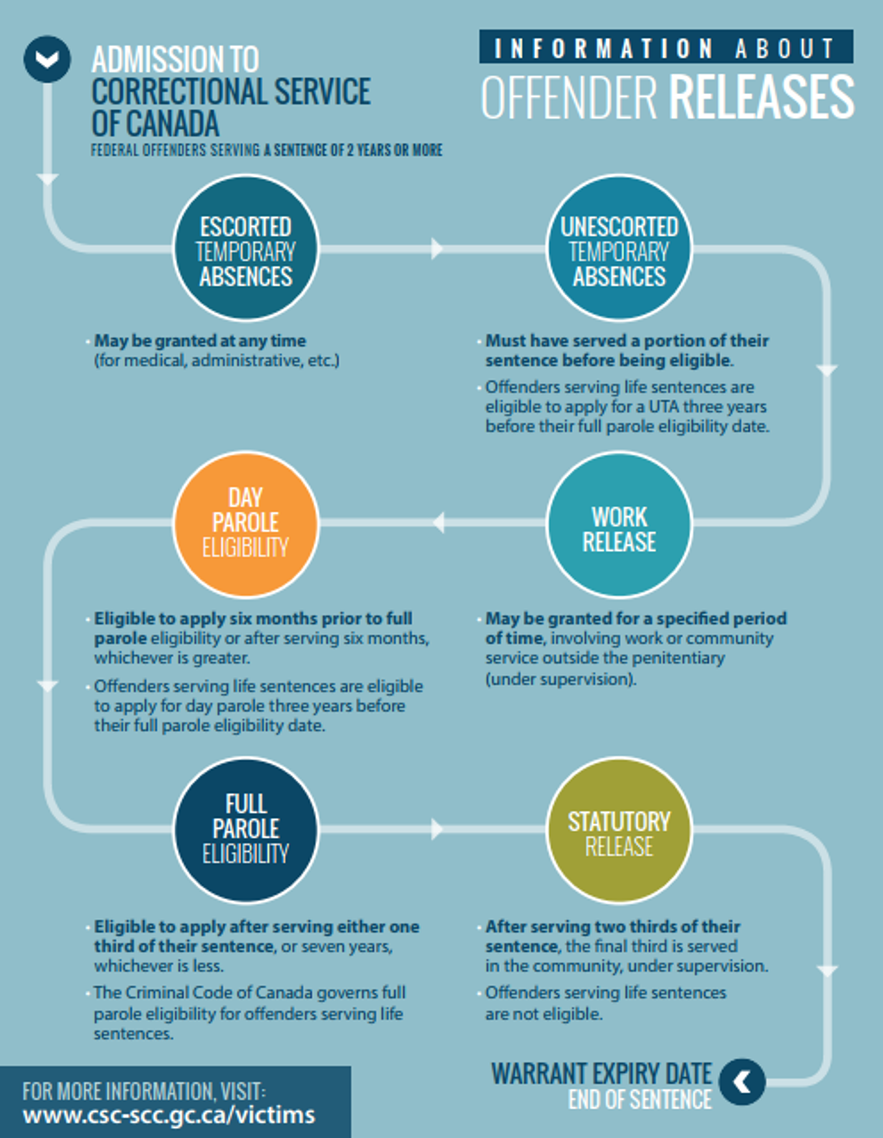
This infographic provides information about the different type of releases for federal offenders.
Admission to Correctional Service of Canada – Federal offenders serving a sentence of two years or more:
- Escorted temporary absences (ETA)
- May be granted at any time (for medical, administrative reasons, etc.)
- Unescorted temporary absences (UTA)
- Offenders must have served a portion of their sentence before being eligible
- Offenders serving life sentences are eligible to apply for a UTA three years before their full parole eligibility date
- Work release (WR)
- May be granted for a specified period of time, involving work or community services outside the penitentiary (under supervision)
- Day parole eligibility
- Eligible to apply six months prior to full parole eligibility or after serving six months, whichever is greater
- Offenders serving life sentences are eligible to apply for day parole three years before their full parole eligibility date
- Full parole eligibility
- Eligible to apply after serving either one third of their sentence, or seven years, whichever is less
- The Criminal Code of Canada governs full parole eligibility for offenders serving life sentences
- Statutory release
- After serving two thirds of their sentence, the final third is served in the community, under supervision
- Offenders serving life sentences are not eligible
- Warrant expiry date
- End of sentence
For more information, visit: canada.ca/correctional-service-victims
The use of unescorted temporary absences and work releases had not rebounded to pre-pandemic levels.
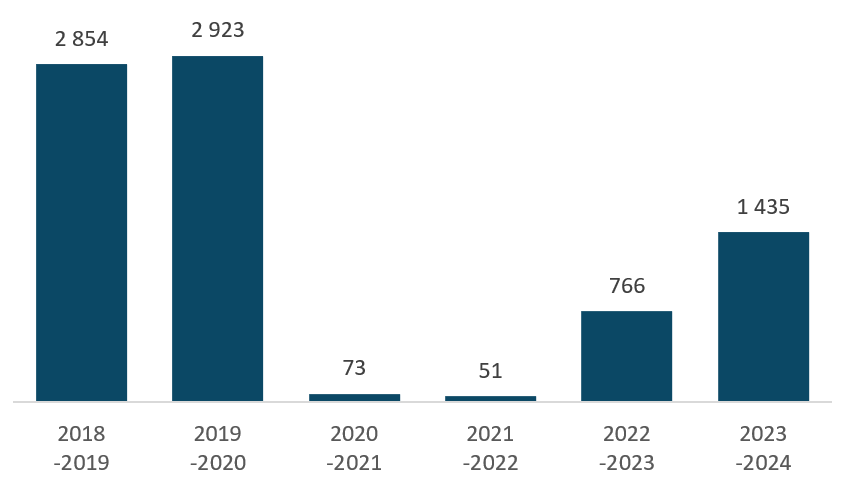
Temporary absences and work releases were found to be important tools for successful reintegration into the community and were employed over the period covered by the evaluation. However, there was a sharp decrease in UTAs and work releases during the COVID pandemic. Although the number increased in recent years, by fiscal year 2023-2024 they had not returned to 2018-2019 levels.
Long description
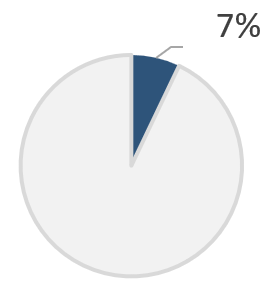
This chart shows that 7% of offenders granted discretionary release had completed a successful UTA or work release.
From 2018 to 2024, very few offenders who were granted discretionary release (at time of their first release) had completed a successful UTA or work release, with higher percentages of women (9%) than men (7%).
Long description
This graph shows the number of UTAs that ended each fiscal year.
- 2018 to 2019: 2,854
- 2019 to 2020: 2,923
- 2020 to 2021: 73
- 2021 to 2022: 51
- 2022 to 2023: 766
- 2023 to 2024: 1,435
For the most part, interviewees believed that there should be more use of temporary absences and work releases, but there were barriers to their use.
These types of releases were seen to allow offenders to experience being in the community in a supported way and thereby demonstrate their preparedness for parole release. Some of those interviewed went further and expressed that gradual and progressive release measures were very important for those who had experienced longer incarceration.
Barriers impeding the use of temporary absences and work releases reported by interviewees
- Limited resources to transport and escort offenders (unavailability of CSC staff, financial)
- Limited number of community partners and community engagement
- Lengthy approval process
- Limited access to or use of temporary absences in medium-security sites
Mental health and substance use
Mental health and substance use issues impacted case file preparation and readiness for parole.
According to interviewees, there was a lack of mental health and substance use treatment resources within CSC and externally in the community. They reported that it was challenging to obtain information about offenders’ mental health and substance use needs to assist in making recommendations about release. Requirements for consent and lengthy waits for psychological risk assessments to be completed added to the complexity of the process. Substance use and mental health needs affected perceived levels of risk and progress on rehabilitation.
Substance use and mental health needs were considered during the parole review process in accordance with the parole decision-making process. However, while considered in making recommendations about release, there was no clear indication from those interviewed that the presence of mental health or substance use issues necessarily prevented a positive parole decision. In the parole decisions reviewed, and according to interviewees, the PBC considered the offender’s ability to address any mental health and substance use challenges in the totality of individual case factors. Unaddressed or insufficiently managed challenges were found to be associated with parole being denied. It was considered a mitigating factor in cases where offenders demonstrated a commitment to managing such issues. When parole was granted, parole decisions often included special conditions relating to substance use or mental health treatment.

Long description
This image shows the five components of CSC’s Mental Health Strategy.
- Mental Health Screening at Intake
- Primary Mental Health Care
- Intermediate Mental Health Care
- Psychiatric Hospital Care at Regional Treatment Centres
- Transitional Care for Release to the Community and Community Mental Health Services
Source: Correctional Service of Canada: Responding to Mental Illness in Corrections
The CSC’s Mental Health Strategy is founded on 5 key components, falling along a continuum of care from intake through to end of sentence.
The characteristics of cases that were granted parole
Certain characteristics were common in cases that were granted parole.
A review of parole decisions and feedback from interviewees found that cases where parole was granted were dominantly characterized by:
- offender change, such as observable progress in their correctional plans and reduction in risks
- positive behaviour in the institution and while in the community on their current release
- active program engagement and its successful completion
- comprehensive and viable release plans that offered structure and support
This was consistent with research on decision-making by parole authorities and guidance provided in assessing offenders for release.
Areas for improvement in preparing offenders for parole
Improvements to interventions in several areas were identified to better prepare offenders for parole.
Interviewees suggested improvements that were also reflected in the literature. These focused on:
- Quicker access to correctional programs (particularly for Indigenous programming) or increased availability of interventions
- The need for more interventions (for example, correctional programs, vocational training) and resources, particularly additional services for mental health, substance use, and trauma
- Updating interventions, especially vocational training
- Increased access to technology to develop computer skills
- Adjustments or adding interventions for specific subpopulations (for example, programs for lifers, specific interventions for offenders of different ethnocultural backgrounds)
Additionally, the literature review identified the development of gang disaffiliation programs and addressing financial literacy and healthy relationships as areas for improving interventions for CSC.
Interviewees indicated that CSC applied some best practices in preparing offenders for parole.
Most interviewees agreed that CSC applied best practices in preparing offenders for parole. The best practices identified by interviewees, and supported by the literature review, included:
- Engaging with offenders to provide information about the parole process, offering support, meeting their needs, and using gradual and progressive release measures
- Release planning (for example Section 84 release plans, discussing release plans with offenders, dedicated staff to support release planning, and Community StrategyFootnote 8 reports)
- Collaboration within the institution and with the community
Some interviewees identified specific examples of particularly effective practices, such as:
- Case review meetings with community POs
- Monthly meetings with Health Services
- Initiatives developed to support offenders in accessing housing and obtaining identification
Areas of improvement to the case preparation process
Interviewees identified areas for improvement in the case preparation process, which were aligned with the document and literature reviews.
For documentation, address the structure and writing of reports (reduce the redundancy and length, no copy and paste between reports, simplify the language). There is a need for timely reports, including psychological risk assessments.
Enhanced information sharing with the community, such as communication with community POs. There was a need for quicker access to reports from other organizations. Within the institutions, improved access to health care information to support decision-making was suggested by CSC interviewees.
Address heavy PO caseload, and the need for additional staff in other roles to support case preparation (for example, discharge planners, social workers, and staff to support Section 84 release planning).
Increased contact between POs and offenders, and more support from POs. Additionally, providing offenders more information about the parole and release processes directly in order to better prepare them for a hearing.
Improved release planning; access to and information about community resources; and sufficient community support for offenders.
Additional mentoring and oversight for POs to support case preparation more effectively.
Changes in assessment, such as better incorporation of social history, and greater assessment and understanding of an offender’s needs.
How do CSC and the Parole Board of Canada coordinate the parole process?
What we examined:
To address this question, the evaluation considered:
- Concordance between PBC parole decisions and CSC parole recommendations
- Whether coordination between CSC and PBC was effective
- Any gaps impacting coordination
Concordance between CSC and Parole Board of Canada
Finding: Concordance between CSC recommendations and PBC decisions was high, consistent with the assessment of similar risk factors and consideration of public safety. Discordance reflected differing assessments of ability to mitigate risk in the community and was consistent with the sole authority of the PBC to make parole decisions.
Concordance between PBC parole decisions and CSC recommendations was high.
Our review of administrative data found that over 90% of parole recommendations made by CSC were in concordance with parole pre-release decisions made by the PBC. Interviewees corroborated these data by reporting that they observed few cases where the CSC recommendation for release and the PBC decision differed.
Reasons for discordance generally centred on assessment of ability to mitigate risk.
Based on the interviews, the main reason for discordance between CSC recommendations for release and PBC decisions related to different views on the ability to mitigate risk in the community. While CSC and PBC consider similar factors when assessing risk to public safety, they conduct their reviews independently, reflecting their separate roles in the process.
CSC recommendations about release are inputs to the PBC deliberations. PBC considers additional information in its review and is explicitly required to address discordant information. Interviewees were generally aware that the PBC was independent of CSC with the sole authority to make release decisions. As a result, they understood that PBC decisions could differ from CSC recommendations for release.
The most common reasons identified by interviewees for lack of concordance aligned to categories found in the Pre/Post Release Assessment for Decision Tool that provides direction concerning the kind of assessment that must be submitted for release decisions. They were:
- Correctional Plan progress and offender engagement. Reasons related to this category were mentioned most frequently and reflected individual factors. They included motivation and engagement, accountability, and progress on the Correctional Plan.
- Release plan and supervision strategy. In this category, assessment of the sufficiency of the release plan to mitigate risk was an area where differences occurred.
- Institutional/community behaviour. In particular, the interpretation of the impact of institutional infractions was noted. CSC interviewees suggested that they were more inclined to support release to provide a structured environment for the offender before statutory release.
- Other reasons were offender behaviour or information shared during the hearing.
Effectiveness of coordination between CSC and Parole Board of Canada
Finding: Coordination between CSC and PBC was considered effective overall.
Coordination occurred at the institutional, regional, and national levels.
At the institutional level, interaction was mainly about providing case documentation to support a parole review or attendance at a hearing.
Identified areas of coordination and information sharing were to resolve specific case issues and any identified issues of a recurring nature.
At the regional level, changes in process (for example, new process for adjournments) and process challenges (for example, site-level issues, delays with third-party reports) were the main purpose for interacting.
Nationally, more strategic policy and process issues were identified, such as discussing policy changes or alignment.
Mechanisms to facilitate the coordination were considered helpful to supporting the process. They included:
- Institutional
- Process checklists and timelines
- Clearly identified contacts, such as, assigned Case Review Officers at PBC
- Case Management Assistants at CSC
- Regular meetings to track and follow-up on issues
- Ad hoc communications
- Regional
- Interlinkages Committee meetings
- Regular bilateral meetings with key managers
- As needed discussions with peer-level counterparts
- CSC staff acting as liaison to the PBC
- National
- Interlinkages Committee meetings
- Regular bilateral meetings
- Ad hoc communications
Interviewees expressed a positive view of the effectiveness of the coordination and information-sharing between CSC and the PBC. A commitment to work together to resolve challenges that arose was evident at all levels.
Gaps and factors impacting coordination
Finding: There were no critical gaps in the process for preparing case files but areas for improvement were identified. Areas of improvement focused on training and education about the parole process.
Challenges related mainly to process inefficiencies instead of gaps.
The challenges most frequently mentioned by interviewees were inefficiencies associated with the separate internal processes and mandates of the PBC and CSC. They were:
Obtaining and providing required information.
This was due to CSC perceptions about PBC requests to provide old reports (for example, ones that were applicable to old sentences), redundancy in providing documents already shared, and difficulties obtaining third-party reports. Many of these related to the need to ensure procedural fairness, according to PBC information.
Communicating release decisions and case logistics.
The key issue raised was release decisions conveyed late in the day. This meant that resources to support the offender were generally unavailable. Interviewees described this as especially challenging in situations where parole was denied or in cases of a decision to immediately release. Also included were changes made to the hearing/review schedule or other administrative or logistical matters and not directly communicated through the established channels.
Having the resources/expertise in place to support case file preparation.
Interviewees identified that in-depth knowledge of the process was needed to efficiently prepare and process the case files. Reported issues included POs with a limited level of experience and a shortage of Case Management Assistants.
Interviewees described factors facilitating effectiveness.
They included:
- Well-established processes and deadlines for preparing case files
- Clear contacts to provide support when questions arose
- Regularly established interagency meetings (for example, bilateral meetings; Interlinkages Committee meetings at the regional and national levels)
- Positive relationships between CSC and PBC colleagues
- Staff offering support (such as, Case Review Officers)
Areas for improvement were identified.
Interviewees noted that a key area for improvement was in developing a shared understanding of the case development, file preparation, and procedural safeguards around information-sharing. Areas for improvement identified by interviewees were:
- A desire of CSC staff to better understand the PBC requirements and to engage with PBC staff to discuss and ensure their understanding
- Ensuring the timely sharing of new information that arises after the file documentation was provided to the PBCFootnote 9
- Formally including PBC staff in relevant training for POs, which had been done in the past and was considered an effective
- PBC visiting the institution to speak with offenders about the parole process (for example, presentations)
Are there additional considerations for Gender-based Analysis Plus populations?
What we examined:
To address this question, the evaluation considered:
- Rates of parole granted by race and sexFootnote 10
- Barriers to parole for subpopulations
- The use and impact of Section 84 release plans
- Impacted the parole process
Parole rates for subpopulations
Finding: Over half of offenders were granted parole, with day parole more frequent. Men, offenders with shorter sentences, and Indigenous offenders had lower rates of being granted parole. Potential barriers to positive parole decisions were identified by interviewees.
Just over half of offenders released for the first time during the evaluation period were granted parole, and it was primarily day parole.
Between April 2018 and March 2024, 54% of offenders were granted a discretionary release (such as, parole) at the time of their first release (see the graph to the right for annual data). Most of the releases granted from 2018 to 2024 were for day parole (96%), with the remainder for full parole.

Long description
This image shows the percentage of offenders granted a discretionary release at their first release by fiscal year.
- 2018 to 2019: 57%
- 2019 to 2020: 55%
- 2020 to 2021: 53%
- 2021 to 2022: 49%
- 2022 to 2023: 54%
- 2023 to 2024: 58%
There were subpopulation differences in being granted parole. Groups differed in being granted parole at first release by sex, sentence length and pathways participation:
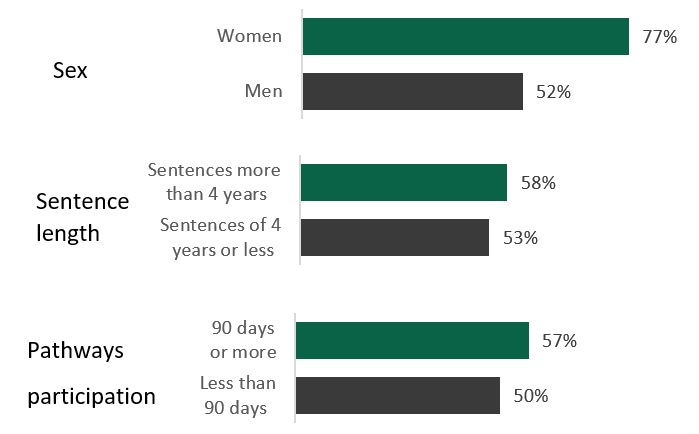
Long description
This image shows the percentage of offenders granted parole at first release by:
- Sex
- Women: 77%
- Men: 52%
- Sentence length
- Sentences more than 4 years: 58%
- Sentences of 4 years or less: 53%
- Pathways participation
- 90 days or more: 57%
- Less than 90 days: 50%
The percentage of discretionary release decreased for both men and women as the offender’s risk level increased (as measured by the dynamic factor rating or the Criminal Risk Index).
Across racial groups, the lowest rate of discretionary release was for Indigenous women (65%) and men (38%). When race-based differences were explored by level of risk, Indigenous men had the lowest percentage of discretionary release at most risk levels. Among women, Indigenous women had the lowest percentage of discretionary release in 2 of the 4 risk levels where differences between racial groups could be examined.
Day parole and full parole
Looking further at administrative data on parole decisions, 77% of day parole decisions and 35% of full parole decisions granted release.
- Similar to discretionary release overall, a higher percentage of women than men were granted day parole (93% women to 75% men) and full parole (49% women to 33% men).
- A greater percentage of offenders with sentences of 4 years or less (80%) were granted day parole than those with sentences of more than 4 years (74%). For full parole, 36% of those with sentences of 4 years or less received positive decisions compared to 33% of those serving sentences of more than 4 years.
- Indigenous men and women had the lowest rates of being granted both day parole (71% and 91%, respectively) and full parole (22% and 36%) when compared across racial groups.
When examining day parole grant rates by risk level, there were fewer differences by race for men. When differences occurred, Indigenous or Black men had the lowest percentage of parole granted. This pattern was similar for women.
With full parole, at all levels of risk, Indigenous men had the lowest rate of being granted parole compared with other racial groups.
Potential barriers to parole releases for subpopulations were identified by interviewees.
For Indigenous offenders, potential barriers mentioned were:
- The community to which the offender wanted to be released (limited resources in the community, unstable environment for the offender, the community was not supportive).
- Consideration of social history not fully integrated into the CSC decision-making process.
- Aspects of case preparation (for example, coordination for an Elder-assisted hearing, additional case preparation).
Additionally, higher levels of need combined with shorter sentences were viewed as contributing to Indigenous offenders not getting released at their earliest eligibility date.
Mental health was identified as a barrier to parole release overall, as well as for Indigenous offenders.
A higher risk level is related to a lower rate of being granted parole. This factor was identified as a potential barrier to parole release for Indigenous and Black offenders due to higher security classifications for these groups.
Section 84
Finding: Fewer than half of offenders initially interested in a Section 84Footnote 11 release plan had one in place by their first release. Several barriers could interfere with completing one. Section 84 release plans were most commonly in place for those released on parole. These plans were seen as beneficial to offenders both for being granted release and success on release.
There was low uptake of Section 84 releases by offenders, and there were numerous challenges in preparing the release plans.
According to the administrative data, 42% of Indigenous offenders who expressed an interest in a CCRA Section 84 release plan had one in place prior to their first release.
The percentage of offenders with a completed Section 84 plan prior to release was highest for:
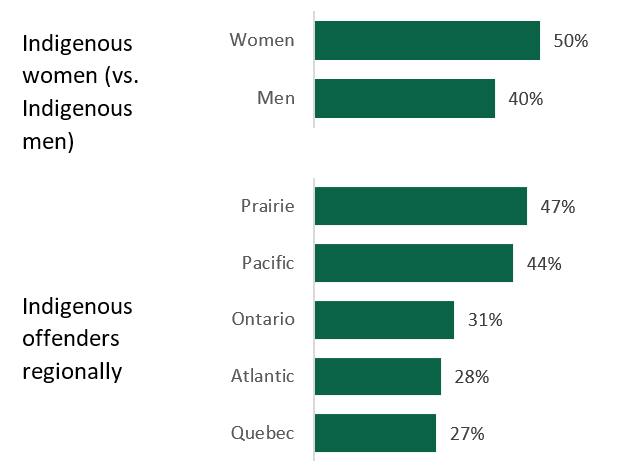
Long description
This image shows that 50% of Indigenous women and 40% of Indigenous men completed a section 84 plan before release.
It also shows the percentage of Indigenous offenders who completed a section 84 plan prior to release, by region.
- Prairie: 47%
- Pacific: 44%
- Ontario: 31%
- Atlantic: 28%
- Quebec: 27%
Interviewees spoke of challenges with preparing Section 84 plans such as:
- requiring additional work by the offender
- a lack of support by some communities
- difficulties for staff to complete them on time
- staff misunderstanding or not supporting the process
For offenders with a Section 84 plan in place at release, the most common type of release was parole.
Of the offenders who had a Section 84 release plan in place by their first release, 56% had a release on parole.

Long description
This chart shows the number of offenders with a section 84 plan in place at first release, by release type:
- Day parole: 1,171
- Statutory release: 916
- Full parole: 33
- Warrant expiry: 13
- Long term supervision: 10
Section 84 release plans were perceived to improve the chances of being granted parole and achieving positive community outcomes.
For Indigenous offenders on a first release, a greater percentage of those with a Section 84 release plan prior to first release had a discretionary release (65%) versus those without a Section 84 release plan (34%)Footnote 12 .
Research had found better community outcomes for Indigenous offenders with Section 84 releases, while accounting for factors such as security level at release and release type. Specifically, men with a Section 84 release were less likely to get conditional release suspended or revoked compared with men on a traditional release. Women with a Section 84 release were less likely to be revoked with a new offence.
The use of Section 84 release was seen by most interviewees as having a positive impact on Indigenous offenders obtaining parole and in supporting reintegration. They reported that positive interactions with community during the Section 84 process contributed to offender success on release.
Official languages
Finding: Parole hearings were available in English or French. Challenges were encountered in meeting language requirements for other aspects of the case preparation process.
There were few challenges with organizing a parole hearing in an offender’s preferred official language. However, issues with organizing interpretation with other languages were encountered.
Interviewees reported that there were few issues in accessing a parole hearing in English or French. However, they identified a challenge in accessing interpreters for languages other than English or French, such as Indigenous languages and American Sign Language.
Translation challenges related to documentation and case preparation were found.
Issues arose in the translation of case documentation between English and French when an offender transferred to a region where the other official language was used. This also entailed ensuring that the offender received information in the language of their choice and having bilingual staff to work with them.
CD 087 - Official Languages
Purpose: To ensure compliance with the Official Languages Act, the spirit of the Act and related regulations on services to offenders and the public.
Conclusions and recommendations
Conclusions
Case management processes enabled effective case preparation for parole review with some room for improvement identified.
Overall, CSC enabled offender cases to be ready for parole review. CSC case management processes were considered effective with some evidence of best practices being applied. The evaluation could not conclusively determine the efficiency (timeliness) of the process through the administrative data, specifically the extent to which parole hearings/reviews were conducted prior to full parole eligibility dates. However, indications from other sources were that processes for case preparation and establishing priority for programming were based around eligibility dates.
There was room for improvement in providing opportunities for offenders to participate in interventions prior to parole eligibility dates in order to demonstrate progress on their Correctional Plans. Incomplete programming was a common reason offenders requested a delay of parole reviews. It is acknowledged that CSC has implemented actions that seek to improve timely access to correctional programs and that CSC monitors related results. The impact of these actions on access to correctional programs will be considered in the scoping of future evaluation planning.
CSC offered other interventions and there were activities from community partners, although their availability varied by institution. In addition, gradual and progressive release measures were associated with positive preparation for parole release, yet their use had not returned to pre-pandemic levels and barriers to employing such measures were identified.
Coordination and information-sharing between CSC and PBC to support the parole process were effective overall but could be strengthened by increased opportunities for training and information-sharing.
Overall, the coordination and information-sharing in preparing case files for parole review were effective. CSC and the PBC successfully worked together to coordinate the parole process, with a few areas for improvement. They collaborated at different levels, from the individual case to nationally. The concordance between CSC recommendations and PBC decisions was high.
A key area identified for improvement was developing a shared understanding of the case development, file preparation, and procedural safeguards related to information-sharing. To do so, training and opportunities for sharing information were suggested.
Differences among GBA Plus populations with respect to parole release were evident.
While 54% of offenders on their first release were granted parole, this rate was lower for certain groups such as men, offenders with shorter sentences, and Indigenous offenders. Indigenous offenders as a group had the lowest parole grant rates at many risk levels.
Numerous factors were suggested as contributing to these differences. While Section 84 release was associated with an improved chance of being granted parole and successful reintegration, uptake was low due to challenges in completing a plan for this type of release.
Recommendations
Recommendation 1
The Assistant Commissioner, Correctional Operations and Programs, should work with the relevant data providers and administrators to ensure reliable data are available to confirm that parole reviews and hearings are happening by parole eligibility dates and that the data fields are defined and understood within CSC.
Response Options (choices are Accepted, Accepted in-part or Rejected):
Response was Accepted
Management response
The Assistant Commissioner, Correctional Operations and Programs (ACCOP) acknowledges the importance of reliable data to support timely parole reviews and hearings. ACCOP will work collaboratively with key stakeholders to identify data gaps and implement corrective measures.
| Deliverable(s) | Accountability | Timeline for implementation |
|---|---|---|
A summary identifying key data issues and proposed resolutions to address issues related to parole-related data. Implementation of corrective actions or system adjustments. |
ACCOP | 2027-03-31 |
Where necessary, updated help/definition in OMS screens related to parole reviews. |
ACCOP | 2027-03-31 |
Recommendation 2
The Assistant Commissioner, Correctional Operations and Programs, should ensure that Parole Officers understand all procedural safeguard requirements and processes, and are supported in integrating social history considerations into assessments.
Response Options (choices are Accepted, Accepted in-part or Rejected):
Response was Accepted
Management response
The Assistant Commissioner, Correctional Operations and Programs (ACCOP) acknowledges the importance of ensuring that Parole Officers have a comprehensive understanding of the parole process, including its procedural safeguards and the appropriate integration of social history. ACCOP is committed to enhancing staff knowledge and decision-making practices through targeted learning strategies.
| Deliverable(s) | Accountability | Timeline for implementation |
|---|---|---|
Parole Officer Continuous Development (POCD) training on the decision-making framework.
|
ACCOP in collaboration with Assistant Commissioner, Human Resource Management | 2027-03-31 |
Complete reference tool published on the Hub. Communication to staff on the tool. |
ACCOP | 2026-06-30 |