
The Fiscal Monitor - October 2025

Highlights
October 2025
There was a budgetary deficit of $2.3 billion in October 2025, compared to a deficit of $1.5 billion in October 2024. The budgetary deficit before net actuarial losses and gains was $1.9 billion, compared to a deficit of $1.2 billion in the same period of 2024-25. The budgetary balance before net actuarial losses and gains is intended to supplement the traditional budgetary balance and improve the transparency of the government's financial reporting by isolating the impact of the amortization of net actuarial losses and gains arising from the revaluation of the government's pension and other employee future benefit plans.
Monthly Budgetary Balance and Budgetary Balance Excluding Net Actuarial Losses and Gains
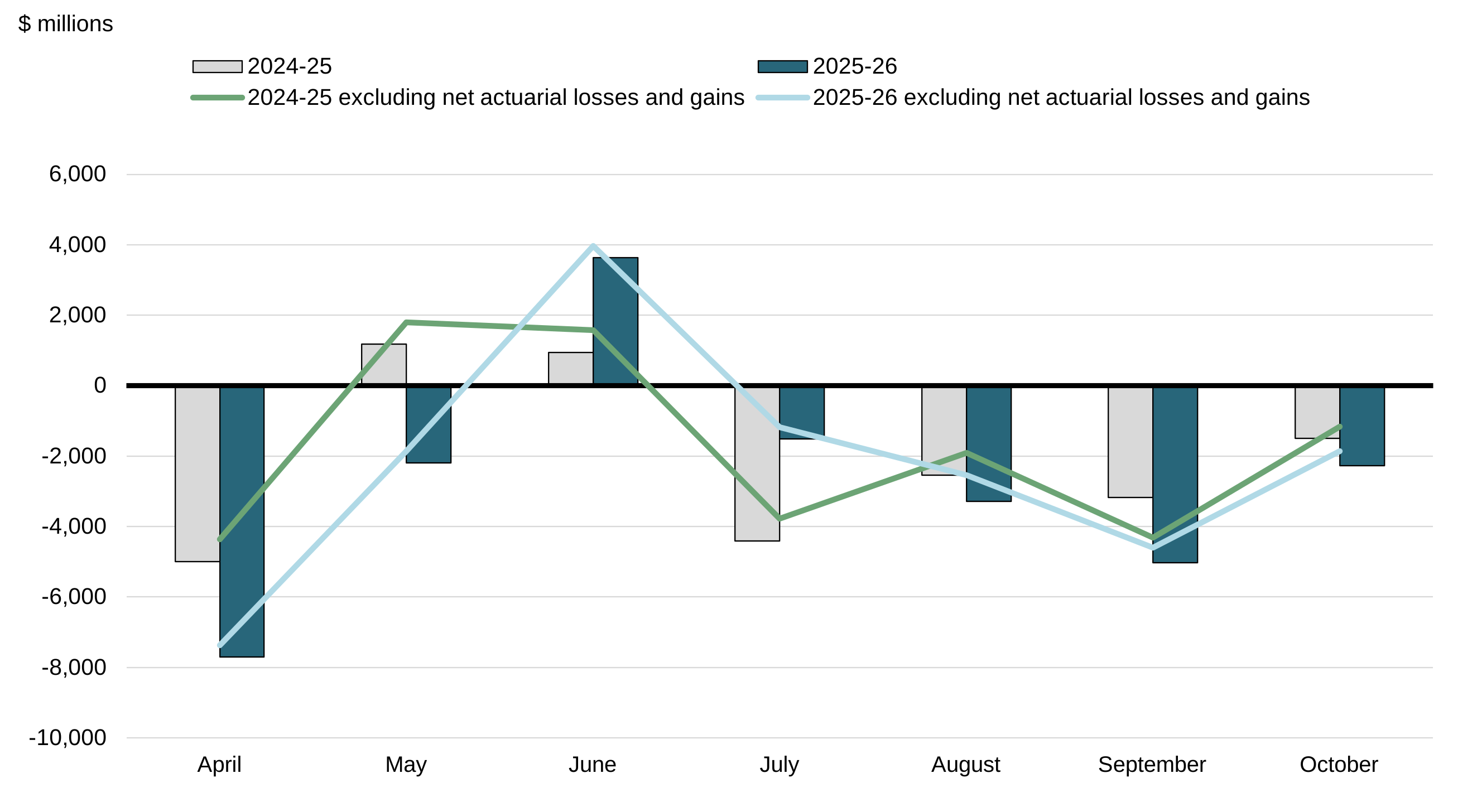
Compared to October 2024:
- Revenues increased by $0.6 billion, or 1.4 per cent, reflecting increases across most categories, partially offset by lower pollution pricing proceeds to be returned to Canadians.
- Program expenses excluding net actuarial losses were up $1.2 billion, or 3.1 per cent, as higher direct program expenses were partly offset by the wind-down of the Canada Carbon Rebate for individuals.
- Public debt charges were up $0.1 billion, or 2.1 per cent, as the impact of higher average effective rates on an increased stock of marketable bonds was largely offset by lower interest rates on treasury bills.
- Net actuarial losses were up $0.1 billion, or 23.9 per cent, reflecting the amortization of losses arising from actuarial valuations of the government's pension and other employee future benefit plans prepared for the Public Accounts of Canada 2025, offset in part by the end of the amortization of certain prior years' net actuarial losses.
April to October 2025
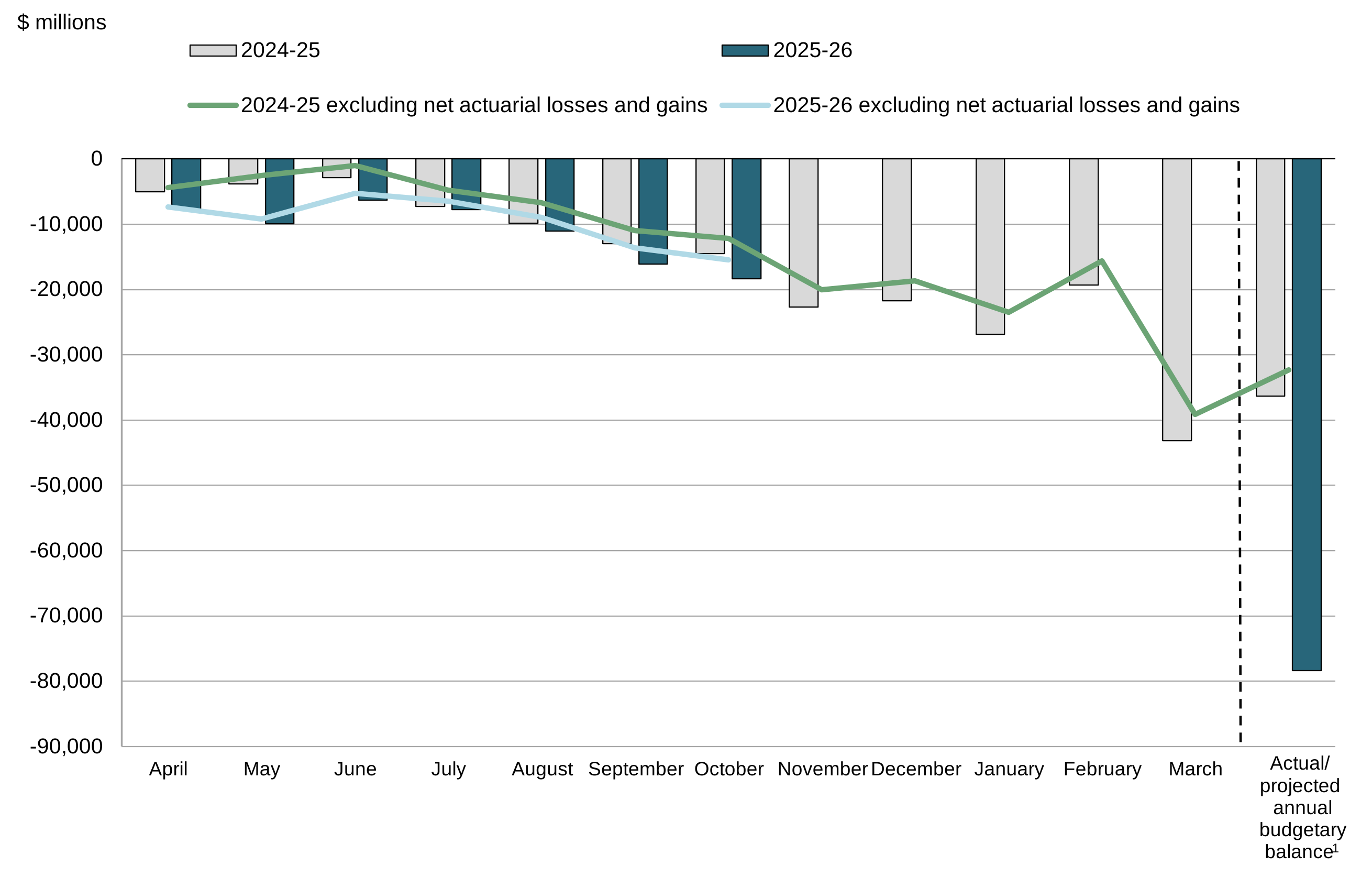
The government posted a budgetary deficit of $18.4 billion for the April to October period of the 2025-26 fiscal year, compared to a deficit of $14.5 billion reported for the same period of 2024-25. The budgetary deficit before net actuarial losses was $15.5 billion, compared to a deficit of $12.2 billion in the April to October period of 2024-25.
Compared to 2024-25:
- Revenues were up $6.4 billion, or 2.3 per cent, reflecting increases in customs import duties due to the countermeasures imposed in response to U.S. tariffs, and corporate and personal income tax revenues. These increases were offset in part by lower pollution pricing proceeds to be returned to Canadians and lower Goods and Services Tax (GST) revenues.
- Program expenses excluding net actuarial losses were up $10.2 billion, or 4.0 per cent, reflecting increases in direct program expenses, major transfers to persons, and major transfers to provinces, territories and municipalities, which were partly offset by the wind-down of the Canada Carbon Rebate for individuals.
- Public debt charges decreased by $0.5 billion, or 1.6 per cent, led by lower short-term interest rates on treasury bills and lower net interest on currency swap transactions, partially offset by higher average effective rates on an increased stock of marketable bonds.
- Net actuarial losses increased by $0.6 billion, or 23.9 per cent, reflecting the amortization of losses arising from actuarial valuations of the government's pension and other employee future benefit plans as at March 31, 2025, offset in part by the end of the amortization of certain prior years' net actuarial losses.
Year-to-Date Budgetary Balance and Budgetary Balance Excluding Net Actuarial Losses and Gains
| October | April to October | |||
|---|---|---|---|---|
| 2024 | 2025 | 2024-25 | 2025-26 | |
| Budgetary transactions | ||||
| Revenues | 40,989 | 41,543 | 273,399 | 279,769 |
| Expenses | ||||
Program expenses, excluding net actuarial losses |
-37,867 | -39,036 | -253,092 | -263,283 |
Public debt charges |
-4,280 | -4,370 | -32,466 | -31,950 |
| Budgetary balance, excluding net actuarial losses | -1,158 | -1,863 | -12,159 | -15,464 |
Net actuarial losses |
-335 | -415 | -2,345 | -2,905 |
| Budgetary balance (deficit/surplus) | -1,493 | -2,278 | -14,504 | -18,369 |
| Non-budgetary transactions | -3,352 | -7,163 | -53,739 | -46,264 |
| Financial source/requirement | -4,845 | -9,441 | -68,243 | -64,633 |
| Net change in financing activities | 4,274 | 20,287 | 40,790 | 78,095 |
| Net change in cash balances | -571 | 10,846 | -27,453 | 13,462 |
| Cash balance at end of period | 39,203 | 59,603 | ||
Note: Positive numbers indicate net source of funds. Negative numbers indicate net requirement for funds. |
||||
Revenues
Revenues in October 2025 totalled $41.5 billion, up $0.6 billion, or 1.4 per cent, from October 2024.
- Tax revenues increased by $1.4 billion, or 4.1 per cent, compared to the same period in 2024-25, reflecting increases across most categories.
- Pollution pricing proceeds to be returned to Canadians were down $1.0 billion, or 99.4 per cent, reflecting the cessation of the application of the federal fuel charge effective April 1, 2025.
- Employment Insurance (EI) premium revenues were up $0.1 billion, or 5.8 per cent, reflecting a higher number of persons employed.
- Other revenues were up $10 million, or 0.2 per cent.
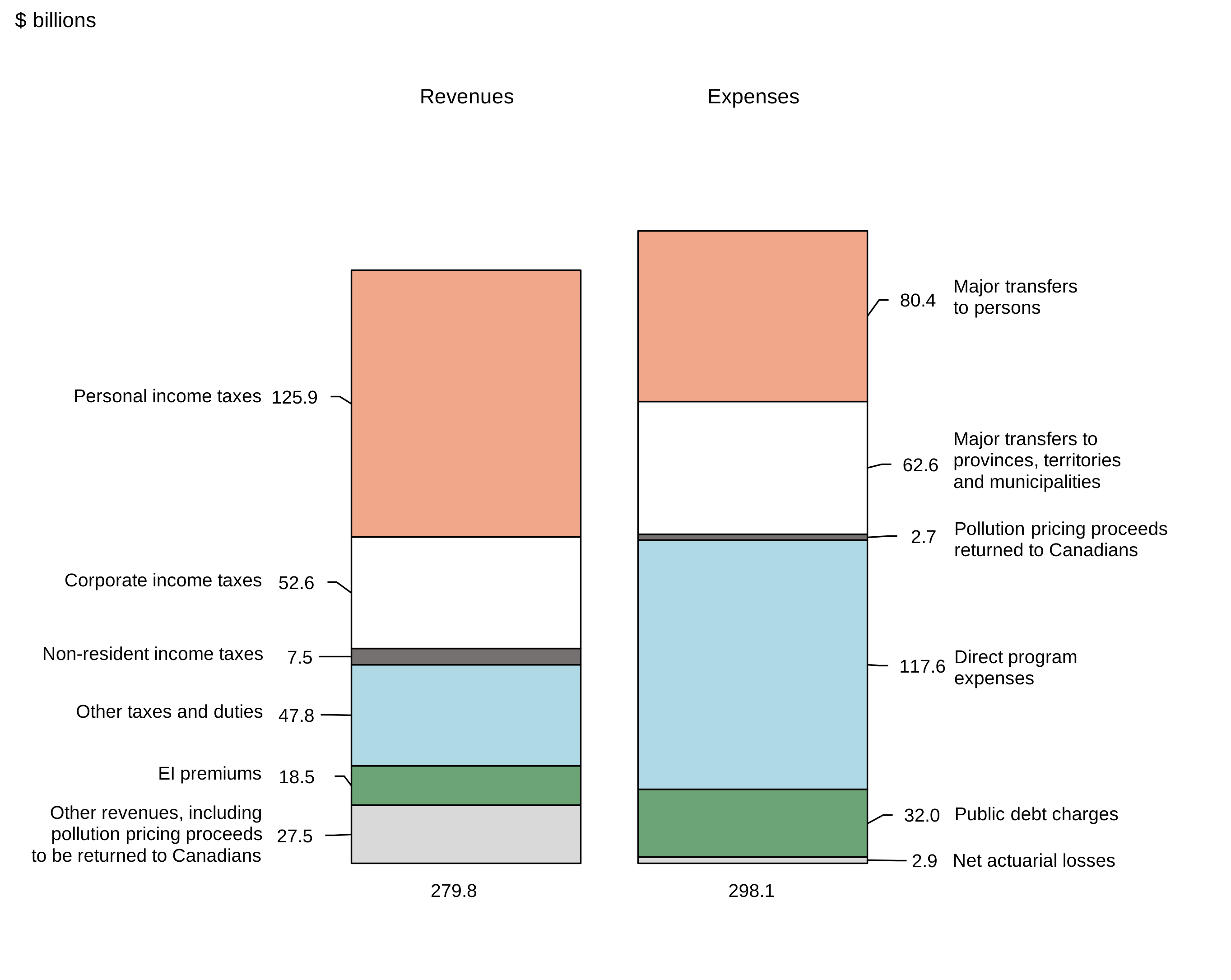
Revenues for the April to October period of 2025-26 totalled $279.8 billion, up $6.4 billion, or 2.3 per cent, from the same period in 2024-25.
- Tax revenues increased by $11.5 billion, or 5.2 per cent, compared to the same period in 2024-25, reflecting increases in customs import duties, and corporate and personal income tax revenues, partially offset by lower GST revenues. The increase in customs import duties is due to the countermeasures imposed in response to U.S. tariffs.
- Pollution pricing proceeds to be returned to Canadians were down $7.0 billion, or 102.8 per cent, reflecting the cessation of the application of the federal fuel charge.
- EI premium revenues were up $0.9 billion, or 5.4 per cent, reflecting a higher number of persons employed.
- Other revenues were up $0.9 billion, or 3.4 per cent, reflecting a number of factors including higher revenues from enterprise Crown corporations, year-over-year timing differences, and higher offshore revenues, partly offset by lower interest and penalty revenue.
| October | April to October | |||||
|---|---|---|---|---|---|---|
| 2024 | 2025 | Change | 2024-25 | 2025-26 | Change | |
| ($ millions) | (%) | ($ millions) | (%) | |||
| Tax revenues | ||||||
| Income taxes | ||||||
Personal |
17,829 | 17,960 | 0.7 | 123,185 | 125,939 | 2.2 |
Corporate |
8,067 | 8,516 | 5.6 | 46,705 | 52,563 | 12.5 |
Non-resident |
1,392 | 1,296 | -6.9 | 7,896 | 7,519 | -4.8 |
Total income tax revenues |
27,288 | 27,772 | 1.8 | 177,786 | 186,021 | 4.6 |
| Other taxes and duties | ||||||
Goods and Services Tax |
5,553 | 6,052 | 9.0 | 33,866 | 32,964 | -2.7 |
Energy taxes |
422 | 502 | 19.0 | 3,290 | 3,305 | 0.5 |
Customs import duties |
404 | 660 | 63.4 | 3,106 | 7,198 | 131.7 |
Other taxes, excise taxes and duties |
482 | 566 | 17.4 | 4,247 | 4,287 | 0.9 |
Total other taxes and duties |
6,861 | 7,780 | 13.4 | 44,509 | 47,754 | 7.3 |
| Total tax revenues | 34,149 | 35,552 | 4.1 | 222,295 | 233,775 | 5.2 |
| Pollution pricing proceeds to be returned to Canadians | 969 | 6 | -99.4 | 6,769 | -188 | -102.8 |
| Employment Insurance premiums | 1,788 | 1,892 | 5.8 | 17,554 | 18,495 | 5.4 |
| Other revenues | 4,083 | 4,093 | 0.2 | 26,781 | 27,687 | 3.4 |
| Total revenues | 40,989 | 41,543 | 1.4 | 273,399 | 279,769 | 2.3 |
Note: Totals may not add due to rounding. |
||||||
Expenses
Program expenses excluding net actuarial gains and losses in October 2025 were $39.0 billion, up $1.2 billion, or 3.1 per cent, from October 2024.
- Major transfers to persons, consisting of elderly benefits, EI benefits, COVID-19 income support for workers, and children's benefits, were up $0.2 billion or 1.8 per cent.
- Elderly benefits increased by $0.1 billion, or 2.1 per cent.
- EI benefits decreased by $0.1 billion, or 6.7 per cent, largely reflecting the timing of Labour Market Development Agreements payments to provinces and territories, offset in part by a higher unemployment rate in October this year.
- COVID-19 income support for workers increased $0.1 billion, or 169.7 per cent, reflecting lower redeterminations of benefits, as well as current-year revisions to previous redeterminations.
- Children's benefits were up $0.1 billion, or 5.6 per cent, mainly reflecting the indexation of benefits to consumer prices, which annually takes effect July 1st.
- Major transfers to provinces, territories and municipalities were up $0.3 billion, or 4.3 per cent, primarily reflecting legislated growth in the Canada Health Transfer, the Canada Social Transfer, Equalization transfers and transfers to the territories.
- Pollution pricing proceeds returned to Canadians decreased by $2.8 billion, or 97.4 per cent, due to the phase-out of the Canada Carbon Rebate. Following the removal of the federal fuel charge effective April 1, 2025, rebate payments were in wind-down, with most final disbursements occurring in spring and summer 2025.
- Direct program expenses were up $3.4 billion, or 21.2 per cent. Within direct program expenses:
- Other transfer payments increased by $2.3 billion, or 39.4 per cent, largely reflecting higher transfers with respect to Indigenous Peoples, defence, and housing initiatives, in part due to year-over-year timing differences.
- Operating expenses of the government's departments, agencies, and consolidated Crown corporations and other entities increased by $1.2 billion, or 11.1 per cent, largely reflecting higher personnel costs and interest and bad debt expense related to taxes.
Public debt charges increased $0.1 billion, or 2.1 per cent, as the impact of higher average effective rates on an increased stock of marketable bonds was largely offset by lower interest rates on treasury bills.
Net actuarial gains and losses, which represent the amortization of changes in the value of the government's obligations for pensions and other employee future benefits accrued in previous fiscal years and related assets, were up $0.1 billion, or 23.9 per cent, largely reflecting the amortization of losses arising from actuarial valuations prepared for the Public Accounts of Canada 2025, as well as the end of the amortization of certain prior years' net actuarial losses.
For the April to October period of 2025-26, program expenses excluding net actuarial losses were $263.3 billion, up $10.2 billion, or 4.0 per cent, from the same period the previous year.
- Major transfers to persons were up $4.3 billion or 5.7 per cent.
- Elderly benefits increased by $1.0 billion, or 2.2 per cent, largely reflecting changes in consumer prices, to which benefits are fully indexed.
- EI benefits increased by $2.1 billion, or 15.8 per cent, largely reflecting a higher unemployment rate in this period compared to the previous year.
- COVID-19 income support for workers increased $0.4 billion, or 115.9 per cent, reflecting lower redeterminations of benefits, as well as current-year revisions to previous redeterminations.
- Children's benefits were up $0.8 billion, or 4.8 per cent, mainly reflecting the indexation of benefits to consumer prices.
- Major transfers to provinces, territories and municipalities were up $3.4 billion, or 5.7 per cent, largely reflecting legislated growth in the Canada Health Transfer, the Canada Social Transfer, Equalization transfers and transfers to the territories, and higher year-to-date payments for Canada-wide early learning and child care and under health agreements.
- Pollution pricing proceeds returned to Canadians decreased by $6.1 billion, or 69.0 per cent, largely reflecting the structural wind-down of the Canada Carbon Rebate following the removal of the federal fuel charge.
- Direct program expenses were up $8.5 billion, or 7.8 per cent. Within direct program expenses:
- Other transfer payments increased by $3.2 billion, or 7.6 per cent, reflecting a number of factors, including the rollout of transfers under the Canadian Dental Care Plan, higher defence contributions, and year-over-year timing differences.
- Operating expenses of the government's departments, agencies, and consolidated Crown corporations and other entities increased by $5.4 billion, or 8.0 per cent, largely reflecting higher personnel costs, higher defence spending, increased interest and bad debt expense related to taxes, and an increase in Crown corporation expenses.
Public debt charges decreased by $0.5 billion, or 1.6 per cent, led by lower short-term interest rates on treasury bills and lower net interest on currency swap transactions, partially offset by higher average effective rates on an increased stock of marketable bonds.
Net actuarial losses increased by $0.6 billion, or 23.9 per cent, reflecting the amortization of losses arising from updated actuarial valuations of the government's pension and other employee future benefit plans as at March 31, 2025, offset in part by the end of the amortization of certain prior years' net actuarial losses.
| October | April to October | |||||
|---|---|---|---|---|---|---|
| 2024 | 2025 | Change | 2024-25 | 2025-26 | Change | |
| ($ millions) | (%) | ($ millions) | (%) | |||
| Major transfers to persons | ||||||
Elderly benefits |
6,818 | 6,960 | 2.1 | 46,573 | 47,577 | 2.2 |
Employment Insurance benefits |
1,946 | 1,816 | -6.7 | 13,428 | 15,551 | 15.8 |
COVID-19 income support for workers1 |
-33 | 23 | 169.7 | -358 | 57 | 115.9 |
Children's benefits |
2,439 | 2,576 | 5.6 | 16,383 | 17,173 | 4.8 |
| Total major transfers to persons | 11,170 | 11,375 | 1.8 | 76,026 | 80,358 | 5.7 |
| Major transfers to provinces, territories and municipalities | ||||||
Canada Health Transfer |
4,340 | 4,557 | 5.0 | 30,380 | 31,899 | 5.0 |
Canada Social Transfer |
1,409 | 1,451 | 3.0 | 9,863 | 10,159 | 3.0 |
Equalization |
2,104 | 2,181 | 3.7 | 14,731 | 15,266 | 3.6 |
Territorial Formula Financing |
351 | 373 | 6.3 | 3,405 | 3,623 | 6.4 |
Canada-wide early learning and child care |
3 | - | -100.0 | 2,018 | 2,416 | 19.7 |
Canada Community-Building Fund |
- | - | n/a | 1,175 | 1,243 | 5.8 |
Health agreements with provinces/territories2 |
- | - | n/a | 2,250 | 2,456 | 9.2 |
Other fiscal arrangements3 |
-638 | -668 | -4.7 | -4,582 | -4,453 | 2.8 |
| Total major transfers to provinces, territories and municipalities | 7,569 | 7,894 | 4.3 | 59,240 | 62,609 | 5.7 |
| Pollution pricing proceeds returned to Canadians | 2,882 | 76 | -97.4 | 8,778 | 2,723 | -69.0 |
| Direct program expenses | ||||||
Other transfer payments |
5,809 | 8,095 | 39.4 | 42,158 | 45,352 | 7.6 |
Operating expenses |
10,437 | 11,596 | 11.1 | 66,890 | 72,241 | 8.0 |
Total direct program expenses |
16,246 | 19,691 | 21.2 | 109,048 | 117,593 | 7.8 |
| Total program expenses, excluding net actuarial losses | 37,867 | 39,036 | 3.1 | 253,092 | 263,283 | 4.0 |
| Public debt charges | 4,280 | 4,370 | 2.1 | 32,466 | 31,950 | -1.6 |
| Total expenses, excluding net actuarial losses | 42,147 | 43,406 | 3.0 | 285,558 | 295,233 | 3.4 |
| Net actuarial losses | 335 | 415 | 23.9 | 2,345 | 2,905 | 23.9 |
| Total expenses | 42,482 | 43,821 | 3.2 | 287,903 | 298,138 | 3.6 |
Note: Totals may not add due to rounding. 1 COVID-19 income support for workers includes the Canada Emergency Response Benefit, the Canada Recovery Benefit, the Canada Recovery Caregiving Benefit, the Canada Recovery Sickness Benefit, and the Canada Worker Lockdown Benefit. 2 Health agreements with provinces and territories include the Working Together bilateral agreements and Aging with Dignity bilateral agreements. Remaining funding under the Home and Community Care, and Mental Health and Addictions Services bilateral agreements was integrated into these agreements. 3 Other fiscal arrangements include the Quebec Abatement (Youth Allowances Recovery and Alternative Payments for Standing Programs), which represents a recovery from Quebec of a tax point transfer; statutory subsidies; and other items. |
||||||
The following table presents total expenses by main object of expense.
| October | April to October | |||||
|---|---|---|---|---|---|---|
| 2024 | 2025 | Change | 2024-25 | 2025-26 | Change | |
| ($ millions) | (%) | ($ millions) | (%) | |||
| Transfer payments | 27,430 | 27,440 | 0.0 | 186,202 | 191,042 | 2.6 |
| Other expenses | ||||||
Personnel, excluding net actuarial losses |
6,338 | 6,874 | 8.5 | 41,167 | 44,306 | 7.6 |
Transportation and communications |
315 | 315 | 0.0 | 1,766 | 1,828 | 3.5 |
Information |
42 | 46 | 9.5 | 203 | 216 | 6.4 |
Professional and special services |
1,896 | 2,014 | 6.2 | 10,083 | 10,320 | 2.4 |
Rentals |
424 | 445 | 5.0 | 2,699 | 2,931 | 8.6 |
Repair and maintenance |
368 | 406 | 10.3 | 1,921 | 2,028 | 5.6 |
Utilities, materials and supplies |
271 | 280 | 3.3 | 1,801 | 1,998 | 10.9 |
Other subsidies and expenses |
324 | 754 | 132.7 | 4,076 | 5,204 | 27.7 |
Amortization of tangible capital assets |
451 | 451 | 0.0 | 3,112 | 3,324 | 6.8 |
Net loss on disposal of assets |
8 | 11 | 37.5 | 62 | 86 | 38.7 |
Total other expenses |
10,437 | 11,596 | 11.1 | 66,890 | 72,241 | 8.0 |
| Total program expenses, excluding net actuarial losses | 37,867 | 39,036 | 3.1 | 253,092 | 263,283 | 4.0 |
| Public debt charges | 4,280 | 4,370 | 2.1 | 32,466 | 31,950 | -1.6 |
| Total expenses, excluding net actuarial losses | 42,147 | 43,406 | 3.0 | 285,558 | 295,233 | 3.4 |
Net actuarial losses |
335 | 415 | 23.9 | 2,345 | 2,905 | 23.9 |
| Total expenses | 42,482 | 43,821 | 3.2 | 287,903 | 298,138 | 3.6 |
Note: Totals may not add due to rounding. |
||||||
Revenues and expenses (April to October 2025)
Financial requirement of $64.6 billion for April to October 2025
The budgetary balance is presented on an accrual basis of accounting, recording government revenues and expenses when they are earned or incurred, regardless of when the cash is received or paid. In contrast, the financial source/requirement measures the difference between cash coming in to the government and cash going out. This measure is affected not only by changes in the budgetary balance but also by the cash source/requirement resulting from the government's investing activities through its acquisition of capital assets and its loans, financial investments and advances, as well as from other activities, including payment of accounts payable and collection of accounts receivable, foreign exchange activities, and the amortization of its tangible capital assets. The difference between the budgetary balance and financial source/requirement is recorded in non-budgetary transactions.
With a budgetary deficit of $18.4 billion and a requirement of $46.3 billion from non-budgetary transactions, there was a financial requirement of $64.6 billion for the April to October 2025 period, compared to a financial requirement of $68.2 billion for the same period of the previous year.
| October | April to October | |||
|---|---|---|---|---|
| 2024 | 2025 | 2024-25 | 2025-26 | |
| Budgetary balance (deficit/surplus) | -1,493 | -2,278 | -14,504 | -18,369 |
| Non-budgetary transactions | ||||
| Accounts payable, accrued liabilities and accounts receivable | -2,874 | 338 | -22,628 | -13,876 |
| Pensions, other future benefits, and other liabilities | 533 | 836 | 4,311 | 6,437 |
| Foreign exchange accounts and derivatives | 1,876 | -4,121 | -5,839 | 563 |
| Loans, investments and advances | -2,214 | -2,021 | -25,668 | -32,644 |
| Non-financial assets | -673 | -2,195 | -3,915 | -6,744 |
| Total non-budgetary transactions | -3,352 | -7,163 | -53,739 | -46,264 |
| Financial source/requirement | -4,845 | -9,441 | -68,243 | -64,633 |
Note: Totals may not add due to rounding. |
||||
Net financing activities up $78.1 billion
The government financed this financial requirement of $64.6 billion and increased cash balances by $13.5 billion by increasing unmatured debt by $78.1 billion. The increase in unmatured debt was achieved primarily through the issuance of marketable bonds and treasury bills.
Cash balances at the end of October 2025 stood at $59.6 billion, up $20.4 billion from their level at the end of October 2024.
| October | April to October | |||
|---|---|---|---|---|
| 2024 | 2025 | 2024-25 | 2025-26 | |
| Financial source/requirement | -4,845 | -9,441 | -68,243 | -64,633 |
| Net increase (+)/decrease (-) in financing activities | ||||
| Unmatured debt transactions | ||||
Canadian currency borrowings |
||||
Marketable bonds |
4,323 | 17,621 | 21,272 | 59,214 |
Treasury bills |
1,464 | 167 | 14,156 | 20,789 |
Total Canadian currency borrowings |
5,787 | 17,788 | 35,428 | 80,003 |
Foreign currency borrowings |
-1,492 | 2,517 | 5,529 | -2,016 |
Total market debt transactions |
4,295 | 20,305 | 40,957 | 77,987 |
Obligations related to capital leases and other unmatured debt |
-21 | -18 | -167 | 108 |
| Net change in financing activities | 4,274 | 20,287 | 40,790 | 78,095 |
| Change in cash balance | -571 | 10,846 | -27,453 | 13,462 |
| Cash balance at end of period | 39,203 | 59,603 | ||
Note: Totals may not add due to rounding. |
||||
Federal debt
The federal debt, or accumulated deficit, is the difference between the government's total liabilities and total assets. The year-over-year change in the accumulated deficit reflects the year-to-date budgetary balance plus remeasurement gains and losses.
Remeasurement gains and losses include:
- changes in the fair value of derivatives, such as swap agreements and foreign exchange forward agreements, which are used by the government to manage financial risks, and
- certain unrealized gains and losses on financial instruments and certain actuarial gains and losses related to pensions and other employee future benefits reported by consolidated Crown corporations, enterprise Crown corporations, and other government business enterprises.
Remeasurement gains and losses are not reflected in the budgetary balance but are instead charged directly to the accumulated deficit.
The accumulated deficit increased by $18.4 billion over the April to October 2025 period, reflecting the $18.4-billion budgetary deficit and $46 million in net remeasurement losses.
| March 31, 2025 | October 31, 2025 | Change | |
|---|---|---|---|
| Liabilities | |||
| Accounts payable and accrued liabilities | 259,725 | 240,020 | -19,705 |
| Interest-bearing debt | |||
Unmatured debt |
|||
Payable in Canadian currency |
|||
Marketable bonds |
1,169,397 | 1,228,611 | 59,214 |
Treasury bills |
282,252 | 303,041 | 20,789 |
Subtotal |
1,451,649 | 1,531,652 | 80,003 |
Payable in foreign currencies |
29,557 | 27,541 | -2,016 |
Obligations related to capital leases and other unmatured debt |
4,681 | 4,789 | 108 |
Total unmatured debt |
1,485,887 | 1,563,982 | 78,095 |
Pension and other liabilities |
|||
Public sector pensions |
162,746 | 157,152 | -5,594 |
Other employee and veteran future benefits |
213,667 | 225,741 | 12,074 |
Other liabilities |
7,031 | 6,988 | -43 |
Total pension and other liabilities |
383,444 | 389,881 | 6,437 |
Total interest-bearing debt |
1,869,331 | 1,953,863 | 84,532 |
| Foreign exchange accounts liabilities | 47,697 | 47,008 | -689 |
| Derivatives1 | 5,583 | 3,797 | -1,786 |
| Total liabilities | 2,182,336 | 2,244,688 | 62,352 |
| Financial assets | |||
| Cash and accounts receivable | 281,394 | 289,027 | 7,633 |
| Foreign exchange accounts assets | 201,362 | 198,518 | -2,844 |
| Derivatives1 | 1,752 | 81 | -1,671 |
| Loans, investments, and advances (net of allowances)2 | 278,520 | 312,595 | 34,075 |
| Public sector pension assets | 25,722 | 25,722 | - |
| Total financial assets | 788,750 | 825,943 | 37,193 |
| Net debt | 1,393,586 | 1,418,745 | 25,159 |
| Non-financial assets | 127,102 | 133,846 | 6,744 |
| Federal debt (accumulated deficit) | 1,266,484 | 1,284,899 | 18,415 |
Note: Totals may not add due to rounding. 1 October 31, 2025, net balance of derivative assets and derivative liabilities includes net remeasurement losses of $1.5 billion resulting from the change in their fair values over the April to October 2025 period. 2 October 31, 2025, amount includes $1.4 billion in net remeasurement gains from enterprise Crown corporations and other government business enterprises, and from changes in the fair value of investments held by consolidated Crown corporations, for the April to October 2025 period. |
|||
Notes
- The Fiscal Monitor is a report on the consolidated financial results of the Government of Canada, prepared monthly by the Department of Finance Canada. The government is committed to releasing The Fiscal Monitor on a timely basis in accordance with the International Monetary Fund's Special Data Dissemination Standards Plus, which are designed to promote member countries' data transparency and promote the development of sound statistical systems.
- The financial results reported in The Fiscal Monitor are drawn from the accounts of Canada, which are maintained by the Receiver General and used to prepare the annual Public Accounts of Canada.
- The Fiscal Monitor is generally prepared in accordance with the same accounting policies as used to prepare the government's annual consolidated financial statements, which are summarized in Section 2 of Volume I of the Public Accounts of Canada, available through the Public Services and Procurement Canada website.
- The financial results presented in The Fiscal Monitor have not been audited or reviewed by an external auditor.
- There can be substantial volatility in monthly results due to the timing of revenue receipts and expense recognition. For instance, a large share of government spending is typically reported in the March Fiscal Monitor.
- The April to March results reported in The Fiscal Monitor are not the final results for the fiscal year as a whole. The final results are published in the annual Public Accounts of Canada and incorporate post-March end-of-year adjustments made once further information becomes available, including the accrual of tax revenues reflecting assessments of tax returns and valuation adjustments for assets and liabilities. Post-March adjustments may also include the accrual of measures announced in the budget that are recorded upon receipt of Royal Assent of enabling legislation.
- Table 7, Condensed Statement of Assets and Liabilities, is included in the monthly Fiscal Monitor following the finalization and publication of the government's financial results for the preceding fiscal year, typically in the fall.
Note: Unless stated otherwise, changes in financial results are presented on a year-over-year basis.
For inquiries about this publication, contact Gina Clark at gina.clark@fin.gc.ca.
December 2025