
Canada hosts first post-pandemic NATO Electronic Warfare Advisory Group meeting
December 3, 2025 - Defence Stories
Estimated read time – 2:15
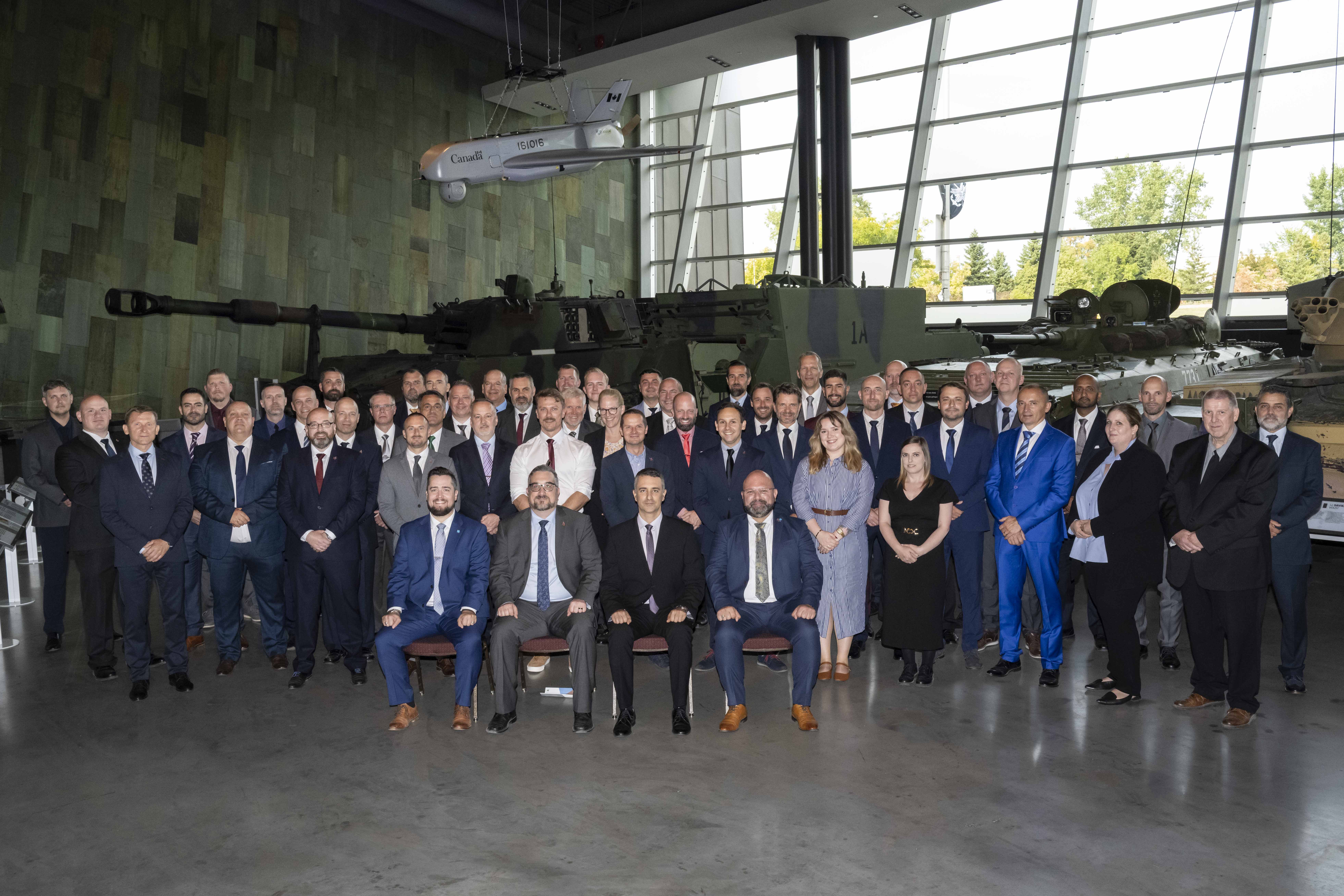
Caption
Photo credit: Avr St-Hilaire
Delegates from 21 nations and four NATO organizations gather at the Canadian War Museum during the 95th NATO Emitter Database Advisory Group meeting hosted by the Canadian Forces Electronic Warfare Centre (CFEWC) in Ottawa.
By Major Christopher Daniel, Canadian Armed Forces Cyber Command (CAFCYBERCOM)
The Canadian Forces Electronic Warfare Centre (CFEWC), one of the Canadian Armed Forces Cyber Command’s (CAFCYBERCOM) key operational enablers, welcomed representatives from across the North Atlantic Treaty Organization (NATO) to Ottawa from September 15 to 19 for the semi-annual NATO Emitter Database Advisory Group (NEDBAG) meeting. This gathering marked the first time since before the pandemic that the event took place outside The Hague.
Delegates from 21 nations and four NATO organizations attended, bringing together 50 experts who work to strengthen NATO’s approach to electronic warfare. NEDBAG oversees the NATO Emitter Database – SCORPIO (NEDB-SCORPIO), a shared platform that allows allied militaries to exchange, review, and update information on electromagnetic emitters. This data supports interoperability and enhances the effectiveness of NATO forces during training and operations.
Hosting the event allowed Canada to highlight both leadership and capability in the electronic warfare domain. Delegates visited CFEWC’s NATO-enabled computer lab, toured the Canadian War Museum and experienced Canadian Armed Forces traditions during a no-host dinner. The meeting closed with a plenary session at the historic Willson House on the shore of Meech Lake.
Commander Graham Hill, Commanding Officer of CFEWC, said welcoming NATO partners to Canada underscored the centre’s growing role within the Alliance. “CFEWC exists to generate mission data and provide electronic warfare expertise for the Canadian Armed Forces. Sharing our facilities and our work with our NATO colleagues helps deepen trust and reinforces our commitment to collective defence,” he said. “Bringing the community back together in Canada after so many years was an important milestone for all of us.”
Canada’s contributions to the meeting were led by Mr. Steve Fortier, Head of Delegation and training lead for the NEDB-SCORPIO database, and Mr. Chris Gariepy, Deputy Head of Delegation. Their leadership reflects Canada’s long-standing engagement in improving and advancing NATO’s electronic warfare data-sharing practices. With the pandemic limiting host nations in recent years, Canada volunteered to be the first country to resume in-person hosting.
Over the week, delegates participated in working groups and technical discussions aimed at strengthening the SCORPIO database and improving policy documentation that guides NATO’s electronic warfare activities. These sessions supported NEDBAG’s goal of building a shared foundation of knowledge across the Alliance.
For the Canadian Armed Forces, the benefits are significant. CFEWC’s mission data feeds directly into Royal Canadian Navy, Royal Canadian Air Force, and Canadian Army systems deployed worldwide. Strengthened collaboration through NEDBAG improves Canada’s ability to integrate with NATO partners, especially in the management of emitter data and electronic order of battle information.
This was the first time in more than 20 years that Canada hosted a NEDBAG meeting. It signals Canada’s renewed leadership within NATO’s electronic warfare community and sets the stage for continued collaboration in support of future operations in the electromagnetic domain.