
NUNAKPUT “Our land” strong and free
October 2, 2026 – Defence Stories
Estimated read time: 4:34
By: Captain Aaron Niles
Image gallery
A pale veil of fog crept off the Arctic Ocean, swallowing a community and hiding it from view.
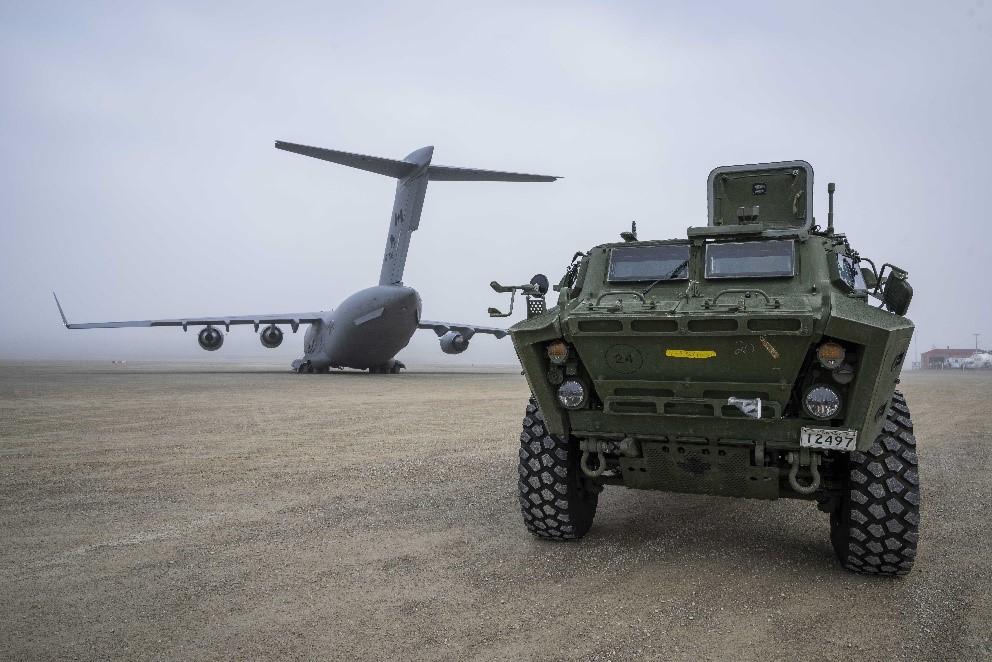
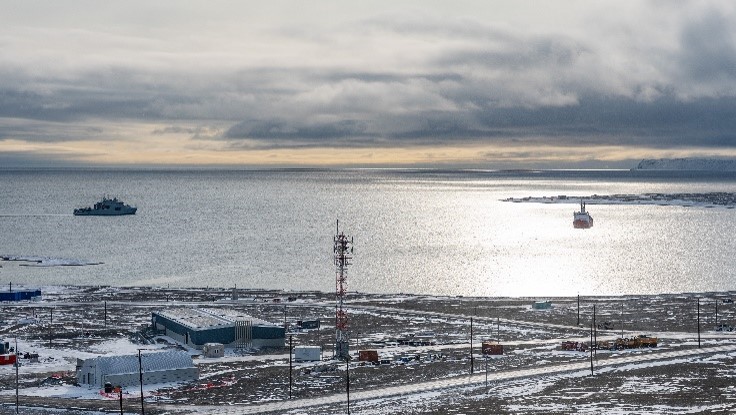
This was a familiar occurrence for Resolute Bay, a tiny Inuit hamlet of 180 people, located on Cornwallis Island in Nunavut. An isolated Arctic community, whose only connection to the wider world was a small airport that frequently vanished underneath the curtain of the thick morning fog, was accustomed to being unseen by the wider world, with or without fog. But on August 23, a new figure loomed in the shroud of grey clouds, peering towards the community as an unfamiliar sight. A CC-117 Globemaster from the Royal Canadian Air Force’s 429 Squadron had landed at Resolute Bay Airport, the second northernmost aerodrome in Canada. The large and imposing aircraft was visible from afar despite nature’s best efforts to hide its arrival, and as the ramp of the Globemaster descended, it harkened the arrival of a first for the community, and a sign that things were about to change.
Coming down the ramp of the Globemaster, tires touching the dirt and sand of the frozen domain, was a Canadian Forces Tactical Armoured Patrol Vehicle (TAPV), a combat vehicle used by the Canadian Army (CA) for reconnaissance, surveillance, security, and personnel transport. Operated by the 4th Canadian Division Support Base Petawawa, the vehicle and its crew had travelled 3,779 km from CFB Petawawa to CFB Trenton, and then up to the Canadian Arctic in a Globemaster, combatting muddy runways, freezing rain, sleet, and dense fog to arrive in Resolute Bay; a first for a TAPV. The TAPV was there for a specific purpose: to test and confirm the Canadian Armed Forces’ (CAF) ability to deploy and move large equipment to the isolated Canadian Arctic as part of Operation NANOOK, the CAF’s signature Arctic operation. The operation focused on comprehensive, joint, interagency, and multinational activities to enhance and refine the defence of Canada, improve the readiness of its personnel to respond to safety and security issues in the North, and develop and maintain key partnerships.
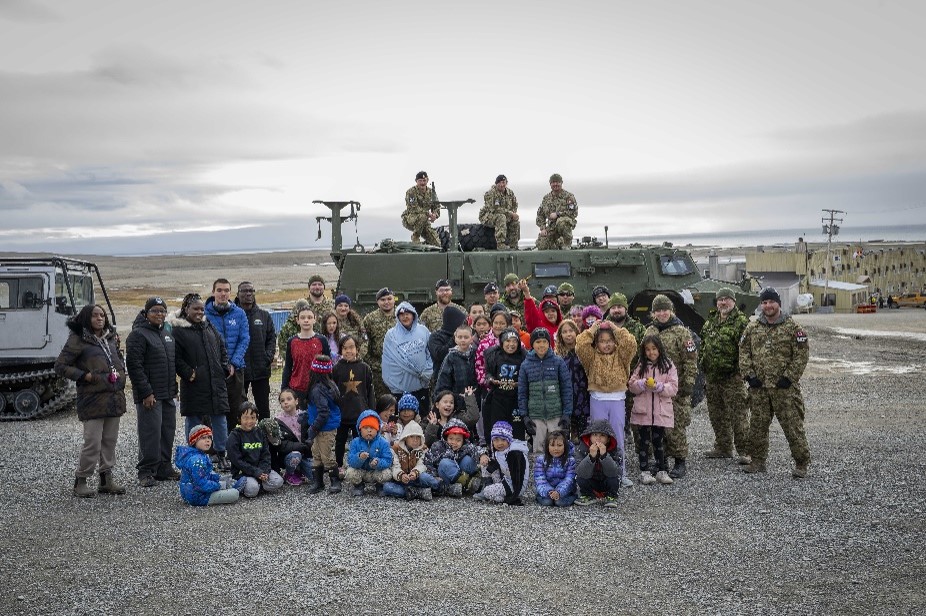
Maintaining these partnerships is vital, as the Indigenous Peoples and northern communities are key partners in the CAF approach to safety, security, and defence in the Arctic. As part of this relationship building, the CAF contingent at the CAF Arctic Training Centre (CAFATC) held a community relations day on August 25, wherein they drove several military vehicles such as the TAPV, a Fat Truck, and a Bandvagn 206 (BV 206) all terrain transport vehicle into the hamlet. They interacted with the local community and gave children and parents the opportunity to board the vehicles and experience first hand what it’s like to be inside military armoured equipment that plays a vital role in the CAF’s defence of the Arctic.
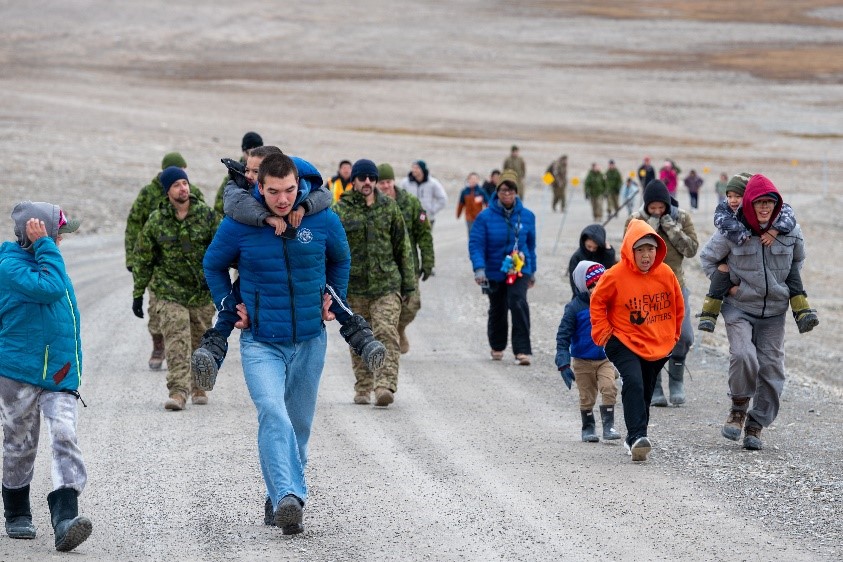
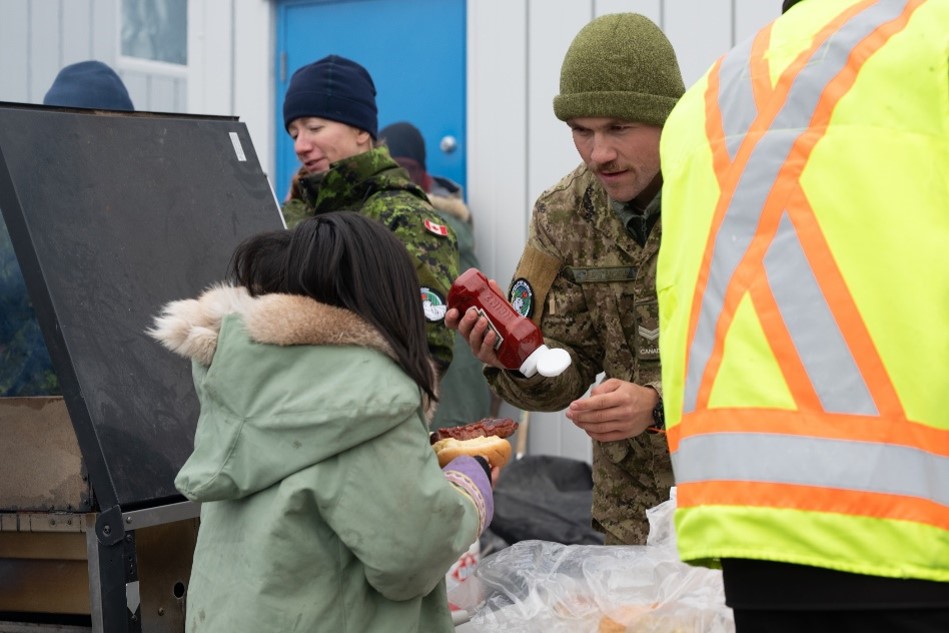
Showcasing the close relationship between the CAF and the hamlet, the community reciprocated, when the staff and students of Qarmartalik School invited the CAF members who were supporting Op NANOOK-NUNAKPUT, having arrived to the area just one day prior, to participate in their community Terry Fox run on September 4th. Strengthening the bonds between two groups whose history was becoming more intertwined, CAF personnel ran alongside students and staff of the school and then held a community BBQ.
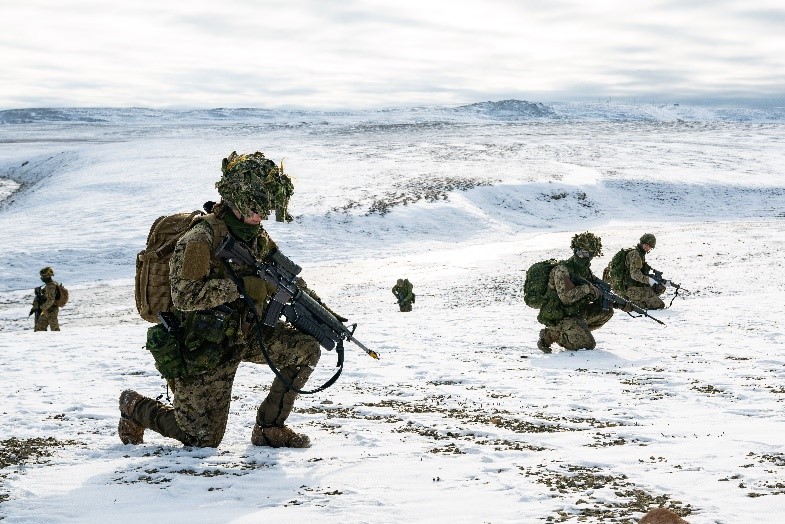
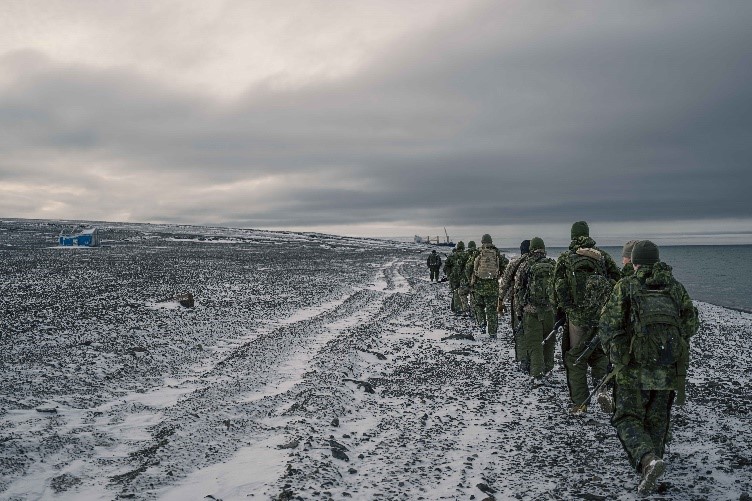
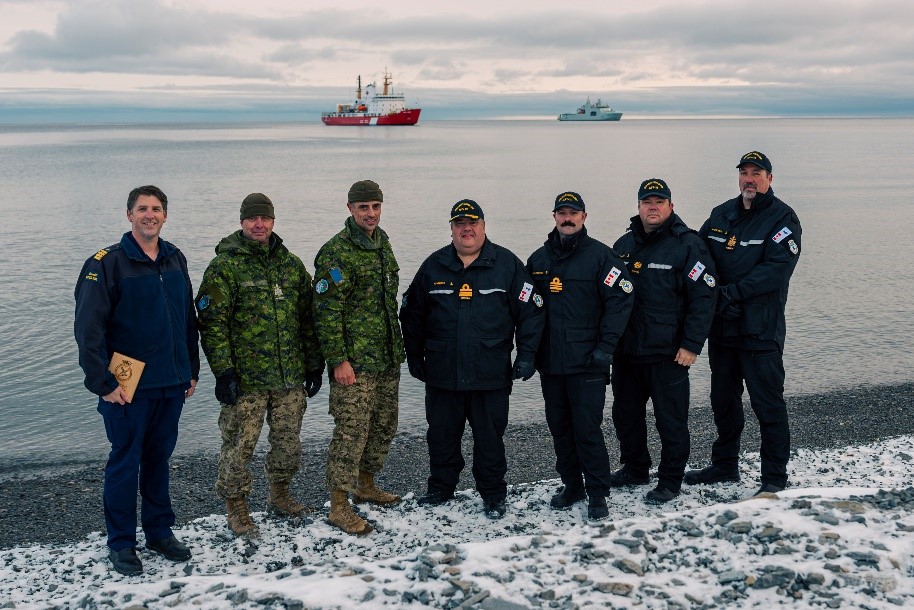
Warm and welcoming smiles gave way to cold hard determination as Operation NANOOK-NUNAKPUT kicked off, with the main portion of the operation running from September 2 - 17. More than 350 CAF personnel from a large swath of participating organizations such as the Canadian Rangers, Royal Canadian Navy, Canadian Army, Canadian Coast Guard, and Joint Task Force, descended into the frigid North to hone their skills in an austere environment, fine-tuning their personal craft so that when called upon, they can defend Canada’s Arctic sovereignty. Key activities during this time included surveillance training, air and land mobility exercises, movement of heavy equipment, and land and maritime activities.
The CAF continually prepares to confront the challenges of the Arctic. The Arctic tests everything from equipment, logistics, and even resolve, and much like the place from which they operated from, the troops were resolute in their resolve, carrying on their duties despite all that Mother Nature had in store for them.
The challenges faced in Resolute Bay are unique. From a wildlife perspective, whereas most Canadians might have to worry about squirrels getting into their attic, Resolute Bay faces constant threats from one of nature’s few apex predators in the polar bear. To protect the troops from becoming a tasty morsel for one of Canada’s most iconic and recognizable animals, patrols by Canadian Rangers took place on a 24-hour basis. The Canadian Rangers, a sub-component of the Canadian Army Reserve, provide vital military presence in the remote and isolated regions of Canada and are experienced with encountering wildlife where few have ever stepped. What might have been seen as a precautionary measure, soon materialized into a vital asset when polar bears were discovered just 1.5 km away from the camp where the CAF contingent was sleeping.
Weather was also a factor that needed to be considered and oftentimes combatted. Freezing rain and deep-thick fog prevented two CH-147F Chinooks from being able to safely land at Resolute Bay. After diverting from their initial planned arrival, the fleet underwent an operation pause while an investigation was taking place, preventing them from arriving at the operation at all. The Chinooks were set to play a vital role during the operation, providing air mobility of key personnel from the camp at Resolute Bay to Little Cornwallis Island, where the main portion of the operation was taking place. This setback illustrated why operating in the Arctic is uniquely challenging. Through training, professionalism, and preparation, the contingent in Resolute Bay was up to the challenge. The task force worked fervently to create a new plan to accomplish the mission without air lift capability. Utilizing the limited maritime capability they had, they were able to move key assets to Little Cornwallis Island while also conducting a patrols and company level maneuver near the vicinity of the CAFATC camp that ensured all participants in Op NANOOK-NUNAKPUT were engaged in the operation.
Despite all the challenges, Op NANOOK-NUNAKPUT was successful and showcased that despite all that the Canadian Arctic has to offer, CAF members have the capability, mettle, and determination to face any adversarial threats in the Canadian North and is ready to deploy anywhere across Canada’s vast boundaries. As snowfall returns to Canada, harkening the beginning of a new winter, rest assured, Canada’s military lies ready and waiting.