
Fifty years on: The CC-115 in domestic service to Canadians
News Article / January 26, 2022
Cheryl Condly
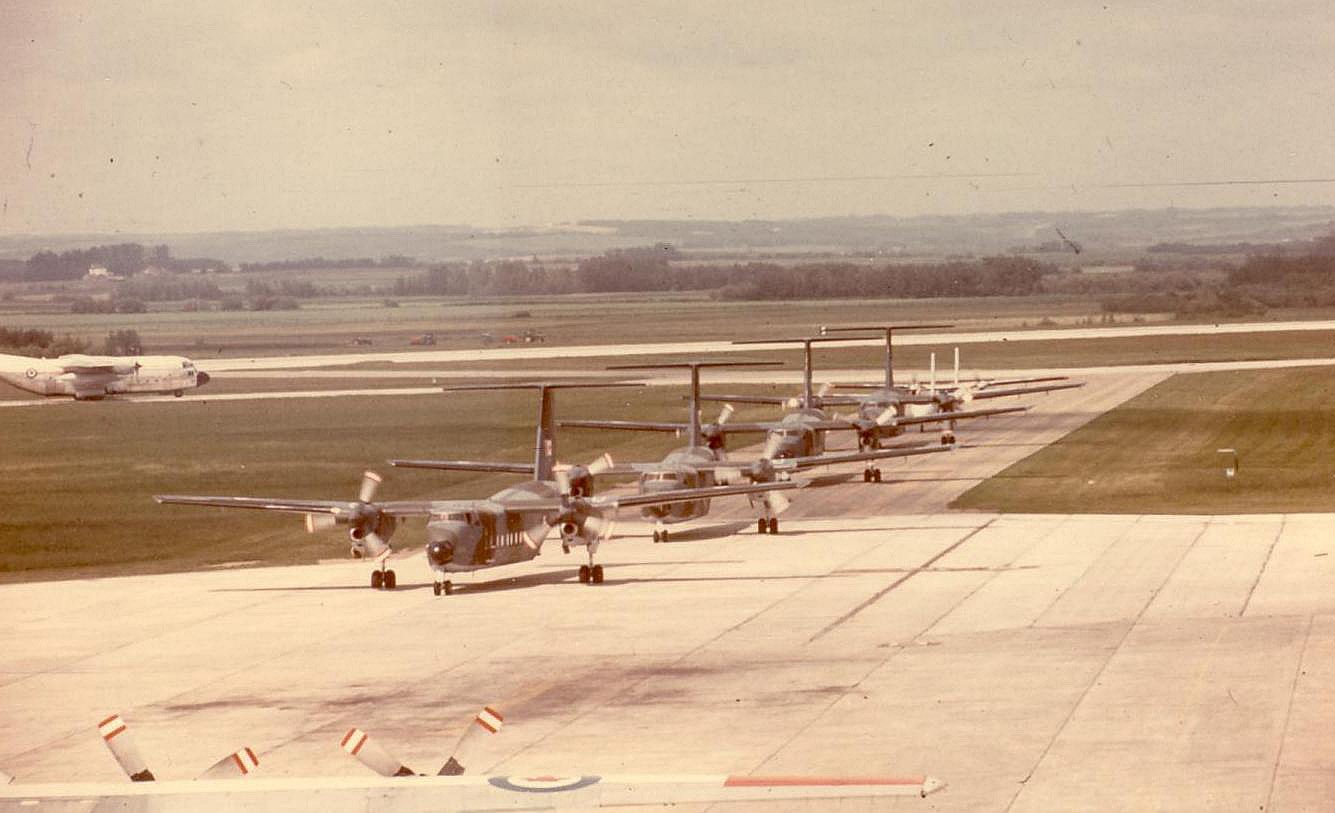
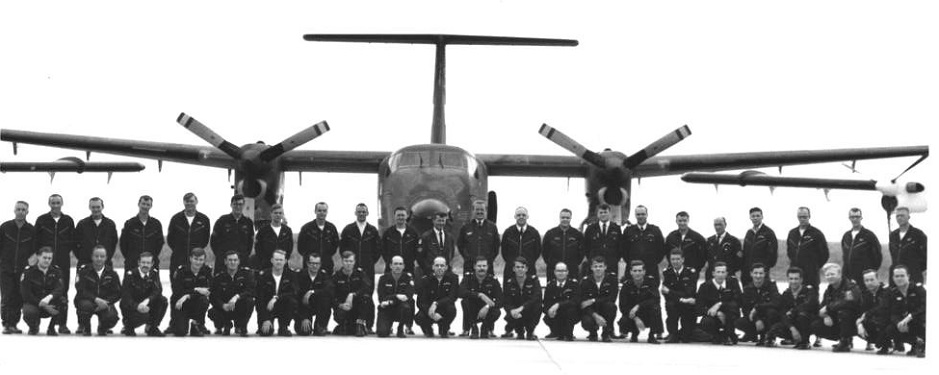
Captain Peter Francis was posted to 429 Squadron as a Buffalo pilot shortly before it became the combined 429/440 Sqn with the arrival of the Twin Otter aircraft. The mission of the squadron was a dual role with the Buffalo performing a tactical role and the Twin Otter that of search and rescue. The Buffalo would later drop the tactical role, be assigned to other squadrons, and be dedicated solely to search and rescue for which the Buffalo and crews to this day are well known for excellent performance.
Crews have always been prepared to assist with domestic missions, so when Capt Francis was tasked to assist with the fire control of the burning underground peat in the Wood Buffalo region north of High Level from August 8 to 15, 1971, he and his crew were fully prepared for their being seconded to the Alberta Forestry Service (AFS) for this mission.
“Our aircraft and crew were tasked to assist the AFS in any way permissible by airlifting crews, supplies, fuel and whatever needed moving to areas close to the burning peat,” said Francis. “The Buffalo aircraft was extremely capable of operating from short, unprepared airstrips and was ideal for moving whatever was needed by AFS to remote locations closer to the fires.”
The tasked crew was Ken Portas (AC), Peter Francis (FO), Larry Cote (FE) and Roy Dowell (LM). The transportation duties were shared with a commercial helicopter company, Evergreen Helicopters out of McMinnville, OR in the United States.
The operation was flown only during daylight hours as none of the airstrips were controlled or lighted and crews stayed in a local motel, with AFS supplying crew provisions.
“As it was summer and the weather was usually clear, it did not adversely affect the operation,” notes Francis. “From a personal standpoint, it was motivating and enjoyable to be doing a job rather than training for a job that had a positive effect on the situation, as we felt that the results were worthwhile to the province and visible to the affected public.”
“The Buffalo was a great aircraft and performed admirably in all scenarios for which it was designed. It was disappointing that the Buffalo procurement process did not include sufficient spare parts to satisfy the demand and there seemed to be a propensity to keep one aircraft in the hangar to provide spare parts for the rest of the fleet. Otherwise, it was excellent as a low-level transport aircraft able to carry heavy loads to substandard airstrips.”
There were inherent risks that came with this mission. On one flight with a load of empty fuel drums, one was found to have substantial fuel, which leaked into the aircraft.
“The fumes were almost toxic, providing a real danger of somehow being ignited and causing an explosion. Thus, all windows were open to dissipate the fumes, but to little avail,” said Francis.
“On arrival at High Level, the aircraft was backed up to the edge of the parking area and the load unstrapped. Ken (Capt Portas) applied full power and released the brakes, which resulted in all the fuel barrels being ejected from the aircraft and rolling to a stop on the edges of the tarmac. It stopped the fuel fumes in the aircraft and negated a very real possibility of the fuel igniting and causing a massive explosion.”
“An anecdote to the story is that while we stayed in High Level, we ate our evening meals at a local Chinese restaurant and Ken Portas always ordered a double shrimp cocktail with each meal. Some years later, while walking through West Edmonton Mall, Ken and another gentleman eyed each other and simultaneously loudly proclaimed, “Double Shrimp Cocktail” and laughed together while renewing old acquaintances.”
As my tour on the CC-115 Buffalo was coming to an end with 429/ 440 Squadron, I was posted to the new 116 Air Transport Unit (ATU) formed for the United Nations in Cairo, Egypt. I arrived in early June 1974 and commenced flying with the unit on Jun 9, 1974.
We were tasked to support the United Nations requirement in the Middle East, flying initially from Cairo to Cyprus, Lebanon, Syria and Israel primarily. It was summer and the daily temperatures usually topped out at approximately 125+oF. We were quartered on an abandoned racetrack in Arctic tents, with Arctic sleeping bags and trifold aluminum tube tanning lounges about 18 inches off the sand.
We slept in the flannelette liner of the sleeping bags, but any drawstrings that touched the sand invited biting sand fleas into the bag and were extremely difficult to remove. There were no hard lavatory facilities, and the port-a-potties housed in 4x4x6 foot tents, and immersion heated garbage cans full of water provided the rudimentary facilities for personnel usually suffering from some form of dysentery.
My first glimpse of the Sweetwater Canal from whence we drew our potable water was of a young boy paddling a dead donkey, much like a raft, on the canal. As you can imagine, conditions were somewhat rudimentary and much less that most were accustomed to.
As the weather was always clear and good, it did not present a problem for the flying portion of the operation. There was, however, always political considerations when flying in those areas as the Arabs did not recognize Israel and only would accept flight plans to cities in Israel if the old International Civil Aviation Organization (ICAO) designators for locations in Israel were used.
The flight plans were on preprogrammed flight itineraries and although firm, could be advanced if the proper coordination was approved with air traffic control and the aircraft was in radio contact with the appropriate control centre. There was always a little degree of apprehension when flying into warring nations, but by and large, the flying was good and plentiful.
On one occasion, after delivering a multi-national personnel load into Beirut and waiting for their return, we were arrested by the Lebanese police and ushered into the terminal building basement. As language was a problem, it took several hours prior to learning that a Ghanaian Lieutenant Colonel had been discovered with a suitcase full of hash, and as we had carried him into Lebanon, it was assumed that we were complicit in his smuggling operation. It took another two to three hours to convince the police that we were only the bus drivers and had no connection with the load of passengers and we were released to continue without the LCol.
Loads for the aircraft were quite varied, but the most difficult were the personnel loads of mixed nationalities. Many countries would not allow other nationalities on their soil. Sometimes we were forced to carry these folks and had to keep them in the aircraft until departure, sometimes in temperatures of 100oF without air conditioning. This was all part of our normal operations.
A fateful day
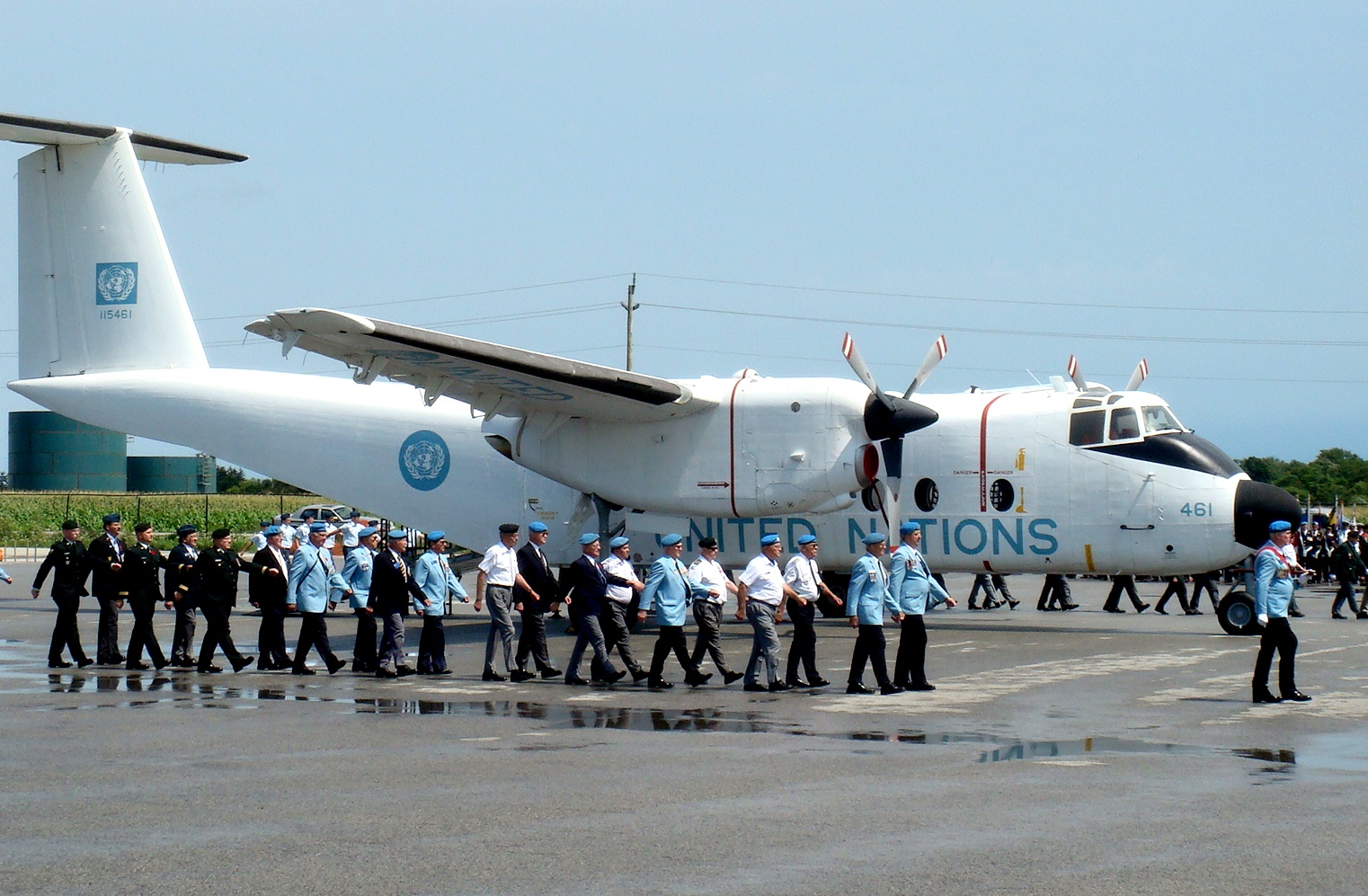
On August 9, 1974, everything changed. Buffalo 461 was shot down by a salvo of three SAM 6 missiles fired from a Syrian base on the road between Beirut and Damascus. All nine Canadians aboard the aircraft were killed.
An American officer watched the missiles being fired and again watched them hit and destroy the aircraft. The ensuing phone traffic was revealing at best. On the first contact, the Syrian air traffic control phoned and asked for a crew list for “the aircraft that we shot down.” Subsequent calls all referred to the “aircraft that had contacted the ground.”
Three separate boards of inquiry determined that: (United Nation) the aircraft was shot down by Syrian missiles, (Canadian) the aircraft was shot down by SAM missiles, but did not name the perpetrators, (Syrian) the aircraft crashed into old unused SAM site, which explained the Cyrillic marking on the wire bundles, at the crash site as SAM 6 missiles were of Russian manufacture.
At the unit, the news was devastating. My tent mate, Captain Keith Mirau, was the first officer on the flight and his loss was difficult to accept. The closeness of our small cadre was an emotional catastrophe. It was particularly difficult to amass Keith’s effects as he and his wife wrote almost daily and to read their personal thoughts to one another was heartrending.
Needless to say, the unit aircrew refused to continue to fly that corridor from Beirut to Damascus and were re-routed north through Latakia, Turkey, until the Syrians provided absolute proof that the incident would never be repeated. Personally, I never returned to Damascus after the shoot down, and likely never will.
Sometime in the interval between Aug 1 and Aug 21, the ATU moved its base of operations from Cairo to Ismailia on the Suez Canal into an old Royal Air Force base, which had been abandoned and never rebuilt.
The Canadians cleaned out all the debris and rebuilt the non-flying quarters into livable accommodations and established a tent city at the airfield for the members of 116 ATU. Officers had individual tents of Polish origin (shaped like Quonset huts) and were double layered to provide some insulation from the stifling heat. Along with the revised accommodation came a hard shelter for the port-a-potties and water trailers filled with local water and purification tablets. The taste was intolerable, and it was only bearable when mixed with any flavour of Tang. Most of the unit drank bottled beverages and soft drinks to avoid the water and any chance of dysentery.
I returned home in November of 1974, sadder and more realistic about my chosen profession. However, the flying bug was never eliminated, and it just made me more determined to practice and be the best pilot I was capable of being.