
Memories of missions, crews and friends

News Article / January 21, 2022
Cheryl Condly
Capt Ken Portas was one of the first pilots to join 429 Transport Squadron detachment in Edmonton in August 1968. He enjoyed his time with the squadron and flying the Buffalo CC-115, especially as “the aircraft was new and unique to anything else the Air Force had and the crews became very close knit, all of us and our families became friends for life.”
429 Sqn operated under the Army's Mobile Command as a tactical transport at the time. The aircraft could deliver 28 fully equipped paratroopers as well as cargo pallets and fully loaded jeeps and other necessary equipment for Canadian Forces personnel, making it an excellent platform for tactical missions.
The cargo compartment was sized to accept the Hercules pallets turned lengthways, which allowed versatile cargo movement. This system included a set of restraint rails and sked system to hold the pallets in place during flight and to allow Buffalo crews to air drop equipment. The pallets were extracted by drogue chute and main chutes.
“This capability lead to the most outstanding and unmatched short field capability of any aircraft of its size at that time,” stated Portas. “Its large bulbous main gear tires allowed for rough runways and unprepared strips. I landed several times on farm-type hay fields in camp Wainwright, Alberta. Overall, the aircraft could utilize 1,500 feet of runway or less depending on weight. At the Abbotsford Airshow we demonstrated a stop and go in 1,000 feet.”
A largely unknown flight utilizing the Buffalo performance is documented in Portas’ logbook. “We had deployed two aircraft to Eielson USAF (Fairbanks) base in Alaska on November 29, 1970, for a joint service exercise,” Portas recalls. “The purpose was a large paradrop of troops and equipment by RCAF, USAF, and the Australian Air Force. The temperature for the entire stay was a bitter 50 below.”
Portas and his crew were lead aircraft as the pathfinder for the major airdrop. They were tasked to rendezvous with a C141 Starlifter 20 miles out and then calculate the track and release point for the paradrop of US soldiers and a jeep. The Starlifter crew was tasked to place a large 'A' as the initial aiming point for the main attack 30 minutes later. Navigators in the 20 or more aircraft following would use the marker as their aiming spot plus drift.
“In the Buffalo the right seat pilot plots and calls the drop sequence,” said Portas. “In the Hercules crew the navigator plots the drop sequence but relies on more electronic info. In those days we found the mark one eyeball up front more accurate.”
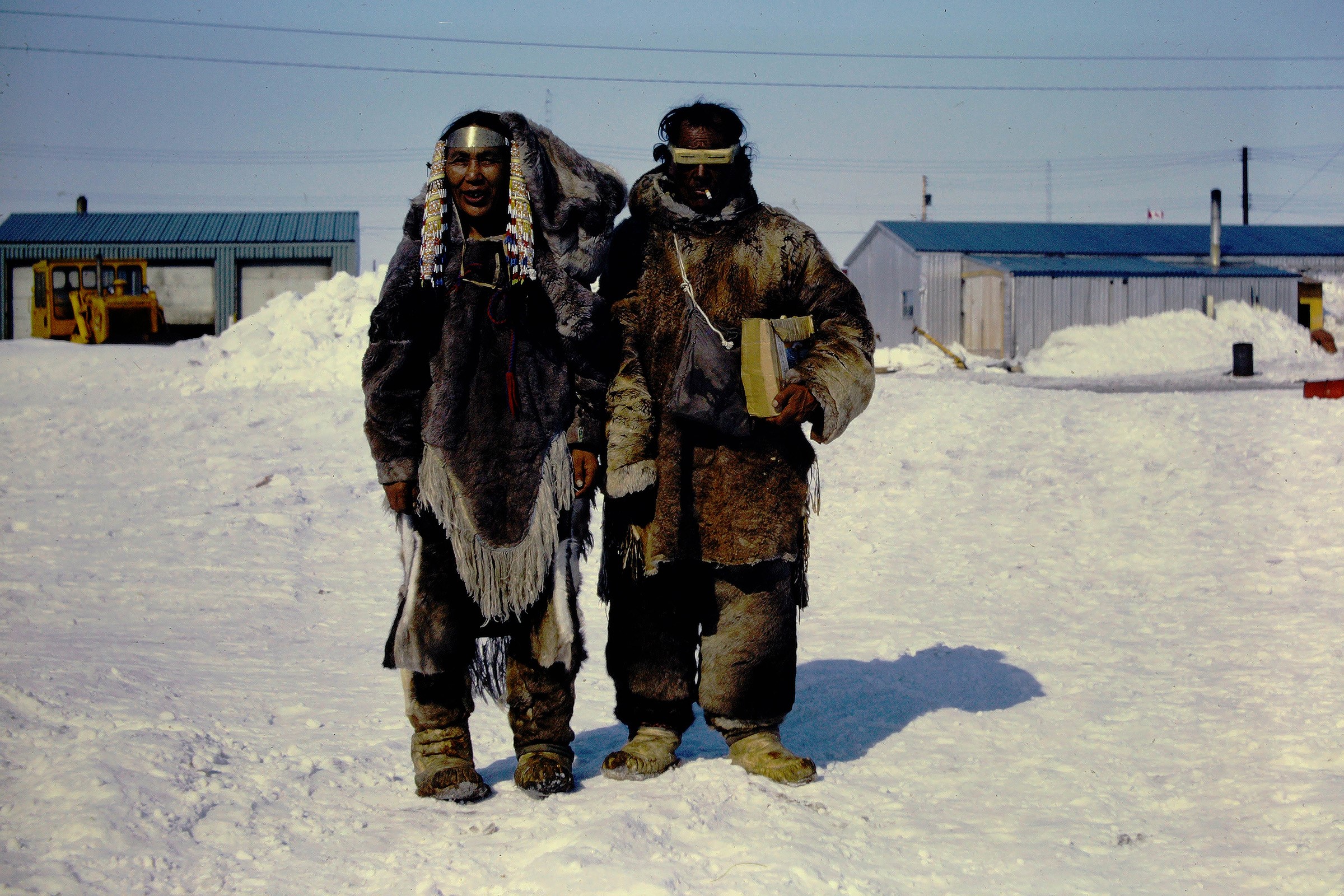
While on exercise, word came down from the USAF that a native village, Anaktuvuk Pass, on the north sloop of Alaska had run out of heating fuel and diesel. The USAF had been trying to airlift supplies onto the runway with twin-engine C123 transports; however, they were having a problem as half of the 3000ft runway was covered in deep snowdrifts.
429 Sqn CO, Maj Bob Caskie, was approached by the USAF “to see what we could do with the Buff, since they had been hearing about its performance,” Portas said. “So our crew discussed the mission and decided to load fuel drums and fly the 600 nm trip north.”
Piloted by Portas and Terry Kitzu, first officer, the crew included flight engineer Don Steers and loadmaster George Baker. They flew out on December 11, 1970.
“The trip to Anuktuvuk Pass at around 14,000 feet was over solid snow-covered Rocky Mountains with scattered cloud, very beautiful,” said Portas. “The Buffalo's design of high horsepower with high-lift wings and flaps enabled steep approaches and low airspeed on takeoff and approach. The long landing gear struts, large tires, and an automatic lift dump system kept the aircraft on the ground after touchdown.”
“The airfield was oriented north-south and the north end was indeed heavily drifted in. The visibility at the village was quite hazy from ice fog, but we spotted the village and runway and descended quite steeply to over fly the site. The landing kept our heart rate up as most landings do! I often say if you take off you have to come back down sooner or later.”
After a couple of low passes we landed south without any problem. The entire village turned out with great enthusiasm and well wishes. They wanted to gift us with stone carvings; however, we politely declined. It was our mission and we were happy to help. As a military member I think we all feel a sense of gratification for being able to help people while putting to good use all that time and training we received.”
Portas also praised “another group of people who don't get enough recognition. An aircraft will never leave the ground without a ground crew.”
There are also memories that remind us all of the dangers of flying. On November 2, 1970, a Canadian Military Dakota, #12930, crashed at Cape Perry, NWT while trying to drop fuel and survival gear to a downed helicopter. The Dakota crew of nine all perished.
Ken Portas, Peter Francis and Dave Royer flew to the site on November 20, 1970. Their friends are remembered to this day.