
Master Corporal Tex Young: Precise professional
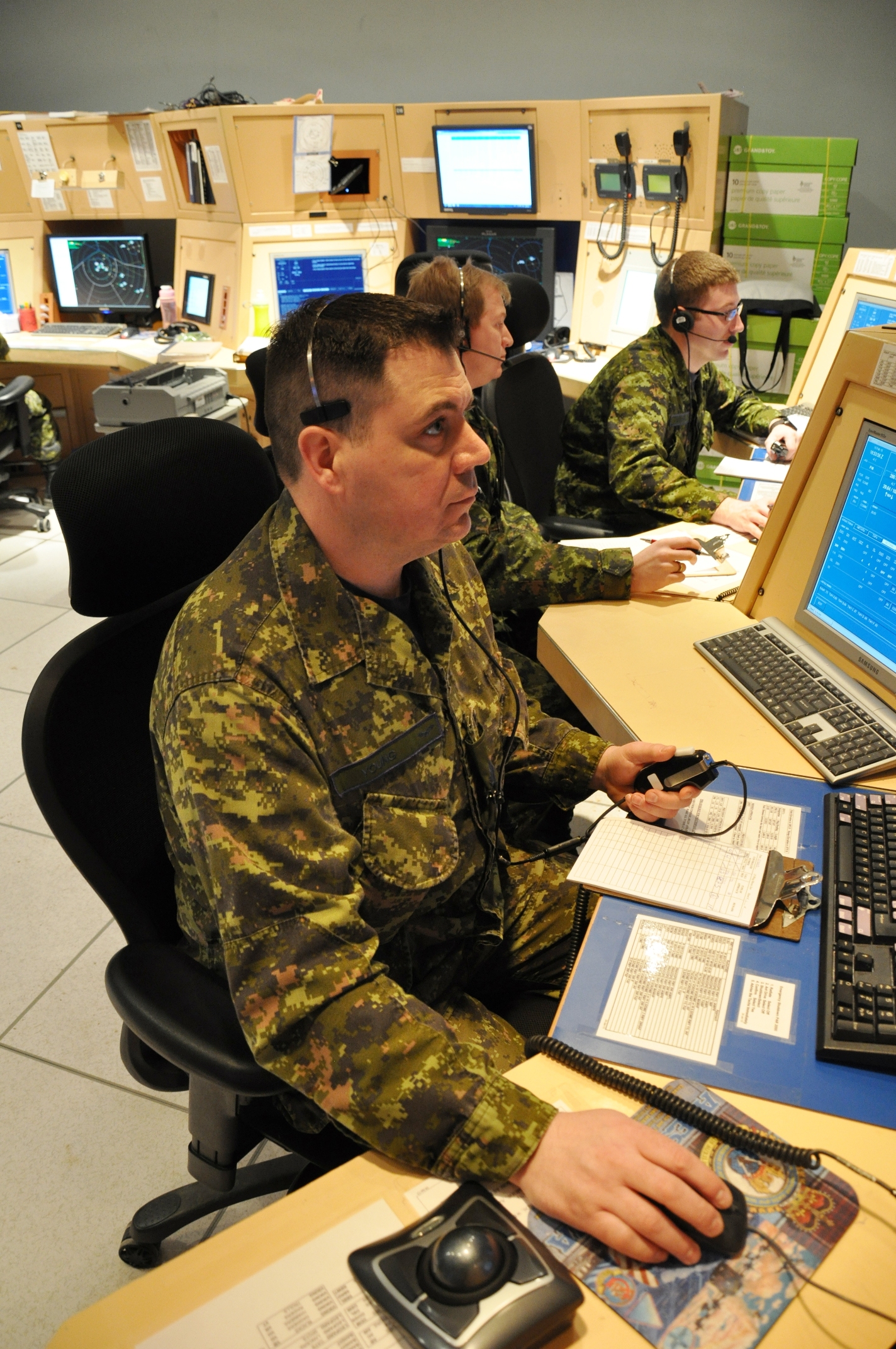
News Article / March 18, 2013
“The Aboriginal recruits taught me the true definition of courage,” says Master Corporal Grenville Tex Young, the acting senior radar controller at 15 Wing Moose Jaw, Sask.
MCpl Young gained a new appreciation for Aboriginal youth and their challenges as an Aboriginal Recruit Program instructor at 16 Wing Borden, Ont., last spring. It wasn’t quite what he expected, however.
“Before I went to Borden, my master warrant officer said I could give a lot to the program given my military background and my involvement with Aboriginal issues, but it went the other way. Those kids gave me so much when I learned about their adversity and the challenges they go through.
“They gave me a lot of hope because they didn’t blame anyone for their troubles. They aren’t letting the negative challenges of their past affect their future. That’s real courage.”
MCpl Young fulfills a valued role in supporting the readiness pillar of the Canada First Defence Strategy. 15 Wing is the principal site of the NATO Flying Training in Canada program and the home of 2 Canadian Forces Flying Training School. The Snowbirds air demonstration team also calls Moose Jaw home.
Army Reserve service
Growing up in Hillmond, Sask., MCpl Young joined the Army Reserve as a lineman in 1991. He transferred to the Regular Force in 1996, becoming a sapper (private) with 2 Combat Engineer Regiment, where he worked as an electrical generation systems technician. He deployed on back-to-back tours to Bosnia with the mobile repair team in 1997 and then with the 1st Battalion, The Royal Canadian Regiment Battle Group in 1998.
“It was an eye-opener on so many levels,” says MCpl Young. “I had a perception of how good life was in Canada prior to my tours, but I had no clue as to what I was going to see and do once I got to Bosnia … how badly destroyed those communities were and how deep their hatred for each other was.”
In 2001, MCpl Young transferred to the Royal Canadian Air Force, joining the aerospace control operator trade as an air surveillance technician. “I’ve always been interested in aviation and thought this would be a challenging trade. Surveillance is part of the air defence community and I have to be doing something that’s personally meaningful and important.”
15 Wing posting
In 2005, MCpl Young became a precision approach radar (PAR) controller, a branch of air traffic control (ATC), and was posted to 15 Wing. “We are the only NCMs [non-commissioned members] who control air traffic, but we do it from the terminal.”
The ATC community has two distinct breeds of controller. The control tower is run by the officers and the terminal is run by the NCMs. ATC officers rely on visual flight rules (VFRs) to bring the aircraft to the wing while the PAR controllers use instrument flight rules (IFRs) to land them safely.
“Although the final approach is pilot-controlled, the PARs are guiding them, and we have to keep all aircraft at least a thousand feet (300 metres) or three miles (five kilometres) apart.”
ATC shifts in Moose Jaw are unusual. With the high number of student pilots, PAR controllers and ATCs can handle 15 to 20 approaches every six-hour shift. “The ATC community requires 18 approaches per month to stay current. We can do this in a day here and, quite often, we do,” says MCpl Young, who has over 9,400 approaches under his belt.
But the job isn’t for everybody.
“The work is intense and mentally fatiguing. A different type of skill set is required for this job. You have to be able to multi-task and make decisions quickly. You have to like the stress to do this type of job, but the teamwork between the officers and the NCMs is amazing and incredibly satisfying. Everyone works together here.”
Community involvement
When he’s not guiding aircraft to the windswept airfields in this mid-western prairie outpost, MCpl Young is active in the local Métis community.
“I do a lot of grant writing to support local Aboriginal and Métis projects. It’s been very meaningful to contribute to this community, which I knew nothing about until I met my wife — she’s Métis. We can do so much to bridge the gap between the military and Aboriginal communities.”
There’s a perfectionist streak to the ATC community.
“You must have the attitude of ‘I want to be the best ATC.’ It has to be that way because it’s all about getting the aircraft safely on the ground. The job is unpredictable and approaches happen at a moment’s notice, and if you get cocky, this job will bite you in the ass.”
Looking back after over 20 years of service, MCpl Young says, “I’ve had an awesome career. I’ve learned so much in the military and it has given so much to me personally. It has been incredibly generous to me and I hope I can give back as much as I get from it.”