
HMCS Winnipeg patrols Asia-Pacific’s electric avenues
Navy News / February 8, 2021
By Captain Chelsea Dubeau
One ship, two operations, three multinational exercises. An incredibly busy Intermediate Multi-ship Readiness Training (IMSRT) Program on the way to and during Exercise Rim of the Pacific (RIMPAC). A deployment experience unlike any other, it was also one that tested the crew’s resilience and proved what is possible when positive, people-first leadership meets innovation.
More than that, it was a learning experience in every possible way: from planning to deploy and then deploying in a COVID environment, to incorporating the latest-and-greatest Wi-Fi technology, to keeping the crew engaged and morale high during a deployment deprived of port visits, and to managing supply chain challenges brought on by the global pandemic, there was much uncharted water to navigate.
Even if it is a region in which Canada has operated for decades, Her Majesty’s Canadian Ship (HMCS) Winnipeg’s time in the Asia-Pacific continued to provide learning opportunities, sometimes in the most unexpected of ways. The waters of the region are alive, electric, very busy and anything but benign.
Winnipeg deployed August 1, 2020 and began Operation PROJECTION in September to conduct forward naval presence operations in the Asia-Pacific region.
While deployed in the region, Winnipeg also operated under Operation NEON, Canada’s contribution to a coordinated, multinational effort to support the implementation of United Nations Security Council Resolution (UNSCR) sanctions imposed against North Korea. The sanctions aim to pressure North Korea to abandon its weapons of mass destruction programs and respond to North Korean nuclear weapon tests and ballistic missile launches.
Primarily a surveillance mission, units operating under the auspices of Operation NEON are tasked to collect critical evidence on vessels of interest, or vessels suspected of maritime sanctions evasion like ship-to-ship transfers of fuel and other commodities banned by the UNSCRs. This evidence is then submitted to higher authorities, including the UN Panel of Experts, which gather, examine and analyze information to evaluate cases of non-compliance.
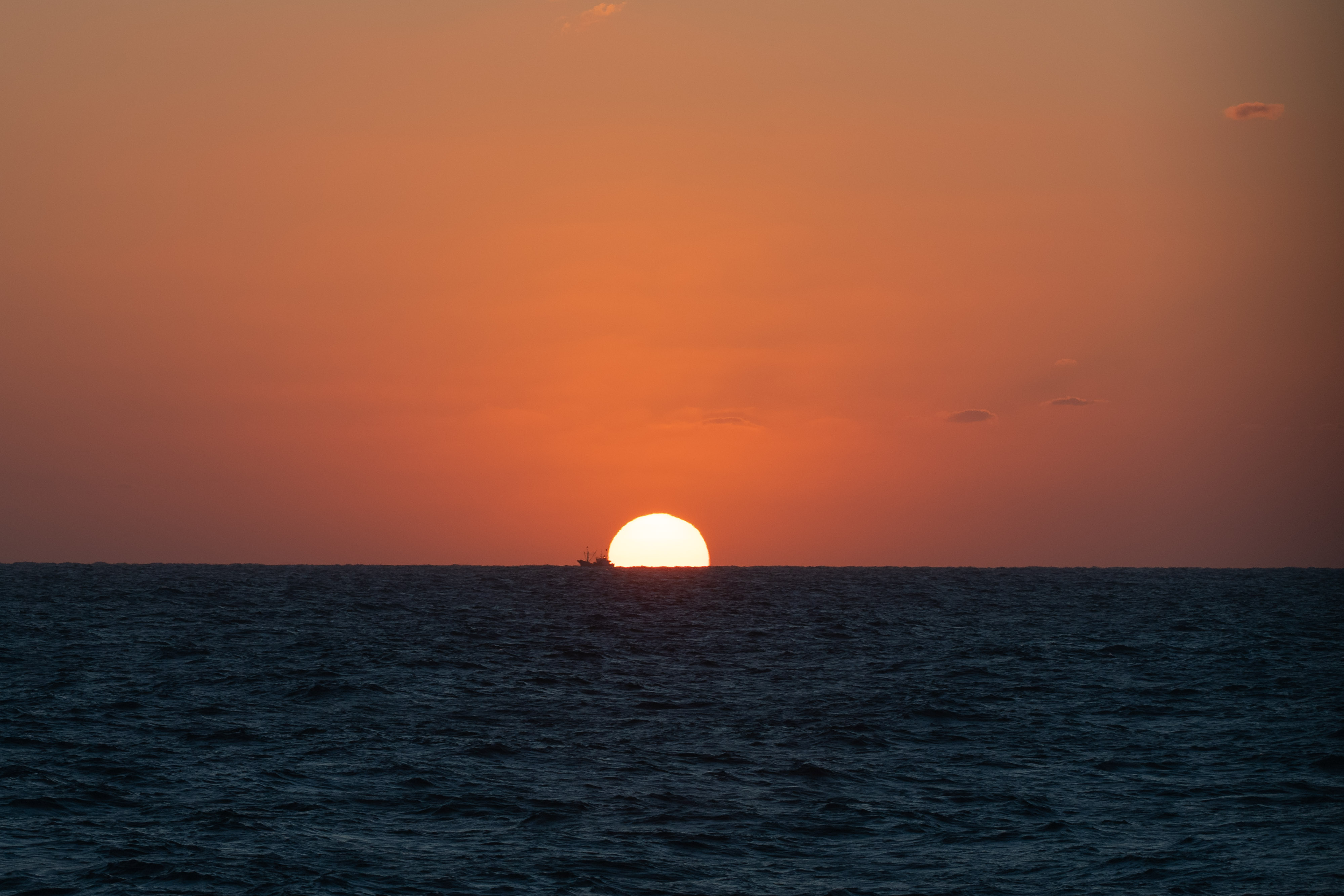
But if the Taiwan Strait was busy, the East China Sea was electric. At night, the waters were lit up for miles from the lights of hundreds of nearby vessels. Operation NEON is conducted in one of the busiest marine traffic areas in the world, which makes it that much more difficult when you’re trying to find and conduct surveillance on a handful of vessels of interest.
“This particular area of the globe has an extremely high density of shipping traffic and fishing vessels,” said Major (Maj) Kris Sutton, Air Officer on board Winnipeg. “Between crew resource management between sorties, to strategizing the best way to cover the tasked areas, to gaining proficiency with the helicopter’s sophisticated system of sensors to locate vessels of interest, the lessons came quickly.”
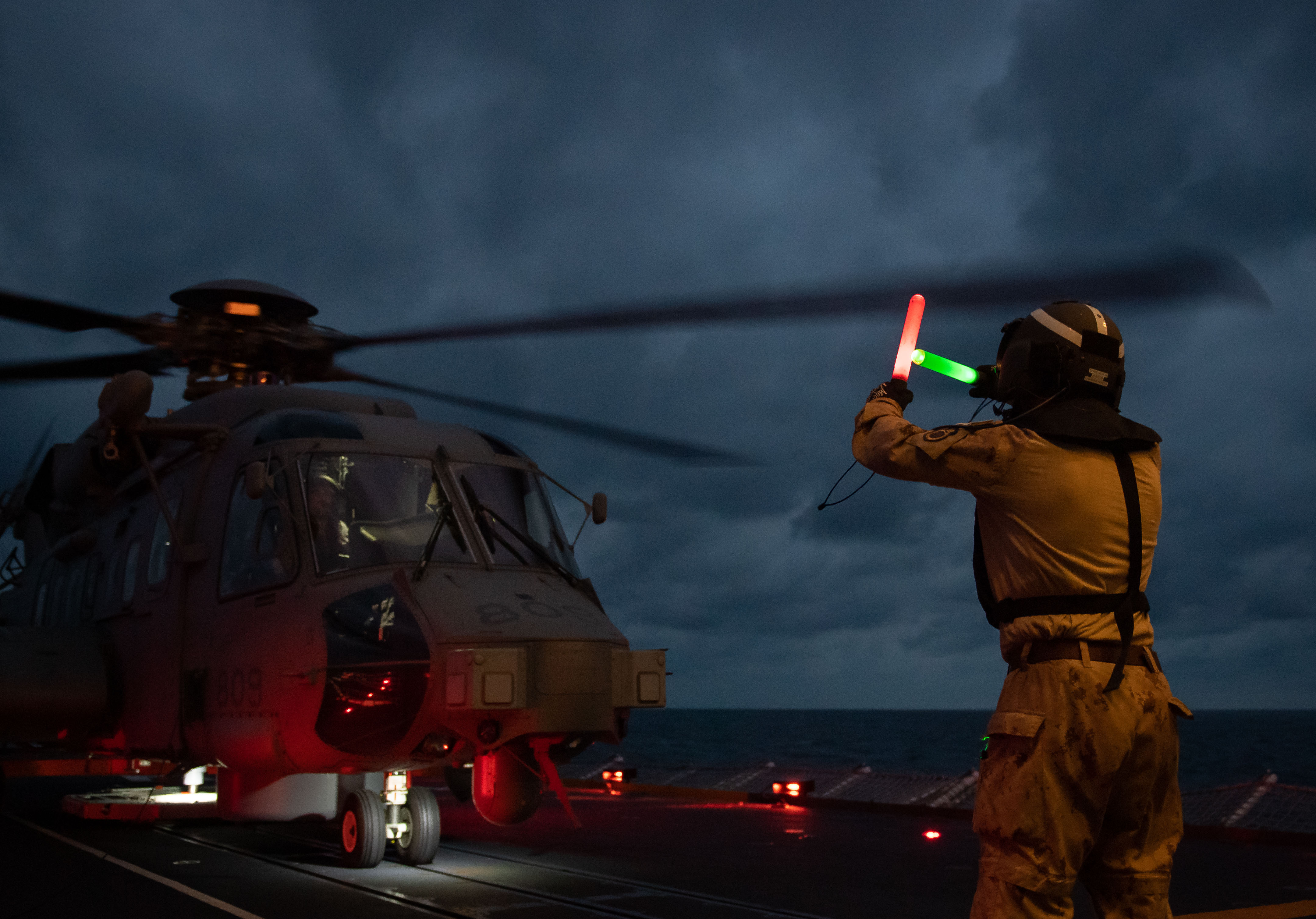
Winnipeg’s embarked CH-148 proved itself to be an invaluable asset during Operation NEON, extending the ship’s intelligence, surveillance and reconnaissance reach beyond the horizon and allowing for a greater amount of surveillance conducted on these vessels.
“The CH-148 is effective at what it’s designed to do,” said Maj Sutton. “It’s nice to have validation of its capability in executing this type of mission in an actual theatre of operations.”
Of course, the CH-148 wasn’t the only asset using radar to confirm who was in contravention of the UNSCRs. In Winnipeg’s operations room, that’s the bread-and-butter of many, including Sailor 1st Class (S1) David Mason, a Naval Environment Sensor Operator (NESOP).
“My job as a NESOP is to provide early warning for any surface or air contacts that may be around us at any given time,” said S1 Mason. “We help paint a picture of the surrounding area and give situational awareness to the ship’s command team. During Op NEON, it was our job to locate vessels of interest radars.”
“There were a lot more merchant and fishing vessels than I realized, all of which utilize general navigation radars,” S1 Mason continues. “While looking for our assigned vessels of interest, the only radars we could search for were general navigation radars which was like looking for a needle in a stack of needles. Luckily, we were able to count on the assistance of our allied maritime patrol aircraft and a CP-140 Aurora to assist in locating these (vessels).”
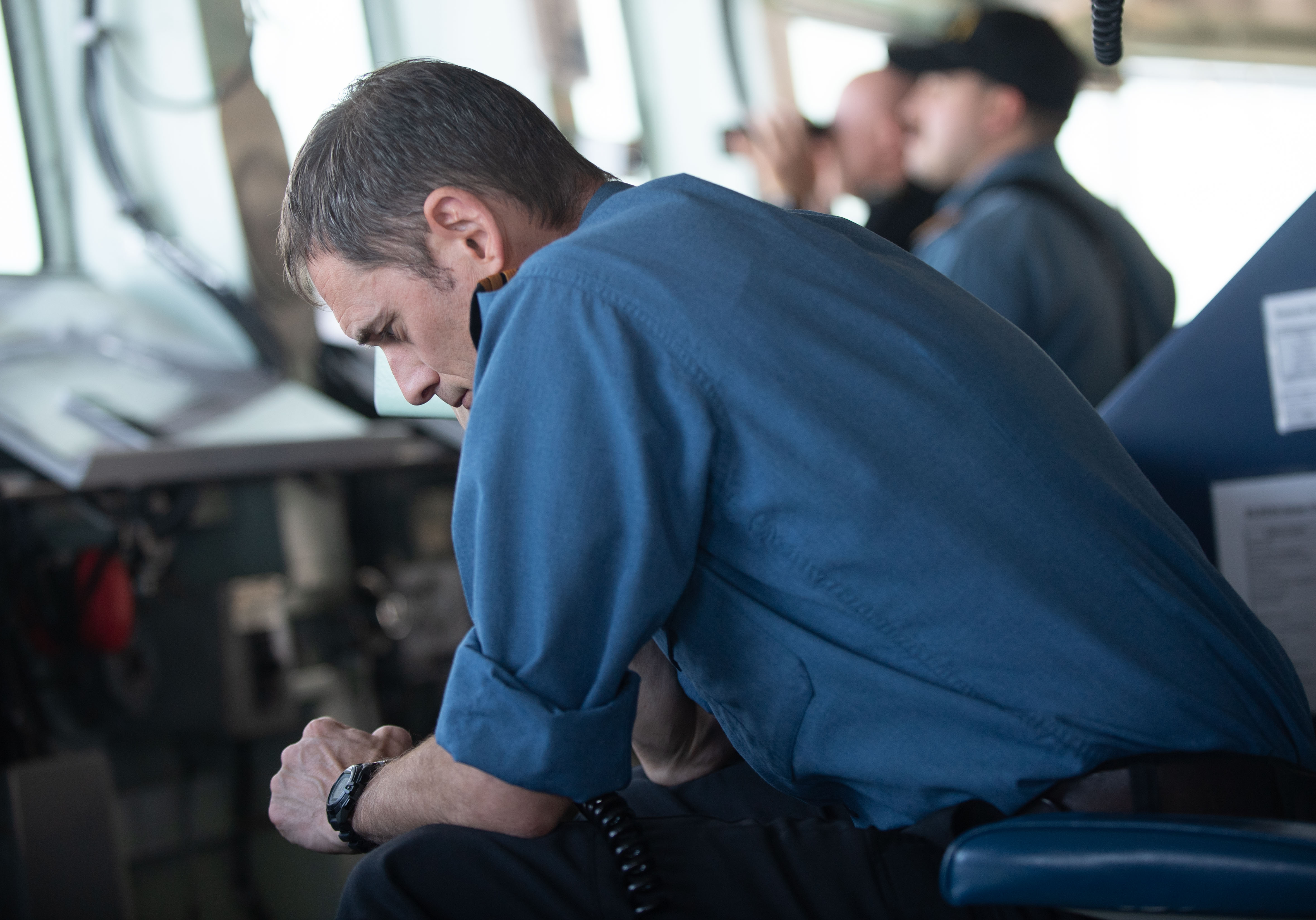
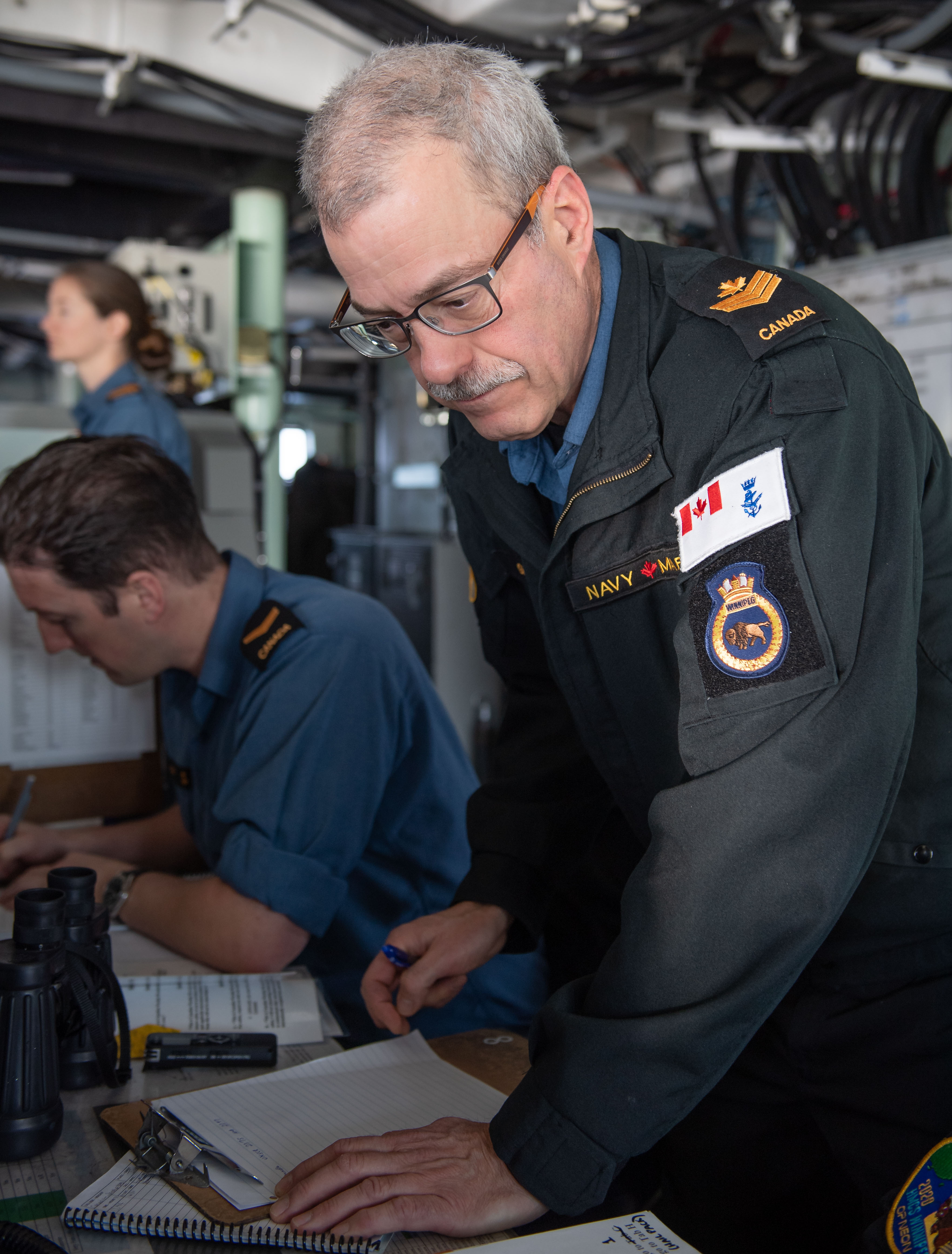
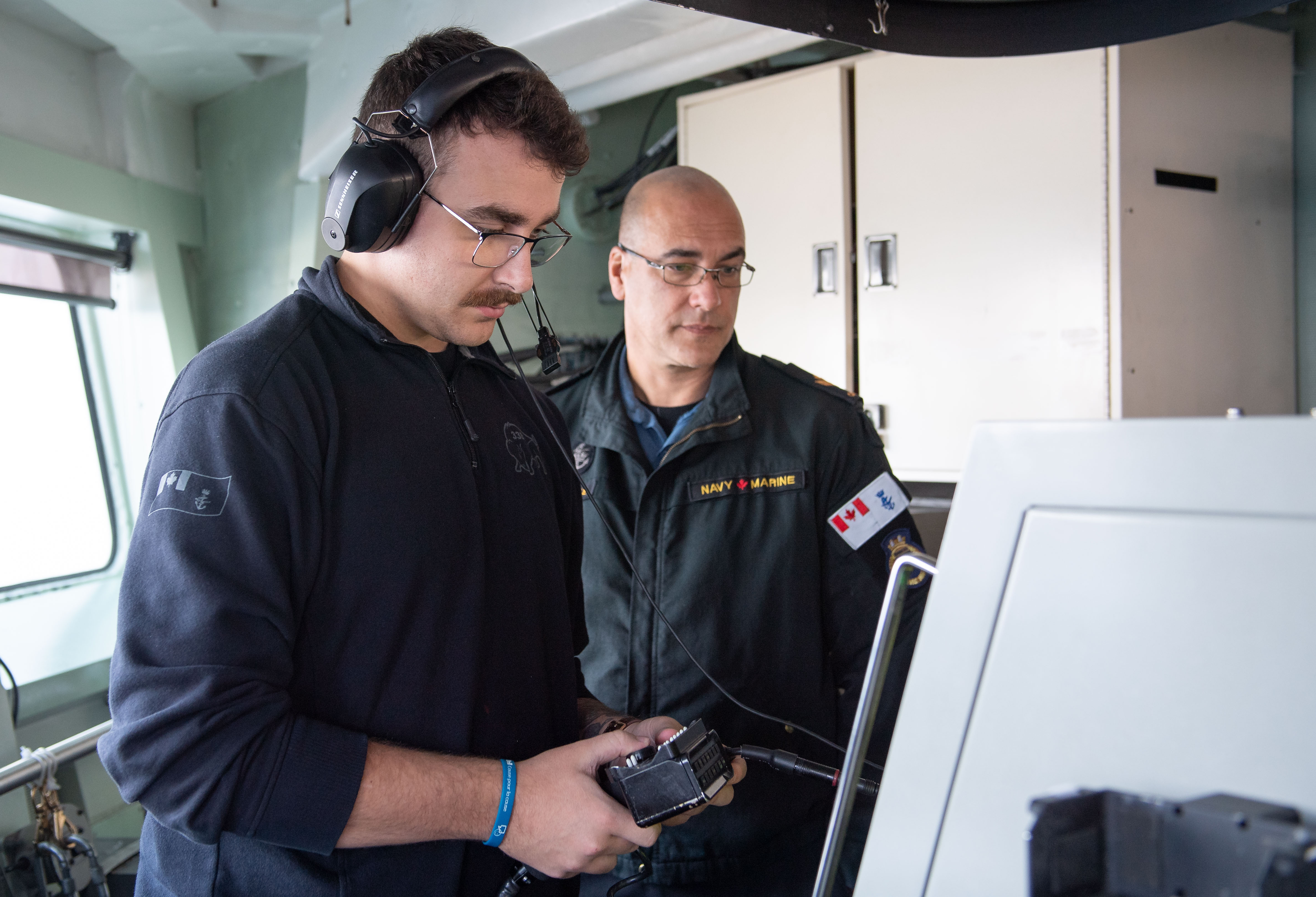
Sailor 2nd Class (S2) Chad DeMan is a boatswain on board Winnipeg who frequently stands watch as a Lookout on the bridge. As Lookout, his job is to visually detect and report ships, debris and other navigational hazards. During Operation NEON, S2 DeMan reported and helped visually identify vessels of interest, and it wasn’t without its challenges.
“Sometimes it looks like you’re on the highway in the middle of the ocean,” said S2 DeMan. “It’s hard to keep track of where each vessel is going, which one is priority, and even the different countries they represent.”
Another difficulty in visually tracking them is the tactics these vessels can employ in order to conceal their identity.
“Sometimes when we came upon a vessel of interest, the intelligence provided wouldn’t match up to the ship,” said S2 DeMan. “For example, colour of the hull, hull numbers, or even certain features and characteristics on board the vessel.”
Between the operations, multinational exercises and ongoing training, HMCS Winnipeg’s deployment was successful by any measurement. Winnipeg earned several accolades from many levels of command, both domestic and international, for its performance across a range of activities including imagery and intelligence collection and Anti-Submarine Warfare capability.
HMCS Winnipeg returned to its home port of Esquimalt, B.C., on December 19, 2020. During its deployment, Winnipeg intercepted 17 vessels of interest, observed 13 ship-to-ship transfers, visited Japan and the United States, operated with nine partner navies and participated in three multinational exercises. In total HMCS Winnipeg transited 29,178 nautical miles.
On December 14, during the transit home, Master Sailor (MS) Duane Earle went missing. An extensive search, involving the ship’s Cyclone helicopter, a Royal Canadian Air Force CP-140 Aurora, a United States Coast Guard C-27J search and rescue aircraft and a California Air National Guard C-130 Hercules aircraft, was conducted over an area approximating 2,000 square nautical miles. The search took place over a period of 30 hours, and regretfully concluded unsuccessfully on December 16.
The Canadian Armed Forces (CAF) is conducting an investigation into the circumstances of how MS Earle went missing.