
Below the surface: How autonomous systems could protect Canada
Royal Canadian Navy Public Affairs – September 24, 2026
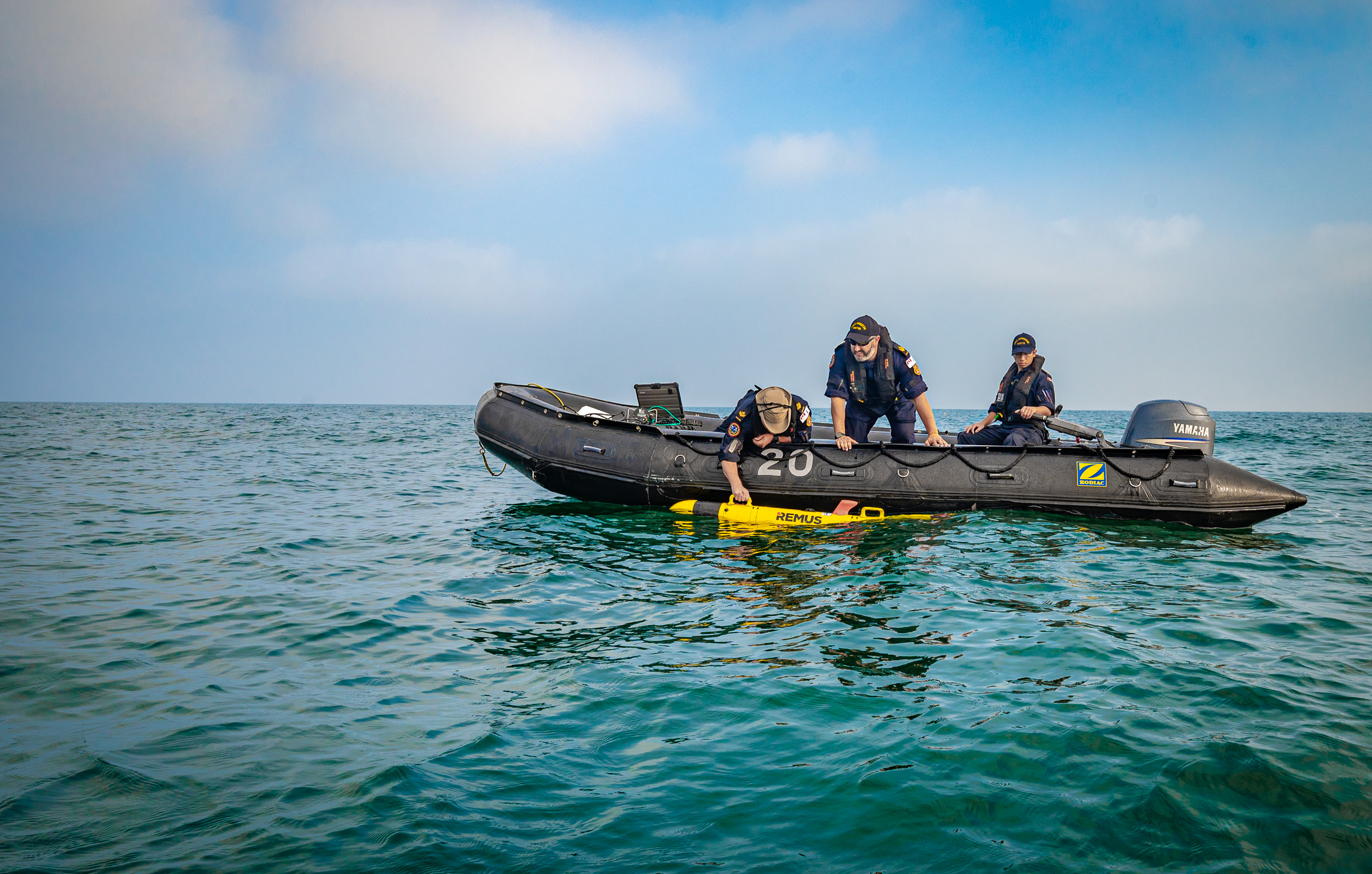
Caption
Members of the Seabed Intervention Systems team operate Remote Environmental Monitoring Unit (REMUS) for Historical Ordinance Disposal operations during Operation REASSURANCE in the English Channel outside of Le Tréport. Photo: Sailor 1st Class Taylor Congdon.
Canada's vast maritime approaches present a significant surveillance challenge for the Royal Canadian Navy (RCN).
"The scope of what we're working with is enormous if we think about the Canadian coastline and littoral waters," said Commander (Cdr) Greg Atkinson, Section Head for Remote and Autonomous Systems within the RCN.
"It’s absolutely massive."
As the Navy explores how autonomous underwater vehicles (UUVs) could support surveillance and other operations, the scale of Canada's waters remains a key consideration.
While UUVs show promise, the challenge goes beyond simply acquiring and deploying autonomous systems. The RCN must determine whether they provide meaningful operational advantages and how they can complement existing capabilities.
"Does it enhance it? Does it make it more resilient when an adversary sends something that is new or disruptive? That's what we need to test it against," said Cdr Phillip Durand, one of the RCN's experts in maritime counter-drone operations.
The Arctic presents some of the toughest challenges for autonomous systems.
From vast distances and limited communications to harsh conditions and under-ice operations, there are still significant obstacles to overcome before the technology can be used effectively in northern waters.
"How is it going to communicate back to the user? How is it going to charge and recharge? How is it going to operate under the ice?" said Cdr Atkinson.
"There are quite a few puzzle pieces to this challenge."
One area where autonomous systems could provide a clear operational benefit is mine countermeasures. Increased use of autonomous technologies could allow dangerous tasks to be conducted without requiring sailors or divers to enter hazardous areas.
"Taking the person out of the minefield is what we're looking to do on the autonomous side," Cdr Atkinson explained.
“The goal is to conduct the full spectrum of mine countermeasure activities, from detection and identification to destruction, from a safe distance from the mine danger area."
The RCN is working with Defence Research and Development Canada (DRDC) and other partners. Researchers are conducting trials to test autonomous systems in realistic maritime conditions and exploring how they could support future operations.
"What we are doing today is trying to leverage the work that DRDC has been doing by providing a mature capability that can be easily integrated into operational exercises that also informs requirements," said Cdr Atkinson.
The Navy is paying particular attention to autonomy itself
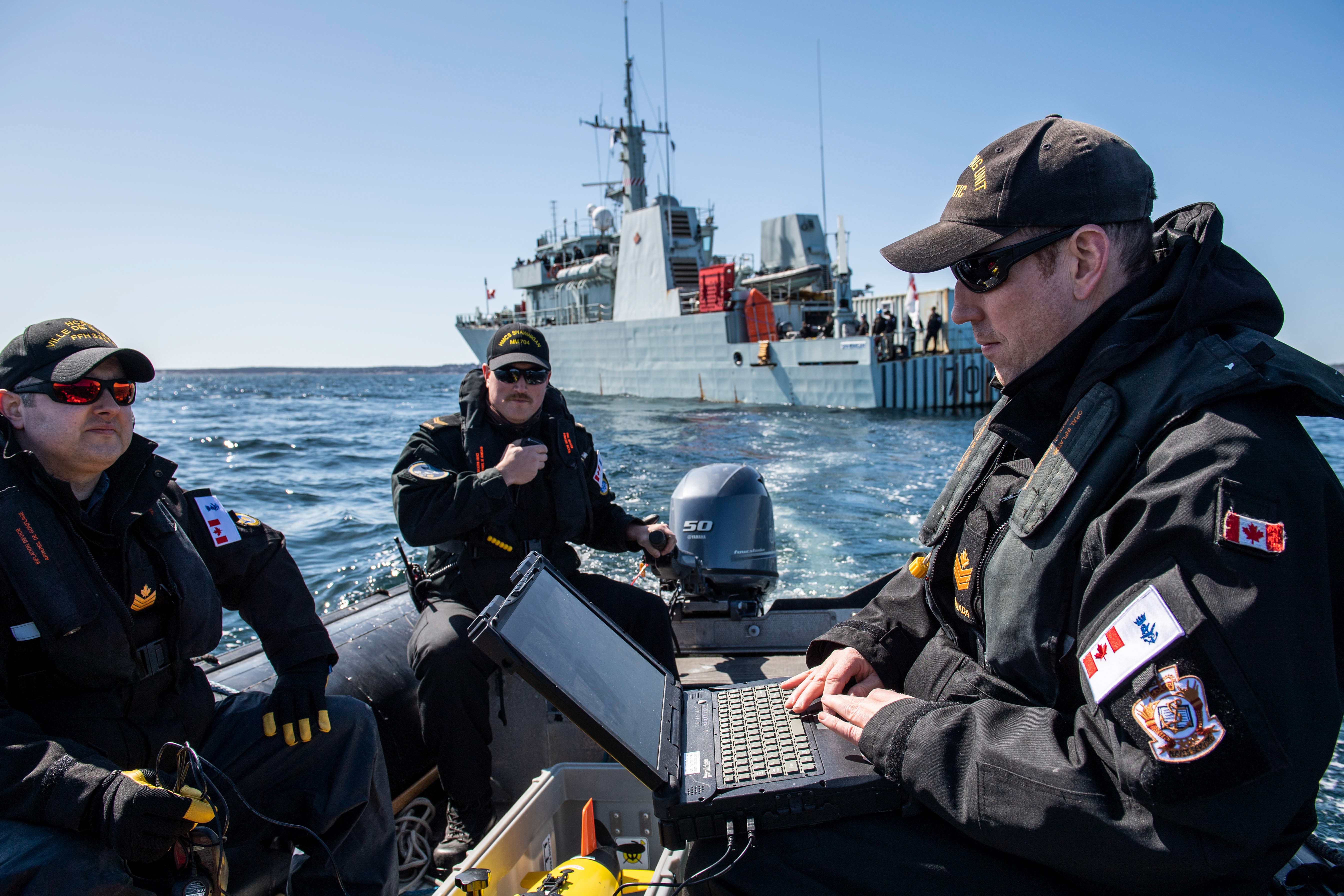
Caption
Crew of HMCS SHAWINIGAN and members of Fleet Diving Unit (Atlantic) utilize REMUS to locate practice mines. Photo: Master Corporal Anthony Laviolette
While uncrewed vehicles already exist, future success may depend on reducing the level of human oversight required to operate them.
"What we’re watching is the autonomy of those systems, the ability for them to navigate on their own and complete the mission on their own," Cdr Durand said.
"Because right now, we’re one-to-one for an operator to any sort of uncrewed system. We need to expand that."
Greater autonomy could eventually allow a single operator to oversee multiple systems, extending the Navy's reach without requiring a corresponding increase in personnel.
Looking ahead, autonomous systems could play an increasingly important role in maritime surveillance, mine countermeasure operations, and other naval tasks. For the RCN, however, success will not be measured by the technology itself, but by the operational advantage it provides to sailors.
Ultimately, every new capability must answer the same question:
"What does a sailor actually need to do their job as conditions deteriorate, and be able to finish it, complete the mission, and come home safe?" said Cdr Durand.