
Updated draft assessment - Phenol, methylstyrenated
CAS Registry Number
68512-30-1
Environment and Climate Change Canada
Health Canada
January 2026

Synopsis
Pursuant to section 68 of the Canadian Environmental Protection Act, 1999 (CEPA), the Minister of the Environment and the Minister of Health have conducted an assessment of phenol, methylstyrenated (CAS Registry Number [RN] 68512-30-1), hereinafter referred to as MSP.
MSP was previously assessed as part of the Final Screening Assessment for Potentially Toxic Substances in 2008. As no exposure to humans or the environment was expected based on the information available at the time, it was concluded that MSP did not meet any of the criteria set out in section 64 of CEPA, as it did not pose a risk to humans or the environment. However, it was determined that new activities could result in MSP meeting the criteria set out in section 64 of CEPA. Therefore, this substance has been subject to the Significant New Activity (SNAc) provisions specified under subsection 81(3) of CEPA since 2008.
Since 2015, there were multiple Significant New Activity Notifications (SNANs) received in response to the SNAc provisions applied to MSP. These notifications have not indicated intent to manufacture this substance in Canada; however, the total notified imports fall within the range of 10,000 kg to 100,000 kg per year. The major proposed use of this substance specified in these notifications is for paints and coatings on ships and large equipment. Outcomes from the evaluation of the SNANs suggest that releases of MSP may pose a risk to the environment. Given indication of increasing use in Canada, it was determined that potential risk to the environment and human health should be further evaluated in an assessment. A draft assessment for MSP was published in November 2021 for a 60-day public comment period. Since then, CEPA was amended, and an updated draft assessment of MSP was published to reflect certain amendments to the Act.
MSP is an organic Unknown or Variable composition, Complex reaction products or Biological materials (UVCB) substance, which consists of oligomerization and alkylation reaction products of 2-phenylpropene (C9 monomer) and phenol. More significant components of MSP are expected to be a phenol with 1 to 3 methylstyrenated substituents, and dimers and trimers of C9 monomer. The proportions of these components can vary in commercially manufactured MSP under the same CAS RN. In MSP imported into Canada, the composition is dominated by 3 major components: mono- and di-methylstyrenated phenol and dimers of C9 monomer.
On the basis of empirical data and model predictions, 2 major components of MSP (monomethylstyrenated phenol and dimers of C9 monomer) are not expected to degrade rapidly in the environment; 2 major components of MSP (dimethylstyrenated phenol and dimers of C9 monomer) are also expected to bioaccumulate in organisms. Empirical effects data suggest that the 3 major components can cause adverse effects on aquatic organisms at low exposure concentrations. Some components are also associated with endocrine estrogenic activity and endocrine effects on organisms. Environmental exposure associated with the notified uses was predicted on the basis of data submitted in SNANs. Outcomes from ecological risk characterization for MSP indicate that releases of this substance from notified uses may pose a risk to aquatic organisms.
Considering all available lines of evidence presented in this updated draft assessment, there is a risk of harm to the environment from MSP. It is proposed to conclude that MSP meets the criteria set out in paragraph 64(a) of CEPA, as it is entering or may enter the environment in a quantity or concentration or under conditions that have or may have an immediate or long-term harmful effect on the environment or its biological diversity. However, it is also proposed to conclude that MSP does not meet the criteria set out in paragraph 64(b) of CEPA, as it is not entering the environment in a quantity or concentration or under conditions that constitute or may constitute a danger to the environment on which life depends.
The general population is not directly exposed to MSP from its use in industrial applications; however, the substance may be released to surface water, and the general population may be exposed via drinking water consumption. A comparison of the estimated exposure to MSP from drinking water and critical effect levels results in margins of exposure that are considered adequate to address uncertainties in the health effects and exposure databases.
The human health assessment considered groups of individuals within the Canadian population who may be more vulnerable to experiencing adverse health effects due to greater susceptibility or greater exposure. People living in the vicinity of industrial releases of MSP are more likely to be exposed. Infants were identified as the subpopulation with the highest exposure to MSP due to their relative body weight and drinking water intake. No subpopulation was identified as being more susceptible to the effects of MSP.
Considering all the information presented in this updated draft assessment, it is proposed to conclude that MSP does not meet the criteria set out in paragraph 64(c) of CEPA, as it is not entering the environment in a quantity or concentration or under conditions that constitute or may constitute a danger in Canada to human life or health.
It is therefore proposed to conclude that MSP meets 1 or more of the criteria set out in section 64 of CEPA.
It is also proposed that MSP meets the criteria in paragraph 77(3)(a) for a substance that may have a long-term harmful effect on the environment. MSP is inherently toxic to non-human organisms, is persistent and bioaccumulative in accordance with the Persistence and Bioaccumulation Regulations of CEPA, is present in the environment primarily as a result of human activity, and is not a naturally occurring radionuclide or a naturally occurring inorganic substance.
1. Introduction
Pursuant to section 68 of the Canadian Environmental Protection Act, 1999 (CEPA) (Canada 1999), the Minister of the Environment and the Minister of Health have conducted an assessment of phenol, methylstyrenated (CAS Registry Number [RN] 68512-30-1), hereinafter referred to as MSP, to determine whether this substance presents or may present a risk to the environment or to human health.
MSP was previously assessed as part of the Final Screening Assessment for Potentially Toxic Substances (Canada 2008a). This substance was included in this previous screening assessment, having been identified as a high priority for assessment based on its meeting the categorization criteria (ECCC, HC [modified 2017]). Data collected through a notice issued pursuant to section 71 of CEPA (Canada 2006) reported no industrial activity (import or manufacture) of this substance in Canada above the reporting threshold of 100 kg for the 2005 reporting year. Given that there was no exposure to the general population or to the environment, it was concluded that the substance did not meet any criteria set out in section 64 of CEPA, as it was not posing a risk to humans or the environment (Canada 2008a). However, given the characteristics of the substance, that is, persistence, potential for bioaccumulation, and inherent toxicity to non-human organisms (PBiT), there was a concern that new activities that had not been identified or assessed could lead to the substances meeting the criteria set out in section 64 of CEPA. Therefore, this substance was subject to the Significant New Activity (SNAc) provisions specified under subsection 81(3) of CEPA since 2008 (Canada 2008b).
Since 2015, there were multiple Significant New Activity Notification (SNAN) submissions received in response to the SNAc provisions associated with this substance. These notifications have not indicated an intent to manufacture this substance in Canada, but the total notified imports are in the range of 10,000 kg to 100,000 kg per year. The major use of this substance specified in these notifications is for paints and coatings on ships and large equipment. Outcomes from the evaluation for the SNANs suggest that releases of MSP may pose a risk to the environment. Given indications of increasing use in Canada, it was determined that potential risk to the environment and human health should be more thoroughly evaluated in an assessment, pursuant to section 68 of CEPA.
A draft assessment for MSP was published in November 2021 and subject to a 60-day public comment period (Canada 2021). Relevant data identified in the literature up to June 2024, and information submitted by stakeholders, including those from SNANs and the public comment period, have been considered in the updated draft assessment.
This updated draft assessment was prepared by the staff of the CEPA Risk Assessment Program at Environment and Climate Change Canada and Health Canada. The ecological portion of this assessment has undergone external review. Comments on the technical portions relevant to the environment were received from Dr. Valérie Langlois of the Institut national de la recherche scientifique, and Dr. Connie Gaudet. While external comments were taken into consideration, the final content and outcome of the assessment remain the responsibility of Environment and Climate Change Canada and Health Canada.
Assessments focus on information critical to determining whether the substances meet the criteria as set out in section 64 of CEPA, by considering scientific data, including information, if available, on subpopulations that may have greater susceptibility or greater exposure, cumulative effectsFootnote 1 , and by incorporating a weight-of-evidence approach and precautionFootnote 2 . This updated draft assessment presents the critical information and considerations on which the proposed conclusion is based.
2. Substance identity
For the purpose of the assessment, this substance is referred to as MSP, derived from the name methylstyrenated phenol.
MSP is an organic UVCB substance. UVCB stands for unknown or variable composition, complex reaction products or biological materials. A UVCB is not an intentional mixture of discrete substances, and is considered a single substance. The complexity and variability of its composition can make it difficult to fully and consistently characterize.
MSP consists of oligomerization and alkylation reaction products of 2-phenylpropene (C9 monomer) and phenol. Components of MSP include mono-, di-, and tri-methylstyrenated phenol (Table 2-1), and dimers (Table 2-2) and trimers of C9 monomer (Table 2-3). Dimers and trimers do not contain the hydroxyl (-OH) group.
| CAS RN | Chemical name on DSL | Common name | Chemical structure |
|---|---|---|---|
| 599-64-4 | Phenol, 4-(1-methyl-1-phenylethyl)- | Monomethyl-styrenated phenol | 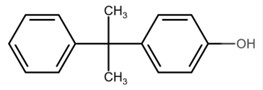 |
| 2772-45-4 | Phenol, 2,4-bis(1-methyl-1-phenylethyl)- | Dimethyl-styrenated phenol | 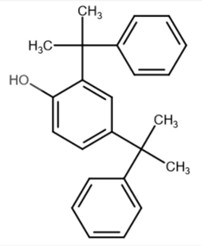 |
| 30748-85-7 | 2,4,6-Tris(1-methyl-1-phenylethyl) phenol | Trimethyl-styrenated phenol | 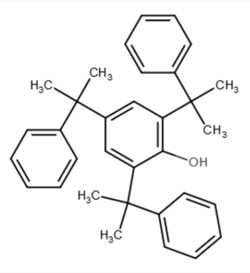 |
| CAS RN | Chemical name | Chemical structure |
|---|---|---|
| 3910-35-8 | 2,3-Dihydro-1,1,3-trimethyl-3-phenyl-1H-indene | 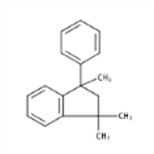 |
| 6258-73-7 | Benzene, 1,1’-(1,3,3-trimethyl-1-propene-1,3-diyl) bis | 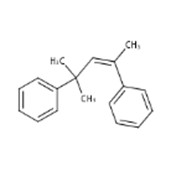 |
| 6362-80-7 | Benzene, 1,1’-(1,1-dimethyl-3-methylene-1,3-propanediyl) bis- | 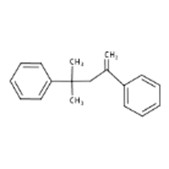 |
| CAS RN | Chemical name | Chemical structure |
|---|---|---|
| 19303-34-5 | Benzene, 1,1',1''-(1,3,5,5-tetramethyl-1-pentene-1,3,5-triyl)tris- | 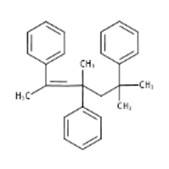 |
| 41906-71-2 | 1H-Indene, 2,3-dihydro-1,3-dimethyl-1-(2-methyl-2-phenylpropyl)-3-phenyl- | 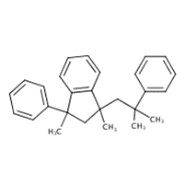 |
| 62604-62-0 | Benzene, 1,1',1''-(1,1,3-trimethyl-5-methylene-1,3,5-pentanetriyl)tris- | 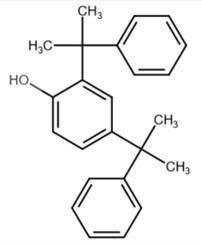 |
The relative proportions of mono-, di-, and tri-methylstyrenated phenol and dimers/trimers of C9 monomer (without OH) vary in commercially manufactured substances listed under the same CAS RN. Based on data provided by SNANs notifiers (ECCC 2025) and information available for select commercial products under this CAS RN in the global market (ECHA c2007–2023), the major components in MSP imported into Canada are monomethylstyrenated phenol, dimethylstyrenated phenol, and dimers of C9 monomer; while trimethylstyrenated phenol and trimers of C9 monomer are present at very low concentrations (Table 2-4).
| Component | Proportion in MSP (%) |
|---|---|
| Monomethylstyrenated phenol | 3.5–21 |
| Dimethylstyrenated phenol | 10–50 |
| Dimers of C9 monomer | 31–50 |
To assess a UVCB substance, the fate, behaviour, and toxicity can be predicted using representative constituents (Salvito et al. 2020). The ecological risk assessment focuses on major components of MSP, namely monomethylstyrenated phenol, dimethylstyrenated phenol, and dimers of C9 monomer (Table 2-4). The specific name and CAS RN of an identified component in MSP are used when information is applicable or relevant to that component. Such component-specific information, as well as the data available for the UVCB substance are then used to inform the assessment of the whole substance.
2.1 Selection of analogues and use of (Q)SAR models
The results of (quantitative) structure-activity relationship ([Q]SAR) models and a read-across approach using data from analogues have been used, where appropriate, to inform the ecological risk portion of the assessment. The applicability of (Q)SAR models was determined on a case-by-case basis. Details of the read-across data and (Q)SAR models chosen to inform the ecological and human health assessments of MSP are further discussed in the relevant sections of this assessment.
Phenol, styrenated (CAS RN 61788-4-1), referred to as styrenated phenol in this assessment, was identified as a structural analogue. Styrenated phenol is also a UVCB that includes mono-, di-, and tri-styrenated phenol components. Its representative chemical structure is presented in Figure 2-1. The relevant data for each component of the analogue UVCB are used to assess the corresponding component in MSP in this assessment, as presented in Table 2‑5, along with an indication of the available read-across data for various parameters.
| CAS RN | DSL name | Uses | Physical-chemical property data | Fate data | Ecotoxicity data |
|---|---|---|---|---|---|
| 61788-44-1 | Phenol, styrenated | Yes | Yes | Yes | Yes |
* Only component-specific data were used for read-across
Figure 2-1. Representative chemical structure of the analogue substance, styrenated phenol (CAS RN 61788-44-1).

3. Physical and chemical properties
The empirical physical and chemical property data for MSP are limited and the available data are summarized in Table 3‑1.
| Property | Valuea | Key reference(s) |
|---|---|---|
| Melting point (°C) | -14 (at 1,013 hPa) | ECHA c2007–2023 |
| Boiling point (°C) | ≥300 (at 1,013 hPa) | ECHA c2007–2023 |
| Vapour pressure (Pa) | 0.03–0.056 (at 20°C) | ECHA c2007–2023 |
| Vapour pressure (Pa) | 0.05–0.09 (at 25°C) | ECHA c2007–2023 |
| Water solubility (mg/L) | 0.5–7 mg TOC/L (at 20°C to 21.5°C and pH = 8) | ECHA c2007–2023 |
Acronym: TOC, total organic carbon
a Value is the empirical measurement.
The physical and chemical properties for major components of MSP (monomethylstyrenated phenol, dimethylstyrenated phenol, and dimers of C9 monomer) are also compiled in tables 3-2 to 3-4. When experimental information for a property of a component in MSP was limited or unavailable, read-across from the experimental measurements of the corresponding component in the analogous UVCB was used (noted in Table 3-3). In some cases, (Q)SAR models were used to generate predicted values.
| Property | Valuea | Key reference(s) |
|---|---|---|
| Melting point (°C) | 74–76 | EPI Suite c2000–2012 |
| Boiling point (°C) | 335 | EPI Suite c2000–2012 |
| Vapour pressure (Pa) | 0.00792 | EPI Suite c2000–2012 |
| Henry’s law constant (Pa·m3/mol) | 0.023 (calculatedb) | Not applicable |
| Water solubility (mg/L) | 72 at pH = 6–7 | ECHA c2007–2023 |
| Log KOW (dimensionless) | 3.7 at 23°C and pH = 5.3 | ECHA c2007–2023 |
| Log KOC (dimensionless) | 3.4 | ECHA c2007–2023 |
| Log KOA (dimensionless) | 9.14 (modelled, using log KOW = 3.7) | EPI Suite c2000–2012 |
| pKa (dimensionless) | 10.0 ± 0.4 (modelled) | ACD/Percepta c1997–2012 |
Abbreviations: KOW, octanol-water partition coefficient; KOC, organic carbon-water partition coefficient; KOA, octanol-air partition coefficient; pKa, acid dissociation constant
a Value is the empirical measurement at the standard temperature, unless specified.
b Henry’s law constant is calculated from vapour pressure × molecular weight ÷ water solubility.
| Property | Valuea | Key reference(s) |
|---|---|---|
| Melting point (°C) | 172 (modelled) | EPI Suite c2000–2012 |
| Boiling point (ºC) | 436 (modelled) | EPI Suite c2000–2012 |
| Vapour pressure (Pa) | 7.78 × 10⁻⁸ | EPI Suite c2000–2012 |
| Henry’s law constant (Pa·m3/mol) | 1.12 × 10⁻⁴ (calculatedb) | Not applicable |
| Water solubility (mg/L) | 0.665 (read-across from distyrenated phenol) | Brooke et al. 2009 |
| Log KOW (dimensionless) | 6.2 (read-across from distyrenated phenol) | Brooke et al. 2009 |
| Log KOC (dimensionless) | 4.52 (modelled, based on log KOW = 6.2) | EPI Suite c2000–2012 |
| Log KOA (dimensionless) | 12.45 (modelled, using log KOW = 6.2) | EPI Suite c2000–2012 |
| pKa (dimensionless) | 10.0 ± 0.4 (modelled) | ACD/Percepta c1997–2012 |
Abbreviations: KOW, octanol-water partition coefficient; KOC, organic carbon-water partition coefficient; KOA, octanol-air partition coefficient; pKa, acid dissociation constant
a Value is the empirical measurement at the standard temperature, unless specified.
b Henry’s law constant is calculated from vapour pressure × molecular weight ÷ water solubility.
| Property | Valuea | Key reference(s) |
|---|---|---|
| Melting point (°C) | 67.0 | ECHA c2007–2023 |
| Boiling point (°C) | 312.1 | ECHA c2007–2023 |
| Vapour pressure (Pa) | 0.063 | ECHA c2007–2023 |
| Henry’s law constant (Pa·m3/mol) | 64.7 (calculatedb) | Not applicable |
| Water solubility (mg/L) | 0.23 | ECHA c2007–2023 |
| Log KOW (dimensionless) | 6.2 | ECHA c2007–2023 |
| Log KOC (dimensionless) | 4.82 | ECHA c2007–2023 |
| Log KOA (dimensionless) | 7.68 (modelled, using log KOW = 6.2) | EPI Suite c2000–2012 |
| pKa (dimensionless) | No predicted value | Not applicable |
Abbreviations: KOW, octanol-water partition coefficient; KOC, organic carbon-water partition coefficient; KOA, octanol-air partition coefficient; pKa, acid dissociation constant
a Value is the empirical measurement at the standard temperature, unless specified.
b Henry’s law constant is calculated from vapour pressure × molecular weight ÷ water solubility.
4. Sources and uses
MSP was included in a notice issued pursuant to section 71 of CEPA in 2006 (Canada 2006). There were no reports of manufacturing or import of this substance into Canada above the 100 kg reporting threshold for the 2005 calendar year.
In response to the SNAc provisions on this substance (Canada 2008b), starting in 2015, stakeholders have submitted multiple SNANs and indicated anticipated imports of the substance in paints and coatings into Canada at a total quantity in the range of 10,000 kg to 100,000 kg MSP per year. There was no report of manufacturing of MSP above the 100 kg reporting threshold in Canada.
In Canada, MSP was notified to be present in paints and coatings for applications on ships and large equipment.
In addition, internationally, MSP is known to be used asa synthetic resin and for adhesives, sealants, coatings, printing inks, and rubber goods (SDS 2019). It is also used as an intermediate in the formation of fuel additives and fuel blends, and in polymer production (ECHA c2007–2023). In Nordic countries (SPIN c2017), the reported use quantities were in the range of 100,000 kg to 1,000,000 kg per year from 2010 to 2016 and above 1,000,000 kg in 2017; major applications included uses in anti-corrosion surface treatment, paints, lacquers and varnishes, adhesives, and construction materials (SPIN c2017).
On the basis of use information for the analogous UVCB, styrenated phenol (Brooke et al. 2009), and a few structural analogues notified under the New Substances Program, MSP could also be used as an antioxidant in rubber or as a reactant to produce polymeric surfactants.
5. Releases to the environment
In general, point source releases are expected to occur at various life cycle stages of a substance, including manufacture, formulation, use, and disposal. The focus of this assessment is placed on the use of products containing MSP in large volumes or in a non-contained environment, as manufacture and formulation involving MSP are not known to occur in Canada. Water is expected to be the main receiving compartment.
Disposal of end-use products containing MSP is not addressed in this assessment because the substance is covalently bound with the polymeric matrices of cured paints and coatings following application. The release of the substance is unlikely when and after those cured paints and coatings are disposed of. For coated metal equipment and parts, the substance is expected to be destroyed during recycling through high-temperature metallurgical processes.
6. Environmental fate and behaviour
6.1 Environmental distribution
The environmental fate of a substance describes the processes by which it moves and is transformed in the environment following its release from a source. The fate analysis given below is to determine the relative proportions (distribution) of a substance between different environmental compartments once released into a given compartment. Its purpose is to identify the compartments where the substance will reside the most, so that those compartments can be selected for the release and exposure calculations provided in section 7.2. As a result, release quantities are neither required nor estimated for the purpose of the fate analysis. Given that MSP is a UVCB consisting of a number of components, if released into the environment, each component would be distributed into environmental media separately. Therefore, the environmental distribution of MSP is characterized by the distribution of its components.
Using the physical and chemical properties of each major component, the environmental distribution was predicted using Level III fugacity modelling (New EQC 2011) assuming steady-state emissions to water or soil. Substantial direct release of MSP to air is not expected. The Level III EQC model assumes non-equilibrium conditions between environmental compartments, but equilibrium within compartments. The results represent the net effects of chemical partitioning, inter-media transport and loss by both advection (out of the modelled region), and degradation/transformation processes, that is, relative steady-state distribution in the physical environmental compartments. Outcomes are summarized in tables 6-1 and 6-2.
| Component | Partitioning in air (%) | Partitioning in water (%) | Partitioning in soil (%) | Partitioning in sediment (%) |
|---|---|---|---|---|
| Monomethylstyrenated phenol | Negligible | 84 | Negligible | 16 |
| Dimethylstyrenated phenol | Negligible | 26 | Negligible | 74 |
| Dimers of C9 monomer | Negligible | 6 | Negligible | 94 |
| Component | Partitioning in air (%) | Partitioning in water (%) | Partitioning in soil (%) | Partitioning in sediment (%) |
|---|---|---|---|---|
| Monomethylstyrenated phenol | Negligible | 0.4 | 99.6 | 0.1 |
| Dimethylstyrenated phenol | Negligible | Negligible | 99.9 | 0.1 |
| Dimers of C9 monomer | Negligible | Negligible | 99.9 | 0.1 |
If released to water (Table 6-1), the major components of MSP are expected to mainly remain in water or adsorb in sediment. The ratio of partitioning into these 2 compartments varies for each component, depending on the water solubility and the organic carbon partition coefficient. Volatilization from surface water is expected to be negligible.
If released to soil (Table 6-2), all major components in MSP are expected to remain in this compartment. Volatilization from surface soil to air and partitioning from soil to water are expected to be low to negligible.
6.2 Environmental persistence
6.2.1 Degradation in the environment
Empirical degradation data have been identified for MSP and some of its components (ECHA c2007–2023) and are summarized in Table 6-3.
| Substance name (CAS RN) | Fate process | Test inoculum and method | Degradation data | Reference |
|---|---|---|---|---|
MSP |
Biodegradation (ready biodegradability) | Activated sludge, non-adapted OECD Guideline 310 and ISO Guideline No 14593 | 28-day degradation = 4% (CO2 evolution) | ECHA c2007–2023 |
Monomethyl styrenated phenol |
Hydrolysis | OECD Guideline 111 | The extent of apparent hydrolysis at 50.0°C was -4, 0.1, and 5% at pH 4, 7 and 9, respectively. | ECHA c2007–2023 |
Monomethyl styrenated phenol |
Biodegradation (ready biodegradability) | Activated sludge, non-adapted OECD Guideline 301 D | 28-day degradation = 0.1% (O2 consumption) | ECHA c2007–2023 |
Monomethyl styrenated phenol |
Biodegradation in water: screening test | Not specified | 28-day degradation = 0% (BOD) 28-day degradation = 7% (HPLC) |
J-CHECK c2010– |
Monomethyl styrenated phenol |
Biodegradation (ready biodegradability) | Activated sludge, domestic, non-adapted, and mineral medium OECD Guideline 302 B | 28-day degradation = 90% (CO2 evolution)a | ECHA c2007–2023 |
| Dimers of C9 monomer (3910-35-8) |
Biodegradation in water: simulation test | Aerobic Freshwater OECD Guideline 309 | DT50 = 542 days at 12°C and 1 µg/L DT50 = 205 days at 12°C and 10 µg/L |
ECHA c2007–2023 |
| Dimers of C9 monomer (6362-80-7) |
Hydrolysis | OECD Guideline 111 | The test substance remains at 90% or more after the 5-day test at 50°C and pH 4, 7, and 9. Its half-life at 25°C is considered to more than 1 year | ECHA c2007–2023 |
| Dimers of C9 monomer (6362-80-7) |
Biodegradation (ready biodegradability) | Activated sludge, non-adapted Test Method Relating to New Chemical Substances | 28-day degradation = 0% (BOD) 28-day degradation = 3% (HPLC) |
ECHA c2007–2023; J-CHECK c2010– |
| Dimers of C9 monomer (6362-80-7) |
Biodegradation (inherent biodegradability) | Activated sludge and micro-organisms, mineral medium OECD Guideline 302 C | 28-day degradation = 65% (O2 consumption) 28-day degradation = 82% (chemical analysis) |
ECHA c2007–2023 |
Acronyms: BOD, biological oxygen demand, HPLC, high-performance liquid chromatography
a According to ECHA (c2007–2023), the reliability of this study was not assignable, due to results inconsistent with those from biodegradation studies of similar substance.
Two hydrolysis studies identified in the European Chemicals Agency (ECHA) database conclude that 2 major components in MSP (monomethylstyrenated phenol and dimers of C9 monomer) are considered hydrolytically stable in water. Four ready biodegradation studies identified in the ECHA database indicate that MSP and its 2 major components (monomethylstyrenated phenol and dimers of C9 monomer) are unlikely to undergo rapid biodegradation (Table 6-3). One ready biodegradation study for the major component, monomethylstyrenated phenol, suggests that the substance biodegrades; however, the use of mineral medium in the study may have enhanced biodegradation. Overall, the result of this study is inconsistent with the weight of evidence from other ready biodegradation studies on MSP and its components.
Some biodegradation was observed in an inherent biodegradation study for a dimer of C9 monomer (CAS RN 6362-80-7). According to the study report, mixed micro-organisms and mineral medium were added into the inoculum, which can facilitate biodegradation processes via acclimation (ECHA c2007–2023). Non-acclimated study results are more relevant for extrapolation to environmental conditions such as surface waters, as they are generally applicable to these conditions. Therefore, the outcomes of the inherent biodegradation study are considered not directly applicable for determining the biodegradation potential of the test substance.
In addition, (Q)SAR models, CATALOGIC 301C (2014), and BIOWIN5/6 (EPI SUITE c2000–2012) were also used to determine environmental degradation potential for MSP and its major components. All modelled components were in the domain of each (Q)SAR model. Model results are summarized in Table 6-4. Predictions from CATALOGIC indicated 2 major components monomethylstyrenated phenol and a dimer of C9 monomer in MSP are not ready biodegradable; predictions from BIOWIN have indicated all 3 major components not ready biodegradable.
| Component | Model and result | Reference |
|---|---|---|
| Monomethylstyrenated phenol | CATALOGIC 301C BOD = 19% (below 20% threshold for primary biodegradability) | CATALOGIC 2014 |
| Monomethylstyrenated phenol | BIOWIN5 = 0.29 BIOWIN 6 = 0.17 (below 0.5 threshold for ready biodegradable) | EPI Suite c2000–2012 |
| Dimethylstyrenated phenol | CATALOGIC 301C BOD = 20% | CATALOGIC 2014 |
| Dimethylstyrenated phenol | BIOWIN5 = 0.04 BIOWIN 6 = 0.02 (below 0.5 threshold for ready biodegradable) | EPI Suite c2000–2012 |
| Dimers of C9 monomer (CAS RN 6362-80-7) |
CATALOGIC 301C BOD = 3% (below 20% threshold for primary biodegradability) | CATALOGIC 2014 |
| Dimers of C9 monomer (CAS RN 6362-80-7) |
BIOWIN5 = 0.22 BIOWIN 6 = 0.10 (below 0.5 threshold for ready biodegradable) | EPI Suite c2000–2012 |
Acronym: BOD, biological oxygen demand
6.2.2 Long-range transport potential in air
Long-range transport potential (LRTP) was predicted using TaPL3 (2003) and the OECD POV and LRTP Screening Tool (2009). Outcomes are summarized in Table 6-5. The characteristic travel distance (CTD) predicted by both models for all major components in MSP is below the cut-off values defined for the models, suggesting a low potential for long-range transport for the substance.
| Component | CTDa (km) predicted by TaPL3 | CTDa (km) predicted by OECD POV and LRTP Screening Tool | Potential for LRTPb |
|---|---|---|---|
| Monomethylstyrenated phenol | 58 | 477 | Low |
| Dimethylstyrenated phenol | 37 | 770 | Low |
| Dimers of C9 monomer | 42–244 | 154–245 | Low |
a Acronym: CTD, characteristic travel distance
b Different values were defined by models associated with the LRTP. For TaPL3, the cut-off values of CTD are <700 km for low LRTP, 700–2,000 km for moderate LRTP, and >2,000 km for high LRTP. For the OECD POV and LRTP Screening Tool, the cut-off value associated with LRTP is 5,098 km.
Based on available empirical data and model predictions, 2 major components of MSP (monomethylstyrenated phenol and dimers of C9 monomers) and the UVCB substance itself, are expected to persist in the environment; all 3 components of MSP are expected to have low potential for long-range transport in air.
6.3 Potential for bioaccumulation
The monomethylstyrenated phenol component of MSP is considerably more water-soluble than the other major components of the substance (dimethylstyrenated phenol and dimers of C9 monomer). Monomethylstyrenated phenol possesses a moderate log KOW and exhibits high bioavailability in water. Therefore, the bioconcentration factor (BCF) is used to characterize the bioaccumulation for this component. However, for dimethylstyrenated phenol and dimers of C9 monomer that possess high log KOW (6.2) and low water solubilities, it becomes important to consider exposure via food in addition to uptake from water. Accordingly, the bioaccumulation factor (BAF) is considered more appropriate for characterizing the bioaccumulation potential of these components, as it accounts for uptake from food.
Some empirical bioaccumulation data have been identified (see Table 6-5). A measured BCF of 60 L/kg to 190 L/kg whole body wet weight for monomethylstyrenated phenol was reported in a 60-day study on Cyprinus carpio (J-CHECK c2010–). A measured BCF range of 427 L/kg to 4410 L/kg for a dimer of C9 monomer (CAS RN 6362-80-7) was reported in a 60-day study in the same aquatic organism (C. carpio) (ECHA c2007–2023).
Models were used to produce estimates for BCF and BAF for all major components of MSP, either in the absence of empirical data or as supplemental information (Table 6-6).
| Component | Type of data (experimental vs. modelled) | Endpoint and value | Reference |
|---|---|---|---|
| Monomethylstyrenated phenol | Experimental | BCF = 60–190 L/kg | ECHA c2007–2023 |
| Monomethylstyrenated phenol | Modelled | BCF = 279.9 L/kg (mid-trophic) | EPI Suite c2000–2012 |
| Monomethylstyrenated phenol | Modelled | BAF = 281.7 L/kg (mid-trophic) | EPI Suite c2000–2012 |
| Monomethylstyrenated phenol | Modelled | BCF (corrected) = 53.70 L/kg | BCF base-line model in OASIS CATALOGIC 2014 |
| Dimethylstyrenated phenol | Modelled | BCF = 976.6 L/kg (mid-trophic) | EPI Suite c2000–2012 |
| Dimethylstyrenated phenol | Modelled | BAF = 11,860 L/kg (mid-trophic) | EPI Suite c2000–2012 |
| Dimethylstyrenated phenol | Modelled | BCF (corrected) = 489.78 L/kg | BCF base-line model in OASIS CATALOGIC 2014 |
| Dimers of C9 monomer | Experimental | BCF = 427–4,410 L/kg | ECHA c2007–2023 |
| Dimers of C9 monomer | Modelled | BCF = 2,362–3,333 L/kg (mid-trophic) | EPI Suite c2000–2012 |
| Dimers of C9 monomer | Modelled | BAF = 15,560–45,710 L/kg (mid-trophic) | EPI Suite c2000–2012 |
| Dimers of C9 monomer | Modelled | BCF (corrected) = 4,466.84–12,589.25 L/kg | BCF base-line model in OASIS CATALOGIC 2014 |
| Dimers of C9 monomer | Experimental | BMF = 0.07 | ECHA c2007–2023 |
Acronyms: BCF, bioconcentration factor; BAF, bioaccumulation factor; BMF, biomagnification factor
Based on available empirical data and model predictions, and considering read-across data for the analogue UVCB, 1 component of MSP (monomethylstyrenated phenol) possesses low potential for bioaccumulation in organisms. However, the other 2 major components of MSP (dimethylstyrenated phenol and dimers of C9 monomer) possess a high potential for bioaccumulation in organisms. Since dimethylstyrenated phenol and dimers of C9 monomer components comprise a substantial portion of MSP’s composition, MSP is expected to significantly bioaccumulate in organisms.
7. Potential to cause ecological harm
7.1 Ecological effects assessment
7.1.1 Mode/mechanism of action
There is evidence of an endocrine-mediated mode of action for monomethylstyrenated phenol (CAS RN 599-64-4) and dimethylstyrenated phenol (CAS RN 2772-45-4), as estrogenic responses were observed in various test systems (CoRAP 2014; Terasaki et al. 2005; Matsushima et al. 2008; Sanseverino et al. 2009; Ogawa et al. 2006; Okuda et al. 2011; Biggers and Laufer 2004). Furthermore, estrogenic activity via induction of the biomarker vitellogenin was observed in fish following exposure to MSP. In a 14-day study, fish (Pimephales promelas) were exposed to MSP via food (500 μg/g wet weight) (ECHA c2007–2023). Vitellogenin was measured in fish blood at days 0, 7, and 14 of exposure. Results indicated an increase in vitellogenin in treated male fish compared with the controls, but no effects were seen in females (ECHA c2007–2023).
Ogawa et al. (2006) also reported estrogenic activity for a dimer of C9 monomer (CAS RN 6362-80-7) and found it to be similar to that of Bisphenol A. The other 2 dimers of C9 monomer (CAS RNs 3910-35-8 and 6258-73-7) were not included in the study (Ogawa et al. 2006).
7.1.2 Effects on aquatic organisms
Empirical toxicity data have been identified for MSP and are summarized in Table 7-1.
| Organism (species, if specified) | Test method | Endpoint and result (mg/L) | Reference |
|---|---|---|---|
| Fish (Danio rerio) | OECD 203 | 96-hour LL50 = 25.8 mg TOC/L | ECHA c2007–2023 |
| Aquatic invertebrate (Daphnia magna) | OECD 202 | 48-hour EC50 above the water solubilitya (read-across from styrenated phenol) |
Brooke et al. 2009 |
| Fish | Not specified | 14-day LC50 = 3.8 mg/L
14-day NOEC = 1.9 mg/L (read-across from styrenated phenol) |
J-CHECK c2010– |
Abbreviation and acronyms: EC50, concentration of a substance that is estimated to cause some sublethal effect on 50% of the test organisms; LL50, loading rate of a substance (not completely soluble in water) that is estimated to be lethal to 50% of the test organisms; LC50, median lethal concentration; NOEC, no observed effect concentration; TOC, total organic carbon
a The test substance consisted of 20% distyrenated phenol and 80% tristyrenated phenol.
Empirical toxicity data have also been identified for 3 major components of MSP and their analogues. These data are summarized in tables 7-2 to 7-4, indicating that the 3 major components possess moderate-to-high toxicity to aquatic organisms.
| Organism (species, if specified) | Test method | Endpoint and result (mg/L) | Reference |
|---|---|---|---|
| Fish (Oncorhynchus mykiss) |
OECD 203 | 24–96-hour LC50 = 0.9 | ECHA c2007–2023 |
| Fish (Oryzias latipes) |
Not specified | 96-hour LC50 = 1.6 | J-CHECK c2010– |
| Fish | Not specified | 96-hour LC50 = 1.2 | J-CHECK c2010– |
| Invertebrate (Daphnia magna) |
OECD 202 | 48-hour EC50 = 0.9 | ECHA c2007–2023 |
| Invertebrate | Not specified | 48-hour EC50 = 1.7 | J-CHECK c2010– |
| Algae (Pseudokirchneriella subcapitata) |
OECD 201 | 72-hour EC50 = 1.4 (measured) (growth rate) |
ECHA c2007–2023 |
| Algae (Pseudokirchneriella subcapitata) |
OECD 201 | 72-hour NOEC = 0.9 (estimated) (growth rate) |
ECHA c2007–2023 |
| Algae | Not specified | 72-hour EC50 = 1.4 (growth rate) |
J-CHECK c2010– |
| Algae | Not specified | 72-hour NOEC = 0.33 (growth rate) |
J-CHECK c2010– |
| Algae | Not specified | 72-hour EC50 = 0.60 (areas under the growth curves) |
J-CHECK c2010– |
| Algae | Not specified | 72-hour NOEC = 0.33 (areas under the growth curves) |
J-CHECK c2010– |
Abbreviation and acronyms: EC50, concentration of a substance that is estimated to cause some sublethal effect on 50% of the test organisms; LC50, median lethal concentration; NOEC, no observed effect concentration
There is a lack of empirical data for dimethylstyrenated phenol. Therefore, read-across from the analogue (distyrenated phenol) has been used to characterize its effects on aquatic organisms (see Table 7-3).
| Organism | Test method | Endpoint and result (mg/L) |
|---|---|---|
| Fish (Oryzias latipes) |
Not specified | 96-hour LC50 = 5.6 |
| Aquatic invertebrate (Daphnia magna) |
Not specified | 48-hour EC50 = 4.6 |
| Fish (Oryzias latipes) |
Not specified | 14-day LC50 = 3.8 |
| Fish (Oryzias latipes) |
Not specified | 14-day NOEC = 1.9 |
| Aquatic invertebrate (Daphnia magna) |
OECD 211 | 21-day NOEC = 0.115 (reproduction and parental immobilization) |
| Aquatic invertebrate (Daphnia magna) |
Not specified | 21-day EC50 = 1.5 (reproduction) |
| Aquatic invertebrate (Daphnia magna) |
Not specified | 21-day NOEC = 0.2 (reproduction) |
Abbreviation and acronyms: EC50, concentration of a substance that is estimated to cause some sublethal effect on 50% of the test organisms; LC50, median lethal concentration; NOEC, no observed effect concentration
Empirical toxicity data for a dimer of C9 monomer have been summarized in Table 7-4.
| Organism | Test method | Endpoint and result (mg/L) |
|---|---|---|
| Fish (Oryzias latipes) |
Japan Methods for Testing of New Chemical Substances | 96-hour LC50 >0.092 |
| Invertebrate (Daphnia magna) |
Japan Methods for Testing of New Chemical Substances | 48-hour EC50 = 0.057 |
| Algae (Pseudokirchneriella subcapitata) |
Japan Methods for Testing of New Chemical Substances | 72-hour NOEC >0.059 |
Abbreviation and acronyms: EC50, concentration of a substance that is estimated to cause some sublethal effect on 50% of the test organisms; LC50, median lethal concentration; NOEC, no observed effect concentration
7.1.3 Predicted No Effect Concentration (PNEC) for the aquatic compartment
Predicted no effect concentrations (PNECs) were established from the critical toxicity values (CTV) through the application of an assessment factor (AF) (see Table 7-5); details of the approach are illustrated in Okonski et al. 2021. PNECs for the aquatic compartment were calculated for the major components of MSP, that is, mono- and di-methylstyrenated phenol and dimers of C9 monomer (Table 7-5).
| Component | CTVa (mg/L) | AFb | FESc | FSVd | FMOAe | Aquatic PNEC (µg/Lf) |
|---|---|---|---|---|---|---|
| Monomethyl styrenated phenol | Fish 96-hour LC50 = 0.9 mg/L |
100 | 10 | 2 (empirical data identified for 5 species in 3 categories of organisms) | 5 | 9 |
| Dimethyl styrenated phenol | Aquatic invertebrate 21-day NOEC = 0.115 mg/L (reproduction and parental immobilization) (read-across from distyrenated phenol) |
100 | 1 | 50 (empirical data identified for 1 species in 1 category of organism) | 2g | 1.2 |
| Dimers of C9 monomer | Aquatic invertebrate 48-hour EC50 = 0.057 mg/L |
250 | 10 | 5 (empirical data identified for 3 species in 3 categories of organisms) | 5 | 0.23 |
Abbreviation and acronyms: EC50, concentration of a substance that is estimated to cause some sublethal effect on 50% of the test organisms; LC50, median lethal concentration; NOEC, no observed effect concentration
a Critical Toxicity Value (CTV); the effect endpoint identified from a reliable and relevant toxicity study as representative of the potential adverse effects level in the available dataset.
b An assessment factor (AF) is determined on the basis of consideration of the endpoint standardization (FES), the species variation (FSV), and the mode of action (FMOA), as following: AF = FES × FSV × FMOA.
c The endpoint standardization factor (FES) is used to account for extrapolations from short-term to long-term exposure, mortality to sub-lethal effects, and medium to low effects.
d The species variation factor (FSV) is determined on the basis of the number of different organisms for which empirical data are available in the dataset.
e The mode of action factor (FMOA) is applied to address a known or suspected non-narcotic MoA that the substance possesses. A higher value of FMOA is applied to substances whose mode of action is not expressed in the acute toxicity data when chronic toxicity data are not available for the substance.
f For the purpose of the risk characterization, the aquatic PNEC is in µg/L
g It is noted that dimethylstyrenate phenol possessed endocrine-mediated MoA. Given that chronic toxicity data has been selected as the CTV, it is considered that the specific MoA has been well expressed in the chronic study; hence, an FMoA of 2 (instead of 5) has been chosen in extrapolation of the aquatic PNEC.
7.1.4 Effects on organisms in non-aquatic compartments
For non-aquatic compartments (soil and sediment), no empirical data were identified for the substance or the analogous UVCB substance.
7.2 Ecological exposure assessment
MSP has not been surveyed or monitored in Canada. Therefore, in the absence of monitoring data, exposure to the substance in the Canadian environment has been characterized on the basis of scenarios developed for its uses and quantities, as outlined below.
7.2.1 Determination of exposure scenarios
As specified in the SNANs, MSP is being imported into Canada for multiple industrial applications. These applications include protective coatings for routine maintenance on ships and during the fabrication of large equipment. Two exposure scenarios have been developed for these applications: 1) protective coating applied on ships and 2) industrial coating of large equipment. These scenarios are used to characterize the risk of MSP in the environment. Details for these 2 scenarios are presented in section 7.2.3 and Appendix A.
It is noted that there are other known international uses of MSP, as outlined in section 4, which could lead to future exposures if these uses were to be notified in Canada.
7.2.2 The approach of calculating the predicted environmental concentration in surface water
Predicted environmental concentration (PEC) in surface water is calculated to represent environmental exposure that could result from either direct entry into receiving waters, such as during routine maintenance coating on ships, or from indirect entry via wastewater treatment effluent from industrial applications and manufacture. The direct entry into receiving waters is based on the expectation that overspray may drift off-site or into nearby surface waters when paints are applied to ships (OECD 2009). In contrast, industrial application sites typically operate in closed settings, and paint losses to water commonly end up in wastewater treatment systems.
Key factors that are considered in PEC calculations are estimates of daily release quantities and daily dilution water volumes. The derived PEC represents the level of exposure near the point of MSP discharge into receiving waters.
Where
PEC: predicted environmental concentration in receiving water near discharge point; μg/L
109: conversion factor from kg to mg, mg/kg
Q: annual quantity of MSP used at a facility; kg/year
X: proportion of a major component in MSP; fraction
E: emission factor to water or wastewater; fraction
R: wastewater treatment removal; fraction
N: number of annual release days related to MSP; day(s)/year
V: daily dilution water volume; L/d.
For scenarios other than routine maintenance coating on ships, daily dilution volumes are calculated by multiplying the effluent flow from the wastewater treatment system (WWTS) or facility discharging into a receiving water body by the dilution factor of that water body. In most cases, aquatic PECs were derived using a dilution factor based on the 10th percentile low flow of the receiving water body and capped at a maximum dilution factor of 10, while the approach used to determine daily dilution volumes for routine maintenance coating on ships is described in section 7.2.3 below.
MSP consists mainly of 3 major components (mono- and di-methylstyrenated phenol and dimers of C9 monomer) (ECHA c2007–2023; ECCC 2025), but in somewhat variable proportions (see Table 7-6). In selecting proportion values for PEC calculations, greater weight is given to the more hazardous component. Specifically, the upper end of the range (50%) is assigned to dimers of C9 monomers, which possess the highest toxicity among the 3 major components. A relatively high proportion (40%) is assigned to dimethylstyrenated phenol, and a near-average value (10%) to monomethylstyrenated phenol, reflecting their moderate and lowest toxicity, respectively, among the 3 major components. These assigned proportions ensure that the toxicity of each major component is adequately considered in exposure estimates, in a manner protective of aquatic organisms.
The removal of major components of MSP in wastewater treatment systems was estimated using SimpleTreat 3.1 (2003) and is summarized in Table 7-6. It is assumed that the treatment level of wastewater treatment systems associated with the identified industrial applications is mainly biological (secondary or lagoons). Accordingly, the treatment level is assumed to be biological for all calculations. The removal estimates summarized in Table 7-6 do not account for possible on-site wastewater treatment used by industrial facilities prior to releases to sewer. This on-site wastewater treatment is expected to vary across facilities in terms of MSP component removal, and cases of no removal may also exist. Therefore, the exposure results, without accounting for on-site wastewater treatment, represent a realistic worst-case scenario.
| Component | Proportion in MSP (%) | Proportion (X) selected for exposure calculations (%) | Wastewater treatment removal (R) |
|---|---|---|---|
| Monomethylstyrenated phenol | 3.5–21 | 10 | 0.172 |
| Dimethylstyrenated phenol | 10–50 | 40 | 0.873 |
| Dimers of C9 monomer | 31–50 | 50 | 0.873 |
For routine maintenance coating on ships, releases of MSP are expected to enter surface water directly with no treatment.
Other parameters, such as the use quantity (Q), the emission factor to wastewater (E), the number of annual days of operation (N), and the dilution of water volume (V) depend on each activity. Determination of these values is discussed for each scenario in the following sections.
The emission factor to water or wastewater (E) represents the fraction of an MSP component released into water (direct entry into receiving water) or wastewater (indirect entry into receiving water) via overspray. The release via overspray is expected to be dispersed into water or wastewater, resulting in MSP components from the oversprayed paint becoming freely present in an aqueous system. This scenario differs from the formation of a crosslinked polymeric film following the curing of MSP-containing paint applied to a substrate, where MSP components are locked into the film and become immobile. Various processes, such as paint preparation formulation and substrate surface treatment, may influence release quantities. The use of the emission factor provides net release estimates that account for these processes.
7.2.3 Exposure scenarios
As specified in SNANs, paints and coatings containing MSP are used on ships for repair and maintenance purposes (ECCC 2025). These paints and coatings can be applied when ships are moving or docked. When ships are moving, releases are diluted by a large volume of water in the path of the moving ship; hence, the environmental concentrations are expected to be low and are not quantified here. The PEC is only calculated for the exterior coating application on ships that are docked. In the calculation, V is assumed to equal the volume of water displaced on the day when the ship moves away from the dock. This volume is the displacement volume below the ship’s waterline. A typical ship size is selected for this approximation (224 m in length, 28 m in width and 7 m in depth below the waterline) (CruiseMapper 2018). For the purpose of the assessment, the entire quantity used in a year was assumed to be applied in 1 day. This assumption yields an estimate of exposure under a realistic worst-case scenario.
Based on information specified in notifications, MSP is also present in coatings that are applied to large equipment in fairly high quantities (10,000 kg/year to 100,000 kg/year) (ECCC 2025). Assumptions used in the calculations are presented in Appendix A. Given this information and the assumptions proposed, the PECs associated with these notified uses are summarized in Table 7-7.
| Scenario | Monomethyl-styrenated phenol PEC (µg/L) | Dimethyl-styrenated phenol PEC (µg/L) | Dimer of C9 monomer PEC (µg/L) |
|---|---|---|---|
| Protective maintenance coating on ships at dock | 1.4 | 5.5 | 6.8 |
| Industrial coating of large equipment | 5.8 | 5.0 | 6.2 |
7.3 Characterization of ecological risk
The approach taken in this ecological assessment was to examine assessment information and apply a weight-of-evidence approach and precaution when proposing a conclusion. Evidence was gathered to determine the potential for MSP to cause harm to the Canadian environment. Secondary or indirect lines of evidence are considered when available, including the classification of hazard or fate characteristics made by other regulatory agencies.
Risk characterization for MSP focuses on its releases to surface water from the industrial applications associated with uses identified in SNANs. Potential uses are presented in section 7.3.3 to inform pollution prevention activities. It is noted that both the dimethylstyrenated phenol and C9 monomer components of the substance may partition to sediment significantly after it enters surface waters. Additionally, the application of biosolids from wastewater treatment systems that contain this substance may cause releases to soil. However, due to a lack of data for effects on soil and sediment organisms, the risk to these media is not quantified.
7.3.1 Risk quotient analysis
To characterize the risk associated with the notified uses in the repair and maintenance of ships at dock and in the industrial coating of large equipment, the risk quotient (RQ) was calculated by dividing the PECs from each scenario by the PNECs derived from toxicity data for each component. The outcomes are summarized in Table 7-8. RQs associated with dimethylstyrenated phenol and dimers of C9 monomer are above 1, indicating that aquatic exposure to MSP could cause harm.
| Notified scenario | Major component | PEC (µg/L) | Aquatic PNEC (µg/L) | RQ (=PEC/PNEC) |
|---|---|---|---|---|
| Repair and maintenance coating to ships at dock | Monomethylstyrenated phenol | 1.4 | 9 | 0.16 |
| Repair and maintenance coating to ships at dock | Dimethylstyrenated phenol | 5.5 | 1.2 | 4.6 |
| Repair and maintenance coating to ships at dock | Dimers of C9 monomer | 6.8 | 0.23 | 29.6 |
| Industrial coating of large equipment | Monomethylstyrenated phenol | 5.8 | 9 | 0.64 |
| Industrial coating of large equipment | Dimethylstyrenated phenol | 5.0 | 1.2 | 4.2 |
| Industrial coating of large equipment | Dimers of C9 monomer | 6.2 | 0.23 | 27 |
7.3.2 Consideration of the lines of evidence
To characterize the ecological risk of MSP, technical information for various lines of evidence was considered (as discussed in the relevant sections of this assessment report) and qualitatively weighted. The key lines of evidence informing the assessment conclusion are presented in Table 7-9. The level of confidence refers to the combined influence of data quality and variability, data gaps, causality, plausibility and any extrapolation required within the line of evidence. The relevance refers to the impact the line of evidence has when determining the potential to cause harm to the Canadian environment. Qualifiers used in the analysis range from low to high, with the assigned weight having 5 possible outcomes.
| Line of evidence | Level of confidencea | Relevance in assessmentb | Weight assignedc |
|---|---|---|---|
| Similarity in chemical structure for read-across purposes | High | High | High |
| Persistence in the environment | High | High | High |
| Long-range transport | Moderate | Low | Low–Moderate |
| Bioaccumulation in aquatic organisms | High | High | High |
| Mode of action and other non-apicald data | High | High | High |
| PNEC (derived from the toxicity data) for aquatic organisms | Moderate | High | Moderate–High |
| Aquatic PECs in scenarios developed for the notified uses | Moderate | High | Moderate–High |
| RQs based on the toxicity data for water | Moderate | High | Moderate–High |
a Level of confidence is determined according to data quality, data variability, data gaps, causality, plausibility and any extrapolation required within the line of evidence.
b Relevance refers to the impact of the evidence on the assessment.
c Weight is assigned to each line of evidence according to the overall combined weights for the level of confidence and relevance in the assessment.
d Non-apical endpoints refer to endpoints other than mortality, growth, reproduction (that is, endpoints identified with population-level effects).
7.3.3 Weight of evidence for determining the potential to cause harm to the Canadian environment
MSP is an organic UVCB, consisting of reactive components (mono-, di-, and tri-methylstyrenated phenol) and non-OH containing components (dimers and trimers of C9 monomer). Based on the available information, MSP imported into Canada is typically composed of 3 major components: mono- and di-methylstyrenated phenol and dimers of C9 monomer.
Based on empirical data and model predictions, 2 major components of MSP (monomethylstyrenated phenol and a dimer of C9 monomer) and the UVCB substance itself, are expected to persist in the environment; none of the components are expected to have high potential for long-range transport in air.
Based on the empirical data available and model predictions, 2 major components in MSP (dimethylstyrenated phenol and dimers of C9 monomer) possess high potential for bioaccumulation in organisms.
Among 3 major components, the major component, dimers of C9 monomer, is expected to both persist in the environment and to bioaccumulate in organisms.
Empirical data and read-across data suggest that 3 major components of MSP can cause adverse effects on aquatic organisms at low exposure concentrations. Outcomes from studies on organisms and a yeast assay suggest that these 3 major components are associated with estrogenic activity.
Exposure assessment focuses on uses that were identified in SNANs in response to the SNAc provisions of CEPA. Environmental exposure was predicted on the basis of uses and quantities identified in the notifications. Given the potential for persistence, the substance is expected to remain in the environment over a prolonged period; potential increases in environmental concentrations cannot be fully captured by the PECs.
In the risk quotient analysis for MSP related to the notified uses of paint for ship repair and maintenance coatings, as well as industrial coatings for large equipment, RQs greater than 1 were determined for 2 of its components, dimethylstyrenated phenol and dimers of C9 monomer, indicating that releases from these notified uses of MSP may be harmful to aquatic organisms.
In addition, according to information available on uses of structurally similar substances, MSP has the potential for a broader use pattern. It could potentially be used as an antioxidant in tire manufacturing, a reactant to manufacture polymeric surfactants, or for formulation into coating products. These uses could prompt increases in domestic demand for this substance, which could lead to formulation activities and its manufacture taking place in Canada. Considering Canadian volumes reported for other substances with similar applications, a number of exposure scenarios were developed to estimate releases from these potential uses of MSP to the environment to inform pollution prevention activities. According to the risk characterization, releases from the potential uses of MSP may also be harmful to the environment. It is also noted that ECHA published a decision document, including substances of very high concern in the Candidate List for eventual inclusion in Annex XIV (ECHA 2023). MSP (referred to as “Oligomerisation and alkylation reaction products of 2-phenylpropene and phenol” by ECHA) has been identified as 1 of these substances of very high concern.
7.3.4 Sensitivity of conclusion to key uncertainties
MSP is an organic UVCB consisting of a number of components, the proportions of which may vary under the CAS RN. Risk characterization of MSP focused on the major components identified in the UVCB. Considering the magnitude of the RQs, moderate differences in the proportion of components are unlikely to influence outcomes of the assessment.
Most components of MSP possess high log KOW (>5). As predicted by the new EQC model, if released into water, their partitioning to sediment will be significant. In addition, these components may be captured in biosolids during the wastewater treatment process, consequently leading to exposure in soil via the application of biosolids. Due to a lack of effects data, the potential ecological risk from exposure to major MSP components in sediment and soil could not be addressed.
In the exposure scenario for the notified use in the industrial coating of large equipment, the daily dilution water volume distribution is also a source of uncertainty. The distribution is generic and provides an overall profile for all indirect industrial dischargers, rather than being specific to any individual industrial sector. However, the deviation from the actual conditions is not expected to be large, as the geographically dispersed distribution of potential use locations can reasonably be approximated by a generic distribution.
8. Potential to cause harm to human health
8.1 Exposure assessment
MSP does not occur naturally and no reports of the substance being measured in the environment were identified in the scientific literature.
As described in section 4, MSP is not reported to be manufactured in Canada; however, stakeholders have submitted multiple SNANs since 2015 indicating this substance may be imported into the country at a total volume in the range of 10,000 kg to 100,000 kg per year for use in industrial applications. On the basis of information reported in Canada (2008a) and information received from multiple SNANs, the general population is not directly exposed to MSP from its use in industrial applications. However, the substance may be released to surface water, and the general population may be exposed via drinking water consumption.
Aquatic PEC values for the major components of MSP (i.e. monomethylstyrenated and dimethylstyrenated phenols, and dimers of C9 monomer) discussed in section 7.2 were used to inform estimates of potential exposure to MSP in the general population from drinking water. To estimate overall potential human exposure to MSP, the PECs developed for each major component of MSP were summed to obtain an overall PEC for MSP, based on scenarios involving notified uses. Daily intakes resulting from potential releases to water during use as a maintenance coating for ships range from 0.2 µg/kg bw/day to 1.8 µg/kg bw/day across different age groups, while slightly higher intakes were estimated for the release scenario for use as an industrial coating of large machinery (0.3 µg/kg bw/day to 2.2 µg/kg bw/day). In both scenarios, infants less than 6 months of age had the highest estimated exposure to MSP compared with all other age groups (summarized in Appendix B).
The estimated intakes are considered conservative, as both scenarios assume no additional removal or dilution of the substance before or during the drinking water purification processes. Exposure from other environmental media is not expected.
Consideration of subpopulations who may have greater exposure
There are groups of individuals within the Canadian population who, due to greater exposure, may be more vulnerable to experiencing adverse health effects from exposure to substances. People living in the vicinity of facilities where point source releases of MSP are expected to occur were considered in this assessment. In the assessment of exposures to drinking water, the highest exposure estimates were for infants based on their body weight and drinking water intake rate.
8.2 Health effects assessment
A literature search was conducted up to January 2022. No health effect studies were identified that would result in different critical endpoints or lower points of departure than those stated in the 2021 draft assessment. Health effect studies summarized below were also used to characterize risk to human health in the 2021 draft assessment.
MSP is not genotoxic in the Bacterial Reverse Mutation Assay (OECD TG 471) or the Mammalian Erythrocyte Micronucleus Test (OECD TG 474) (ECHA c2007–2023). This is consistent with the assessments of other members of the related styrenated phenols group conducted by other international jurisdictions (Brooke et al. 2009; US EPA HPVIS 2018).
In a 100-day oral extended one-generation reproductive toxicity study (OECD Guideline 443), rats were administered MSP orally via feed at 0 mg/kg bw/day, 12 mg/kg bw/day, 40 mg/kg bw/day, or 122 mg/kg bw/day (corresponding to 0 mg/kg, 150 mg/kg, 500 mg/kg, or 1,500 mg/kg diet nominal). According to the study authors, a systemic no observed adverse effect level (NOAEL) of 40 mg/kg bw/day was identified based on a decrease in mean body weight at 122 mg/kg bw/day (males and females). Effects on the liver were observed in both sexes at the high dose; however, these were deemed to be adaptive. No effects on reproductive toxicity were observed up to the highest dose tested (ECHA c2007–2023). This study was provided as a response to a study request from ECHA (CoRAP 2014) to address potential endocrine toxicity concerns identified as part of the evaluation under the European Community Rolling Action Plan (CoRAP). Therefore, the study included additional evaluations of the F1 generation that were relevant for the detection of endocrine disrupting effects (OECD TG 408). No such effects were observed in the tested rats, nor were there any effects on developmental neurotoxicity or developmental immunotoxicity. In particular, histopathological examination of the peripheral and central nervous systems revealed no treatment-related changes. In addition, no treatment-related effects were identified on anogenital distance, sperm parameters (motility, morphology and sperm counts), or thyroid-hormone levels (Unnamed Study Report 2018).
In an oral repeated dose study, rats were administered 24.5 mg/kg bw/day, 97.1 mg/kg bw/day, or 337.6 mg/kg bw/day for 28 days (males) or 42 days (females) in their diet (OECD TG 422). According to study authors, a significant reduction in body weight and food consumption was observed in the high dose group (NOAEL 97.1 mg/kg bw/day) (Unnamed Study Report 2018).
In a prenatal developmental toxicity study (OECD TG 414), rats were administered 60 mg/kg bw/day, 150 mg/kg bw/day, or 300 mg/kg bw/day via oral gavage from gestation days 6 to 19. According to the study authors, no embyrotoxicity or foetotoxicity were observed up to the highest dose tested. A lowest observed adverse effect level (LOAEL) of 150 mg/kg bw/day was identified for maternal toxicity based on reduced body weight gain and reduced food consumption. The study authors reported these reductions during gestation days 6 to 20 in maternal body weight gain and food intake to be “relatively mild signs of maternal toxicity” and identified a NOEL of 60 mg/kg bw/day (Unnamed Study Report 2017).
Additional data from the components of MSP and the analogue listed in section 2, were also considered where available. The results from available repeat dose, reproductive, and developmental studies for these substances did not identify effect levels more conservative than the values described above (e.g. Brooke et al. 2009, CoRAP 2014).
Consideration of subpopulations who may have greater susceptibility
There are groups of individuals within the Canadian population who, due to greater susceptibility, may be more vulnerable to experiencing adverse health effects from exposure to substances. The potential for susceptibility during different life stages or by sex are considered from the available studies. No specific subpopulation was found to be more susceptible to exposure to MSP.
8.3 Characterization of risk to human health
Margins of exposure (MOEs) were calculated for exposure via drinking water by comparing the NOAEL of 40 mg/kg bw/day (which corresponds to decreased mean body weight) to the total daily intake (which is based on an aquatic PEC value). All MOEs for notified uses of MSP were 18,000 or greater, which is considered adequate to address uncertainties in the health effects and exposure databases.
8.4 Uncertainties in evaluation of risk to human Health
The key sources of uncertainty are presented in the table below.
| Key source of uncertainty | Impact |
|---|---|
| No measured data were identified for drinking water in Canada or elsewhere | +/- |
| All of the available toxicological studies identified are unpublished | +/- |
| No chronic oral toxicity studies were identified | +/- |
+/- = unknown potential to cause over or under estimation of risk.
9. Conclusion
Considering all available lines of evidence presented in this updated draft assessment, there is a risk of harm to the environment from MSP. It is proposed to conclude that this substance meets the criteria set out in paragraph 64(a) of CEPA, as it is entering or may enter the environment in a quantity or concentration or under conditions that have or may have an immediate or long-term harmful effect on the environment or its biological diversity. However, it is proposed to conclude that it does not meet the criteria set out in paragraph 64(b) of CEPA, as it is not entering the environment in a quantity or concentration or under conditions that constitute or may constitute a danger to the environment on which life depends.
Considering all the information presented in this updated draft assessment, it is proposed to conclude that MSP does not meet the criteria set out in paragraph 64(c) of CEPA, as it is not entering the environment in a quantity or concentration or under conditions that constitute or may constitute a danger in Canada to human life or health.
It is therefore proposed to conclude that MSP meets 1 or more of the criteria set out in section 64 of CEPA. It is also proposed that MSP meets the criteria set out in paragraph 77(3)(a) for a substance that may have a long-term harmful effect on the environment. MSP is inherently toxic to non-human organisms, is persistent and bioaccumulative in accordance with the Persistence and Bioaccumulation Regulations of CEPA, is present in the environment primarily as a result of human activity, and is not a naturally occurring radionuclide or a naturally occurring inorganic substance.
References
ACD/Percepta [prediction module]. c1997–2012. Toronto (ON): Advanced Chemistry Development, Inc.
Biggers WJ, Laufer H. 2004. Identification of juvenile hormone-active alkylphenols in the lobster Homarus am ericanus and in marine sediments. Bioi. Bull. 206: 13–24 [cited in ECHA 2014].
Brooke D, Burns J, Cartwright C, Pearson A. 2009. Environmental risk evaluation report: Styrenated phenol [PDF]. Published by United Kingdom Environment Agency, Rio House, Waterside Drive, Aztec West, Almondsbury, Bristol, BS32 4UD.
Canada. 1999. Canadian Environmental Protection Act, 1999. S.C. 1999, c.33. Canada Gazette Part III, vol. 22, no. 3.
Canada. 2000. Canadian Environmental Protection Act, 1999: Persistence and Bioaccumulation Regulations. P.C. 2000-348, 23 March, 2000, SOR/2000-107.
Canada, Dept. of the Environment. 2006.Canadian Environmental Protection Act, 1999: Notice with respect to selected substances identified as priority for action [PDF]. Canada Gazette, Part I, vol. 140, no. 9, p. 435–459.
Canada. 2008a. Final screening assessment report for potentially toxic substances. Ottawa (ON): Government of Canada.
Canada. 2008b. Final decision on the Screening assessment of 145 substance on the Domestic Substances List (subsection 77(6) of the Canadian Environmental Protection Act, 1999) [PDF]. Canada Gazette, Part I, vol. 142, no. 23.
Canada. 2021. Publication of results of investigations and recommendations for a substance — phenol, methylstyrenated (MSP), CAS RN 68512-30-1. Canada Gazette, Part I, vol. 155, no. 45.
CATALOGIC [environmental fate and ecotoxicity model]. 2014. Ver. 5.11.15. Bourgas (BG): University “Prof. Dr. Assen Zlatarov,” Laboratory of Mathematical Chemistry.
[CoRAP]. Community rolling action plan. European Chemicals Agency (ECHA). 2014. Decision on substance evaluation pursuant to article 46(1) of regulation (EC) No 1907/2006. Helsinki, Finland. [accessed 14 May 2019]
CruiseMapper. 2018. Cruise ship size, comparison, dimensions. [accessed 2018 December].
[ECCC, HC] Environment and Climate Change Canada, Health Canada. [modified 2017 Mar 12]. Categorization. Ottawa (ON): Government of Canada. [accessed 2018 December].
[ECCC, HC] Environment and Climate Change Canada, Health Canada. 2021. Draft Screening Assessment for Phenol, methylstyrenated. Chemical Abstracts Service Registry Numbers 68512-30-1.
[ECCC] Environment and Climate Change Canada. 2025. Data collected under New Substances Program of Environment and Climate Change Canada. Gatineau (QC): ECCC.
[ECHA] European Chemicals Agency. c2007–2023. Registered substances database; search results for CAS RN 68512-30-1. Helsinki (FI): ECHA. [accessed 2024 June].
[ECHA] European Chemicals Agency. 2014. Decision on substance evaluation pursuant to article 46(1) of regulation (EC) No 1907/2006 for Oligomerisation and alkylation reaction products of 2-phenylpropene and phenol (EC No. 700-960-7), previously registered as Phenol, methylstyrenated, CAS No 68512-30-1 (EC No 270-966-8). Helsinki (FI): ECHA. [accessed 2015 August].
[ECHA] European Chemicals Agency. 2023. Inclusion of substances of very high concern in the Candidate List for eventual inclusion in Annex XIV. Doc: D(2023)8585-DC Public. Helsinki, 19 December 2023. [accessed 2024 June].
[EPI Suite] Estimation Program Interface Suite for Microsoft Windows [estimation model]. c2000–2012. Ver. 4.11. Washington (DC): US Environmental Protection Agency, Office of Pollution Prevention and Toxics; Syracuse (NY): Syracuse Research Corporation.
European Chemicals Bureau. 2003. Technical guidance document on risk assessment in support of Commission Directive 93/67/EEC on risk assessment for new notified substances and Commission Regulation (EC) No 1488/94 on risk assessment for existing substances. Luxembourg City (LU): European Chemicals Bureau.
Health Canada. 2015. Food Consumption Table derived from Statistics Canada, Canadian Community Health Survey, Cycle 2.2, Nutrition (2004), Share file. Ottawa.
Health Canada. 2018. Updated default values for breast milk and formula intake for use in ESRAB assessments. Unpublished report. Ottawa (ON): Government of Canada.
[J-CHECK] Japan CHEmicals Collaborative Knowledge database [database]. c2010–. Tokyo (JP): National Institute of Technology and Evaluation (NITE). [accessed 2018 December].
Matsushima A, Teramoto T, Okada H, Liu X, Tokunaga T, Shimohigashi Y. 2008. ERRgamma tethers strongly bisphenol A and 4-alpha-cumylphenol in an induced-fit manner. Biochem Biophys Res Commun. 373(3): 408–413 [cited in ECHA 2014].
[New EQC] New Equilibrium Criterion Model. 2011. Ver. 1.00 (Beta). Peterborough (ON): Trent University, Canadian Centre for Environmental Modelling and Chemistry.
[OECD] Organisation for Economic Co-operation and Development. 2009. Emission scenario documents on coating industry (paints, lacquers and varnishes). ENV/JM/MONO(2009)24. Environment Directorate, Joint Meeting of the Chemicals Committee and the Working Party on Chemicals, Pesticides and Biotechnology.
OECD Pov and LRTP Screening Tool. 2009. Ver. 2.2. Paris (FR): Organisation for Economic Cooperation and Development (OECD). A software model for estimating overall persistence (Pov) and long-range transport potential (LRTP) of organic chemicals.
Ogawa Y, Kawamura Y, Wakui C, Mutsuga M, Nishimura T, Tanamoto K. 2006. Estrogenic activities of chemicals related to food contact plastics and rubbers tested by the yeast two-hybrid assay. Food Addit Contam 23(4): 422–430.
Okonski Ai, MacDonald DB, Potter K, Bonnell, M. 2021. Deriving predicted no-effect concentrations (PNECs) using a novel assessment factor method. Hum. Ecol. Risk Assess. 27(6): 1613–1635.
Okuda K, Fukuuchi T, Takiguchi M, Yoshihara S. 2011. Novel pathway of metabolic activation of bispehol A-related compounds for estrogenic activity. Drug Metab Dispos. 39(9): 1696–1703 [cited in ECHA 2014].
Salvito D, Fernandez M, Jenner K, Lyon DY, de Knecht J, Mayer P, MacLeod M, Eisenreich K, Leonards P, Cesnaitis R, León‐Paumen M, et al. 2020. Improving the Environmental Risk Assessment of Substances of Unknown or Variable Composition, Complex Reaction Products, or Biological Materials. Environ Toxicol Chem 39 (11): 2097–2018.
Sanseverino J, Eldrige ME, Layton AC, Schultz TW. 2009. Screening of potentially hormonally active chemicals using bioluminescent yeast bioreporters. Toxicol Sci. 107: 122–134 [cited in ECHA 2014].
[SDS]. 2019. Safety data sheet CAS RN 68512-30-1. RÜTGERS Germany GmbH, Varziner Straße 49, D-47138 Duisburg. [restricted access].
SimpleTreat [Sewage Treatment Plant Removal Model]. 2003. Version 3.1. Bilthoven (NL): National Institute for Public Health and the Environment (RIVM). Available from: National Institute for Public Health and the Environment (RIVM), Laboratory for Ecological Risk Assessment, Bilthoven, the Netherlands.
[SPIN] Substances in Preparations in Nordic Countries [database]. c2017. Copenhagen (DK): Nordic Council of Ministers. [accessed 2019 July].
[TaPL3] Long Range Transport and Persistence Level III Model. 2003. Ver. 3.00. Peterborough (ON): Trent University, Canadian Centre for Environmental Modelling and Chemistry.
Terasaki M, Shiraishi F, Nishikawa T, Edmonds JS, Makino M. 2005. Estrogenic activity of impurities in industrial grade bisphenol A. Environ Sci Technol. 39(10): 3703–3707. Cited in ECHA 2014.
Unnamed Study Report 2017. Developmental Study. OECD Guideline 414 (Prenatal Developmental Toxicity Study) [cited in ECHA c2007–2023]. [accessed 2018 December].
Unnamed Study Report 2018. Extended one-generation reproductive study; with both developmental neuro- and immunotoxicity (Cohorts 1A, 1B without extension, 2A, 2B, and 3). (OECD Guideline 408 combined with OECD 443) [cited in ECHA c2007–-2023]. [accessed 2018 December].
[US EPA HPVIS] United States Environmental Protection Agency High Production Volume Information System. 2018. Styrenated Phenols Category. Submitted by American Chemistry Council (ACC) Rubber and Plastic’s Additives (RAPA) Panel. [accessed 2018 Oct 30].
Appendix A. Ecological exposure assessment: Summary of assumptions
| Variable name | Value | Units | Additional comments |
|---|---|---|---|
| Use quantity per ship (Q) | 31.6 | kg/yr | Quantity of paint used was estimated by the notifiers to range from 10 kg to 100 kg of MSP per year per ship. The logarithmic mean of the range is used to represent a typical yearly quantity applied on a ship. |
| Emission factor (E) | 0.018 | fraction | Emission factor estimated for maintenance coating on ships (OECD emission scenario document on coating industry (OECD 2009). |
| Days of release (N) | 1 | days/yr | Assumed to be 1 day per year during which the annual quantity (Q) of 31.6 kg would be used on a single ship (European Chemicals Bureau 2003). The one-day-per-year maintenance schedule represents the realistic worst-case scenario for environmental releases within a day. |
| Daily dilution volume (V) | 41,600,000 | L/day | Daily dilution volume based on the volume of water displaced below the ship’s waterline for a typical ship size of 224 m in length, 28 m in width and 7 m in depth below waterline (CruiseMapper 2019). |
| Variable name | Value | Units | Additional comments |
|---|---|---|---|
| Use quantity (per facility) (Q) | 31,623 | kg/yr | The annual use quantity was estimated based on the notifications. The logarithmic mean of the range (10,000 kg to 100,000 kg) is used to represent a typical quantity applied on large industrial equipment per year. |
| Emission factor (to wastewater) (E) | 0.02 | fraction | Emission factor estimated based on European Chemicals Bureau (2003). |
| Days of release (N) | 300 | days/yr | Estimated based on European Chemicals Bureau (2003). |
| Removal rate at secondary WWTS (R) | 0.38–0.87 | fraction | Component-specific; SimpleTreat 2003. |
| Daily dilution volume (V) | 23,000,000 | L/day | 10th percentile of the distribution of daily dilution volumes for industrial facilities discharging to WWTS; representing a realistic worst-case scenario. |
Appendix B. Estimated daily intake from oral exposure to MSP in humans
| Age categories | Ship coatinga | Industrial coatinga |
|---|---|---|
| 0 to 5 monthsb | 1.8 | 2.2 |
| 6 to 11 monthsc | 1.2 | 1.4 |
| 1 yeard | 0.5 | 0.6 |
| 2 to 3 yearse | 0.4 | 0.5 |
| 4 to 8 yearsf | 0.3 | 0.4 |
| 9 to 13 yearsg | 0.2 | 0.3 |
| 14 to 18 yearsh | 0.2 | 0.3 |
| Greater than or equal to 19 yearsi | 0.3 | 0.4 |
a Concentration of MSP in water (µg/L) based on the aquatic PECs determined for the following use scenarios: ship coating, 13.7; industrial coating, 17.0. (See 7.2.3 for details).
b Assumed to weigh 6.3 kg (Health Canada 2015). Exclusively for formula-fed infants, assumed to drink 0.826 L of water per day (Health Canada 2018), where water is used to reconstitute formula. See footnote (a) for drinking water for details.
c Assumed to weigh 9.1 kg (Health Canada 2015), for breast milk-fed infants, assumed to consume 0.632 L of breast milk per day (Health Canada 2018). For formula-fed infants, assumed to drink 0.764 L of water per day (Health Canada 2018), where water is used to reconstitute formula. See footnote (a) for drinking water for details.
d Assumed to weigh 11 kg (Health Canada 2015), and to drink 0.36 L of water per day (Health Canada 2018).
e Assumed to weigh 15 kg (Health Canada 2015), and to drink 0.43 L of water per day (Health Canada 2018).
f Assumed to weigh 23 kg (Health Canada 2015), and to drink 0.5. L of water per day (Health Canada 2018).
g Children 9 to 13 years old assumed to weigh 42 kg (Health Canada 2015), and to drink 0.74 L of water per day (Health Canada 2018).
h Children 14 to 18 years old assumed to weigh 62 kg (Health Canada 2015), and to drink 1.09 L of water per day (Health Canada 2018).
i Assumed to weigh 74 kg (Health Canada 2015), and to drink 1.53 L of water per day (Health Canada 2018).