
Recovery Strategy for the Baikal Sedge in Canada [Proposed] 2011: Critical Habitat
Critical habitat is "the habitat necessary for the survival or recovery of a listed wildlife species and that is identified as the species' critical habitat in the recovery strategy or in an action plan for the species." (Species at Risk Act, s 2). A partial identification of critical habitat supporting the survival and recovery of Baikal Sedge is included in this recovery strategy. The identification is based on the best currently available information and includes the largest Baikal Sedge population in Yukon (representing 75% of the total Canadian population) and another cluster of populations that count as a single population in this strategy. The size, density and health of the Alsek Dune sedge population made it a priority for critical habitat identification. Further work is required to identify additional habitat to support the recovery of this species and achieve the population and distribution objectives. To meet the population and distribution objectives for Baikal Sedge and to identify which populations should be included as critical habitat, it is necessary to determine which of the known locations are of adequate density and health class to remain viable over the long term (based on population size, plant health status, and ecosystem process). In the interim, each dune ecosystem will be managed collaboratively to the extent possible to ensure the long-term persistence of healthy populations throughout the range. Any remaining critical habitat will be identified to the extent possible as per the schedule of studies outlined in section 7.2 below.
The Alsek Dune population of Baikal Sedge is located at the confluence of the Kaskawalsh, Dezadeash and Alsek Rivers in Kluane National Park and Reserve and in the traditional territory of Champagne & Aishihik First Nations (Figure 1). The Alsek Dune population is the largest by far in Canada, representing approximately 75% of the total population and 45% of the total area of Baikal Sedge in Canada.
The critical habitat for the Alsek Dune population (Figure 2) is identified as: 1) all open sand habitat supporting Baikal Sedge densities of more than 100 ramets (stems) per 10 m² (Figure 3) in any state of health, and 2) all open sand habitat supporting any Baikal Sedge at all ( ≥ 1 ramet per 10 m² ) in a moderate or better state of health (Figure 4). To assess sedge plant health, 10 m² plots were qualitatively ranked based on the following parameters: amount of new growth from the current season (i.e. size and number of new green blades per ramet); proportion of ramets with flowering/fruiting heads; size and robustness of the ramets. Small plants showing little to minimal new growth and zero to only a few flowering heads were considered to be in a minimal to poor state of health.
Open sand areas with fewer than 100 ramets per 10 m² that are in minimal to very poor health are not identified as critical habitat. Areas where Baikal Sedge is found in low densities and poor or minimal health status are often areas where there is less open sand due to the influx of other successional plant species that eventually out-compete Baikal Sedge for habitat. A certain amount of disturbance in such areas may benefit a large Baikal Sedge population such as that at the Alsek Dune.
First Nation activities related to access and harvesting rights (including off-trail ATV use for transportation) are unaffected in the low-density areas where there is less open sand and the plants are in poor health, as these areas are not considered to be critical to meeting the populations and distribution objectives and are not identified as critical habitat for Baikal Sedge. Specifically, along the southern margin of the Alsek Dune, up to 30 m from the tree line at the edge of the dune (Figure 2), Baikal Sedge densities are low (0-99 ramets per 10 m² ) and the plants are in poor health (Figures 3 & 4), likely due to the natural process of dune stabilization and competitive exclusion (succession) by other plant species. These areas are therefore outside the area of habitat identified as critical. As such, disturbance associated with ATV travel through this habitat would not seem to pose a threat to Baikal Sedge, and the availability of a travel corridor should accommodate the access rights of members of Champagne and Aishihik First Nations.
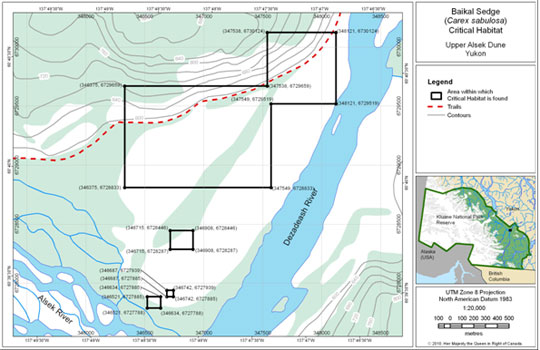
Figure 2: Critical Habitat of Baikal Sedge on the Alsek Dune
© Parks Canada
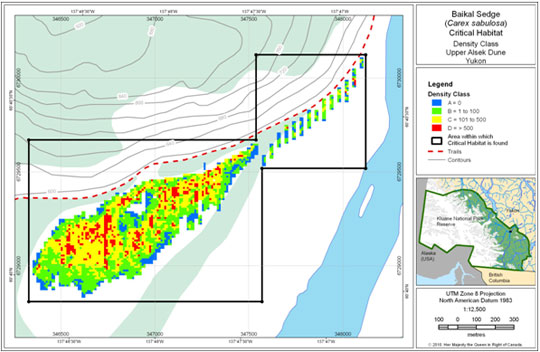
Figure 3: Densities of Baikal Sedge on the Alsek Dune
© Parks Canada
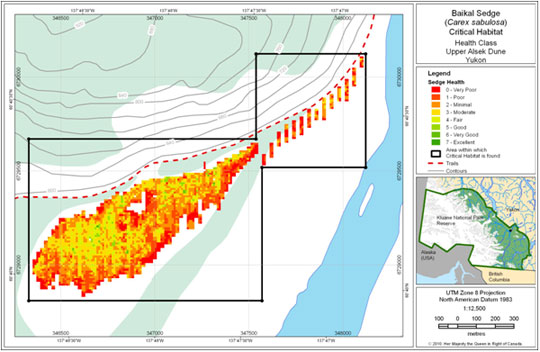
Figure 4: Health status of Baikal Sedge on the Alsek Dune
© Parks Canada
The Lower Alsek Dune population of Baikal Sedge is located along the Alsek River on Champagne & Aishihik First Nations territory in Kluane National Park and Reserve (Figure 1). This population is made up of 6 very small patches of sedge, so in order to maintain a sufficient numbers of individuals for the Lower Alsek population to remain viable over the long term, the critical habitat is identified as all open sand habitat supporting Baikal Sedge in any state of health (Figure 5, bounding box coordinates Table 5). The reason we are not using the same criteria for identifying critical habitat in the Lower Alsek that we did for the Upper Alsek is that each of the 6 Lower Alsek patches are less than 1 hectare in size with a combined total population of 2,800 ramets, compared to the 2.5 to 3.0 million ramets in the Upper Alsek population.
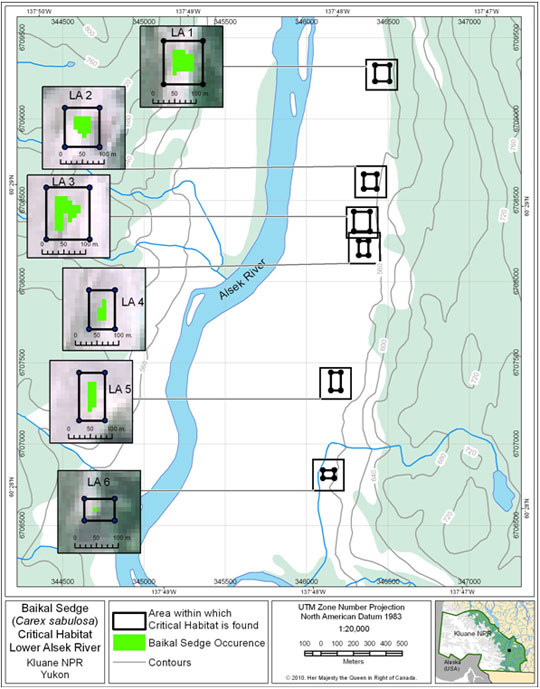
Figure 5: Critical Habitat of Baikal Sedge on the Lower Alsek Dune
© Parks Canada
Within the identified boundaries, the biophysical attributes of critical habitat include the
following:
- Semi-stabilized dunes to active, shifting sand dunes with sparse vegetation.
- Areas where sand is loose and deep, usually 0.5 to 4 metres.
- Areas where strong cold winds consistently blow - winds and cool microclimates are important for the persistence of the dune environments.
Destruction of critical habitat would result if any part of the critical habitat were degraded, either permanently or temporarily, such that it would not serve its function when needed by the species. Destruction may result from single or multiple activities at one point in time or from the cumulative effects of one or more activities over time. Examples of activities that may result in the destruction of critical habitat of the Baikal Sedge include but are not limited to, the following:
Threshold tolerance levels and cumulative effects for the above activities likely to destroy critical habitat have not been determined and require further assessment.