| The promise |
In reality |
How we can do better |
|---|
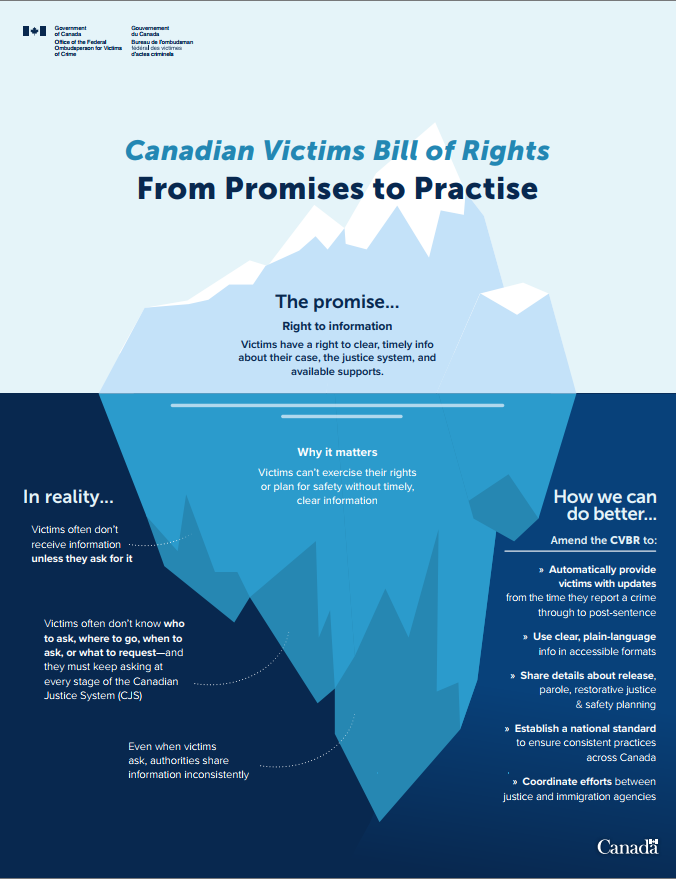
Right to information
Victims have a right to clear, timely info about their case, the justice system, and available supports. |
- Victims often don’t receive information unless they ask for it
- Victims often don’t know who to ask, where to go, when to ask, or what to request —and must keep asking at every stage of the Canadian Justice System (CJS)
- Even when victims ask, authorities share information inconsistently
Why it matters
Victims can’t exercise their rights or plan for safety without timely, clear information.
|
Amend the CVBR to:
- Automatically provide victims with updates from the time they report a crime through to post-sentence
- Use clear, plain-language info in accessible formats
- Share details about release, parole, restorative justice & safety planning
- Establish a national standard to ensure consistent practices across Canada
- Coordinate efforts between justice and immigration agencies
|
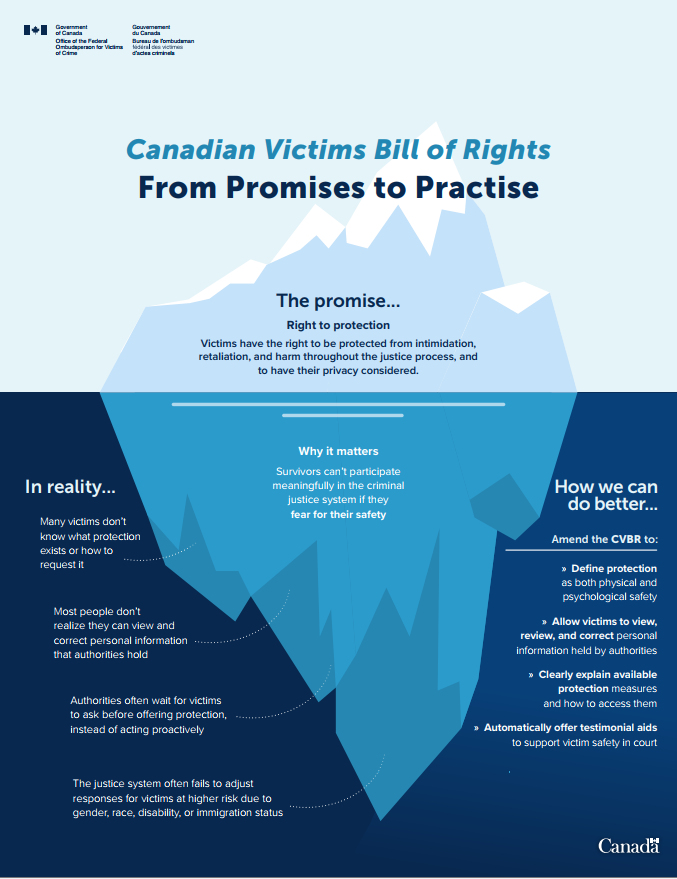
Right to protection
Victims have the right to be protected from intimidation, retaliation, and harm throughout the justice process, and to have their privacy considered. |
- Many victims don’t know what protection exists or how to request it
- Most people don’t realize they can view and correct personal information that authorities hold
- Authorities often wait for victims to ask before offering protection instead of acting proactively
- The justice system often fails to adjust responses for victims at higher risk due to gender, race, disability, or immigration status
Why it matters
Survivors can’t participate meaningfully in the criminal justice system if they fear for their safety.
|
Amend the CVBR to:
- Define protection as both physical and psychological safety
- Allow victims to view, review, and correct personal information held by authorities
- Clearly explain available protection measures and how to access them
- Automatically offer testimonial aids to support victim safety in court
|
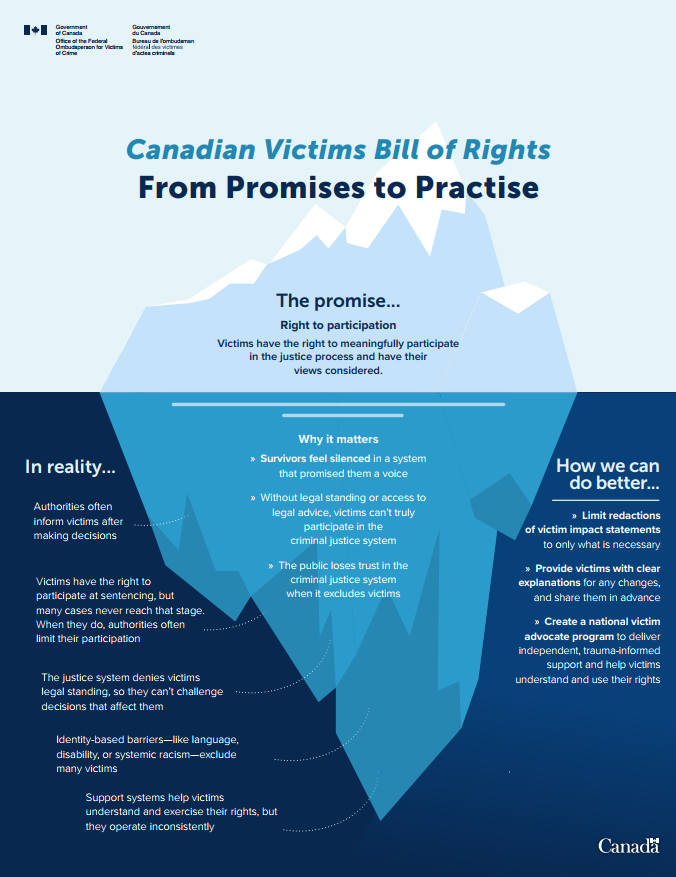
Right to participation
Victims have the right to meaningfully participate in the justice process and have their views considered. |
- Authorities often inform victims after making decisions
- Victims have the right to participate at sentencing, but many cases never reach that stage. When they do, authorities often limit their participation
- The justice system denies victims legal standing, so they can’t challenge decisions that affect them
- Identity-based barriers — like language, disability, or systemic racism — exclude many victims
- Support systems help victims understand and exercise their rights, but they operate inconsistently
Why it matters
- Survivors feel silenced in a system that promised them a voice
- Without legal standing or access to legal advice, victims can’t truly participate
- The public loses trust in the criminal justice system when it excludes victims
|
- Limit redactions of victim impact statements to only what is necessary
- Provide victims with clear explanations for any changes, and share them in advance
- Create a national victim advocate program to deliver independent, trauma-informed support and help victims understand and use their rights
|
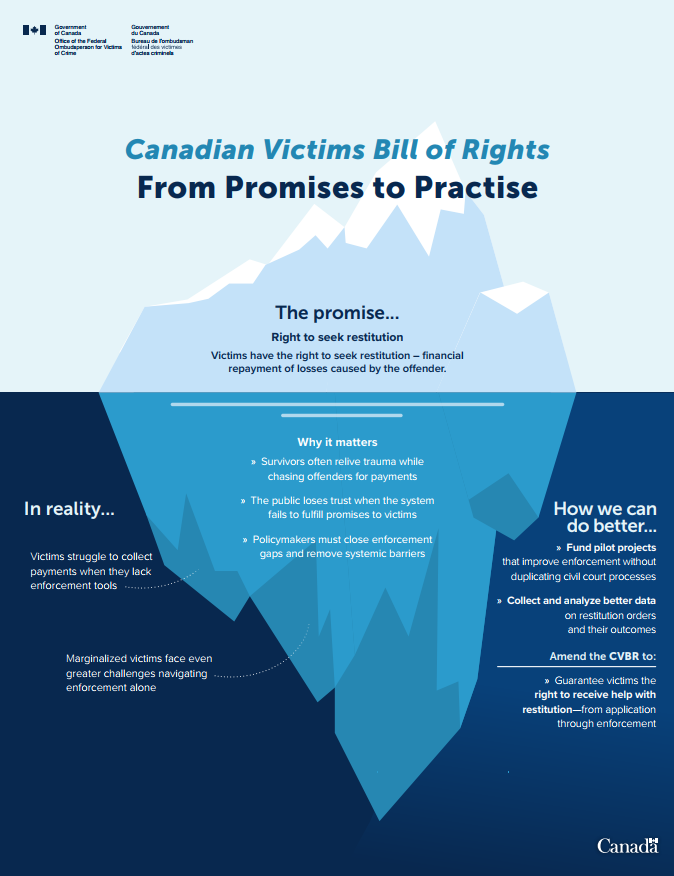
Right to seek restitution
Victims have the right to seek restitution — financial compensation for losses caused by the offender. |
- Victims struggle to collect payments when they lack enforcement tools
- Marginalized victims face even greater challenges navigating enforcement alone
Why it matters
- Survivors often relive trauma while chasing offenders for payments
- The public loses trust when the system fails to fulfill promises to victims
- Policymakers must close enforcement gaps and remove systemic barriers
|
- Fund pilot projects that improve enforcement without duplicating civil court processes
- Collect and analyze better data on restitution orders and outcomes
Amend the CVBR to:
- Guarantee victims the right to receive help with restitution — from application through enforcement
|
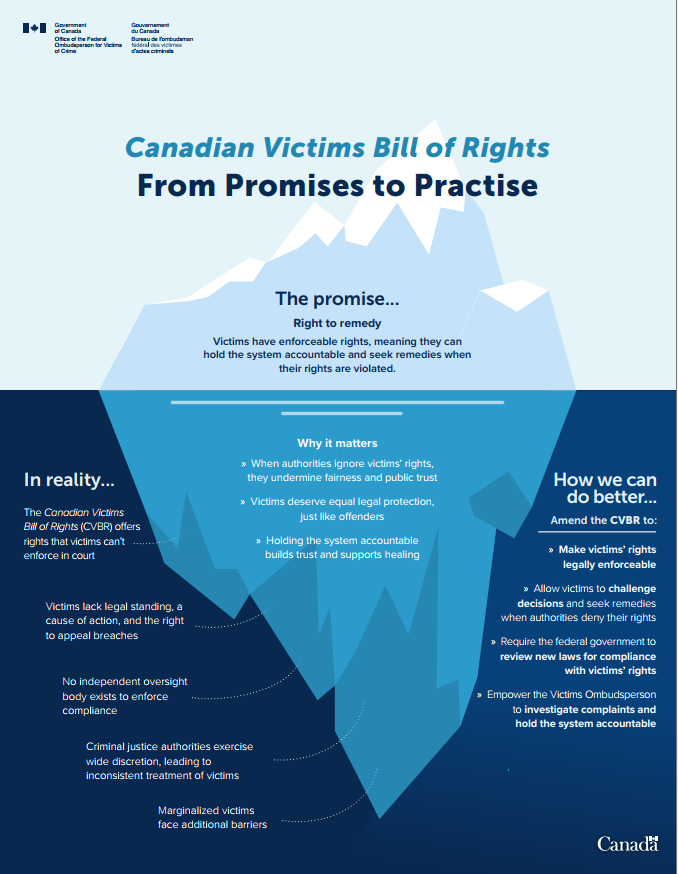
Right to remedy
Victims have enforceable rights, meaning they can hold the system accountable and seek remedies when their rights are violated. |
- The Canadian Victims Bill of Rights (CVBR) offers rights victims can’t enforce in court
- Victims lack legal standing, a cause of action, and the right to appeal breaches
- No independent oversight body exists to enforce compliance
- Authorities exercise wide discretion, leading to inconsistent treatment of victims
- Marginalized victims face additional barriers
Why it matters
- When authorities ignore victims’ rights, they undermine fairness and public trust
- Victims deserve equal legal protection, just like offenders
- Holding the system accountable builds trust and supports healing
|
Amend the CVBR to:
- Make victims’ rights legally enforceable
- Allow victims to challenge decisions and seek remedies when authorities deny their rights
- Require the federal government to review new laws for compliance with victims' rights
- Empower the Victims Ombudsperson to investigate complaints and hold the system accountable
|