
First Nations Major Projects Summit - What We Heard Report

Executive summary
On July 17, 2025, Prime Minister Mark Carney convened the First Nations Major Projects Summit at the Canadian Museum of History on the traditional, unceded territory of the Algonquin Anishinabeg peoples in Gatineau, Québec to engage First Nations leaders on the newly enacted Building Canada Act (the Act). Technical briefings and discussions were held on July 16, 2025, to support informed dialogues at the Summit.
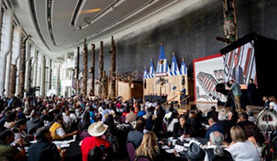
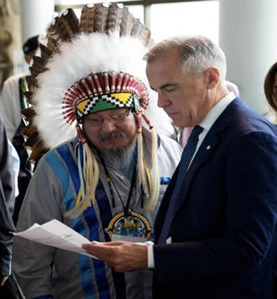
The Summit brought together more than 430 First Nations leaders from across Canada alongside federal government representatives. Participants included First Nations Chiefs, leaders of Modern Treaty and Self-Governing First Nations, the Assembly of First Nations, the Land Claims Agreement Coalition, regional representative organizations, Tribal Councils, as well as a number of federal Cabinet Ministers, Members of Parliament and senior Government of Canada officials.
While not a formal consultation, the Summit did provide an important engagement opportunity for First Nations leaders to voice their concerns, and discuss a path forward for the implementation of the Building Canada Act.
This “What We Heard” report summarizes the views expressed by participants, which will help inform next steps, including future work on the implementation of the Building Canada Act and project-specific consultations.
Overall, the Summit was marked by a mix of cautious optimism and strong reservations. Many First Nations leaders voiced deep concerns about the process that preceded the enactment of Bill C-5, and in particular whether consultation had been meaningful and adequate. Concerns were also repeatedly voiced about the potential impacts of the legislation on Section 35 rights and on appropriate recognition of First Nation governments and treaty obligations. Others, however, expressed support and a desire to move forward in partnership to increase prosperity for their communities. Federal officials acknowledged that First Nations must be central to Canada’s future development, and emphasized the Government’s commitment to meaningful engagement moving forward.
Purpose and context
Canada is facing a generational challenge that demands bold action and national coordination. To safeguard our long-term economic security, we must accelerate economic growth, diversify and deepen trade relationships and increase domestic productivity and competitiveness.
Bill C-5, which came into effect on June 26, 2025, consists of two parts that lay the foundation for a stronger more unified economy:
- Part 1 – Free Trade and Labour Mobility in Canada Act focuses on reducing barriers to the movement of goods, services and workers across provincial and territorial borders to facilitate trade; and,
- Part 2 – Building Canada Act seeks to advance projects in the national interest through an accelerated review process.
The Building Canada Act accelerates major nation-building projects by:
- identifying a list of national interest projects through consultation with provinces, territories and Indigenous rights-holders;
- streamlining multiple decision points for federal approval via an upfront decision from the Governor in Council;
- requiring proponents to meet clear federal standards for transparency, regulatory compliance and engagement with Indigenous communities; and,
- issuing a single “conditions document”, that once published, would constitute a permit, decision, or authorization under all applicable statues.
The Act requires meaningful consultation with First Nations at three key stages:
- on whether a project should be deemed in the national interest;
- throughout the federal regulatory process and the creation of the conditions document; and,
- on any amendments to the conditions document.
In deciding whether to list a project as one in the national interest, the Governor in Council may consider the criteria listed in the legislation, as well as other factors considered relevant, including the extent to which the project can advance the interests of Indigenous peoples.
Initial engagement with First Nations on Bill C-5 highlighted feedback around the:
- time to consult;
- importance of respecting Section 35 of the Constitution Act, 1982, and the rights set out in the United Nations Declaration on the Rights of Indigenous Peoples, including the principle of free, prior, and informed consent;
- importance of economic participation of First Nations peoples;
- need for enforcement, monitoring, and accountability;
- importance of environmental stewardship and need to address cumulative effects; and,
- critical need to protect First Nations women and girls in the development of major projects.
To ensure that major projects are built in partnership, the Government of Canada increased the amount of the Indigenous Loan Guarantee Program from $5B to $10B and is moving forward with the following new measures:
- standing up a new Major Projects Office to coordinate reviews of national interest projects;
- establishing an Indigenous Advisory Council with First Nation, Inuit, Metis, and Modern Treaty and Self-Governing representatives;
- administering $40M over two years to increase capacity funding for Indigenous peoples to engage on projects early and consistently;
- achieving one-project one review informed by cooperation agreements with provinces and territories within 6 months; and,
- achieving 2-year decisions for all major projects through broader legislative and regulatory reform, starting with the 60-day red-tape review.
The First Nations Major Projects Summit was convened in response to calls from First Nations leaders to continue discussions and work toward the implementation of the Building Canada Act.
Participants
The First Nations Major Projects Summit brought together more than 430 First Nations leaders (~310 individuals in-person and ~120 individuals virtually). Participants included First Nations Chiefs, leaders of Modern Treaty and Self-Governing First Nations, the Assembly of First Nations, regional representative organizations and Tribal Councils.
There were also approximately 710 observers (~130 individuals in-person and ~580 individuals virtually), including community Elders and knowledge keepers, band councillors, technical experts and advisors.
Several federal Cabinet Ministers, Members of Parliament and senior Government of Canada officials, participated including:
- The Right Honourable Mark Carney, Prime Minister of Canada;
- The Honourable Dominic LeBlanc, President of the King’s Privy Council for Canada and Minister responsible for Canada-U.S. Trade, Intergovernmental Affairs, Internal Trade and One Canadian Economy;
- The Honourable Rebecca Alty, Minister of Crown-Indigenous Relations;
- The Honourable Mandy Gull-Masty, Minister of Indigenous Services;
- The Honourable Rebecca Chartrand, Minister of Northern and Arctic Affairs and Minister responsible for the Canadian Northern Economic Development Agency;
- The Honourable Sean Fraser, Minister of Justice and Attorney General of Canada and Minister responsible for the Atlantic Canada Opportunities Agency;
- The Honourable Julie Dabrusin, Minister of Environment and Climate Change; and,
- The Honourable Tim Hodgson, Minister of Energy and Natural Resources.
Elder Verna McGregor, an Algonquin traditional knowledge keeper, provided culturally appropriate guidance and support to participants throughout the Summit. Harold Tarbell, a Mohawk Nation member from Akwesasne, was the Summit facilitator.
Recognition of the diversity of First Nations governance and the necessity of honoring both elected and hereditary leadership moving forward was noted.
What we heard: Key themes
Several recurring themes emerged, reflecting a broad and unified call for recognition of rights, shared decision-making, environmental protection, and shared prosperity.
Need for meaningful consultation on Bill C-5
“To date, the government’s actions with Bill C-5 have significantly limited opportunities for First Nations to participate fully in decisions that directly affect their rights and interests. The Building Canada Act should not proceed until full, meaningful consultation has taken place directly with First Nations rights-holders. The legislation must go beyond the intent of the legislation and must be matched by actions and concrete resources.”
First Nations leaders conveyed significant concern regarding the initial consultation process in drafting Bill C-5, as well as the pace at which the Bill was introduced and passed in Parliament. Particularly, First Nations expressed concerns that more time was needed for meaningful consultation directly with rights-holders in the development of the legislation. First Nations leaders also expressed concerns about provisions within the Bill allowing Cabinet to fast-track projects, and questioned who would be defining what’s in the “national interest” and how. Many questioned the alignment with the United Nations Declaration on the Rights of Indigenous People and section 35 rights, noting that the Bill is currently being challenged in court by nine Treaty 9 First Nations. Some First Nations leaders called for the repeal of Sections 6 and 22 of the Building Canada Act, asserting these sections conflict with existing requirements to hear, consider, and address First Nations rights.
First Nations sovereignty, Section 35 rights, treaty implementation and nation-to-nation relationship
“We are not asking to be included. We are asserting our place as decision-makers.”
First Nations leaders asked for full recognition of First Nations as sovereign governments. They also emphasized the need for a clear legal framework to define and uphold Section 35 and Treaty rights. They emphasized that true partnership requires co-development/decision-making rather than consultation after the fact. The need for a transparent, rights-respecting legal framework, which includes free, prior, and informed consent, was cited as essential. First Nations leaders also urged the Government of Canada to act where provinces and territories overreach and/or fail to uphold Section 35 and Treaty rights. In particular, the Natural Resources Transfer Agreement of 1930 was highlighted critically as a foundational breach of treaty rights, especially in provinces like Manitoba, Saskatchewan, and Alberta. Several First Nations leaders pressed for its review or rescission.
Economic equity
“Prosperity cannot be conditional. It must be rooted in our jurisdiction, not just our involvement.”
While First Nations leaders welcomed the $10 billion Indigenous Loan Guarantee Program and $40 million for consultation capacity, they stressed that prosperity must be rooted in jurisdiction and rights - not conditional on project approval. Calls were made for revenue sharing, access to tax powers so that First Nations can establish their own source revenues, and sustained community infrastructure investments.
Participation in project decision-making
“Economic sovereignty demands not only participation in, but authority over projects affecting our lands and futures.”
There was a strong demand for co-decision-making throughout all project stages. First Nations leaders emphasized the need for transparency in project approvals, clear criteria for national interest designations, and public registries for all project-specific consultations, status and information used to develop project conditions. First Nations leaders also called for First Nations-led institutions, independent dispute resolution processes, and real authority to shape or reject national interest projects. Specifically, First Nations leaders asked Canada to co-develop dispute resolution mechanisms that do not require expensive court action by First Nations to protect their rights. First Nations leaders also inquired about the mandate and design of the Indigenous Advisory Council, with some questioning the mandate and others the value it will add. There were appeals for the Indigenous Advisory Council’s mandate and composition to be co-developed with First Nations with clear regional representation, gender and youth inclusion, and direct authority from First Nations.
Federal officials confirmed that the Council’s mandate will be to enhance collaborative efforts with rights holders and communities to advance economic partnership. They emphasized that the Council’s advice is intended to complement and not replace the Government of Canada’s constitutional duty to consult First Nations, Inuit, and Métis rights holders.
Environmental stewardship and cumulative impacts monitoring
First Nations leaders highlighted the need for recognition of First Nations laws and standards alongside federal regulations. There was interest expressed in having First Nations-led assessments and oversight, and co-developed environmental standards incorporating Indigenous Knowledge. First Nations leaders pressed for holistic, interdisciplinary approaches to addressing environmental, social, cultural, and economic impacts of major projects, and urged Canada to give proper weight to cumulative effects assessments in decision-making. First Nations leaders indicated that environmental protection should be central to development planning, with a focus on mitigating impact on water, wildlife, and harvesting rights.
Federal officials affirmed that Indigenous knowledge must be meaningfully integrated into consultation processes, recognizing First Nations as stewards of land and water. The importance of aligning economic development with the goal of fostering safe, healthy, and sustainable communities for Indigenous peoples and all Canadians was also underscored.
Community capacity, priorities and wellbeing
First Nations leaders urged for long-term investments in community capacity, including technical and legal support, early-notice systems for projects, and realistic timelines for consultation. First Nations leaders also questioned how the definition of national interest will apply when many First Nations communities still lack clean water, safe housing, transportation infrastructure and broadband access. There were demands for equal prioritization of community-led infrastructure projects alongside resource development. Many First Nations leaders also referenced past social and environmental harms from extractive industries and called for binding reclamation requirements, community-led monitoring, and compensation for legacy impacts.
Federal officials emphasized the importance of a shared path of partnership and prosperity, where First Nations are empowered to shape their own futures, grounded in their values, supported by respectful partnerships, and equipped with the tools and infrastructure necessary for long-term, sustainable development and self-determination.
Clarity on the need for urgent action
A number of First Nations leaders appealed to the government to provide additional clarity on the US tariffs crisis and its impact on Canada and First Nations. They noted that if the federal government wants First Nations to support urgent action, they need to be full partners, their rights need to be upheld and their communities benefit from development.
Meeting format and discussion outcomes
The First Nations Major Projects Summit used a hybrid format. Rights-holders and the leaders of representative organizations were hosted in the Grand Hall. Those that were not able to participate in-person were able to join virtually via a Zoom link with full participatory functions. Simultaneous interpretation (English, French, ASL, LSQ) and technical support were provided to ensure accessibility.
Participants were engaged in dialogue through a combination of plenary sessions and facilitated working sessions. In addition to open dialogue during the Summit, First Nations leaders were given the opportunity to submit questions and concerns using the interactive tool Slido prior to, during, and after the Summit. This platform enabled individuals to contribute their own questions or topics for discussion, as well as the opportunity to endorse or upvote submissions from others. By highlighting shared priorities, the most pressing issues were brought to the forefront of the conversation so that they could be addressed during the course of and following the Summit. Hundreds of questions were submitted.
Additional observers, including community Elders and knowledge keepers, band councillors, and technical experts and advisors, were hosted either in-person in the Theatre with a live stream, or virtually via a Webinar link (no participatory functions were available for observers).
See Annex A for the First Nations Summit Agenda.
July 16, 2025
Technical briefings and discussions were held to support informed dialogue on July 17th.
The One Canadian Economy Act presentation, delivered by the Privy Council Office, provided an overview of the legislative framework, implementation mechanisms, and consultation requirements. It also summarized feedback received during engagement sessions, including concerns related to consultation timelines, environmental protection, First Nations economic participation, and the safeguarding of First Nations rights. The presentation concluded with a commitment to ongoing dialogue, including the establishment of an Indigenous Advisory Council and increased funding to support First Nations engagement in project assessments and development. For more information, refer to the Free Trade and Labour Mobility in Canada Act and Building Canada Act, and Annex B: Presentation on the Building Canada Act.
First Nations leaders raised extensive concerns regarding the Building Canada Act, particularly around its potential impacts on First Nations rights, lands, and governance. Many emphasized the importance of honouring Treaty relationships, protecting Section 35 rights, and ensuring First Nations-led oversight and benefit-sharing mechanisms. First Nations leaders emphasized the need for transparency, accountability, and a commitment to co-governance, urging the federal government to uphold its duty to consult and ensure that First Nations perspectives shape the implementation of the Building Canada Act.
Federal officials noted that the Government of Canada is committed to respecting the rights of First Nations recognized and affirmed by Section 35 of the Constitution Act, 1982, and the rights set out in the United Nations Declaration on the Rights of Indigenous Peoples. They also noted that the Building Canada Act requires meaningful consultation with First Nations on which projects are determined to be in the national interest, and on the conditions that projects will have to meet to move forward.
July 17, 2025
Opening
The First Nations Major Projects Summit began with an opening prayer by Elder Verna McGregor, followed by opening remarks from the Prime Minister, National Chief of the Assembly of First Nations, and Co-Chair of the Land Claims Agreement Coalition.
Working group sessions
There were four working sessions with panelists and open dialogue.
Working session 1: Open dialogue on meaningful consultation
Panelists included:
- Grand Chief Norman A Wapachee, Grand Council of the Crees
- Chief Archie Wabasse, Wunnumin Lake First Nation
- Chief Edward John, Tl’azt’en Nation
- The Honourable Dominic LeBlanc, President of the King’s Privy Council for Canada and Minister responsible for Canada-U.S. Trade, Intergovernmental Affairs, Internal Trade and One Canadian Economy
- The Honourable Sean Fraser, Minister of Justice and Attorney General of Canada and Minister responsible for the Atlantic Canada Opportunities Agency
- The Honourable Julie Dabrusin, Minister of Environment and Climate Change
- The Honourable Mandy Gull-Masty, Minister of Indigenous Services
First Nations leaders were asked to consider several key questions related to consultation, including:
- What does good faith, timely and equitable engagement look like?
- What does forward consultation look like for you (and your community) and how should consultation be defined in relation to the implementation of the Building Canada Act?
- With regard to the United Nations Declaration on the Rights of Indigenous Peoples, how do rights-holders define expectations leading to free, prior, and informed consent?
- How can we build upon best practices in impact assessment consultations where partnership with First Nations has been prioritized to accelerate projects of national interest?
- Who is best placed to lead the co-creation of consultation mechanisms?
First Nations leaders expressed a need for consultations to be early, ongoing, transparent, and in good faith, enabling First Nations to influence outcomes. First Nations leaders stressed that consultation cannot be a checkbox exercise and must respect First Nations laws and governance. They noted that the current framework set out in the Building Canada Act falls short of embedding legally binding consent mechanisms, including the ability to withhold free, prior, and informed consent. Additional questions focused on access to information, and how to ensure meaningful engagement with individual First Nations moving forward. Questions were also raised about how the Building Canada Act would be applied if First Nations reject conditions during consultation, and whether the federal government would intervene in cases where provincial/territorial actions may violate federal laws or First Nations rights. Several First Nations raised concerns about the Natural Resources Transfer Agreement of 1930 and called for its review or rescission.
In the end, there was acknowledgment that the Summit was the beginning of dialogue. In response, federal officials indicated that collaboration with First Nations leaders will continue through regional engagement sessions and project-specific consultations with rights-holders.
Federal officials confirmed that the recognition of Section 35 rights is embedded in the legislation, along with a requirement to engage in meaningful consultation with affected Section 35 rights holders. Free, prior, and informed consent was highlighted as a central tenant guiding the federal government’s approach to implementing the Building Canada Act.
Working Session 2: The Major Projects Office and the Indigenous Advisory Council
Panelists included:
- The Honourable Dominic LeBlanc, President of the King’s Privy Council for Canada and Minister responsible for Canada-U.S. Trade, Intergovernmental Affairs, Internal Trade and One Canadian Economy
- The Honourable Tim Hodgson, Minister of Energy and Natural Resources
- Chief Derek Nepinak, Minegoziibe Anishinabe
- Grand Chief Kyra Wilson, Assembly of Manitoba Chiefs
- Ovide Mercredi, former National Chief of the Assembly of First Nations
- Chief Daniel Manuel, Upper Nicola Band
First Nations leaders were asked to consider several key questions related to the Major Projects Office and Indigenous Advisory Council, including:
- Recognizing that there is a continued requirement for a direct relationship between the federal government and rights-holders, what should the mandate of the Indigenous Advisory Council be?
- With regards to membership, who should be invited to participate as a member of the Indigenous Advisory Council and how should they be selected?
- How can the Indigenous Advisory Council best support rights-holders in this process?
- What other considerations should be factored into the design and launch of the Major Projects Office?
While the Major Projects Office and Indigenous Advisory Council were discussed as mechanisms to improve engagement and coordination, some First Nations leaders questioned their mandate, authority, inclusiveness, and accountability, noting that neither can replace consultations with rights-holders. There were requests to ensure the Indigenous Advisory Council membership reflects diverse First Nations (e.g., historic treaty holders, modern treaty holders, self-governing nations, and other First Nations governance systems), with clear powers and meaningful influence over project approvals. The need for clear regional representation, gender/youth inclusion and recognition of regional implementation distinctions were also noted.
Many First Nations leaders also noted the need for greater First Nations participation in the design, implementation, and monitoring of major projects, with stringent environmental protections embedded in project approval processes. Water rights and quality were repeatedly emphasized as paramount, with calls for attention to cumulative and downstream effects from industrial development. The need to address cultural, health, and safety concerns alongside economic goals was also stressed given the known links between resource projects and social impacts, including violence against Indigenous women and girls.
Ministers stressed the importance of First Nations participation in regulatory processes, environmental stewardship, development of the Indigenous Advisory Council, and co-development of conditions on projects. They also acknowledged the complexity of overlapping jurisdictions and the need to respect modern treaty processes (e.g. the Yukon Environmental and Socio-Economic Assessment Act) and unique regional contexts (e.g., many First Nations in British Columbia never entered into treaties).
Working session 3: First Nations economic prosperity, partnership and participation
Panelists included:
- Crystal Smith, Former Chief of the Haisla Nation
- Chief Harley Chingee, McLeod Lake Indian Band
- Chief Raymond Powder, Fort McKay First Nation
- The Honourable Dominic LeBlanc, President of the King’s Privy Council for Canada and Minister responsible for Canada-U.S. Trade, Intergovernmental Affairs, Internal Trade and One Canadian Economy
- The Honourable Mandy Gull-Masty, Minister of Indigenous Services
- The Honourable Tim Hodgson, Minister of Energy and Natural Resources
First Nations leaders were asked to consider several key questions related to First Nations economic prosperity, partnership and participation, including:
- What tools, investments or supports could facilitate greater First Nations prosperity and partnership in major projects?
- Do you have an experience to share regarding accessing capital to participate in, or to lead, a major project? What worked well? What could be improved?
- Which projects of national interest do your communities want to see built?
- How do we ensure together that lessons learned, and models can be shared with all interested First Nations?
Panelists Chief Harley Chingee and Chief Raymond Powder shared successful resource development partnership examples including LNG Canada, Cedar LNG, and oil sands projects where First Nations equity and environmental stewardship were prioritized.
Other First Nations leaders underscored the historic failure of governments to uphold treaty obligations, evidenced by decades of resource extraction with limited First Nations benefit resulting in ongoing socio-economic disparities, including infrastructure deficits, health crises, and environmental degradation. First Nations leaders stressed that economic development must be grounded in First Nations identity, laws, cultural values, and community priorities rather than imposed external frameworks. There were strong calls for co-development, transparency, accountability, and long-term investments. First Nations leaders urged the federal government to match legislative intent with concrete action.
First Nations leaders expressed a strong desire to have more information on the projects of national interest being considered within their territories, noting the need for equitable economic participation to support community prosperity and respect their self-determination. Many expressed concerns that financial instruments like the $10 billion Indigenous Loan Guarantee Program do not meet the needs of smaller or underserved communities, calling for direct resource revenue sharing rather than just access to capital and equity stakes in projects.
Capacity constraints were also flagged, with demands for enhanced funding, training, and technical supports to ensure First Nations communities can fully engage in and benefit from major projects within their territories.
Ministers highlighted key government programs designed to support meaningful partnership, equity ownership, and capacity-building, including the $10 billion Indigenous Loan Guarantee Program and $40 million in capacity funding. They also noted the importance of aligning economic development with First Nations community priorities, noting that eligible projects championed by First Nations will be given priority for advancement.
Working session 4: Working together
The final working session brought together First Nations leaders, Prime Minister Mark Carney and federal ministers to reflect on what had been discussed throughout the day. Key themes included the urgency of addressing systemic underfunding in First Nations community infrastructure, programs and services; the demand for co-developed environmental and regulatory frameworks; and, the call for First Nations-led decision-making and oversight. First Nations leaders stressed that consultation must go beyond symbolic gestures and include youth, title holders, and smaller communities. First Nations leaders urged the federal government to act with the same speed and seriousness in upholding First Nations rights as it has in advancing the Building Canada Act.
Ministers reiterated the Government’s commitments to meaningful engagement, consultation, capacity-building, economic partnership, and respect for First Nations rights, treaties, lands and governance. They highlighted the focus on supporting First Nations-led economic growth, and highlighted how major projects can have direct and indirect benefits for community infrastructure investments.
“It’s time to build big projects that will transform and connect our economy. Central to this mission is shared leadership with Indigenous Peoples. Working in partnership, we can seize this opportunity and build lasting prosperity for generations.”
The Rt. Hon. Mark Carney
Prime Minister of Canada
The Prime Minister reaffirmed the Government’s commitment to ongoing dialogue, co-development of project conditions, and project-specific consultations. He acknowledged the need to support work on community priorities including addressing community infrastructure gaps related to housing, clean water, transportation and broadband access. He encouraged First Nations leaders to make their interests known so that eligible projects they support can be fast-tracked to maximize benefits for their communities and all Canadians.
The Prime Minister also outlined the Building Canada Act as enabling legislation, with more work to be done before projects of national interest are identified and approved for development. He noted there is not yet a list of projects, assuring First Nations leaders that they will be consulted as ideas crystalize.
The Prime Minister also highlighted:
- recent funding commitments including:
- the expansion of the Indigenous Loan Guarantee Program to $10 billion to help unlock capital for Indigenous communities to gain full equity ownership in major nation-building projects; and,
- dedicating $40 million to support consultation with rights-holders, including early discussions on which projects to include, as well as ongoing governance and capacity-building.
- clean growth objectives; and,
- the need to work collaboratively with First Nations to build prosperity and trust over time.
Finally, he committed to work with First Nations to ensure the Major Projects Office is operational by Monday, September 1, 2025 (Labour Day) and the Indigenous Advisory Council stood up.
The session concluded with a strong call for partnership, transparency, and respect for First Nations rights, lands and governance. The Prime Minister affirmed that national interest projects will not move forward without First Nations’ involvement and that this engagement is the beginning of a longer-term process. He noted that collaboration with First Nations leaders will continue through regional engagement sessions and project-specific consultations with rights-holders.
Closing
The day ended with a closing prayer from Elder Verna McGregor.
Conclusion
First Nations leaders brought forward diverse perspectives, but their collective message was clear: rights recognition, meaningful consultation and consent, environmental protection, and shared economic prosperity must be foundational.
“For Canada to build a resilient, equitable economy, First Nations sovereignty and rights must be central and honoured, creating space for First Nations peoples to lead their Nations toward economic and cultural renewal for generations to come.”
Several First Nations leaders noted that while the Summit marked a pivotal moment of dialogue between First Nations leaders and the Government of Canada, and the Building Canada Act provides a framework, implementation must rigorously uphold First Nations rights to build a shared prosperous future and dialogue must be followed by meaningful and measurable actions. Many First Nations leaders called for a reset in engagement processes, and a fundamental acknowledgement of First Nations rights, jurisdiction and governance in project approval and economic development.
Moving forward, it was clearly noted that success hinges on translating dialogue into tangible actions that ensure First Nations are equal partners and beneficiaries in Canada’s evolving economy. The Government was urged to ensure that new laws or policies are co-developed, implemented transparently, and backed by enforceable mechanisms for consent, accountability, and benefit sharing.
To this end, the Government of Canada expressed a commitment to work in consultation and partnership with First Nations on the implementation of the Building Canada Act. In the short-term, the Government also committed to:
- Keep the Summit email inbox and Slido platform open for an extra 30 days to receive additional submissions. They will both close on Sunday August 17, 2025.
- Produce a final “What We Heard” report incorporating feedback from the Summit and follow-up period.
- Ensuring that the Major Projects Office is operational by Monday, September 1, 2025 (Labour Day) and the Indigenous Advisory Council stood up.
Annexes
Annex A: First Nations Summit Agenda
1. Opening prayer Elder Verna McGregor |
02:00 – 02:15 |
|---|---|
2. Opening remarks from Ministers Minister Gull-Masty |
02:15 – 02:25 |
3. Building Canada Act technical briefing with officials Deputy Clerk Fox |
02:25 – 03:15 |
4. Health break |
03:15 – 03:45 |
5. Building Canada Act: Technical questions and clarifications with officials |
03:45 – 04:45 |
6. Closing remarks Minister Chartrand |
04:45 – 05:00 |
1. Opening prayer Elder Verna McGregor |
08:45 – 8:55 |
|---|---|
2. Opening remarks from the Prime Minister |
08:55 – 09:05 |
3. Remarks from the National Chief of the Assembly of First Nations |
09:05 – 9:10 |
4. Remarks from the Co-Chair of the Land Claims Agreements Coalition |
09:10 – 09:15 |
5. Working session 1: Open dialogue on meaningful consultation Grand Chief Norman A. Wapachee |
09:15 – 10:45 |
6. Health break |
10:45 – 11:15 |
7. Working session 2: The Major Projects Office and the Indigenous Advisory Council Minister LeBlanc |
11:15 – 12:15 |
8. Lunch |
12:15 – 01:15 |
9. Working session 3: First Nations economic prosperity, partnership and participation Crystal Smith |
01:15 – 02:45 |
10. Health break |
02:45 – 03:15 |
11. Working session 4: Working together Moderated discussion with the Prime Minister and Ministers |
03:15 – 04:15 |
12. Closing remarks from the Prime Minister |
04:15 – 04:25 |
13. Closing prayer Elder Verna McGregor |
04:25 – 04:30 |
Annex B: Presentation on the Building Canada Act
Slide 1
Bill C-5, One Canadian Economy Act
Presentation by the Privy Council Office
First Nation Summit
July 16, 2025
Slide 2
Overview of presentation
- Context for Bill C-5, One Canadian Economy Act
- Part 1: Free Trade and Labour Mobility in Canada Act
- Part 2: Building Canada Act
- What We Heard
- Next Steps
Slide 3
A transformational moment for Canada
- Canada is facing a generational challenge that demands bold action and national coordination
- To safeguard our long-term economic security we must:
- Accelerate economic growth
- Diversify and deepen trade relationships
- Increase domestic productivity and competitiveness
- Bill C- 5 equips Canada to respond decisively by driving economic growth and unlocking Canada's full potential
Slide 4
Bill C- 5, the One Canadian Economy Act
Bill C-5 consists of two parts that lay the foundation for a stronger more unified economy:
- Part 1 – Free Trade and Labour Mobility in Canada Act focuses on reducing barriers to the movement of goods, services and workers across provincial and territorial borders to facilitate trade
- Part 2 – Building Canada Act seeks to advance projects in the national interest through an accelerated review process
Slide 5
Part 1 of the Canadian Economy: The Free Trade and Labour Mobility Act
Slide 6
What does the Free Trade and Labour Mobility in Canada Act do?
The Act aims to:
- Promote free trade and labour mobility while protecting the health, safety, security, social and economic well-being of Canadians and the environment
- Remove federal barriers to the movement of goods, services, and workers across provincial and
territorial borders - Eliminate duplication and red tape for businesses
Slide 7
How does the Free Trade and Labour Mobility in Canada Act improve trade and labour mobility?
The Act applies to:
- Goods and services:
- When a good or a service is subjected to both a federal and a provincial or territorial requirement and when the federal requirement pertains to interprovincial trade
- Provincial and territorial requirements must be comparable to federal requirements
- Labour mobility:
- Provincial and territorial work authorizations will be recognized federally for the same occupation
Slide 8
How will the Free Trade and Labour Mobility in Canada Act be implemented?
The Act requires regulations that will provide:
- Clarity on comparability – set extra guidelines for deciding when federal rules match those of provinces and territories
- Conditions or obligations – for instance, a worker needs to be in good standing to receive the work authorization
- Carve-out for exceptions – areas where the law doesn’t apply because the risks to people’s safety, security, or the environment are too high
Regulations will be informed by engagement with federal regulators, Indigenous partners and external stakeholders.
Slide 9
Part 2 of One Canadian Economy: Building Canada Act
Slide 10
What does the Building Canada Act do?
The Act accelerates major nation-building projects by:
- Identifying a list of national interest projects through consultation with provinces, territories and Indigenous rights holders.
- Streamlining multiple decision points for federal approval via an upfront decision from the Governor in Council.
- Requiring proponents to meet clear federal standards for transparency, regulatory compliance and engagement with Indigenous communities.
- Issuing a single “conditions document”, that once published, would constitute a permit, decision, or authorization under all applicable statues.
Slide 11
What does the Building Canada Act do?
The Act provides for the designation of national interest projects using the following factors, subject to consultation:
- Strengthen Canada’s autonomy, resilience, and security
- Provide economic or other benefits to Canada
- Have a high likelihood of successful execution
- Contribute to clean growth and to meeting Canada’s objectives with respect to climate change
- Advance the interests of Indigenous peoples
Slide 12
What does the Building Canada Act do?
The Act ensures Indigenous consultation is built into the process for:
- Determining whether a project is in the national interest
- The development of the conditions document for permits and authorizations under all applicable federal statutes
- Any amendments to the conditions document
- Consultation required: On project recommendations and understanding of Indigenous interests > GIC Order to determine project in the national interest
- Consultation required: Throughout the federal regulatory process and on the Conditions Document > Minister issues conditions document
- Consultation required: On amendments to Conditions Document
Slide 13
What does the Building Canada Act do?
The Act ensures transparency and parliamentary oversight with requirements for:
- 30-day notice before adding the project to Schedule 1 of the Act, by publishing name and description of a project in Canada Gazette
- Indigenous consultation and consultation with provinces and territories before listing projects
- Parliamentary Review Committee and reporting requirements with legislated timelines
- Online publication of project status, Indigenous consultation results, and information used to develop project conditions
Slide 14
What we heard
During engagement on Bill C-5, we heard concerns about the:
- Inadequate time to consult
- Importance of respecting Indigenous rights and UNDRIP
- Importance of economic participation of Indigenous peoples
- Need for enforcement, monitoring, and accountability
- Importance of environmental stewardship and need to address cumulative effects
- Critical need to protect Indigenous women and girls in the development of major projects
Slide 15
How we’re responding
- Updated the legislation to reflect the interests of Indigenous peoples more clearly as a key factor
- Announced the intention to establish an Indigenous Advisory Council with First Nation, Inuit, and Metis representatives
- Announced $40 million over two years to increase capacity funding for Indigenous peoples to engage on projects early and consistently
- Increased the amount of the Indigenous Loan Guarantee Program from $5B to $10B
Slide 16
Next steps
Work in partnership with Indigenous peoples on implementation, including:
- Standing up Major Projects Office to coordinate reviews of national interest projects
- Establishing the Indigenous Advisory Council
- Administering $40M in capacity funding
- Achieving one-project one review informed by cooperation agreements with provinces and territories within 6 months
- Achieving 2-year decisions for all major projects through broader legislative and regulatory reform, starting with the 60-day red-tape review
We want to hear from you.