
POLAR research and projects
On this page
- POLAR projects and partnerships in Cambridge Bay, Nunavut
- Cold climate testing at CHARS
- Ongoing projects
- Completed projects
- Research projects funded by Polar Knowledge Canada
POLAR projects and partnerships in Cambridge Bay, Nunavut
POLAR advances knowledge of the polar regions through partnerships and collaboration with other organizations on science and technology initiatives at the Canadian High Arctic Research Station (CHARS) in Cambridge Bay, Nunavut. This page shares a selection of ongoing and completed projects.
POLAR prioritizes supporting projects and partnerships that align with the three pillars of research and knowledge that comprise the Science and Technology Framework (2026-2029).
Cold climate testing at CHARS
Did you know that CHARS is a cold climate testbed? The facility is designed to support research and equipment testing in high-latitude, northern environments.
CHARS can host and monitor equipment on site, with support from trained POLAR technicians who can assist with ongoing monitoring, troubleshooting and day-to-day operational support to help keep projects running smoothly.
If you are interested in using CHARS as a cold climate testing site or want to run a science or technology research program in collaboration with POLAR, contact the POLAR S&T Administration team to discuss your project and testing needs.
Ongoing projects
Upper Air Monitoring Station
For close to a century, synchronized weather balloon launches have been used for weather forecasting and environmental research. Every day, twice a day, meteorologists at approximately 1300 locations worldwide release weather balloons simultaneously.
In Canada, Environment and Climate Change Canada (ECCC) launches weather balloons from 30 sites across the country, including Cambridge Bay. Each balloon has a device called a radiosonde attached, which measures air pressure, temperature, humidity, and wind speed and direction. The balloons can reach an altitude of up to 35 km before bursting!
Until recently, balloons from the Cambridge Bay site were filled and launched manually, but in November 2024, ECCC installed an Automated Radiosonde Launching System (ARLS) to automate balloon launches. Hydrogen is produced and stored onsite to fill the balloons, then they are launched via ARLS at the twice-daily launch times. Cambridge Bay has one of 13 automated launch stations in Canada and is one of the first remote Arctic automated launch stations in the world.
POLAR technicians at CHARS provide ongoing site maintenance to help ECCC run the system, contributing to upper air monitoring in the North.

Radioactivity Monitoring Station
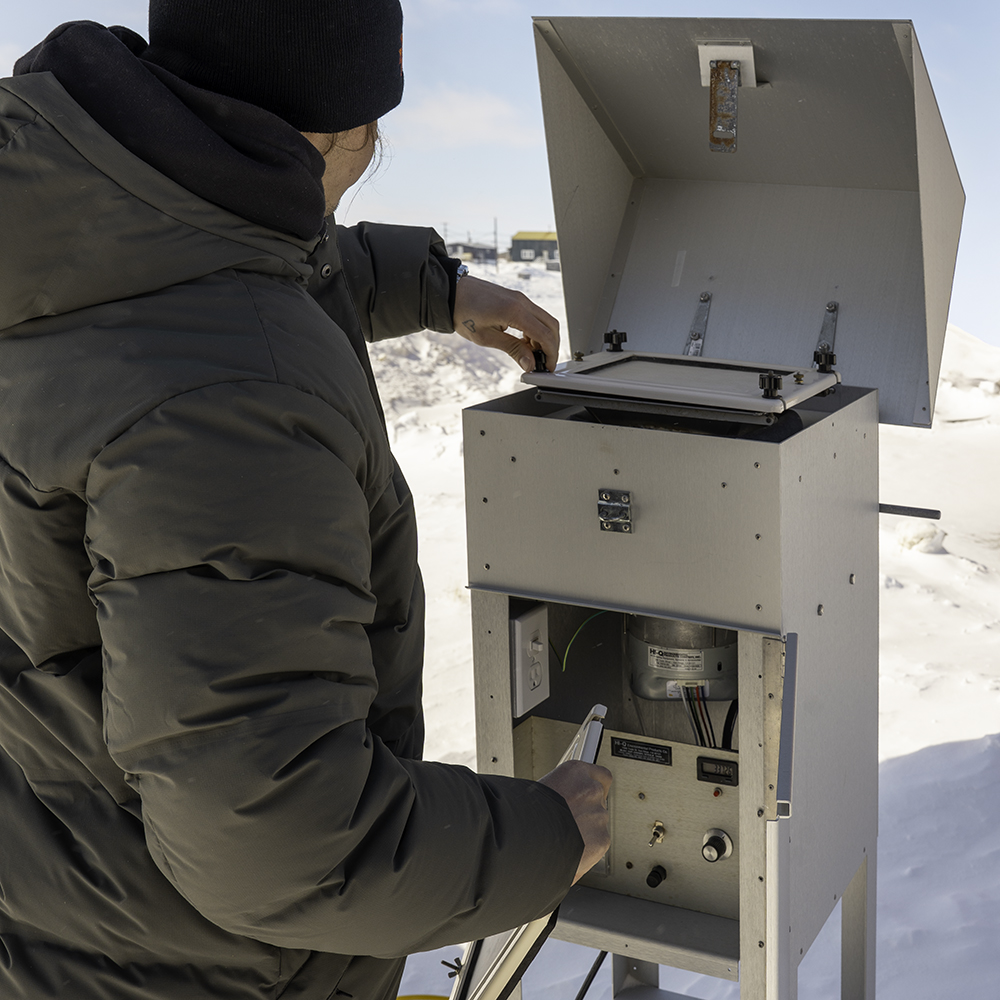
Radiation is part of Canada’s environment. Since 1959, Health Canada has routinely monitored airborne and deposited radioactivity in the environment through the Canadian Radiological Monitoring Network. There are currently 28 monitoring stations across the country, including one at CHARS.
The monitoring station samples radiation levels in airborne particles, precipitation, and external gamma radiation, and can detect both natural and human-made sources of radiation. Data from the station are regularly updated and made publicly available on the Open Government Portal.
POLAR technicians collect air, precipitation, and external gamma radiation samples at the CHARS station and perform annual air flow calibration. They also maintain, repair, and troubleshoot the sampling equipment as needed.
Data from the station contribute to Canada’s radiation surveillance program, which helps provide a baseline for radiation risk assessment and enable early identification of nuclear events.
Solar Resource Monitoring Station
Solar power holds promise as a renewable energy source in the Arctic; however, very few high-quality datasets exist for ground-mounted solar energy systems in the Arctic because of the challenging environmental conditions. To fill this gap, POLAR and CanmetENERGY are working to establish a solar resource monitoring station. This work complements broader research efforts, including the CanmetENERGY Ottawa ARISE-North program, which supports energy innovation in northern and remote communities.
The station will measure a comprehensive set of weather variables, including temperature, humidity, air pressure, snow depth, precipitation, and different types of solar irradiance, or the amount of sunlight that reaches a surface.
Data will provide insights on solar variability and be used to calibrate and improve large weather models for polar regions. Data may also support the advancement and uptake of solar energy in Northern communities.
Lessons learned from the station’s design and operation will also inform future cold climate weather stations and meteorological experiments, as well as support the development of best practices for accurate solar energy data collection in the Arctic.
Multidisciplinary Observatory for Arctic Climate Change and Extreme Events Monitoring
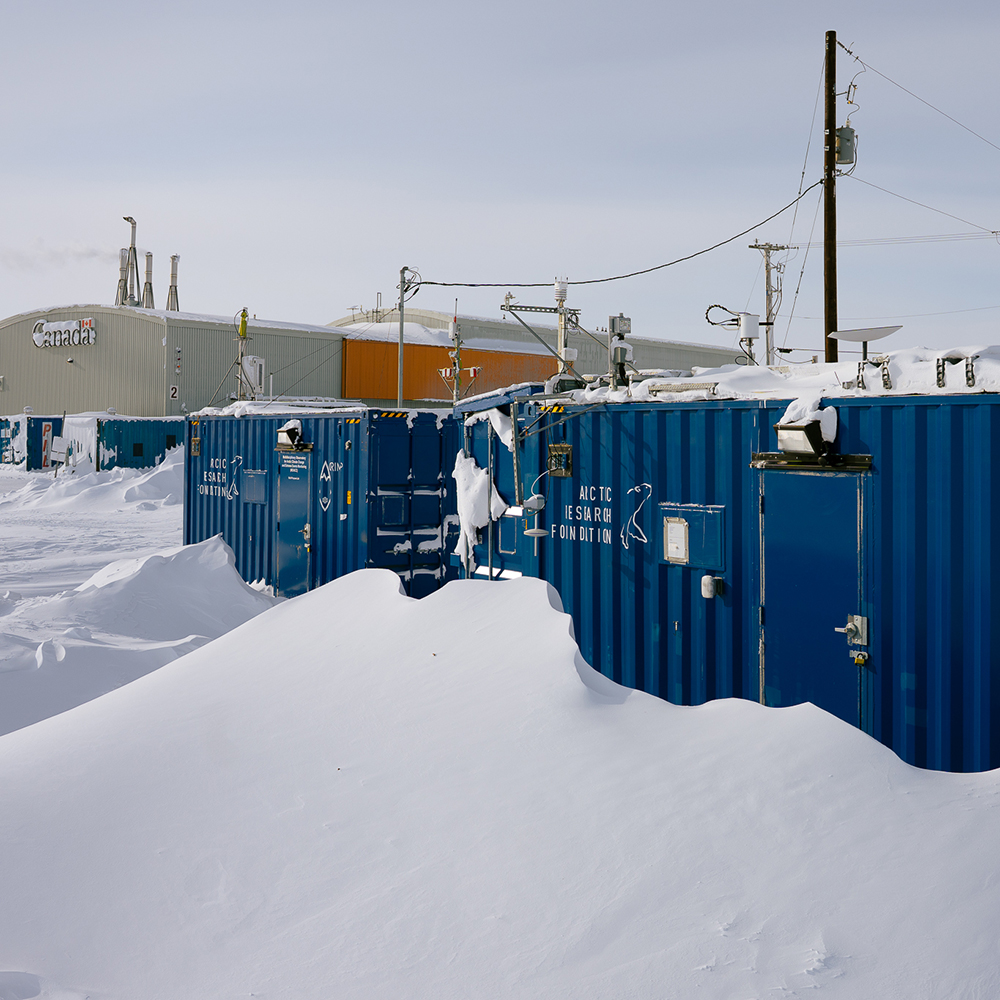
Canada’s Arctic regions are experiencing climate change at one of the fastest rates in the world. The Multidisciplinary Observatory for Arctic Climate Change and Extreme Events Monitoring (MOACC) is establishing a permanent scientific infrastructure at CHARS to enable continuous, long-term monitoring of a changing Arctic climate.
MOACC is a first-of-its-kind multi-institutional collaboration between Université de Sherbrooke, University of Toronto, Université de Montréal, University of Western Ontario, and POLAR. Findings will advance climate modelling in the Arctic and will deepen Canada’s understanding of the impacts of climate change in a data-sparse environment.
POLAR provides financial and in-kind support for MOACC, as well as onsite maintenance, calibration, and equipment troubleshooting at CHARS.
Learn more about MOACC
Solar Adsorption Thermal Energy Storage System
Researchers at Carleton University are developing a novel solar-driven adsorption thermal energy storage (SATES) system as a potential low-carbon heating solution for buildings in northern communities.
The system uses reversible sorption reactions to release heat seasonally. The process involves breaking and reforming weak chemical bonds between two different materials – an adsorbent (usually a powder substance) and an adsorbate liquid (usually water). In summer, solar energy is used to separate the two materials, and in winter, they are recombined to release heat.
A prototype SATES system will be built and field-tested in Cambridge Bay, to be commissioned at CHARS in late 2027. POLAR will provide technical support in commissioning and operating the system over a two-year pilot period, including maintenance, equipment troubleshooting and data collection.
Learn more about the project: Solar-Powered Heating Tech Holds Promise for Northern Communities.
Motus Wildlife Tracking Tower
Many birds in the Arctic are migratory species, meaning they travel long distances each year across vast, remote areas. Better understanding where and when these species move can help inform wildlife ecology research and conservation efforts.
That’s why POLAR partnered with Environment and Climate Change Canada and Birds Canada to install a Motus wildlife tracking tower at CHARS. Motus is an international research network that uses automated radio telemetry – a technology that detects and records radio signals – to track the movement and behaviour of small flying animals like birds, bats and insects.
Motus stations consist of a radio receiver, antennas, a mounting structure and a power supply. Antennas can detect tagged birds up to 20 km away! At CHARS, POLAR technicians commission and decommission the station’s monitoring equipment seasonally, in addition to collecting data and troubleshooting equipment where required. Data from each station are uploaded into a centralized database for use in research, education and conservation initiatives: https://motus.org/dashboard/.
Information gathered through the Motus network provides insight into ecosystem dynamics, including migratory pathways, critical stopover areas and use of breeding and wintering habitats.

Completed projects
Bio-Electrochemical Anaerobic Sewage Treatment (BEAST) Reactor
Cambridge Bay, like many other Arctic communities, has a sewage lagoon. Wastewater is collected by septic trucks and then discharged into the lagoon. Although cost-effective and low-maintenance, sewage lagoons pose challenges in northern communities. Arctic lagoons are frozen for much of the year, meaning that bacteria are less able to break down organic matter, increasing risk of pollution in surrounding environments and food chains.
The National Research Council of Canada and Elkan Environmental Engineering collaborated with POLAR to develop the Bio-Electrochemical Anaerobic Sewage Treatment (BEAST) reactor – an innovative sewage treatment technology for addressing the unique challenges of treating sewage in remote Arctic communities.
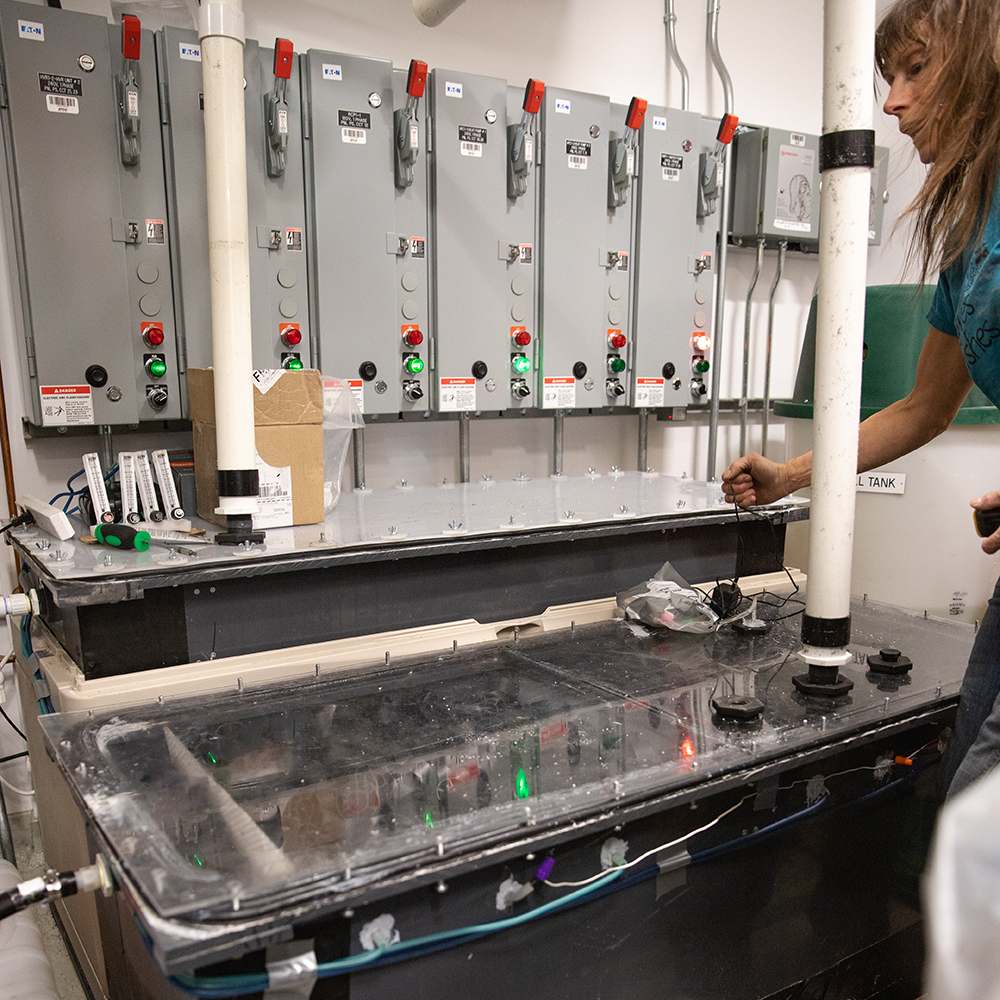
In 2020, a 30-litre pilot BEAST reactor was successfully tested at CHARS. In late 2023, POLAR began testing a larger, 300-litre BEAST installed in the mechanical room of one of CHARS’ triplex accommodation buildings. POLAR technicians maintained and operated the reactor during the six-month pilot period, collecting weekly samples to analyze how effectively the BEAST broke down organic matter. At the conclusion of the project in June 2024, the reactor was decommissioned.
Although it was not tested during this trial, BEAST technology also has the potential to produce biogas that could be used as an energy source. In the future, technologies like the BEAST could serve as potential pre-treatment solutions to mitigate the environmental impact of Arctic sewage lagoons.
Biofuels from food waste
In northern communities, where long winters and frozen ground halt natural processes of decomposition, food scraps have nowhere to go. While composting is now commonplace in much of southern Canada, food scraps in Cambridge Bay often end up in the landfill.
In collaboration with National Research Council of Canada, POLAR explored how everyday organic waste like household food scraps can be turned into a clean, local energy source for Arctic communities. The project used a process called anaerobic digestion, where microorganisms break down organic waste to create biogas – a renewable fuel that can help lower greenhouse gas emissions, reduce reliance on imported diesel fuel and improve waste management in the North.
Over four years of testing in both Ottawa and CHARS, the team developed a compact, efficient system for quickly converting food waste into biogas that is well-suited for Arctic conditions. In 2024, a 20-litre anaerobic digestor was installed at CHARS. During a six-month testing period, the digestor successfully produced up to 65 litres of biogas per day from various sources of organic waste in Cambridge Bay, including grocery store, restaurant, fish plant and residential food waste.
The project highlights a viable path toward cleaner, more self-sufficient energy systems in Canada’s North. Results were published in Arctic Science Journal in October 2025.
Read the scientific article (in English only).

Research projects funded by Polar Knowledge Canada
POLAR funds science and technology, capacity building, and knowledge management projects as well as national workshops.
View the list of funded projects.
Learn more about our funding opportunities by visiting the Funding for researchers page.