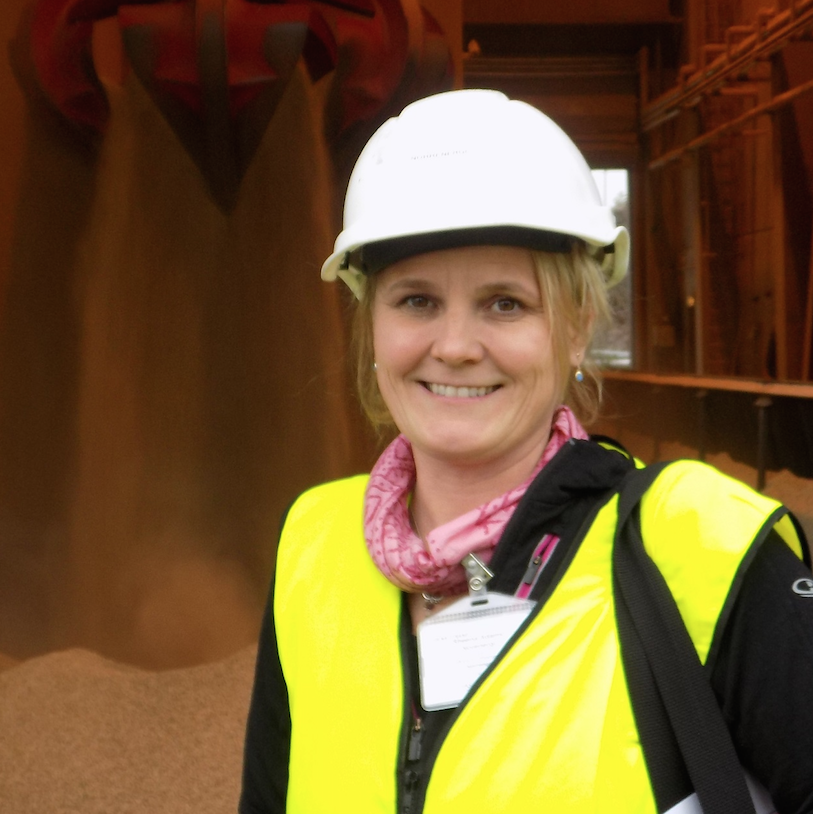
Making alternative energy connections for the Western Arctic at the Nordic Bioeconomy Trade Mission 2016
By: Sheena Adams
Alternative and renewable energy for the North is one of POLAR’s current research priorities. POLAR works with northern communities, governments, academics, and industry to reduce dependency on high-cost imported energy, explore feasibility of local energy sources and mobilize application of northern clean technologies, including biomass energy. Several communities in the Western Arctic are developing and using biomass facilities.
Northern Europe is a world leader the use of biomass for energy. For decades the Nordic countries have been developing and using biomass for heat and power both in cities and small communities. Sweden and Finland are well known for their sophisticated research and innovation in the field, their unique entrepreneurship models, and their advanced supply chains. Establishing connections with Nordic biomass operators and organizations would allow the growing biomass industry in the Canadian North to benefit from Nordic experience. For this reason Polar Knowledge Canada supported the participation of Sheena Adams, of Arctic Energy Alliance in the Nordic Bioeconomy Trade Mission 2016. The Mission enabled Canadians involved in the industry to establish contacts within the advanced bioeconomies of Sweden and Finland. The following is Ms. Adams’ account of her experience as part of the Canadian delegate team.
I am the Regional Energy Project Coordinator for Arctic Energy Alliance, a non- profit organization with a mission to promote the adoption of efficient, renewable, and carbon neutral energy practices by all communities in the Northwest Territories (NWT). I travel across the Western Arctic promoting energy efficiency and conservation, and coordinating renewable energy projects. I connect with youth, elders, home owners, non-profits, community government and businesses to educate, communicate, and address their energy concerns.
With the financial support of Polar Knowledge Canada I attended the Nordic Bioeconomy Trade Mission 2016, held in Sweden and Finland from May 23-29, and organized by the Biomass North Development Centre. The mission included a major bioenergy conference and trade show, bioeconomy seminars, and bioenergy facility tours in southern Sweden and Finland. The Canadian delegate team was made up of government, industry, and academic participants from across the country.
In Sweden we attended the International Wood Biorefining conference, three full days of conferences and seminars on the bioeconomy. There I learnt about new and emerging technologies such as compostable pellet bags, chip drying equipment, and biofuels, and I had the opportunity to see the latest bioenergy equipment and meet with representatives of companies whose products may be suitable for the NWT. We spent two days touring one of Stockholm’s many district heating systems, as well as biomass demonstration projects including farms and businesses. The highlight of our visit to Sweden was the Canada Bioeconomy Seminar hosted by the Canadian Embassy, an informative afternoon featuring presentations on bioeconomy initiatives across Canada. It was especially interesting to learn about the Ontario Government’s push to increase uptake of bioenergy through regulations and tax incentives.
My own presentation offered an overview of biomass energy initiatives in the NWT, including bulk storage and delivery by truck in Inuvik, and NWT-wide woodstove and pellet stove rebates and installation programs. The NWT is a Canadian leader in biomass, and our industry was created by local private investment with support from the Government of the Northwest Territories and the NWT Biomass Energy Association. The conference was a fabulous venue to showcase to our circumpolar neighbours our strength in biomass and the opportunities for collaboration.
A networking session allowed for more learning, sharing, and relationship-building between Canada and the Nordic region. I made excellent contacts including Martin Karlsson, CEO of Ulma AB of Sweden, which designs and manufactures biomass burners, and Lauri Sikanen of the Finnish Forest Research Institute.
After a successful week in Sweden the delegate team flew to Helsinki for two days of tours and seminars coordinated by the Embassy of Canada to Finland. This was an excellent opportunity to share information between our two countries and learn from each other’s experiences. Seminars and tours were given by key Finnish bioenergy and biorefining experts including Matti Kymenvaara of Spinverse, a company that arranges funding and commercialisation of emerging technologies, and Tage Fredriksson of the Bioenergy Association of Finland.I learnt about biomass system sizing and which systems are succeeding in an Arctic region similar to the one I serve. The Finnish tours included visits to biomass heating systems at an organic beef farm and a retail bedding plant greenhouse, and a trip to a privately-managed woodlot that provides raw logs to a local bioenergy production plant. I also was able to observe production at two local bioenergy plants which use woodchips for energy and heat production. This was very inspiring to me, as there is potential to produce and use woodchips in the Western Arctic. I was very impressed with how Finland manages its forests and uses local resources to produce heat and electricity. I hope to see these technologies emerge in northern Canada.
The mission has provided an excellent start to building a bioeconomy relationship between Canada, Sweden, and Finland; and it has allowed me to develop relationships that will enable me to help bring proven technologies from these countries to the NWT and make a positive difference in biomass heat and electricity generation. What I saw in Sweden has inspired me to encourage more district heating in my region. I also see the potential in wood chip production, which would reduce the transportation of fuel and create local jobs in the communities.
The in-house biomass expertise in the NWT will continue to grow as I share findings and contacts with staff at Arctic Energy Alliance, the NWT Biomass Energy Association, regional tradeshows, and the territorial government. Nordic experts will also help build capacity in my region: my new contacts from Sweden and Finland are already planning trips to the NWT and seeking locations for demonstration projects. The NWT can help these countries develop and test their products in our much colder climate, and there is plenty of opportunity for trade of products and knowledge among the three countries.
My three top professional goals are to help reduce the cost of living in the Arctic, build energy security and continue to help mitigate climate change. This trip has inspired me and expanded my reach in a way that will help me to achieve those goals. I will take this experience and turn it into opportunity, by helping create local employment, increasing capacity, introducing proven technologies, and supporting the growth of biomass in the NWT. I sincerely thank Polar Knowledge for sponsoring me in this incredible opportunity, and for helping to strengthen the bioeconomy industry in the Western Canadian Arctic.