
Federal bridges seeing more female operators
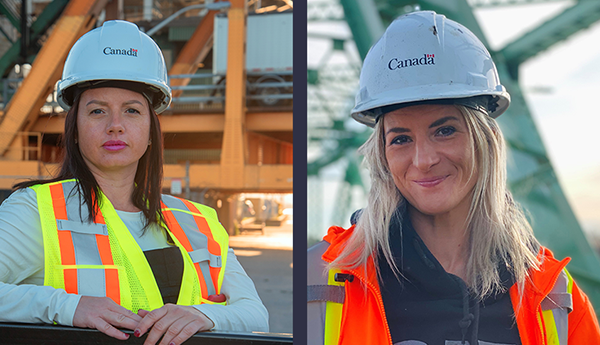
“Manning” the control rooms of 2 federal lift bridges in Ontario are new female bridge operators Janet Bailey and Kathryn Tasse.
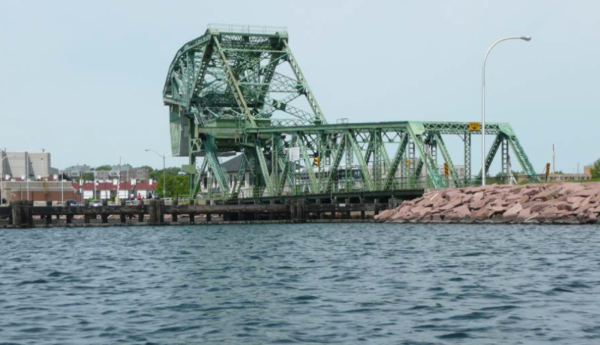
They are employees of Public Services and Procurement Canada (PSPC), doing a unique, complex and critical job requiring extensive training. These bridges are enormous pieces of infrastructure that lift regularly to let both recreational and commercial vessels pass while serving motorists, cyclists and pedestrians.
Janet Bailey brings her experience to bear on bridge operations

With Bailey hailing from the east coast and a family involved with ships, it’s fitting that she’s the first female bridge operator at the Burlington Canal Lift Bridge. “My grandfather worked at the shipyards. As a kid, I spent my summers in Dartmouth and visited him at work. I also went to sailing school, and I still enjoy recreational water activities.”
Though her interest in navigation is helpful, it was largely Bailey’s professional background that prepared her for her new role at the lift bridge. “I worked in procurement positions with local industry, where I often interacted with the port authority, the harbour master and lake freighters. So I’m very familiar with the shipping environment, marine terminology and general navigation practices.”
Building on that foundation, Bailey is in her second year of training as a bridge operator assistant, working alongside experienced bridge staff to become a bridge operator:
“Some people think there are just “Up” and “Down” buttons. But there are a range of controls, including one for every gate along the structure. There are different gears for the lift mechanism, and sirens and horns. Everything has to be done in sequence. That’s on top of using the marine radio to communicate with ships.”

Behind the scenes, there are additional duties to master, such as tracking vessels and creating reports. “Everything that happens here is recorded,” notes Bailey. Outside of the control room, she has received safety training and is participating in bridge maintenance activities while studying emergency procedures in the event of an incident. Bailey credits her training, colleagues and strict operator protocols for her confidence in a position with so much responsibility, operating a bridge that allows for the passage of about 6,500 vessels annually. “I know that, if you follow all the steps, there’s little room for error.”
She’s passionate about her new career, particularly the variety in her activities and her bird’s-eye views from the bridge, where she has actually had some close encounters with a resident falcon family. Bailey hopes other women will follow in her footsteps: “I’d definitely like to see more of us get into industrial disciplines.”
Kathryn Tasse is thrilled to operate the bridge of her childhood
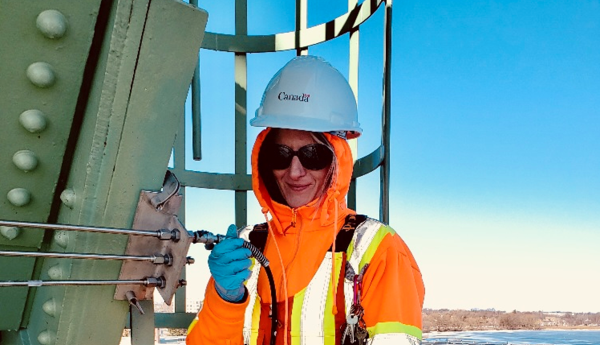
“When I heard about the job opening for a bridge operator, I thought it would be awesome to work on a bridge I’ve been crossing since I was a kid,” says Tasse, who’s the first female operator at the LaSalle Causeway bridge. Fortunately, she had some valuable experience under her belt. “I had first aid and working at heights training, and I’ve worked in auto shops, construction and management positions. I also hold a security guard licence, so I already had some insight into keeping a proper logbook and conducting inspections of a premises, which we do here.”
Even with her qualifications, Tasse participated in many training exercises. “I did a lot of shadowing, role-playing and hands-on simulations. People don’t realize how intense it is. I trained for 2 months to do half a bridge lift under supervision.”
Now able to operate the bridge alone, Tasse relies on what she’s been taught and focuses on her responsibility to ships while ensuring the safety of pedestrians and vehicles during a bridge lift, which is key, with 23,000 cars crossing the bridge daily.
Ultimately, Tasse feels that her past was a rehearsal for the role of her dreams:
“I feel like I’m finally in my element. The jobs I’ve had and courses I’ve taken are connected here, and the position suits me. I’m the kind of girl who took home economics courses in school but wanted to be in the shop class. So I really enjoy what I’m doing. Watching that bridge lift still wows me every time.”
In terms of working in a male-dominated field, Tasse asserts that she has a lot of support and hopes to see more women enter the field. “No one ever asked me if I wanted to be a bridge operator, but it’s an option. People shouldn’t be daunted.”
Visit Our stories for other interesting articles about PSPC. You can also learn more about the Burlington Canal Lift Bridge in this video featuring one of our operators.