
A touch of silver for an agriculture research hub
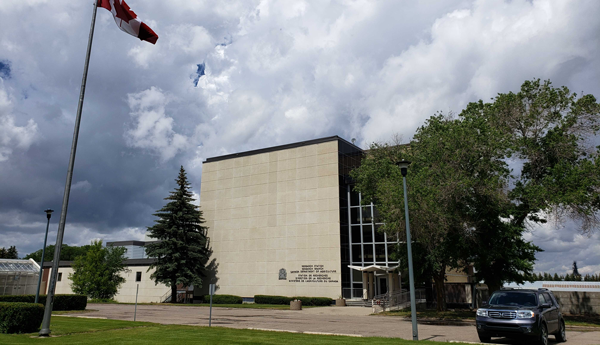
The Swift Current Research and Development Centre, established in the 1920s, is home to important research and development into crop varieties and farming techniques suited for the prairies. It’s also a designated heritage facility with unique historical and architectural features. Now, a modernization project has made this Saskatchewan science hub even more special, through the addition of cutting-edge amenities and a silver Leadership in Energy and Environmental Design (LEED) certification.
Agriculture and Agri-Food Canada (AAFC) operates the centre and ‘sowed the seeds’ of the project. Public Services and Procurement Canada (PSPC) helped them grow by assisting with the renovation and certification. Canadians and the environment are reaping the benefits.
The move to modernize
“We had a dated centre with a large office wing and a wing with enclosed laboratories,” explains Serena Ward, the project manager for AAFC. “The goals for this project were to improve research efficiencies and address health and safety related deficiencies in the old laboratories while minimizing the centre’s environmental impacts.”
Bringing the ambitious plans for the facility to fruition required a range of experts, and a variety of PSPC staff in various disciplines, to work alongside their project partners at AAFC.
The project team had to construct a brand new lab wing attached to the existing structure. The new wing consists of 40 different labs, with an open flow and natural light. The old laboratory area was turned into offices, and the former office area was demolished.
“Another project highlight,” says PSPC project manager Kenton Thiessen, “was the preparation of a space to house individual plant growth chambers, each with its own temperature, lighting and humidity control, to complement the more traditional growing areas in the greenhouses.”
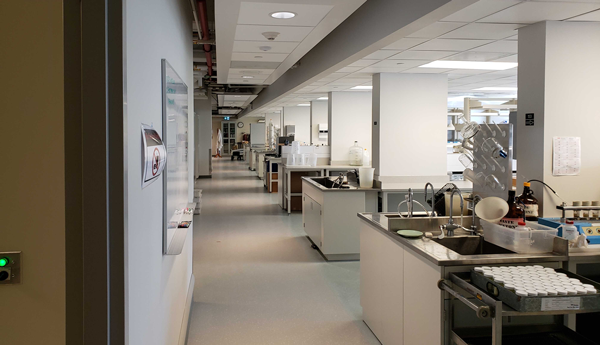
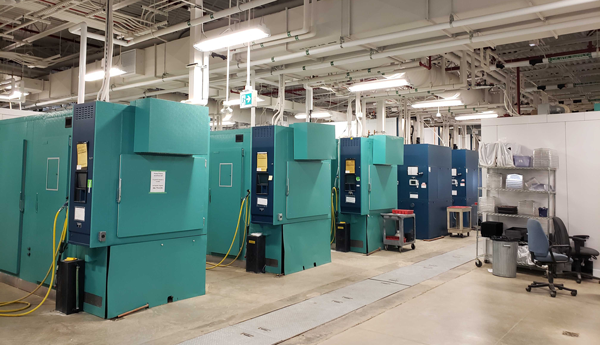
Throughout the project, the heritage aspects of the facility were taken into account and the relevant guidelines followed. “For example, there was wood panelling that we reused,” says Thiessen. “Even the type of paint chosen for the entrance had to meet heritage requirements. Ultimately, we were able to strike an effective balance between preservation and renovation.”
The path to certification
The work resulted in an updated heritage facility that meets the centre’s evolving research objectives. But that wasn’t the end of the story. PSPC also played a critical role in delivering the project’s crowning touch: the successful activities leading to the LEED silver designation.
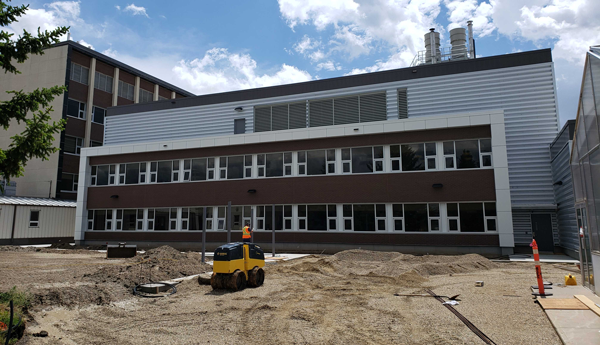
LEED credentials are awarded based on points a facility earns through a variety of green features. At the centre, significant effort went into achieving water and energy efficiencies. “The fixtures we installed and the way water is used in the building now meet strict efficiency criteria,” says Thiessen.
Meanwhile, to conserve energy, the project team focused on improving the insulation of walls and windows and installing better mechanical systems. The project also reduced the centre’s overall footprint, which was a key priority. “The centre has a compact new layout, and that in itself saves energy,” Ward points out. Other LEED points were gained by using regional material, recycled material and material with low levels of embodied carbon.
It wasn’t easy implementing some of these changes in a facility dedicated to crop science. “The plumbing alone is very complex,” says Thiessen, “with pipes running to spaces with highly varied needs, and we had to revamp them to also serve an environmental purpose.”
In addition to carrying out the work, the team had to demonstrate that the LEED targets were met. “There were many documents to submit to the certifying body, the Canada Green Building Council,” Thiessen notes. “We had to track every detail, such as where we sourced concrete and how we’re disposing of waste, and then prove that these measures actually measure up.” Gathering the evidence involved extra steps, including an energy modelling exercise and external review of the ecological upgrades. “It was a long process,” says Ward.
A certificate, a plaque and sustainability success
In March of 2022, the AAFC team learned that the centre had received the LEED silver certification, the first of its kind for an AAFC facility of this nature. A glass plaque hangs in the lobby to celebrate that achievement. Meanwhile, the modelling shows annual energy savings of 35% compared with the centre’s energy use prior to the renovation. “It’s a big accomplishment,” says Thiessen, one well aligned with the Greening Government Strategy.
You can learn more about the Swift Current Research and Development Centre or its heritage designation. For other articles about PSPC people and projects, visit Our stories.