The Liberation of the Netherlands 75: 1945-2020
Nazi Germany invaded and occupied the Netherlands in 1940. The Dutch Royal Family escaped and found sanctuary in Canada.
The First Canadian Army played the leading role in liberating the Netherlands. More than 7,600 Canadians were killed in the fighting and are buried there. These events forged an enduring bond of friendship between Canada and the Netherlands. 2020 marks the 75th anniversary of the liberation campaign and the end of the Second World War.
Alternate format


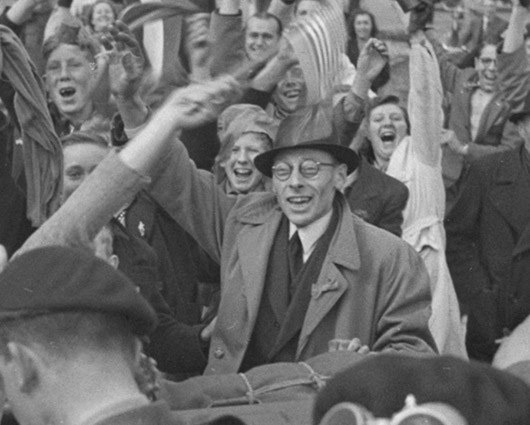
Liberators
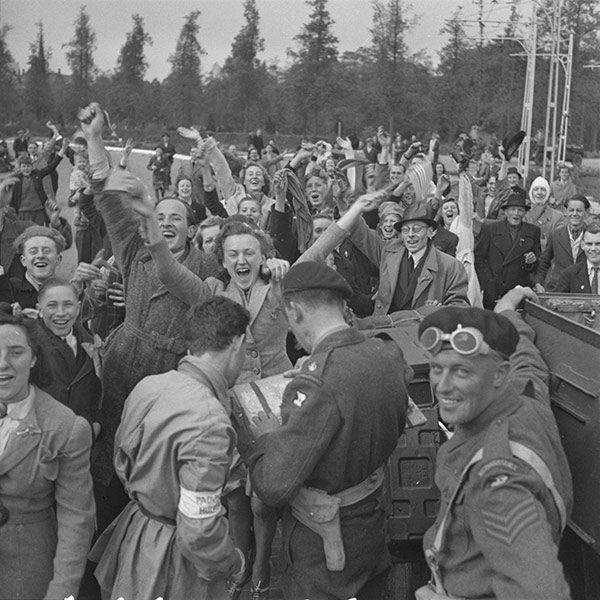
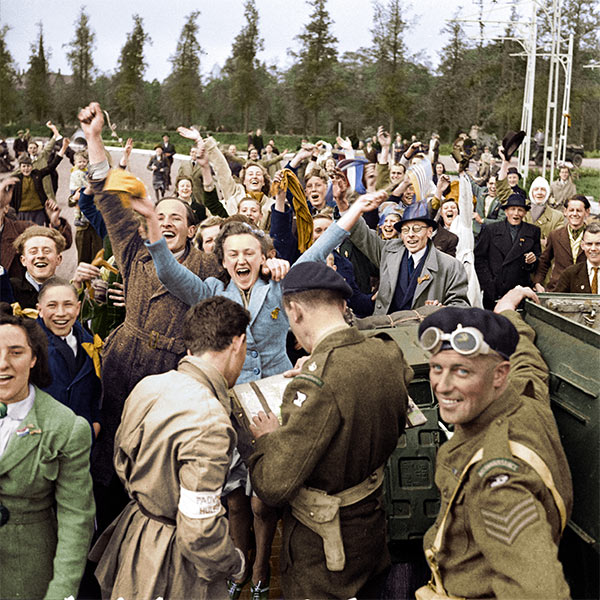
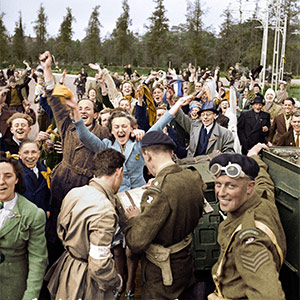
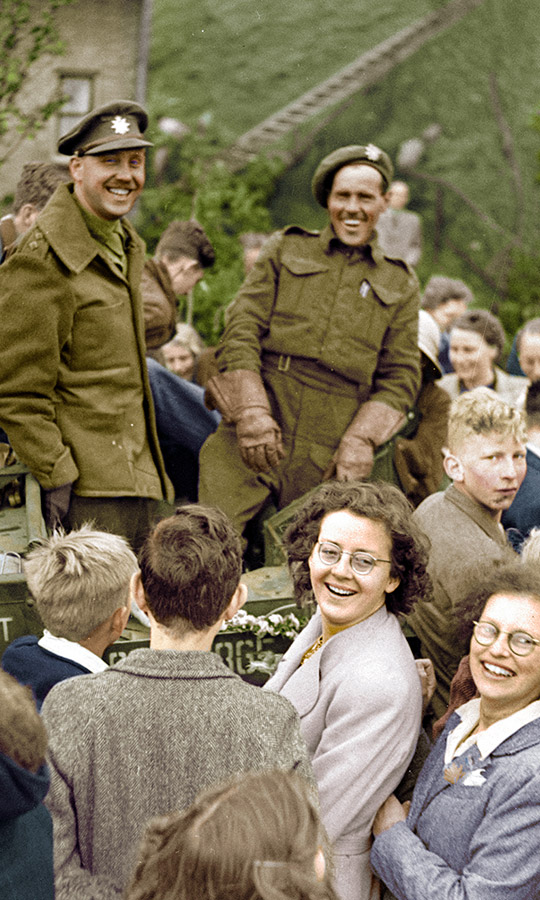
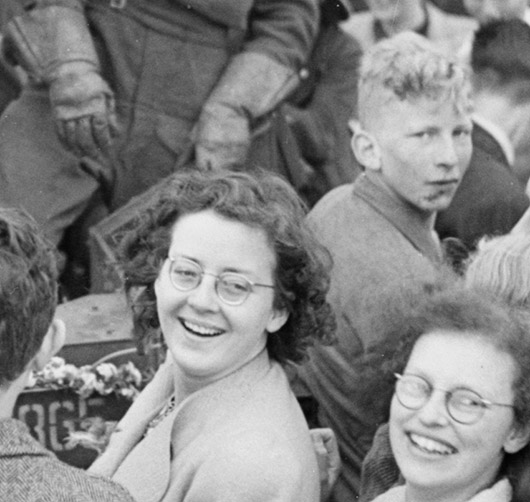
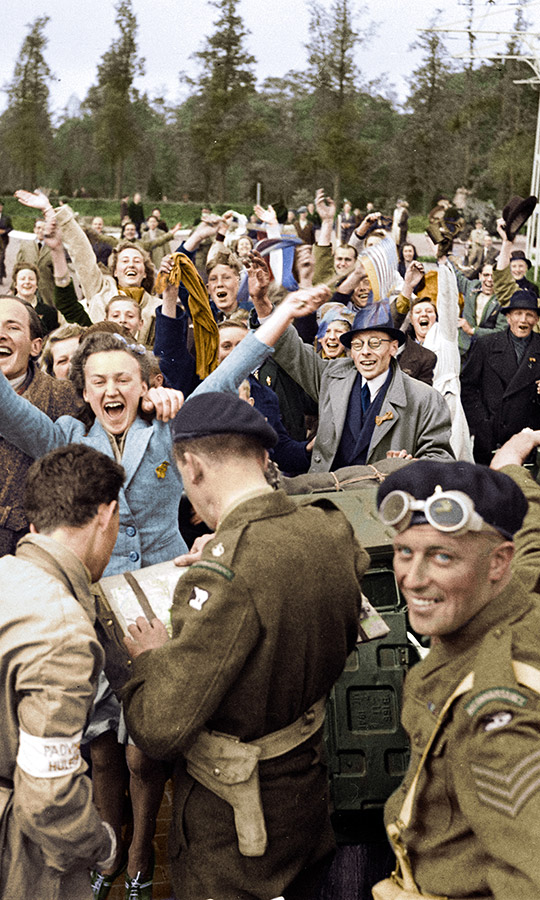
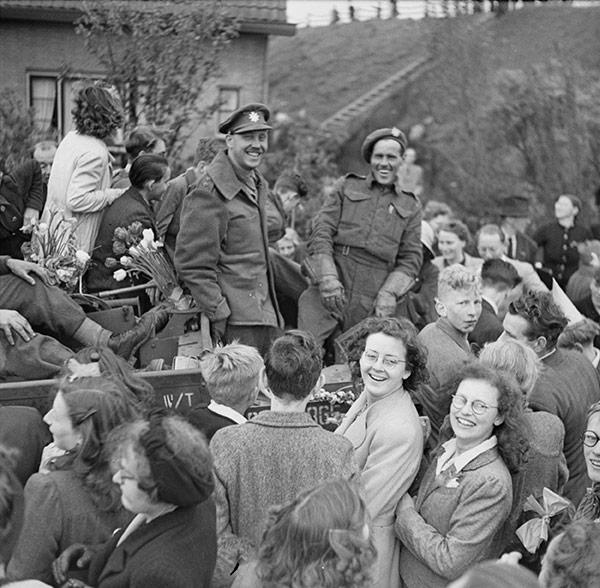
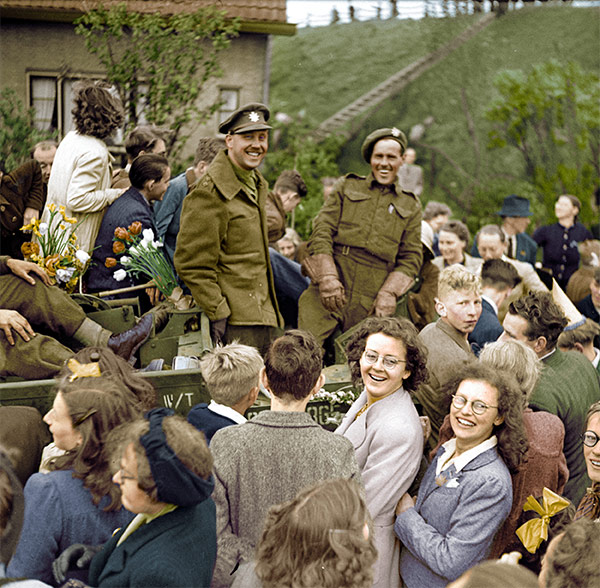
A jubilant Dutch crowd greets soldiers of the West Nova Scotia Regiment on the road to Rotterdam.
LAC/BAC a134390
#Liberation75
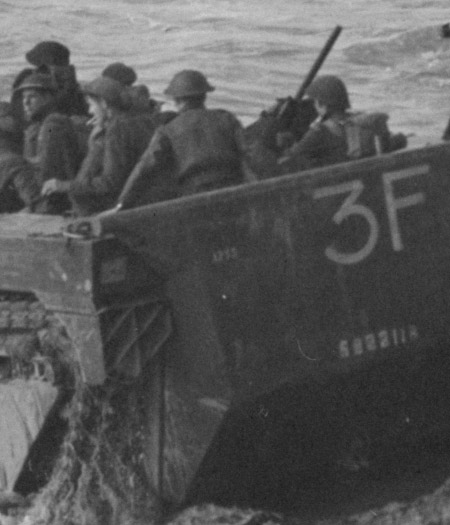
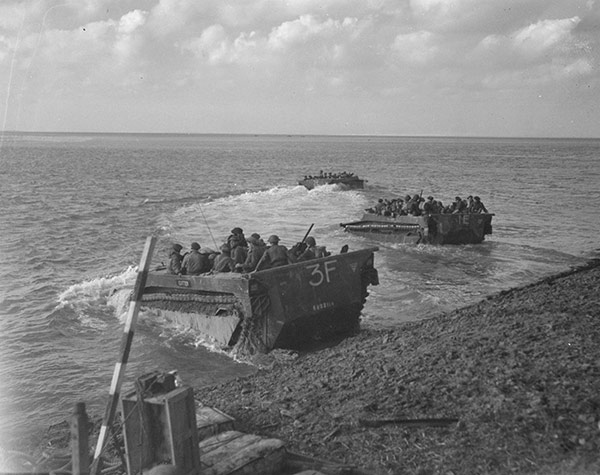
Supplying Liberation
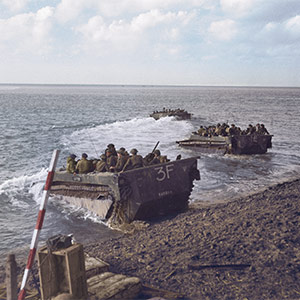
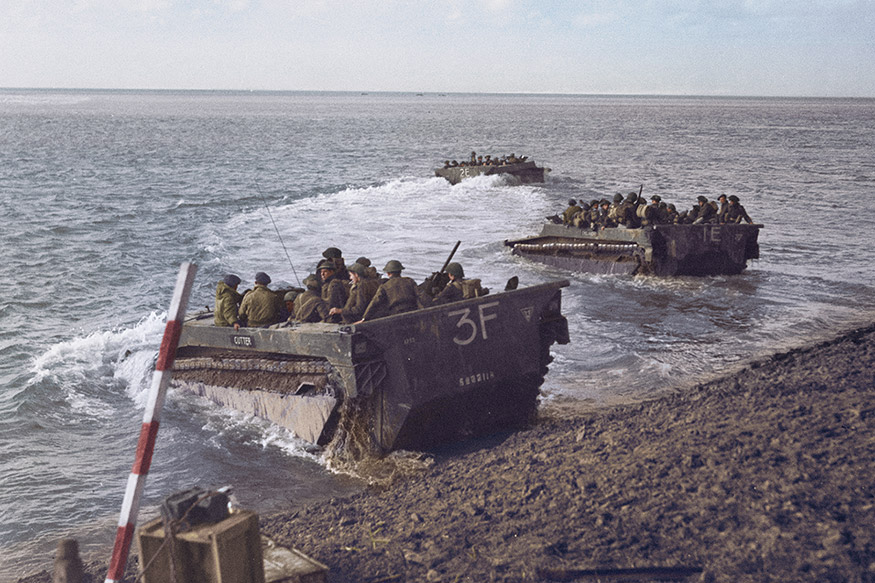
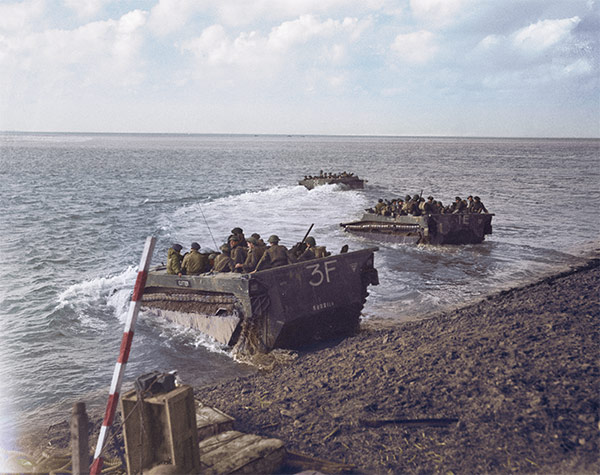
Buffalo amphibious tractors ferry Canadian troops across the Scheldt River. The First Canadian Army had to clear the river estuary of German forces to open a vital Allied supply line through the recently liberated port of Antwerp.
LAC/BAC PA-136754
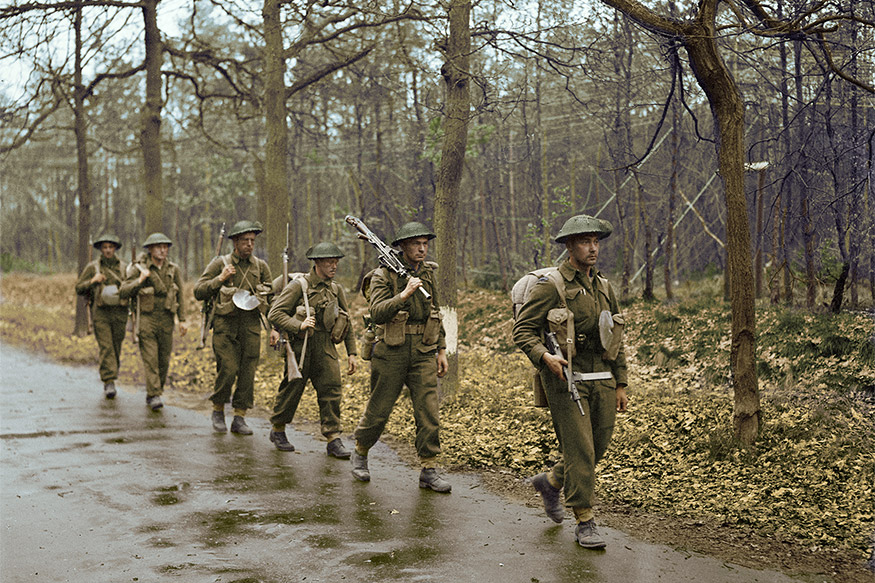
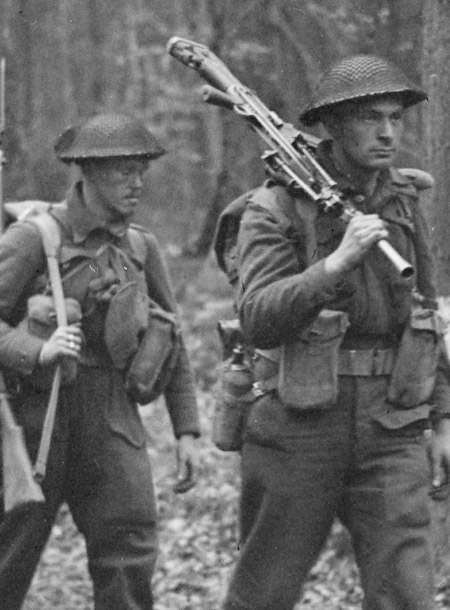
The D-Day Dodgers
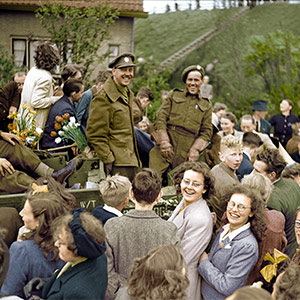
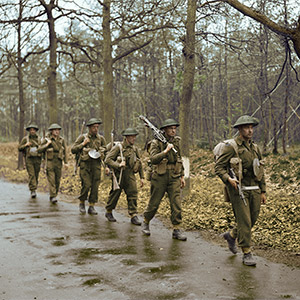
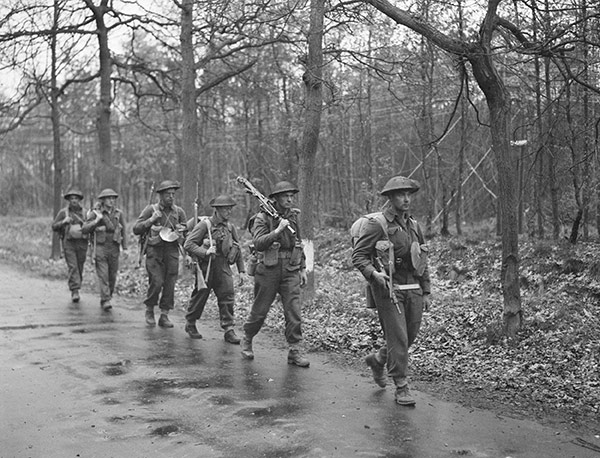
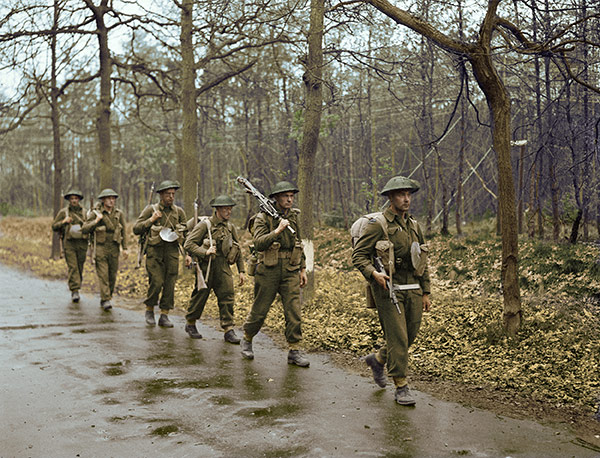
These soldiers of the Perth Regiment (Ontario) were transferred to the Netherlands from the battlefields of Italy in March, 1945. They had missed the Battle of Normandy, but had seen heavy fighting just the same. They adopted “D-Day Dodgers” as an ironic badge of honour.
LAC/BAC a145884
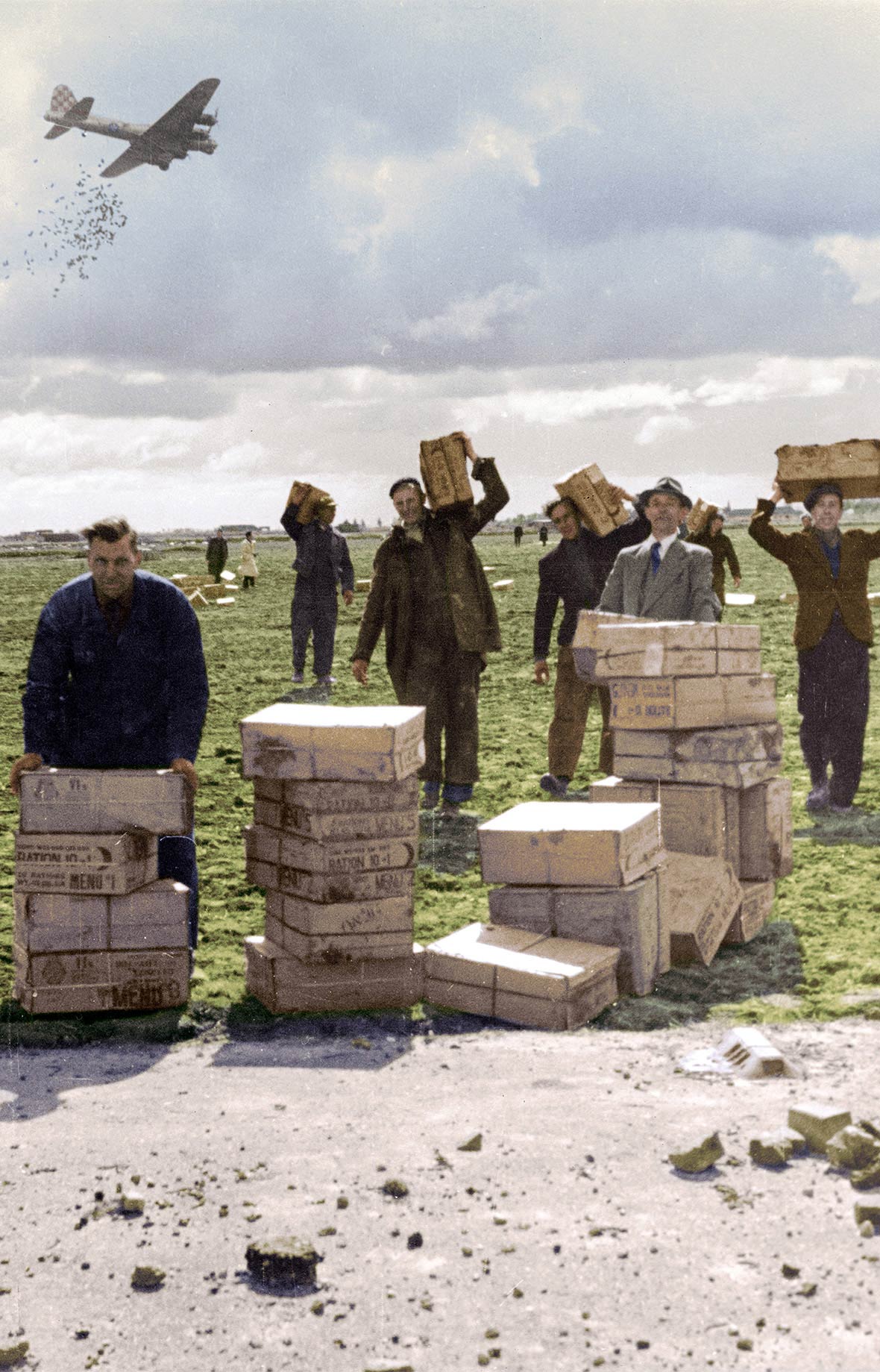
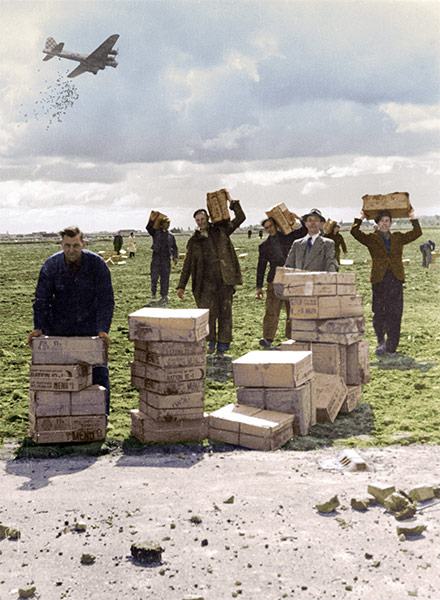
The Hunger Winter
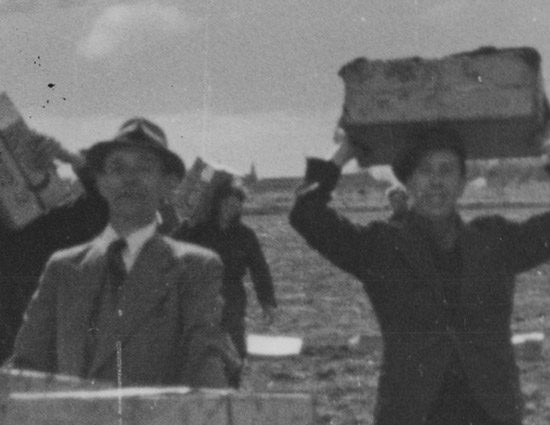
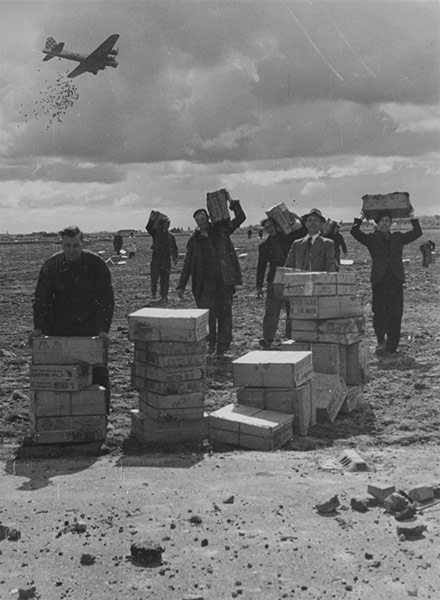
Dutch civilians gather food delivered by Allied aircraft. Brutal Nazi occupation policies caused mass starvation during the winter of 1944-45. Thousands died of hunger despite the airdrops and Allied soldiers on the ground sharing their rations.
Kryn Taconis/LAC/BAC e007913968
Documentary Art
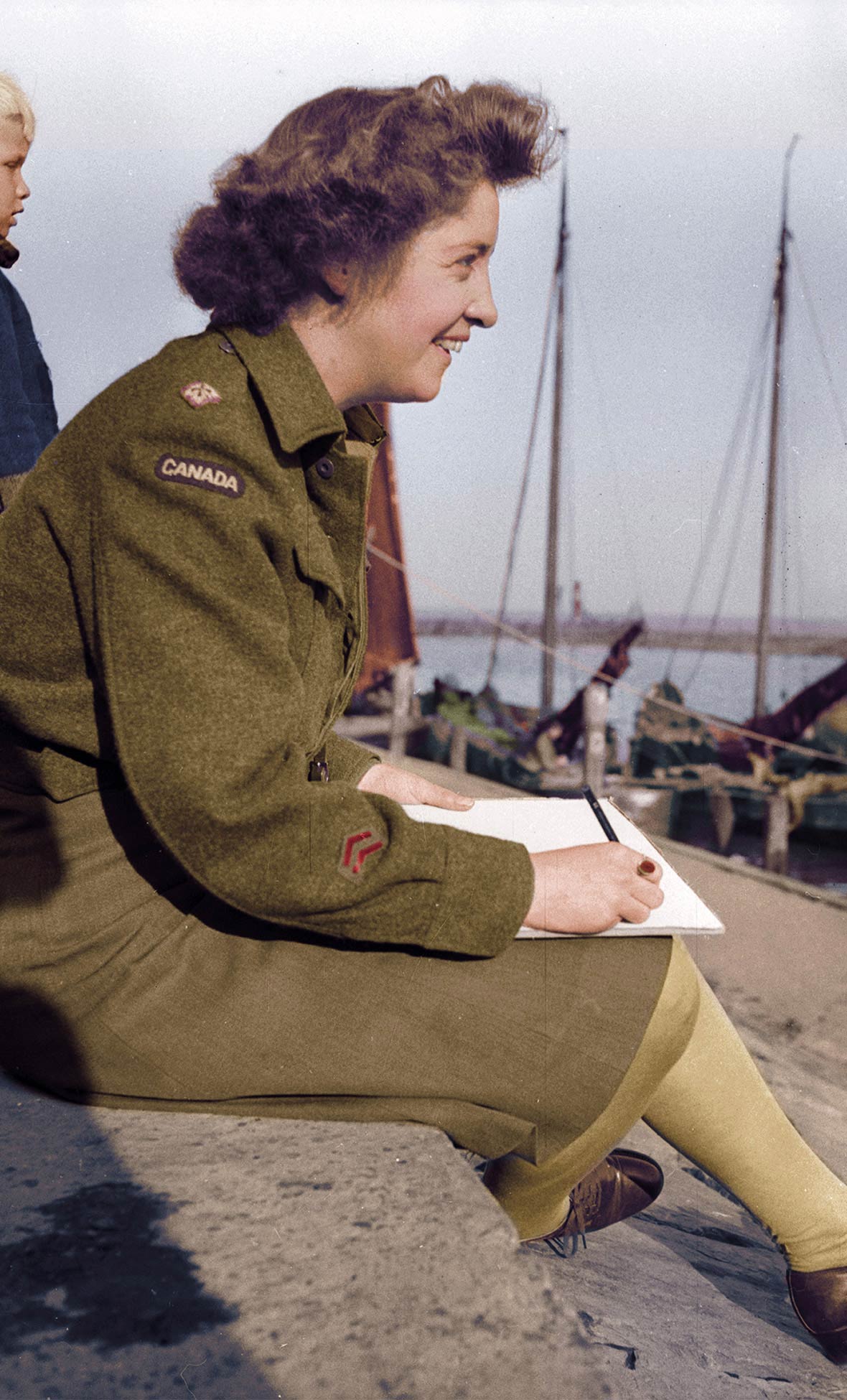
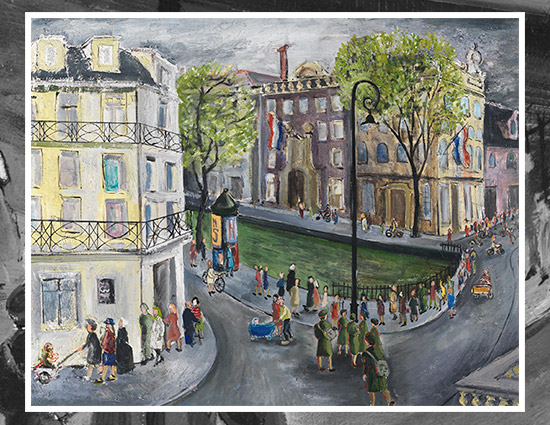
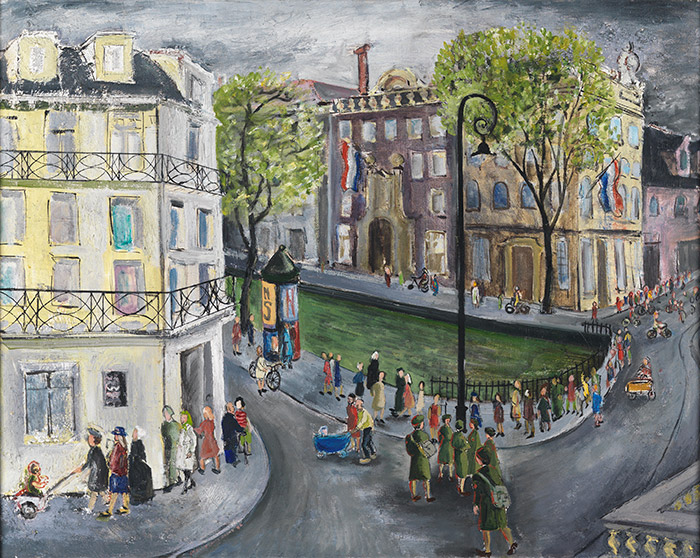
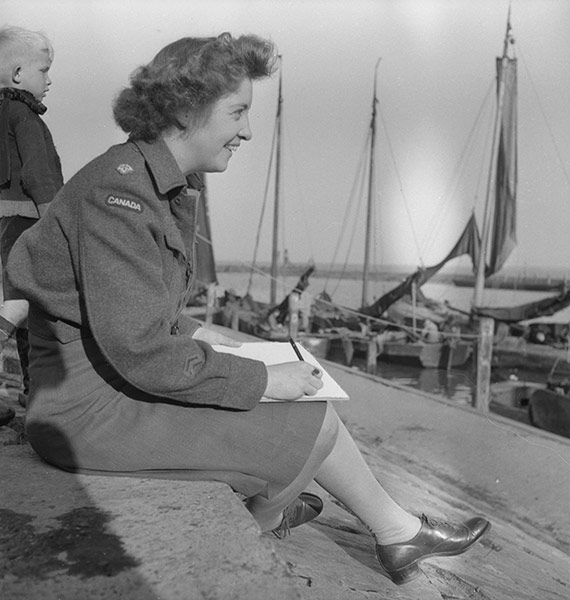
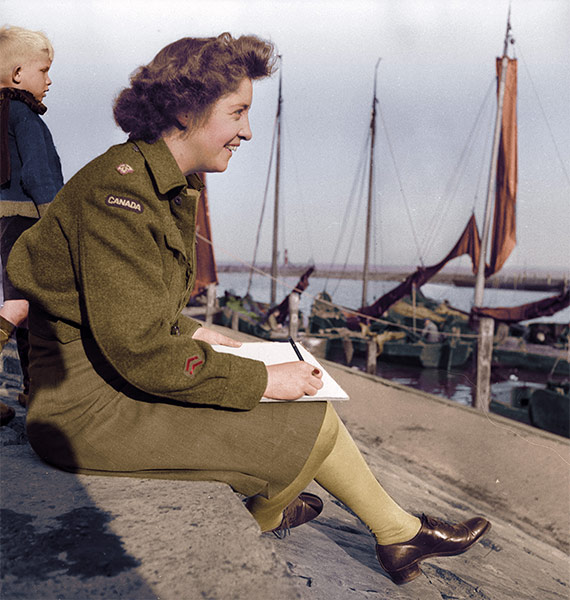
Canadian war artist Lieutenant Molly Lamb Bobak sketches a scene in the Netherlands in 1945. Responsible for recording Canada’s war experience, she also painted this scene of Canadian Women’s Army Corps members (bottom, in green) visiting liberated Amsterdam in 1945.
LAC/BAC a115762
Canadian War Museum 19710261-1653
War Brides
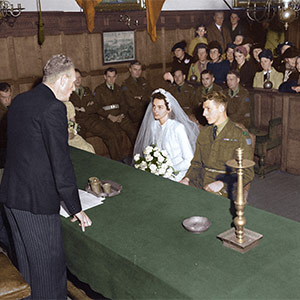
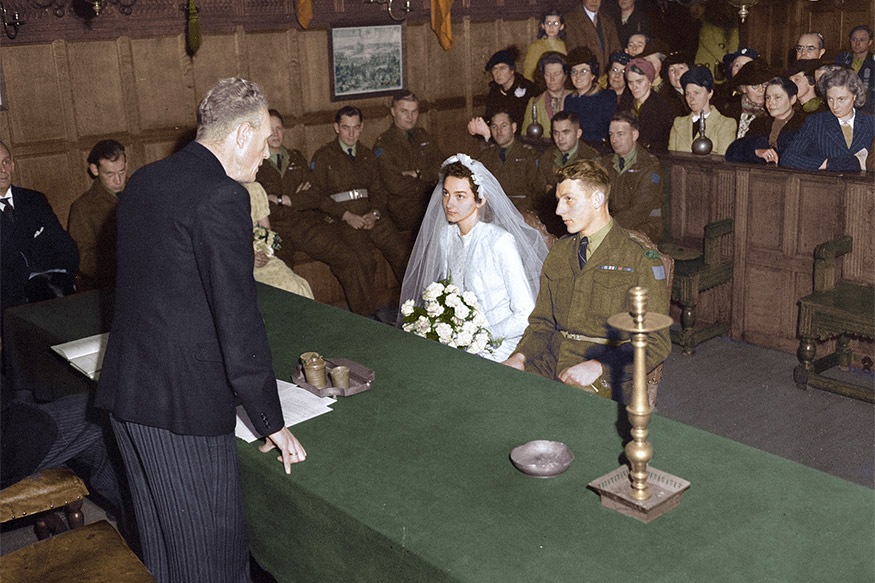
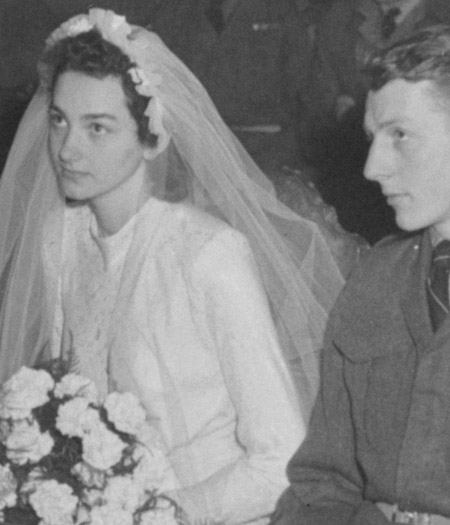
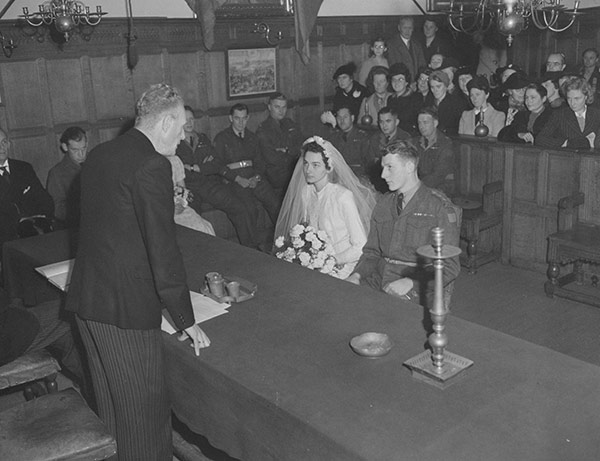
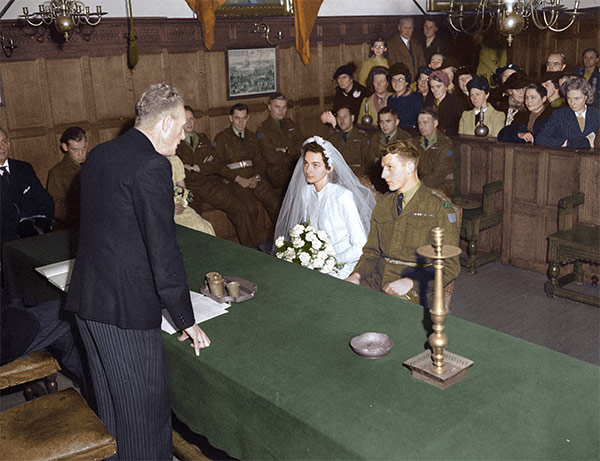
Following liberation, many young Dutch and Canadians found a future in each other. Here we see the wedding of a Canadian Army officer and a Dutch woman in the Netherlands.
LAC/BAC a140421
Not Forgotten
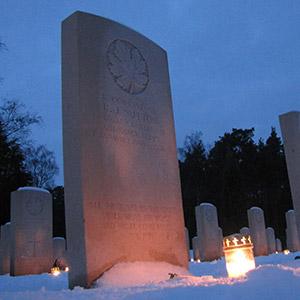
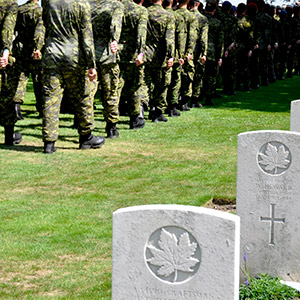
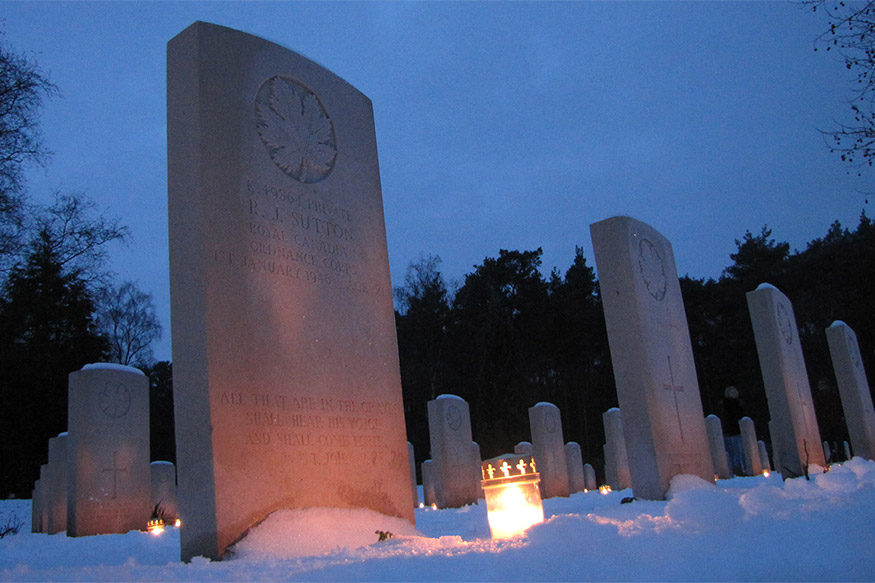
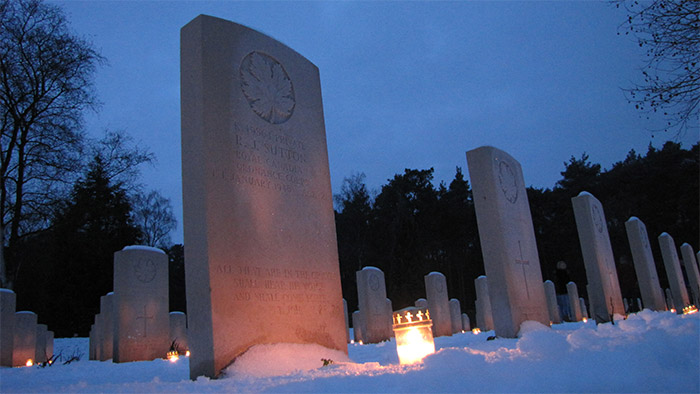
The Commonwealth War Graves Commission maintains Canadian war graves in the Netherlands. This image shows Holten Canadian War Cemetery on Christmas Eve, when people from the nearby town continue a tradition of placing a candle at each grave as an act of commemoration.
Franz van Cappellen
Sanctuary
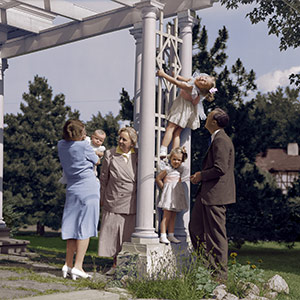
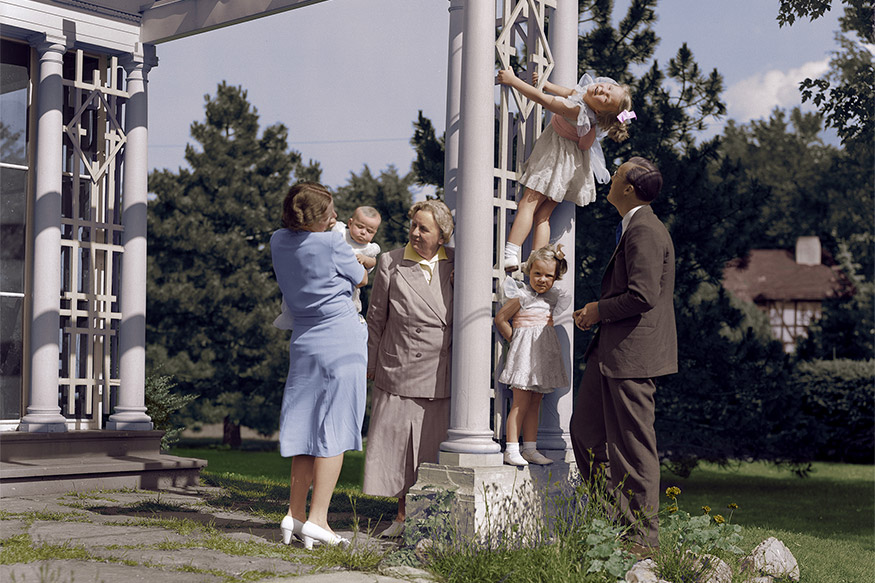
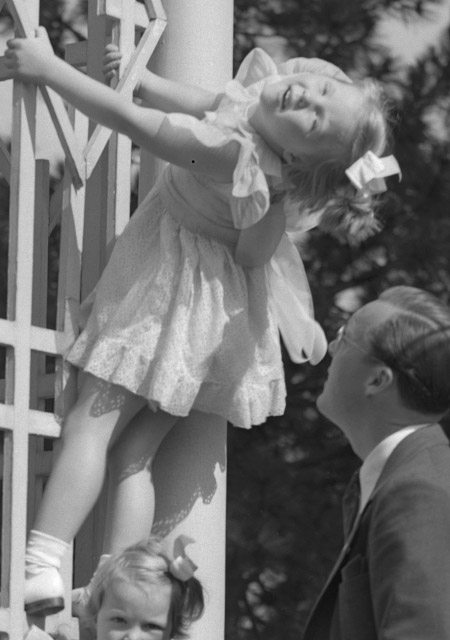
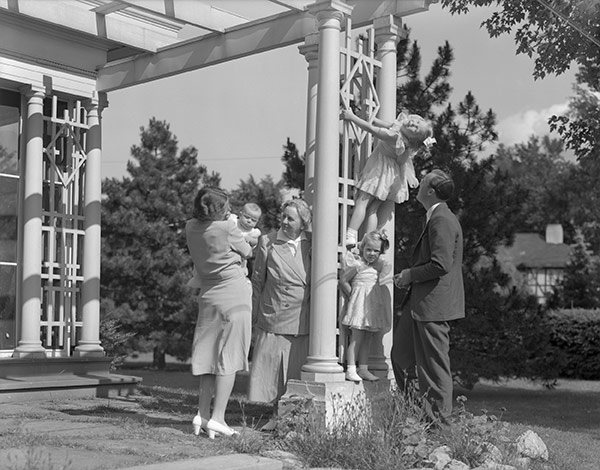
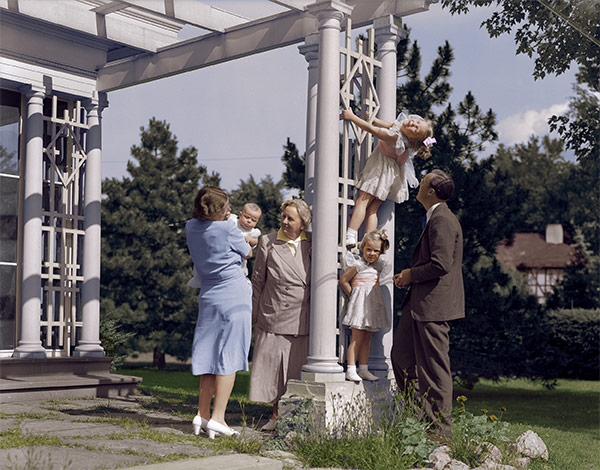
Germany’s 1940 invasion of the Netherlands violated Dutch neutrality. Despite valiant resistance, Dutch defenders were overwhelmed. However, the Dutch Royal Family escaped, and some members found sanctuary in Canada. The baby in this photo is Princess Margriet, who was born in Ottawa in 1943.
Yousef Karsh/LAC/BAC
e011156866
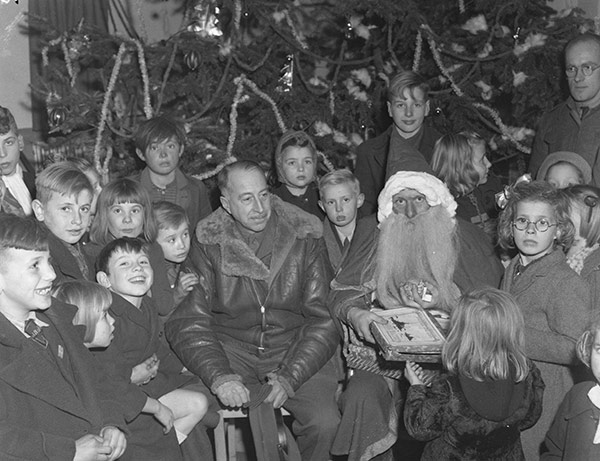
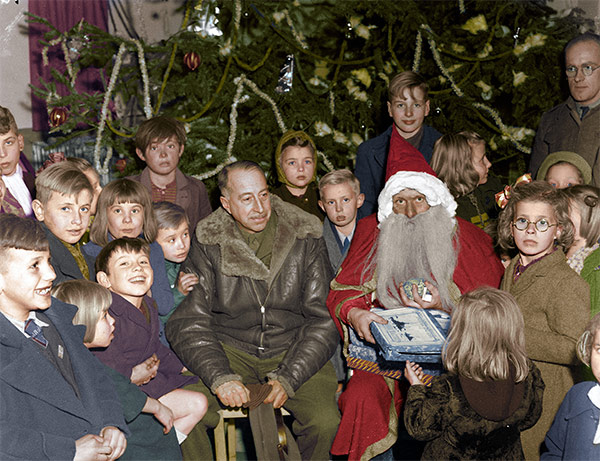
Sinter Klaus
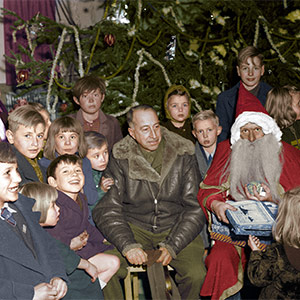
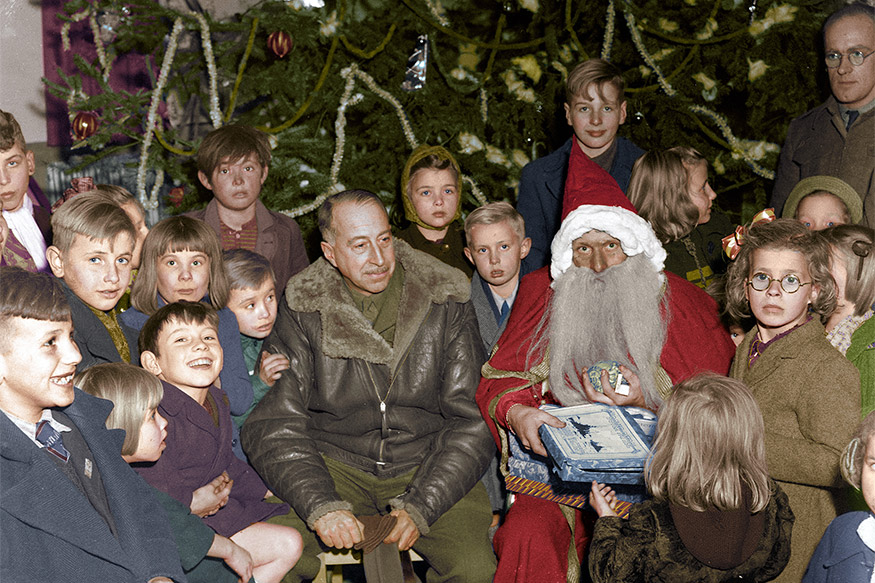
General Harry Crerar, commander of the First Canadian Army, and a special guest host at a Christmas party for Dutch children on Christmas Eve, 1944 at Tilburg, Netherlands.
LAC/BAC a166865
Closure
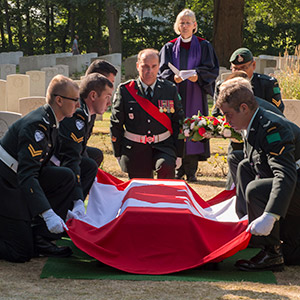
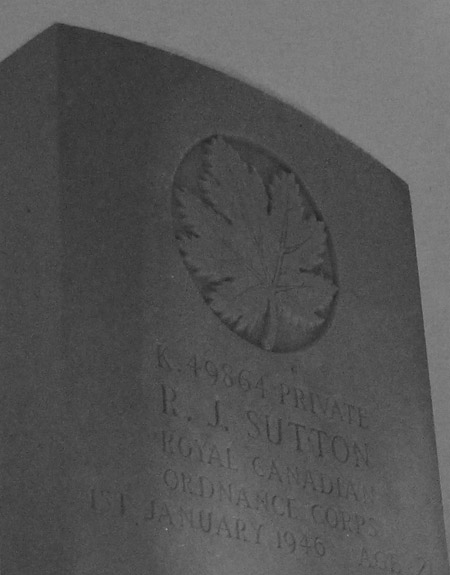
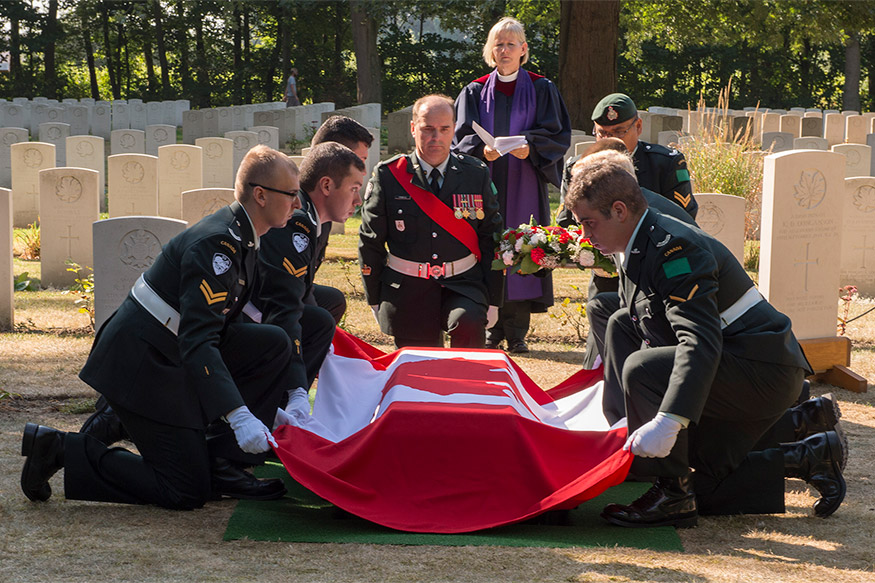
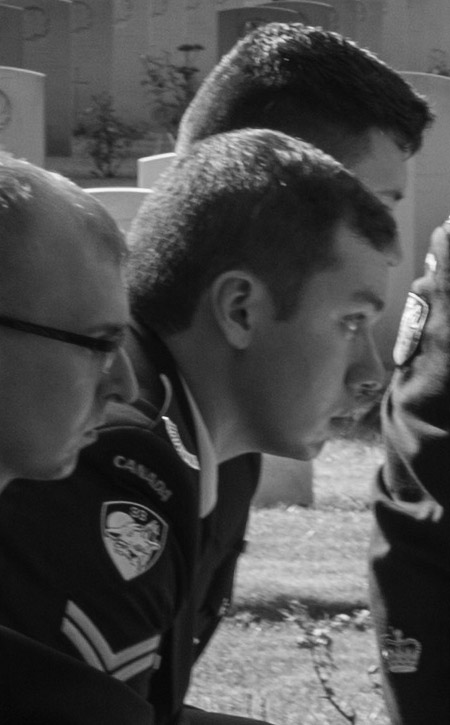
The Canadian Casualty Identification Program works to identify and properly bury the thousands of Canadian military personnel who have no known grave. In 2016, the remains of Private Kenneth Donald Duncanson were interred in Adegem Canadian War Cemetery during a military funeral with members of his family in attendance.
MCpl Pat Blanchard, Canadian Forces Combat Camera, DND
IS03-2016-0032-008

Wounded
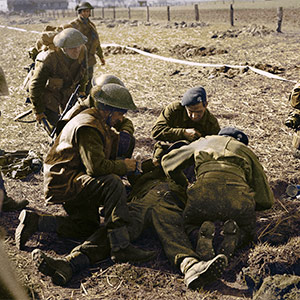
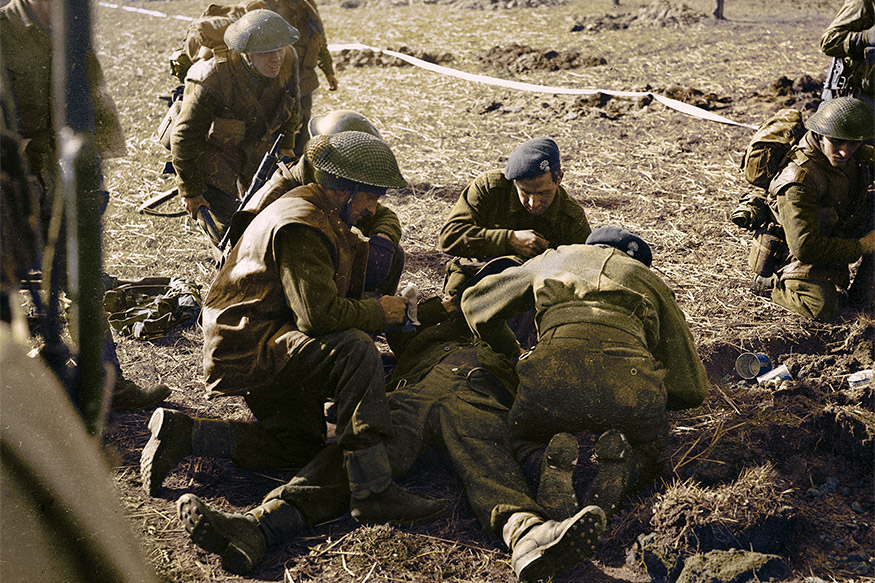
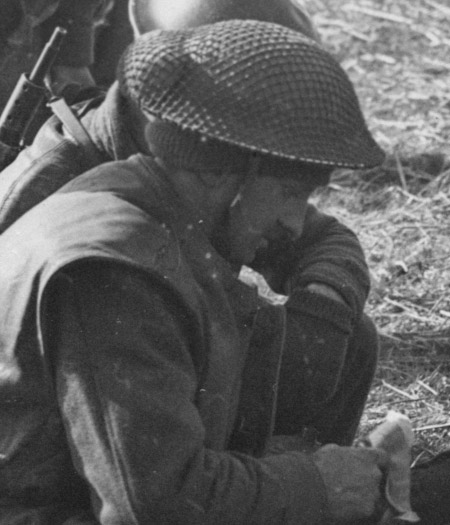
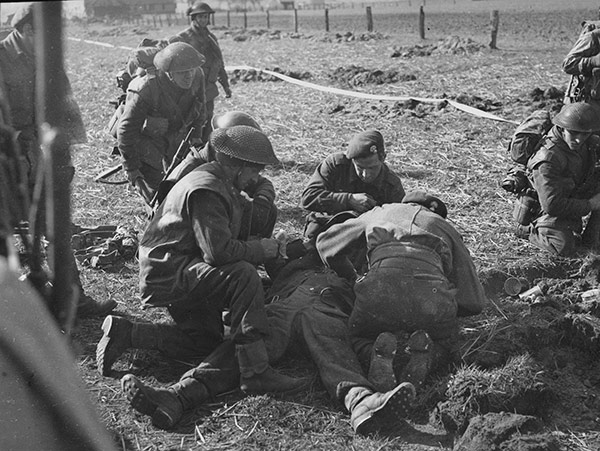
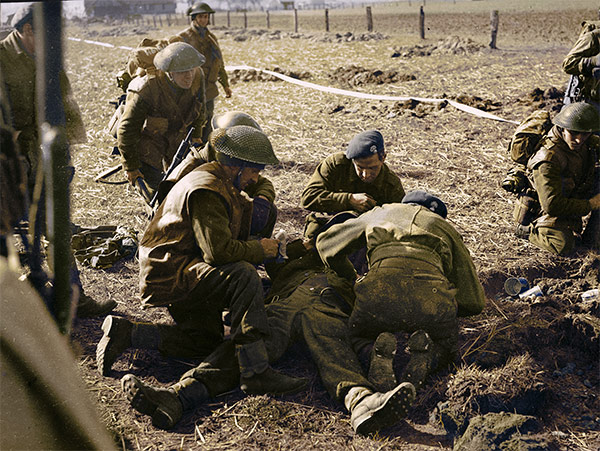
Medics treat a soldier of the South Saskatchewan Regiment who was hit by a sniper’s bullet while crossing a canal. Thousands of Canadians suffered serious injuries to body and spirit during the fighting.
LAC/BAC a167193
Nijmegen March
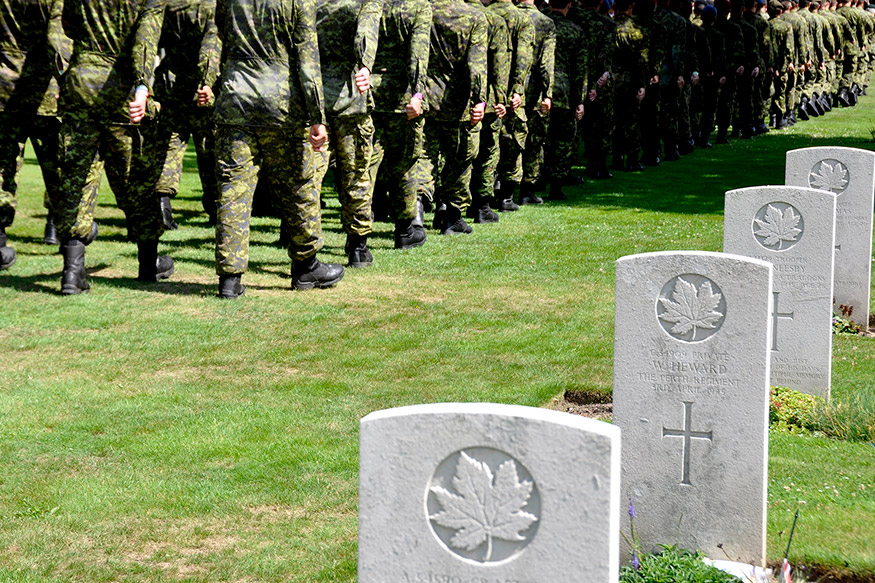
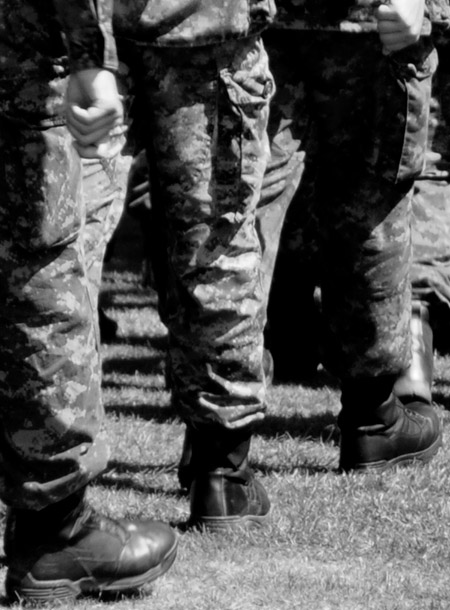
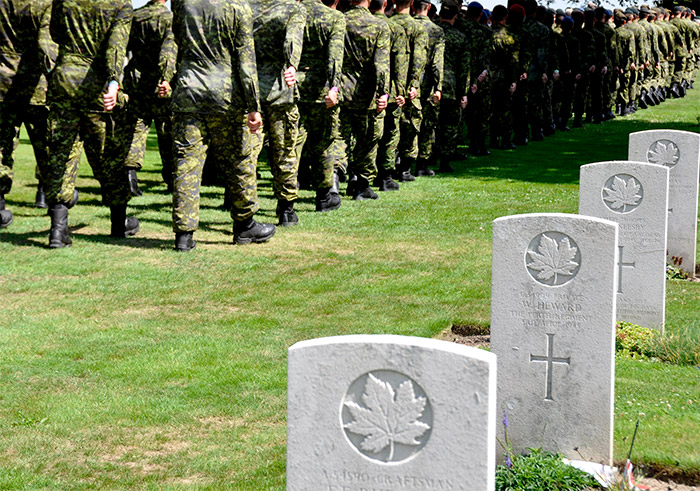
Members of the Canadian Forces are among the over 50,000 participants in this annual international event in the Netherlands. Each year Canadian participants conduct memorial ceremonies at Canadian war cemeteries to commemorate the sacrifices of an earlier generation.
Roberto Maldeno
On the March
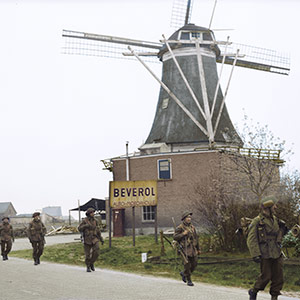
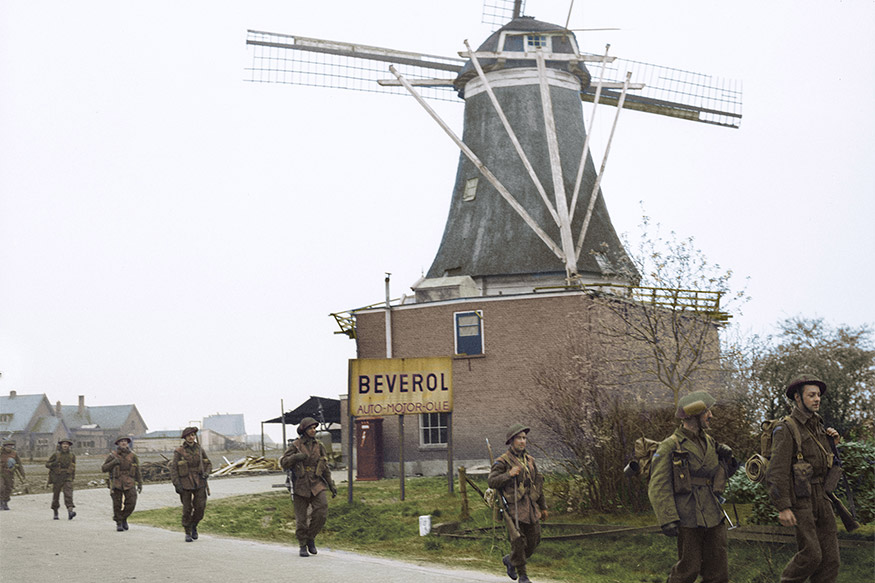
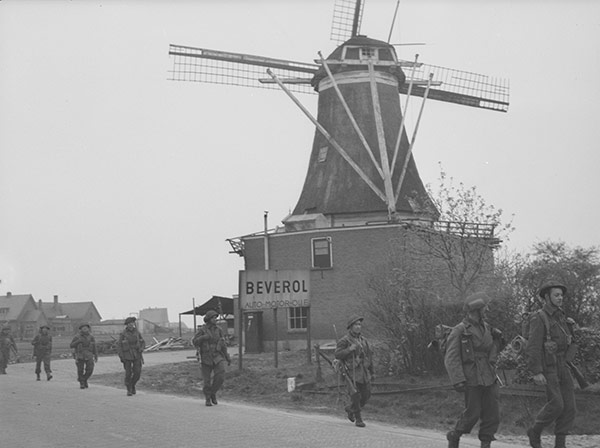
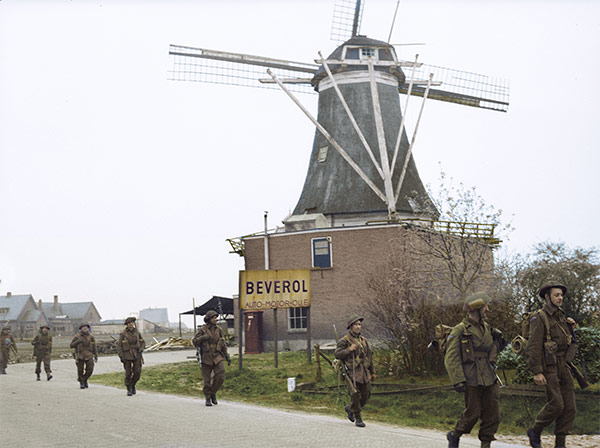
Soldiers of the Régiment de Maisonneuve (Québec) advance past a windmill, an iconic Dutch landmark, in Holten, Netherlands.
LAC/BAC a133174
Far From Home
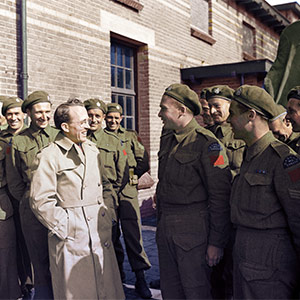
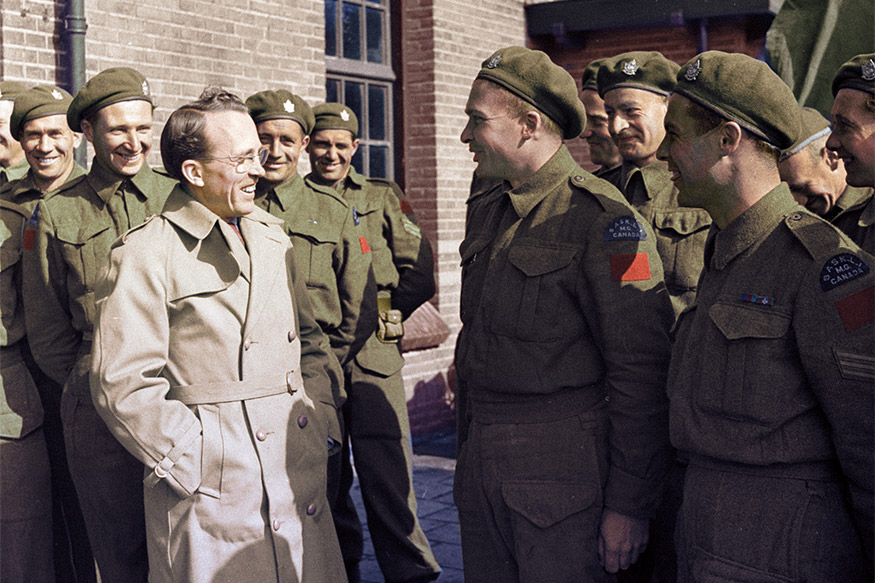
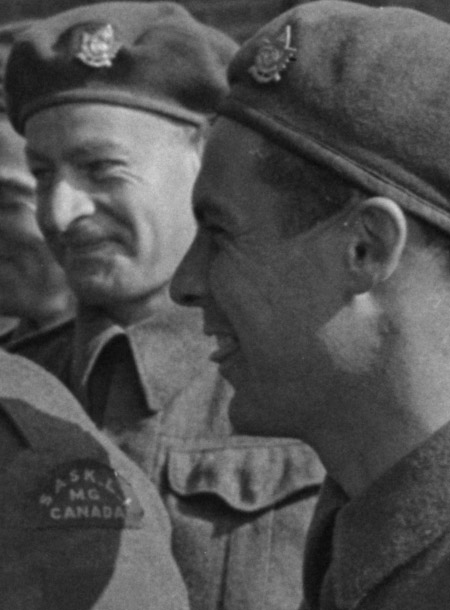
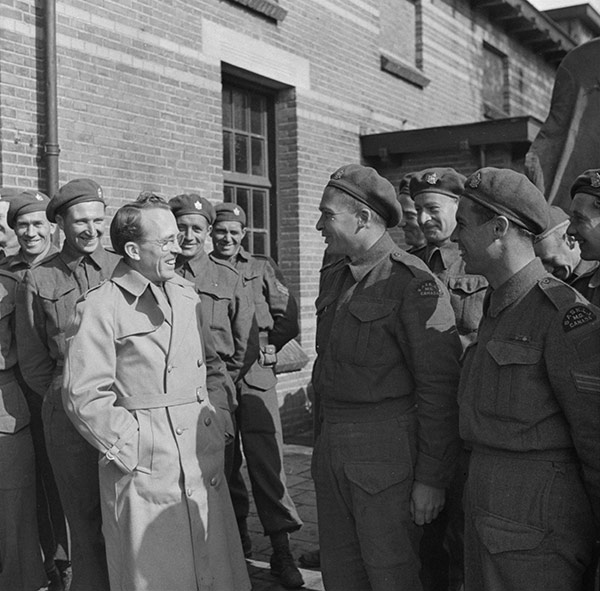
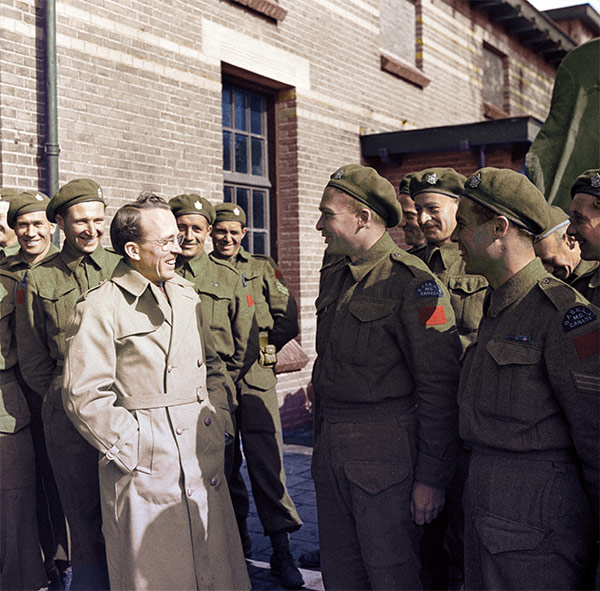
Premier Tommy Douglas visits soldiers of the Saskatoon Light Infantry Regiment (Saskatchewan) in the Netherlands in April 1945. As the war ended, Canadian soldiers turned their thoughts towards home. Some, however, would remain as the welcome guests of the Dutch into 1946.
LAC/BAC a138035
Surrender
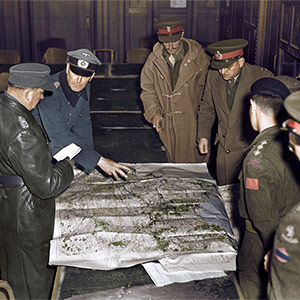
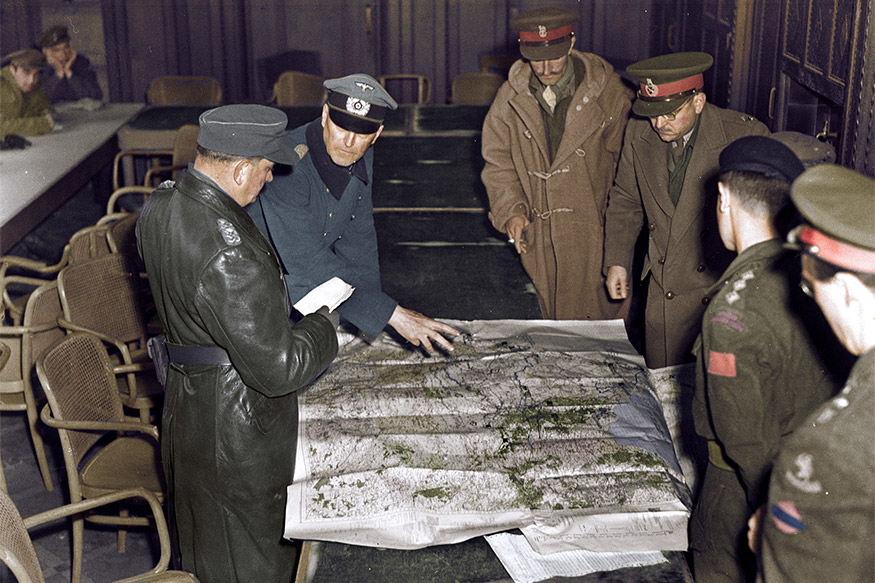
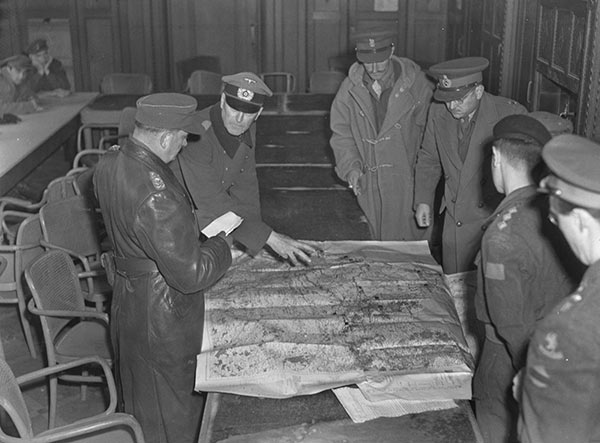
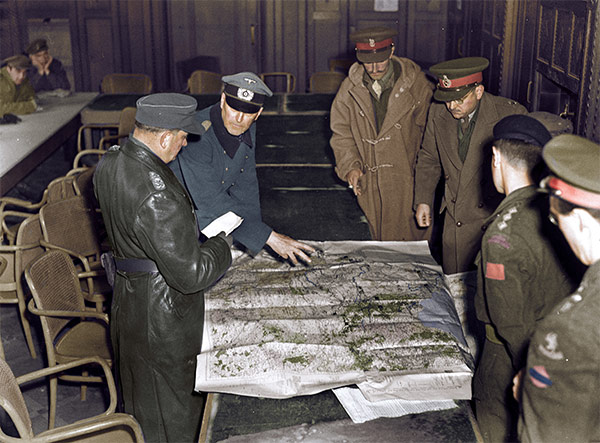
Officers of 1st Canadian Corps Headquarters, with Prince Bernhard (far right foreground) representing the Netherlands, meet their German counterparts to arrange for the surrender of German forces in the Netherlands.
LAC/BAC a133321
Liberation
British scouts from the First Canadian Army collect information from a member of the Dutch Resistance while receiving an enthusiastic welcome from Dutch civilians in Utrecht. The First Canadian Army was a multinational formation under Canadian command.
LAC/BAC a134377
#Liberation75