
Integration of the Canadian Coast Guard
On this page
Administrative Details
Appearance Details
Date:
December 11, 2025
Location:
TBD
Time:
09:15 – 10:15
Witnesses:
Natasha Kim
Associate Deputy Minister of National Defence
Mario Pelletier
Commissioner of the Canadian Coast Guard
Katia Jollez
Director General, Change Management and Oversight, Canadian Coast Guard
Committee Profiles
In this section

Charles Sousa
LPC - Mississauga—Lakeshore, ON
Profile
Political Role: Parliamentary Secretary to the Minister of Public Services and Procurement (2023 – 2025)
Role at the Standing Committee on National Defence (NDDN): Chair (2025 – Present), Member (January – September 2023)
Connection to National Defence: The Toronto Scottish Regiment, part of 4th Canadian Division Primary Reserve Unit is headquartered in the Mississauga—Lakeshore riding.
Key Interests: Based on his early interventions as Chair, Mr. Sousa has demonstrated a desire to adhere to the schedule and agenda; his interests include procurement, culture change, the war in Ukraine, commitments to NATO, and support for Canadian Armed Forces (CAF) members and their families with regards to healthcare.
Recent Interventions at NDDN: In his current role as Chair, Mr. Sousa has not yet participated in exchanges with witnesses. However, he was a member of NDDN earlier in the 44th Parliament. His previous interventions include:
- September 2023: Highlighted the efforts undertaken in Latvia by the CAF and their work to train Ukrainian recruits under Operation UNIFIER.
- September 2023: Asked about the security of the Baltic states and how long Canada could withstand supporting a NATO Article 5 response (if required) with the amount of ammunition available.
- September 2023: Asked about civilian and military casualties on both Russian and Ukrainian sides.
- June 2023: Asked the External Monitor about steps being taken to implement meaningful and lasting cultural changes in the CAF and if she was encouraged by the leadership coming from then Minister Anand at the time.
- June 2023: Inquired about procurement and reaching the NATO 2% target.
- June 2023: Inquired about mental health in the CAF and if members are more at risk due to the nature of their work in the military.
- April 2023: Inquired about combatting mis/disinformation.
Recent Interventions in the House:
- October 2025: (Debate on Military Justice System Modernization Act) Stressed the importance of moving forward with culture change within the CAF and that Bill C-11 contributes to this. He also noted that this legislation will work to increase trust in the military justice system and demonstrate to the world that Canada takes sexual misconduct in the military seriously.
- September 2025: Tabled two NDDN reports on Housing and Transparency.
- November 2024: (QP) Responding in his capacity as then Parliamentary Secretary to the Minister of Public Services and Procurement to a question related to “getting our sailors the equipment they need to defend our country and our values,” Mr. Sousa highlighted the importance of protecting our coastline and that the government was looking at replacing the Victoria-class submarine and looking at requests for information to seek a renewal of the fleet.
Professional History:
- Years elected: 2022, 2025
- Prior occupation: Member of Legislative Assembly of Ontario (2007 – 2018), including roles as Minister of Finance, Minister of Citizenship and Immigration, and Minister of Labour; Commercial Banking and Director Marketing at Royal Bank of Canada; Canadian Chamber of Commerce; Toronto Board of Trade
- Education: Business Administration, Wilfred Laurier University; MBA, University of Western Ontario
- Other Committees: Liaison Committee
- Other Defence-related Parliamentary Roles: Canadian NATO Parliamentary Association; Canadian Delegation to the Organization for Security and Co-operation in Europe Parliamentary Assembly

James Bezan
CPC – Selkirk—Interlake—Eastman, Manitoba
Profile
Political Role: Shadow Minister for National Defence (2015 – Present)
Role at the Standing Committee on National Defence (NDDN): Vice-Chair (2017 – Present); Former Chair (2011 – 2013); Member since 2011
Connection to National Defence: As Shadow Minister, he has travelled alongside the Minister of Defence on many occasions, including Italy, Kuwait, and Singapore (Shangri-La Dialogue). As Parliamentary Secretary to the Minister of National Defence (2013 – 2015), he accompanied the Canadian Armed Forces delivery of non-lethal aid to Ukraine on two occasions in 2014.
Key Interests: Mr. Bezan has extensive knowledge of Defence issues; his interests include support for Ukraine, increasing Defence investment, improving procurement practices, as well as addressing recruitment and retention challenges.
Recent Interventions at NDDN:
- October 2025: Inquired about threats facing Canada’s North, as well as what capabilities are needed to protect the Arctic and contribute to NORAD. He specifically asked about Over-the-Horizon Radar, ballistic missile defence, and the lifespan of the North Warning System.
- October 2025: Inquired about the procurement of the F-35s and the delay in releasing National Defence’s review, and if the National Security Exception provision should be used to accelerate defence procurement.
- September 2025: Asked about the lack of residential housing units available to Canadian Armed Forces (CAF) members.
- September 2025: Questioned whether the Coast Guard’s budget should count towards the Canada’s 2% NATO goal because of the organization’s lack of defence capabilities.
- September 2025: Asked about out-of-service tanks and how this impacted training in Latvia.
Recent Interventions in the House:
- October 2025: (Debate on the Military Justice System Modernization Act) Highlighted that the Liberal government had failed to act on long-standing reports, mishandled military justice reforms, and allowed political interference, referencing former CDS Vance and former MND Sajjan. He also noted that the CPC can be trusted to restore respect, accountability, and proper support for the CAF.
- June 2025: (Debate on the Strong Borders Act) Highlighted the need for the government to identify how they will “make the Coast Guard a security agency” as it moves under National Defence.
- June 2025: (QP) Referenced a National Defence report that noted “less than 50% of the equipment used by our Armed Forces is operational, only 46% of our Navy ships are seaworthy, and fewer than half of the land vehicles and aircraft needed by our Army and Air Force are even serviceable,” continuing on to note that the Canadian Armed Forces do not have the “tools they need to do the job to deal with today’s growing threats.” In response, the Minister highlighted the increased investments in Defence and procurement projects, including submarines, the Arctic and offshore patrol ships, and more.
Professional History:
- Years elected: 2004, 2006, 2008, 2011, 2015, 2019, 2021, 2025
- Prior occupation: Cattle producer; CEO of the Manitoba Cattle Producers Association
- Education: Agricultural Production, Olds College
- Other Committees: N/A
- Other Defence-related Parliamentary Roles: Canadian NATO Parliamentary Association; Canadian Delegation to the Organization for Security and Co-operation in Europe Parliamentary Assembly

Simon-Pierre Savard-Tremblay
BQ – Saint-Hyacinthe—Bagot—Acton, QC
Profile
Political Role: Critic, National Defence (2025 – Present); Critic, Foreign Affairs, Trade and Development (International Trade) (2021 – Present); Former Critic, Industry (Aerospace and Cars) (2021 – 2025); First member of the Huron-Wendat nation to be elected to the Federal Parliament; Former President of BQ Youth Forum (2010 – 2012)
Role at the Standing Committee on National Defence (NDDN): Vice-Chair (2025 – Present)
Connection to National Defence: The 6th Battalion, Royal 22e Régiment, a Reserve infantry unit, is headquartered in Saint-Hyacinthe.
Key Interests: Mr. Savard-Tremblay’s key interests relate to the BQ’s broader goal of advancing Quebec’s sovereignty; in particular, he is focused on supporting Quebec’s defence and aerospace industries, as well as Quebec’s trading relationships.
Recent Interventions at NDDN:
- October 2025: Inquired about the Golden Dome and if it is complementary to NORAD capabilities, noting issues with some of President Trump’s rhetoric around the concept.
- October 2025: Asked about the capabilities required to establish and integrate into an anti-ballistic missile system by 2030.
- October 2025: Expressed interest in the development of emerging technologies in Canada, specifically related to hypersonic missiles and the political will to support innovation.
- September 2025: Asked the National Defence Ombudsman how investigations are handled and about safeguards to prevent political interference and pressure.
- September 2025: Inquired about China and the People’s Liberation Army’s military capabilities, and what Canada’s military position would be in the event of an armed conflict in Taiwan.
Recent Interventions in the House:
- October 2025: (Debate on Military Justice System Modernization Act) Acknowledged the sensitivity of the culture change in the Canadian Armed Forces (CAF) and criticized the CPC and LPC governments for their years of inaction following the 2015 Deschamps report, which revealed a culture of sexism and misconduct within the CAF. He also expressed concerns related to potential delays in implementing reforms and transferring cases to the civilian justice system.
- June 2025: (QP) Encouraged the government to adopt a BQ proposal to reinvest in Quebec’s aerospace, shipbuilding, and AI sectors, including a 22% floor for defence investments. The Minister responded by highlighting a $9.3 billion investment that will bring Canada to NATO’s 2% target this fiscal year.
Professional History:
- Years elected: 2019, 2021, 2025
- Prior occupation: Author; Journalist; Lecturer at Université Laval and Université du Québec à Chicoutimi
- Education: BA Political Science, Université de Montréal; MA Sociology, Université du Québec à Montréal; PhD Socio-economics of development, École des hautes études en sciences sociales (Paris)
- Other Committees: Vice-Chair of the Standing Committee on International Trade
- Other Defence-related Parliamentary Roles: Counsellor, Canadian NATO Parliamentary Association; Canadian Delegation to the Organization for Security and Co-operation in Europe Parliamentary Assembly; Canada-China Legislative Association

Sherry Romanado
LPC – Longueil—Charles-LeMoyne, QC
Profile
Political Role: Parliamentary Secretary to the Minister of National Defence (2025 – Present); Former Parliamentary Secretary to the Minister of Veterans Affairs and Associate Minister of National Defence (2017 – 2018)
Role at the Standing Committee on National Defence (NDDN): Member (2025 – Present)
Connection to National Defence: Her two sons serve in the Canadian Armed Forces. She previously volunteered with the Canadian Grenadier Guards 1979 Centennial Cadet Corps of Greenfield Park.
Key Interests: Ms. Romanado has personal experience with Defence as part of a military family; her primary interests include improving support for personnel and Veterans, as well as more general recruitment and retention strategies.
Recent Interventions at NDDN:
- October 2025: Asked if the NORAD mandate should be expanded, if Canadians are convinced on the importance of NORAD modernization, and asked for examples of adversaries testing our defences to see what they can “get away with.”
- October 2025: Asked if incorporating the Coast Guard was a good idea to enhance and amplify maritime surveillance.
- September 2025: Asked why increasing investments and getting to 2% are important for Canada’s continental defence.
- September 2025: Asked how Canada’s increase of $2 billion in miliary assistance to Ukraine will help the country, as well as the impacts of the renewal of Operation REASSURANCE on NATO’s eastern flank and deterrence in the region.
- September 2025: Asked about deterrence efforts against the CRINKs (China, Russia, Iran, North Korea).
Recent Interventions in the House:
- October 2025: (Debate on Military Justice System Modernization Act) Emphasized that those who protect Canadians deserve protection themselves and that victims of misconduct must be able to report abuse without fear of reprisal. She also urged all members to support Bill C-11’s study at committee to ensure a safer, more inclusive future for the CAF.
- June 2025: (QP) Responded to a CPC question about the Prime Minister’s “broken promises [in the first four weeks of Parliament],” during which she highlighted that the $9.3 billion investment in Canada’s defence is “an investment in the Armed Forces, in good-paying jobs, in Canadian innovation, and in economic growth.” She continued on to state that the “generational investment is strengthening Canada's role as a strong, reliable international trading partner while rebuilding and rearming our forces here at home.”
- June 2025: (Debate on Main and Supplementary Estimates 2025-26) Highlighted investments in National Defence and its impacts at home and around the world, particularly as the Estimates “provide critical funding as Canada enters an increasingly complex world and ever-changing threat environment.” Noted that “[her] military family is what motivated [her] to run for federal office.”
Professional History:
- Years elected: 2015, 2019, 2021, 2025
- Prior occupation: Faculty lecturer at McGill; Member of the Chartered Institute for Transport and Logistics
- Education: Public Relations, McGill University; MBA, Concordia University
- Other Committees: N/A
- Other Defence-related Parliamentary Roles: Counsellor, Canadian NATO Parliamentary Association

Cheryl Gallant
CPC - Algonquin—Renfrew—Pembroke, ON
Profile
Political Role: One of the longest serving members of Parliament, since 2000.
Role at the Standing Committee on National Defence (NDDN): Member (2006 – Present); Former Vice-Chair (2016 – 2017)
Connection to National Defence: CFB Petawawa, Arnprior Aerospace, and Chalk River Nuclear Laboratories are all located in the Algonquin—Renfrew—Pembroke riding.
Key Interests: Mrs. Gallant has been a long-time member of NDDN and, as such, has a strong knowledge base of the Defence portfolio; she often seeks information regarding emerging threats. Her interests include procurement projects, improving infrastructure and housing, contaminated sites, equipment and Canadian Armed Forces (CAF) readiness, as well as recruitment and retention.
Recent Interventions at NDDN:
- October 2025: Asked what the timeline would be if Canada decided to participate in the Golden Dome “today,” when Canada could face an imminent missile threat, and what type of hybrid threat would trigger a response from NORAD.
- October 2025: Asked whether there are threats to Canada related to delaying the decision on the F-35s and about NORAD capabilities to destroy unmanned vehicles in our airspace.
- September 2025: Asked the Ombudsman how he would like the backlog of ATIP requests at DND/CAF and the backlog of grievances filed by the members of the CAF to be rectified.
- September 2025: Asked the Ombudsman about the integration of the Coast Guard and whether the decision was made to reach the government’s 2% NATO commitment.
- September 2025: Asked how Canada would respond if China was to intrude on Canadian territory, as well as whether the Navy would defend Japan, the Philippines, or Australia in the face of a similar attack.
- September 2025: Asked about Canada’s military contributions to protecting its Arctic, including whether the CAF will be establishing necessary infrastructure in the region.
Recent Interventions in the House:
- October 2025: (Debate on Military Justice System Modernization Act) Criticized Bill C-11 for not fully addressing culture issues, transparency, and accountability, calling it incomplete. She also stressed that military police did not have the resources to conduct proper investigations and inquired when the investigations would be taken over immediately by civilian detectives who are equipped to handle these types of situations, and if they have the adequate resources to do so.
- June 2025: (Debate on Main Estimates 2025-2026) Asked about salary increases and equipment.
- June 2025: (Member Statements) Expressed concern over the increased cost and schedule for the F-35 fighter jets, referencing the Auditor Generals report on the subject.
- June 2025: (Debate on the Speech from the Throne) Inquired about healthcare access for CAF family members.
Professional History:
- Years elected: 2000, 2004, 2006, 2008, 2011, 2015, 2019, 2021, 2025
- Prior occupation: Insurance; Office management
- Education: Chemistry, University of Western Ontario
- Other Committees: N/A
- Other Defence-related Parliamentary Roles: NATO Parliamentary Association; Canadian Delegation to the Organization for Security and Co-operation in Europe Parliamentary Assembly

Jeff Kibble
CPC - Cowichan—Malahat—Langford, BC
Profile
Role at the Standing Committee on National Defence (NDDN): Member (2025 – Present)
Connection to National Defence: He is a retired Lieutenant-Commander of the Royal Canadian Navy, having served for 28 years. He deployed to East Timor, the Persian Gulf, and commanded the Regional Joint Operations Center Pacific, and commanded the Navy’s training ship HMCS ORIOLE for five years before retiring in 2016. His wife is also a Veteran and both of his grandfathers served in the Royal Canadian Air Force.
Key Interests: During his brief time as a Parliamentarian, Mr. Kibble has shown an interest in Canadian Armed Forces (CAF) modernization, procurement, recruitment and retention, as well as Veterans affairs.
Recent Interventions at NDDN:
- October 2025: Inquired about how the Canadian Coast Guard’s budget will contribute to NATO spending; its ability to collect and transmit tactical and intelligence data to military units, and its hypothetical ability to defend itself against foreign nations when conducting security patrols.
- October 2025: Inquired about hybrid threats from China and Russia, including scientific buoys, if a Golden Dome-type system could “deal with” advanced ballistic missile defence capabilities, and about what Canada needs to do to be seen as “stepping up” in NORAD modernization.
- October 2025: Asked about the obsoletion of the North Warning System, if hypersonic weapons are nuclear capable and if drones can defend against this type of threat, as well as the acquisition of the F-35s.
- September 2025: Brought attention to the mental health challenges faced by CAF members and asked about mental health training available to members pre-deployment
- September 2025: Asked about military housing shortages and whether this has had an impact on recruitment and retention of new CAF members
- September 2025: Asked about the threat of the People’s Liberation Army’s Navy in Canada’s Arctic and whether the Canadian Coast Guard could counter this threat
- September 2025: Asked about the CAF’s military presence in Latvia and whether the possibility of deploying troops to Ukraine would impact Canada’s presence in Latvia.
Recent Interventions at in the House:
- October 2025: (Debate on Military Justice System Modernization Act): Emphasized the need to end all forms of harassment in the military and expressed his support for the main basis of Bill C-11. He also expressed concern that the legislation could lead to increased political interference with Governor in Council appointments.
- June 2025: (Debate on the Speech from the Throne) Emphasized the importance of modernizing the CAF and ensuring members of the CAF have the equipment needed.
Professional History:
- Years elected: 2025
- Prior occupation: Royal Canadian Navy, Canadian Armed Forces
- Education: English, University of British Columbia
- Other Committees: N/A
- Other Defence-related Parliamentary Roles: N/A
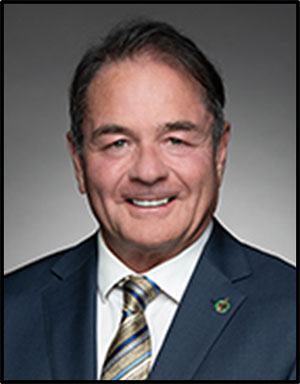
Scott Anderson
CPC - Vernon—Lake Country—Monashee, BC
Profile
Political Role: Interim leader of the Conservative Party of British Columbia (2017 – 2019)
Role at the Standing Committee on National Defence (NDDN): Member (2025 – Present)
Connection to National Defence: Retired Captain of the British Columbia Dragoons (2008 – 2017), a Primary Reserve Armoured Reconnaissance Regiment that is part of the 3rd Canadian Division's 39 Canadian Brigade Group.
Key Interests: During his brief time as a Parliamentarian, Mr. Anderson has shown interest in readiness, procurement, international operations, and the integration of the Coast Guard.
Recent Interventions at NDDN:
- October 2025: Expressed concerns that procurement is still politically driven and inquired about new forms of warfare, specifically in reference to drones, and how much weight Canada should put behind drone/anti-drone development.
- September 2025: Criticized Canada sending $6.5 million to a non-NATO member [Ukraine], noting there is “warfare elsewhere” and questioned how support to Ukraine is in the Canadian national interest.
- September 2025: Asked about training for Operation REASSURANCE in Latvia, redundancy of equipment based in Latvia, and how the military is adapting its force structure to reflect lessons learned from modern symmetrical warfare.
- September 2025: Asked about the integration of the Coast Guard related to its contribution to the NATO 2% spending target, any plans to “modify the ships,” and pressing on defensive capabilities if the Coast Guard ships are “now warships, they are legitimate targets for foreign actors”.
Recent Interventions in the House:
- October 2025: (During debate on Military Justice System Modernization Act) Asked about the implications of the legislation on military justice, including concerns over jurisdiction for overseas offences, command authority, bureaucratic delays, and the need for ongoing oversight to ensure fairness and operational effectiveness.
Professional History:
- Years elected: 2025
- Prior occupation: Vernon City Councillor; Owner, Dump Runz (junk removal company); Columnist, Infotel.ca
- Education: International Relations, University of Manitoba; MA, Strategic Studies, University of British Columbia
- Other Committees: N/A
- Other Defence-related Parliamentary Roles: N/A

Viviane Lapointe
LPC - Sudbury, ON
Profile
Political Role: Parliamentary Secretary to the Minister of Official Languages and Associate Minister of Public Safety (February – March 2025)
Role at the Standing Committee on National Defence (NDDN): [Chair/Vice-Chair/Member]
Connection to National Defence: The 2nd Battalion, Irish Regiment of Canada, is located at Sudbury Armoury within the Sudbury riding.
Key Interests: Ms. Lapointe is the only returning LPC member of NDDN from the 44th Parliament; her primary interests include support for Ukraine and NATO, Defence procurement, and operational readiness of the Canadian Armed Forces (CAF).
Recent Interventions at NDDN:
- October 2025: Inquired which modernization tools should be prioritized to protect infrastructure, about quantum tools and their capabilities, and where should Canada be aligning – or exercising caution – related to modernizing NORAD with the current U.S. administration.
- October 2025: Asked about NORAD modernization and where Canada should focus its efforts, if there are concerns related to relying on foreign or privately-owned satellite networks, and for suggestions of guardrails to protect Canadian sovereignty related to the foreign or private satellite networks.
- September 2025: Asked how the annual report “Addressing Wrongful Behaviours” and other reports like it could be made more useful to survivors and those working on prevention of sexual misconduct.
- September 2025: Asked about the strategic significance of trilateral alignment between China, Russia, and North Korea, and how Canada and its allies should interpret its signals for global security, particularly in the Indo-Pacific and Euro-Atlantic regions.
Recent Interventions in the House:
- October 2025: (Debate on Military Justice System Modernization Act) Noted that a cultural change is necessary to support CAF members and ensure a safe environment and that the amendments aim to improve transparency and meet the needs of the CAF. She also stated that repealing the duty to report helps build trust with affected individuals.
- June 2025: (Debate on Bill C-5, One Canadian Economy Act) Noted the importance of government’s critical minerals strategy and highlighted American dependence on nickel from Ontario, specifically from Sudbury, for its aerospace and defence work.
Professional History:
- Years elected: 2021, 2025
- Prior occupation: Ontario Ministry of Northern Development and Mines; Executive Director, Community Living Greater Sudbury
- Other Committees: N/A
- Other Defence-related Parliamentary Roles: Canadian NATO Parliamentary Association; Canadian Delegation to the Organization for Security and Co-operation in Europe Parliamentary Assembly

Chris Malette
LPC - Bay of Quinte, ON
Profile
Role at the Standing Committee on National Defence (NDDN): Member (2025 – Present)
Connection to National Defence: CFB Trenton, the Royal Canadian Air Force’s largest base and home to 8 Wing, is located within the Bay of Quinte riding.
Key Interests: During his brief time as a Parliamentarian, Mr. Malette has shown interest in international operations and relationships, defence infrastructures, and support the Canadian Armed Forces (CAF).
Recent Interventions at NDDN:
- October 2025: Asked about efforts to incorporate Indigenous knowledge into NORAD modernization, how Canada can help ensure NORAD remains relevant against non-traditional security threats, and how new surveillance systems would enable further detection and identification of potential threats to North America from a pan-domain perspective.
- October 2025: Asked about supply chain issues affecting Canada’s Arctic and National Defence’s role in research and development of emerging technologies, such as artificial intelligence, quantum computing, and cyber defence.
- September 2025: Asked the Ombuds to provide his main observations concerning the grievance process and how the duration of the grievance process could be shortened.
- September 2025: Asked about the new partnerships being forged with European Union members and how these relationships will help support Ukraine. He also inquired about Canada’s role conducting training in Latvia, how many CAF members participated in Exercise TALISMAN SABRE, and how the exercise tested resilience.
Recent Interventions in the House:
- October 2025: (Debate on Military Justice System Modernization Act) Emphasized the need to ensure CAF members can report misconduct without fear of reprisals. He also highlighted that the government is taking a “step forward in protecting members from harassment in the workplace,” and that building a more inclusive and supportive fighting force that reflects the diversity of Canada is a priority.
- September 2025: (QP) Asked the Minister of National Defence to update the House on the support being provided to CAF members, “as our government makes a generational investment in our military.”
Professional History:
- Years elected: 2025
- Prior occupation: Belleville City Councillor; Journalist, editor, and photographer of The Belleville Intelligencer
- Education: Journalism, Sheridan College
- Other Committees: Standing Joint Committee for the Scrutiny of Regulations
- Other Defence-related Parliamentary Roles: Counsellor, Canadian NATO Parliamentary Association

Tim Watchorn
LPC - Les Pays-d'en-Haut, QC
Profile
Role at the Standing Committee on National Defence (NDDN): Member (2025 – Present)
Key Interests: During his brief time as a Parliamentarian, Mr. Watchorn has shown interest in procurement, critical infrastructure in the North, and new and emerging technologies.
Recent Interventions at NDDN:
- October 2025: Inquired about potential attacks and cyber threats that Canada faces from adversaries.
- October 2025: Inquired about investing in hypersonic sites and delivery systems, and about the new defence procurement agency, in addition to the best option for energy infrastructure in the North.
- September 2025: Asked whether francophones face systemic barriers in accessing services from the Office of the Ombudsperson for National Defence and the CAF.
- September 2025: Asked about Canada’s contributions to NATO should there be continued escalation from Russia, or other adversaries, and about Canada’s drone capabilities in the event of an attack.
- September 2025: Asked about imminent risks in the Indo-Pacific region, submarines, and partnership opportunities in the region.
Recent Interventions in the House:
- September 2025: (QP) Asked how Canada will enhance our military presence both domestically and abroad.
Professional History:
- Years elected: 2025
- Prior occupation: Mayor of Morin-Heights, QC; Municipal public servant in St-Sauveur-des-Monts and Ste-Adele
- Education: Engineering, École Polytechnique de Montreal
- Other Committees: N/A
- Other Defence-related Parliamentary Roles: Canadian NATO Parliamentary Association
Key Issues
Canadian Coast Guard Integration
- We are honoured to welcome the Canadian Coast Guard to the Defence Team.
- Strengthening Canada's ability to detect, monitor and respond to maritime threats is essential to protect Canadians, our sovereignty, and our national interests.
- The integration of the Coast Guard within National Defence will enhance strategic planning and enable greater collaboration with security partners, including information sharing.
- It will also allow the Canadian Armed Forces and the Coast Guard to build upon existing operational cooperation and explore new opportunities to work together in areas, such as training and innovation.
- This integration will further enhance Canada's awareness of emerging threats in our waterways as well as Arctic and northern approaches.
- As a civilian special operating agency, the Coast Guard will continue to deliver its critical role in search and rescue, icebreaking, environmental response, safe navigation, and ocean science.
If pressed on militarization of Canadian Coast Guard:
- The Canadian Coast Guard are not part of the Canadian Armed Forces, nor are they law enforcement.
- There are currently no plans to arm Canadian Coast Guard personnel or assets, or to incorporate an additional enforcement role into the organization.
- The Coast Guard will continue to fulfill its mandate, providing key maritime services to Canadians.
If pressed on the Canadian Coast Guard being a valid military target:
- While the Canadian Coast Guard was transferred to the National Defence portfolio, they remain a civilian fleet, in a non-combatant role.
- The Coast Guard will support security efforts in our maritime domains, but will not take on a defence role.
Quick Facts
- The Canadian Coast Guard (CCG) owns and operates the federal government's civilian fleet and provides key maritime services to Canadians, including:
- Maritime search and rescue (SAR)
- Aids to navigation and waterways management
- Marine communications and traffic management
- Marine environmental and hazards response
- Icebreaking operations
- Supporting maritime security
- Support to other government departments
- The CCG has approximately 6,700 employees and is organized into four regions:
- Western - approximately 1,400 employees
- Central - approximately 1,670 employees
- Atlantic approximately 2,110 employees
- Arctic - approximately 120 employees
- In addition, a national headquarters in Ottawa provides functional leadership (1,400 employees, including employees of the Canadian Coast Guard Academy)
- The CCG's current fleet is made up of 126 vessels and 23 helicopters, this includes:
- 26 Large Vessels
- 4 Interim Icebreakers
- 31 Small Vessels
- 61 SAR Lifeboats
- 4 Air Cushion Vehicles
- Current CCG assets include:
- 21 operational bases
- 12 Marine Communications Traffic Services Centres (MCTS)
- 3 Regional Operations Centres (ROC)
- 2 Maritime Rescue Sub-Centres (MRSC)
- 45 Lifeboat Stations
- 25 In-shore Rescue Boat Stations
- 1 Arctic Marine Response Station
- 17,000 fixed and floating aids to navigation
- Close to 200 communication sites
- Environmental response depots and caches
Background
Transition
- On June 9, 2025, it was announced that the Canadian Coast Guard (CCG) would be integrated into the Defence portfolio which became effective on September 2, 2025, through an Order in Council.
- On October 10, 2025, the Minister of National Defence formally welcomed the CCG to the Defence Team at a ceremony in Dartmouth, Nova Scotia.
- The full transition will take place over the coming months, as the Department of National Defence (DND) and the Department of Fisheries and Oceans (DFO) finalize a memorandum of understanding to implement the transfer.
- Online resources are available to all Defence Team members, including CCG and supporting DFO employees, to address questions regarding the transition and potential impacts on them and their work.
Key Synergies with the Department of National Defence (DND) and Canadian Armed Forces (CAF)
- CCG's transition to DND enhances its ability to coordinate with security partners, including:
- Better procurement opportunities and supply chain coordination;
- Increased interoperability and a unified approach to Maritime Domain Awareness;
- Exchange of expertise in training, exercising, and Arctic operations;
- Enhanced coordination and strategic planning;
- Bolstered technology and innovation activities, including cyber and security capabilities; and
- Recruitment and retention strategies for operational and seagoing personnel.
Considerations Unique to CCG
- As a civilian special operating agency (SOA), the CCG retains unique operational and organizational authorities, including:
- Domestic programming for marine navigation and response services, including icebreaking for industry;
- Response readiness to meet the demands of increased marine vessel traffic in Canadian waters;
- Management of CCG's civilian fleet under commercial regulations;
- Represented public service workforce and collective bargaining implications;
- International commitments and conventions, including the International Organization for Marine Aids to Navigation, the International Maritime Organization, and regional multilateral fora for the Arctic, North Pacific, and North Atlantic;
- Specialized relationships with maritime industry; and
- Legislation.
- CCG's primary enabling legislation includes:
- The Oceans Act
- The Canada Shipping Act
- The Wrecked, Abandoned or Hazardous Vessels Act
The Oceans Act and Bill C-12
- The Oceans Act is a central piece of legislation, granting CCG the responsibility to provide marine services to Canadians and in Canada's waters.
- Amendments to the Oceans Act to expand the CCG's services to include security activities were introduced in June 2025 in Bill C-2, the Strong Borders Act, and later in Bill C-12, Strengthening Canada's Immigration System and Borders Act, tabled on October 8, 2025.
- The intent of the amendments was to strengthen sovereignty and maritime domain awareness, particularly in remote Arctic waters, by enabling the CCG to conduct security patrols and collect, analyze, and share information and intelligence for security purposes.
- The Standing Committee on Public Safety and National Security completed clause-by-clause review of Bill C-12 on November 25, 2025, and returned the Bill to the House of Commons for further consideration.
The Canada Shipping Act
- The Canada Shipping Act gives the Minister power, responsibilities, and obligations concerning aids to navigation, search and rescue, pollution response, and vessel traffic services.
The Wrecked, Abandoned or Hazardous Vessels Act
- The Wrecked, Abandoned or Hazardous Vessels Act was introduced in 2019 to address vessels of concern, including wrecked, abandoned, hazardous or worn-down boats, which can create public health, safety, environmental and economic issues for impacted communities.
- Under the Act, the CCG is responsible for:
- Addressing all vessels and wrecks, including those that pose or may pose a hazard in all Canadian waters;
- Coordinating and conducting hazard assessments on vessels and wrecks wherever located, including enforcement actions;
- Enforcing the Nairobi International Convention on the Removal of Wrecks, 2007 in Canadian waters and the exclusive economic zone of Canada;
- Taking appropriate actions on dilapidated vessels that are left on property under the responsibility of the Minister of Fisheries and Oceans.
Responsible Principals: Canadian Coast Guard, Deputy Minister's Office (Canadian Coast Guard Integration)
December 8, 2025
Bill C-12 and Enhancements to the Canadian Coast Guard Mandate
- The Canadian Coast Guard plays a critical role in supporting Canada's maritime security by:
- enabling national maritime domain awareness through sensor information and expert analysis in Canada's three Marine Security Operations Centres and the National Command Centre;
- providing patrol vessels, helicopters and personnel to support on-water federal presence and operations; and
- engaging with federal and international partners to ensure a coherent approach to national and allied maritime security.
- Canada is rebuilding and reinvesting in security and defence to strengthen its sovereignty and safeguard its interests.
- On March 25, 2025, the Prime Minister announced the expanded reach and abilities of the Canadian Coast Guard and their integration into our NATO defence capabilities, including giving the Canadian Coast Guard a new mandate to conduct maritime surveillance operations to secure our coasts.
- Bill C-12 would see the Canadian Coast Guard's mandate expand to incorporate security related activities, including conducting security and surveillance patrols, such as monitoring suspicious vessels near the border or in remote Northern locations, and sharing the information collected with intelligence, security and defence partners.
- The Government's maritime security posture is also being strengthened through the September 2025 move of the Canadian Coast Guard to the leadership of the Minister of National Defence.
- This change will increase the Canadian Coast Guard's interoperability with the Department of National Defence and other security, defence and intelligence partners, while remaining a civilian Special Operating Agency.
Responsive – Arming
- The Canadian Coast Guard deters unsafe or unlawful maritime activity through continuous, visible presence across Canada's coasts, Arctic, Great Lakes–St. Lawrence Seaway, and inland waterways.
- The Coast Guard's presence signals effective governance, situational awareness, and resolve, discouraging misconduct without the use of force.
- The Canadian Coast Guard remains a civilian, unarmed organization.
- Its predictable, rules-based conduct reduces escalation risk and shapes behaviour lawfully and safely, reinforcing norms of compliance and accountability.
- By providing patrol vessels, communications, and operational support to Royal Canadian Mounted Police, Fisheries and Oceans Conservation and Protection, Canadian Border Service Agency, and the Canadian Armed Forces, the Canadian Coast Guard enables a whole-of-government response to maritime security challenges while maintaining clear civilian-military roles.
- There are no plans to arm the Canadian Coast Guard or assign it an enforcement role.
- Its deterrent effect derives from presence, legitimacy, and partnerships, not armament.
Quick Facts
Canadian Coast Guard Presence
- The Canadian Coast Guard (CCG) is a Special Operating Agency within the Department of National Defence.
- It operates Canada's civilian fleet to deliver on-water safety, security, sovereignty, science, and environmental protection 24/7.
- The CCG oversees Canada's 243,000 km of coastline with the help of 12 Marine Communications and Traffic Services Centres, 3 Joint Rescue Coordination Centres, 2 Maritime Rescue Sub-Centres, and 3 Marine Security Operations Centres.
- The current fleet consists of:
- 26 Large Vessels
- 4 Interim Icebreakers
- 31 Small Vessels
- 61 Search and Rescue Lifeboats
- 4 Air Cushion Vehicles
- 23 Helicopters
- In addition, the fleet is supplemented by two leased Emergency Towing Vessels on the West Coast
- The CCG supports Canada's ocean economy by enabling the safe and efficient flow of $251B in marine trade annually, handling more than 342M tonnes of critical goods, supporting tens of thousands of jobs across Canada.
Background
Enhanced Mandate, Bill C-12
- The CCG is a Special Operating Agency, with a presence on all coasts, including the Great Lakes and the St-Lawrence.
- As the largest on water presence in Canada, and often the only visible federal presence in the North, the CCG operates 126 ships, 23 helicopters, a network of communications towers, operational centres, and sensors across the country.
- Currently, the CCG can only collect information for safety purposes and cannot collect and share information for security purposes.
- This creates a gap in Canada's ability to understand what is taking place in the maritime domain, including in the Arctic.
- Tabled on November 5, 2025, Bill C-12, Strengthening Canada's Immigration System and Borders Act, includes proposed amendments to the Oceans Act to expand the services of the CCG to include security activities.
- These amendments would mean that the information collected and reported during regular operations could now also be used for security purposes, which was previously not possible.
- These amendments will enable the CCG to conduct security and surveillance patrols, which could include, for example, monitoring suspicious vessels near the border or in remote Northern locations, and sharing the information collected with intelligence, security, and defence partners.
- With 'security' as part of its services, the CCG will be able to leverage all of its assets, vessels, sensors, and extensive presence across the country and in remote Northern locations to support Canada's security and sovereignty.
- The CCG will also be able to provide information about the maritime domain to domestic and international security partners, where information-sharing agreements exist.
- This will increase interoperability with the Department of National Defence and other security, defence, and intelligence partners, and respond to the call from international allies to secure the Arctic, and from the United States to increase border security.
- This change will leverage the CCG's extensive presence from coast to coast to coast and in the Great Lakes and St-Lawrence to better safeguard Canada's interests.
- The CCG has well established partnerships with Indigenous groups in the area of marine safety, particularly Indigenous coastal communities.
- The CCG will uphold legal obligations and will continue to work with Indigenous groups as new security services are implemented.
- The CCG remains a civilian agency committed to its safety services and programs.
- These amendments do not seek enforcement or interdiction powers, and are not intended to turn the CCG into a military or law enforcement agency.
- Those functions continue by federal partners that already have authorities in those spaces.
- The CCG will continue to deliver its current suite of programs and services, including marine safety, icebreaking, and the provision of platforms for oceans science, while also better supporting the security and sovereignty of Canada.
- Bill C-12 is moving through the parliamentary process now and completed a clause-by-clause review on November 25, 2025, at the Standing Committee for Public Safety and National Security.
- The report stage is anticipated the week of December 8, 2025, with background preparatory technical briefings of Senators being led by Public Safety planned to occur simultaneously.
Transfer of the Canadian Coast Guard through an Order in Council
- On September 2, 2025, the CCG was transferred to the Department of National Defence as a civilian Special Operating Agency through an Order in Council.
- This structural change is intended to strengthen Canada's maritime security posture by improving coordination, enhancing interoperability and streamlining information sharing across the defence team.
- The CCG is a civilian Special Operating Agency and its mandate to provide coast guard services largely stems from the Oceans Act, the Canada Shipping Act 2001, and the Wrecked, Abandoned and Hazardous Vessels Act.
- As a service provider, the CCG provides marine services like icebreaking, marine traffic control, and aids to navigation to commercial shipping within Canada.
- These services are normally provided for a nominal fee, and are meant to promote the safe, economical and efficient movement of ships in Canadian waters.
- The CCG can also provide support to other government departments and does so to support the Royal Canadian Mounted Police, Canada Border Services Agency, Fisheries and Oceans, and Canadian Armed Forces operations (e.g., contribute to wildfire response or provide ice breaking services in the Arctic).
- The change will not impact the services Canadians have come to expect from the CCG.
- The CCG will continue to provide search and rescue, icebreaking, and environmental response services, while enabling navigation and supporting ocean science.
- While the transition itself does not impact the CCG's mandate, the Government of Canada is advancing a separate, but parallel effort under Bill C-12.
- If passed, Bill C-12 will amend the Oceans Act to allow CCG to provide coast guard services related to security.
Responsible Principals: Canadian Coast Guard
December 8, 2025
Arctic Sovereignty and Cooperation
- National Defence is committed to the sovereignty and security of the Canadian Arctic.
- Strategic competition, climate change, and emerging technologies are driving new security challenges in the region.
- The addition of the Canadian Coast Guard under the Defence portfolio enables greater operational coordination in the North to meet these challenges.
- We will leverage the Coast Guard's assets, including its ships, helicopters, sensors and operational centres, to continue to bolster Canada's domain awareness and posture in the Arctic.
- The Coast Guard will also continue to provide marine safety services in the region by supporting community resupply missions, icebreaking, and emergency response programs.
- Through its collaborative governance and engagement with Inuit, First Nations and Métis partners, the Coast Guard is working to advance shared priorities, build capacity, and strengthen environmental protection.
- National Defence is also investing in new capabilities to support our ability to detect threats and sustain an effective deterrence posture in the region.
- This includes Arctic and Polar Over-the-Horizon Radar systems, maritime patrol and airborne early warning aircraft, and undersea sensors.
- To support operations, we are investing in Arctic infrastructure that will increase and enhance our Arctic and Northern presence.
- For example, upgrades to NORAD northern basing and the establishment of new Northern Operational Support Hubs will allow us to maintain a persistent and meaningful year-round presence.
- As our presence in the region expands, we are working with partners to maximize multi-purpose and dual-use infrastructure to support both defence operations and Northern and Indigenous communities.
- Taken together, these efforts by National Defence – now including the Canadian Coast Guard – will support defence operations and Northern communities, strengthen regional security and resilience, and foster economic opportunities.
Quick Facts
Canadian Coast Guard (CCG) Arctic Presence
- CCG Base in Hay River, NT.
- Regional headquarters (HQ) office in Yellowknife, NT.
- Response depots in Yellowknife, NT, and Iqaluit, NU.
- Marine Communications and Traffic Services Centre in Iqaluit, NU, plus 10 remotely controlled radio sites.
- Response (unstaffed) depots in Churchill, MB, and Tuktoyaktuk, NT.
- Arctic Marine Response Station in Rankin Inlet, NU, operating from June to November.
- CCG Auxiliary - Arctic Chapter: 41 units; 533 members; 59 vessels.
Canadian Armed Forces (CAF) Arctic Presence
- There are over 300 military personnel in the North and Inuit Nunangat.
- There are approximately 5,500 Canadian Rangers that maintain a meaningful presence in 205 remote and isolated communities, including over 1,500 Rangers in 66 Northern communities and Inuit Nunangat.
- On March 18, 2025, Prime Minister Carney announced $420 million in new funding to boost the presence of the CAF in the North and Inuit Nunangat.
- The CAF is planning to expand its Northern and Arctic operations.
- This expansion anticipates including more CAF personnel and the potential for increased inclusion of forces from Allied nations with an Arctic interest.
- In addition to the year–round presence stated above, new activities and increased resources aim to support a near year-round military operation pr through Operation NANOOK and other exercises and training to assert Canada's presence and sovereignty as well as refine information-sharing processes.
- Enabling increased Northern and Arctic operations will allow the CAF to better detect, deter, and defend against threats to Canada and North America.
Investments with an Arctic Nexus in Canada's Defence Policy (cash basis):
- $2.7 billion over 20 years to establish Northern Operational Support Hubs.
- $29.1 billion over 20 years to acquire a more modern, mobile, and effective tactical helicopter capability.
- $7.6 billion over 20 years for airborne early warning aircraft.
- $2.1 billion over 20 years to acquire specialized maritime sensors to conduct ocean surveillance.
- $985 million over 20 years to build a new satellite ground station in the Arctic.
Background
Canadian Coast Guard (CCG) Presence in the Arctic
- The CCG Arctic Region is headquartered in Yellowknife, Northwest Territories, and includes staff bases in Hay River, Northwest Territories, and Iqaluit, Nunavut, including the Marine Communications and Traffic Services Centre in Iqaluit.
- The CCG Arctic Region has grown to more than 100 full-time employees dedicated to program delivery in the Arctic.
- The Canadian Coast Guard Auxiliary (CCGA) in the Arctic has undergone tremendous expansion in recent years. Prior to 2015, the CCGA operated nine community-based units in the Arctic; currently, there are 41 community-based CCGA units with 533 members and 59 vessels. This expansion has strengthened local response capacity.
- The CCG also operates the Arctic Marine Response Station (AMRS) in Rankin Inlet, NU. The AMRS is the primary search and rescue facility in the Arctic, improving maritime safety in Arctic waters. The station operates seasonally from June to November.
- The CCG Arctic Region's Marine Environmental and Hazards Response (MEHR) team has enhanced the Agency's footprint across the Canadian Arctic with staffed facilities in Iqaluit, Yellowknife, and Hay River. It will also place equipment caches in 47 communities by the end of FY 2025-26.
Canadian Armed Forces (CAF) Presence in the Arctic
- The CAF's permanent presence in the North is anchored by Joint Task Force North (JTFN) in Yellowknife with detachments in Iqaluit and Whitehorse, along with 440 Transport Squadron, 1 Canadian Ranger Patrol Group Headquarters and a Company of Reserve Infantry.
- The Canadian Army's Arctic Response Company Groups have the ability to conduct sovereignty operations, facilitate disaster response support, and provide general assistance to other government departments in the Canadian North.
- The CAF's footprint in the North and Inuit Nunangat also includes:
- Canadian Forces Station Alert, the northernmost CAF outpost;
- CAF Arctic Training Centre in Resolute Bay, Nunavut, which provides a permanent location for training and operations in the Arctic; and
- Assets that support North American Aerospace Defense Command (NORAD) operations, including the North Warning System, three Forward Operating Locations in Yellowknife, Inuvik, and Iqaluit, and one Deployed Operating Base in Goose Bay.
- National Defence supplements its capabilities in the North and Inuit Nunangat through collaboration with intergovernmental and Inuit and Northern First Nation and Metis partners, including through the Inuit-Crown Partnership Committee (ICPC), which meets three times annually, and briefings to northern Premiers and Indigenous leaders.
- The ICPC has co-developed a work plan with Defence focused on multi-purpose infrastructure and procurement in Inuit Nunangat.
- Canada will further bolster its presence in the Arctic with $2.7 billion over 20 years (cash basis) for Northern Operational Support Hubs. These hubs will better ensure Canadian sovereignty by establishing a greater year-round presence across the Arctic and the North, and investing in multi-purpose, dual-use infrastructure that also meets the needs of the territories, Indigenous peoples, and Northern communities.
- On March 6, 2025, the Minister of National Defence announced Iqaluit, Inuvik, and Yellowknife as Northern Operational Support Hub locations.
- Further, the NORAD Northern Basing Infrastructure project, part of Canada's NORAD modernization plan, will upgrade legacy and build new infrastructure to support NORAD and Royal Canadian Air Force operations.
- As part of this project, National Defence is maintaining and enhancing CAF infrastructure at Inuvik, Yellowknife, Iqaluit, and 5 Wing Goose Bay. The investment covers recapitalization, modernization, replacement or addition of new critical infrastructure, airfield rehabilitation, as well as upgrades to security, information management/information technology and electrical systems.
- Other projects will upgrade infrastructure in Alert, Rankin Inlet, the North Warning System locations and the Whitehorse Cadet Camp.
Exercises and Operations
- CAF presence and responsiveness in the Arctic is maintained through regular national, bilateral, and multilateral exercises and operations. For example:
- Operation LATITUDE focuses on increasing domain awareness in the Western Arctic and its approaches, in addition to enhancing interoperability with the United States military in the context of continental defence involving live-fire training, personnel exchanges, integrated drills, and tactical coordination.
- Operation NANOOK is the CAF's signature Northern operation and takes place each year across Yukon, the Northwest Territories, Nunavut, and Labrador. It involves engaging with Northern and Indigenous partners, territorial emergency planners and other government departments to identify threats to Northern communities and plan for disaster response.
Arctic Over-the-Horizon Radar (A-OTHR) Project
- On March 18, 2025, Prime Minister Carney announced Canada's intention to partner with the Government of Australia on advanced A-OTHR technology. Subsequently, in June 2025, Canada and Australia signed a technology partnership to advance collaboration to rapidly develop Canada's A-OTHR capability.
Polar Over-the-Horizon Radar (P-OTHR) Project
- National Defence is conducting research and development into the P-OTHR capability, which will further extend surveillance coverage for early threat identification and warning.
- In April 2025, the Government of Canada awarded a two-year contract, valued at $48.4 million, as a joint venture between ATCO Frontec Ltd and Inuvialuit Development Corporation (IDC) to design, build, install and operate the P-OTHR research and development data collection system in the Northwest Territories.
International Cooperation
- National Defence maintains strategic-level collaboration with Arctic Allies and partners through regular multilateral policy dialogues such as the Northern Defence Dialogue at the Defence Ministerial level, the Arctic Chiefs of Defence meetings, the Arctic Security Forces Roundtable, the Arctic Security Policy Roundtable and the Arctic Council.
- National Defence is also committed to increasing information sharing and joint training opportunities with Arctic and non-Arctic partners, including through the North Atlantic Treaty Organization (NATO).
- The CCG collaborates with other Arctic states on maritime search and rescue and environmental response issues. It has taken a leadership role in the Arctic Coast Guard Forum and Arctic Council's Emergency Prevention, Preparedness and Response Working Group.
- Defence Research and Development Canada is an active participant in the International Cooperative Engagement Program for Polar Research with several Arctic nations to advance our scientific knowledge of the evolving Arctic.
- In July 2024, Canada, the United States and Finland announced an enhanced trilateral partnership called the Icebreaker Collaboration Effort, or ICE Pact, to build best-in-class Arctic and polar icebreakers.
Arctic Infrastructure Fund – Defence perspective
- Announced in Budget 2025, the Arctic Infrastructure Fund, led by Crown-Indigenous Relations and Northern Affairs Canada and the Canadian Northern Economic Development Agency, will invest $1 billion over five years in projects that deliver dual-use capabilities for both military and civilian purposes.
- These investments will advance shared priorities by supporting Defence operational readiness while meeting the infrastructure needs of Northern and Indigenous communities.
- Projects under this fund will focus on critical enablers such as transportation, energy and communications, which are essential for sustaining operations and strengthening resilience in the Arctic.
- Defence is working closely with other government departments to ensure that infrastructure investments complement mobility, logistics, and situational awareness requirements, reinforcing Canada's sovereignty and security posture in the North.
Responsible Principals: Assistant Deputy Minister (Policy), Assistant Deputy Minister (Infrastructure and Environment), Canadian Army, Strategic Joint Staff, Canadian Coast Guard, Communications Security Establishment.
December 3, 2025
Canadian Coast Guard and the North Atlantic Treaty Organization (NATO) Defence Investment Pledge
- National Defence follows guidelines established by NATO and agreed to by Allies to ensure a common approach to defining defence expenditures.
- Through this approach, a number of other government departments contribute to Canada's defence spending.
- This includes Veterans Affairs Canada, Treasury Board Secretariat, Global Affairs Canada, and the newest member of the Defence Team – the Canadian Coast Guard.
- In fiscal year 2023-24, over $750 million of the Coast Guard's budget was included in Canada's defence spending calculations.
- While 100% of the Coast Guard's budget will now be counted toward our NATO commitment with its integration under the Defence portfolio, their contribution would have likely grown beyond their 2023-24 figures due to increased expenditures for projects such as the icebreakers and an expanded security mandate.
- Canada is set to meet it's NATO 2% GDP target this fiscal year.
- We are also on a pathway to meet NATO's 5% Defence Investment Pledge by 2035, further demonstrating our unwavering commitment to collective defence and transatlantic security.
- To meet this pledge, Canada will invest 3.5% of GDP in core military capabilities and a further 1.5% in critical defence and security-related investments.
- Major investments range from modern aircraft to submarines capable of patrolling our three coastlines.
- Indeed, to advance the acquisition of our next fleet of submarines, we recently identified Thyssen Krupp Marine Systems and Hanwha Ocean as qualified suppliers.
- These commitments will increase our ability to protect Canadians, defend our North, and support our Allies.
Quick Facts
Defence Spending
- FY 2025-26: Canada's defence spending is projected to reach 2.01% of its Gross Domestic Product (GDP), with 22.6% devoted to major equipment, up from 1.47% of GDP and 18.3% on major equipment in comparison to FY 2024-25.
North Atlantic Treaty Organization (NATO) Common Funded Budget
- In addition to investing in their own armed forces, all NATO Allies contribute directly to NATO's budget based on an agreed cost-share formula derived from Gross National Income. Canada is the 6th largest contributor to NATO's common funded budget.
Background
- On June 25, 2025, Canada and its NATO Allies agreed to a new Defence Investment Pledge of investing 5% of GDP annually by 2035.
- As part of this 5% pledge, Canada will invest 3.5% of GDP for core defence expenditures, expanding on the June 9, 2025, announcement, which will bring Canada to 2% this year.
- This includes strengthening the foundation of National Defence through investments in our people, capabilities, infrastructure, and digital capabilities.
- An additional 1.5% of GDP will be dedicated to investments in critical defence and security-related expenditures, that will – among other things – protect our critical infrastructure, defend our networks, unleash innovation, and strengthen our defence industrial base.
Other Government Department and Agencies' Contributions
- On September 2, 2025, the Canadian Coast Guard (CCG) integrated into the National Defence portfolio. With this move, the entirety of CCG's budget will be included in our NATO contributions going forward. Historically, only a portion of the CCG's budget counted towards Canadian defence expenditures.
- Eligible funding to other government departments has also counted towards Canada's NATO contributions, such as pensions for members. This includes Veterans Affairs Canada, the Treasury Board of Canada Secretariat, Global Affairs Canada, Shared Services Canada, and other government organizations that cannot be disclosed publicly.
Parliamentary Budget Officer (PBO) Analysis
- The PBO published a report on October 30, 2024, entitled The Fiscal Implications of Meeting the NATO Military Spending Target in follow-up to its update in July 2024.
- The report stated that additional spending would be required to meet the NATO 2% commitment but concluded that such expenditures are possible without unduly impacting Canada's deficit-to-GDP ratio.
- However, it reiterated a position that the PBO took in summer 2024, that Our North, Strong and Free (ONSAF) underestimates GDP growth and that, as a result, Canada's defence budget would have to rise significantly to meet the NATO 2% target.
- The PBO labelled the ONSAF GDP forecast as "erroneous" as it assumed a nominal GDP growth rate of 1.7%, which "does not even keep pace with inflation and therefore assumes a 4-year economic recession, almost twice the length of the country's longest recession in the last 40 years".
- The PBO relies on its own methodology for calculating GDP, which it says is broadly similar to the Department of Finance's methodology.
- National Defence uses Canadian GDP figures provided by NATO, which use several data sources, including the Organization for Economic Co-operation and Development (OECD), and is a standard practice for NATO Allies.
- The PBO's 2025 update on its Planned Capital Spending under Canada's Defence Policy report was released on October 29, 2025.
- The report analyses Department of National Defence planned and actual capital spending since the 2017 defence policy, Strong, Secure, Engaged.
- The PBO report includes the following findings:
- That Defence spending is increasing to unprecedented levels
- The report highlights a projected spend of $322.9 billion between 2024-25 to 2043-44, with annual spending projected to peak at $25.7 billion in 2030-31.
- That National Defence continues to underspend which results in lapsing or reprofiling funding
- Over the period 2017-18 to 2023-24, actual capital spending fell short of planned amounts by a total of $18.5 billion.
- Delayed spending results in higher costs.
- That Defence spending is increasing to unprecedented levels
- The increase in planned capital spending reflects the addition of new projects as well as revisions to existing projects under the updated defence policy. The Government's commitment to meet NATO spending targets contributes to this increase, though this report does not assess the capital plan relative to those targets.
- Challenges to meeting planned spending have included persistent supply chain issues as a result of the pandemic, reduced availability of materiel as a result of production issues and delayed delivery of equipment from contractors.
Responsible Principals: Assistant Deputy Minister (Finance), Vice Chief of the Defence Staff, Assistant Deputy Minister (Policy), Canadian Coast Guard, Assistant Deputy Minister (Materiel)
December 8, 2025
Canadian Coast Guard Fleet Renewal
- Canadian Coast Guard vessels and helicopters ensure the safety, security, and accessibility of Canadian waters.
- Since 2005, Canada has invested over $39 billion in fleet recapitalization to sustain operations until new vessels are delivered under the National Shipbuilding Strategy.
- To date, the Coast Guard has taken delivery of four large science vessels and 21 small vessels under the National Shipbuilding Strategy, as well as 23 helicopters and four interim icebreakers.
- An additional small Search and Rescue lifeboat is expected to be delivered in 2025.
- Earlier this year, Canada awarded contracts for two new Polar Icebreakers, marking a major step in Canada's commitment to reinforcing Arctic sovereignty.
- The Polar Icebreakers will allow for year-round Arctic operations.
- This capability will bolster the Coast Guard's capacity to provide crucial services in the North, including emergency response and support for Arctic science.
- Delivery of both ships is expected in the early 2030s.
If pressed on project budgets:
- Factors such as the lasting effects of the pandemic on labour availability and supply chains, as well as high inflation have had an impact on costing.
- The Coast Guard and Public Services and Procurement Canada continue to work with shipyards to contain costs and minimize delays in order to deliver value for Canadians.
If pressed on Chantier Davie hybrid build approach for Polar Icebreaker:
- The Polar Icebreaker at Chantier Davie will be partially constructed in Canada and partially constructed at the Davie-owned shipyard in Finland.
- This strategy will allow Chantier Davie to leverage the expertise of their Helsinki shipyard and support the knowledge transfer from Finnish to Canadian shipyard workers.
If pressed on schedule delays:
- The National Shipbuilding Strategy is a nation-building initiative that seeks to achieve the broader objective of revitalizing Canada's shipbuilding sector.
- It has taken time, but we are seeing the fruits of a 15-year effort.
- New ships are in service and five large vessels currently under construction for the Canadian Coast Guard.
Quick Facts
Revitalized Shipbuilding Sector
- The Canadian Coast Guard has taken delivery of an Offshore Oceanographic Science Vessel (OOSV), built by Vancouver Shipyards. The vessel will replace the critical oceanographic and climate change research that was performed by the decommissioned CCGS Hudson.
- Construction efforts are currently underway on four (4) large vessels for the Coast Guard, including:
- Two (2) Polar Icebreakers; and
- Two (2) Arctic and Offshore Patrol Ship (AOPS) variants.
- The Coast Guard is also renewing its small vessel fleet, including the construction of 20 Search and Rescue Lifeboats. Two contracts were awarded to Hike Metal Products Ltd., in Wheatley, Ontario, and Chantier Naval Forillon Inc., in Gaspé, Quebec.
- On March 7, 2025, Canada awarded a $3.15 billion contract to Vancouver Shipyards and a $3.25 billion contract to Chantier Davie, each for the construction of a Polar Icebreaker.
Upcoming Milestones
- Additionally, the Coast Guard is targeting delivery of the final Search and Rescue Lifeboats by the end of 2025.
Background
- The Canadian Coast Guard (CCG) fleet renewal consists of the following large vessels:
- Three Offshore Fisheries Science Vessels, which were delivered in 2019 and 2020 by Seaspan's Vancouver Shipyards (VSY);
- One Offshore Oceanographic Science Vessel;
- Two Polar Icebreakers;
- Up to 16 Multi-Purpose Icebreakers;
- Two Arctic and Offshore Patrol Ships (AOPS) (CCG variants); and
- Up to six Program Icebreakers.
- Budget 2008 allocated funding for the acquisition of a Polar Icebreaker to replace the Canadian Coast Guard Ship (CCGS) Louis S. St-Laurent. Subsequent policy and funding approvals were obtained between 2012 and 2025.
- In May 2021, Canada announced the procurement of two Polar Icebreakers for the CCG – one to be built at VSY and the other at Chantier Davie Canada Inc. (CDCI).
- In April 2023, CDCI was formally added to the National Shipbuilding Strategy.
Polar Icebreaker at VSY (Polar-VSY)
- In July 2021, Canada awarded an ancillary contract to VSY to finalize design and undertake work in preparation for comprehensive construction engineering.
- In December 2022, VSY was awarded contracts for construction engineering and the acquisition of long-lead items.
- In February 2024, work was completed on a prototype block at VSY. This marked an important step in the shipyard's work on the project.
- Steel was cut in April 2025, and full rate construction started in July 2025. The vessel is expected to be delivered to Canada in 2032.
Polar Icebreaker at CDCI (Polar Max)
- In September 2024, Canada awarded an ancillary contract to CDCI. Work included the verification of technical specifications, as well as the development of cost estimates and a CDCI-proposed build strategy for the Polar Max, as an alternative to the CCG Polar Icebreaker design.
- Steel was cut on August 20, 2025, following a ceremony held in Helsinki, Finland. The vessel is expected to be delivered to Canada in 2030.
Large Shipyard Updates
Vancouver Shipyards
- Offshore Oceanographic Science Vessel acceptance was concluded on November 13, 2025.
- Construction engineering and long-lead items contracts for the Multi-Purpose Icebreakers were announced on March 26, 2024. Work is underway to prepare for the start of the construction, currently planned for 2026-27.
- Steel was cut for the Polar Icebreaker in April 2025, and full rate construction began in July 2025.
Chantier Davie Canada Inc. (CDCI)
- Initial work on the Program Icebreaker is underway through an ancillary contract that was announced in March 2024.
- Work on the second Polar Icebreaker (Polar Max) is advancing at CDCI's Helsinki shipyard, with construction commencing on August 20, 2025.
Irving Shipbuilding Inc. (ISI)
- Work is progressing well on both Arctic and Offshore Patrol Ships (CCG variants). ISI is targeting delivery of CCGS Donjek Glacier in fall 2026 and expects to deliver CCGS Sermilik Glacier in fall 2027.
Small Vessel Fleet
- On May 25, 2023, Canada announced an investment valued at $2.5 billion for up to 61 small vessels. To date, 33 small vessels have been delivered to the CCG, including 21 vessels acquired under the National Shipbuilding Strategy, as well as 12 vessels pre-dating the strategy.
Additional Initiatives
- The CCG completed the renewal of its light and medium helicopter fleet with delivery of 16 new light-lift helicopters and seven new medium-lift helicopters. A replacement light-lift helicopter was also acquired in 2024, to replace one involved in an accident in September 2022.
- The CCG is also implementing interim measures to ensure continued delivery of critical services until new ships are delivered. This includes a comprehensive Vessel Life Extension program for existing vessels, as well as the acquisition of three interim Medium Icebreakers and one interim Light Icebreaker.
Responsible Principals: Canadian Coast Guard
December 3, 2025
Additional Notes
Supplementary Estimates (B): Canadian Coast Guard Items
- The Government is committed to investing in the Canadian Coast Guard to ensure it can provide the vital services needed by Canadians to enable public safety on the water.
- For example, the Canadian Coast Guard provides emergency towing as a key preventative action to assist large disabled ships and prevent marine incidents while protecting mariners, the marine environment, and coastal communities.
- To support this service, $12.7 million is requested to ensure the Government of Canada can respond to incidents involving large ships off the coast of British Columbia.
- In addition, $5.2 million is being requested for marine spot chartering and related activities.
- Charters provide critical flexibility for icebreaking, navigation support, and science missions when Coast Guard vessels are unavailable due to seasonal removal, maintenance, or fleet shortages.
- In addition, $3.58 million is being requested from the Ship Fund to cover costs of responding to pollution incidents and hazardous vessels.
- The Government is committed to investing in the Canadian Coast Guard to ensure it can provide the vital services needed by Canadians to enable public safety on the water.
Quick facts
Canadian Coast Guard Towing:
- The Canadian Coast Guard (CCG) has contracted emergency towing capacity and capability on the West Coast of Canada to protect mariners and the marine environment from pollution risks resulting from large disabled vessels.
- The CCG does not have large vessel towing capability within its current fleet.
- As part of the Oceans Protection Plan, the Government of Canada leased two emergency towing vessels on the West Coast as an interim measure while a National Strategy for Emergency Towing was developed.
Spot Chartering
- Spot charters ensure rapid response for essential marine services—icebreaking, buoy maintenance, fish harbour access, and flood prevention—when Coast Guard vessels are unavailable.
Marine Pollution preparedness and response
- The CGG is the lead agency that responds to marine pollution in Canadian waters when the source of pollution is:
- ships,
- unknown sources,
- oil handling facilities, as a result of loading or unloading oil to or from ships,
- foreign waters that could affect Canadian waters.
Background
Canada's Oceans Protection Plan
- In 2016, the Government of Canada launched the $1.5 billion Oceans Protection Plan (OPP).
- The OPP is a national, whole-of-government plan to protect our oceans and coastlines from the potential impacts of marine shipping, and to ensure the health of our oceans.
- It further improves marine safety and responsible shipping, protects Canada's marine environment, and offers new possibilities for Indigenous and coastal communities.
- The OPP includes Transport Canada as the designated lead department; Fisheries and Oceans Canada, Canadian Coast Guard (CCG), Environment and Climate Change Canada and Natural Resources Canada.
- The OPP included a commitment to immediately increase emergency towing capacity on the West Coast on an interim basis, while Transport Canada and the CCG are completing the development of a long-term national approach for emergency towing.
- Under OPP, investments were made to increase emergency towing capacity in Canadian waters, which included:
- Leasing two emergency towing vessels currently stationed off the coast of British Columbia,
- Adding towing equipment to major CCG vessels.
Ensuring Operational Continuity Through Spot Chartering:
- Spot charters ensure rapid response for essential marine services—icebreaking, buoy maintenance, fish harbour access, and flood prevention—when CCG vessels are unavailable.
- Dedicated incremental funding secures charter availability for these tasks, a growing need as more CCG ships enter life-extension phases.
Marine Pollution preparedness and response
- The CCG receives all reports of marine pollution in Canadian waters 24 hours a day, 365 days a year. To respond they:
- asses the risk,
- provide notifications to partners, including Indigenous and coastal communities,
- work with polluters and partners
- respond or oversee the response to incidents
Supporting CCG's Mandate When Polluters Can't Pay:
- Under Canadian law, vessel owners pay for pollution incidents or hazardous vessels, but when no owner exists, the costs incurred by CCG are later claimed through the Ship Fund.
- The $3.58 million requested through Supplementary Estimates (B) updates CCG's reference level to reflect funds recovered from Ship Fund, insurers, and vessel owners, ensuring financial alignment with actual response activities.
Responsible Principal: Canadian Coast Guard
November 17, 2025
Canadian Coast Guard and Projects of National Interest
- The Canadian Coast Guard plays a foundational role in supporting the safe and efficient movement of maritime trade on Canada's waters.
- Canadian Coast Guard services, such as marine traffic management and icebreaking, are critical to keeping shipping lanes open year-round, enabling the movement of goods and people, helping support major resource projects that drive economic growth.
- The Canadian Coast Guard continues to support federal efforts related to major projects with a marine shipping component.
- Major projects, such as ports, energy terminals, and critical mineral developments rely on the Coast Guard's vessels, traffic services, and incident prevention and response to be able to operate safely.
- The Building Canada Act will designate certain major projects as Projects of National Interest.
- The Coast Guard has a unique role and contributes maritime safety expertise and program services to support safe navigation in Canada's waters.
- As economic activity grows, the Coast Guard remains focused on ensuring that coastal communities and maritime users continue to benefit from safe navigation and reliable services.
- The Coast Guard also continues to work closely with federal partners to advance opportunities that reinforce navigational safety, maritime domain awareness and community resilience.
If pressed on future projects:
- As projects advance, the Coast Guard continues to provide search and rescue, environmental and hazards response, incident management as well as communications and marine traffic services expertise through established federal processes.
- We remain committed to ensuring safe navigation, reliable services, and upholding clear communication with partners as marine activity evolves.
- Regardless of the project, the Coast Guard's priority is to maintain safe and efficient maritime operations for coastal and northern communities.
Quick Facts
Canadian Coast Guard (CCG) Role in Major Resource Projects
- CCG provides expertise on search and rescue, environmental and hazards response, incident management, vessel traffic services, icebreaking, and aids to navigation during federal impact assessments and provincial substituted processes.
- Through Transport Canada's Navigational Safety Assessment Process, the CCG contributes analysis to identify measures that support safe marine navigation.
- CCG remains engaged with federal partners as projects move through planning, permitting, and operational phases to help ensure safe and reliable marine operations.
- As major resource projects advance, any changes to or the expansion of CCG programs and services to support safe and efficient maritime operations would require engagement and consultation with impacted Indigenous communities.
Potential Projects of National Interest with a Marine Shipping Component
- Port of Churchill Plus – Upgrades would expand trade corridors and diversify market access to Europe and other markets through northern routes. CCG's current presence in Churchill includes services that facilitate economic access and community resupply.
- Arctic Economic and Security Corridor – Intended to improve northern development, connectivity, and community access across the western Arctic. CCG's established northern presence, along with its communications network and response capacity, supports safe navigation across key Arctic waterways.
- Liquified Natural Gas (LNG) Projects on the West Coast – Linked to energy exports that help diversify Canada's trade and advance clean energy goals (e.g., Ksi Lisims LNG and LNG Canada Phase 2). CCG support includes existing marine communications and traffic services, navigational aids, and year-round maritime safety services.
- Northwest Critical Minerals Corridor – Promotes critical mineral production in the Northern British Columbia. CCG's current navigation systems, communications coverage, and environmental and hazards response contribute to safe maritime access along the western trade routes.
- Wind West Atlantic Energy – Supports offshore renewable energy development in the Atlantic region. CCG's search and rescue capacity, marine communications, and traffic-management services help ensure safe navigation for existing and proposed offshore activities in the region.
Background
Major Resource Projects and CCG Programs
- The Coast Guard delivers programs that contribute to the safety of mariners, community resilience, protect Canada's marine environment, and support the safe and efficient movement of maritime trade. The Coast Guard also maintains a federal presence that contributes to Canada's sovereignty and security in Canadian waters.
- Increased activity from major resource projects highlights the Coast Guard's ongoing role in supporting safe navigation and delivering effective maritime services.
- The CCG is working to develop e-navigation solutions for the future, to provide mariners with real-time information and support navigation in areas of national interest, such as major resource projects.
- The Coast Guard's participation in federal impact assessments helps identify maritime considerations early. This includes assessing vessel traffic patterns, navigational conditions, ice conditions, emergency response needs, and communications coverage.
Projects of National Interest
- The Building Canada Act allows the Government of Canada to designate major infrastructure proposals as Projects of National Interest (PONIs).
- Under this framework, the Major Projects Office (established in 2025) coordinates federal reviews and supports for these projects across the federal government.
- Projects are considered for PONI designation based on their potential to contribute to national economic growth, Indigenous participation, and Canada's climate objectives, among other factors.
- The Government has announced two tranches of major projects, reflecting significant national economic activity and priority areas such as supply-chain strength, clean growth, and regional development.
- In September 2025, the Prime Minister announced the first tranche of major projects to be considered under the regime, representing investments across energy, critical minerals, and trade corridors.
- On November 13, 2025, the Prime Minister announced a second tranche of potential major projects, adding further large-scale infrastructure and industrial proposals.
Marine Activity Associated with PONIs
- Potential developments in the Arctic, along the Pacific and Atlantic Coasts, and in the St. Lawrence Seaway may influence historical vessel patterns and increase marine traffic in some waterways.
- These changes reinforce the Coast Guard's role in ensuring safe navigation, providing emergency management coordination, search and rescue as well as environmental and hazards response capacity, and maintaining effective marine communications systems.
Indigenous Partnerships and Consultation
- Proponents have the responsibility to carry out consultations consistent with the Duty to Consult and Free, Prior and Informed Consent, with support from the Government and the CCG, where applicable.
- If a major resource project results in changes to Coast Guard programs or services, the CCG is responsible for fulfilling and upholding Crown obligations and commitments related to the duty to consult, treaties, the United Nations Declaration on the Rights of Indigenous Peoples Act, and the Inuit Nunangat Policy.
Responsible Principals: Canadian Coast Guard
December 8, 2025
Safe at Sea Initiative
- The Canadian Coast Guard operates in some of the most challenging marine environments in the world.
- Ensuring that our personnel are supported – psychologically, emotionally, and operationally – is essential to sustaining both mission success and a healthy workforce.
- The Safe at Sea initiative is a foundational commitment to the well-being, safety, and operational readiness of its people.
- The initiative works to ensure that Coast Guard employees can work in an environment that is safe, respectful, and free from harassment including sexual misconduct.
- This is reinforced through awareness training, clear reporting pathways, and consistent leadership engagement, modelling behavioural expectations.
- Since the inception of the initiative, over one-third of fleet have participated in onboard engagements led by regional fleet leadership to strengthen awareness of support resources and harassment prevention, and to reinforce conduct expectations directly with crews in their operational environment.
- Recent integration with the Department of National Defence has further strengthened our support system. Coast Guard personnel now have access to a broader suite of confidential counselling and trauma-informed resources.
- This partnership allows us to leverage specialized expertise while ensuring our internal prevention and wellness programs remain tailored to the unique realities of maritime operations.
- We recognize that access to support must be equitable for all staff, including those deployed at sea or working in remote regions.
- Safe at Sea has been implemented with this in mind—using flexible delivery models to ensure that no member is disadvantaged due to geography or operational tempo.
- Safe at Sea is not simply a program; it is a long-term modernization of our organizational culture and workforce model.
- It strengthens our ability to recruit and retain skilled personnel by demonstrating that the Coast Guard is committed to their health, dignity, and safety. And it ensures that Canada has a resilient, mission-ready Coast Guard prepared to meet evolving maritime and security demands.
- In closing, Safe at Sea represents a comprehensive and forward-looking approach to supporting our people. It integrates prevention efforts, early support, strong partnerships, and accountability to ensure a safe and respectful workplace.
- These efforts are essential to maintaining the trust of our employees and the confidence of Canadians.
Quick Facts
Safe at Sea Vessel Awareness Sessions
- Safe at Sea vessel awareness sessions are onboard engagements led by regional fleet leadership to strengthen awareness of support resources and harassment prevention, and to reinforce conduct expectations directly with crews in their operational environment. National progress to date includes reaching 1,040 crew members (over 1/3rd of fleet).
Safe at Sea Peer Support Network
- The Safe at Sea Initiative is supported by a national peer network equipped to offer early, accessible, and confidential support. Nationally, 85 peers have been identified and 43 have been trained to date. All peers are expected to be trained by March 2026.
Background
- The Government of Canada has taken action through Bill C-65, the federal anti-harassment and violence legislation, to help keep workers in federally regulated workplaces, including the most vulnerable, safe.
- Bill C-65 came into force on January 1, 2021, and is an Act that amended the Canada Labour Code (CLC) Part II to introduce new regulations (the Regulations) on prevention of harassment and violence in the workplace. The Regulations introduced a number of amendments to strengthen the existing framework for harassment and violence prevention. This includes sexual harassment and sexual violence, discrimination, as well as family violence, in federally regulated industries and workplaces.
- The Canadian Coast Guard (Coast Guard) started work on the Safe at Sea initiative in February 2024. An initial two-year, nationally coordinated implementation plan was established to strengthen psychological health, prevent sexual misconduct and harassment, and enhance support for sea-going and shore-based personnel. The plan details the phased rollout of national training, peer-support capacity, leadership accountability measures, and fleet-specific awareness activities from Fiscal Year (FY) 2024–25 through FY 2025–26, including the appointment of dedicated regional AS-04 coordinators, foundational and advanced peer-training modules, updated awareness workshop packages, bystander intervention training, and resilient leadership training.
- The implementation plan also includes a National Social Health Needs Assessment, integration of Safe at Sea content into College and Command courses, and regular monitoring through quarterly dashboards and ongoing consultations. Collectively, the sequencing view demonstrates a structured, evidence-informed approach to building a safer, more respectful, and more responsive organizational culture across every region and fleet.
- The scope of this initiative is to provide emotional and practical support. This involves - ensuring an employee is heard; directed to the appropriate resources; and, that the proper follow-up has been done. In addition, it includes working towards the elimination of sexual misconduct and harassment. This will be addressed via various means including, but not limited to: training for all employees; swift and decisive disciplinary action; enforcement of the sexual misconduct and harassment policy; ensuring the proper reporting procedures are in place; and, that all complaints of sexual misconduct and harassment will be taken seriously and promptly investigated. It is important to note that the scope of this initiative is not to offer personal or legal counselling and will not provide labor relations advice.
Responsible Principals: Canadian Coast Guard
December 8, 2025
Icebreaker Collaboration Effort (ICE Pact)
Most Recent:
- On November 18, 2025, Canada signed a joint statement of intent (JSOI) with Finland and US to advance the ICE Pact.
- Key priorities under the JSOI include:
- enhancing industrial collaboration across all stages of icebreaker production
- launching trilateral workforce development initiatives
- aligning international promotion and cooperation activities
- advancing joint research and development frameworks
Background
- On July 11, 2024, Canada announced an enhanced economic and security trilateral partnership with Finland and the United States on Arctic and polar icebreakers and other Arctic and polar capabilities to support the collective economic, climate and national security priorities.
- After months of negotiations, a Memorandum of Understanding was signed by all parties on November 13, 2024.
- This partnership marks a collaborative effort to strengthen the shipbuilding and broader marine industries in each nation by capabilities related to Arctic and polar icebreakers.
- The initiative aims to improve cooperation and reduce costs by sharing technical knowledge about icebreakers. It also includes working together on training programs and providing top-quality icebreakers to allies. Additionally, it will create a framework to share research and innovation for future Arctic and polar projects.
- The information and best practices gained through the partnership will help inform current and future work on ice breaking capabilities built under the National Shipbuilding Strategy (NSS).
- Canada remains committed to working with Canadian shipyards to revitalize Canada's marine industry, create good middle-class jobs, and maximize economic benefits across the country, while recapitalizing the Canadian Federal fleets. Canadian shipyards will continue to build polar icebreakers and other Arctic and polar capabilities under the NSS.
- Canada has world class shipbuilding, ship design and ship repair and overhaul capabilities. This partnership has the potential to contribute to the long-term viability of the shipbuilding and broader marine industries in being self-sustaining as well as the potential to bring prosperity and well-paying jobs to multiple regions of Canada.
Aircraft Services Delivery Transfer
- Budget 2025 included the government's decision to transfer Transport Canada's (TC) aviation services to the Department of National Defence (DND).
- Currently, most of the work done by the Transport Canada aviation services is directly for the Canadian Coast Guard (CCG) and the Royal Canadian Air Force (RCAF).
- The aviation services is an important Canadian capability in support of security and safety for the Department of National Defence.
- TC and DND, as represented by the CCG, have been defining the scope and modalities of this transfer to ensure critical services remain uninterrupted throughout this process.