
Standing Committee on National Defence (NDDN): Supplementary Estimates (B), December 4, 2025
On This Page
- Appearance Details
- Committee Profiles
- Supplementary Estimates (B)
- General Overview Note – National Defence
- General Overview Note – Communications Security Establishment
- Supplementary Estimates (B) Page Proofs – National Defence
- Supplementary Estimates (B) Page Proofs - Communications Security Establishment
- Capital Investment Fund Projects
- Transfers
- Grants and Contributions
- Spending Reductions and Unspent Funds
- Funded Items
- Key Priorities and Background
- Personnel
- Domestic and Continental Security
- Operations and International Engagements
- Procurement
- Infrastructure and Environment
- Indigenous
- Administrative Notes
- Communications Security Establishment (CSE)
Appearance Details
Date:
December 4, 2025
Location:
Wellington Building, 197 Sparks Street
Time:
08:15 – 10:15
Witnesses:
The Honourable David J. McGuinty, P.C., M.P.
Minister of National Defence
Stefanie Beck
Deputy Minister of National Defence
Caroline Xavier
Chief, Communication Security Establishment
LGen Stephen R. Kelsey
Vice Chief of the Defence Staff
Mario Pelletier
Commissioner of the Canadian Coast Guard
Jonathan Moor
Chief Financial Officer
Heather Sheehy
Assistant Deputy Minister (Materiel)
Committee Profiles
In this section

Charles Sousa
LPC - Mississauga—Lakeshore, ON
Profile
Political Role: Parliamentary Secretary to the Minister of Public Services and Procurement (2023 – 2025)
Role at the Standing Committee on National Defence (NDDN): Chair (2025 – Present), Member (January – September 2023)
Connection to National Defence: The Toronto Scottish Regiment, part of 4th Canadian Division Primary Reserve Unit is headquartered in the Mississauga—Lakeshore riding.
Key Interests: Based on his early interventions as Chair, Mr. Sousa has demonstrated a desire to adhere to the schedule and agenda; his interests include procurement, culture change, the war in Ukraine, commitments to NATO, and support for Canadian Armed Forces (CAF) members and their families with regards to healthcare.
Recent Interventions at NDDN: In his current role as Chair, Mr. Sousa has not yet participated in exchanges with witnesses. However, he was a member of NDDN earlier in the 44th Parliament. His previous interventions include:
- September 2023: Highlighted the efforts undertaken in Latvia by the CAF and their work to train Ukrainian recruits under Operation UNIFIER.
- September 2023: Asked about the security of the Baltic states and how long Canada could withstand supporting a NATO Article 5 response (if required) with the amount of ammunition available.
- September 2023: Asked about civilian and military casualties on both Russian and Ukrainian sides.
- June 2023: Asked the External Monitor about steps being taken to implement meaningful and lasting cultural changes in the CAF and if she was encouraged by the leadership coming from then Minister Anand at the time.
- June 2023: Inquired about procurement and reaching the NATO 2% target.
- June 2023: Inquired about mental health in the CAF and if members are more at risk due to the nature of their work in the military.
- April 2023: Inquired about combatting mis/disinformation.
Recent Interventions in the House:
- October 2025: (Debate on Military Justice System Modernization Act) Stressed the importance of moving forward with culture change within the CAF and that Bill C-11 contributes to this. He also noted that this legislation will work to increase trust in the military justice system and demonstrate to the world that Canada takes sexual misconduct in the military seriously.
- September 2025: Tabled two NDDN reports on Housing and Transparency.
- November 2024: (QP) Responding in his capacity as then Parliamentary Secretary to the Minister of Public Services and Procurement to a question related to “getting our sailors the equipment they need to defend our country and our values,” Mr. Sousa highlighted the importance of protecting our coastline and that the government was looking at replacing the Victoria-class submarine and looking at requests for information to seek a renewal of the fleet.
Professional History:
- Years elected: 2022, 2025
- Prior occupation: Member of Legislative Assembly of Ontario (2007 – 2018), including roles as Minister of Finance, Minister of Citizenship and Immigration, and Minister of Labour; Commercial Banking and Director Marketing at Royal Bank of Canada; Canadian Chamber of Commerce; Toronto Board of Trade
- Education: Business Administration, Wilfred Laurier University; MBA, University of Western Ontario
- Other Committees: Liaison Committee
- Other Defence-related Parliamentary Roles: Canadian NATO Parliamentary Association; Canadian Delegation to the Organization for Security and Co-operation in Europe Parliamentary Assembly

James Bezan
CPC – Selkirk—Interlake—Eastman, Manitoba
Profile
Political Role: Shadow Minister for National Defence (2015 – Present)
Role at the Standing Committee on National Defence (NDDN): Vice-Chair (2017 – Present); Former Chair (2011 – 2013); Member since 2011
Connection to National Defence: As Shadow Minister, he has travelled alongside the Minister of Defence on many occasions, including Italy, Kuwait, and Singapore (Shangri-La Dialogue). As Parliamentary Secretary to the Minister of National Defence (2013 – 2015), he accompanied the Canadian Armed Forces delivery of non-lethal aid to Ukraine on two occasions in 2014.
Key Interests: Mr. Bezan has extensive knowledge of Defence issues; his interests include support for Ukraine, increasing Defence investment, improving procurement practices, as well as addressing recruitment and retention challenges.
Recent Interventions at NDDN:
- October 2025: Inquired about threats facing Canada’s North, as well as what capabilities are needed to protect the Arctic and contribute to NORAD. He specifically asked about Over-the-Horizon Radar, ballistic missile defence, and the lifespan of the North Warning System.
- October 2025: Inquired about the procurement of the F-35s and the delay in releasing National Defence’s review, and if the National Security Exception provision should be used to accelerate defence procurement.
- September 2025: Asked about the lack of residential housing units available to Canadian Armed Forces (CAF) members.
- September 2025: Questioned whether the Coast Guard’s budget should count towards the Canada’s 2% NATO goal because of the organization’s lack of defence capabilities.
- September 2025: Asked about out-of-service tanks and how this impacted training in Latvia.
Recent Interventions in the House:
- October 2025: (Debate on the Military Justice System Modernization Act) Highlighted that the Liberal government had failed to act on long-standing reports, mishandled military justice reforms, and allowed political interference, referencing former CDS Vance and former MND Sajjan. He also noted that the CPC can be trusted to restore respect, accountability, and proper support for the CAF.
- June 2025: (Debate on the Strong Borders Act) Highlighted the need for the government to identify how they will “make the Coast Guard a security agency” as it moves under National Defence.
- June 2025: (QP) Referenced a National Defence report that noted “less than 50% of the equipment used by our Armed Forces is operational, only 46% of our Navy ships are seaworthy, and fewer than half of the land vehicles and aircraft needed by our Army and Air Force are even serviceable,” continuing on to note that the Canadian Armed Forces do not have the “tools they need to do the job to deal with today’s growing threats.” In response, the Minister highlighted the increased investments in Defence and procurement projects, including submarines, the Arctic and offshore patrol ships, and more.
Professional History:
- Years elected: 2004, 2006, 2008, 2011, 2015, 2019, 2021, 2025
- Prior occupation: Cattle producer; CEO of the Manitoba Cattle Producers Association
- Education: Agricultural Production, Olds College
- Other Committees: N/A
- Other Defence-related Parliamentary Roles: Canadian NATO Parliamentary Association; Canadian Delegation to the Organization for Security and Co-operation in Europe Parliamentary Assembly

Simon-Pierre Savard-Tremblay
BQ – Saint-Hyacinthe—Bagot—Acton, QC
Profile
Political Role: Critic, National Defence (2025 – Present); Critic, Foreign Affairs, Trade and Development (International Trade) (2021 – Present); Former Critic, Industry (Aerospace and Cars) (2021 – 2025); First member of the Huron-Wendat nation to be elected to the Federal Parliament; Former President of BQ Youth Forum (2010 – 2012)
Role at the Standing Committee on National Defence (NDDN): Vice-Chair (2025 – Present)
Connection to National Defence: The 6th Battalion, Royal 22e Régiment, a Reserve infantry unit, is headquartered in Saint-Hyacinthe.
Key Interests: Mr. Savard-Tremblay’s key interests relate to the BQ’s broader goal of advancing Quebec’s sovereignty; in particular, he is focused on supporting Quebec’s defence and aerospace industries, as well as Quebec’s trading relationships.
Recent Interventions at NDDN:
- October 2025: Inquired about the Golden Dome and if it is complementary to NORAD capabilities, noting issues with some of President Trump’s rhetoric around the concept.
- October 2025: Asked about the capabilities required to establish and integrate into an anti-ballistic missile system by 2030.
- October 2025: Expressed interest in the development of emerging technologies in Canada, specifically related to hypersonic missiles and the political will to support innovation.
- September 2025: Asked the National Defence Ombudsman how investigations are handled and about safeguards to prevent political interference and pressure.
- September 2025: Inquired about China and the People’s Liberation Army’s military capabilities, and what Canada’s military position would be in the event of an armed conflict in Taiwan.
Recent Interventions in the House:
- October 2025: (Debate on Military Justice System Modernization Act) Acknowledged the sensitivity of the culture change in the Canadian Armed Forces (CAF) and criticized the CPC and LPC governments for their years of inaction following the 2015 Deschamps report, which revealed a culture of sexism and misconduct within the CAF. He also expressed concerns related to potential delays in implementing reforms and transferring cases to the civilian justice system.
- June 2025: (QP) Encouraged the government to adopt a BQ proposal to reinvest in Quebec’s aerospace, shipbuilding, and AI sectors, including a 22% floor for defence investments. The Minister responded by highlighting a $9.3 billion investment that will bring Canada to NATO’s 2% target this fiscal year.
Professional History:
- Years elected: 2019, 2021, 2025
- Prior occupation: Author; Journalist; Lecturer at Université Laval and Université du Québec à Chicoutimi
- Education: BA Political Science, Université de Montréal; MA Sociology, Université du Québec à Montréal; PhD Socio-economics of development, École des hautes études en sciences sociales (Paris)
- Other Committees: Vice-Chair of the Standing Committee on International Trade
- Other Defence-related Parliamentary Roles: Counsellor, Canadian NATO Parliamentary Association; Canadian Delegation to the Organization for Security and Co-operation in Europe Parliamentary Assembly; Canada-China Legislative Association

Sherry Romanado
LPC – Longueil—Charles-LeMoyne, QC
Profile
Political Role: Parliamentary Secretary to the Minister of National Defence (2025 – Present); Former Parliamentary Secretary to the Minister of Veterans Affairs and Associate Minister of National Defence (2017 – 2018)
Role at the Standing Committee on National Defence (NDDN): Member (2025 – Present)
Connection to National Defence: Her two sons serve in the Canadian Armed Forces. She previously volunteered with the Canadian Grenadier Guards 1979 Centennial Cadet Corps of Greenfield Park.
Key Interests: Ms. Romanado has personal experience with Defence as part of a military family; her primary interests include improving support for personnel and Veterans, as well as more general recruitment and retention strategies.
Recent Interventions at NDDN:
- October 2025: Asked if the NORAD mandate should be expanded, if Canadians are convinced on the importance of NORAD modernization, and asked for examples of adversaries testing our defences to see what they can “get away with.”
- October 2025: Asked if incorporating the Coast Guard was a good idea to enhance and amplify maritime surveillance.
- September 2025: Asked why increasing investments and getting to 2% are important for Canada’s continental defence.
- September 2025: Asked how Canada’s increase of $2 billion in miliary assistance to Ukraine will help the country, as well as the impacts of the renewal of Operation REASSURANCE on NATO’s eastern flank and deterrence in the region.
- September 2025: Asked about deterrence efforts against the CRINKs (China, Russia, Iran, North Korea).
Recent Interventions in the House:
- October 2025: (Debate on Military Justice System Modernization Act) Emphasized that those who protect Canadians deserve protection themselves and that victims of misconduct must be able to report abuse without fear of reprisal. She also urged all members to support Bill C-11’s study at committee to ensure a safer, more inclusive future for the CAF.
- June 2025: (QP) Responded to a CPC question about the Prime Minister’s “broken promises [in the first four weeks of Parliament],” during which she highlighted that the $9.3 billion investment in Canada’s defence is “an investment in the Armed Forces, in good-paying jobs, in Canadian innovation, and in economic growth.” She continued on to state that the “generational investment is strengthening Canada's role as a strong, reliable international trading partner while rebuilding and rearming our forces here at home.”
- June 2025: (Debate on Main and Supplementary Estimates 2025-26) Highlighted investments in National Defence and its impacts at home and around the world, particularly as the Estimates “provide critical funding as Canada enters an increasingly complex world and ever-changing threat environment.” Noted that “[her] military family is what motivated [her] to run for federal office.”
Professional History:
- Years elected: 2015, 2019, 2021, 2025
- Prior occupation: Faculty lecturer at McGill; Member of the Chartered Institute for Transport and Logistics
- Education: Public Relations, McGill University; MBA, Concordia University
- Other Committees: N/A
- Other Defence-related Parliamentary Roles: Counsellor, Canadian NATO Parliamentary Association

Cheryl Gallant
CPC - Algonquin—Renfrew—Pembroke, ON
Profile
Political Role: One of the longest serving members of Parliament, since 2000.
Role at the Standing Committee on National Defence (NDDN): Member (2006 – Present); Former Vice-Chair (2016 – 2017)
Connection to National Defence: CFB Petawawa, Arnprior Aerospace, and Chalk River Nuclear Laboratories are all located in the Algonquin—Renfrew—Pembroke riding.
Key Interests: Mrs. Gallant has been a long-time member of NDDN and, as such, has a strong knowledge base of the Defence portfolio; she often seeks information regarding emerging threats. Her interests include procurement projects, improving infrastructure and housing, contaminated sites, equipment and Canadian Armed Forces (CAF) readiness, as well as recruitment and retention.
Recent Interventions at NDDN:
- October 2025: Asked what the timeline would be if Canada decided to participate in the Golden Dome “today,” when Canada could face an imminent missile threat, and what type of hybrid threat would trigger a response from NORAD.
- October 2025: Asked whether there are threats to Canada related to delaying the decision on the F-35s and about NORAD capabilities to destroy unmanned vehicles in our airspace.
- September 2025: Asked the Ombudsman how he would like the backlog of ATIP requests at DND/CAF and the backlog of grievances filed by the members of the CAF to be rectified.
- September 2025: Asked the Ombudsman about the integration of the Coast Guard and whether the decision was made to reach the government’s 2% NATO commitment.
- September 2025: Asked how Canada would respond if China was to intrude on Canadian territory, as well as whether the Navy would defend Japan, the Philippines, or Australia in the face of a similar attack.
- September 2025: Asked about Canada’s military contributions to protecting its Arctic, including whether the CAF will be establishing necessary infrastructure in the region.
Recent Interventions in the House:
- October 2025: (Debate on Military Justice System Modernization Act) Criticized Bill C-11 for not fully addressing culture issues, transparency, and accountability, calling it incomplete. She also stressed that military police did not have the resources to conduct proper investigations and inquired when the investigations would be taken over immediately by civilian detectives who are equipped to handle these types of situations, and if they have the adequate resources to do so.
- June 2025: (Debate on Main Estimates 2025-2026) Asked about salary increases and equipment.
- June 2025: (Member Statements) Expressed concern over the increased cost and schedule for the F-35 fighter jets, referencing the Auditor Generals report on the subject.
- June 2025: (Debate on the Speech from the Throne) Inquired about healthcare access for CAF family members.
Professional History:
- Years elected: 2000, 2004, 2006, 2008, 2011, 2015, 2019, 2021, 2025
- Prior occupation: Insurance; Office management
- Education: Chemistry, University of Western Ontario
- Other Committees: N/A
- Other Defence-related Parliamentary Roles: NATO Parliamentary Association; Canadian Delegation to the Organization for Security and Co-operation in Europe Parliamentary Assembly

Jeff Kibble
CPC - Cowichan—Malahat—Langford, BC
Profile
Role at the Standing Committee on National Defence (NDDN): Member (2025 – Present)
Connection to National Defence: He is a retired Lieutenant-Commander of the Royal Canadian Navy, having served for 28 years. He deployed to East Timor, the Persian Gulf, and commanded the Regional Joint Operations Center Pacific, and commanded the Navy’s training ship HMCS ORIOLE for five years before retiring in 2016. His wife is also a Veteran and both of his grandfathers served in the Royal Canadian Air Force.
Key Interests: During his brief time as a Parliamentarian, Mr. Kibble has shown an interest in Canadian Armed Forces (CAF) modernization, procurement, recruitment and retention, as well as Veterans affairs.
Recent Interventions at NDDN:
- October 2025: Inquired about how the Canadian Coast Guard’s budget will contribute to NATO spending; its ability to collect and transmit tactical and intelligence data to military units, and its hypothetical ability to defend itself against foreign nations when conducting security patrols.
- October 2025: Inquired about hybrid threats from China and Russia, including scientific buoys, if a Golden Dome-type system could “deal with” advanced ballistic missile defence capabilities, and about what Canada needs to do to be seen as “stepping up” in NORAD modernization.
- October 2025: Asked about the obsoletion of the North Warning System, if hypersonic weapons are nuclear capable and if drones can defend against this type of threat, as well as the acquisition of the F-35s.
- September 2025: Brought attention to the mental health challenges faced by CAF members and asked about mental health training available to members pre-deployment
- September 2025: Asked about military housing shortages and whether this has had an impact on recruitment and retention of new CAF members
- September 2025: Asked about the threat of the People’s Liberation Army’s Navy in Canada’s Arctic and whether the Canadian Coast Guard could counter this threat
- September 2025: Asked about the CAF’s military presence in Latvia and whether the possibility of deploying troops to Ukraine would impact Canada’s presence in Latvia.
Recent Interventions at in the House:
- October 2025: (Debate on Military Justice System Modernization Act): Emphasized the need to end all forms of harassment in the military and expressed his support for the main basis of Bill C-11. He also expressed concern that the legislation could lead to increased political interference with Governor in Council appointments.
- June 2025: (Debate on the Speech from the Throne) Emphasized the importance of modernizing the CAF and ensuring members of the CAF have the equipment needed.
Professional History:
- Years elected: 2025
- Prior occupation: Royal Canadian Navy, Canadian Armed Forces
- Education: English, University of British Columbia
- Other Committees: N/A
- Other Defence-related Parliamentary Roles: N/A
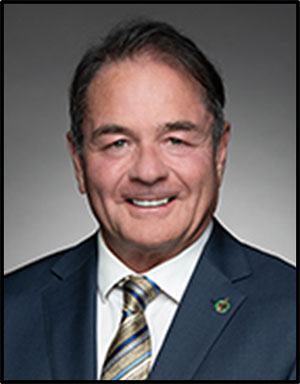
Scott Anderson
CPC - Vernon—Lake Country—Monashee, BC
Profile
Political Role: Interim leader of the Conservative Party of British Columbia (2017 – 2019)
Role at the Standing Committee on National Defence (NDDN): Member (2025 – Present)
Connection to National Defence: Retired Captain of the British Columbia Dragoons (2008 – 2017), a Primary Reserve Armoured Reconnaissance Regiment that is part of the 3rd Canadian Division's 39 Canadian Brigade Group.
Key Interests: During his brief time as a Parliamentarian, Mr. Anderson has shown interest in readiness, procurement, international operations, and the integration of the Coast Guard.
Recent Interventions at NDDN:
- October 2025: Expressed concerns that procurement is still politically driven and inquired about new forms of warfare, specifically in reference to drones, and how much weight Canada should put behind drone/anti-drone development.
- September 2025: Criticized Canada sending $6.5 million to a non-NATO member [Ukraine], noting there is “warfare elsewhere” and questioned how support to Ukraine is in the Canadian national interest.
- September 2025: Asked about training for Operation REASSURANCE in Latvia, redundancy of equipment based in Latvia, and how the military is adapting its force structure to reflect lessons learned from modern symmetrical warfare.
- September 2025: Asked about the integration of the Coast Guard related to its contribution to the NATO 2% spending target, any plans to “modify the ships,” and pressing on defensive capabilities if the Coast Guard ships are “now warships, they are legitimate targets for foreign actors”.
Recent Interventions in the House:
- October 2025: (During debate on Military Justice System Modernization Act) Asked about the implications of the legislation on military justice, including concerns over jurisdiction for overseas offences, command authority, bureaucratic delays, and the need for ongoing oversight to ensure fairness and operational effectiveness.
Professional History:
- Years elected: 2025
- Prior occupation: Vernon City Councillor; Owner, Dump Runz (junk removal company); Columnist, Infotel.ca
- Education: International Relations, University of Manitoba; MA, Strategic Studies, University of British Columbia
- Other Committees: N/A
- Other Defence-related Parliamentary Roles: N/A

Viviane Lapointe
LPC - Sudbury, ON
Profile
Political Role: Parliamentary Secretary to the Minister of Official Languages and Associate Minister of Public Safety (February – March 2025)
Role at the Standing Committee on National Defence (NDDN): [Chair/Vice-Chair/Member]
Connection to National Defence: The 2nd Battalion, Irish Regiment of Canada, is located at Sudbury Armoury within the Sudbury riding.
Key Interests: Ms. Lapointe is the only returning LPC member of NDDN from the 44th Parliament; her primary interests include support for Ukraine and NATO, Defence procurement, and operational readiness of the Canadian Armed Forces (CAF).
Recent Interventions at NDDN:
- October 2025: Inquired which modernization tools should be prioritized to protect infrastructure, about quantum tools and their capabilities, and where should Canada be aligning – or exercising caution – related to modernizing NORAD with the current U.S. administration.
- October 2025: Asked about NORAD modernization and where Canada should focus its efforts, if there are concerns related to relying on foreign or privately-owned satellite networks, and for suggestions of guardrails to protect Canadian sovereignty related to the foreign or private satellite networks.
- September 2025: Asked how the annual report “Addressing Wrongful Behaviours” and other reports like it could be made more useful to survivors and those working on prevention of sexual misconduct.
- September 2025: Asked about the strategic significance of trilateral alignment between China, Russia, and North Korea, and how Canada and its allies should interpret its signals for global security, particularly in the Indo-Pacific and Euro-Atlantic regions.
Recent Interventions in the House:
- October 2025: (Debate on Military Justice System Modernization Act) Noted that a cultural change is necessary to support CAF members and ensure a safe environment and that the amendments aim to improve transparency and meet the needs of the CAF. She also stated that repealing the duty to report helps build trust with affected individuals.
- June 2025: (Debate on Bill C-5, One Canadian Economy Act) Noted the importance of government’s critical minerals strategy and highlighted American dependence on nickel from Ontario, specifically from Sudbury, for its aerospace and defence work.
Professional History:
- Years elected: 2021, 2025
- Prior occupation: Ontario Ministry of Northern Development and Mines; Executive Director, Community Living Greater Sudbury
- Other Committees: N/A
- Other Defence-related Parliamentary Roles: Canadian NATO Parliamentary Association; Canadian Delegation to the Organization for Security and Co-operation in Europe Parliamentary Assembly

Chris Malette
LPC - Bay of Quinte, ON
Profile
Role at the Standing Committee on National Defence (NDDN): Member (2025 – Present)
Connection to National Defence: CFB Trenton, the Royal Canadian Air Force’s largest base and home to 8 Wing, is located within the Bay of Quinte riding.
Key Interests: During his brief time as a Parliamentarian, Mr. Malette has shown interest in international operations and relationships, defence infrastructures, and support the Canadian Armed Forces (CAF).
Recent Interventions at NDDN:
- October 2025: Asked about efforts to incorporate Indigenous knowledge into NORAD modernization, how Canada can help ensure NORAD remains relevant against non-traditional security threats, and how new surveillance systems would enable further detection and identification of potential threats to North America from a pan-domain perspective.
- October 2025: Asked about supply chain issues affecting Canada’s Arctic and National Defence’s role in research and development of emerging technologies, such as artificial intelligence, quantum computing, and cyber defence.
- September 2025: Asked the Ombuds to provide his main observations concerning the grievance process and how the duration of the grievance process could be shortened.
- September 2025: Asked about the new partnerships being forged with European Union members and how these relationships will help support Ukraine. He also inquired about Canada’s role conducting training in Latvia, how many CAF members participated in Exercise TALISMAN SABRE, and how the exercise tested resilience.
Recent Interventions in the House:
- October 2025: (Debate on Military Justice System Modernization Act) Emphasized the need to ensure CAF members can report misconduct without fear of reprisals. He also highlighted that the government is taking a “step forward in protecting members from harassment in the workplace,” and that building a more inclusive and supportive fighting force that reflects the diversity of Canada is a priority.
- September 2025: (QP) Asked the Minister of National Defence to update the House on the support being provided to CAF members, “as our government makes a generational investment in our military.”
Professional History:
- Years elected: 2025
- Prior occupation: Belleville City Councillor; Journalist, editor, and photographer of The Belleville Intelligencer
- Education: Journalism, Sheridan College
- Other Committees: Standing Joint Committee for the Scrutiny of Regulations
- Other Defence-related Parliamentary Roles: Counsellor, Canadian NATO Parliamentary Association

Tim Watchorn
LPC - Les Pays-d'en-Haut, QC
Profile
Role at the Standing Committee on National Defence (NDDN): Member (2025 – Present)
Key Interests: During his brief time as a Parliamentarian, Mr. Watchorn has shown interest in procurement, critical infrastructure in the North, and new and emerging technologies.
Recent Interventions at NDDN:
- October 2025: Inquired about potential attacks and cyber threats that Canada faces from adversaries.
- October 2025: Inquired about investing in hypersonic sites and delivery systems, and about the new defence procurement agency, in addition to the best option for energy infrastructure in the North.
- September 2025: Asked whether francophones face systemic barriers in accessing services from the Office of the Ombudsperson for National Defence and the CAF.
- September 2025: Asked about Canada’s contributions to NATO should there be continued escalation from Russia, or other adversaries, and about Canada’s drone capabilities in the event of an attack.
- September 2025: Asked about imminent risks in the Indo-Pacific region, submarines, and partnership opportunities in the region.
Recent Interventions in the House:
- September 2025: (QP) Asked how Canada will enhance our military presence both domestically and abroad.
Professional History:
- Years elected: 2025
- Prior occupation: Mayor of Morin-Heights, QC; Municipal public servant in St-Sauveur-des-Monts and Ste-Adele
- Education: Engineering, École Polytechnique de Montreal
- Other Committees: N/A
- Other Defence-related Parliamentary Roles: Canadian NATO Parliamentary Association
Supplementary Estimates (B)
Supplementary Estimates Overview
- In these Supplementary Estimates, National Defence is requesting an additional $1.11 billion in funding and the transfer of approximately $1.1 billion to other departments and agencies.
- This would result in a total increase in budgetary authorities of $35.6 million.
- Funding includes $476 million for the Future Fighter Capability Program, $215.1 million for the River-class Destroyer, and $59.4 million for the Domestic Ammunition Production Initiative.
- Also included is $294.5 million for previously approved defence investments funded through the Capital Investment Fund.
- Furthermore, National Defence is transferring significant funds to other departments and agencies in support of government priorities.
- This includes $961.9 million for defence research and development, as well as support for the Canadian defence industry.
- Taken together, these investments reflect our commitment to putting people first and to ensuring that our soldiers, sailors, and aviators are equipped with modern and effective equipment.
- Finally, it should be noted that the Canadian Coast Guard's authorities are now reflected in National Defence's total budgetary authorities.
Quick facts
- Supplementary Estimates (B) would increase National Defence's authorities for the current fiscal year to $46.7 billion ($48.4 billion including CSE and agencies).
- The following funding items are included in Supplementary Estimates (B) 2025-26:
- Future Fighter Capability Program ($476,034,107) See Tab 11
- Previously approved defence investments funded through the Capital Investment Fund ($294,512,411) See Tab 04
- River-Class Destroyer ($215,118,205) See Tab 12
- Domestic Ammunition Production Initiative ($59,400,000) See Tab 10
- Increased internal support capacity ($17,215,400)
- Emergency towing services on the west coast ($12,625,134) See Tab 14
- Remediation of the North Bay Jack Garland Airport Site ($6,721,143) See Tab 13
- Establish the program for Canadian Innovators and Accelerators of the North Atlantic Treaty Organization Defence Innovation Accelerator for the North Atlantic ($5,836,125)
- Marine spot chartering and related activities ($5,173,569)
- Arctic Over-the-Horizon Radar Program ($4,763,055) See Tab 09
- Reinvestment of revenue received from polluters or the Ship-Source Oil Pollution Fund for clean-up costs associated with oil spills ($3,584,708) See Tab 14
- Temporary Water Treatment Units for the City of Saguenay ($2,781,976) See Tab 13
- Recognition and Incremental Implementation of Self-Government Agreements (horizontal item) ($323,804)
- Funding to administer Recognition and Incremental Implementation Agreements (Budget 2024) (horizontal item) ($134,033)
Background
Transfers
- In addition to receiving new funding, these Supplementary Estimates include 25 transfers to other Government departments [five coming into National Defence ($12,197,748) and seventeen going out (-$1,089,566,237)]. There are also four internal transfers from Vote 1 (-$249,778,103) to Vote 5 ($107,127,193) and Vote 15 ($142,650,910) with a $0 net effect.
Transfer from other organizations |
Description |
Transfer Amount |
|---|---|---|
Treasury Board Secretariat |
To support projects which will reduce greenhouse gas emissions in federal government operations |
$10,166,000 |
Social Sciences and Humanities Research Council |
For managing their research enterprise at the Royal Military College of Canada |
$912,999 |
Parks Canada Agency |
For the transfer of the administration of Inskip Islands |
$499,999 |
Natural Sciences and Engineering Research Council and the Social Sciences and Humanities Research Council |
To support the Canada Research Chairs at the Royal Military College of Canada |
$418,750 |
Department of Natural Resources |
For projects under the 2 Billion Trees Program |
$200,000 |
Subtotal of transfers from other organizations: |
$12,197,748 |
|
Internal Reallocations |
||
Internal reallocation of resources for the Service Income Security Insurance Plan for long-term disability |
Existing reference levels will be transferred from Vote 1 to Vote 15 of $142,650,910. |
Vote 1 Vote 5 Vote 15 |
Internal reallocation of resources for In-Service Support to reflect a change in accounting treatment |
Existing reference levels will be transferred from Vote 1 to Vote 5 of $100,000,000. |
|
Internal reallocation of resources for previously approved defence investments funded through the Capital Investment Fund. |
Existing reference levels will be transferred from Vote 1 to Vote 5 of $6,507,131. |
|
Internal reallocation of resources for the Arctic Over-the-Horizon Radar Program |
Existing reference levels will be transferred from Vote 1 to Vote 5 of $620,062. |
|
Subtotal: |
$0 |
|
Transfers to other organizations |
||
To the Department of Foreign Affairs, Trade and Development |
to provide support to departmental staff located at missions abroad |
-$85,285 |
To the Department of Crown-Indigenous Relations and Northern Affairs |
to support negotiations with the Haida Nation on a protocol to implement the Haida Title Lands Agreement |
-$160,000 |
To the Department of Crown-Indigenous Relations and Northern Affairs |
to support a bilateral process with Esquimalt First Nation that is linked to the Recognition of Indigenous Rights and Self-Determination table |
-$160,000 |
To the Military Police Complaints Commission |
to address increases in the volume and complexity of complaints |
-$250,000 |
To the Department of Crown-Indigenous Relations and Northern Affairs |
for research services and expert witness services costs as part of ongoing litigation with Beaver Lake Cree Nation |
-$600,000 |
To the Atlantic Canada Opportunities Agency |
for the North Atlantic Treaty Organization Defence Innovation Accelerator for the North Atlantic program |
-$610,844 |
To the Department of Industry |
To maintain the Shirleys Bay Campus in the National Capital Region |
-$909,223 |
To the Department of Natural Resources |
to densify the Canadian Space Weather Detection Network in support of National Defence. |
-$1,010,000 |
to the Royal Canadian Mounted Police |
for law enforcement record checks |
-$1,677,500 |
To the Department of Veterans Affairs |
For research projects related to military members, Veterans and their families |
-$1,722,225 |
to the Treasury Board Secretariat |
for the Digital Community Management initiative |
-$1,828,814 |
to Federal Economic Development Agency for Southern Ontario |
for a defence-focused stream of Creative Destruction Lab's technology accelerator program |
-$2,167,000 |
to various organizations |
for the Canadian Safety and Security Program |
-$2,180,551 |
to the Natural Sciences and Engineering Research Council and the Social Sciences and Humanities Research Council |
for research scholarships and grant projects |
-$3,996,314 |
to the Department of Natural Resources |
for the Polar Continental Shelf Program in Resolute, Nunavut |
-$6,108,183 |
to the Communications Security Establishment |
for the Classified Security Management Infrastructure Project |
-$6,500,000 |
to the Atlantic Canada Opportunities Agency |
for the Centre for Ocean Ventures and Entrepreneurship |
-$7,659,294 |
to the Communications Security Establishment |
for information management and information technology support services |
-$30,038,352 |
to the Department of Foreign Affairs, Trade and Development |
for support to Haiti |
-$60,000,000 |
to various organizations |
for defence research and development and support for the Canadian defence industry |
-$961,902,652 |
Subtotal of transfers to other organizations: |
-$1,089,566,237 |
|
Total net transfers: |
-$1,077,368,489 |
|
Canadian Coast Guard
- On September 2, 2025, Order in Council P.C. 2025-0639 transferred the control and supervision of the Canadian Coast Guard from the Department of Fisheries and Oceans to the Department of National Defence. This includes transferring unexpended appropriations for the Canadian Coast Guard to the Department of National Defence.
- National Defence allotment adjustments in 2025-26 include $1,759,402,409 for the Deemed Appropriations from the Department of Fisheries and Oceans for the Canadian Coast Guard.
- Operating expenditures: $483,096,489
- Capital expenditures: $1,263,707,747
- Grants and contributions: $12,598,173
Responsible Principal: Assistant Deputy Minister (Finance)
November 21, 2025
Communications Security Establishment Canada Supplementary Estimates (B) Overview
- The Communications Security Establishment Canada (CSE) is one of Canada's key security and intelligence agencies and the lead federal technical authority for cyber security.
- CSE provides valuable foreign intelligence to inform the Government of Canada's decision making and protect national security.
- Its sophisticated cyber and technical expertise also helps identify, prepare for, and defend against threats to Canada and its cyber systems and networks.
- While conducting these activities, CSE respects the highest standards of lawfulness, ethics, values, and the protection of the privacy of Canadians.
- CSE's 2025-26 Supplementary Estimates B represent a net funding increase totaling $70.0M.
Quick Facts
- Treasury Board (TB) Submission funding of $9.5M for the Classified Security Management Infrastructure (CSMI) Phase 2B Project
- Reprofiled funding of $22.5M from 2023-24 and 2024-25 for the Canadian Cryptographic Modernization Program (CCMP) Project
- A net funding increase of $38.0M resulting from six interdepartmental transfers.
Background
- Funding of $9.5M for CSMI Phase 2B Project to support the development and implementation of cryptographic capabilities as part of the CCMP Project.
- CSMI Phase 2B replaces the Government of Canada's (GC) aging core cryptographic infrastructure and completes the development and implementation of new cryptographic key management systems that are required to protect the GC and Canadian Armed Forces communications and information.
- Reprofiled funding of $22.5M from 2023-24 and 2024-25 for the Canadian Cryptographic Modernization Program (CCMP) Project to re-align lapsed funding with new project timelines.
- This funding will be used to support The CCMP to modernize the Government of Canada's aging cryptographic equipment and infrastructure in order to safeguard classified information and maintain Canada's ability to establish secure communications both nationally and internationally.
- A net funding increase of $38.0M resulting from six interdepartmental transfers:
- Transfer of $30.0M from the Department of National Defence (DND) relating to Information Management and Information Technology (IM/IT) support services:
- $17.2M for Top Secret Network Convergence; and
- $12.8M for IM/IT support provided to the Canadian Armed Forces Cyber Command
- Transfer of $6.5M from DND relating to the CSMI Phase 2B Project;
- Transfer of $2.9M from Shared Services Canada to support Secure Communications for National Leadership program
- This program will help to provide secure mobile phone capabilities for Ministers and senior officials. The SCNL is a joint PCO, CSE and SSC initiative that enables a modern, mobile and secure means of communications for Ministers and senior officials classified up to SECRET.
- Transfer of $806K to the Global Affairs Canada for Foreign Service Directives
- GAC is a common service provider for Government of Canada operations abroad and receives compensation for the increased cost of operations resulting from staff being posted at Canadian missions and liaison offices by other government departments.
- Transfer of $493K to Royal Canadian Mounted Police for Law Enforcement Record Checks; and
- Transfer of $150K to Employment and Social Development Canada to support Policy Horizons Canada.
- Policy Horizons Canada is the Government of Canada's centre of excellence in foresight. Policy Horizon Canada's goal is to empower the Government of Canada with a future-oriented mindset and outlook to strengthen decision making.
- Transfer of $30.0M from the Department of National Defence (DND) relating to Information Management and Information Technology (IM/IT) support services:
Responsible Principal: Communications Security Establishment Canada
Last updated: November 2025.
Supplementary Estimates (B) - Page Proofs - National Defence
Organization Summary
Authorities To Date |
These Supplementary Estimates |
Proposed Authorities To Date |
|||
|---|---|---|---|---|---|
| Budgetary | |||||
| Voted | |||||
| 1b | Operating expenditures | 26,595,734,530 |
(931,785,770) |
258,640,183 |
25,922,588,943 |
5b |
Capital expenditures |
12,971,354,793 |
92,877,215 |
770,520,439 |
13,834,752,447 |
10b |
Grants and contributions |
4,461,279,927 |
(381,110,844) |
75,063,048 |
4,155,232,131 |
15 |
Payments in respect of the long-term disability and life insurance plan for members of the Canadian Forces |
446,727,532 |
142,650,910 |
- |
589,378,442 |
| Total Voted | 44,475,096,782 |
(1,077,368,489) |
1,104,223,670 |
44,501,951,963 |
|
Total Statutory |
2,230,827,661 |
- |
8,741,958 |
2,239,569,619 |
|
| Total Budgetary Expenditures | 46,705,924,443 |
(1,077,368,489) |
1,112,965,628 |
46,741,521,582 |
|
Explanation of Requirements
| Vote Number | Amount | |
|---|---|---|
| Budgetary | ||
| Voted Appropriations | ||
Funding for the Future Fighter Capability Program |
Vote 1b |
190,634,000 |
Vote 5b |
285,400,107 |
|
Total |
476,034,107 |
|
Funding for a number of previously approved defence investments funded through the Capital Investment Fund |
Vote 1b |
29,273,339 |
| Vote 5b | 265,239,072 | |
Total |
294,512,411 |
|
| Funding for the River-Class Destroyer | Vote 5b | 215,118,205 |
| Funding for the Domestic Ammunition Production Initiative | Vote 10b |
59,400,000 |
Funding for increased internal support capacity |
Vote 1b |
17,215,400 |
Funding for the emergency towing services on the west coast |
Vote 1b |
12,625,134 |
Funding for the remediation of the North Bay Jack Garland Airport Site |
Vote 10b |
6,721,143 |
Funding to establish the program for Canadian Innovators and Accelerators of the North Atlantic Treaty Organization Defence Innovation Accelerator for the North Atlantic program |
Vote 10b |
5,836,125 |
Funding for marine spot chartering and related activities |
Vote 1b |
5,173,569 |
Funding for the Arctic Over-the-Horizon Radar Program |
Vote 5b |
4,763,055 |
Reinvestment of revenue received from polluters or the Ship-Source Oil Pollution Fund for clean-up costs associated with oil spills |
Vote 1b |
3,584,708 |
Funding of Temporary Water Treatment Units for the City of Saguenay |
Vote 10b |
2,781,976 |
Funding for Recognition and Incremental Implementation of Self-Government Agreements (horizontal item) |
Vote 10b |
323,804 |
Funding to administer Recognition and Incremental Implementation Agreements (Budget 2024) (horizontal item) |
Vote 1b |
134,033 |
| Total Voted Appropriations | 1,104,223,670 |
|
Total Statutory Appropriations |
8,741,958 |
|
Transfers |
||
| Transfers from Other Organizations | ||
From the Treasury Board Secretariat to various organizations to support projects which will reduce greenhouse gas emissions in federal government operations |
Vote 1b |
10,166,000 |
From the Social Sciences and Humanities Research Council to the Department of National Defence for managing their research enterprise at the Royal Military College of Canada |
Vote 1b |
912,999 |
From the Parks Canada Agency to the Department of National Defence for the transfer of the administration of Inskip Islands |
Vote 1b |
483,999 |
| Vote 5b | 16,000 | |
Total |
499,999 |
|
From the Natural Sciences and Engineering Research Council and the Social Sciences and Humanities Research Council to the Department of National Defence to support the Canada Research Chairs at the Royal Military College of Canada |
Vote 1b |
418,750 |
| From the Department of Natural Resources to the Department of National Defence and the Parks Canada Agency for projects under the 2 Billion Trees Program | Vote 1b | 200,000 |
| Internal Transfers | ||
| Internal reallocation of resources for the Service Income Security Insurance Plan for long-term disability | Vote 1b |
(142,650,910) |
| Vote 15 | 142,650,910 | |
Total |
- |
|
Internal reallocation of resources for In-Service Support to reflect a change in accounting treatment |
Vote 1b |
(100,000,000) |
| Vote 5b | 100,000,000 | |
Total |
- |
|
Internal reallocation of resources for previously approved defence investments funded through the Capital Investment Fund |
Vote 1b |
(6,507,131) |
| Vote 5b | 6,507,131 | |
Total |
- |
|
Internal reallocation of resources for the Arctic Over-the-Horizon Radar Program |
Vote 1b |
(620,062) |
Vote 5b |
620,062 |
|
Total |
- |
|
| Transfers to Other Organizations | ||
| From various organizations to the Department of Foreign Affairs, Trade and Development to provide support to departmental staff located at missions abroad | Vote 1b |
(85,285) |
From the Department of National Defence to the Department of Crown-Indigenous Relations and Northern Affairs to support negotiations with the Haida Nation on a protocol to implement the Haida Title Lands Agreement |
Vote 1b |
(160,000) |
From the Department of National Defence to the Department of Crown-Indigenous Relations and Northern Affairs to support a bilateral process with Esquimalt First Nation that is linked to the Recognition of Indigenous Rights and Self-Determination table |
Vote 1b |
(160,000) |
From the Department of National Defence to the Military Police Complaints Commission to address increases in the volume and complexity of complaints |
Vote 1b |
(250,000) |
From the Department of National Defence to the Department of Crown-Indigenous Relations and Northern Affairs for research services and expert witness services costs as part of ongoing litigation with Beaver Lake Cree Nation |
Vote 1b |
(600,000) |
| From the Department of National Defence to the Atlantic Canada Opportunities Agency for the North Atlantic Treaty Organization Defence Innovation Accelerator for the North Atlantic program | Vote 10b | (610,844) |
| From various organizations to the Department of Industry to maintain the Shirleys Bay Campus in the National Capital Region | Vote 5b |
(909,223) |
From the Department of National Defence to the Department of Natural Resources to densify the Canadian Space Weather Detection Network in support of National Defence |
Vote 5b |
(1,010,000) |
From various organizations to the Royal Canadian Mounted Police for law enforcement record checks |
Vote 1b |
(1,677,500) |
From the Department of National Defence to the Department of Veterans Affairs for research projects related to military members, Veterans and their families |
Vote 1b |
(1,722,225) |
From the Canadian Institutes of Health Research, the Department of National Defence and Statistics Canada to the Treasury Board Secretariat for the Digital Community Management initiative |
Vote 1b |
(1,828,814) |
From the Department of National Defence to Federal Economic Development Agency for Southern Ontario for a defence-focused stream of Creative Destruction Labʼs technology accelerator program |
Vote 1b |
(2,167,000) |
From the Department of National Defence to various organizations for the Canadian Safety and Security Program |
Vote 5b |
(2,180,551) |
From the Department of National Defence to the Natural Sciences and Engineering Research Council and the Social Sciences and Humanities Research Council for research scholarships and grant projects |
Vote 1b |
(3,996,314) |
From the Department of National Defence to the Department of Natural Resources for the Polar Continental Shelf Program in Resolute, Nunavut |
Vote 1b |
(6,108,183) |
| From the Department of National Defence to the Communications Security Establishment for the Classified Security Management Infrastructure Project | Vote 5b | (6,500,000) |
| From the Department of National Defence to the Atlantic Canada Opportunities Agency for the Centre for Ocean Ventures and Entrepreneurship | Vote 1b Vote 5b |
(3,993,090) (3,666,204) |
Total |
(7,659,294) |
|
| From the Department of National Defence to the Communications Security Establishment for information management and information technology support services | Vote 1b | (30,038,352) |
| From the Department of National Defence to the Department of Foreign Affairs, Trade and Development for support to Haiti | Vote 1b |
(60,000,000) |
| From the Department of National Defence to various organizations for defence research and development and support for the Canadian defence industry | Vote 1b | (581,402,652) |
| Vote 10b | (380,500,000) | |
| Total | (961,902,652) | |
| Total Transfers | (1,077,368,489) | |
| Total Budgetary | 35,597,139 |
|
Listing of Transfer Payments
Estimates to Date |
These Supplementary Estimates |
Revised Estimates |
|
|---|---|---|---|
| Grants | |||
Grants for Canadian Innovators and Accelerators of the Defence Innovation Accelerator for the North Atlantic |
- |
5,225,281 |
5,225,281 |
| Contributions | |||
Contributions for the Canadian Defence Industry Resilience Program |
- |
59,400,000 |
59,400,000 |
Remediation of the North Bay Jack Garland Airport Site |
- |
6,721,143 |
6,721,143 |
Temporary water treatment units for the City of Saguenay |
3,198,024 |
2,781,976 |
5,980,000 |
Contributions in Support of the Canadian Coast Guard Integrated Program |
- |
323,804 |
323,804 |
Listing of Statutory Authorities
| Budgetary | Authorities To Date |
These Supplementary Estimates |
Proposed Authorities |
Contributions to employee benefit plans |
470,237,264 |
8,741,958 |
478,979,222 |
Supplementary Estimates (B), 2025–26 Annex
Items for inclusion in the Proposed Schedules to the Appropriation Bill
Supplementary Estimates (B), 2025–26 Annex – Items for inclusion in the Proposed Schedules to the Appropriation Bill
Items for inclusion in the Proposed Schedule 1 to the Appropriation Bill
| Vote No. | Items |
Amount ($) |
Total ($) |
|---|---|---|---|
Department of National Defence |
|||
1b |
|
258,640,183 |
|
5b |
|
770,520,439 |
|
10b |
|
75,063,048 |
|
1,104,223,670 |
|||
Statutory Forecasts
Authorities To Date |
These Supplementary Estimates |
Proposed Authorities |
|
|---|---|---|---|
| Budgetary | |||
| Department of National Defence | |||
Contributions to employee benefit plans – Members of the military |
1,759,938,097 |
- |
1,759,938,097 |
Contributions to employee benefit plans |
470,237,264 |
8,741,958 |
478,979,222 |
Payments under the Supplementary Retirement Benefits Act |
450,000 |
- |
450,000 |
Minister of National Defence – Salary and motor car allowance (Salaries Act and Parliament of Canada Act) |
102,300 |
- |
102,300 |
Payments under Parts I-IV of the Defence Services Pension Continuation Act (R.S.C., 1970, c. D-3) |
100,000 |
- |
100,000 |
Total Budgetary |
2,230,827,661 |
8,741,958 |
2,239,569,619 |
Expenditures by Purpose
Budgetary
| Department of National Defence | Estimates to Date | These Supplementary Estimates | Revised Estimates | ||||
|---|---|---|---|---|---|---|---|
Operating |
Capital |
Transfer Payments |
Revenues and other reductions |
Total | |||
Ready Forces |
13,052,096,229 |
(106,108,183) |
100,000,000 |
59,400,000 |
- |
53,291,817 |
13,105,388,046 |
Sustainable Bases, Information Technology Systems and Infrastructure |
5,163,551,289 |
9,185,596 |
31,545,597 |
9,503,119 |
- |
50,234,312 |
5,213,785,601 |
Marine Operations and Response |
- |
22,146,565 |
- |
323,804 |
- |
22,470,369 |
22,470,369 |
Defence Team |
6,912,419,341 |
(213,251) |
- |
- |
- |
(213,251) |
6,912,206,090 |
Procurement of Capabilities |
12,659,370,100 |
(362,230,441) |
738,692,812 |
(380,500,000) |
- |
(4,037,629) |
12,655,332,471 |
Future Force Design |
1,166,670,059 |
(10,333,629) |
(6,856,755) |
5,225,281 |
- |
(11,965,103) |
1,154,704,956 |
Operations |
4,290,597,251 |
(60,085,285) |
- |
- |
- |
(60,085,285) |
4,230,511,966 |
Internal Services |
1,097,560,825 |
(14,114,091) |
16,000 |
- |
- |
(14,098,091) |
1,083,462,734 |
Total |
44,342,265,094 |
(521,752,719) |
863,397,654 |
(306,047,796) |
- |
35,597,139 |
44,377,862,233 |
Total Budgetary |
44,342,265,094 |
(521,752,719) |
863,397,654 |
(306,047,796) |
- |
35,597,139 |
44,377,862,233 |
Budgetary Expenditures by Standard Object
This table shows the forecast of total expenditures by Standard Object, which includes the types of goods or services to be acquired, or the transfer payments to be made and the funds to be credited to the vote.
Definitions of standard objects available at: Object codes for the fiscal year ending March 31, 2026
Budgetary Expenditures by Standard Object
| Personnel | Transportation and communications | Information | Professional and special services | Rentals | Purchased repair and maintenance | Utilities, materials and supplies | Acquisition of land, buildings and works | Acquisition of machinery and equipment | Transfer payments | Public debt charges | Other subsidies and payments | Less: Revenues and other reductions | Total | |
|---|---|---|---|---|---|---|---|---|---|---|---|---|---|---|
1 |
2 |
3 |
4 |
5 |
6 |
7 |
8 |
9 |
10 |
11 |
12 |
|||
| Department of National Defence | 39,036,155 |
(46,051,615) |
(31,739,401) |
33,223,742 |
(23,534,369) |
(117,558,442) |
(56,559,080) |
8,511,479 |
595,308,599 |
(306,047,796) |
- |
(58,992,133) |
- |
35,597,139 |
| Total | 39,036,155 |
(46,051,615) |
(31,739,401) |
33,223,742 |
(23,534,369) |
(117,558,442) |
(56,559,080) |
8,511,479 |
595,308,599 |
(306,047,796) |
- |
(58,992,133) |
- |
35,597,139 |
Horizontal Items
The items listed in this table are horizontal initiatives and other jointly funded items. Both types of horizontal items generally involve two or more organizations with a formal funding agreement (e.g. Memorandum to Cabinet or Treasury Board submission). Through horizontal initiatives, the organizations work in partnership toward the achievement of shared outcomes. In jointly funded items, organizations receive incremental funding, and each independently contributes to the realization of the stated objective(s).
Horizontal Items
| Organization | Amount |
|---|---|
| Funding for Recognition and Incremental Implementation of Self-Government Agreements | |
| Department of National Defence | 323,804 |
| Funding to administer Recognition and Incremental Implementation Agreements (Budget 2024) | |
| Department of National Defence | 134,033 |
Supplementary Estimates (B) - Page proofs - Communications Security Establishment
Organization Summary
Authorities To Date |
These Supplementary Estimates |
Proposed Authorities To Date |
||
|---|---|---|---|---|
Transfers Adjustments |
||||
| Budgetary | ||||
| Voted | ||||
1b Program expenditures |
1,545,226,293 |
38,035,284 |
29,955,913 |
1,613,217,490 |
| Total Voted | 1,545,226,293 |
38,035,284 |
29,955,913 |
1,613,217,490 |
Total Statutory |
75,887,658 |
- |
2,025,057 |
77,912,715 |
| Total Budgetary Expenditures | 1,621,113,951 |
38,035,284 |
31,980,970 |
1,691,130,205 |
Explanation of Requirements
| Vote No. | Amount | |
|---|---|---|
| Budgetary | ||
| Voted Appropriations | ||
| Funding for the Canadian Cryptographic Modernization Program | Vote 1b |
22,455,701 |
Funding for the implementation phase of the Classified Security Management Infrastructure Project |
Vote 1b |
7,500,212 |
Total Voted Appropriations |
29,955,913 |
|
Total Statutory Appropriations |
2,025,057 |
|
| Transfers | ||
| Transfers from Other Organizations | ||
| From the Department of National Defence to the Communications Security Establishment for information management and information technology support services | Vote 1b |
30,038,352 |
From the Department of National Defence to the Communications Security Establishment for the Classified Security Management Infrastructure Project |
Vote 1b |
6,500,000 |
From Shared Services Canada to the Communications Security Establishment for the operation of the Secure Communications for National Leadership Program |
Vote 1b |
2,945,656 |
| Transfers to Other Organizations | ||
From the Communications Security Establishment and the Social Sciences and Humanities Research Council to the Department of Employment and Social Development to support Policy Horizons Canada |
Vote 1b |
(150,000) |
From various organizations to the Royal Canadian Mounted Police for law enforcement record checks |
Vote 1b |
(492,500) |
From the Communications Security Establishment to the Department of Foreign Affairs, Trade and Development for administrative support to departmental staff located at liaison offices abroad |
Vote 1b |
(806,224) |
| Total Transfers | 38,035,284 | |
| Total Budgetary | 70,016,254 |
|
Listing of Statutory Authorities
Authorities To Date |
These Supplementary Estimates |
Proposed Authorities |
|
|---|---|---|---|
| Budgetary | |||
Contributions to employee benefit plans |
75,887,658 |
2,025,057 |
77,912,715 |
Annex
Items for inclusion in the Proposed Schedules to the Appropriation Bill
Items for inclusion in the Proposed Schedules to the Appropriation Bill
| Vote No. | Items |
Amount ($) |
Total ($) |
|---|---|---|---|
Communications Security Establishment |
|||
1b |
|
29,955,913 |
|
29,955,913 |
|||
Statutory Forecasts
Authorities To Date |
These Supplementary Estimates |
Proposed Authorities |
|
|---|---|---|---|
Budgetary |
|||
| Communications Security Establishment | |||
Contributions to employee benefit plans |
75,887,658 |
2,025,057 |
77,912,715 |
Total Budgetary |
75,887,658 |
2,025,057 |
77,912,715 |
Expenditures by Purpose
Budgetary
| These Supplementary Estimates | |||||||
|---|---|---|---|---|---|---|---|
Estimates to Date |
Operating |
Capital |
Transfer Payments |
Revenues and other reductions |
Total |
Revised Estimates |
|
| Communications Security Establishment | |||||||
Defend and advance Canada's interests and values in and through cyberspace, and through foreign intelligence |
1,590,636,274 |
70,016,254 |
- |
- |
- |
70,016,254 |
1,660,652,528 |
Total |
1,590,636,274 |
70,016,254 |
- |
- |
- |
70,016,254 |
1,660,652,528 |
Total Budgetary |
1,590,636,274 |
70,016,254 |
- |
- |
- |
70,016,254 |
1,660,652,528 |
Budgetary Expenditures by Standard Object
This table shows the forecast of total expenditures by Standard Object, which includes the types of goods or services to be acquired, or the transfer payments to be made and the funds to be credited to the vote.
Definitions of standard objects available at: Object codes for the fiscal year ending March 31, 2026
Budgetary Expenditures by Standard Object
| Personnel | Transportation and communications | Information | Professional and special services | Rentals | Purchased repair and maintenance | Utilities, materials and supplies | Acquisition of land, buildings and works | Acquisition of machinery and equipment | Transfer payments | Public debt charges | Other subsidies and payments | Less: Revenues and other reductions | Total | |
|---|---|---|---|---|---|---|---|---|---|---|---|---|---|---|
1 |
2 |
3 |
4 |
5 |
6 |
7 |
8 |
9 | 10 |
11 |
12 |
|||
| Communications Security Establishment | 19,731,773 |
- |
- |
- |
- |
- |
- |
- |
- |
- |
- |
50,284,481 |
- |
70,016,254 |
| Total | 19,731,773 |
- |
- |
- |
- |
- |
- |
- |
- |
- |
- |
50,284,481 |
- |
70,016,254 |
Capital Investment Fund Projects
- In these Supplementary Estimates, National Defence is requesting $294.5 million for previously approved defence investments funded through the Capital Investment Fund or "CIF".
- This includes $79.9 million for the Automatic Identification Technology project, which will automate supply chain business processes to enhance asset visibility and, in turn, facilitate increased operational readiness.
- It also includes $47.6 million for the Ground-Based Air Defence project, which will provide tactical air defence protection to friendly forces and vital installations during military operations.
- Through the CIF, National Defence has moved to longer term portfolio and investment planning, supported by secured funding to deliver outcomes instead of project-by-project management.
- National Defence now has a full 20-year view of capital investments under a single, consolidated capital funding envelope which will mitigate risks while increasing flexibility in managing projects.
Quick notes
- $294.5 million is requested in Supplementary Estimates (B), 2025–26 for the following previously approved defence investments under the Capital Investment Fund:
- Automatic Identification Technology project – $79.9 million.
- Ground-Based Air Defence project – $47.6 million.
- Special Operations Forces Capability and Recapitalization Project – $34.5 million.
- Housing of Primary Reserve Units Projects Sherbrooke – $30.5 million.
- Counter Uncrewed Aircraft System project – $23.7 million;
- Enhanced Recovery Capability project – $15.3 million;
- Bridge and Gap Crossing Modernization project – $13.0 million;
- Royal Canadian Navy Intelligence, Surveillance, Target Acquisition, and Reconnaissance Uncrewed Aircraft System project – $12.6 million.
- Tactical Communications Modernization project – $10.8 million;
- Canadian Forces Land Electronic Warfare Modernization project – $6.7 million;
- Science and Technology Enhanced Research Capability project – $6.0 million;
- Land Command Support System Tactical Command and Control Information System Modernization project – $3.9 million;
- Land Vehicle Crew Training System project – $3.3 million;
- Advanced Water Supply System project - $2.7 million;
- Construction of Mess Hall, Dining, and Accommodations – Bagotville - $2.0 million;
- Tactical Power Systems project - $1.7 million;
- Naval Large Tug project - $0.2 million
Background
Capital Investment Fund (CIF)
- The Capital Investment Fund (CIF) is a dedicated source of funds that matches the accrual profile of National Defence's existing and planned capital assets.
- Within its 20-year envelope, this funding can be used to mitigate risks within other projects, provide funding for new projects, or adjust for changes in scope to existing projects.
- As part of its prudent management of public funds, National Defence would only make funding requests that can be reasonably spent in a given fiscal year; additional funding, when needed, is requested through Supplementary Estimates.
- The CIF was introduced as part of Strong, Secure, Engaged, to enable a full 20-year view of capital investments under a consolidated defence budget.
- Prior to 2019, the planning of National Defence's capital program was managed on both a cash and accrual basis.
- Accrual Basis: the cost of acquiring an asset is spread over its useful life. Operating funding for the asset is recorded in the year that the expenditure is made.
- Cash Basis: funding for cash payments related to the acquisition of capital assets and operating funding is allocated in the year in which the expenditure is made (immediately).
- Some operating costs were covered on a cash basis, while others were managed on an accrual basis. This introduced significant complexity in planning for major equipment projects, which was a fundamental challenge of large procurements of the past.
- The CIF introduced important changes to how the defence budget is managed to ensure that the Defence Team has the flexibility to effectively manage key investments in defence capabilities.
- Annual CIF forecasts may exceed the supplied accrual funding by up to 5% in a given year, provided the overall 20-year accrual envelope is not exceeded.
- National Defence provides an annual CIF report to the Department of Finance and Treasury Board Secretariat to determine the affordability of the CIF when compared to the supplied funding.
Responsible Principal: Assistant Deputy Minister (Finance)
November 18, 2025
Supplementary Estimates (B) (2025-26) - Transfers
Transfers to National Defence
Transfer |
Amount |
Description |
|---|---|---|
From the Treasury Board Secretariat (TBS) to various organizations to support projects which will reduce greenhouse gas emissions in federal government operations |
$10,166,000 |
Funding provided to National Defence under the Greening Government Fund to support and share the results of four projects which will reduce greenhouse gas emissions in federal government operations. $470K of this transfer relates to the CCG, the remaining amount is a transfer for the Department of National Defence (DND). |
From the Social Sciences and Humanities Research Council (SSHRC) to DND for managing their research enterprise at the Royal Military College of Canada (RMC) |
$912,999 |
Funding for the Research Support Fund to ease the administrative burden caused by managing the Research Enterprise at RMC. |
From the Parks Canada Agency to DND for the transfer of the administration of Inskip Islands |
$499,999 |
Funding is for the transfer and acceptance of administration of Inskip Islands in British Columbia from DND to PCA. The land will be added to PCA-administered lands and will be included in the study area for the designation of a national urban park in the Greater Victoria area. |
From the Natural Sciences and Engineering Research Council and the Social Sciences and Humanities Research Council to DND to support the Canada Research Chairs at RMC |
$418,750 |
Funding to hire replacement professors while the Canada Research Chairs Program chairs conduct their approved research projects. |
From the Department of Natural Resources to DND for projects under the 2 Billion Trees Program |
$200,000 |
Funding for the ongoing planting of approximately 14,450 trees at strategic locations within Canadian Forces Housing Agency-managed Residential Housing Sites over the course of 5 years. |
Transfers from National Defence to Other Government Departments and Agencies
Transfer |
Amount |
Description |
|---|---|---|
To the Department of Foreign Affairs, Trade and Development to provide support to departmental staff located at missions abroad |
$85,285 |
Funding to support departmental staff located at missions abroad under VCDS Directorate of Foreign Liaison. |
To the Department of Crown-Indigenous Relations and Northern Affairs to support negotiations with the Haida Nation on a protocol to implement the Haida Title Lands Agreement |
$160,000 |
On December 4, 2024, Canada and the Haida Nation signed the Haida Title Lands Big Tide Agreement. To implement the Agreement, DND is transferring funds to CIRNAC to utilize existing funding agreements to provide capacity funding to the Haida Nation. |
To the Department of Crown-Indigenous Relations and Northern Affairs to support a bilateral process with Esquimalt First Nation that is linked to the Recognition of Indigenous Rights and Self-Determination table |
$160,000 |
In 2017, Canada and Esquimalt First Nation entered a Letter of Understanding for a Recognition of Indigenous Rights and Self-Determination table to explore options to resolve their litigation. To establish a bilateral process, DND is transferring funds to CIRNAC to utilize existing funding agreements with the Esquimalt First Nation to provide capacity funding. |
To the Military Police Complaints Commission to address increases in the volume and complexity of complaints |
$250,000 |
Funding to support the Military Police Complaints Commission of Canada to address an unforeseeable increase in expenses related to the quantity and complexity of complaints. |
To the Department of Crown-Indigenous Relations and Northern Affairs for research services and expert witness services costs as part of ongoing litigation with Beaver Lake Cree Nation (BLCN) |
$600,000 |
In 2008, BLCN commenced a legal action against Alberta and Canada with a trial tentatively scheduled in January 2027. Expert research is necessary to provide a comprehensive evaluation on matters and DND is transferring its share of the research funding to CIRNAC. |
To the Atlantic Canada Opportunities Agency for the North Atlantic Treaty Organization (NATO) Defence Innovation Accelerator for the North Atlantic (DIANA) program |
$610,844 |
A one-time reimbursement from DND to ACOA for eligible expenditures incurred by the Centre for Ocean Ventures and Entrepreneurship in support of its role as a NATO DIANA Accelerator Site. |
To the Department of Industry to maintain the Shirleys Bay Campus in the National Capital Region |
$909,223 |
Funding to support DND's portion of the Shirleys Bay Campus Capital Investment Plan. |
To the Department of Natural Resources to densify the Canadian Space Weather Detection Network in support of National Defence |
$1,010,000 |
Funding transferred will leverage the DND Space Weather Program's relationship with NRCan for the provision of space weather data and associated services. Increased space domain awareness will be the key outcome of this investment. |
To the Royal Canadian Mounted Police for law enforcement record checks |
$1,677,500 |
Funding is for the RCMP to conduct up to 5,000 Law Enforcement Record Checks in support of an application for enhanced security screening under DND/CAF's security screening program |
To the Department of Veterans Affairs for research projects related to military members, Veterans and their families |
$1,722,225 |
Funding to collectively fund research related to military members, veterans, and their families through the Veterans Affairs Research Funding Program. |
To the Treasury Board Secretariat for the Digital Community Management initiative |
$1,828,814 |
Funding will be used to build upon work undertaken for the digital community in previous years and align with the government's vision for a digital government. The expected outcome of the transfer of funding is to attract, develop and retain digital talent. |
To the Federal Economic Development Agency for Southern Ontario for a defence-focused stream of Creative Destruction Labʼs (CDL) technology accelerator program |
$2,167,000 |
Funding will be used to create a new defence stream in CDL's core program, with an initial focus on the development of dual-use technologies that enhance security, resilience, and operational capabilities in Arctic and polar environments. |
To various organizations for the Canadian Safety and Security Program (CSSP) |
$2,180,551 |
Funding to support the CSSP, which provides strategic technology acquisitions that enhance federal science and technology capabilities for public safety and security. |
To the Natural Sciences and Engineering Research Council and the Social Sciences and Humanities Research Council for research scholarships and grant projects |
$3,996,314 |
Funding to support building connections between DND and scholars active in research areas and to support university-based research, research training and research-related activities. |
To the Department of Natural Resources for the Polar Continental Shelf Program in Resolute, Nunavut |
$6,108,183 |
Funding for the annual requirement to support the sustainment of the Canadian Forces Arctic Training Centre. |
To the Communications Security Establishment for the Classified Security Management Infrastructure (CSMI) Project |
$6,500,000 |
Funding for the CSMI Project will support the development and implementation of new cryptographic key management systems that are required to protect the Government of Canada's communications and information. |
To the Atlantic Canada Opportunities Agency for the Centre for Ocean Ventures and Entrepreneurship |
$7,659,294 |
Funding will support COVE, a not-for-profit entity and an industry-leading innovation centre and high-tech hub, whose goal is to empower and support the marine technology ecosystem. |
To the Communications Security Establishment for information management and information technology support services |
$30,038,352 |
This funding is for Information Management, Information Security, and Information Technology services for the provision of technical and operational assistance to the CAF and DND. |
To the Department of Foreign Affairs, Trade and Development for support to Haiti |
$60,000,000 |
Funding will support Haiti through two grant programs: funding in support of the Multinational Security Support Mission ($40M) and funding to support a new Regional Maritime Security Initiative in the Caribbean, ultimately contributing to economic growth, security, and prosperity across the Caribbean ($20M). |
To various organizations, including the Department of Industry ($111.8 million), National Research Council Canada ($156.4 million), Canadian Space Agency ($528.5 million), for defence research and development and support for the Canadian defence industry. |
$961,902,652 |
Transfer of funds to other organizations supporting DND in the implementation of the Defence Industrial Strategy (DIS) Early Moves. The DIS aims to redefine the Government's relationship with Canada's defence industry through increased trust and transparency, establishing clear roles and supporting mechanisms. |
Grants and Contributions
- Through targeted grants and contributions in these Supplementary Estimates, National Defence is investing $74.5 million in initiatives that will strengthen Canada's defence capabilities and drive innovation.
- For example, over $59 million is earmarked for the Canadian Defence Industry Resilience program, which will support industry efforts to expand production capability and capacity.
- Investing in the Canadian Defence Industry Resilience program will increase the security of Canada's supply chains.
- This effort includes supporting the Centres of Excellence in the Munitions Supply Program to expand their production capacity for ammunition and explosives.
- In addition, National Defence is providing over $5 million in funding for a new program to advance emerging defence technologies through the NATO Defence Innovation Accelerator for the North Atlantic or "DIANA" program.
- Taken together, these investments are critical in enhancing domestic defence production and supporting innovation.
Quick facts
- Grants and contributions are transfer payments made for the purpose of furthering the objectives of programs and initiatives of interest to National Defence.
- There are five Transfer Payment Programs at National Defence that received funding through Supplementary Estimates B:
- Grants for Canadian Innovators and Accelerators of the Defence Innovation Accelerator for the North Atlantic ($5.2 million)
- Canadian Defence Industry Resilience Program ($59.4 million)
- A new program that supports the Defence Ammunition Production (DAP) initiative to support Canadian businesses, such as Centres of Excellence in the Munitions Supply Program (MSP), in expanding their defence production capacity for ammunition and explosives.
- Remediation of the North Bay Jack Garland Airport Site ($6.7 million) and Temporary water treatment units for the City of Saguenay ($2.8 million). See note 13
- Funding will continue to support the remediation of PFAS in the municipal water supply in North Bay and Saguenay.
- Contributions in Support of the Canadian Coast Guard Integrated Program ($324,000)
- The funding will support Musqueam Indian Band's capacity building to participate in marine emergency management activities and associated collaborative governance.
-
- A new program that supports Canadian innovators and accelerators accepted to NATO DIANA.
- $380 million of Vote 10 was transferred from National Defence to various government departments in Supplementary Estimates B. This fund was part of the $1.4 billion National Defence received from Supplementary Estimates A to support the Strengthening Canada's Relationship with the Defence Industry initiative.
Background
Capital Investment Fund (CIF)
- Both grants and contributions are types of "voted transfer payments," which means that funding for these payments must be approved by a Vote in Parliament. These payments do not include investments, loans, and loan guarantees, nor do they result in the acquisition of any goods, services, or assets by the Government.
- Grants: A grant is an unconditional transfer payment. This means that recipients must meet certain eligibility requirements before they receive a payment; however, they usually do not need to meet any further conditions after they receive the payment.
- Contributions: A contribution is a conditional transfer payment. This means that recipients must first meet certain eligibility requirements before they receive payment, and are also subject to post-payment performance conditions that are specified in a contribution agreement. These conditions are based on a performance measurement strategy that is developed before the contribution is disbursed. The strategy must include an explanation of the program goals, as well as the expected results, performance targets, and internal audit and evaluation strategies.
Grants and Contributions Received through Supplementary Estimates B
| Item | Key points |
|---|---|
Grants for Canadian Innovators and Accelerators of the Defence Innovation Accelerator for the North Atlantic
|
|
Canadian Defence Industry Resilience (CDIR) Program
|
|
Remediation of the North Bay Jack Garland Airport Site
|
|
Funding of Temporary Water Treatment Units for the City of Saguenay
|
|
Contributions in Support of the Canadian Coast Guard Integrated Program
|
|
Responsible Principal: Assistant Deputy Minister (Finance)
November 21, 2025
Spending Reductions and Unspent Funding
- As one of the largest federal departments, National Defence is ensuring that our dollars are concentrated on achieving our top priorities.
- We continue to demonstrate strong stewardship and fiscal discipline while increasing our investments in military capabilities.
- As part of our efforts to make sure that every dollar counts, under the Comprehensive Expenditure Review the Department of National Defence has a savings target of 2% starting next fiscal year.
- Our focus will be on prioritizing and streamlining activities and reducing unnecessary duplication of effort.
- These efforts will increase the efficiency and cost-effectiveness of Government spending to deliver results for Canadians.
If pressed on unspent funding
- National Defence manages a large budget with major equipment and construction initiatives that require funding over many years.
- As such, Defence uses a flexible funding model to ensure that projects get the money they need when they need it.
- This means that funding can be re-allocated to support priority projects and initiatives within a given year or moved forward to support needs in future years.
- We will continue to direct committed funding when required, to support our people, deliver on operations, and undertake major equipment and construction initiatives.
Quick facts
- Budget 2025 announced the Comprehensive Expenditure Review, an initiative to save $60 billion over five years through rationalization of the public service and reductions in discretionary spending on consulting, professional services, and travel.
- While the Comprehensive Expenditure Review will have minimal impact on DND, it will have a significant impact on other government departments. DND's expenditure reductions will be largely centred on a fleet divestment strategy, totalling $1.1 billion over four years.
- Of the $772.1 million in unspent funding in 2024-2025, $734.2 million (excludes spending of proceeds from the disposal of surplus Crown assets available for use in subsequent years) or 95.1% of the amount is available for defence spending in future years. This includes:
- $364.0 million in Carry Forward (operating expenditures) including $97.1 million for CAF-DND Class Action Settlements;
- $217.4 million for adjustments to spending on capital equipment and infrastructure;
- $109.3 million for the Medium Range Air-to-Air Missile (MRAAM) acquisitions;
- $43.6 million for various contribution programs;
Background
National Defence Spending
- Our North, Strong and Free committed to investing $8.1 billion over the next five years and $73 billion over the next 20 years in National Defence.
- With these funding commitments, National Defence spending is on track to more than double in fiscal year 2025-26 compared to fiscal year 2016-17, when Strong Secure Engaged was released.
- At the North Atlantic Treaty Organization (NATO) Summit in Washington D.C. in July 2024, the government announced its commitment to continue increasing Canada's defence spending in order to reach 2% of Canada's gross domestic product (GDP) by 2032.
- In June 2025, Prime Minister Carney committed to expedite core defence spending to reach 2% of GDP this fiscal year – seven years ahead of schedule. Core defence spending will then continue growing to 3.5% of GDP by fiscal year 2035-36.
- In Budget 2025, the Government laid out its plan to grow defence spending – announcing an investment of $81.8 billion over five years, starting in fiscal year 2025-26.
Parliamentary Budget Officer Report
- The PBO recently published a report titled Planned Capital Spending under Canada's Defence Policy: 2025 Update
- PBO noted that over the period 2017-18 to 2023-24, actual capital spending for National Defence fell short of planned amounts by a total of $18.5 billion.
- Capital Investment Fund – introduced under the 2017 defence policy, Strong, Secure, Engaged, provides National Defence with significant flexibility to manage changes in project scope and schedules, and to reallocate funding as necessary toward projects that are ready to advance to the next phase.
- Capital funding that National Defence could have accessed during a fiscal year, but did not request through the Estimates process, is not lost to the department — the funding remains in the Capital Investment Fund, available for future use when needed to advance capital projects.
Lapsed Funding
- National Defence introduced a flexible funding model in 2017 to re-allocate unspent funds to support emerging priorities or future needs.
- To mitigate lapses in funding authorized by Parliament, National Defence is taking the following actions:
- Improving its capital funding forecast to ensure that the Department does not request more funding authorities from Parliament than required;
- Funding new projects from surplus in-year funding rather than requesting additional funding from Parliament;
- Requesting funding for additional military deployments later in the process to ensure only the required funding authorities are requested (to prevent operating lapse); and
- Monitoring forecasted exchange rates to better anticipate their impact on funding estimates (to mitigate grants and contributions lapse).
Responsible Principal: ADM(Finance)
November 24, 2025
Funded Items
Defence Industrial Strategy
- The Defence Team works closely with partners in other departments, as well as Canada's defence industry, to procure the equipment and services our Forces need.
- We will soon launch a Defence Industrial Strategy that will deepen our commitment to these partnerships.
- This fiscal year alone, we are investing $2.1 billion to strengthen the Government's relationship with Canada's defence industry and lay the groundwork for the strategy.
- In fact, we are transferring $961.9 million in these Supplementary Estimates to other organizations to support defence research and development and the Canadian defence industry.
- The strategy will be a catalyst for Canadian companies to support both the Canadian Armed Forces as well as our Allies and partners.
- It will also strengthen Allied industrial partnerships and leverage joint NATO procurement mechanisms.
- National Defence remains committed to bolstering Canada's defence industrial base to support our long-term defence goals and safeguard our sovereignty.
Quick facts
Supplementary Estimates (B)
- Through Supplementary Estimates B, National Defence is transferring $961.9 million to other organizations to support defence research and development and the Canadian defence industry.
- These transfers include $528.5 million to the Canadian Space Agency, $156.4 million to the National Research Council Canada, and $111.8 million to Innovation, Science and Economic Development Canada.
Budget 2025
- Budget 2025 commits $6.6 billion over five years to the Defence Industrial Strategy. Of this, a total of $4.6 billion has already been allocated to a series of initial investments starting this year, under the forthcoming Defence Industrial Strategy to improve access to capital, drive research and innovation, bolster domestic supply chains, and grow critical resource stockpiles.
- This includes:
- $182.6 million over three years, starting in 2025-26, for DND to establish a sovereign space launch capability.
- $68.2 million over three years to establish the Bureau of Research, Engineering and Advanced Leadership in Innovation and Science (BOREALIS).
- $1.0 billion in 2025-26 to create a new Defence and Security Business Mobilization Program at the Business Development Bank of Canada.
- $656.9 million over five years, starting 2025-26, to develop and commercialise dual civilian-military technologies.
- $334.3 million over five years, starting in 2025-26, for a suite of measures to help anchor quantum technology companies in Canada and provide pathways to technology adoption in defence-related applications and industries.
- $443.0 million over five years, starting in 2025-26, to support the development of innovative critical minerals processing technologies, support joint investments with Allies in Canadian critical minerals projects, and develop a critical minerals stockpiling mechanism to strengthen Canadian and Allied national security.
Background
- National Defence works closely with partners in other departments such as Public Services and Procurement Canada (PSPC), the newly created Defence Investment Agency, Innovation, Science and Economic Development Canada (ISED), as well as defence industry experts, to procure the equipment and services the Canadian Armed Forces (CAF) need.
- Defence follows a rigorous project planning and procurement process that ensures the equipment procured meets all the CAF requirements, while ensuring financial value for Canadians as well as economic growth for industry.
- National Defence's project management approach is governed by policy set by the Treasury Board of Canada, which states that:
- projects achieve value for money;
- sound stewardship of project funds is demonstrated;
- accountability for project outcomes is transparent; and
- outcomes are achieved within time and cost constraints.
- Canada has an Industrial and Technological Benefits (ITB) policy which leverages defence and Canadian Coast Guard procurements to contribute to jobs, innovation and economic growth across the country.
2022 Canadian defence industry key figures*
- Generated $14.3 billion in revenues from its more than 585 firms.
- Contributed $9.6 billion in Gross Domestic Product (GDP).
- Contributed over 81,200 jobs to the Canadian economy.
- Exported over $7.0 billion in goods in services, of which close to 70% was to Canada's Five Eyes partners.
- Firms with fewer than 250 employees represented over 85% of firms in the Canadian defence industry.
- The Canadian defence industry was over three time more Research and Development intensive than the broader manufacturing sector.
*Facts and figures from the Innovation, Science and Economic Development Canada State of Canada's Defence Industry Report – Spring 2024.
Responsible Principals: Assistant Deputy Minister (Materiel), Assistant Deputy Minister (Finance), Assistant Deputy Minister (Policy)
November 21, 2025
NORAD Modernization
- Canada remains steadfast in its commitment to detect, deter, and defend against threats to our nation and North America, including through NORAD.
- NORAD’s mission is more vital than ever in this shifting strategic environment.
- To meet evolving security challenges, National Defence is investing $38.6 billion over 20 years to modernize Canada’s NORAD capabilities.
- For example, National Defence is working on an expedited basis with Australia to field our Arctic Over-the-Horizon Radar system.
- This system will be based in Southern Ontario and will enhance the military’s awareness of threats to our northern approaches.
- In fact, the first two sites in Southern Ontario are expected to be operational by 2029.
- In these Supplementary Estimates, National Defence is requesting $4.8 million to support the Arctic Over-the-Horizon Radar system.
- As part of NORAD modernization, Canada is also investing in space-based systems, northern infrastructure, new air-to-air weapons, and science and technology, among other key areas.
- National Defence is working closely with Indigenous, territorial, and provincial partners to ensure that defence initiatives are planned and implemented in ways that benefit local communities.
If pressed on Arctic Over-the-Horizon Radar land acquisition:
- The land acquired by National Defence in the Municipality of Clearview will host a preliminary reception site as part of Phase 1 of the program.
- We continue to assess options for the full capability.
- We are committed to ensuring that public input plays a meaningful role in shaping the outcomes of this initiative.
If pressed on additional initiatives:
- National Defence is accelerating the deployment of advanced technologies to strengthen domain awareness for the Canadian Armed Forces and NORAD.
- We are also undertaking efforts to upgrade infrastructure at three Forward Operating Locations - in Inuvik, Yellowknife, and Iqaluit - as well as at the Deployed Operating Base in Goose Bay.
- These efforts will support NORAD operations, deliver new capabilities, and improve military readiness in the North.
Quick Facts
Investments
- In June 2022, National Defence announced $38.6 billion (on an accrual basis over 20 years) to modernize key Canadian capabilities in support of the North American Aerospace Defense Command (NORAD).
- These investments include:
- $6.96 billion to modernize surveillance systems, especially in Canada’s northern approaches;
- $4.13 billion to improve threat identification and response speeds through upgrades to command, control, and communications systems;
- $6.38 billion to strengthen NORAD’s ability to deter and defeat aerospace threats by modernizing air weapon systems;
- $15.68 billion to ensure the Canadian Armed Forces (CAF) can deploy and sustain a strong military presence across the country, including in Canada’s North, through investments in infrastructure and support capabilities; and
- $4.23 billion to future-proof NORAD’s ability to defend North America through investments in science and technology.
Background
- Beyond the NORAD modernization investments that were announced in 2022, Canada is also modernizing its air fleets and acquiring new capabilities that will support NORAD's missions:
- Strong, Secure, Engaged announced major procurement projects relevant to NORAD that are currently in the implementation stage, including the Future Fighter Capability Project (F-35s), Canadian Multi-Mission Aircraft (P-8 maritime patrol aircraft), and Remotely Piloted Aircraft Systems (MQ-9B).
- Our North, Strong and Free provided $103 billion (cash basis) in new funding and announced new maritime sensors and a new fleet of Airborne Early Warning aircraft and committed to strengthening Canada's contribution to the Integrated Air and Missile Defence of North America.
- As part of the Government of Canada's $9 billion plan (cash basis) announced in June 2025 to rebuild, re-arm and reinvest in the Canadian Armed Forces (CAF), Canada is also supporting key capabilities such as the Joint Counter-Drone Program.
Arctic Over-the-Horizon-Radar (A-OTHR)
- On March 18, 2025, Prime Minister Carney announced Canada's intention to partner with the Government of Australia on advanced OTHR technology. Subsequently, in June 2025, Canada and Australia signed a technology partnership to advance collaboration to rapidly develop Canada's A-OTHR capability.
- This system, based on Australia's Jindalee Operational Radar Network (JORN) technology and adapted to the challenges of Northern surveillance, will provide advanced early warning and long-range surveillance, enabling faster CAF detection and tracking of a wide range of threats in our Northern air and maritime approaches, while strengthening NORAD domain awareness in the defence of Canada and North America.
- A-OTHR will be based in Southern Ontario. On July 17, 2025, as part of Stage 1, the selection of the first transmit site, in Kawartha Lakes, and receive site, in Clearview Township, was announced. Initial work is anticipated to begin at the Kawartha Lakes site in winter 2026 while the site study remains ongoing at the Clearview site.
- On November 27, 2025, an article was published in the Ottawa Citizen on the construction of the A-OTHR and reported that farmers and other residents of Clearview Township are pushing back against National Defence's plan for the new radar site. It questioned why the capability cannot instead be located at nearby CAF properties, such as the Meaford training centre or CFB Borden.
- Stage 1 will be completed by the end of 2029 which will provide an initial capability, and the full A-OTHR capability is anticipated by 2043. Work is underway to shorten the date of full operational capability.
CAF Contribution to NORAD
- Canada contributes fighter aircraft, bases, air-to-air refuelers, Forward Operating Locations, and approximately 1,000 personnel in support of the NORAD mission throughout North America.
- Forward Operating Locations in Inuvik, Yellowknife, Iqaluit, and Deployed Operating Base Goose Bay will be upgraded to support NORAD activities. The facilities at these locations can currently accommodate fighter aircraft and other assets when required.
- Canada manages and operates the Canadian portion of the North Warning System (NWS), a chain of radar stations stretching from Alaska to Labrador. An Inuit majority-owned company, Nasittuq, is under contract to assist with the management of 45 of the 47 Canadian NWS radar sites.
- Canadian NORAD Region headquarters in Winnipeg, Manitoba, provides operational control of assets assigned to NORAD in Canadian airspace.
- The Canadian Air Defence Sector in North Bay, Ontario, provides tactical command and control of assets in the Canadian Sector that have direct ties to NORAD Headquarters in Colorado.
- Canada demonstrates its capabilities and commitment to NORAD through binational operations and exercises, such as Operation NOBLE DEFENDER, a recurring, year-round defensive training operation.
Responsible Principals: Assistant Deputy Minister (Policy), Assistant Deputy Minister (Infrastructure and Environment), Strategic Joint Staff, Royal Canadian Air Force, Vice Chief of the Defence Staff
November 28, 2025.
Sovereign Ammunition Capability
- In the face of a challenging and uncertain world, Canada must have timely and reliable access to the capabilities and military equipment it needs, including ammunition.
- We are making important progress on this front through generational investments in our domestic production capacity as well as research and development.
- For example, due to investments made by National Defence, IMT Precision can now produce 5,000 shells per month – an increase of 2,000 shells monthly since December 2023.
- These Supplementary Estimates include $59.4 million in targeted funding to strengthen and expand our ability to produce critical munitions domestically.
- Further, under our Defence Policy, National Defence will invest $9.5 billion over 20 years to build a strategic supply of ammunition.
- These investments will help meet the ammunition demands of Canada and our closest Allies, while also creating skills, jobs, and economic benefits for Canadians.
If pressed on timelines for a Canadian artillery ammunition production capacity:
- The Government of Canada understands the urgency with which we must modernize and increase our domestic manufacturing capacity.
- National Defence has secured contracts totaling $34 million with Canadian munitions suppliers, demonstrating our commitment to strengthening domestic capability. To date, $16.75 million has been expended.
- It is estimated that it will take three to five years for this new production capacity to become available.
- In the meantime, we are exploring options to produce, acquire, and sustain battle decisive munitions with our NATO Allies and strategic partners.
If pressed on other procurement initiatives for ammunition:
- In addition to new investments in domestic ammunition production, Canada has also joined NATO's Air Battle Decisive Munitions framework.
- Through this framework, Allies are working together to reduce ammunition costs, accelerate deliveries, and ensure the interoperability of our stocks.
Quick notes
Supplementary Estimates (B)
- Through Supplementary Estimates (B), National Defence will receive $59.4 million in targeted funding to strengthen and expand the country's ability to produce critical munitions domestically.
Domestic Production and the Munitions Supply Program (MSP)
- The MSP was established by the Government of Canada in the 1970s to maintain domestic capability to produce select high-volume operational and training military munitions in Canada.
- The five companies comprising the MSP are:
- General Dynamics – Ordnance and Tactical Systems (GD-OTS), with three locations in Quebec, is the designated Centre of Excellence for ammunition, propellant, and explosives;
- Colt Canada, based in Ontario, is the Centre of Excellence for small arms;
- IMT Precision (previously IMT Defence), with three locations in Ontario, is the Centre of Excellence for the manufacturing of projectile bodies;
- Magellan Aerospace, located in Winnipeg, is the Centre of Excellence for rockets, illumination flares, and rocket propellants; and
- HFI Pyrotechnics Inc., based in Prescott, Ontario, is the Centre of Excellence for pyrotechnic technology.
Background
Munitions Supply Program (MSP) contracts and initiatives
- In February 2023, the Government of Canada awarded a $4.8 million contract to IMT Defence to increase the production capacity for the M107 variant of the 155mm ammunition projectile bodies. The production capacity has been increased to 5,000 rounds per month, up from 3,000 rounds per month, as of December 2023.
- In March 2024, National Defence announced that $4.4 million had been awarded through the Innovation for Defence Excellence and Security (IDEaS) program to General Dynamics Ordnance and Tactical Systems - Canada (GD-OTS Canada) and IMT Precision to fund research projects improving design and production of more modern variants of 155mm ammunition, including through automation, new materials and prototypes.
- IMT was awarded a contribution agreement ($455,872) to develop a production line concept for 155mm projectile bodies, using advanced manufacturing and inspection techniques. IMT concluded this project last year;
- GD-OTS Canada (Repentigny) was awarded a contribution agreement ($1,968,825) to investigate automating key areas of production of 155 mm projectiles, such as casting and solidification processes, inspecting for defects using an X-ray, and transporting materials using automated guided vehicles. This work is expected to be completed by March 2026; and
- GD-OTS Canada (Valleyfield) was awarded a contribution agreement ($2,019,959) to demonstrate the capability to manufacture a combustible cartridge case for the 155mm Howitzer, including developing the expertise and pre-engineering study to manufacture combustible cartridge cases for Canada's needs. It is anticipated this work will be completed in spring 2026.
- The Government of Canada has also committed to accelerating the establishment of a new artillery ammunition production capacity to provide a reliable supply of North Atlantic Treaty Organization (NATO) - standard ammunition to the Canadian Armed Forces and our Allies. Work is underway with the companies to refine the engineering and costs for this initiative.
- On June 9, 2025, the Prime Minister announced a $9 billion increase in defence spending for fiscal year 2025-26. This includes additional funding for domestic ammunition production and a bolstered industrial capacity.
NATO Air Battle Decisive Munitions (ABDM) Framework
- On April 17, 2024, Canada joined NATO's ABDM framework.
- Launched in 2014, the ABDM framework enables Allies to aggregate their munitions and missile requirements and convert them into multinational buys.
- ABDM strengthens NATO's deterrence and defence posture and provides more options for Allies to increase their support to Ukraine.
Responsible Principals: Assistant Deputy Minister (Materiel), Assistant Deputy Minister (Policy), Assistant Deputy Minister (Defence Research Development Canada)
November 25, 2025
Future Fighter Jet Capability
- Replacing the CF-18 fleet will represent the most significant investment in the Royal Canadian Air Force.
- As directed by the Prime Minister, we are reviewing this decision to ensure that the F-35 continues to be the best choice for Canada.
- Canada will take the time we need to get this decision right.
- In the meantime, we are continuing with our commitments and remain on track for scheduled aircraft deliveries.
- In fact, Supplementary Estimates (B) includes
$476 million for the Future Fighter Capability Program to fulfill financial commitments, including payments under the F-35 Memorandum of Understanding with the U.S. Government.
F-35 Program:
- Canada has participated in the F-35 Program since its inception in 1997.
- In fact, the F-35 was conceived, developed, and continues to be operated and sustained as a joint/coalition platform, with partners and Allies around the world.
- The Program operates under well-established agreements that ensure all F-35 operators, including Canada, have the necessary capabilities to sustain and operate their aircraft effectively.
F-35 and Canadian Industry:
- Currently, 37 Canadian companies in the aerospace sector have F-35 contracts supporting the production and sustainment of the global fleet.
- As of March 2025, every F-35 produced for the global program contains approximately
$3.2 million of Canadian-made components. - As international demand for the F-35 continues to grow with over 3,600 aircraft on order, Canadian industry is well-positioned to experience long-term economic and strategic benefits.
- Canada's modernization of infrastructure at Bagotville, Cold Lake, and other operating locations presents significant opportunities for the construction industry.
- These projects will generate over 1,000 jobs and inject approximately $10 billion into local construction sectors, including Northern and Indigenous companies.
If pressed on the F-35 Review:
- The review of the F-35 remains ongoing as Canada continues to consider our Defence Industrial Strategy and work to ensure maximum economic benefits for our businesses and workers.
- The review is addressing operational needs, NORAD and NATO commitments, industrial benefits, strategic partnerships, and potential alternatives along with their associated delivery timelines.
If pressed on extending the CF-18 fleet:
- The CF-18 was initially introduced into service in the 1980s with an initial estimated life expectancy to 2003.
- Several life extensions and upgrades have extended its life and increased its operational capability.
- The most recent series of work is taking place under the Hornet Extension Project.
- The Project is delivering modest capability upgrades.
- The first phase involves meeting regulatory requirements and interoperability standards.
- The second phase involves combat capability upgrades to 36 aircraft.
Quick facts
Budget: $27.7 billion
- The acquisition budget includes 88 F-35A jets, associated training, support equipment, sustainment set-up and services, and the construction of Fighter Squadron Facilities in Cold Lake, AB, and Bagotville, QC.
Timeline:
- Delivery of initial eight aircraft: 2026-2027 to Luke Air Force Base, Arizona, for the training of Canadian pilots and aircrew.
- First Aircraft Arrival in Canada: 2028 to Canadian Forces Base Cold Lake, AB
- Initial Operational Capability: 2029
- Full Operational Capability: 2033
CF-18 Hornets
- The CF-18 Hornet fighter fleet will continue to be assigned missions under Government of Canada alliance commitments to the North American Aerospace Defense Command (NORAD) and the North Atlantic Treaty Organization (NATO) until the scheduled retirement of the fleet in 2032.
Background
Supplementary Estimates (B)
- Supplementary Estimates (B) includes $476 million for the Future Fighter Capability Program to fulfill financial commitments, including payments under the F-35 MOU with the US Government.
- This funding is not new funding but is being reprofiled from future years.
F-35 Procurement Review
- On March 14, 2025, Prime Minister Mark Carney announced a review of the F-35 acquisition, including whether it remains the best choice for Canada.
- The review considers operational needs, NORAD and NATO commitments, industrial benefits, strategic partnerships, and potential alternatives in light of current domestic and global realities.
F-35 Acquisition
- Canada's current fighter fleet, the CF-18 Hornet, has already begun its retirement and will be entirely removed from service by 2032. This means that the replacement capability must be in place and fully operational by 2032 to avoid a critical capability gap. The planned F-35 acquisition delivery schedule has been coordinated with the phased retirement of the CF-18 to minimize operational impacts during the transition.
Joint Strike Fighter Program (JSF) and Production, Sustainment and Follow-on Development (PSFD) Memorandum of Understanding (MOU)
- The JSF Program is a multinational cooperative effort to build an advanced combat aircraft equipped to fulfill multiple roles.
- The F-35 was conceived, developed, and continues to be operated and sustained as a joint/coalition platform, built on strong partnerships with the U.S., NATO Allies and partner nations across the globe.
- The program operates under well-established agreements that include maximizing commonality to achieve affordability and coalition interoperability; implementing a global sustainment system to deliver continuous cost and performance improvements; and promoting industrial involvement for participants.
- Canada has been an active participant in the JSF Program since it began, and in 2006 became a partner in the PSFD MOU, which expires in December 2051. Eight partner countries cooperate under the JSF PSFD MOU: Australia, Canada, Denmark, Italy, Netherlands, Norway, United Kingdom, and the United States. Currently, there are 12 countries purchasing the F-35 through the United States Foreign Military Sales Program: Belgium, Finland, Germany, Israel, Japan, South Korea, Poland, Singapore, Switzerland, Czechia, Greece, and Romania.
Economic Benefits
- As a partner in the F-35 program, Canada has access to industrial participation in production of the aircraft.
- Since 1996, over 110 Canadian companies have contributed to the production and development of the F-35.
- Currently, 37 Canadian companies have F-35 contracts, including Magellan Aerospace in Manitoba (horizontal tail assembly), GasTops in Ontario (engine sensors), and Heroux-Devtek in Quebec (landing gear components).
- Each F-35 aircraft coming out of the production line contains approximately $3.2 million dollars of Canadian-made components.
- The acquisition and initial sustainment of the F-35 project has the potential to contribute over $425 million annually to Canada's gross domestic product and maintain 3,300 jobs annually for Canadian industry and value chain partners (direct and indirect).
- In addition, approximately 1,000 jobs will be generated by the significant construction initiatives in Cold Lake and Bagotville.
- More jobs are anticipated as repair overhaul facilities are stood up and infrastructure progresses on other operating locations to support extended F-35 operations.
- Total Construction investment for the two Fighter Squadron Facilities in Bagotville and Cold Lake is valued at approximately $2 billion.
- Further work to upgrade infrastructure, hangars, runways and services at these two bases and other operating locations is valued at over $7 billion.
- The procurement is expected to generate additional opportunities and jobs for Canadian industry to integrate into the global supply chain, which will support a fleet of over 3,000 aircrafts worldwide.
- In November 2024, the Government of Canada announced that L3Harris MAS of Mirabel, Quebec, was identified as its strategic partner to work with Canada and the F-35 Joint Program Office to investigate requirements for an F-35 air vehicle maintenance, repair, overhaul, and upgrade facility, also known as an air vehicle depot.
Responsible Principals: Assistant Deputy Minister (Materiel), Assistant Deputy Minister (Infrastructure and Environment), Assistant Deputy Minister (Review Services), Royal Canadian Air Force, Assistant Deputy Minister (Finance), Assistant Deputy Minister (Policy)
November 20, 2025
River-class Destroyers
- A modern Royal Canadian Navy will help protect our sovereignty and project power far from Canada's shores.
- This is why we are procuring 15 River-class Destroyers to replace the Iroquois-class Destroyers and Halifax-class Frigates.
- In fact, full-rate construction of the first batch of ships began at Irving Shipyard on April 25, 2025.
- The $215 million requested through these Estimates will be used to acquire spare parts, ammunition, and other key supplies for the initial three River-Class Destroyers.
- It will also be used to develop and deliver training, so that our members are ready to operate our new ships as they come online.
- In addition to enhancing Canada's naval capabilities it will also serve as a catalyst for economic growth and job creation at home.
- In fact, the implementation contract for the first three ships is estimated to contribute $719 million annually to Canada's GDP and create or maintain 5,250 jobs annually over the 2025-2039 period.
- In addition, consumer spending by associated employees is estimated to contribute $191 million annually in additional GDP and 1,545 additional jobs annually during the same 15-year period.
- The River-class Destroyer is a long-term investment that will enhance Canadian sovereignty and contribute to economic benefits.
Cost Increases and Delays:
- Initial costs and timelines were developed based on early assumptions and best practices at the time.
- These are continuously refined following project progress and updated industry benchmarks.
- As a result, project costs have increased since the ship design was selected in 2019.
- This initiative is the largest and most complex shipbuilding effort undertaken in Canada and will take time.
- Nevertheless, we continue to make valuable progress and are focused on delivering the first ship by the early-2030s.
If pressed on Stop Work Orders:
- As work on the design of the ships matures, our specialists may find that it is no longer feasible to procure certain equipment or systems.
- This could be for reasons such as cost or project timelines.
- In such cases, the government will issue a stop work order.
- Stop work orders pertain to contracts between the Prime Contractor and their suppliers, and details are considered commercially sensitive third-party information.
- As such, we cannot comment on further specifics at this time.
- However, stop work orders are not unusual, and our focus is to ensure that alternative equipment and systems are identified and procured as soon as possible.
Quick facts
- Total Estimated Cost Batch 1 Ships: $22.2 billion (3 ships).
- Project Status:
- In February 2019, Canada selected the River-class Destroyer design, based on the BAE Systems' Type 26 Global Combat Ship. Irving Shipbuilding (ISI) (prime contractor) contracted Lockheed Martin Canada for the design team.
- Canada worked with ISI, Lockheed Martin Canada, and their subcontractors to evolve the selected ship design and systems integration.
- On March 3, 2025, the Government of Canada awarded a build contract to ISI for the construction of Batch 1 ships (3 ships). Full-rate production started in April 2025.
- The initial contract includes the construction, testing and trialling, as well as delivery of the first of three ships and necessary supports such as training, maintenance and logistics support data.
- Delivery of the first ship, His Majety's Canadian Ship Fraser, is expected in the early 2030s, with the final ship (ship 15) expected by 2050.
Economic Benefits:
- The project will promote growth of key industrial capabilities in Canada by creating investments in innovation, supplier development, and export opportunities with a focus on cyber security and the marine sector.
- This initiative will be especially significant to Atlantic Canada, creating more jobs and opportunities in the region that workers can count on.
Background
- The River-class Destroyers are fast, manoeuvrable, long endurance warships which will replace the retired Iroquois-class Destroyers (4 ships) and the Halifax-class Frigates (12 ships). This single combat-capable class of ship will be capable of meeting multiple threats on the open ocean and the coastal environment.
- As the future warship of the Royal Canadian Navy (RCN), the River-class Destroyers must be capable of conducting a full range of military operations in high-threat environments, including counter-terrorism as well as humanitarian and sovereignty enforcement operations.
Responsible Principals: Assistant Deputy Minister (Materiel), Royal Canadian Navy
November 21, 2025
Contaminated Sites (Jack Garland and Saguenay)
- National Defence recognizes its responsibility to minimize the environmental impact of defence activities and remains accountable to the people and communities that have been affected.
- Through the Federal Contaminated Sites Action Plan, we are committed to addressing historical contamination resulting from military operations.
- To date, we have successfully closed 66% of the sites listed in the Federal Contaminated Sites Inventory.
- Over the past eight years, National Defence has reduced its contaminated sites liability by at least 10% each year.
- In Supplementary Estimates (B), National Defence is requesting approximately $6.7 million for Jack Garland Airport and $2.8 million for Saguenay to support remediation effort.
- We continue to prioritize the remediation of high-risk sites, particularly those with legal, environmental, or health-related concerns.
- Above all, we remain committed to protecting the health and safety of Canadian Armed Forces members, civilian employees, and all Canadians.
If pressed on Jack Garland water supply contamination
- National Defence continues to work in collaboration with the City of North Bay, the Ontario Ministry of the Environment, Conservation and Parks and the North Bay Parry Sound District Health unit to address the issue.
- Through Supplementary Estimates (B), the Government of Canada is providing approximately $6.7 million to the City of North Bay to remediate PFAS contamination at the Jack Garland Airport.
- PFAS levels in the municipal water supply comply with provincial criteria.
- National Defence provides an alternate water source or treatment to residents with PFAS levels above provincial criteria, at no cost.
If pressed on Saguenay water supply contamination
- National Defence is working with the City of Saguenay as they develop a permanent solution to address the presence of PFAS in the local water supply.
- This includes remedial actions on National Defence property to reduce PFAS at the source and limit its migration into groundwater.
- National Defence has also facilitated extensive well-water testing.
- Through Supplementary Estimates (B), the Government of Canada is providing approximately $2.8 million to the City of Saguenay to support a short-term solution through 2026.
- In 2025, Saguenay is expected to invest $4.5 million in municipal water treatment efforts.
- According to the Province of Quebec, which is the responsible authority, the local water remains safe to drink.
- National Defence will continue working with local and provincial partners to monitor and address PFAS impacts, ensuring community safety.
Quick facts
PFAS (per- and polyfluoroalkyl substances)
- PFAS are man-made chemicals that are used as surfactants, lubricants, repellents (for dirt, water, and grease). They can be found in certain firefighting foams, textiles (including carpets, furniture, and clothing), cosmetics, and in food packaging materials.
- From 1972 until the early 2010s, National Defence conducted firefighter training with foams. These activities were conducted according to the accepted practices and regulations of the time.
- While water is now used for training, foams are still used for emergencies as they are the safest and most effective way to extinguish fuel fires. When firefighting foams containing PFAS are used, National Defence follows standardized procedures to try to contain the foams and minimize their impacts on the environment as much as possible.
Background
PFAS in Saguenay and at Canadian Forces Base (CFB) Bagotville
- PFAS have been found in surface water, sediment, soil, and groundwater on CFB Bagotville property.
- The presence of PFAS at CFB Bagotville is related to the past use of firefighting foams for training and operations.
- In 2023, PFAS were detected in three of the five municipal supply wells in the borough of La Baie. Based on the results, action was recommended by the province.
- Temporary treatment began in early 2024. According to the province, treatment has been successful in reducing PFAS exposure in municipal water to acceptable levels.
- The Government of Canada is providing up to $15.5 million in funding to the City of Saguenay for a short-term solution to address the presence of PFAS in the municipal water supply.
- In addition, through Supplementary Estimates (B), the Government of Canada is providing approximately $2.8 million to the City of Saguenay to support a short-term solution through 2026 to address PFAS in the municipal water supply.
PFAS at Jack Garland Airport and at 22 Wing North Bay
- PFAS have been found in groundwater, surface water, soil, sediment and fish on and around 22 Wing North Bay.
- The presence of PFAS at 22 Wing North Bay is related to the past use of firefighting foams for training and operations at the Wing and at the Jack Garland Airport.
- PFAS was detected in nearby private wells and in North Bay's municipal water supply. The Department of National Defence (DND) provides an alternate water source or treatment to residents with PFAS levels above provincial criteria, at no cost. PFAS levels in the municipal water supply comply with provincial criteria.
- DND continues to work in collaboration with the City of North Bay, the Ontario Ministry of the Environment, Conservation and Parks and the North Bay Parry Sound District Health unit to address the issue.
- The Government of Canada is providing up to $20 million in funding to the City of North Bay to remediate PFAS contamination at the Jack Garland Airport. Funding is coming through the Shared Responsibility Framework, DND is the sponsoring Department.
- In addition, through Supplementary Estimates (B), the Government of Canada is providing approximately $6.7 million to the City of North Bay to remediate PFAS contamination at the Jack Garland Airport.
Federal Contaminated Sites Action Plan (FCSAP)
- Federal contaminated sites are land owned or leased by the federal government, or properties where the federal government has accepted responsibility for the contamination.
- Through the FCSAP, National Defence is investing resources to clean up historical contamination and minimize future environmental impact from military activities.
- In Main Estimates 2025-26, National Defence obtained $48.5 million in incremental funding to reduce legacy contamination by remediating sites including:
- Esquimalt Harbour Remediation Project (British Columbia);
- Firefighting Training Area, 3 Wing Bagotville (Quebec);
- Stony Point (Former Camp Ipperwash) (Ontario); and
- Trichloroethylene (TCE) Contamination, Canadian Forces Base (CFB) Valcartier (Quebec).
Responsible Principals: Assistant Deputy Minister (Infrastructure and Environment), Military Personnel Command, RCAF, Canadian Army
November 26, 2025
Canadian Coast Guard Items Including Towing
- The Government is committed to investing in the Canadian Coast Guard to ensure it can provide the vital services needed by Canadians to enable public safety on the water.
- For example, the Canadian Coast Guard provides emergency towing as a key preventative action to assist large disabled ships and prevent marine incidents while protecting mariners, the marine environment, and coastal communities.
- To support this service, $12.7 million is requested to ensure the Government of Canada can respond to incidents involving large ships off the coast of British Columbia.
- In addition, $5.2 million is being requested for marine spot chartering and related activities.
- Charters provide critical flexibility for icebreaking, navigation support, and science missions when Coast Guard vessels are unavailable due to seasonal removal, maintenance, or fleet shortages.
- In addition, $3.58 million is being requested from the Ship Fund to cover costs of responding to pollution incidents and hazardous vessels.
- The Government is committed to investing in the Canadian Coast Guard to ensure it can provide the vital services needed by Canadians to enable public safety on the water.
Quick facts
Canadian Coast Guard Towing:
- The Canadian Coast Guard (CCG) has contracted emergency towing capacity and capability on the West Coast of Canada to protect mariners and the marine environment from pollution risks resulting from large disabled vessels.
- The CCG does not have large vessel towing capability within its current fleet.
- As part of the Oceans Protection Plan, the Government of Canada leased two emergency towing vessels on the West Coast as an interim measure while a National Strategy for Emergency Towing was developed.
Spot Chartering
- Spot charters ensure rapid response for essential marine services—icebreaking, buoy maintenance, fish harbour access, and flood prevention—when Coast Guard vessels are unavailable.
Marine Pollution preparedness and response
- The CGG is the lead agency that responds to marine pollution in Canadian waters when the source of pollution is:
- ships,
- unknown sources,
- oil handling facilities, as a result of loading or unloading oil to or from ships,
- foreign waters that could affect Canadian waters.
Background
Canada's Oceans Protection Plan
- In 2016, the Government of Canada launched the $1.5 billion Oceans Protection Plan (OPP).
- The OPP is a national, whole-of-government plan to protect our oceans and coastlines from the potential impacts of marine shipping, and to ensure the health of our oceans.
- It further improves marine safety and responsible shipping, protects Canada's marine environment, and offers new possibilities for Indigenous and coastal communities.
- The OPP includes Transport Canada as the designated lead department; Fisheries and Oceans Canada, Canadian Coast Guard (CCG), Environment and Climate Change Canada and Natural Resources Canada.
- The OPP included a commitment to immediately increase emergency towing capacity on the West Coast on an interim basis, while Transport Canada and the CCG are completing the development of a long-term national approach for emergency towing.
- Under OPP, investments were made to increase emergency towing capacity in Canadian waters, which included:
- Leasing two emergency towing vessels currently stationed off the coast of British Columbia,
- Adding towing equipment to major CCG vessels.
Ensuring Operational Continuity Through Spot Chartering:
- Spot charters ensure rapid response for essential marine services—icebreaking, buoy maintenance, fish harbour access, and flood prevention—when CCG vessels are unavailable.
- Dedicated incremental funding secures charter availability for these tasks, a growing need as more CCG ships enter life-extension phases.
Marine Pollution preparedness and response
- The CCG receives all reports of marine pollution in Canadian waters 24 hours a day, 365 days a year. To respond they:
- asses the risk,
- provide notifications to partners, including Indigenous and coastal communities,
- work with polluters and partners
- respond or oversee the response to incidents
Supporting CCG's Mandate When Polluters Can't Pay:
- Under Canadian law, vessel owners pay for pollution incidents or hazardous vessels, but when no owner exists, the costs incurred by CCG are later claimed through the Ship Fund.
- The $3.58 million requested through Supplementary Estimates (B) updates CCG's reference level to reflect funds recovered from Ship Fund, insurers, and vessel owners, ensuring financial alignment with actual response activities.
Responsible Principal: Canadian Coast Guard
November 17, 2025
Key Priorities and Background
Rebuilding, Rearming, Reinvesting – Budget 2025
- Canada faces a rapidly changing and increasingly uncertain world and must be ready and able to defend our territory, our people, and our values.
- Budget 2025 proposes $81.8 billion in cash over five years to rebuild, rearm, and reinvest in the Canadian Armed Forces.
- These investments will help recruit and retain a strong fighting force, while ensuring that our military has the equipment and infrastructure they need.
- This also includes an initial investment of $6.6 billion, with $4.6 billion already allocated, to launch our upcoming Defence Industrial Strategy.
- Further, Canada is committed to strengthening transatlantic security and reaffirming our commitment to defend NATO territory in the face of ongoing Russian aggression.
- In fact, Canada is set to meet NATO's 2% defence-spending-to-GDP target this fiscal year.
- We are also on a pathway to meet NATO's 5% Defence Investment Pledge by 2035, further demonstrating our unwavering commitment to collective defence and transatlantic security.
- Taken together, these generational investments will provide our military with the necessary tools and equipment to protect our sovereignty and bolster our security.
Quick facts
- Budget 2025 proposes to provide $81.8 billion over five years on a cash basis, starting in 2025-26, to rebuild, rearm, and reinvest in the Canadian Armed Forces. This includes over $9 billion in 2025-26 that was announced by the Prime Minister in June 2025.
- The Budget highlights investments to meet the North Atlantic Treaty Organization's (NATO) 2% of gross domestic product (GDP) target this year and put Canada on a pathway to meet the NATO Defence Investment Pledge of investing 5% of GDP in defence by 2035.
Background
- The 2025 Federal Budget, Canada Strong, was introduced on November 4, 2025.
- Budget 2025 states that Canada will make generational investments totaling over $280 billion across four key pillars on an accrual basis over 5 years:
- Housing: $25 billion
- Infrastructure: $115 billion
- Defence and Security: $30 billion
- Productivity and Competitiveness: $110 billion
- Under the theme of "Defending Our Sovereignty," Budget 2025 lays out the Government's plan to "secure Canada, fulfill our responsibility to shared security with our Allies, build a world class defence industrial base, and establish a new Defence Investment Agency that will accelerate the procurement process."
Rebuild, Rearm, Reinvest
- Budget 2025 proposes to provide $81.8 billion over five years on a cash basis, starting in 2025-26, to rebuild, rearm, and reinvest in the Canadian Armed Forces (CAF). This includes over $9 billion in 2025-26 that was announced by the Prime Minister in June 2025.
- $20.4 billion over five years to recruit and retain a strong fighting force, including generational pay raises for the CAF and support to CAF healthcare.
- $19.0 billion over five years to repair and sustain CAF capabilities and invest in defence infrastructure, including expanding ammunition and training infrastructure.
- $10.9 billion over five years for upgrades to digital infrastructure at National Defence and the Communications Security Establishment, including those needed for modern warfare such as cyber defence.
- $17.9 billion over five years to expand Canada's military capabilities, including investments in additional logistics utility, light utility, and armoured vehicles, counter-drone and long-range precision strike capabilities, and domestic ammunition production, among other investments.
- $6.6 billion over five years, starting in 2025-26, to strengthen Canada's defence industry through a Defence Industrial Strategy.
- $6.2 billion over five years to expand Canada's defence partnerships, including expanded military assistance to Ukraine and increased military training and international policy programming.
- $805 million over five years to the Canadian Coast Guard, the Canadian Security Intelligence Service, and Public Services and Procurement Canada (PSPC) for complementary initiatives to support Canada's defence capabilities.
Defence Industrial Strategy
- Budget 2025 announces $6.6 billion over five years for the forthcoming Defence Industrial Strategy, including $4.6 billion already allocated for the Strategy's initial investments.
- National Defence initiatives outlined in the Budget include the establishment of the Bureau of Research, Engineering and Advanced Leadership in innovation and Science (BOREALIS), $1 billion for a Defence and Security Mobilization Plan at the Business Development Bank of Canada and funding to establish a sovereign space launch capability.
- The Budget commits to publish a fulsome Defence Industrial Strategy in the coming months.
Defence Investment Agency (DIA)
- The DIA will focus on defence procurements valued at $100 million and above, including submarines and other critical capabilities that the CAF requires.
- Budget 2025 proposes to provide $30.8 million over four years, starting in 2026-27, with $7.7 million ongoing to PSPC to establish the DIA.
- Budget 2025 proposes to provide $52.5 million over five years, starting in 2026-27, with $12.2 million ongoing to PSPC to modernise and increase capacity for the Industrial Security Program to meet the needs of the DIA and support Canada's defence industry.
Operations
- Operations REASSURANCE and AMARNA are included in Budget 2025.
- Specifically, the Budget reaffirms the Prime Minister's announcement in August 2025 regarding the renewal of Operation REASSURANCE ($2.7B over three years).
- The Budget further proposes $300.1M over three years for Operation AMARNA ($155.8M of which is to be funded through existing National Defence reference levels).
Responsible Principals: Assistant Deputy Minister (Finance), Assistant Deputy Minister (Policy)
November 21, 2025
Nato Investment Pledge
- The geopolitical landscape is increasingly dangerous.
- It is important that Canada strengthen its defence.
- This is why Canada is set to meet NATO's 2% defence-spending-to-GDP target this fiscal year.
- We are also on a pathway to meet NATO's 5% Defence Investment Pledge by 2035, further demonstrating our unwavering commitment to collective defence and transatlantic security.
- To meet this pledge, Canada will invest 3.5% of GDP in core military capabilities and a further 1.5% in critical defence and security-related investments.
- Major investments range from modern aircraft to submarines capable of patrolling our three coastlines.
- Indeed, to advance the acquisition of our next fleet of submarines, we recently identified Thyssen Krupp Marine Systems and Hanwha Ocean as qualified suppliers.
- These commitments will increase our ability to protect Canadians, defend our North, and support our Allies.
If pressed on financial contributions to the NATO spending target by the Canadian Coast Guard:
- National Defence follows guidelines established by NATO and agreed to by Allies to ensure a common approach to defining defence expenditures.
- Through this approach, a number of other government departments contribute to Canada's defence spending.
- This includes Veterans Affairs Canada, Treasury Board Secretariat, Global Affairs Canada, and the newest member of the Defence Team – the Canadian Coast Guard.
- In fiscal year 2023-24, over $750 million of the Coast Guard's budget was included in Canada's defence spending calculations.
- With the integration of the Coast Guard under the Defence portfolio, 100% of its budget will be counted toward our NATO commitment.
Quick Facts
Defence Spending
- FY 2025-26: Canada's defence spending is projected to reach 2.01% of its Gross Domestic Product (GDP), with 22.6% devoted to major equipment, up from 1.47% of GDP and 18.3% on major equipment in comparison to FY 2024-25.
North Atlantic Treaty Organization (NATO) Common Funded Budget
- In addition to investing in their own armed forces, all NATO Allies contribute directly to NATO's budget based on an agreed cost-share formula derived from Gross National Income. Canada is the 6th largest contributor to NATO's common funded budget.
Background
- On June 25, 2025, Canada and its NATO Allies agreed to a new Defence Investment Pledge of investing 5% of GDP annually by 2035.
- As part of this 5% pledge, Canada will invest 3.5% of GDP for core defence expenditures, expanding on the June 9, 2025, announcement, which will bring Canada to 2% this year.
- This includes strengthening the foundation of National Defence through investments in our people, capabilities, infrastructure, and digital capabilities.
- An additional 1.5% of GDP will be dedicated to investments in critical defence and security-related expenditures, that will – among other things – protect our critical infrastructure, defend our networks, unleash innovation, and strengthen our defence industrial base.
Other Government Department and Agencies' Contributions
- As of September 2, 2025, the Canadian Coast Guard (CCG) moved under the National Defence portfolio. With this move, the entire budget of the CCG will be included in our NATO contributions going forward. Historically, only a portion of the CCG's budget counted towards Canadian defence expenditures.
- Eligible funding to other government departments has also counted towards Canada's NATO contributions, such as pensions for members. This includes Veterans Affairs Canada, the Treasury Board of Canada Secretariat, Global Affairs Canada, Shared Services Canada, and other government organizations that cannot be disclosed publicly.
Parliamentary Budget Officer (PBO) Analysis
- The PBO published a report on October 30, 2024, entitled in follow-up to its update in July 2024.
- The report stated that additional spending would be required to meet the NATO 2% commitment but concluded that such expenditures are possible without unduly impacting Canada's deficit-to-GDP ratio.
- However, it reiterated a position that the PBO took in summer 2024, that ONSAF underestimates GDP growth and that, as a result, Canada's defence budget would have to rise significantly to meet the NATO 2% target.
- The PBO labelled the ONSAF GDP forecast as "erroneous" as it assumed a nominal GDP growth rate of 1.7%, which "does not even keep pace with inflation and therefore assumes a 4-year economic recession, almost twice the length of the country's longest recession in the last 40 years".
- The PBO relies on its own methodology for calculating GDP, which it says is broadly similar to the Department of Finance's methodology.
- National Defence uses Canadian GDP figures provided by NATO, which use several data sources, including the Organization for Economic Co-operation and Development (OECD), and is a standard practice for NATO Allies.
- The PBO's 2025 update on its Planned Capital Spending under Canada's Defence Policy report was released on October 29, 2025.
- The report analyses Department of National Defence (DND) planned and actual capital spending since the 2017 defence policy, Strong, Secure, Engaged.
- The PBO report includes the following findings:
- That Defence spending is increasing to unprecedented levels
- The report highlights a projected spend of $322.9 billion between 2024-25 to 2043-44, with annual spending projected to peak at $25.7 billion in 2030-31.
- That National Defence continues to underspend which results in lapsing or reprofiling funding
- Over the period 2017-18 to 2023-24, actual capital spending fell short of planned amounts by a total of $18.5 billion.
- Delayed spending results in higher costs.
- That Defence spending is increasing to unprecedented levels
- The increase in planned capital spending reflects the addition of new projects as well as revisions to existing projects under the updated defence policy. The Government's commitment to meet NATO spending targets contributes to this increase, though this report does not assess the capital plan relative to those targets.
Responsible Principals: Assistant Deputy Minister (Finance), Vice Chief of the Defence Staff, Assistant Deputy Minister (Policy), Canadian Coast Guard, Assistant Deputy Minister (Materiel)
November 21, 2025
Defence Procurement Reform
- National Defence is committed to equipping the Canadian Armed Forces with modern, state-of-the-art capabilities to support our people and ensure operational success.
- Delivering the right capabilities at the right time is critical to maintaining operational readiness and effectiveness.
- To achieve this, we recognize the need for a defence procurement system that is efficient, transparent, and responsive to the complex demands of today's security environment.
- That is why we are focused on accelerating the delivery of critical capabilities, while also maximizing economic benefits for Canadians and strengthening our domestic defence industry.
- We are actively supporting Public Services and Procurement Canada in advancing defence procurement reform to meet these objectives.
- A key part of this effort is the newly established Defence Investment Agency, which will centralize procurement expertise and streamline decision-making.
- In parallel, we are investing in our procurement professionals to make sure we have the expertise and capacity needed to advance projects.
- We are also strengthening collaboration with industry and Indigenous partners to identify practical solutions to keep capability delivery on schedule.
- This engagement will help inform our forthcoming Defence Industrial Strategy, which will prioritize supporting Canadian industry and innovators in delivering the capabilities our Armed Forces require.
- While defence procurement can be complex and time-consuming, it is essential that we get it right as this equipment is vital to the defence of our country and Canada's participation in international operations.
Quick notes
- Each year, over 100,000 contracts are awarded by, or on behalf of, National Defence.
- National Defence's contracting authorities have risen to:
- $7.5 million for competitive goods and services contracts
- $375,000 for non-competitive goods and service contracts
- This is a significant step in streamlining the procurement process, giving the Department the authority to directly award over 95% of its contracts in FY 2024-25.
Background
- The Defence Team works closely with partners in other departments such as Public Services and Procurement Canada (PSPC), Innovation, Science and Economic Development Canada (ISED), as well as defence industry experts, to procure the equipment and services our forces need.
- We follow a rigorous project planning and procurement processes that ensure the equipment procured meets all the CAF requirements, while ensuring financial value for Canadians as well as economic growth for industry.
- The Defence Investment Agency, announced by the Prime Minister on October 2, 2025, has been created within PSPC to accelerate and modernize defence procurement for Canada. Its mission is to deliver equipment, technology, and capabilities to the Canadian Armed Forces and Canadian Coast Guard (CCG) more quickly and efficiently, while growing Canada's domestic industrial base through strategic partnerships, targeted investments and active engagement with Canadian industry.
- National Defence's project management approach is governed by policy set by the Treasury Board of Canada, which states that:
- projects achieve value for money;
- sound stewardship of project funds is demonstrated;
- accountability for project outcomes is transparent; and
- outcomes are achieved within time and cost constraints.
- Canada has an Industrial and Technological Benefits (ITB) policy which leverages defence and CCG procurements to contribute to jobs, innovation, and economic growth across the country.
Streamlining Defence Procurement
- PSPC-led Risk-Based Approach to Contract Approval enables lower complexity projects to progress through the acquisition process with fewer check points, allowing the overall program to progress towards a timely delivery of projects and capabilities.
- The Tailored Project Approval Process was implemented in 2017 to provide a flexible and scalable framework for National Defence to fully leverage its Organizational Project Management Capacity Assessment Level, through improved internal coordination, increased delegation, and strengthened approval processes. Low to Medium Risk Projects that follow the tailored project approval process progress on average two to three times quicker.
- In November 2022, National Defence's Project Approval Directive was amended regarding the Urgent Operational Requirement process, resulting in significant time savings throughout the Project Phases for those capabilities that are most urgently needed.
- In July 2025, amendments to the Treasury Board Directive on the Management of Projects and Programmes removed the requirement for departments to seek Treasury Board approval at the Project Definition stage for projects that fall within a minister's project approval authority.
- National Defence works with government and industry partners to optimize defence procurement, including through new initiatives such as Continuous Capability Sustainment (CCS).
- The CCS initiative focuses on maintaining and evolving military capabilities over time, rather than replacing them through large, discrete mid-life acquisition projects. This ensures that capabilities remain operationally relevant, effective, and aligned with evolving threats and emerging technologies.
- Through its Digital Transformation Initiative, the Department will upgrade its enterprise resource planning systems to modernize business processes, improve operational effectiveness, and strengthen decision-making. By increasing analytics use and building trust in system data, National Defence will better harness critical information to guide decisions.
Professional Development of Procurement Staff
- Several steps have been taken to strengthen the capacity of the procurement specialist workforce (project managers, procurement officers, and cost estimators).
- The Project Manager Competency Development program provides project managers with development and learning opportunities through a defined framework for accreditation. Within project implementation organizations, project managers are matched with projects of an appropriate level of complexity and risk.
- The Competency-Based Project Management Organization seeks to enhance project management as an aspect of organizational culture with the following goals:
- Develop an engaged workforce that demonstrates the desired project management competencies;
- Improve workforce planning to ensure the right people are matched with the right projects; and
- Provide an inclusive project management environment and improve overall delivery of projects.
- A Centre for Costing in Defence (CCD) was established to generate life cycle cost estimates for each project as it advances through the project life cycle. The cost estimates are based on the best possible information available at the time and evolve as more information is known. The cost estimates are provided to project sponsors and decision makers, who use them to set realistic budgets and make informed decisions.
- An 'Academy' is being established with other key government departments, including PSPC, to recruit and develop procurement and materiel management specialists throughout their careers. The Fundamental Program was launched in September 2023, and the development of additional programs are underway.
Responsible Principal: Assistant Deputy Minister (Materiel), Assistant Deputy Minister (Policy) (Defence Industrial Strategy)
November 21, 2025
Canadian Coast Guard Integration
- I am honoured to welcome the Canadian Coast Guard to the Defence Team.
- Strengthening Canada's ability to detect, monitor and respond to maritime threats is essential to protect Canadians, our sovereignty, and our national interests.
- In fact, the integration of the Coast Guard within the National Defence Team will allow for greater collaboration with security partners, including information sharing, training, strategic planning, innovation and operational coordination.
- These efforts will further enhance Canada's awareness of emerging threats in Canada's waterways as well as Arctic and northern approaches.
- As a civilian special operating agency, the Coast Guard will continue to deliver its critical role in search and rescue, icebreaking, environmental response, safe navigation, and ocean science.
If pressed on Bill C-12:
- Bill C-12, Strengthening Canada's Immigration System and Borders Act, would enhance the Coast Guard's security mandate by granting it additional authority to collect, analyze and share information and intelligence for security purposes.
If pressed on militarization of Canadian Coast Guard:
- There are currently no plans to arm Canadian Coast Guard personnel or assets, or to incorporate an additional enforcement role into the organization.
Quick facts
Canadian Coast Guard (CCG):
- The CCG owns and operates the federal government's civilian fleet and provides key maritime services to Canadians, including:
- Maritime search and rescue (SAR)
- Aids to navigation and waterways management
- Marine communications and traffic management
- Marine environmental and hazards response
- Icebreaking operations
- Maritime security
- Support to other government departments
- The CCG has approximately 6,700 employees and is organized into four regions:
- Western - approximately 1,400 employees
- Central - approximately 1,670 employees
- Atlantic approximately 2,110 employees
- Arctic - approximately 120 employees
- In addition, a national headquarters in Ottawa provides functional leadership (1,400 employees, including employees of the Canadian Coast Guard Academy)
- The CCG's current fleet is made up of 126 vessels and 23 helicopters, this includes:
- 26 Large Vessels
- 4 Interim Icebreakers
- 31 Small Vessels
- 61 SAR Lifeboats
- 4 Air Cushion Vehicles
- Current CCG assets include:
- 21 operational bases
- 12 Marine Communications Traffic Services Centres (MCTS)
- 3 Regional Operations Centres (ROC)
- 2 Maritime Rescue Sub-Centres (MRSC)
- 45 Lifeboat Stations
- 25 In-shore Rescue Boat Stations
- 1 Arctic Marine Response Station
- 17,000 fixed and floating aids to navigation
- Close to 200 communication sites
- Environmental response depots and caches
Background
Transition
- On June 9, 2025, it was announced that the Canadian Coast Guard (CCG) would be integrated into the Defence portfolio. The transfer became effective on September 2, 2025, through an Order in Council.
- On October 10, 2025, the Minister of National Defence formally welcomed the CCG to the Defence Team at a ceremony in Dartmouth, Nova Scotia.
- The full transition will take place over the coming months, as the Department of National Defence (DND) and the Department of Fisheries and Oceans (DFO) finalize a memorandum of understanding to implement the transfer.
- Online resources are available to all Defence Team members, including CCG and supporting DFO employees, to address questions regarding the transition and potential impacts on them and their work.
Arctic Presence
- The CCG is one of the most visible federal organizations in the Arctic, with a regional presence of more than 100 full-time employees responsible for program delivery. It plays a key role in advancing federal priorities including reconciliation, climate change adaptation and mitigation, science and research, and maritime safety and security.
- Its history in the Canadian Arctic spans more than 60 years and includes key activities such as assisting the shipping industry during annual Arctic resupply missions.
Key Synergies with the Department of National Defence (DND) and Canadian Armed Forces (CAF)
- CCG's transition to DND enhances its ability to coordinate with security partners, including:
- Better procurement opportunities and supply chain coordination;
- Increased interoperability and a unified approach to Maritime Domain Awareness;
- Exchange of expertise in training, exercising, and Arctic operations;
- Enhanced coordination and strategic planning;
- Bolstered technology and innovation activities, including cyber and security capabilities; and
- Recruitment and retention strategies for operational and seagoing personnel.
Considerations Unique to CCG
- As a civilian special operating agency (SOA), the CCG retains unique operational and organizational authorities, including:
- Domestic programming for marine navigation and response services, including icebreaking for industry;
- Response readiness to meet the demands of increased marine vessel traffic in Canadian waters;
- Management of CCG's civilian fleet under commercial regulations;
- Represented public service workforce and collective bargaining implications;
- International commitments and conventions;
- Specialized relationships with maritime industry; and
- Legislation.
- CCG's primary enabling legislation includes:
- The Oceans Act
- The Canada Shipping Act
- The Wrecked, Abandoned or Hazardous Vessels Act
The Oceans Act and Bill C-12
- The Oceans Act is a central piece of legislation, granting CCG the responsibility to provide marine services to Canadians and in Canada's waters.
- Amendments to the Oceans Act to expand the CCG's services to include security activities were introduced in June 2025 in Bill C-2, the Strong Borders Act, and later in Bill C-12, Strengthening Canada's Immigration System and Borders Act, tabled on October 8, 2025.
- The intent of the amendments was to strengthen sovereignty and maritime domain awareness, particularly in remote Arctic waters, by enabling the CCG to conduct security patrols and collect, analyze, and share information and intelligence for security purposes.
- The Standing Committee on Public Safety and National Security completed clause-by-clause review of Bill C-12 on November 25, 2025, and returned the Bill to the House of Commons for further consideration.
The Canada Shipping Act
- The Canada Shipping Act gives the Minister power, responsibilities, and obligations concerning aids to navigation, search and rescue, pollution response, and vessel traffic services.
The Wrecked, Abandoned or Hazardous Vessels Act
- The Wrecked, Abandoned or Hazardous Vessels Act was introduced in 2019 to address vessels of concern, including wrecked, abandoned, hazardous or worn-down boats, which can create public health, safety, environmental and economic issues for impacted communities.
- Under the Act, the CCG is responsible for:
- Addressing all vessels and wrecks, including those that pose or may pose a hazard in all Canadian waters;
- Coordinating and conducting hazard assessments on vessels and wrecks wherever located, including enforcement actions;
- Enforcing the Nairobi International Convention on the Removal of Wrecks, 2007 in Canadian waters and the exclusive economic zone of Canada;
- Taking appropriate actions on dilapidated vessels that are left on property under the responsibility of the Minister of Fisheries and Oceans.
Responsible Principals: Canadian Coast Guard, Deputy Minister's Office (Canadian Coast Guard Integration)
November 21, 2025
Personnel
Canadian Armed Forces Readiness
- Ensuring the readiness of the Canadian Armed Forces is the core business of National Defence.
- It enables our military to be responsive to evolving circumstances at home and abroad, and to carry out operations successfully.
- That is why the Defence Team remains focused on strengthening the core components of readiness: our people, equipment, training, and sustainment.
- At home, under Operation LENTUS, the Canadian Armed Forces stand by to assist on short notice when called upon by civilian authorities.
- This summer, military members helped evacuate over 6,788 people as wildfires threatened communities in Saskatchewan, Manitoba, and Ontario.
- Abroad, as part of Operation REASSURANCE, Canada leads NATO's Multinational Brigade in Latvia.
- This effort is the largest reinforcement of NATO's collective defence in a generation.
- Looking ahead, National Defence is advancing significant projects for modern equipment, such as River-class destroyers, advanced fighter aircraft, and armoured combat support vehicles.
- In parallel, we are procuring ammunition and supplies that are necessary to maintain military capabilities.
- The Defence Team is also making improvements to its processes to better prioritize, forecast, and manage readiness in support of our strategic priorities using a data-driven, evidence-based approach.
If pressed on the modernized Universality of Service:
- To provide combat-effective, multi-purpose forces at home and abroad, the Canadian Armed Forces have recently launched a modernized Universality of Service policy.
- This is a key policy that allows the military to meet their mission obligations.
- The policy does not compromise or lower standards of the military, but defines a new minimum operational standard that reflects the realities of military service in the 21st century.
Quick facts
Readiness
- The Defence Team remains focused on strengthening the core components of readiness - our people, equipment, training, and sustainment.
Universality of Service (U of S) Policy
- A modernized U of S Policy came into effect April 1, 2025. The new policy precisely and objectively defines a set of minimum operational standards for all CAF members that reflect the realities of military service in the 21st Century.
- The modernized policy is underpinned by evidence-based and command-endorsed Minimum Operational Standards which are comprised of 14 duties and eight working conditions.
- The policy is an interdisciplinary approach that incorporates subject matter expertise in the support provided to CAF members who experience challenges in temporarily meeting U of S minimum operational standards because of medically related or other factors.
Background
Chief of the Defence Staff/Deputy Minister Directive for CAF Force Posture and Readiness
- CAF Readiness as Core Business: Readiness is central to Defence operations, guiding force generation, employment, and strategic advice to the Government of Canada, with an emphasis on supporting concurrent operations and modernization in line with national priorities.
- Force Posture and Readiness (FP&R) Framework: The Framework serves as the primary tool to direct, measure, and analyze CAF readiness through agile planning, reliable data, and integration into Defence governance to inform operational and financial decisions.
- FP&R Improvements: The FP&R Framework is being reinvigorated via an internal campaign plan with three main Lines of Effort: 1) providing better direction to force generators aligned to strategic priorities, 2) digitally transforming the enterprise to reduce the burden to users and improve analytics, and 3) connecting it to governance to inform decision making and resource allocation.
- Department-wide Responsibilities and Governance: Level 1 groups are tasked with supporting FP&R through consistent reporting, capability development, governance contributions, and integration of readiness data into planning and decision-making.
Universality of Service (U of S) Policy
- U of S is a critical policy that helps ensure that the Canadian Armed Forces (CAF) meets its mission obligations.
- A modernized U of S Policy came into effect April 1, 2025. The new policy precisely and objectively defines a set of minimum operational standards for all CAF members that reflect the realities of military service in the 21st Century.
- The modernized policy is underpinned by evidence-based and command-endorsed Minimum Operational Standards which are comprised of 14 duties and eight working conditions.
- The policy is an interdisciplinary approach that incorporates subject matter expertise in the support provided to CAF members who experience challenges in temporarily meeting U of S minimum operational standards because of medically related or other factors.
Readiness Levels
- The 2024-2025 Departmental Results Report noted that 61% of force elements were ready for operations in accordance with established targets (a decrease of 5.7% compared to fiscal year 2023-2024). The 2025-26 Departmental Plan's target is for at least 90% of force elements to be ready for operations by 2032.
Responsible Principals: Strategic Joint Staff, Chief Joint Operations Command, Chief Military Personnel
November 24, 2025
Recruitment and Retention
- A ready and resilient Canadian Armed Forces is the best insurance against global uncertainty.
- We're seeing real momentum. From April through October, nearly 6,700 new members joined the Canadian Armed Forces — strengthening our ranks and driving growth.
- Almost one in five were women, and close to one in four identified as francophone.
- These numbers show that the Canadian Armed Forces isn't just growing—we're becoming more diverse and inclusive at the same time.
- However, there is more to do for the Canadian Armed Forces.
- That is why the military is working to optimize and modernize how it recruits, retains, and supports members.
- This includes a variety of measures such as the recently announced pay adjustment, which is designed to appropriately compensate members for the unique and demanding nature of military service.
- Our recruiters are introducing some truly innovative experiences. For example, we've launched a new augmented reality initiative called 'This is For You.'
- This immersive experience gives potential recruits to the chance to step into the boots of our members and explore interactive, virtual scenarios across the Army, Navy, and Air Force — bringing the reality of military life closer than ever before.
- Looking ahead, the Canadian Armed Forces has developed a multi-year plan that will further strengthen recruitment and prepare the military for increased domestic and international demands.
- The military is making efforts to improve suitability, medical, and security screening processes, implement modern digital technologies, and maximize recruit training at our schools in St-Jean and Borden.
- In addition to our newly recruited members, National Defence is also working to retain those already serving Canada by prioritizing how we support them and their families.
- For example, the Defence Team is investing $100 million over five years to enhance access to childcare and $1.4 billion to build new homes and renovate existing housing.
- Projects like the new facility at Canadian Forces Base Borden that provides modern accommodations for up to 350 recruits.
- The Defence Team is driven by a clear purpose: to create an exceptional military experience that empowers our members and strengthens our team.
- By investing in their wellbeing and growth, we ensure the Canadian Armed Forces remains ready and resilient — delivering on our promise to serve Canadians with excellence.
If pressed on the Auditor General Report on CAF Recruitment
- I want to thank the Auditor General for their important work.
- National Defence agrees with the recommendations, and I am pleased to tell you that action is already underway.
- Over the past year, the Canadian Armed Forces has made significant progress in modernizing its recruitment system, strengthening training capacity, and improving the overall applicant experience.
- In fact, from April 1, 2024, to March 31, 2025, the Canadian Armed Forces enrolled 55% more recruits than the previous year, exceeding our annual target.
- Changes are delivering results.
- As part of our modernization efforts, the Canadian Armed Forces has updated the Common Enrollment Medical Standard — breaking down barriers and making service more inclusive
- Going a step further, the Canadian Armed Forces is introducing a new probationary period, allowing recruits to start training sooner while completing their enrollment requirements.
- Notably, recently approved compensation and benefits changes should not only help attract new recruits but should also encourage members to serve longer.
- The package includes the largest pay raise in a generation, ranging from 8% to 20%, as well as other financial initiatives.
- Taken together, these efforts are part of a comprehensive transformation to ensure that the Canadian Armed Forces remains a people-first institution — modern and agile.
Quick facts
- The authorized Target Strength of the Canadian Armed Forces (CAF) Regular Force is 71,500, and that of the Primary Reserve Force is 30,000.
- As of October 31, 2025, the current Force Strength is approximately 65,700 Regular Force and 25,200 (Average Paid Strength) Primary Reserve Force members. This is approximately 10,600 short of the authorized strength.
- Between April 1, 2025, and October 31, 2025, the CAF received approximately 71,200 applicants.
- Canadian citizens represent approximately 70% (approximately 50,600) of the total applicant pool.
- Permanent Residents represent approximately 30% (approximately 20,600) of the pool.
- In FY 2025-2026 (as of October 31, 2025), approximately 6700 individuals joined the Regular Force and Primary Reserve, 18.8% of whom were women and 23.4% of whom identified as francophone.
- 2024-2025 intake: approximately 11,500 individuals.
- 2023-2024 intake: approximately 8,100 individuals.
Cost-of-Living Supports – Salary Increases
- On August 8, 2025, the Prime Minister and the Minister of National Defence announced the following updates to CAF compensation measures:
- Pay adjustment (retroactive to April 1, 2025)
- This significant, pensionable adjustment is a result of the modernization of the Military Factor, a percentage added to the base salaries of CAF members.
- The adjustment is expected to be in place by late fall 2025.
- Military Service Pay (retroactive to April 1, 2025)
- A new annual, pensionable compensation measure will be implemented, paid as a lump sum, based on years of service, for both Regular Force and Reserve Force members.
- Details (Years of Service: Compensation based on Regular Force/Reserve Force):
- 5-10 years: $2,000/$400
- 11-15 years: $3,500/$700
- 16-20 years: $5,000/$1,000
- 21+ years: $6,000/$1,200
- Pay adjustment (retroactive to April 1, 2025)
Cost-of-Living Supports – Childcare
- Budget 2024 announced a total investment of $100 million over five years to enhance access to childcare services for CAF families.
- This is in recognition of military service which requires frequent moves and deployments making it more difficult for military members and their families to find and maintain childcare. While a small number of childcare spots are available through Military Family Resource Centres at bases and wings, the vast number of CAF families must compete for childcare spots in the local civilian community where they live, often perpetually registered at the bottom of wait lists because they move often and need to continually start over.
- This funding will help improve childcare access for military families by partnering with not-for-profit childcare providers to expand services near bases, reimbursing CAF family members who train and certify as childcare workersand creating a network of childcare coordinators to quickly connect families with local childcare resources.
Cost-of-Living Supports – Housing
- Budget 2024 announceda total investment of $1.4 billion to build 1,400 homes and renovate 2,500 existing units.
- Over the next 20 years, this investment will build and renovate housing on bases and wings nationwide ensuring military families can live close to where they serve. Projects will span key locations such as Esquimalt, Edmonton, Borden, Trenton, Kingston, Petawawa, Ottawa, Valcartier, Halifax, and Gagetown.This includes a new accommodations facility at Canadian Forces Base Borden which provides to up 350 modern sleeping quarters, common lounge areas, study areas, laundry rooms, storage, and office spaces to the recruits who train on base. On January 30, 2025, the former Minister of National Defence Blair opened and toured the new accommodations facility.
OAG Report on CAF Recruitment
- In their fall 2025 report on CAF recruitment, the Auditor General noted:
- Overall, the CAF did not meet its recruitment and training goals and failed to understand the causes of applicant drop-off during recruitment.
- The CAF did not have sufficient basic training capacity to meet demand if recruitment targets were met.
- Planning for new recruits fell short of meeting demand and did not fully account for trained and effective members leaving.
- Recruitment and training processes are inefficient and fail to leverage modern tools such as electronic forms or automation.
- Security screening processes involve significant backlog.
Background
Additional Compensation Measures
- Recruitment Allowance for Critical Occupations - Effective April 1, 2026
- Members will receive $10,000 upon completion of basic training, $20,000 once qualified in trade, and $20,000 upon completion of the first contract, when signing on for another period of service.
- Instructors' Allowance - Effective January 1, 2026
- All members posted to a designated training school will receive $300/month. Instructors at Canadian Forces Leadership and Recruit School will receive an additional $35/day they instruct up to $12,000/year, while instructors at other establishments will receive an additional $20/day they instruct up to $8,400/year.
- Changes to Environmental Allowances - Effective April 1, 2026
- The current monthly allowance, prorated for the number of years in the environment, will transition back to a daily flat rate of $100/day, and will be received when the member is actually at sea or in the field.
- Domestic Operations and Arctic Allowance - Effective April 1, 2026
- In addition to any environmental allowances being received, members will receive $45/day when deployed on a named domestic operation (for example, Operation LENTUS), and an additional percentage of their land duty (50%) or sea duty (25%) allowance when deployed in the Arctic.
- Posting Frequency Mitigation Measures - Effective April 1, 2026
- For Regular Force, the current allowance of a month's pay, or ½ month's pay for a single member or Imposed Restriction (IR) move (see below), will be replaced with $13,500 for each of the first three moves, $20,500 for moves 4-6, and $27,000 after that. This applies to single members as well, although those on IR will continue to receive half of the new allowance, given the other IR benefits being provided.
- Imposed Restriction Improvements - Effective first day of third month following approval for members on Imposed Restriction
- The CAF will improve IR benefits. Specifically, a member will now receive a food allowance of $19.51/day, a transportation allowance of $350/month and an incidentals allowance of $200/month.
- "This is For You" Augmented Reality Experience
- In June 2025, National Defence launched the "This is For You" Augmented Reality Experience which allows participants to:
- take flight as part of an air crew delivering supplies to Canadian Forces Station Alert;
- participate as a soldier providing assistance to Canadian citizens during a natural disaster; or
- take action as a sailor on HMCS Harry DeWolf, whose crew finds a distressed research vessel.
- In June 2025, National Defence launched the "This is For You" Augmented Reality Experience which allows participants to:
- The goal of this ambitious project is to capture the imagination of Canadians, especially those who are between 18-34 years old and are potential recruits for the CAF.
- The development and launch of this AR experience is part of the ongoing "This is For You" recruitment campaign that also includes a national advertising campaign, including a series of video ads and new eye-catching decals on the windows of 23 Canadian Forces Recruiting Centres across the country.
OAG Report
Fall 2025 OAG audit on Canadian Armed Forces Recruitment
- The objective was to determine whether the Canadian Armed Forces (CAF) recruits and trains the members it needs to meet operational requirements.
- The audit made six key recommendations:
- The Canadian Armed Forces should collect and analyze information from applicants during the recruitment process to identify common reasons for "no further contact" and voluntary withdrawals and adjust recruitment strategies where appropriate.
- To support operational readiness, the Canada Armed Forces should implement and monitor actions to address understaffed occupations, particularly those that are in-demand.
- The Canadian Armed Forces should take action to ensure sufficient investments in instructors, training infrastructure, and equipment to increase the number of recruits that can be trained and create a more stable, long-term training system and better align the Strategic Intake Plan with long-term personnel needs.
- The Canadian Armed Forces should modernize the system supporting recruitment activities by implementing tools and processes that improve data quality integration and usability for recruiters and applicants.
- The Canadian Armed Forces should adopt a consistent approach to manage basic and occupational training across the organization.
- The Canadian Armed Forces should identify sustainable solutions to ensure security screening process is efficient and timely to meet its needs.
Responsible Principals: Chief Military Personnel, Chief Professional Conduct and Culture, ADM (Review Services), ADM(Policy)
November 4, 2025
Military Housing
- National Defence is committed to improving access to suitable housing for all military members.
- We are funding new housing and improving existing housing, while shifting our approach to reflect the needs of today's Canadian Armed Forces.
- In fact, the Defence Team will construct or renovate more than 2,000 units within the next five years.
- Priority locations for construction include Gagetown, Halifax, Valcartier, Trenton, Kingston, Petawawa, Borden, Edmonton, and Esquimalt.
- In addition to traditional construction, National Defence is exploring alternative methods, such as prefabricated housing and acquiring existing housing stock, to improve efficiency and accelerate construction timelines.
- For example, National Defence recently acquired an apartment complex with 37 units just minutes from Canadian Forces Base Esquimalt.
- Access to affordable, high-quality housing is vital for the well-being of military members and their families and plays a critical role in our retention efforts.
If pressed on OAG Report:
- I thank the Auditor General for her important and timely report.
- We recognize that the quantity, quality, and availability of our Living Accommodations directly impacts the well-being and morale of our members and their families.
- National Defence agrees with the Auditor General's recommendations and is fully committed to making real, measurable improvements.
- We are taking action by allocating $1.4 billion over 20 years to establish and implement the Canadian Armed Forces Housing Strategy.
- In addition, the Canadian Forces Housing Agency is developing a Residential Housing Response Plan to address housing shortfalls based on planned and future growth of the Canadian Armed Forces.
- We will continue to listen carefully and monitor how policy changes impact all members, to ensure our housing program remains fair, relevant and supportive of retention and quality of life.
If pressed on shelter charges (rents):
- National Defence reviews shelter charges annually to reflect changes in the local rental market.
- Shelter charges (excluding parking costs and utilities) should not exceed 25% of the gross household income of all occupants in any one year.
- The Canadian Forces Housing Agency can accept occupant requests to review shelter charges based on their gross household income at any time throughout the year.
Quick facts
Current Housing Portfolio
- The Department of National Defence's (DND) residential housing portfolio includes 11,737 residential housing units at 27 locations across Canada.
- Approximately 16% of Canadian Armed Forces (CAF) members currently occupy National Defence housing units.
Shelter Charges
- For FY 2025-26, the national average shelter charge is $1,066 per month. The national average shelter charge increase for current occupants was 8.6%, representing approximately $91 per month.
- Annual adjustments are made based on the Statistics Canada Consumer Price Index.
- Where annual shelter charge adjustments result in an increase, they are limited to $100 per month to protect members from sudden and substantial changes. These shelter charge adjustments came into effect on May 1, 2025.
Background
Military Housing Investments
- Investments under Our North, Strong and Free will enable National Defence to construct 824 residential housing units by Fiscal Year (FY) 2029-30 in Gagetown, Halifax, Valcartier, Trenton, Kingston, Petawawa, Borden, Edmonton, and Esquimalt.
- Spring 2024: Construction began on six net-zero ready buildings in Edmonton (36 units total), the first residential net-zero-emission-ready buildings in the federal government. A $19 million contract was awarded to Bird Construction Group Ltd. Construction is planned to be completed by March 31, 2026.
- February 2025: Design phase of a Modified Design Build contract awarded to Bird Construction Group Ltd., for $4.8 million. This project is to design 12-unit apartment buildings (200 residential housing units total) in Borden, Kingston, and Petawawa. The construction phase is planned to start in early FY 2026-27.
- March 2025: Design phase of a Modified Design-Build contract in Esquimalt awarded to Pomerleau Inc., for $2.2 million. This project is to design 244 new units, within several apartment buildings. The construction phase is planned to start in early FY 2026-27.
- March 2025: Design phase of a Modified Design-Build contract in Gagetown awarded to Pomerleau Inc., for $855,000. This project is to design 12-unit apartment buildings (40 residential housing units total). The construction phase is planned to start in early FY 2026-27.
- April 2025: Construction of two six-unit apartment buildings in Kingston awarded to DC&F Corp, of Toronto. Construction is planned to be completed in fall FY 2026-27.
- FY 2025-26: Additional design and construction contracts will be tendered and awarded throughout the year in Edmonton, Borden, Trenton, Valcartier, and Halifax.
Accommodations
- Summer 2024: A contract was awarded to Ellis Don Corporation to begin design work on a new state-of-the-art facility at Canadian Forces Base Esquimalt which will provide modern accommodations for 480 members while on training.
Budget 2024
- Budget 2024 announceda total investment of $1.4 billion to build 1,400 homes and renovate 2,500 existing units.
Dual-Use Pathfinder Initiative
- As part of efforts to build homes on public lands, Budget 2024 announced that the Government is exploring the redevelopment of National Defence properties in Halifax, Toronto, and the Victoria area (i.e. Esquimalt) that could be suitable for both military and civilian uses. These are known as the "Pathfinder Sites".
Prefabricated Construction
- National Defence is exploring the benefits of modular and prefab construction. These benefits may include higher quality construction and faster on-site assembly to speed up the availability of housing units.
2025 OAG Report on CAF Housing
- This audit focused on whether DND managed living accommodations to meet operational requirements and respond to CAF members' needs.
- Key findings:
- DND did not manage the housing needs of the CAF to meet operational requirements. Quarters are in poor physical condition and many don't offer enough space and modern amenities.
- The Canadian Forces Housing Agency (CFHA) provides insufficient residential housing units to meet operational and members' needs and does not have up-to-date inspections on 25% of the units.
- DND has set strategic goals and actions to increase housing supply but has not considered future demand growth for housing to bring CAF beyond the authorized strength of 71,500.
2024 NDDN Report on CAF Housing: Gaps to Fill: Housing and Other Needed Supports for Canadian Armed Forces Members and their Families
- The report was presented to the House on September 23, 2025.
- The committee has requested a Government Response which is due in January 2026.
- The committee issued 25 recommendations urging the government to reverse rent increases, expand and renovate housing, improve contractor oversight, enhance relocation services, and increase collaboration with provinces and municipalities.
Responsible Principals: Assistant Deputy Minister (Infrastructure and Environment), Canadian Forces Housing Agency
November 20, 2025.
Culture Evolution
- A safe, inclusive, and diverse workplace is essential to the operational success of the Canadian Armed Forces and the broader Defence Team.
- Across the organization, we are making significant efforts to achieve a lasting culture change.
- For those entering the Canadian Armed Forces, the military has extended probation periods.
- This will improve the onboarding experiences for new members and allow the military to more efficiently remove those who fall short of our ethical standards.
- As members progress in their careers, promotion and selection processes now include greater consideration of past conduct and character traits.
- Further, those occupying positions of leadership are now provided with strong supports including modernized, culture-related training materials and tools, coaching sessions and leadership advice.
- In addition, we are also working to improve our ability to support those impacted by misconduct.
- This includes significant progress on addressing recommendations from four external reports, including the reports from former Supreme Court Justices Fish and Arbour.
- We are strengthening support for survivors of sexual misconduct through the expansion of the Sexual Misconduct Support and Resource Centre (SMSRC).
- In fact, the SMSRC now offers independent legal assistance and in-house counsel to affected members at no cost.
- In addition, we are improving the Grievance Process in order to reduce delays and modernize access.
- These meaningful initiatives aim to rebuild trust among members of the Defence Team and Canadians.
If pressed on extremism or hateful conduct:
- The Government of Canada has tabled legislation, Bill C-9, the Combatting Hate Act.
- Bill C-9 would make the willful promotion of hatred through terrorism and hate symbols an offence under the Criminal Code.
- Further, the Defence Team is taking deliberate and coordinated actions to eliminate and prevent extremism and hateful conduct.
- All applicants to the Armed Forces undergo in-depth screenings of their background, educational and professional credentials, personal and professional references, and criminal records.
- The Defence Team has developed a range of tools and resources to identify and prevent extremism and hateful conduct.
- This includes the Hateful Conduct Spectrum, which clearly outlines behaviours that contribute to a safe and inclusive workplace, and those that are inappropriate or criminal acts.
- Confidential reporting channels and protections for complainants are also available.
- Additional resources include training designed to build psychologically safe and inclusive workplaces, and Victim's Liaison Officers who provide information and assistance to victims of service offences.
Culture Evolution – External Reports:
- Understanding the urgency of culture change, we have made significant progress in implementing recommendations from key external reports.
- These reviews have spanned a broad range of issues, including misconduct, military justice, and racism.
- That is why the Defence Team created a Comprehensive Implementation Plan (CIP), providing a detailed roadmap on what we need to do and by when.
- In fact, 114 of the 194 recommendations in the CIP have been addressed.
- This includes 75% of the recommendations from former Justice Arbour.
- We expect to meet the intent of all 48 of Justice Arbour's recommendations by the end of 2025 [Recommendation 5 is dependent on Parliament].
- This progress was noted by the External Monitor in her sixth and final status report, which recognized the "significant inroads" made by the Defence Team since 2022.
- Further, all eight recommendations from the National Apology Advisory Committee Report are deemed addressed.
- Close to 80% (or 31 of 39) of the actionable recommendations of the Advisory Panel on Systemic Racism have been addressed.
- We value the work of the experts who have and continue to help guide sustained change across the Defence enterprise.
Background
Independent External Comprehensive Review (IECR)
- The IECR was presented to the Minister of National Defence by former Supreme Court Justice Louise Arbour in May 2022. It contains 48 recommendations for Department of National Defence (DND) and the Canadian Armed Forces (CAF) to address culture-related issues within the organization.
- To date, 36 of 48 recommendations have been addressed.
Comprehensive Implementation Plan (CIP)
- The CIP establishes a phased approach over five years (2023-2028) for prioritizing and addressing 194 external recommendations from the IECR, Third Independent Review of the National Defence Act (IR3), Advisory Panel on Systemic Racism (APR) and Discrimination, and No. 2 Construction Battalion National Apology Advisory Committee Report.
- 114 of 194 of the recommendations have been addressed.
- 12 recommendations were closed following careful analysis and cross-comparison of overlap between the recommendations from all four reports tracked in the CIP as they will be addressed by other external recommendations or broader initiatives or by leveraging existing processes and structures or legislative changes.
Canadian Military College (CMC) Review Board Report
- On March 7, 2025, the former Minister of National Defence released the first report of the CMC Review Board. The report highlighted the enduring value of the colleges and provided 49 recommendations for systemic reform to address issues of negative culture and misconduct previously identified in the IECR.
- The CMC Review Board is comprised of five external education and culture experts, a Defence public service executive, and a military representative. Board members were chosen for their range of perspectives, background, independence, and impartiality.
- Review Board members consulted and engaged with over 1,500 individuals, including Department of National Defence employees, CAF members, alumni, academic and non-public fund CMC employees, and Canadians. Consultation was a key part of the Review Board's mandate and included visits to allied and partner nations' military academies as well as several visits to both military colleges in Kingston, Ontario, and Saint-Jean, Quebec.
Sixth External Monitor Report (November 2025)
- The report provides an external, independent assessment of the progress made by DND and the CAF in implementing the recommendations made by former Supreme Court Justice Louise Arbour in the IECR.
- In this sixth and final report, Madame Therrien highlighted the genuine effort made by CAF leadership and achievements expected to have an enduring impact, including the repeal of Duty to Report regulations, the introduction of a probationary period for recruits, consideration of unprofessional conduct in promotion and selection processes, and increased supports for affected individuals.
- Madame Therrien also identified structural matters that could impede progress moving forward, such as the need for greater expertise to develop and integrate revisions throughout CAF policy documents, a lack of or dispersal of data across numerous databases, and the complexity of addressing misconduct through overlapping systems of summary hearings and administrative reviews.
Grievance and Complaints System
- The CAF has initiated a review of its grievance and complaints systems with the goal of implementing a complete end-to-end transformation focused on the member's experience and aiming at reducing the time to decision.
- A new digital grievance submission form was introduced on February 5, 2024, for all CAF members, marking a key step in the modernization of complaints and grievance processes.
- In early September 2025, the CAF published a digital version of the Notice of Intent to Grieve form, a form which makes it easier and faster for CAF members to raise concerns to the Chain of Command and seek resolutions at the earliest opportunity. This introduced another step in the modernization of the grievance process and allows members to digitally to submit the form from anywhere, streamlining the process, reduce processing times and providing better access for members.
Extremism and hateful conduct
- Bill C-9 (Combatting Hate Act) was introduced in the House of Commons on September 19, 2025, and seeks to better protect access to places of worship, as well as schools, community centres and other specified places, and to more clearly address and denounce hate-motivated crime.
- Bill C-9 creates a hate crime offence under the Criminal Code or any other Act of Parliament, including the NationalDefence Act, that is motivated by hatred based on certain factors.
- The CAF defines hateful conduct in DAOD 5019-0 as an act or conduct, including the display or communication of words, symbols, or images, by a CAF member that they knew or ought reasonably to have known would constitute, encourage, justify, or promote violence or hatred against a person or persons of an identifiable group, based on prohibited grounds of discrimination under the Canadian Human Rights Act.
- If a military member is found to have engaged in hateful conduct, consequences may include training, monitoring, removed access to materials, investigation and administrative or disciplinary actions.
- The Hateful Conduct Spectrum, which is available to all Defence Team members, identifies improper behaviours like harassment, inappropriate social media use, and affiliations with hate groups, as well as criminal acts like hate crimes, violent extremism, and terrorism.
- It also offers Defence Team members guidance and examples of behaviours on the opposite end of the spectrum, like allyship, anti-racism, and inclusive language, that can help to build a safer and more inclusive workplace.
- The CAF's recruitment and screening processes have been modernized and expanded to assess both eligibility and suitability for service, with specialized recruitment staff trained to recognize extremist symbols, affiliations, and indicators of radicalization.
Responsible Principals: Chief Professional Conduct and Culture, Vice Chief of the Defence Staff, Judge Advocate General.
November 24, 2025
Domestic and Continental Security
Arctic Sovereignty and Security
- National Defence is committed to the sovereignty and security of the Canadian Arctic.
- Strategic competition, climate change, and emerging technologies are driving new security challenges in the region.
- This is why we are investing in new capabilities to support our ability to detect threats and sustain an effective deterrence posture in the region.
- This includes Arctic and Polar Over-the-Horizon Radar systems, maritime patrol and airborne early warning aircraft, and undersea sensors.
- To support operations, we are investing in Arctic infrastructure that will increase and enhance our Arctic and Northern presence.
- For example, upgrades to NORAD northern basing and the establishment of new Northern Operational Support Hubs will allow us to maintain a persistent and meaningful year-round presence.
- As our presence in the region grows, we are working with partners to maximize multi-purpose and dual-use infrastructure to support both defence operations and Northern and Indigenous communities.
- The addition of the Canadian Coast Guard under the Defence portfolio is another way we are enabling greater operational coordination in the North.
- We will leverage the Coast Guard's assets, including its ships, helicopters, sensors and operational centres, to continue to bolster Canada's domain awareness and posture in the Arctic.
- The Coast Guard will also continue to provide marine safety services in the region by supporting community resupply missions, icebreaking, and emergency response programs.
- Through its collaborative governance and engagement with Inuit, First Nations and Métis partners, the Coast Guard is working to advance shared priorities, build capacity, and strengthen environmental protection.
- The Communications Security Establishment Canada or "CSE" also plays a vital role in supporting Canada's Arctic sovereignty.
- CSE works alongside domestic and international partners to deliver foreign intelligence, strengthen cyber defence, and support the Canadian Armed Forces.
- Additionally, through its Canadian Centre for Cyber Security, CSE has deployed sensors to protect the cyber systems of high-priority non-federal institutions, such as the Northwest Territories, Nunavut and Yukon government systems.
- Taken together, these efforts by National Defence will support defence operations and Northern communities, strengthen regional security and resilience, and foster economic opportunities.
Quick facts
Canadian Armed Forces (CAF) Arctic Presence
- There are over 300 military personnel in the North and Inuit Nunangat.
- There are approximately 5,500 Canadian Rangers that maintain a meaningful presence in 205 remote and isolated communities, including over 1,500 Rangers in 66 Northern communities and Inuit Nunangat.
- On March 18, 2025, Prime Minister Carney announced $420 million in new funding to boost the presence of the CAF in the North and Inuit Nunangat.
- The CAF is planning to expand its Northern and Arctic operations.
- This expansion anticipates including more CAF personnel and the potential for increased inclusion of forces from Allied nations with an Arctic interest.
- In addition to the year–round presence stated above, new activities and increased resources aim to support a near year-round military operation pr through Operation NANOOK and other exercises and training to assert Canada's presence and sovereignty as well as refine information-sharing processes.
- Enabling increased Northern and Arctic operations will allow the CAF to better detect, deter, and defend against threats to Canada and North America.
Investments with an Arctic Nexus in Canada's Defence Policy (cash basis):
- $2.7 billion over 20 years to establish Northern Operational Support Hubs.
- $29.1 billion over 20 years to acquire a more modern, mobile, and effective tactical helicopter capability.
- $7.6 billion over 20 years for airborne early warning aircraft.
- $2.1 billion over 20 years to acquire specialized maritime sensors to conduct ocean surveillance.
- $985 million over 20 years to build a new satellite ground station in the Arctic.
Canadian Coast Guard (CCG) Arctic Presence
- CCG Base in Hay River, NT.
- Regional headquarters (HQ) office in Yellowknife, NT.
- Response depots in Yellowknife, NT, and Iqaluit, NU.
- Marine Communications and Traffic Services Centre in Iqaluit, NU, plus 10 remotely controlled radio sites.
- Response (unstaffed) depots in Churchill, MB, and Tuktoyaktuk, NT.
- Arctic Marine Response Station in Rankin Inlet, NU, operating from June to November.
- CCG Auxiliary - Arctic Chapter: 41 units; 533 members; 59 vessels.
Background
Canadian Armed Forces (CAF) Presence in the Arctic
- The CAF's permanent presence in the North is anchored by Joint Task Force North (JTFN) in Yellowknife with detachments in Iqaluit and Whitehorse, along with 440 Transport Squadron, 1 Canadian Ranger Patrol Group Headquarters and a Company of Reserve Infantry.
- The Canadian Army's Arctic Response Company Groups have the ability to conduct sovereignty operations, facilitate disaster response support, and provide general assistance to other government departments in the Canadian North.
- The CAF's footprint in the North and Inuit Nunangat also includes:
- Canadian Forces Station Alert, the northernmost CAF outpost;
- CAF Arctic Training Centre in Resolute Bay, Nunavut, which provides a permanent location for training and operations in the Arctic; and
- Assets that support North American Aerospace Defense Command (NORAD) operations, including the North Warning System, three Forward Operating Locations in Yellowknife, Inuvik, and Iqaluit, and one Deployed Operating Base in Goose Bay.
- National Defence supplements its capabilities in the North and Inuit Nunangat through collaboration with intergovernmental and Inuit and Northern First Nation and Metis partners, including through the Inuit-Crown Partnership Committee (ICPC), which meets three times annually, and briefings to northern Premiers and Indigenous leaders.
- The ICPC has co-developed a work plan with Defence focused on multi-purpose infrastructure and procurement in Inuit Nunangat.
- Canada will further bolster its presence in the Arctic with $2.7 billion over 20 years (cash basis) for Northern Operational Support Hubs. These hubs will better ensure Canadian sovereignty by establishing a greater year-round presence across the Arctic and the North, and investing in multi-purpose, dual-use infrastructure that also meets the needs of the territories, Indigenous peoples, and Northern communities.
- On March 6, 2025, the Minister of National Defence announced Iqaluit, Inuvik, and Yellowknife as Northern Operational Support Hub locations.
- Further, the NORAD Northern Basing Infrastructure project, part of Canada's NORAD modernization plan, will upgrade legacy and build new infrastructure to support NORAD and Royal Canadian Air Force operations.
- As part of this project, National Defence is maintaining and enhancing CAF infrastructure at Inuvik, Yellowknife, Iqaluit, and 5 Wing Goose Bay. The investment covers recapitalization, modernization, replacement or addition of new critical infrastructure, airfield rehabilitation, as well as upgrades to security, information management/information technology and electrical systems.
- Other projects will upgrade infrastructure in Alert, Rankin Inlet, the North Warning System locations and the Whitehorse Cadet Camp.
Exercises and Operations
- CAF presence and responsiveness in the Arctic is maintained through regular national, bilateral, and multilateral exercises and operations. For example:
- Operation LATITUDE focuses on increasing domain awareness in the Western Arctic and its approaches, in addition to enhancing interoperability with the United States military in the context of continental defence involving live-fire training, personnel exchanges, integrated drills, and tactical coordination.
- Operation NANOOK is the CAF's signature Northern operation and takes place each year across Yukon, the Northwest Territories, Nunavut, and Labrador. It involves engaging with Northern and Indigenous partners, territorial emergency planners and other government departments to identify threats to Northern communities and plan for disaster response.
Arctic Over-the-Horizon Radar (A-OTHR) Project
- On March 18, 2025, Prime Minister Carney announced Canada's intention to partner with the Government of Australia on advanced A-OTHR technology. Subsequently, in June 2025, Canada and Australia signed a technology partnership to advance collaboration to rapidly develop Canada's A-OTHR capability.
Polar Over-the-Horizon Radar (P-OTHR) Project
- National Defence is conducting research and development into the P-OTHR capability, which will further extend surveillance coverage for early threat identification and warning.
- In April 2025, the Government of Canada awarded a two-year contract, valued at $48.4 million, as a joint venture between ATCO Frontec Ltd and Inuvialuit Development Corporation (IDC) to design, build, install and operate the P-OTHR research and development data collection system in the Northwest Territories.
Canadian Coast Guard Presence in the Arctic
- The CCG Arctic Region is headquartered in Yellowknife, Northwest Territories, and includes staff bases in Hay River, Northwest Territories, and Iqaluit, Nunavut, including the Marine Communications and Traffic Services Centre in Iqaluit.
- The CCG Arctic Region has grown to more than 100 full-time employees dedicated to program delivery in the Arctic.
- The Canadian Coast Guard Auxiliary (CCGA) in the Arctic has undergone tremendous expansion in recent years. Prior to 2015, the CCGA operated nine community-based units in the Arctic; currently, there are 41 community-based CCGA units with 533 members and 59 vessels. This expansion has strengthened local response capacity.
- The CCG also operates the Arctic Marine Response Station (AMRS) in Rankin Inlet, NU. The AMRS is the primary search and rescue facility in the Arctic, improving maritime safety in Arctic waters. The station operates seasonally from June to November.
- The CCG Arctic Region's Marine Environmental and Hazards Response (MEHR) team has enhanced the Agency's footprint across the Canadian Arctic with staffed facilities in Iqaluit, Yellowknife, and Hay River. It will also place equipment caches in 47 communities by the end of FY 2025-26.
International Cooperation
- National Defence maintains strategic-level collaboration with Arctic Allies and partners through regular multilateral policy dialogues such as the Northern Defence Dialogue at the Defence Ministerial level, the Arctic Chiefs of Defence meetings, the Arctic Security Forces Roundtable, the Arctic Security Policy Roundtable and the Arctic Council.
- National Defence is also committed to increasing information sharing and joint training opportunities with Arctic and non-Arctic partners, including through the North Atlantic Treaty Organization (NATO).
- The CCG collaborates with other Arctic states on maritime search and rescue and environmental response issues. It has taken a leadership role in the Arctic Coast Guard Forum and Arctic Council's Emergency Prevention, Preparedness and Response Working Group.
- Defence Research and Development Canada is an active participant in the International Cooperative Engagement Program for Polar Research with several Arctic nations to advance our scientific knowledge of the evolving Arctic.
- In July 2024, Canada, the United States and Finland announced an enhanced trilateral partnership called the Icebreaker Collaboration Effort, or ICE Pact, to build best-in-class Arctic and polar icebreakers.
Arctic Infrastructure Fund – Defence perspective
- Announced in Budget 2025, the Arctic Infrastructure Fund, led by Crown-Indigenous Relations and Northern Affairs Canada and the Canadian Northern Economic Development Agency, will invest $1 billion over five years in projects that deliver dual-use capabilities for both military and civilian purposes.
- These investments will advance shared priorities by supporting Defence operational readiness while meeting the infrastructure needs of Northern and Indigenous communities.
- Projects under this fund will focus on critical enablers such as transportation, energy and communications, which are essential for sustaining operations and strengthening resilience in the Arctic.
- Defence is working closely with other government departments to ensure that infrastructure investments complement mobility, logistics, and situational awareness requirements, reinforcing Canada's sovereignty and security posture in the North.
Responsible Principals: Assistant Deputy Minister (Policy), Assistant Deputy Minister (Infrastructure and Environment), Canadian Army, Strategic Joint Staff, Canadian Coast Guard, Communications Security Establishment.
November 24, 2025
Canada-United States Defence Relations
- The defence relationship between Canada and the United States plays a critical role in the security of North America.
- We have shared concerns regarding the evolving security environment, and we maintain a strategic and constructive dialogue with our American counterparts on these challenges.
- Our commitment to work together in the defence of North America, including through NORAD, remains unwavering.
- This is why Canada is delivering significant investments to modernize our contribution to NORAD, the only binational command of its kind in the world.
- National Defence will continue working with the United States to address mutual threats through regular dialogue, joint exercises and operations, as well as multilateral security partnerships and alliances.
If pressed on defence materiel relations:
- The North American defence industrial base is deeply integrated and has been for over seven decades.
- Through our well-integrated supply chains over 50% of Canadian defence industry exports are sent to the United States.
- Moreover, Canada produces over 60 critical minerals and metals vital to American defence supply chains, including cobalt, graphite, gallium, uranium, germanium, titanium, and lithium.
- We will continue to support and invest in our domestic defence industries while we maintain a strong security relationship with the United States and look to diversify defence trade with global partners.
If pressed on integrated air and missile defence:
- In this rapidly evolving strategic environment, Canada recognizes that Integrated Air and Missile Defence is critical to deter and defend against the full spectrum of air and missile weapons.
- To this end, Canada is reinforcing its Integrated Air and Missile Defence posture with key investments.
- This includes early warning and sensing, defensive and offensive capabilities, modernized command and control, enhanced infrastructure, and research and development.
- Through Our North, Strong and Free, we committed to making further contributions to the Integrated Air and Missile Defence of Canada and North America.
- We will also explore options for acquiring ground-based air defences to defend critical infrastructure.
- These investments will improve Canada's defence and deterrence posture.
If pressed on Golden Dome for America:
- Canada looks forward to working closely with the United States in the context of continental integrated air and missile defence.
- It would be premature to comment on the potential details of this collaboration.
Quick facts
- Canada-United States Defence Relationship
- The bilateral defence relationship is characterized by extensive military-to-military cooperation, policy dialogue, and high-level strategic engagements. This is done through:
- Institutions, Organizations, and Agreements, such as the binational North American Aerospace Defense Command (NORAD), the Permanent Joint Board on Defence (PJBD), the Canada-U.S. Test and Evaluation Program (CANUSTEP), and the Military Cooperation Committee (MCC).
- Personnel Exchanges:
- Approximately 300 Canadian Armed Forces (CAF) members serve under binational command at NORAD headquarters in the United States.
- Another 300 Canadian Armed Forces members serve in other areas in the United States.
- Approximately 50 American military personnel serve at North Bay, Ontario, and Winnipeg, Manitoba, as part of NORAD.
- Joint Exercises and Operations, such as Exercise ARCTIC FORGE, Exercise GLOBAL RESOLVE, Exercise VITAL ARCHER, and Operation NOBLE DEFENDER. The United States also participates in Operation NANOOK.
- Cooperation on Cyber, Space, and Emerging Technologies, between National Defence, Canada's Communications Security Establishment, the U.S. Department of War, U.S. Space Force, USSPACECOM, USCYBERCOM, and the U.S. intelligence community.
- Defence Materiel Relations, underpinned by the Defence Production Sharing Agreement (DPSA) and Title III of the American Defense Production Act, which recognize Canadian businesses as domestic sources in the United States, as well as various other memoranda of understanding covering defence production, capability and component purchasing, logistics, research and development, and testing and evaluation.
- Multilateral Engagements, including through the North Atlantic Treaty Organization (NATO), Five-Eyes, Global Coalition to Defeat Daesh, Combined Space Operations Initiative, Operation OLYMPIC DEFENDER, the Ukraine Defence Contact Group, and the Partnership for Indo-Pacific Industrial Resilience (PIPIR).
Responsible Principals: Assistant Deputy Minister (Policy), Assistant Deputy Minister (Materiel)
November 20, 2025
Operations and International Engagements
European Partnerships (Rearm Europe)
- As a founding member of NATO, Canada recognizes the importance of building and sustaining strong relationships in an increasingly unstable and dangerous world.
- National Defence is working to strengthen and diversity its security partnerships.
- This includes exploring opportunities to enhance relations with NATO Allies and other European partners on Arctic security, transatlantic solidarity, and other geopolitical concerns.
- We are also building closer ties with the European Union.
- This includes the Canada-European Union Security and Defence Partnership I signed in June.
- This partnership marks a significant step forward in deepening cooperation across several areas, including crisis management, hybrid threats, and military mobility.
- It also opened the door for negotiations to provide more favourable access to Canadian industry to participate in defence investments under the ReArm Europe Plan.
Background
Canada's Strategic Partnerships with Poland, Germany, and Latvia
- From August 25 – 27, 2025, Prime Minister Mark Carney announced that Canada will strengthen our strategic partnerships with Poland, Germany, and Latvia to advance co-operation in key areas, including trade, energy, critical minerals, and collective defence.
- With Poland: The enhanced partnership will deepen ties across trade, defence, and energy security – investing in key sectors, such as clean energy, including nuclear, critical minerals, defence, aviation, cybersecurity, and advanced technologies.
- With Germany: A Joint Declaration of Intent was signed to deepen co-operation to secure critical mineral supply chains, increase collaboration on research and development, and co-fund new critical mineral projects that contribute to a range of industries – from electric vehicle manufacturing to defence and aerospace.
- With Latvia: The enhanced partnership will strengthen the bilateral relationship between Latvia and Canada, and enhance trade, including in the defence sector. He also announced that Operation REASSURANCE will be renewed until 2029.
- Canada will be the Lead Nation of the 2026 International Defence Industry Exhibition in Kielce, Poland, one of Europe's largest defence and security trade shows. Of note, the September 2025 event drew nearly 39,000 visitors, hosting over 800 companies from 35 countries.
European Union (EU) Defence Production Partnership
- In March 2025, the White Paper for European Defence and the ReArm European Plan/Readiness 2030 was released to frame a new approach to defence, strengthen pan-European defence capabilities, and identify investment needs.
- On June 23, 2025, Canada signed the Security and Defence Partnership (SDP) with the EU to strengthen defence cooperation with Europe. This new partnership is the intentional first step toward Canada's participation in Security Action for Europe (SAFE), an instrument of the ReArm Europe Plan/Readiness 2030.
- SAFE includes a number of initiatives of interest to Canada. For example, SAFE enables the EU to provide €150 billion in loans to Member States for defence investments, increasing the funds available to EU Member States, which could in turn increase their demand for Canadian defence products. SAFE also promotes joint procurement and defence purchases between EU Member States and countries with an SDP with the EU.
- Canada aims to participate in the ReArm Europe Plan/Readiness 2030 through its SDP with the EU and to expand reciprocal and joint defence procurement in capability areas like artillery systems, air and missile defence, ammunition, drones and counter-drone systems, mobility assets, emerging technologies, and critical infrastructure protection.
- Global Affairs Canada is currently negotiating a bilateral agreement with the EU, which aims to allow greater access for Canadian companies to the European market. The Council of the EU approved the opening of negotiations for Canadian participation in the SAFE defence loan instrument on September 18, 2025.
Responsible Principal: Assistant Deputy Minister (Policy)
November 21, 2025
Europe (Operation REASSURANCE)
- In the face of Russian aggression, the Canadian Armed Forces are making important contributions to NATO deterrence and defence measures in Europe.
- Operation REASSURANCE is Canada's largest international mission, with over 2,000 military members deployed on land, air, and sea.
- Further, Canada has pledged to increase its military contribution in Latvia to up to 2,200 persistently deployed personnel by 2026.
- On the ground, Canada acts as the framework nation and lead for NATO's Multinational Brigade in Latvia and provides the largest contribution of military personnel and equipment.
- Our Air Task Force has contributed to the delivery of nearly 30 million pounds of materiel, including aid, in support of Ukraine.
- Further, our Navy has persistently deployed a warship for NATO exercises and operational tasks.
- For example, this past spring, HMCS Montréal deployed on Exercise FORMIDABLE SHIELD, NATO's joint live-fire Integrated Air and Missile Defence exercise.
- This exercise improved NATO's collective ability to defend the Alliance's warships in the face of any future missile and air defence scenarios.
- Finally, our cyber forces have deployed cyber operators to Riga to help Latvia's Computer Emergency Response Team defend national critical infrastructure.
- Canada remains committed to NATO's core principle of collective defence and will continue to collaborate with Allies and partners to stand up to Russian aggression.
If pressed on Russian incursions in NATO airspace:
- Canada condemns Russia's repeated violation of NATO airspace.
- Our commitment to the defence of our NATO Allies remains steadfast.
- We are working with NATO and our Allies to assess next steps in bolstering our collective defence and ensuring that NATO is ready to respond to any further Russian aggression.
- Canada will continue to prioritize its contributions to NATO's collective defence through Operation REASSURANCE as well as our ongoing support for Ukraine through Operation UNIFIER.
If pressed on conducting validation training in Latvia:
- The shift to training and validation in Europe has been well-received by our NATO Allies.
- It is effective, as it gives the military experience on the ground in Latvia, reinforces interoperability with Allies, and bolsters the deterrence effect of Canada's presence in the Baltics.
If pressed on the availability of vehicles:
- Over 400 vehicles of all types are deployed in Latvia.
- Recent investments will improve the availability of spare parts, but time is required for industry to ramp up production.
If pressed on new capabilities:
- In February, National Defence finalized a $67 million agreement to acquire the Switchblade 300 and Switchblade 600 loitering munitions systems.
- These land-based precision-fires weapon systems can reliably locate, track, and neutralize adversary targets beyond visual line of sight to a range of 40 kilometers.
- We anticipate the first phase of this project – the portable systems – to be delivered by winter 2026.
Quick facts
Budget 2025
- Budget 2025 proposes to provide $2.7 billion over three years on a cash basis, starting in 2026-27, to the Department of National Defence in support of the renewal of Operation REASSURANCE. Operation REASSURANCE will remain the CAF's largest overseas mission.
Operation REASSURANCE
- Under Operation REASSURANCE, the Canadian Armed Forces (CAF) has deployed:
- A Maritime Task Force, which contributes ships to the Standing North Atlantic Treaty Organization (NATO) Maritime Groups;
- An Air Task Force, providing logistical support out of Prestwick, United Kingdom;
- A Tactical Aviation Detachment in Latvia composed of episodically deployed Chinook and persistently deployed Griffon helicopters, providing aviation support to NATO forces in the Baltics; and
- A Land Task Force, including contributions to and leadership for NATO Multinational Brigade Latvia.
- A Cyber Task Force has deployed a cyber operator to conduct Joint Threat Hunt operations alongside Latvia's Cyber Emergency Response Team (CERT-LV). This initiative aims to bolster the defence of Latvian critical infrastructure against cyber threats.
- Canada intends to complete the full implementation of persistently deployed Brigade capabilities to Latvia by 2026, at which point the Brigade will have up to 2,200 CAF members as part of NATO's Forward Land Forces and supporting elements in Latvia.
- With support from the Communications Security Establishment, the CAF also provides direct cyber defence support to Latvia's national Computer Emergency Response Team as well as to the NATO Multinational Brigade.
- In August 2025, Canada extended Operation REASSURANCE for another three years until March 2029.
Multinational Brigade Latvia
- The Multinational Brigade Latvia was established in July 2024.
- In October 2024, the Multinational Battle Group was integrated into NATO Multinational Brigade Latvia.
- The Brigade is currently composed of 14 contributing nations: Albania, Canada, Czechia, Denmark, Iceland, Italy, Montenegro, North Macedonia, Poland, Slovakia, Slovenia, Spain, Sweden, and Latvia.
- As the Framework Nation, Canada is responsible for coordinating with Latvia and the contributing nations to help set the structure, pace, training and combat effectiveness of the Brigade.
- Canada is one of eight Framework Nations leading NATO's Forward Land Forces to protect NATO's Eastern Flank.
Exercise RESOLUTE WARRIOR
- The second annual exercise was conducted across Central and Northern Latvia from November 1 to 10, 2025, and reinforced the Alliance's ability to defend its territory and deter aggression through its enhanced presence and coordinated training.
- This large-scale field exercise continues to provide an opportunity for the Brigade to train its operational capabilities and validate force readiness.
Air Task Force – Prestwick, United Kingdom
- Since March 2022, the CAF has provided tactical airlift aircraft and support personnel out of Prestwick, United Kingdom to move vital, time-sensitive military aid donations from Allies and partners in Europe.
- As of September 2025, the Air Task Force delivered around 30 million pounds of military aid from Canada, NATO Allies, and partners in support of Ukraine.
Tactical Aviation Detachment in Latvia
- Since August 2024, the CAF has provided aviation support to NATO Multinational Brigade Latvia with an Air Detachment of 4x CH-146 Griffon helicopters.
- In July 2025, the CAF stood up a Tactical Aviation Detachment in Latvia, which consisted of 2x CH-147 Chinook heavy-lift, multi-mission helicopters, in addition to the 4 x CH-146 Griffons. The Chinooks provided increased troop transport and cargo delivery capabilities. The Battalion HQ and the Chinooks returned to Canada in mid-September but remain at elevated readiness, earmarked for deployment to Latvia should the situation require it.
Background
Maritime Task Force
- Since 2014, the Canadian Armed Forces (CAF) has deployed a warship on a persistent, rotational basis for exercises and operational tasks in the NATO Maritime Command's areas of responsibility.
- HMC Ships Edmonton and Yellowknife deployed from July until early October 2025 to Standing NATO Mine Countermeasures Group 1, identifying and disposing of sea mines in European waters from prior conflicts while also providing NATO with a maritime patrol capability.
- HMCS St. John's was deployed with Standing NATO Maritime Group Two (SNMG2) until November 2025 and has recently transferred to Standing NATO Maritime Group One (SNMG1), where it will remain until December 2025. Last year, from July to December, HMCS Charlottetown commanded SNMG2, one of NATO's standing maritime immediate reaction forces.
- Periodically through 2025, from April through October, the CAF sent personnel to assist in the Black Sea Mine Countermeasure activity based out of Romania, identifying and disposing of sea mines that have drifted westward from Ukraine to the shores of NATO nations.
Spike LR2 Missile Malfunction
- In December 2023, National Defence finalized the procurement of Portable Anti-Armour Missile Systems from Rafael Advanced Defence Systems. These modern anti-tank weapons aim to improve the self-protection of military members deployed in Eastern Europe.
- In the interest of obtaining the shortest timeline from Request for Proposal to delivery to Latvia, no live-fire tests or demonstrations were planned or performed during the selection process for the Portable Anti-X Missile System's Urgent Operational Requirement.
- This technical risk was deemed acceptable as Rafael Advanced Defence Systems had already delivered thousands of units of this product to Canadian Allies.
- During Initial Cadre Training in mid-July 2024, issues with the functionality of the missiles and launchers were identified by project staff.
- Following consultation with Rafael Advanced Defence Systems, additional trials were conducted in March 2025. The rescheduled demonstration range proved successful, the functionality issue was resolved, and the acquisition is moving forward.
- Training for operators and technicians took place in early September 2025, following the delivery of the missiles to Latvia.
Russian Incursions in NATO Airspace
- On September 9-10, 2025, several Russian drones crossed into Polish airspace. NATO aircraft were scrambled and shot down some of these drones. In response to these airspace violations, Poland requested consultations with NATO Allies under Article 4 of the Washington Treaty.
- NATO launched an enhanced vigilance activity, EASTERN SENTRY, to strengthen NATO's air and missile defence posture along its eastern flank. Some NATO Allies, such as Denmark, France, Germany, and the UK, have pledged to deploy additional fighter aircraft, anti-air warfare frigates and other air and missile defence capabilities for EASTERN SENTRY.
- Additional violations took place throughout the fall, including an incident on September 19, 2025, in which three Russian fighter jets violated Estonian airspace over the Gulf of Finland. Italian F-35 fighters attached to NATO's air defence support mission in the Baltic states were scrambled to intercept the jets.
Balancing Readiness in Latvia and Pre-Deployment Training in Canada
- The CAF has revamped its approach for the generation and management of readiness, reinforcing it as a central business process in Defence.
- Training and exercises are key to building our readiness for specific missions and to operate as a joint force alongside our Allies and partners. International exercises act as important deterrence instruments, demonstrating capabilities, cooperation, and resolve.
- Given the strategic priority of the Latvia deployment, the Canadian Army concentrates the majority of available vehicle replacement parts and consumables s on Multinational Brigade Latvia. Deployed needs must be balanced against training and force generation needs in Canada, which periodically leads to shortages in theatre.
New Capabilities:
Switchblade Loitering Munitions System
- In February 2025, Canada announced that it was acquiring the Switchblade Loitering Munitions (LM) System as part of Operation REASSURANCE. Canada identified this system as an Urgent Operational Requirement (UOR) to support members deployed in Eastern Europe.
- The LM capability will provide CAF members with land-based precision-fires weapon systems able to reliably locate, track, and neutralize adversary targets beyond visual line of sight to a range of 40km.
- National Defence will acquire LM capabilities through two phases:
- Phase 1 will acquire dismounted (soldier portable) LM systems; and
- Phase 2 will integrate LM systems on existing armoured vehicles.
- Anticipated deliveries for Phase 1 are winter 2026 and late 2026/early 2027 for Phase 2.
Counter Uncrewed Aircraft System
- The Counter Uncrewed Aircraft System (CUAS) Project will acquire a new CUAS to detect, track, identify, and defeat NATO Class 1 Unmanned Aerial Systems as well as Loitering Munitions for forces deployed on Operation REASSURANCE.
- CUAS systems will include a dismounted and Fixed Site Systems (Phase 1) as well as an integrated CUAS vehicle (Phase 2).
- Phase 1 delivery began and was completed in April 2025, and training was completed by the end of May 2025.
- The Government of Canada has awarded the contract to CACI International, Inc. for the Integrated CUAS Vehicle (ICV) as part of Phase 2 of the CUAS project.
Air Defence Capabilities
- This project will provide the CAF with the capability to defeat rotary and fixed wing aircraft as well as some Unmanned Aerial Systems in support of Operation REASSURANCE.
- This project will procure 16 launchers, 286 missiles, and 16 vehicles along with the associated logistics support.
- The majority of the training is complete and deployment to Latvia has already begun.
Light Tactical Vehicles (LTVs)
- In July 2024, the Minister of National Defence announced an investment by Canada of $35.8 million to deliver 90 LTVs to Canadian Army personnel deployed in Latvia, supporting Operation REASSURANCE.
- Delivery of 28 LTVs to Latvia was completed in fall 2024 as part of the first phase of the Light Forces Enhancement (LFE) Project. An additional 72 vehicles are expected to be delivered by January 2026 and will be shipped to Latvia in spring 2026.
- Through the LFE project, the CAF's Light Forces are acquiring new off-road vehicle capability.
Responsible Principals: Strategic Joint Staff, Assistant Deputy Minister (Policy), Canadian Army, Assistant Deputy Minister (Materiel), Canadian Joint Operations Command
November 18, 2025
Operation UNIFIER
- Canada is committed to ensuring Ukrainian troops have the skills needed to defend their nation's sovereignty and security.
- Since 2015, we have trained over 47,000 Ukrainian troops under Operation UNIFIER, including nearly 13,000 since Russia's full-scale invasion.
- With Canada's support, Ukrainian soldiers have received training in basic and advanced military skills, including battlefield tactics, medical training, combat engineering and junior leadership training.
- We are also making important contributions to Allied efforts.
- For example, Canada plays a key leadership role and is the third largest troop contributor in NATO's training coordination cell, which helps ensure that Allied and partner support is effective and efficient.
- Taken together, these contributions reflect our enduring commitment to Ukraine's sovereignty and to protecting Euro-Atlantic security.
If pressed on providing security guarantees:
- Canada is ready and willing to support a security construct for Ukraine as part of ensuring a just and lasting peace.
- We continue to engage closely with Ukraine, Allies, and partners on how best to support Ukraine in its defence.
- This includes participating in military and political planning discussions on a Coalition of the Willing to which the Prime Minister has affirmed our willingness to deploy a direct and scalable contribution.
Quick facts
Operation UNIFIER
- Op UNIFIER is the military training, professionalization, and capacity building mission of the Canadian Armed Forces (CAF) in support of Ukraine.
- It was launched in 2015 at the request of the Ukrainian government.
Current Training Missions
- Engineer Training Element
- The CAF provides training on a range of basic and advanced combat engineering skills. This includes instruction on locating, identifying, and neutralizing enemy explosives as well as breaching enemy obstacles to enable the movement of friendly forces.
- Combat Medic Training
- CAF members participate in the medical training program for the Armed Forces of Ukraine (AFU), focusing on advanced tactical medical skills and combat survivability that have saved Ukrainian lives on the battlefield.
- Junior Officer Leadership Development Training
- The CAF participates in a joint leadership program and is training AFU combat leaders. This training instructs Ukrainian junior officers on battlefield responsibilities, planning and orders processes, maneuver coordination, intelligence and reconnaissance, and planning and execution.
Coordinated Efforts with Allies
- Canada continues to make key contributions towards collective Allied efforts in support of Ukraine.
- Canada is the third-largest troop contributor to the NATO Security Assistance and Training for Ukraine (NSATU) command, which coordinates the provision of military training, equipment, and logistical support to Ukraine.
- Canada contributes several key leadership positions under this organization. Notably, a Canadian Army Brigadier-General occupies the post of Deputy Commanding General – Training.
- In early 2025, Canada contributed $41 million in bridge funding to NSATU, accounting for more than half of its immediate funding needs at the time, to ensure the organization's effective establishment and operation as a coordinating body for Allies and partners to continue to support Ukraine.
- In March 2025, France and the United Kingdom announced they would lead a Coalition of the Willing to coordinate discussions for a potential multi-national reassurance force to support Ukraine in a just and lasting peace.
Background
Capacity Building
- Operation UNIFIER also encompasses support for Ukraine's various reform objectives – including capacity building and strategic advice to strengthen defence institutions – to improve the governance and accountability of the Ministry of Defence of Ukraine (MoD), the Armed Forces of Ukraine (AFU), and constituent defence forces.
- Since 2023, the Military Training Cooperation Program (MTCP) has managed an annual funding envelope of $8 million in contributions for Defence Institution Building and Defence Capacity Building initiatives in support of Ukraine.
Cyber Defence Support
- Since the beginning of the conflict, at the request of the Ukrainian Ministry of Defence, the Canadian Armed Forces and the Communications Security Establishment have been bolstering Ukraine's cyber defence capabilities.
- This support includes the provision of cyber defence expertise, cyber threat intelligence, training, software tools, IT hardware, and engineering solutions.
Bilateral Agreement on Security Cooperation with Ukraine
- On February 24, 2024, Canada and Ukraine signed an Agreement on Security Cooperation.
- This strategic security partnership formalizes Canada's long-term support to Ukraine as it defends its sovereignty and territorial integrity, rebuilds its economy, protects its citizens, and pursues its integration into the Euro-Atlantic community.
- The Agreement is valid for 10 years and sets out key areas of current and future cooperation and support. The Agreement serves to match Canadian capabilities with Ukrainian needs and focuses on Canada's own strengths and areas of interest, including in demining; countering disinformation; and Women, Peace and Security, in addition to military assistance.
- During his August 2025 visit to Ukraine, Prime Minister Carney signed the Action Plan to implement the Agreement.
Responsible Principals: Strategic Joint Staff, Assistant Deputy Minister (Policy), Canadian Army, Assistant Deputy Minister (Materiel), Joint Operations Command
November 26, 2025
Military Assistance Donations to Ukraine
- Canada's support for Ukraine is unwavering.
- Since February 2022, Canada has committed nearly $22 billion in multi-faceted support to Ukraine, including over $6.5 billion in military assistance.
- This includes $2 billion in military assistance this fiscal year to provide urgently needed equipment and supplies.
- Canada is working closely with Allies and partners to strengthen Ukraine's battlefield capabilities, including through the Ukraine Defense Contact Group.
- This includes ongoing participation in the Contact Group's Capability Coalitions on cyber security and drones.
- We are also delivering training to Ukrainian F-16 pilots in Canada as part of the Air Force Capability Coalition.
- Taken together, these investments reflect Canada's enduring commitment – alongside partners and Allies – to the security and sovereignty of Ukraine.
Quick facts
- Since February 2022, Canada has committed over $6.5 billion in military assistance to Ukraine.
- On August 24, 2025, on the 34th anniversary of Ukraine's independence, Prime Minister Carney announced that the $2 billion earmarked for military assistance to Ukraine this fiscal year was fully allocated, including:
- $835 million to procure critical capabilities, including armoured vehicles, medical equipment, spare parts, small arms, ammunition, explosives, and drone capabilities.
- Approximately $680 million (USD 500 million) to purchase a package of U.S. capabilities under the Prioritised Ukraine Requirements List (PURL) Initiative, including ammunition and air defence capabilities.
- $220 million to purchase drone, counter-drone and electronic warfare capabilities, including investments in joint ventures between Ukrainian and Canadian industry.
- $165 million to support Canada's work in Ukraine Defense Contact Group Capability Coalitions; and
- $100 million to source ammunition through the Czech Ammunition Initiative.
- On October 15, 2025, during the 31st Ukraine Defense Contact Group meeting, the Minister of National Defence (MND) announced new Canadian contributions to strengthen Ukraine's defence, which included:
- Contributing an additional $12 million to the Drone Capability Coalition's Common Fund to bolster Ukraine's drone capabilities;
- Providing $30 million in winter gear for the Armed Forces of Ukraine, with deliveries already underway; and
- Donating surplus CAF equipment, including AIM-7 missile components, LAU-7A rocket launchers, and M113 vehicles and parts.
- In November 2025, MND announced additional allocations in support of Ukraine's defence, including $100 million for small arms and ammunition and $25 million for critical medical equipment.
- Through Budget 2025, the Government of Canada is committing $6.2 billion over five years to expand Canada's defence partnerships, including expanded military assistance to Ukraine and increased military training and international policy programming.
- Of the 89 Armoured Combat Support Vehicles committed to Ukraine, 49 were delivered between fall 2022 and fall 2024, and the remaining vehicles are currently being delivered with the final vehicle scheduled to arrive before the end of 2025.
Background
Ukraine Defense Contact Group (UDCG):
- Co-chaired by the United Kingdom and Germany, the UDGC brings together over 50 countries, providing a mechanism for identifying Ukraine's critical equipment needs; enabling Allies and partners to facilitate donation assistance to Ukraine; and building the long-term capabilities of the Armed Forces of Ukraine (AFU).
- Canada is an active member in the Air Force, Armour, Drone and Information Technology UDCG Capability Coalitions.
Air Force Capability Coalition (AFCC)
- Canada joined the Air Force Coalition due to its niche capabilities in pilot training English language training. Canada announced an investment of $389 million over five years to support F-16 pilot training for Ukrainian personnel from 2024 to 2029.
Armour Capability Coalition (ACC)
- Canada joined the Armour Capability Coalition due to its industry expertise and previous donations to Ukraine, including 39 armoured combat support vehicles (ACSVs). An additional 50 vehicles were committed to Ukraine with final delivery by the end of 2025. Canada also committed a total of $50 million to support Poland's Leopard Maintenance and Repair Centre, which is instrumental in maintaining Ukraine's fleet of Leopard 2A4 main battle tanks.
Drone Capability Coalition (DCC)
- Canada joined the Drone Capability Coalition to coordinate and deliver drone capabilities to Ukraine, leverage opportunities for knowledge exchange with the AFU, and explore potential partnerships with Ukrainian industry. The Drone Coalition is comprised of four Working Groups. Canada co-leads the Joint Venture Working Group (JVWG) with Latvia, where we are working to coordinate opportunities for partnership between Canadian and other DCC nations' companies with Ukrainian industry.
Information Technology Capability Coalition (ITCC)
- Canada joined the IT Capability Coalition to further advance our support to Ukrainian resilience in areas such as digital modernization, IT infrastructure, communications, and cyber security. Canada leads the Cyber Security Working Group and contributes $2 million to the IT Coalition's Common Fund to advance Ukraine's cyber capabilities. Canada has committed an additional $6 million to advance efforts under the ITCC this Fiscal Year (FY2025/26).
Latest Projects/Announcements
$100 million in small arms and ammunition
- Canada has invested $100 million over two years to deliver small arms and ammunition—including 5.56mm and 7.62mm rounds, blank training rounds, and M4 Carbines (CAF C7/C8 equivalent) from Colt Canada, a leading Canadian industry partner. This initiative addresses Ukraine's urgent need for ammunition and supports its transition to NATO-standard weapons. These efforts build on Canada's previous contribution of $172 million in small arms and ammunition since 2022.
$25 million in critical medical equipment.
- Canada is providing $25 million worth of critical medical supplies—including REBOA, combat medical kits and consumables. These resources will strengthen Ukraine's ability to deliver advanced care in combat zones, addressing increasingly complex and urgent frontline medical needs. These donations are built on previous donations of combat medical bags, training kits, and will also support CAF medical training under Operation UNIFIER.
Responsible Principals: Strategic Joint Staff, Canadian Joint Operations Command, Assistant Deputy Minister (Policy), Canadian Army, Assistant Deputy Minister (Materiel)
November 26, 2025
Indo-Pacific Strategy
- Peace and stability in the Indo-Pacific are essential for Canada's prosperity and security, as recognized in both Canada's Indo-Pacific Strategy and our Defence Policy.
- Under Operation HORIZON, our military is promoting peace and security through a near-persistent forward presence, including the annual deployment of three warships to the region.
- We have also increased participation in multilateral exercises to enhance interoperability with our partners.
- In fact, the Canadian Armed Forces participated in the largest iteration of TALISMAN SABRE this July, a multinational warfighting exercise hosted by Australia.
- This exercise marked our single largest deployment to the region since the launch of Operation HORIZON.
- 600 personnel from various elements of the Canadian Armed Forces participated in a range of activities, including maritime strike activities, ground force manoeuvres, and air operations.
- Further, Canada stands with its Indo-Pacific partners to uphold international law.
- This includes conducting transits through the Taiwan Strait and participating in Multinational Maritime Cooperative Activities in the South China Sea.
- These activities facilitate increased Maritime Domain Awareness.
- Under Operation NEON, the Canadian Armed Forces support Indo-Pacific security by deploying assets to detect and deter illicit ship-to-ship transfers of prohibited goods.
Quick facts
Operation HORIZON
- Operation HORIZON is Canada's forward-presence mission in the Indo-Pacific region, promoting peace, stability, and an international order based on the rule of law. In support of the Government of Canada's Indo-Pacific Strategy, the Canadian Armed Forces (CAF) are increasing military activities and maintaining a significant presence in the Indo-Pacific through this operation.
Operation NEON
- Operation NEON is Canada's contribution to a coordinated multinational effort supporting the implementation of United Nations Security Council sanctions against North Korea.
- Military ships, aircraft, and personnel are deployed to conduct surveillance operations, identifying maritime sanctions evasion activities, particularly ship-to-ship transfers of banned commodities.
- Canadian warships and aircraft will continue conducting episodic monitoring activities in 2025 and into 2026.
Funding for Bilateral and Multilateral Exercises
- As part of the Indo-Pacific Strategy's five interconnected priorities promoting peace, resilience, and security, $48.7 million is allocated to increase CAF participation in bilateral and multilateral exercises with regional allies and partners.
Augmented Analytical Capacity
- Increased analytic capacity on the Indo-Pacific region through the creation of new strategic analyst positions, internal collaborations and external partnerships is ongoing.
Current and Upcoming Engagements in the Region
- HMCS Max Bernays is currently returning from deployment on Operation HORIZON, where the ship and crew:
- participated in multinational exercises, including SAMA SAMA in the Philippines and ANNUALEX in Japan;
- participated in Operation NEON along with a CP-140 detachment; and
- conducted port calls and defence diplomacy engagements in the Philippines, Japan, and South Korea, all in support of Canada's Indo-Pacific Strategy.
- In 2026, the CAF will maintain forward presence operations through naval deployments and other CAF capabilities to advance defence and foreign policy objectives.
Status of Visiting Forces Agreement (SOVFA)
In November 2025, Canada and the Philippines signed a Status of Visiting Forces Agreement, strengthening the bilateral defence relationship and once ratified, will open the door to further activities and exercises.
Background
Participation in Exercises and Activities
- Through 2025 to date, the CAF has participated in numerous exercises, such as:
- KHAAN QUEST and PACIFIC AIRLIFT RALLY (Mongolia)
- MOBILITY GUARDIAN (Guam)
- ANNUALEX and Surface Warfare Advanced Tactical Training (Japan)
- FREEDOM SHIELD, ULCHI FREEDOM SHIELD, LOCKED SHIELDS, and Allied Power Exercise (APEX) (Republic of Korea)
- SAMA SAMA and ALON (Philippines, Australia, and partner nations)
- TALISMAN SABRE (Australia and partner nations)
- PACIFIC PARTNERSHIP (U.S. and partner nations)
- SUPER GARUDA SHIELD (Indonesia)
- On November 10, 2025, HMCS Ville de Québec returned to its home port of Halifax, Nova Scotia, after completing a seven-month deployment, which included travel across the Indo-Pacific and work with regional partners under Operation HORIZON.
- From July 13 to August 4, 2025, the CAF deployed a joint force of approximately 600 personnel to participate in Exercise TALISMAN SABRE in Australia. This included HMCS Ville de Québec and was the largest single deployment of CAF personnel to the region since the launch of Op HORIZON, making it a significant opportunity to improve interoperability with important regional partners.
- In support of Operation HORIZON, the CAF regularly conducts transits through the Taiwan Strait to reinforce international law, including navigation and overflight rights, and the principles of a free, open, and secure Indo-Pacific.
- Further, under the same principles, the CAF also conducts regular Multinational Maritime Cooperative Activities (MCA) in the South China Sea with the Philippines and other key partners such as Australia, Japan, and the United States.
- An MCA is a joint effort between multiple nations to collaborate on maritime issues. These activities aim to enhance cooperation, improve interoperability, and address shared maritime security challenges.
- MCAs often involve coordinated patrols, strategic collaborations, and other joint operations, demonstrating a collective commitment to upholding international maritime law and maintaining stability in international waters.
Cyber Cooperation in the Region
- Canada's Indo-Pacific Strategy included $2.6 million to bolster military-to-military cyber cooperation and sharing of information and lessons learned with select partners in the region.
- As part of this commitment, the Canadian Armed Forces Cyber Command (CAFCYBERCOM) is deepening its relationship with key actors in the region through joint exercises, strategic-level engagements on cyber defence issues, and the delivery of capacity-building training.
- For example, in December 2024, CAFCYBERCOM supported its first Military Cyber Operations and Capabilities Course in Malaysia, sponsored by the Military Training and Cooperation Program.
Regional Training and Capacity Building
- Through its Military Training and Cooperation Programme, National Defence has programmed over $6 million in support of military capacity building and Women, Peace, and Security (WPS) initiatives in the Indo-Pacific since 2023, training over 500 personnel from Indonesia, the Philippines, Vietnam, and Malaysia.
- WPS initiatives include supporting tailored training and seminars to enhance gender integration in the armed forces of Malaysia, Indonesia, the Philippines, and Vietnam, as well as cooperating with Japan to create a maritime intersectionality tool to enhance these countries' maritime security operations.
- Other capacity building efforts include enhancing the Malaysian Armed Forces' ability to respond to chemical, biological, radiological, or nuclear threats; collaborating with the United States to deliver two maritime surveillance uncrewed aerial systems to the Philippines; and providing submariner training to the Philippine Navy.
Responsible Principals: Assistant Deputy Minister (Policy), Canadian Joint Operations Command, Strategic Joint Staff
November 18, 2025
Middle East (Includes Operation AMARNA)
- The Canadian Armed Forces stand ready to respond to the priorities of the Government of Canada, whenever they are called upon.
- As the security environment in the Middle East continues to evolve, Canada maintains a presence in Jerusalem with approximately 30 personnel deployed under Operation PROTEUS.
- Operation PROTEUS aims to improve the capacity of the Palestinian Authority Security Forces.
- This work is in line with Canada's defence and foreign policy goals of promoting regional stability, a secure Israel, and a peaceful, viable Palestinian state.
- More broadly, through Operation AMARNA, the Canadian Armed Forces are building on Canada's longstanding presence as a reliable partner in the Middle East.
- This includes prioritizing defence diplomacy and security cooperation activities as well as joint exercises to better allocate resources, enhance crisis response, and respond effectively to regional needs.
- For example, our military members are providing periodic training and capacity building to the Jordanian Armed Forces and to the Lebanese Armed Forces.
- In fact, since 2016, we have trained over 3,000 members of the Lebanese Armed Forces to help the country improve its military capabilities and contribute to regional stability.
Responsive Only Points on Gaza
- On September 21, Canada recognized the State of Palestine to preserve prospects for a two-state solution – the only viable path to long-term peace and security for Israelis and Palestinians.
- Canada welcomes the comprehensive peace plan for Gaza being advanced by President Trump, and recognizes the tireless mediation efforts of the U.S., Egypt, Qatar, and Türkiye.
Quick facts
Budget 2025
- Budget 2025 proposes to provide $300.1 million over three years on a cash basis, starting in 2025-26, to the Department of National Defence (DND) and the Communications Security Establishment to support Operation AMARNA.
- This will be partly offset by $155.8 million over three years of existing DND resources.
Operation AMARNA
- As of April 1, 2025, Operation AMARNA replaced Operations ARTEMIS and IMPACT as part of Canada's contribution to strengthening peace and security in the Middle East.
- Up to 70 CAF members will be deployed on a persistent basis.
- An additional capacity of up to 500 personnel will be available for episodic joint and combined exercises and security cooperation activities, enhancing the CAF's ability to respond to emergencies and crises in the region.
- The CAF will conduct exercises and defence diplomacy activities with regional partners, continue to support the North Atlantic Treaty Organization (NATO) Mission Iraq, continue to perform capacity building in Jordan and Lebanon, and continue to support the 47-nation Combined Maritime Forces.
Government of Canada Support to Palestine and Israel
- On August 4, 2025, the Canadian Armed Forces (CAF) delivered additional life-saving humanitarian assistance to Gaza to respond to the pressing humanitarian needs of Palestinians.
- The CAF employed a CC-130J Hercules aircraft to conduct an airdrop of critical humanitarian aid in support of Global Affairs Canada into the Gaza Strip. The air drop consisted of 21,600 pounds (10,000 kilograms) of aid.
- On July 29, 2025, Foreign Affairs Minister Anita Anand announced new funding of $30 million to help address the humanitarian needs of Palestinians in Gaza and the West Bank.
- The $30 million in humanitarian assistance will be focused on:
- Support to logistical operations along the Jordanian Corridor;
- Support to experienced UN and Red Cross partners to scale up the delivery of assistance into Gaza; and
- Input of Canadian-funded humanitarian supplies into the pipelines into Gaza, including support to the Government of Jordan's efforts.
- With the additional resources announced on July 29, 2025, Canada has committed more than $355 million in international assistance to respond to the humanitarian and resilience needs of Palestinian civilians since the conflict began on October 7, 2023.
- On October 17, 2025, the Canadian Armed Forces deployed a liaison officer to the Civil-Military Coordination Center (CMCC) in Kiryat Gat, Israel, to support international coordination efforts on implementation of the comprehensive Middle East peace process.
Background
- The CAF remains involved in legacy United Nations, NATO, and Multinational Forces and Observers (MFO) contributions in the area (Operations JADE, PROTEUS, FOUNDATION, and CALUMET) and other operations depending on necessity (Operations GLOBE and PRESENCE).
- The approximate number of CAF personnel posted to Middle East operations as of October 8, 2025, can be found in the table below.
Operation |
Description |
Approximate CAF Personnel |
AMARNA |
Operation in the Middle East to enhance defence diplomacy and support to partners to improve access, basing, and overflight in the region. |
106 |
JADE |
Operation in Israel, Lebanon and Syria in support of the United Nations Truce Supervision Organization mission to observe and supervise the regional cease-fire and to implement the Armistice Agreements. |
5 |
FOUNDATION |
Operation in Qatar, Bahrain, and the United States to support U.S.-led counter-terrorism operations. |
16 |
CALUMET |
Operation in Sinai, Egypt, to provide critical mission support to the independent peacekeeping operation to Egypt and Israel. |
40 |
PROTEUS |
Operation in Jerusalem to improve the capacity of Palestinian Authority Security Forces. |
26 |
Responsible Principals: Assistant Deputy Minister (Policy), Canadian Joint Operations Command, Strategic Joint Staff
November 20, 2025
Procurement
Submarines
- Submarines are key to a balanced fleet that will enable the Royal Canadian Navy to protect our sovereignty and project power far from Canada's shores.
- The next fleet of submarines will project a persistent deterrent on all three coasts with under-ice capable, conventionally powered submarines.
- This means that the fleet will be capable of conducting operations in the Indo-Pacific, executing NATO missions in the North Atlantic, and conducting sustained operations in the High Arctic.
- In August 2025, TKMS and Hanwha Ocean were identified as the two qualified suppliers for this project.
- This decision was informed by a thorough assessment of Canada's requirements, including construction and delivery timelines for the new submarine fleet.
- National Defence anticipates awarding a contract for the new fleet no later than 2028.
- We expect the first submarine to be delivered no later than 2035.
- The renewal and expansion of the submarine fleet will contribute to defending Canada, the Arctic, and the collective defence of North America.
If pressed on foreign strategic partnership:
- We continue to assess the best path forward for the acquisition of the next fleet of submarines to support the Royal Canada Navy.
- This includes working with our federal partners in considering all contracting options, comprising both strategic partnerships with foreign governments and contracting with the manufacturers themselves.
- National Defence will work to ensure that any agreement supports the operational effectiveness of the Navy, provides value for Canadians, and creates opportunities for the Canadian defence industry.
If pressed on Victoria-class Submarines:
- Presently, the Victoria-class submarines are among Canada's most strategic assets for conducting surveillance of Canadian and international waters, including the approaches to Canada's Arctic waters.
- To ensure that these submarines remain operationally relevant until the mid-2030s, we launched the Victoria-class Modernization project.
- This project is focused on enhancing our current fleet's habitability, Joint Force capability, and survivability.
- National Defence is currently engaged with industry to facilitate the ongoing critical maintenance, repairs, and management of our fleet.
Quick facts
Canadian Patrol Submarine Project (CPSP)
- On July 10, 2024, Canada announced it will purchase up to 12 conventionally powered, under-ice capable submarines.
- A Request for Information was released on September 14, 2024 enabling industry engagement in the acquisition process
- On August 26, 2025, the Government of Canada announced that it had identified German company TKMS (previously known as Thyssenkrupp Marine Systems) and Republic of Korea company Hanwha Ocean Co., Ltd. as the two Qualified Suppliers (QS) for the CPSP. This decision was informed by a thorough assessment of Canada's requirements for the CPSP, including construction and delivery timelines for the new submarine fleet.
- In October 2025, Qualified Suppliers received guidelines and Instructions to enable the submission of formal proposals in Spring 2026.
- The Government of Canada will determine a preferred strategy for the acquisition, such as a contract with one of the shortlisted qualified suppliers or a strategic government-to-government partnership.
- Canada also engaged with other governments and militaries to exchange lessons learned and to gain insights into their respective submarine acquisitions, infrastructure and sustainment programs.
- The identification of qualified suppliers is a critical milestone for the CPSP.
- At present, build times for new off-the-shelf submarines have been assessed as 7 years via engagements with diesel-electric submarine manufacturers.
- Delivery of the first Canadian Patrol Submarine is required no later than 2035.
- As part of the next steps, Canada is presently conducting in-depth engagements with the two qualified suppliers to continue to advance the procurement process.
Victoria-class Modernization (VCM)
- Improvements to HMCS Victoria, HMCS Windsor and HMCS Corner Brook are ongoing and are expected to be completed in the early 2030s.
- The VCM project is currently made up of 12 separate projects. Eight are in the Implementation Phase and four are in the Definition Phase.
- Budget: The VCM is valued at up to $1 billion.
Background
Canadian Patrol Submarine Project (CPSP)
- The CPSP was established in 2021 to inform timely governmental decision-making about a potential replacement class of submarines and avoid any gap in capabilities.
- The key submarine capability requirements will be stealth, lethality, persistence and Arctic capabilities, meaning that the capability will have extended range and endurance.
Victoria-class Modernization (VCM)
- The first three Victoria-class submarines were accepted into service between 2000 and 2003. The fourth submarine suffered a fire in transit to Canada, which delayed its acceptance into Royal Canadian Navy service until 2015. The VCM project will focus primarily on enhancing three distinct capabilities:
- Habitability – to improve habitability and functionality of living conditions onboard Victoria-class submarines, including improvements to increase the functionality of living spaces and washrooms;
- Habitability improvements are being implemented on HMCS Victoria and HMCS Windsor during their ongoing Work Periods.
- HMCS Corner Brook will have these changes implemented at its mid-cycle Docking Work Period scheduled for 2030.
- These updates are expected to be completed on all three platforms in the early 2030s.
- Joint Force Capability – to position the Victoria-class submarines to contribute meaningfully to joint operations ashore, including by making them less likely to be detected and by increasing their ability to conduct intelligence, surveillance and reconnaissance missions; and
- Survivability – to ensure the survivability of the Victoria-class submarines against an evolving complex threat in an ever-changing battle space.
- Joint Force Capability and Survivability improvements are also expected to be completed on HMCS Windsor during its ongoing Extended Docking Work Period.
- HMCS Corner Brook and HMCS Victoria will have these changes implemented during their mid-cycle Docking Work Periods which are both scheduled to start in the early-2030s.
- Habitability – to improve habitability and functionality of living conditions onboard Victoria-class submarines, including improvements to increase the functionality of living spaces and washrooms;
- A $4.9 million contract for the design, acquisition and fabrication elements of the Galley Improvement Project was awarded to COTA Aviation Ltd in December 2023. It is an Indigenous company based in Parksville, British Columbia.
- Other components of the VCM project may be sourced from Canadian companies.
- Contracts will be awarded through an open, fair, and transparent procurement process, and all eligible bidders will be invited to participate.
- The VCM project will also ensure there is no gap in submarine capability until the new fleet of submarines are operationally available.
Victoria In Service Support Contract
- The current annual maintenance cost for the four Victoria-class submarines is approximately $300-350 million per year.
Procurement through Strategic Partnership
- On September 19, 2025, Vice-Admiral Angus Topshee, Commander of the Royal Canadian Navy, was quoted in the Globe and Mail that the Government of Canada is considering the option of purchasing submarines through a "strategic partnership" with foreign governments.
- It was noted that such an approach could yield benefits for Canada including an accelerated delivery of the submarines, as well as the possibility for more Canadian input into the construction of the submarines.
Responsible Principals: Assistant Deputy Minister (Materiel), Royal Canadian Navy
November 20, 2025
Light Armoured Vehicles
- Through the Light Armoured Vehicle Reconnaissance Surveillance System project, the Canadian Army was seeking to replace the aging Coyote fleet with sixty-six advanced Light Armoured Vehicle 6.0 reconnaissance platforms.
- These vehicles were to provide long-range detection and identification capabilities while on the move, giving soldiers a decisive advantage in complex environments.
- Nine vehicles were receipted for the purpose of conducting reliability, availability, maintainability, and durability testing in 2023.
- Technical challenges involved in integrating multiple networked sensor systems led to delays in the project.
- Due to these delays, many components of the proposed system became obsolete prior to delivery, limiting the effectiveness of the system.
- In late 2025, as part of our commitment to delivering the best value to the Canadian Armed Forces and Canadians, the Government of Canada cancelled the project.
- The Canadian Army is leveraging its existing suite of sensors while exploring options for a modern reconnaissance vehicle.
Quick facts
Light Armoured Vehicle Reconnaissance Surveillance System (LRSS)
- The project's aim was to deliver 66 Light Armoured Vehicle 6.0 reconnaissance platforms equipped with advanced surveillance systems.
- The acquisition cost for this project, including project management, infrastructure, contracts, and contingency, was $623.4 million.
- Capabilities:
- On-the-move long-range detection and identification.
- Advanced surveillance systems integrated into the LAV 6.0 platform.
- Project Milestones:
- Preliminary approval: 2012
- Project approval: 2014
Background
Light Armoured Vehicle Reconnaissance Surveillance System (LRSS) Project
- The LRSS project was launched in 2012 when the Government of Canada approved the replacement of the aging Coyote reconnaissance vehicles.
- The project was formally approved in 2014 to deliver 66 LAV 6.0 platforms equipped with advanced surveillance systems.
- These vehicles were to allow soldiers to detect, recognize, and identify targets at long range while on the move, significantly improving situational awareness and operational effectiveness.
- The LRSS fleet integrates digital sensors and surveillance technology into a highly mobile and protected platform, enabling operations in complex environments.
- The total project cost was approximately $623.4 million, which includes acquisition, project management, infrastructure, contracts, and contingency.
- Reliability, Availability, Maintainability and Durability (RAMD) testing occurred between November 2023 and April 2024, and again between March 2025 and May 2025, and demonstrated serious technical problems.
- Due to the technical challenges experienced in meeting the Canadian Army's requirements for LRSS and due to changes in the rapidly evolving tactical and technological spaces, the Canadian Army determined that the LRSS solution no longer filled its capability gap.
- In September 2025, Canada and GDLS-C mutually agreed to end the LRSS contract. As part of the cancellation agreement:
- The Government of Canada would descope the contracts to include only the work already completed and paid for by Canada up to the stop work date.
- The Department of National Defence would return the nine vehicles and LRSS specific parts received, thereby transferring ownership of these and any partially produced vehicles back to GDLS-C.
- In return for giving full ownership of the vehicles and parts back to GDLS-C, a "Consideration In Kind" is being explored, though details are not yet available.
- The remaining funds for the project would be returned to the Capital Investment Fund.
Responsible Principals: Assistant Deputy Minister (Materiel), Canadian Army
November 12, 2025
High Mobility Artillery Rocket Systems
- The acquisition of long-range missile capabilities is a top modernization initiative for the Canadian Army.
- It will enable the Army to deter threats at home, and to reach targets at greater ranges than our adversaries in combat abroad.
- National Defence is exploring options through the Long-Range Precision Strike (Land) project.
- In October, we moved forward to consider the purchase of High Mobility Artillery Rocket Systems, or HIMARS, through the United States Foreign Military Sales program.
- Now that the Congressional Notification process is complete, the United States will provide Canada with a Letter of Offer and Acceptance.
- Neither the Congressional Notification nor the eventual Letter of Offer and Acceptance commits Canada to purchasing the HIMARS.
- We will closely examine the letter's contents during the decision-making process.
If pressed on a sole-source option:
- The HIMARS is the only system currently in use in the world that can meet all of the Canadian Army's requirements.
- This includes a requirement to easily transport the HIMARS in Canadian aircraft to missions at home and abroad.
- The Canadian Army also requires a fully developed, mature and proven military-off-the-shelf capability, that is interoperable with the United States and many NATO Allies, including in the Baltics.
Quick facts
Foreign Military Sale (FMS) Program - High Mobility Artillery Rocket System (HIMARS)
- The HIMARS, Multiple Launch Rocket System Family of Munitions (MFOM), and associated fire control are produced by Lockheed Martin Missiles and Fire Control. They are not commercially available, and only available through the United States FMS program.
- The proposed sale includes 26 HIMARS launchers, various long-range missiles and training rockets, initial spares, training, and support services.
- Potential Cost: Up to $1.75 billion USD.
Timeline
- A Letter of Request was submitted in December 2024 to the U.S. Government to request acquisition under the FMS program.
- On October 1 2025, the U.S. Department of State approved the potential sale to Canada. Once Canada receives a U.S. Letter of Offer and Acceptance, it will be reviewed and a decision based on its contents will be made in the coming months.
- If the sale moves forward, the initial operating capability is scheduled for 2030 with full operating capability by 2034.
Background
Long-Range Precision Strike (Land) (LRPS(L)) Project
- A long-range missile capability was identified as a priority in Canada's 2024 Defence Policy, Our North, Strong and Free (ONSAF) and in the Canadian Army's modernization strategy, Inflection Point 2025.
- The LRPS(L) project will equip the Canadian Army with an enhanced long-range strike capability, that can shoot at threats at distances up to 300 kilometers and beyond, an increase from the current 30 kilometers range; revolutionizing the way the Canadian Army conducts strike operations.
Responsible Principals: Assistant Deputy Minister (Materiel), Canadian Army
November 26, 2025
Infrastructure and Environment
Infrastructure on bases and wings
- National Defence is committed to providing our military members with the infrastructure they need to live, train, and operate.
- That is why we are investing $10.2 billion over 20 years to modernize defence infrastructure across Canada.
- In fact, this fiscal year, National Defence has allocated $22 million to improve port facilities in Halifax and Esquimalt.
- Another $22 million is earmarked to repair and maintain training facilities in Edmonton and Gagetown.
- Further, National Defence has committed more than $130 million for the construction of a new headquarters in Yellowknife for the 1st Canadian Rangers Patrol Group and elements of Joint Task Force (North).
- This project will enhance the military's presence, reach, mobility, and responsiveness, while also supporting local and regional needs wherever possible.
- Taken together, these and other investments will enhance military readiness, as we rebuild, rearm and reinvestin the Canadian Armed Forces.
If pressed on daycare closure at CFB Gagetown:
- I am aware of the situation regarding the daycare closure at CFB Gagetown and we are monitoring closely.
- The necessary contractors have been engaged to prepare the facility for a safe reopening.
- Daycare administrators will communicate to families when the reopening will occur.
- We are committed to providing safe, reliable services and facilities to our military members and their families.
Quick facts
National Defence Real Property Portfolio Overview
- 2.2 million hectares of land
- 19,000 buildings, 20,000 works (electrical water), 5,500 kilometres of roads
- Average age of assets is 39 years old
Our North, Strong and Free (ONSAF)
- ONSAF commits to investing $10.2 billion over 20 years in current and new infrastructure to support the required tempo of training, operations and day-to-day military activities.
- These investments will range from asset maintenance and repair to minor and major recapitalization and renewal of military facilities, including but not limited to retrofit and replacement of firehalls, living accommodations, and health services centres.
Examples of Major Recent Defence Infrastructure Projects
- Canadian Forces Base (CFB) Halifax: Continue design and construction of the $191 million Combatant Training and Integration Centre at CFB Halifax. Once complete, this facility will house cutting-edge training systems to train personnel for future River-class Destroyer operations.
- Defence Research and Development Canada Suffield: Initiating the design of the combined Modernize Chemical and Biological Facilities and Neurobehavioral Blast Research Facility projects for a value of $761 million. This project aims to deliver a state-of-the-art facility to support ongoing and future research activities to directly support the CAF's ability to respond to Chemical and Biological threats and improve blast protection and blast treatment for personnel.
- CFB Esquimalt: The ongoing $1.1 billion A/B Jetty Recapitalization Project at CFB Esquimalt's Dockyard in BC to support new fleets built through the National Shipbuilding Strategy. Work in 2025/26 includes the completion of "B" Jetty and the start of construction of "A" Jetty.
- CFB Gagetown: Completion of the new $90 million facility for the 4 Engineering Support Regiment, the Canadian Army's High Readiness Engineer Unit. This modern 20,000m2 facility enables the unit to continue to meet the demands of domestic and expeditionary crisis response.
- The Digital Services Group (DSG) is collaborating closely with Shared Services Canada to ensure National Defence's infrastructure is supported through the Network Modernization Project. Additionally, DSG is enhancing WiFi solutions to support Defence Team members on bases and wings.
Background
- Much of the existing Real Property (RP) portfolio was not designed for today's operational needs. In addition, a significant proportion of the assets are at the end of their life cycle and are forecasted to be in "critical" condition by 2030.
- The condition of the National Defence portfolio is aligned with the overall Government of Canada RP portfolio; the average age of assets is increasing, overall portfolio condition is deteriorating, deferred maintenance costs are growing, and the functionality and suitability of the portfolio are declining.
- In order to address these issues, National Defence is investing $8.8 billion over 5 years (starting in 2025-26) to address the backlog of deferred maintenance, including recapitalization of linear assets and municipal works to improve the resiliency and sustainability of the real property portfolio across bases and wings.
- Additionally, due to climate change, 64% of National Defence assets are at a high or greater risk of failure by the 2050s.
- Through portfolio modernization, National Defence is increasing the energy efficiency of defence infrastructure, reducing greenhouse gas (GHG) emissions, and providing modern net-zero or net-zero ready facilities to support personnel.
- As of 2023-24, Defence had reduced GHG emissions from its real property and conventional fleet by about 38% from 2005 levels, nearing the 40% GHG emission reduction target for real property and conventional fleet by 2024/2025.
- By 2030, DND's goal is to eliminate fossil fuel use in government-owned buildings, cut emissions, and lower energy costs. We are investing in diverse low-carbon projects and expanding the use of Energy Performance products to deliver cost- effective upgrades with guaranteed energy savings.
- To ensure our accountability, all new infrastructure projects will include energy performance targets in their design, and procurement will prioritize low-carbon materials and sustainable products, including building materials to vehicle fleets.
- Throughout this process, we remain committed to implementing Government of Canada environmental obligations and regularly engaging Northern and Indigenous partners, as we work to address the security impacts of climate change.
- For 2025-26, National Defence is allocating over $370 million to minor capital projects for existing infrastructure. In addition to buildings and facilities, this includes $31 million for municipal works projects, such as roads and utilities.
- In support of the Defence Real Property Portfolio Strategy, the Infrastructure Maintenance and Renewal Programis aimed at stabilizing the aging and deteriorating Defence RP portfolio, addressing maintenance requirements, and prioritizing long-term recapitalization investments. Taken together, the Program will:
- Modernize infrastructure management;
- Contribute to reducing GHG emissions by 40% by 2025 and setting National Defence on a path to meeting the net zero carbon target by 2050;
- Support Indigenous reconciliation initiatives; and
- Provide a resilient and sustainable RP portfolio in support of future operations.
Daycare Closure at CFB Gagetown
- On November 18, 2025, a rodent infestation at the Military Family Resource Centre (MFRC) daycare at CFB Gagetown led to the Province of New Brunswick suspending the daycare's operating licence for approximately 14 days. Daycare workers also walked off the job in response to the issue.
- The Base arranged for pest control and deep cleaning services to address the situation and will work with the proper authorities to recertify the daycare's operating licence.
- On November 18, social media posts by New Brunswick MFRC publicly acknowledge the rodent problem and indicate a target date of December 8 to reopen the daycare.
- On November 27, further social media posts indicated the facility underwent pest control which was still ongoing. It stated the facility is undergoing a deep cleaning which includes the HVAC system. Weather stripping on doors and windows had also been replaced during the closure.
Responsible Principals: Assistant Deputy Minister (Policy), Assistant Deputy Minister (Infrastructure and Environment), Royal Canadian Air Force
November 20, 2025
Indigenous
Indigenous Engagement
- National Defence is committed to meaningful engagement with Indigenous partners and organizations regarding defence investments and planning.
- To increase defence collaboration with First Nations, Inuit, and Métis partners, National Defence is allocating $1.5 million annually through the Indigenous Reconciliation Program.
- During the 2024-25 fiscal year, the program funded 25 Indigenous organizations.
- Further, National Defence is investing $2.67 billion over 20 years to establish a network of Northern Operational Support Hubs, which include airstrips, logistics facilities, and equipment.
- The hubs will be located in Iqaluit, Inuvik, and Yellowknife.
- Indigenous partners and northern communities are being engaged throughout the development, design and implementation of this project, to identify dual-use infrastructure opportunities that support both defence operational requirements and local community needs, including housing, workforce development, and food security.
- Bringing the Canadian Coast Guard under National Defence opens the door to deeper collaboration with Indigenous coastal communities — strengthening partnerships and advancing shared stewardship of Canada's waters.
- This work aims to improve safety on the water and delivers goods to isolated Northern communities through summer re-supply missions.
- The Defence Team is committed to working hand in hand with Indigenous and Northern communities to safeguard sovereignty and security, while advancing the Government of Canada's broader goal of reconciliation.
Quick facts
Indigenous Reconciliation Program (IRP)
- In Budget 2022, National Defence was allocated $6 million over four years, beginning in 2023-24, to establish the IRP. This funding is aligned with the United Nations Declaration on the Rights of Indigenous Peoples (UNDRIP) and promotes early collaboration with Indigenous communities.
- Efforts are ongoing to renew the IRP to ensure continuity amid significant upcoming Defence investments and related Indigenous engagement needs.
- Through the Innovation Research Program (IRP), organizations have access to a range of funding opportunities designed to foster collaboration and advance policy development. This includes
- Engagement and Collaboration grants that support partnerships and dialogue, as well as
- Research Support Contributions to drive evidence-based solutions and
- In fiscal year 2024-25, the IRP funded 25 First Nations, Inuit, and Métis organizations.
- The call for applications for fiscal year 2025-26 is open and as of November 2025, the IRP has funded 19 recipients, including:
- The OneHoop National Indigenous Defence Conference which aims to advance Indigenous reconciliation in Defence. The second annual Conference will take place in Ottawa in February 2026; and
- The Council for the Advancement of Native Development Officers (CANDO), which will initiate The Indigenous Defence Supply Chain Pilot. This ongoing effort will focus on building Indigenous capacity to participate in Defence procurement.
- Maritime Forces Pacific and Canadian Forces Base (CFB) Esquimalt continues engagement and joint dialogue with T'Sou-ke Nation on marine activity, miliary operations and environmental concerns.
Northern Engagement and Operational Support Hubs
- On March 6, 2025, the Minister of National Defence, jointly with the Premier of Nunavut, the Mayor of Iqaluit, and leaders of Inuit treaty partner organizations in Iqaluit, announced that Inuvik, Yellowknife, and Iqaluit have been selected as locations for the Northern Operational Support Hubs project.
- These hubs will function as a dispersed network of logistical stations, which will extend the operational reach of the Canadian Armed Forces, reduce logistical constraints, and enhance support for military operations in the Arctic.
- National Defence is working with territorial governments and Northern Indigenous partners to identify new hub locations, including exploring opportunities for dual-use infrastucture that supports both the CAF and civilian needs and modernize the North American Aerospace Defense Command (NORAD) through focused, collaborative engagement.
National Defence Engagement in the Atlantic
- The Royal Canadian Navy (RCN) maintains relationships with 13 Indigenous communities and the Kwilmu'kw Maw-klusuaqn (KMKNO), representing the Mi'kmaq of Nova Scotia.
- Discussions focus on supporting military operations, sharing infrastructure project details, building Indigenous contracting capacity, incorporating Indigenous knowledge to protect marine life, and participating in cultural ceremonies on defence lands.
National Defence Engagement in the Pacific
- The RCN has strong relationships with Esquimalt, Songhees, Sc'ianew, Snaw-naw-as, and T'souke Nations, with emerging connections to 18 others.
- National Defence has established communication protocols with Tl'esqox and is pursuing similar agreements with two other nations for central British Columbia training area lands for the Canadian Army.
- The Royal Canadian Air Force are heavily engaged with K'omoks Nation for the lease back of Goose Spit lands (CFB Comox) from the Nation as stipulated within their initialed treaty.
- Collaboration covers mutual benefits on Defence property, support for military activities, communication protocols, early infrastructure consultations, capacity building, mitigation of impacts on marine mammals (including endangered Southern Resident Killer Whales) and fish, Indigenous access for traditional practices, maritime security and emergency response, amongst others.
Background
Indigenous Representation in the Canadian Armed Forces (CAF)
- As of June 30, 2025, 2.8% of the Regular Force and Primary Reserve self-identified as Indigenous persons; the goal is 3.5% by 2026.
- As of June 30, 2025, 26.9% of Canadian Rangers self-identify as Indigenous persons.
- National Defence implements a broad range of proactive and targeted recruitment programs aimed at increasing the representation of Indigenous Peoples in the CAF. These programs and initiatives include:
- The CAF Indigenous Entry Program;
- The Indigenous Leadership Opportunity Year; and
- Primary Reserve Indigenous Summer Programs
- These CAF summer programs have delivered strong results and provide valuable pathways for Indigenous individuals to explore or begin military careers. For example, the Indigenous summer programs recorded an approximate 88% graduation rate from 2013–2018. There exists a strong cultural integration as participants often join the CAF or become community leaders.
Engagements
- The Inuit-Crown Partnership Committee Working Group on Sovereignty, Defence, and Security continues to advance joint defence priorities, including the co-developed workplan with Defence on multi-purpose infrastructure and procurement in Inuit Nunangat.
- The Arctic Foreign Policy keeps Indigenous partners updated on international security trends and threats.
- The CAF has created several roles for Indigenous peoples to represent their interests, including the Defence Indigenous Advisory Group established in 1994.
- In 2024, the Assembly of Defence Team Indigenous Advisors was created to support reconciliation efforts within Defence and meets annually.
- Regional committees are underway within National Defence to support Indigenous engagement efforts.
- The RCN is developing an Indigenous Relations Strategic Framework for policy guidance to advance reconciliation with Indigenous Peoples during its operations and activities.
Canadian Coast Guard's Indigenous Community Boat Volunteer Program
- The Indigenous Community Boat Volunteer Program provides funding to coastal Indigenous communities to buy boats and related marine safety equipment. This helps support their membership in the Canadian Coast Guard Auxiliary.
- Combined with training in search and rescue, the Program helps these communities carry out search and rescue operations making the waters near Indigenous coastal communities safer for everyone.
Responsible Principals: Military Personnel Command, Assistant Deputy Minister (Policy), Assistant Deputy Minister (Infrastructure and Environment), Assistant Deputy Minister (Materiel), Canadian Army, Royal Canadian Navy, Canadian Coast Guard, Chief Professional Conduct and Culture
November 21, 2025
Administrative Notes
VIP Flights
- National Defence operates aircraft fleets that support government travel when secure and coordinated transportation is required.
- These flights are planned in accordance with operational requirements to ensure safe, reliable travel for Government of Canada representatives.
- Providing air transportation remains critical to support Canada's engagement with international partners.
- National Defence takes its responsibility as a steward of public funds seriously.
- Flight-related costs are monitored and reported with full transparency as part of routine oversight.
- As with any flights, expenditures include things like catering, airport fees, local taxes and fuel.
Quick facts
Aircraft Roles
- RCAF aircraft (CC-144 Challenger and Airbus CC-150 Polaris) are used for:
- Rapidly deployable medical and military transport.
- Secure and reliable transport for Government officials.
VIP Transport
- National Defence provides secure VIP transport at the request of the Government.
- Passenger lists and destinations are provided by the requesting agency/VIP office.
- National Defence organizes air travel logistics for reaching the requested destination.
Flight Menu Selection
- The RCAF Squadron and/or flight steward coordinates with the requesting VIP office.
- Menu approval is followed by catering orders placed with approved providers.
- RCAF flight stewards ensure compliance with Canadian food safety standards.
Catering Costs
- Includes food, non-alcoholic beverages, handling, delivery, storage, cleaning, disposal of international waste, airport taxes, administrative fees, security charges, and local taxes.
- Costs vary based on catering options available at global airports.
Fuel and Cost Tracking
- Fuel consumption estimated by flight hours and aircraft burn rate (e.g., 1,230 L/hour for CC-144 Challenger).
- Fuel costs calculated using average aviation fuel price (e.g., $1.765/L).
Background
Government of Canada Official Air Transport
- The Royal Canadian Air Force (RCAF) provides secure and reliable air transportation for Government of Canada representatives, including the Prime Minister, Governor General, ministers, and other officials.
- This service ensures rapid deployment for official travel and supports operational readiness by allowing pilots and crew to maintain required flying hours.
- RCAF aircraft also fulfill critical roles such as medical evacuations and military transport for Canadian Armed Forces operations.
- For security reasons and in accordance with long-standing government policy, the Prime Minister must travel on government aircraft for both official and personal business.
Responsible Principals: RCAF
November 12, 2025
Access to Information and Privacy (ATIP)
- Access to Information is a priority – transparency and accountability are essential to earning and keeping Canadians' trust.
- By ensuring timely and accurate responses, we demonstrate our commitment to openness and responsible governance.
- At Defence, we're modernizing how we work—streamlining processes for efficiency, building capacity to meet future demand, leveraging digital tools and strengthening Access to Information awareness and training across Defence.
- In the 2024-25 fiscal year, National Defence closed over 2,000 access to information requests, a 6.3% increase from the previous year.
- National Defence proactively publishes key information online, including significant contracts, expenses, and reports tabled in Parliament.
- We continue to uphold Access to Information as both a fundamental departmental priority and a right of access for all Canadians.
If pressed on "No Records Exist" responses:
- National Defence does not willfully withhold or destroy records in its possession.
- A "No Records Exist" response may stem from several situations, for example, when the retention period for a document has passed.
Quick facts
Efforts to Improve Access to Information and Privacy (ATIP)
- To enhance the efficiency and compliance with ATIP requirements across the Defence Team several key initiatives have been implemented. These measures aim to streamline processes, improve access, and modernize the digital infrastructure.
- National Defence is improving ATIP awareness for all Defence Team members, including through mandatory ATIP training for all civilian managers/executives as well as Canadian Armed Forces supervisors/managers of civilians.
- In June 2025, a new Chief of Defence Staff/Deputy Minister Directive on Improving Compliance with the Access to Information Act and the Privacy Act was published. The directive sets clear expectations for how the Defence Team will uphold its legal obligations under the two Acts. Its purpose is to strengthen compliance across the institution and reinforce our commitment to transparent, accountable, and timely service to Canadians.
- There has also been increasing engagement between the Information Commissioner and senior Defence leaders to ensure alignment on ATIP matters.
No Records Exist Responses
- A "No Records Exist" response to an Access to Information request may result from several different situations, for example:
- The information was contained in a record which has passed the retention period and has been disposed of or transferred to Library and Archives Canada; or
- The information requested was transitory in nature and was disposed of when no longer required in compliance with information management procedures.
Statistics
- The DND/CAF 2024-2025 Annual Report on the Administration of the Access to Information Act was tabled in Parliament on October 7, 2025, along with the reports of all departments.
- In the 2024-2025 fiscal year, National Defence received 2,494 new Access to Information requests, a 6.3% increase from the previous reporting period. In the same fiscal year, National Defence closed 2,218 ATI requests, also a 6.3% increase over the previous fiscal year.
- A total of 416,052 pages were processed during the 2024-25 fiscal year, releasing 286,069 pages in full or in part. This represents a 40 percent increase in pages reviewed over the previous fiscal year (296,479 pages).
Ongoing Judicial Review
- There is one ongoing case for judicial review with the Information Commissioner regarding compliance by National Defence with the Access to Information Act. It is being heard by the Federal Court on November 27, 2025.
Responsible Principals: Assistant Deputy Minister (Review Services), Assistant Deputy Minister (Public Affairs), Assistant Deputy Minister (Human Resources-Civilian), Canadian Forces Legal Advisor, Assistant Deputy Minister (Digital Services).
November 21, 2025.
Bilingualism
- Bilingualism is a cornerstone of Canada's identity and a vital asset to the Defence Team's operational effectiveness.
- That's why National Defence actively promotes the use of both French and English in our daily operations.
- We provide language training in both official languages to Canadian Armed Forces members through programs and services across the country.
- Our bilingual facility in St-Jean delivers annual training in academics, military leadership and physical fitness in both French and English.
- We also offer services in both languages to members and their families, supporting their well-being throughout their careers.
- In bilingual regions, Defence Team members are encouraged and empowered to work in the official language of their choice.
Quick facts
- A new Official Languages Action Plan will be released in 2026 to align with the Modernized Official Languages Act (2023) and updated Treasury Board regulations (2025).
- National Defence and Canadian Armed Forces members deliver bilingual services to Canadians through its search and rescue coordination centres, public affairs offices and recruiting centres.
- Since June 20, 2025, employees in bilingual regions have the right to be supervised in the official language of their choice, regardless of their positions linguistic designation.
- Second-language requirements have also been strengthened requirements for supervisory positions in bilingual regions have been strengthened, increasing the minimum proficiency level from BBB to CBC for new appointments and vacancies.
- The modernized Act enhances compliance, granting the Commissioner of Official Languages new powers, including compliance agreements, orders, and monetary penalties for non-compliance.
Background
- The Official Languages Act affirms English and French as Canada's official languages with equal status.
- The Modernized Official Languages Act (2023) introduced:
- Stronger governance under Treasury Board for official languages compliance.
- A regulatory framework for advancing equality of status and use of English and French.
- Measures to support Francophone immigration and protect French as a minority language in North America.
- On June 20, 2025, two major changes under the Treasury Board Directive on Official Languages for People Management took effect:
- Employees in bilingual regions gained the right to be supervised in the official language of their choice.
- Minimum second-language requirements for supervisory positions in bilingual regions were increased to ensure compliance.
- These updates required revisions to the Directive to reflect the new rights and obligations.
Responsible Principals: Chief of Professional Conduct and Culture (CPCC)
November 21, 2025
2024-25 Departmental Results Report
- National Defence remains committed to rebuilding, rearming, and reinvesting in Canada's defence capabilities.
- Historic investments are underway to modernize equipment, enhance recruitment and retention, and improve quality of life for Canadian Armed Forces members and their families.
- The 2024-25 Departmental Results Report identifies ongoing efforts to improve in a number of key areas, including readiness, equipment serviceability, recruitment, and housing.
- For example, readiness shortfalls are being tackled through investments in sustainment, infrastructure renewal, and digital modernization.
- Equipment serviceability shortfalls are being addressed through initiatives to modernize the Defence Supply Chain, including through Automatic Identification Technology.
- The Canadian Armed Forces is rebuilding its strength through improved recruitment, retention, and compensation.
- In fact, fiscal year 2024-25 saw the highest Regular Force enrolments in a decade, with 6,706 new members.
- To address housing affordability, $1.4 billion is being invested over 20 years, alongside a $100 million, five-year initiative to expand access to childcare.
- Through these investments and initiatives, Canada continues to build a strong foundation for the future, reinforcing self-sufficiency and keeping pace with Allies and adversaries.
Quick facts
- Reports for all departments were tabled in Parliament by the President of the Treasury Board on behalf of Ministers on November 7, 2025 and published on Canada.ca.
Key Defence Priorities in the 2024-25 Departmental Results Report
- Operations and Readiness, Reconstitution, Culture Evolution, Modernization, and Stewardship and Compliance
Canadian Armed Forces Reconstitution
- From April 1, 2024, to March 31, 2025, the Canadian Armed Forces (CAF) enrolled 6,706 new members into the Regular Force, surpassing the fiscal year goal of 6,496 recruits.
- Modernization Initiatives:
- Launched trial programs to speed up the application process and improve onboarding;
- Introduced new measures to enable the faster enrolment of applicants and streamline the security clearance process; and
- Enhanced advertising and attractions activities, including increased face-to-face and targeted recruiting.
- $1.395 billion in new underwater sensors
Funding Announcements
- On June 9, 2025, the Prime Minister of Canada and the Minister of National Defence announced Canada's plan to increase and accelerate investments in defence.
- This plan includes a cash increase of over $9 billion in defence investment this fiscal year (2025-26), bringing Canada's defence spending to 2 per cent of gross domestic product.
Spending Reductions
- In fiscal year 2024-25, National Defence targeted the following areas, and reduced spending by over $810 million:
- $210 million less on consulting and other professional services contracts;
- $58.6 million less in discretionary travel expenses (not CAF deployments);
- $354.8 million saved on general operating costs, including from defence programs that historically have spent less than their annual budget allocation; and
- $197.1 million saved from deferred initiatives, including from programs awaiting Treasury Board approval, and from revising project schedules for which a delay does not impact future military capabilities.
- Recognizing the importance of the Defence mandate and recent investments, National Defence has a lower savings target of 2%, in comparison to other government departments, starting next fiscal year.
- This does not impact funding from the June 2025 announcement of new investments in defending Canada, and capital budgets are not included in the review.
Background
Departmental Results Report (DRR) and the Departmental Plan
- The DRR is an account to Parliament and Canadians of the actual performance of National Defence for 2024-25 against the plans, priorities and expected results communicated in the 2024-25 Departmental Plan.
- The document provides an overview of five Core Responsibilities.
- Core Responsibility 1: Operations
- Actual spending: $2,980,747,779
- Actual full-time equivalent staff: 3,067
- Core Responsibility 2: Ready Forces
- Actual spending: $11,960,347,112
- Actual full-time equivalent staff: 41,661
- Core Responsibility 3: Defence Team
- Actual spending: $4,521,073,589
- Actual full-time equivalent staff: 21,118
- Core Responsibility 4: Future Force Design
- Actual spending: $1,490,747,381
- Actual full-time equivalent staff: 2,202
- Core Responsibility 5: Procurement of Capabilities
- Actual spending: $7,383,814,779
- Actual full-time equivalent staff: 3,239
- Core Responsibility 1: Operations
Fleet Readiness
- Over 2024-25, the Defence Team continued to address long-standing readiness challenges. Some of these pressures were alleviated through targeted investments under Our North, Strong and Free. This included funding to help extend the operational life of the Halifax-class fleet, thereby contributing to improvements in naval readiness.
- Digital modernization of the Defence Supply Chain also continued, helping to ensure the CAF could support concurrent operations and remain ready for future challenges.
- To strengthen joint readiness, the CAF participated in a wide range of training exercises across domestic, continental, and international settings. These exercises involved close cooperation with other government departments, allies, and partner nations, and helped improve interoperability.
Departmental Result Indicators |
Target |
Date to achieve target |
Actual Results |
|---|---|---|---|
% of maritime key fleets that are serviceable to meet training, readiness, and operational requirements |
At least 60% |
March 31, 2025 |
2022-23: 51.2% |
% of land key fleets that are serviceable to meet training, readiness and operational requirements |
At least 70% |
March 31, 2025 |
2022-23: 56% |
% of aerospace key fleets that are serviceable to meet training, readiness, and operational requirements |
At least 85% |
March 31, 2028 |
2022-23: 43.88% |
Responsible Principal: Vice Chief of the Defence Staff
November 17, 2025
Bill C-11, Military Justice System Modernization Act
- Bill C-11 marks a meaningful step towards advancing the culture of respect and accountability across the Defence Team.
- The Bill proposes a suite of targeted amendments to help bolster confidence in the military justice system.
- The proposed amendments address key recommendations from independent and external reviews conducted by former Supreme Court Justices Arbour and Fish.
- This includes Recommendation 5 of the Arbour Report to remove military jurisdiction over Criminal Code sexual offences committed in Canada.
- We have – and will continue to – address the needs of those who have been affected by conduct deficiencies, harassment, and crimes of a sexual nature.
If pressed on reimbursement of legal fees:
- Legal services are not provided to members who are tried in the civilian criminal justice system.
- This already applies to cases prosecuted in the civilian criminal justice system, such as sexual exploitation and sexual trafficking, amongst other examples.
Quick facts
Bill C-11
- On September 26, 2025, Bill C-11 – formerly Bill C-66 – was reintroduced to amend the National Defence Act (NDA).
- Bill C-11 completed second reading on October 10, 2025, and was referred to the Standing Committee on National Defence for study.
- Bill C-11 will respond to eight recommendations from the Fish report and one recommendation from the Arbour report.
- Key areas of the proposed legislation:
- Removing the Canadian Armed Forces' (CAF) investigative and prosecutorial jurisdiction over Criminal Code sexual offences committed in Canada (Recommendation 5 of Arbour Report);
- Making amendments to the NDA based on the eight Fish report recommendations, which include, among other things, modifying the appointment process for the Director of Military Prosecutions, the Director of Defence Counsel Services, and the Canadian Forces Provost Marshal;
- Excluding military judges from the summary hearing system, and expanding access to Victim's Liaison Officers;
- Amending the National Defence Act to align sex offender information and publication ban provisions with the amendments made in An Act to amend the Criminal Code, the Sex Offender Information Registration Act and the International Transfer of Offenders Act (former Bill S-12).
Background
Reintroduction of Former Bill C-66
- On September 26, 2025, the Minister of National Defence reintroduced legislation to amend the NDA, under Bill C-11 An Act to amend the National Defence Act and other Acts.
- These amendments address eight recommendations from the Third Independent Review of the National Defence Act (IR3), conducted by former Supreme Court Justice Morris J. Fish, and address one recommendation from the Independent External Comprehensive Review (IECR), conducted by former Supreme Court Justice Louise Arbour.
- The recommendations were designed to enhance and modernize the military justice system.
- This legislation was first introduced in March 2024 as Bill C-66 but ceased to exist once Parliament was prorogued in January 2025.
Consideration in Committee
- The Standing Committee on National Defence (NDDN) initiated its study of Bill C-11 on October 27, 2025, with an appearance by the Minister of National Defence and supporting officials. Subsequent witnesses have included legal experts, retired military personnel, and individuals affected by military sexual misconduct.
- In undertaking its study, NDDN agreed to hold no more than six meetings with witnesses before proceeding with clause-by-clause review of Bill C-11.
Support to Affected Persons
- Since 2015, the Sexual Misconduct Support and Resource Centre (SMSRC) has worked to ensure that people affected by sexual misconduct have access to the support services and trusted resources they need.
- Over the past decade, their services, programs and initiatives have evolved to meet the needs of the wider Defence community.
Reimbursement of Legal Fees
- Section 249.17 of the NDA prescribes that, "A person who is liable to be charged, dealt with and tried under the Code of Service Discipline has the right to be represented in the circumstances and in the manner prescribed in regulations made by the Governor in Council".
- Section 249.19 of the NDA stipulates that "The Director of Defence Counsel Services provides, and supervises and directs the provision of, legal services prescribed in the regulations made by the Governor in Council to persons who are liable to be charged, dealt with and tried under the Code of Service Discipline".
- Article 101.11 of the Queen's Regulations and Orders (QR&Os) prescribes the types of legal services that can be provided by the Director of Defence Counsel Services.
- As such, the QR&Os do not prescribe providing legal services to persons who are subjected to investigations, arrests, detentions or trials that do not pertain to a Service Offence, including all offences tried in the civilian criminal justice system.
Responsible Principals: Judge Advocate General, Chief Professional Conduct and Culture, Sexual Misconduct Support and Resource Centre
November 26, 2025
Communications Security Establishment (CSE)
Communications Security Establishment Canada Mandate
- The Communications Security Establishment Canada (CSE) is Canada's cryptologic agency, responsible for foreign signals intelligence, cyber security, and foreign cyber operations.
- CSE operates as a standalone agency reporting to the Minister of National Defence and is a core member of Canada's security and intelligence community.
- CSE includes the Canadian Centre for Cyber Security (Cyber Centre) - Canada's lead operational and technical agency for cyber security and information assurance.
- CSE's integrated mandate is a strategic advantage. By having foreign intelligence and cyber security under one roof, CSE can detect threats faster, understand adversaries more deeply, and launch coordinated responses that protect Canadian interests.
- CSE operates with unwavering integrity, upholding the highest standards of lawfulness, ethics, values, and privacy to protect Canadians.
- CSE remains steadfast in its commitment to defend Canada from hostile foreign threats while also advancing the country's strategic, economic, security, trade, defence, and foreign policy interests.
If pressed on foreign signals intelligence:
- CSE collects foreign signals intelligence (SIGINT) to provide timely and relevant information about foreign-based threats.
- CSE's intelligence is guided by Cabinet-approved Intelligence Priorities, ensuring their work directly supports Canada's most critical national security, defence and foreign policy objectives.
- These priorities include economic security, diplomatic affairs, violent extremism, foreign interference, cyber threats, Arctic sovereignty, support to military operations, and more.
If pressed on cyber security and information assurance:
- Leveraging advanced cyber and technical expertise and tools, CSE protects Government of Canada networks and systems of national importance by detecting, investigating and mitigating against malicious cyber threats.
- As the national authority for Communications Security (COMSEC) in Canada, CSE contributes to the security and protection (encryption) of the Government of Canada's most classified information and data, ensuring that government and industry partners working with the government, are deploying equipment that is approved for use and effective in keeping Canada's information secure.
- CSE is also preparing for the future by developing quantum-resistant encryption to stay ahead of emerging threats.
If pressed on foreign cyber operations:
- CSE also conducts foreign cyber operations to advance Canadian interests and tackle some of the toughest national defence and security challenges we face, including threats to our economic security.
- Every foreign cyber operation must meet strict legal thresholds and is reviewed to ensure it aligns with Canada's national interests and respects the rights and privacy of Canadians.
If pressed on technical and operational assistance:
- CSE's specialized technical and operational capabilities support other federal organizations in their efforts keep Canadians safe and secure.
- For example, on request CSE is authorized to assist the Department of National Defence (DND) and the Canadian Armed Forces (CAF), as well as federal law enforcement and security agencies such as the RCMP, CSIS and CBSA in the conduct of their activities under their respective mandates.
If pressed on directing activity at Canadians
- CSE is prohibited from directing its activities at Canadians or anyone in Canada. All activities are conducted in strict compliance with Canadian law, with robust oversight to protect the privacy and rights of Canadians.
Background
- CSE's mandate and powers are set out in the Communications Security Establishment Act (the CSE Act). This legislation came into force in August 2019.
- CSE's five-part mandate is detailed in the Communications Security Establishment Act (CSE Act), specifically:
- foreign signals intelligence
- cyber security and information assurance
- active cyber operations
- defensive cyber operations
- technical and operational assistance to federal partners
Responsible Principal: Communications Security Establishment Canada
September 3, 2025
Border Security
- The Communications Security Establishment Canada (CSE) plays a critical role in supporting Canada's Border Plan by leveraging its foreign intelligence and cyber capabilities to help protect Canadians and disrupt transnational threats.
- CSE provides strategic and actionable foreign intelligence on organized crime and drug trafficking networks, with a particular focus on the movement of fentanyl and its precursors into North America.
- CSE also leverages its technical expertise to support federal law enforcement and security partners on border security priorities, enhancing their ability to detect and respond to emerging threats.
- Where appropriate, CSE's foreign cyber operations capabilities may be mobilized to disrupt or degrade activities that pose a threat to Canadian and allied security.
- Both foreign intelligence and cyber operations are conducted in close collaboration with domestic and international partners to ensure a coordinated and effective response.
- CSE is an active participant in the Joint Operational Intelligence Cell (JOIC), which brings together Canadian security departments and agencies, and law enforcement partners to strengthen border protection.
- The JOIC builds on existing cooperation between law enforcement partners and security agencies to enhances intelligence production, analysis, sharing and operational response related to transnational organized crime, money laundering, and drug trafficking.
Quick facts
Canada's Border Plan
- In December 2024, the Government of Canada released Canada's Border Plan.
- Backed by an investment of $1.3 billion and built around five pillars, Canada's Border Plan aimed to bolster border security and strengthen the immigration system by supporting more personnel, new technology and equipment, and enhancing coordination between national security, intelligence, and law enforcement agencies.
- The five pillars include:
- Detecting and disrupting the fentanyl trade.
- Introducing significant new tools for law enforcement.
- Improving operational coordination.
- Expanding information sharing.
- Minimizing unnecessary border volumes.
- Specifically, the government announced an investment of $180 million over 6 years to expand CSE's intelligence collection and foreign cyber operations capacity, enabling CSE to target transnational organized crime and fentanyl trafficking more effectively.
- The government is ensuring 24/7 eyes on the border through round-the-clock surveillance and by mobilizing law enforcement and civilian forces with new and modernized equipment. Nearly 10,000 frontline personnel are working on protecting the border.
Directive on Transnational Crime and Border Security
- In February 2025, the Government of Canada issued a new intelligence directive on transnational crime and border security to detail how the national security, law enforcement, and intelligence community will use the new resources in the Border Plan to help advance the Intelligence Priority for "Translational Organized Crime, Cyber Crime, and Border Security".
- In line with the Border Plan, the Government of Canada also established a Joint Operational Intelligence Cell (JOIC), led by Public Safety Canada, to bring together Canadian security departments and agencies, and law enforcement partners to better leverage information sharing to target transnational organized crime, money laundering, drug trafficking and improve border security.
Bill C-2 – The Strong Borders Act
- In June 2025, Public Safety Canada introduced Bill C-2, the Strong Borders Act, to strengthen laws and keep Canadians safe.
- This Bill will ensure law enforcement has the right tools to keep Canadian borders secure, combat transnational organized crime, stop the flow of illegal fentanyl, and crack down on money laundering.
- The Bill will bolster Canada's response to increasingly sophisticated criminal networks and enhance the integrity and fairness of the immigration systems while protecting Canadians' privacy and Charter rights.
- The Bill passed first reading on June 3, 2025, and is at second reading in the House of Commons.
Responsible Principals: Communications Security Establishment Canada
September 3, 2025
Arctic Sovereignty and Security
- The Government of Canada is taking decisive action to protect Arctic sovereignty and security.
- The Communications Security Establishment Canada (CSE) plays a vital role in this effort, working alongside domestic and international partners to deliver foreign intelligence, strengthen cyber defence, and support the Canadian Armed Forces (CAF).
- CSE provides foreign intelligence to enhance situational awareness and inform strategic decision making across government. This includes insights into foreign states' political intentions, military capabilities, technological advancements, economic interests, and research activities in the Arctic.
- Through its Canadian Centre for Cyber Security (Cyber Centre), CSE has deployed sensors to protect the cyber systems of high-priority non-federal institutions, such as the Northwest Territories, Nunavut and Yukon government systems.
- The Cyber Centre also collaborates with partners in the North such as critical infrastructure providers and other systems of importance like airports and universities, to provide advice and guidance and help raise the cyber security bar.
- Further, CSE is a key partner in implementing Canada's new Arctic Foreign Policy, helping bridge intelligence gaps and address the complex threats facing the Arctic.
- Partnerships remain critical to our success and this year, CSE took several steps to deepen ongoing Arctic partnerships, including:
- supporting the CAF in monitoring and tracking threats from foreign adversaries in the Arctic
- Co-chairing the Arctic Intelligence Coordination Group with the Privy Council Office (PCO), coordinating Arctic security activities across the Government of Canada
- providing leadership at domestic and international conferences and forums focused on Arctic and polar issues
- hosting an in-person conference in Ottawa for an international forum on signals intelligence concerning both polar regions
- CSE continues to invest in intelligence capabilities to meet the growing demand from Arctic stakeholders and advance partnerships in cyber defence, economic security and countering foreign interference.
If pressed on how many intelligence reports on Arctic CSE shared:
- Throughout the past year, CSE shared 196 intelligence reports on Arctic security with 20 Government of Canada departments and with Canada's international allies.
- These reports enhance situational awareness and inform strategic decision-making across the federal landscape.
Responsible Principal: Communications Security Establishment Canada
September 2025
Cyber Security and Cyber Capabilities
- Cyber security is foundational to Canada's future – it underpins our digital economy, protects personal safety, and strengthens national resilience.
- The federal government is actively strengthening national cyber resilience by promoting best practices across sectors, empowering Canadians to stay secure online, and safeguarding our digital space.
- Every day, the Communications Security Establishment Canada (CSE) uses the full breadth of its mandate to defend Canada from cyber threats.
- The Canadian Centre for Cyber Security, part of CSE, leads the government's response to cyber incidents, delivering expert guidance and deploying advanced cyber capabilities to protect Canada's digital infrastructure and safeguard Canadians.
- Cyber security must be a whole-of-society effort. We work closely with provinces, territories, Indigenous communities, small businesses, and critical infrastructure operators to raise our collective defences.
- We collaborate with industry partners to share threat intelligence and prevent cyber incidents across Canada's critical sectors.
- Canadian companies impacted by a cyber incident should report them to Cyber Centre immediately.
- In February 2025, the Government of Canada launched the National Cyber Security Strategy (NCSS) – a long-term plan to address Canada's cyber security challenges through strategic partnerships with provinces, territories, law enforcement, industry, academia and civil society.
- As part of the NCSS, Canada established the Canadian Cyber Defence Collective (CCDC) – a multi-stakeholder engagement body that strengthens national cyber readiness by sharing intelligence and coordinating best practices.
- Cyber security legislation, such as Bill C-8 (An Act Respecting Cyber Security), is vital to equip the government with tools to protect Canadians and secure critical infrastructure.
- Canada's cyber security is further strengthened through collaboration with international allies, enhancing our ability to detect and disrupt foreign-based threats through shared intelligence, joint operations and coordinated defence strategies.
If pressed on how many incidents the Government of Canada faces:
- Cyber threats are a daily reality for the Government of Canada. In 2024–25, the Cyber Centre responded to over 2,500 cyber security incidents, including 1,100 targeting federal institutions and 1,400 affecting critical infrastructure partners.
- These figures reflect the most serious cases requiring direct intervention, thousands more are automatically blocked or mitigated through proactive cyber defence systems. If pressed on why someone should report an incident:
- The Cyber Centre can provide expert advice to help contain the incident, limit damage and support mitigation.
- Early reporting will allow for a faster response, reducing the impact on systems.
- It gives the Cyber Centre a clearer picture of emerging threat trends across the country.
- Anonymized information about the threat will alert others so they can take preventative action.
- Reported incidents can help shape policies, tools, and legislation to better respond to evolving threats.
Contact Information for the Cyber Centre:
- Report incidents via Canadian Centre for Cyber Security.
- General Inquiries:
- contact@cyber.gc.ca
- 1-833-CYBER-88 (1-833-292-3788)
- General Inquiries:
If asked about quantum computing:
- Quantum computing presents a strategic challenge to Canada's cyber security. The Government of Canada is proactively preparing for this shift by launching a national roadmap to transition to post-quantum cryptography, ensuring our systems remain secure in a quantum-enabled future.
If pressed on the Quantum challenge:
- Adversaries are already harvesting encrypted data with the intent to decrypt it once quantum computers become powerful enough, a threat known as "harvest now, decrypt later."
- The Canadian Centre for Cyber Security is leading the transition to post-quantum cryptography (PQC),working with federal departments and international partners to implement quantum safe standards by 2035.
If pressed on cyber operations:
- Foreign cyber operations are a key element of national defence, critical to deterring and defeating foreign-based threats targeting Canadian interests.
- Canada's 2024 Defence Policy Update (Our North Strong and Free) committed to enhancing the Canadian Armed Forces' cyber capabilities, including the creation of a CAF Cyber Command and joint operations with CSE.
- All cyber activities are conducted in accordance with the Charter and Canadian and international law, ensuring transparency, accountability and respect for rights.
If pressed on the impact of Foreign Cyber Operations:
- Canada's Foreign cyber operations, led by CSE, have disrupted espionage, degraded malicious cyber infrastructure, countered foreign disinformation, and protected Canadians from violent extremism. These operations are informed by foreign intelligence and subject to rigorous legal oversight, including review by the Intelligence Commissioner and NSIRA.
If pressed on which allies Canada has supported in cyber defence:
- Canada has provided cyber defence support to key allies including Ukraine, Latvia, and NATO partners, sharing threat intelligence, deploying defensive capabilities, and contributing to joint operations.
- Through the Five Eyes alliance, we maintain deep operational ties with the United States, United Kingdom, Australia, and New Zealand, including technology sharing and coordinated cyber defence missions. Canada's Host-Based Sensor technology, for example, has been adopted by the UK's National Cyber Security Centre to protect British government systems.
Background
Legal Framework and Authorities
- CSE is Canada's foreign signals intelligence agency and the technical authority for cyber security and information assurance.
- The CSE Act authorizes CSE to carry out two types of foreign cyber operations: active and defensive.
- Defensive cyber operations allow CSE to take online action to defend Canada against foreign cyber threats, such as disabling a foreign server targeting Canadian networks.
- These operations can also protect systems designated by the Minister of National Defence, including energy grids, telecommunications, healthcare, banking, and elections infrastructure.
- Active cyber operations allow CSE to disrupt foreign threats such as terrorist groups, cyber criminals, hostile intelligence agencies, and state-sponsored hackers.
- Cyber operations must relate to international affairs, defence, or security and are conducted in accordance with Canadian and international law.
- Cyber operations require Ministerial Authorization under the CSE Act, with consultation or consent from the Minister of Foreign Affairs depending on the type of operation (Active Cyber Operations require consent. Defensive Cyber Operations require consultation).
- CSE's activities must not target Canadians or any person in Canada.
- Canada's cyber operations are governed by a strong framework of independent review, internal oversight, and operational compliance.
- Operations are subject to checks and balances including rules of engagement, targeting protocols, and collateral damage assessments.
Operational Capabilities and Cyber Defence
- CSE's cyber and technical expertise helps identify, prepare for, and defend against severe and persistent cyber threats.
- The Canadian Centre for Cyber Security (Cyber Centre) consolidates key cyber security units under one roof, providing expert advice and operational support.
- The Cyber Centre defends Government of Canada systems using tools like sensors that detect malicious activity across networks and cloud environments.
- In 2024-25, the Cyber Centre responded to 1,155 cyber security incidents reported by federal institutions.
- The Cyber Centre supports secure communications, conducts supply chain integrity assessments, and monitors threats to high-priority government projects.
- CSE and the Canadian Armed Forces (CAF) collaborate on specialized cyber capabilities and joint operations.
- Joint CSE/CAF cyber operations are conducted under the CSE Act, the Crown Prerogative, and the National Defence Act.
Strategic Partnerships and Collaboration
- The Cyber Centre works with industry partners to share threat information and prevent cyber incidents.
- It establishes strategic partnerships with critical infrastructure operators to share intelligence and integrate cyber defence technologies.
- In 2024-25, the Cyber Centre collaborated with mobile network operators and global experts to enhance 5G network resilience.
- The Cyber Centre participated in over 200 speaking engagements across sectors such as energy, health, finance, and telecommunications.
- It also conducted 13 tabletop exercises and 7 technical briefings on topics like AI, quantum threats, and cybercrime.
- The Cyber Centre conducted 1,371 supply chain risk assessments, evaluating technical vulnerabilities and vendor practices.
- It increasingly collaborates with provinces, territories, and private sector partners on supply chain risks.
National Cyber Security Strategy (NCSS)
- In February 2025, the Government of Canada released its new National Cyber Security Strategy (NCSS).
- The NCSS outlines a long-term plan to partner with provinces, territories, law enforcement, industry, Indigenous communities, and academia.
- The strategy is guided by two principles: whole-of-society engagement and agile leadership.
- It focuses on three pillars: protecting Canadians and businesses, making Canada a global cyber leader, and disrupting cyber threat actors.
- The Cyber Centre plays a key role in the NCSS by protecting government systems, leading incident response, and promoting innovation and cyber skills.
Public Engagement and Support
- The Cyber Centre provides Canadians and businesses with a trusted source for cyber security advice and guidance.
- It supports federal institutions in responding to incidents and enhancing cyber resilience.
- In 2024-25, the Cyber Centre worked with 150 federal organizations, delivering briefings to departments at higher risk of cyber threats.
- It provided 38 biweekly threat briefings to over 600 IT professionals in critical infrastructure sectors.
- The Cyber Centre urges Canadian companies impacted by cyber threats to contact them via toll-free number (1-833-CYBER-88), email (contact@cyber.gc.ca), or the Canadian Centre for Cyber Security website.
Responsible Principal: Communications Security Establishment Canada
September 2025
Defence Investments and Digital Sovereignty
- We are living in a world shaped by fast-moving technology, expanded and distributed supply chains, and consequential shifts in geopolitics.
- To support the defence of Canada, the Government of Canada announced funding, in June 2025, for the Department of National Defence (DND) and the Communications Security Establishment Canada (CSE) to enhance tools, capabilities, and digital foundations for operational support.
- In Supplementary Estimates A, CSE sought $370.1 million, contributing to Canada's broader defence investments. This funding will deliver resilient Canadian solutions to safeguard the country's most sensitive information, communications, and operations.
- These investments will enable CSE to expand its capabilities for timely access to sensitive, mission-critical information, leveraging technological advancements that are increasingly used by adversaries.
- Emerging technologies – including artificial intelligence and quantum - are critical capabilities that Canada must develop to meet its defence, security, and international affairs goals.
- As a key element of this government's defence strategy, CSE is hardening and modernizing the federal government's critical systems that encrypt and secure our most sensitive communications, information and operations.
- This foundational digital investment will support the delivery of resilient and sovereign Canadian solutions to safeguard the integrity of classified operations and services and enhance interoperability within Canada and with Five Eyes intelligence partners.
- Digital sovereignty is about having sufficient control over foundational infrastructure to maintain resilience and autonomy in the face of external pressures. It is essential to protecting national interests, ensuring data privacy, and maintaining control over critical digital infrastructure.
- It is not just about security, it is also about economic opportunity. By investing in sovereign infrastructure and open-source technologies, Canada aims to foster a competitive digital economy that supports Canadian businesses and talent.
- The Government of Canada continues to consult with industry leaders to build a digital sovereignty framework that harnesses domestic innovation in its digital solutions.
If pressed on Five Eyes relationship:
- The Five Eyes alliance is a strong and valuable partnership between our respective intelligence, military, and cyber defence teams.
- CSE is a trusted and contributing partner within the Five Eyes community.
- Collaboration among likeminded countries is vital to defending shared principles, norms, and values, as well as national sovereignty.
- Five Eyes partners actively collaborate and aim to improve interoperability, overall capabilities, and efficiency of joint modernization in the online cyberspace.
Background
- Canada is not immune to threats to its digital infrastructure. As new technologies emerge and our adversaries develop new techniques over time, investments are needed to both leverage these new capabilities and secure our digital infrastructure.
- The new Defence Investments aim to modernize Canada's Top Secret systems to support national defence, security, and international affairs.
- This covers foundational investments in Canada's Top Secret ecosystem, including Canada's Top Secret Network, artificial intelligence and cryptography.
- These investments strengthen Canada's sovereignty and security, ensure the protection of sensitive information, and position Canada as a capable and trusted partner in global defence and intelligence collaboration.
Threat environment
- Canada's digital environment is increasingly vulnerable to adversaries and technological advances such as quantum computing.
- CSE assesses that as early as the 2030s, a powerful enough quantum computer will exist that will break the cryptography used today to secure communications worldwide.
- The Government of Canada relies on cryptography to protect sensitive information, communications, and information technology systems from cyber threats and unauthorized access.
- To address this reality, Canada, in line with its Five Eyes allies, continues to modernize and harden its operations and services for its Top-Secret environment.
- The recent defence investments will enable the delivery of resilient and sovereign Canadian solutions to enhance security, interoperability and integrity of classified operations and services.
Future year funding
- CSE is actively engaged with the Treasury Board Secretariat and federal partners to secure TB approval on implementation plans, and the required funding will be sought as part of future Estimates.
Canadian Top Secret Network (CTSN)
- The Canadian S&I community comprises several distinct but interconnected communities: intelligence, law enforcement, defence, security, and foreign affairs.
- The efficient and effective functioning of this community relies on the right information getting to the right people securely and at the right time in order to take timely and decisive action.
- The Canadian Top Secret Network (CTSN) allows information to be shared at the Top Secret level across the Canadian S&I community. CSE runs Canada's Top Secret Network (CTSN).
- CTSN also enables clients across the Government of Canada and the Five Eyes to access CSE's intelligence reporting.
Responsible principal: Communications Security Establishment Canada
September 3, 2025
Emerging Technologies
- The Government of Canada is modernizing its digital infrastructure and strengthening national capabilities to address the rapid evolution of technologies like AI, quantum computing, and advanced encryption.
- The Communications Security Establishment Canada (CSE) plays a central role in these efforts, providing expert advice, protecting Canada's infrastructure, and helping shape federal policy on emerging technologies.
- CSE's Canadian Centre for Cyber Security (Cyber Centre) regularly publishes assessments on the cyber security implications and mitigation measures for these technologies, including AI-driven threats such as disinformation and cyber espionage.
- CSE and its Cyber Centre work closely with domestic and international partners to keep pace with the evolving challenges and opportunities presented by emerging technologies.
- For example, to address vulnerabilities in machine learning systems, CSE partnered with their UK and US counterparts to release guidance for secure AI development. These internationally endorsed guidelines set a global benchmark for building resilient and secure AI systems.
- Internally, CSE launched an AI Strategy to guide their responsible adoption and risk management of AI technologies.
- On the Quantum front, CSE is working with domestic and international partners to develop post-quantum cryptography and protect sensitive data from future threats.
- Budget 2022 provided CSE with $44.5 million over nine years to support academic research in advanced technologies to strengthen Canada's research ecosystem and support long-term national security objectives.
- And in June 2025, the government announced new funding for the Department of National Defence and CSE to strengthen tools, capabilities, and digital foundations in support of national defence.
- CSE is also actively recruiting talented individuals with the right skills to ensure that Canada remains secure, resilient, and at the forefront of digital innovation.
If pressed on CSE's publications:
- CSE regularly publishes unclassified reports to inform Canadians, government partners, and industry stakeholders about cyber threats, emerging technologies, and national security risks.
- The Cyber Threats to Canada's Democratic Process series is a flagship example, assessing how cyber threat actors attempt to interfere in elections, manipulate online discourse, and exploit emerging technologies like AI.
- The National Cyber Threat Assessment (NCTA) highlights broader risks, including the malicious use of AI, quantum technologies, and supply chain vulnerabilities.
- The Baseline Cyber Threat Assessment provides insight into how emerging technologies are reshaping the threat landscape for federal institutions.
- These reports draw on classified intelligence, open-source data, and technical expertise, while excluding sensitive operational details.
If pressed on findings in Cyber Threats to Canada's Democratic Process:
- Between 2023 and 2024, reported cases of generative AI used by hostile actors to interfere in global elections surged from just one case (2021-2023) to 102 cases across 41 elections – representing 27% of all elections held globally during that period.
- While attribution remains challenging, many cases were linked to Russia and the People's Republic of China (PRC), both of which are expected to continue leading state-backed AI-enabled disinformation campaigns.
- Most foreign AI-generated disinformation fails to gain traction, but when it does, it is often amplified by domestic and transnational commentators. As foreign actors refine their AI tactics, viral disinformation is expected to become more frequent.
- The PRC is conducting large-scale data collection operations, gathering billions of data points on politicians and citizens worldwide. These are used with predictive AI to analyze voter psychographics and enhance targeted influence and espionage campaigns.
If pressed on what CSE is doing for AI:
- CSE has published several public-facing reports to inform Canadians and government partners about the opportunities and risks of AI, including:
- The Threat from Large Language Model Text Generators
- Adopting Artificial Intelligence with Security in Mind
- In January 2025, CSE released its foundational Artificial Intelligence Strategy, outlining its vision for becoming an AI-enabled organization. The strategy focuses on:
- Innovating and integrating AI capabilities in alignment with CSE's national security mandate
- Championing responsible and secure AI development
- Countering the malicious use of AI by threat actors
- This strategy complements broader federal AI policies and guidelines, reinforcing a whole-of-government approach to emerging technologies.
- To ensure long-term security and resilience, CSE is advancing its AI capabilities with a forward-looking, enterprise-wide vision, empowering personnel across the organization to adopt AI tools responsibly and effectively.
If pressed on CSE's work to address the Quantum challenge:
- Adversaries are already harvesting encrypted data with the intent to decrypt it once quantum computers become powerful enough, a threat known as "harvest now, decrypt later."
- The Cyber Centre is leading the transition to post-quantum cryptography (PQC),working with federal departments and international partners to implement quantum safe standards by 2035.
- CSE has published several public-facing reports to raise awareness and guide preparedness, including:
- Preparing Your Organization for the Quantum Threat to Cryptography (ITSAP.00.017), which outlines the risks posed by quantum computing and steps organizations can take to prepare.
- Roadmap for the Migration to Post-Quantum Cryptography for the Government of Canada (ITSM.40.001), which provides milestones and guidance for federal departments to transition IT systems to PQC2.
- Addressing the Quantum Computing Threat to Cryptography (ITSE.00.017), which explains the long-term risks to sensitive data and the importance of evaluating information lifespans.
- These publications support a whole-of-government approach and emphasize the need for cryptographic agility, vendor coordination, and workforce education to ensure long-term resilience.
- CSE's Research Directorate includes specialized teams in cryptography, cyber security, data science, and high-performance computing, complemented by the Tutte Institute for Mathematics and Computing (TIMC).
- TIMC plays a critical role in advancing Canada's capabilities in emerging technologies, including quantum computing, AI, and advanced analytics
- While much of TIMC's work is classified, the institute prioritizes knowledge sharing with academic and open-source communities wherever possible, contributing to global research efforts.
- CSE's research efforts help ensure Canada remains at the forefront of technological innovation in support of national security and cyber resilience.
If pressed on CSE and innovation:
- CSE fosters a culture of innovation to stay ahead of rapidly evolving cyber threats and emerging technologies such as artificial intelligence, quantum computing, and advanced data analytics.
- Big Dig is an internal workshop where multidisciplinary teams, including analysts, developers, and researchers, collaborate intensively to prototype solutions to complex operational challenges.
- They often explore applications of emerging technologies like AI, machine learning, and automation to enhance cyber defence and intelligence capabilities.
- GeekWeek is a flagship initiative that brings together CSE experts and external partners, including academia, industry, and other government agencies, to experiment with new technologies, share knowledge, and co-develop tools.
- Recent GeekWeeks have focused on areas such as generative AI, quantum-safe cryptography, and advanced threat detection.
- These innovation events serve as incubators for new ideas, helping CSE rapidly test and refine technologies that can be scaled across its operations to strengthen Canada's cyber resilience.
Responsible Principal: Communications Security Establishment Canada
September 2025