
Staying Aware, Staying Ready: Overdose awareness across the Defence Team
August 31, 2026 – Defence Stories
Estimated read time – 2:13
Caption
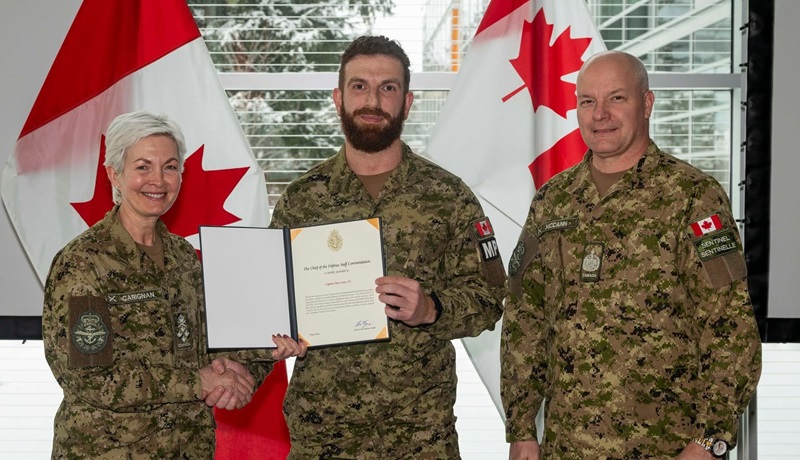
Captain Aoun received the Chief of the Defence Staff Commendation in recognition of his exemplary and life-saving actions, including administering naloxone to a person experiencing an opioid overdose.
Understanding the current risk
As we mark International Overdose Awareness Day, trends show substance-related harms remain significantly higher than pre-pandemic levels, despite encouraging signs of improvement in 2025. Today’s illegal drug supply remains highly toxic and unpredictable. Substances are often mixed and many overdoses involve combinations of depressants, stimulants, additional opioids, and other contaminants, making overdoses harder to predict and respond to. As a result, Canada’s drug toxicity crisis continues to affect individuals, families, communities, and members of the Defence Team.
Naloxone and overdose response
You do not need to know exactly what substance was used to respond to an overdose.
Naloxone is a safe, effective, and easy-to-use medication that can temporarily reverse the effects of an opioid overdose. If someone shows signs of poisoning or overdose, act quickly: call 911 and provide appropriate first aid and naloxone, if available. An overdose can be fatal; a rapid response can save a life.
Learn how to use naloxone in just a few minutes by watching this short video or by participating in training available in your area. Take home naloxone kits are available through pharmacies without a prescription.
Taking action across the Defence Team
Naloxone is becoming more widely available, and awareness of mental health and substance use continues to grow. Across Canada, individuals, communities, and organizations are taking action to reduce substance-related harms and support those affected by substance use. One example is Captain Aoun, who administered naloxone to an Ottawa resident experiencing an opioid overdose. In recognition of his life-saving actions, he was awarded the Chief of the Defence Staff Commendation.
Local initiatives are also helping build knowledge, skills, and supportive environments. At CFB Esquimalt, a recent naloxone workshop provided Defence Team members with practical knowledge and skills to respond to an overdose emergency.
Visit Stop Overdoses to learn how to recognize and respond to an overdose, reduce overdose risk, and how to have supportive conversations about substance use.
Supporting yourself and others through iCARE
Reducing stigma can help create an environment where people feel more comfortable seeking support. Recovery is possible, and with the right care, CAF members can recover from substance use disorders and continue successful careers. By staying informed, caring for one another, and being prepared to act, the Defence Team can put iCARE into action while helping protect teammates, workplaces, and communities.
Resources
Get help and support:
- For everyone: Help with Substance Use
- For CAF members and families: Military mental health resources (including Canadian Forces Member Assistance Program (CFMAP) and the Family Information Line)
- For DND public servant employees: Employee Assistance Program (EAP)
Learn more:
- Your local Strengthening the Force program Personnel Support Program (PSP) Health Promotion Office
- Infographic: Defence Team – Know the Signs of Overdose
- Overdose fact sheets (PDF, 2.98 MB)
- Statement from the Council of Chief Medical Officers of Health
- Canadian data and trends: dashboards on opioids and stimulants , benzodiazepines, emerging substances, and community-reported trends
Kristina Laforge and Laura O'Dell – Strengthening the Forces (STF) Substance Use Health team.
STF is the CAF/DND’s health promotion program offering expert information, guidance, training, tools, and leadership support to enhance CAF members’ health and well-being.