
Who is Master Corporal Erik Estrada?
News Article / April 4, 2014
Name: Master Corporal Erik Estrada
Years in the Canadian Armed Forces: 12
Occupation: Aviation systems technician (AVN tech)
Unit: 408 Tactical Helicopter Squadron (THS) based in Edmonton, Alberta, but under the command of 1 Wing Kingston, Ontario
Unit position: AVN tech for first and second line maintenance of the CH-146 Griffon helicopter
By Second Lieutenant Catherine Keyser
Master Corporal Estrada has served 12 years in the Royal Canadian Air Force as an aviation systems (AVN) technician.
His first posting was with the CF-18 Hornet fighter jets at 410 Operational Training Squadron with 4 Wing Cold Lake, Alberta. In 2008, he was posted to 408 Tactical Helicopter Squadron (THS) where he continues to work as an AVN technician with secondary duties as a forward arming replenishment point (FARP) commander.
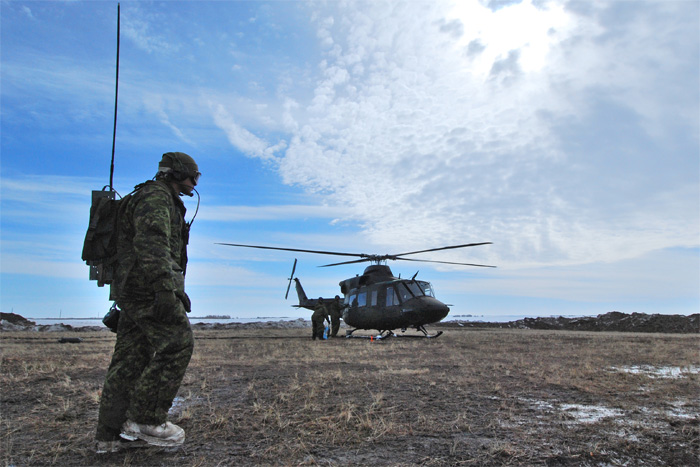
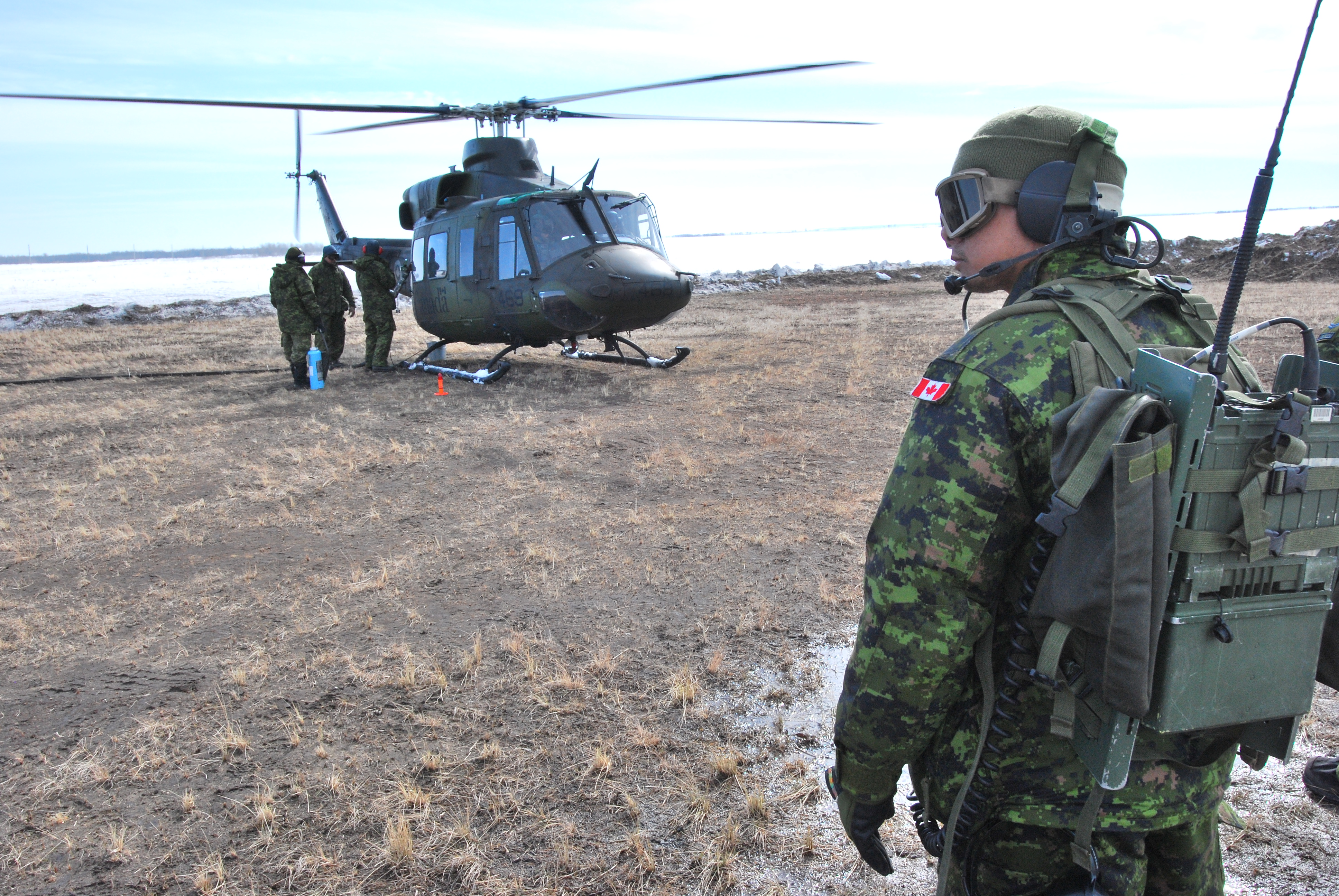
When tactical aviation is deployed on an operation or a military training exercise, the forward arming replenishment point (FARP) is a location designated to be the aircraft refueling point between the base of operations, and the forward operating base (FOB) of the combat arms. The distance between the base of operations and the FOB can be a great distance, and due to the aircraft restraints for fuel loads, the FARP plays an essential role in allowing the aircraft to operate between the two locations and the surrounding area for longer periods of time.
The refueling itself is completed by aircraft technicians through the method called hot close circuit refueling (HCCR), in which the aircraft is being refueled while it is still running on the ground.
While on deployment in a hostile environment, a FARP team will be armed with weapons, but there will normally be an armed escort of combat arms personnel who will secure the FARP and provide combat support if required.
Sight controller/FARP commander
They are in charge of the FARP team, and their primary role is to ensure safety of all personnel while refueling is accomplished. They also ensure the safe operating of equipment, and ensure all standards and protocols are followed. Communications between the operations center of their tactical helicopter unit and the FARP team is maintained by the FARP commander and any aircrew in the operating helicopters.
The set up of the site is another responsibility of the FARP commander. In a tactical environment, they are responsible for the camouflage and concealment of the equipment and the strategic location of the site itself to eliminate observation from the enemy.
Marshaller
Through the use of hand signals with the pilots, they direct the aircraft to the landing zone (LZ) and communicate the start and end of the refueling process. They also look out for the safety of the rest of their crew along with the FARP commander.
Refueller
They refuel the helicopter by operating the nozzle from the bowser refueling vehicle.
Bowser driver
They drive the bowser fuel vehicle and operate the vehicle’s ‘dead man switch’ to direct fuel to the helicopter, similar to an on/off switch.
Fireguard
They are responsible to put out any fires in the immediate area, as well as ensure the safety of the refueller.
“I enjoy being deployed to austere environments, as it provides me challenges,” said Master Corporal Estrada. “It allows me to exercise all aspects of my military training, including my basic soldier skills. It is very much different from my work at the squadron lines, as the FARP team is often deployed with the brigade to be on the forward lines. Here we use skills such as navigation, concealment, sentry, convoy operations and tactical movements.”
Operation Renaissance (Philippines 2013)
“As soon as I had seen the disaster unfold on the news, I knew Canada was going to step up, and I knew I had to step up as well as a member of 408 THS when I received word we were going,” he said.
“My role as an AVN tech in the Philippines was to help maintain the Griffon helicopters as part of the DART [Disaster Assistance Response Team] detachment so that they could deliver humanitarian aid to disaster struck areas of Panay Island. The operation hit close to home, but I knew we were doing a tremendous job with the relief efforts which sped up the road to recovery for the local population. I felt a sense of accomplishment helping out the disaster torn areas. I joined the military for reasons such as this. I felt it was my duty to volunteer to aid the local population.”
Operation Athena (Afghanistan 2009)
“It was a long tour, but I know my role was important as an AVN technician part of the helicopter detachment for Join Task Force Afghanistan,” said Master Corporal Estrada. “I was part of the maintenance team for the Griffon fleet that provided armed escorts and overwatch for the Chinook helicopters. It was a challenging job that provided a sense of accomplishment when you saw all those ground troops come off the Chinook helicopters at Kandahar Air Field.”