
OSBLOCK: Reinventing construction, one block at a time
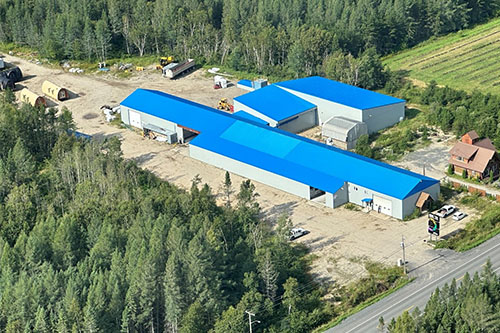
Discover how OSBLOCK is making construction easier with its insulated, easy-to-assemble blocks that are stronger, greener and built with the future in mind.
Summary
|
Organization: OSBLOCK CED’s support has made it possible to: acquire and install two automated assembly lines, boost productivity and fuel OSBLOCK’s growth in the construction market. |
OSBLOCK: Reinventing construction, one block at a time
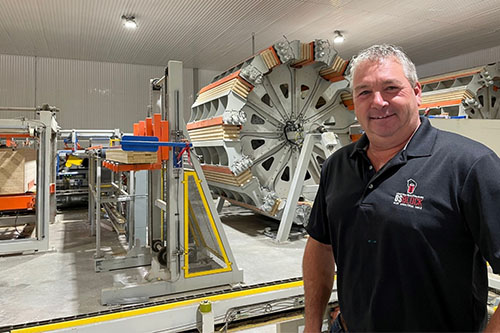
In Saint-Henri-de-Taillon, located in the Saguenay–Lac-Saint-Jean region, a local business aims to simplify builders’ lives while also improving the energy performance of buildings. That is why OSBLOCK has created an insulated block that interlocks like a building toy. Made from recycled materials and designed to withstand the harshest conditions, it allows builders to construct walls that are stronger and faster to assemble and that offer far better insulation than those built using traditional methods.
For founder Marco Tremblay, this innovation is the result of extensive experience in the field.
“I worked in the Canadian North for many years,” he explains. “Up there, we quickly saw the limitations of traditional construction. Materials absorbed water, the buildings lost heat.
I thought to myself that there had to be a simpler and more efficient way to build.”
From log homes to a new system
Before founding OSBLOCK, Marco Tremblay launched a business specializing in log homes. He constructed his own machinery, designed his equipment and built houses inspired by traditional craftsmanship. After selling that first business in 2012, however, he decided to completely rethink the way he built.
The idea took root in the “piece by piece” method, adapted with modern materials. “It really started with log construction,” he explains. “We took what already existed, but we fixed the weaknesses: insulation, thermal bridges, corners, lintels.”
The result is an insulated polystyrene block covered with panels made of Oriented Strand Board (OSB), a material made from compressed wood chips. This type of panel is widely used in construction because it is durable and cost-effective. The addition of clips allows the blocks to be assembled quickly—a bit like building blocks. In practice, only three components are needed to put up a wall: the base, the blocks and the corners. “Building an OSBLOCK wall is easier than assembling IKEA furniture,” summarizes Marco Tremblay.
A product adapted to today’s realities
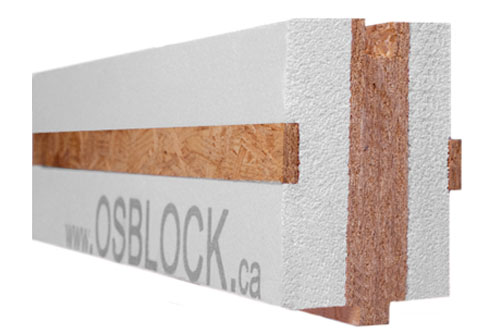
Each block is highly insulated, delivering roughly three times more insulation than a conventional wall made of wood and wool insulation. This helps the home retain heat in winter and stay cool in summer, improving comfort and reducing energy costs. The blocks are also designed to last: They are waterproof and resistant to extreme cold and heat and remain undamaged by insects. On top of these advantages, they help reduce waste on construction sites. Scraps are recovered and leftover polystyrene pieces are returned to the factory to be reprocessed into raw material. Nothing is lost; everything is reused.
“We wanted to create a simple, effective, durable product. One that removes irritants from constructions sites, saves times and reduces occupants’ energy bills,” explains Tremblay.
CED’s support: a key lever
For the business to move from prototype to large-scale production, backing from CED proved essential. Two projects were funded: one in 2019 and another in 2024. This assistance made it possible to acquire and install automated production lines—an important milestone in the business’s growth.
“The funding allowed us to automate our production. Today, each block is manufactured in 42 seconds in a facility that is nearly fully robotic. This puts us far ahead of traditional methods,” notes Tremblay.
In total, CED has provided more than $2.2 million for OSBLOCK’s modernization and expansion. This investment has directly contributed to productivity gains, job creation and market diversification.
A regional SME with big ambitions
The business’s growth is reflected first and foremost in concrete projects in Quebec and across Canada. In the North and in remote regions, where wood is scarce and expensive, OSBLOCK is rolling out its solution and adapting it to local realities, notably by using hard-to-recycle plastics. These projects are carried out by local contractors who use OSBLOCK blocks. Recent achievements include two six-unit buildings in Kuujjuaq in 2022 and 2023, six homes in Manitoba’s St. Theresa Point, and a project of roughly twenty homes now nearing completion in Colville Lake, Northwest Territories. OSBLOCK also aims to expand internationally and plans to eventually establish block-manufacturing facilities abroad to process locally available materials on site.
“In many countries, plastic waste is a huge problem. The idea is to turn this challenge into a solution. We can clean up an area by reusing plastic and turning it into durable building blocks. This results in sturdy, affordable homes while reducing environmental impact,” explains Tremblay.
Building the future, block by block
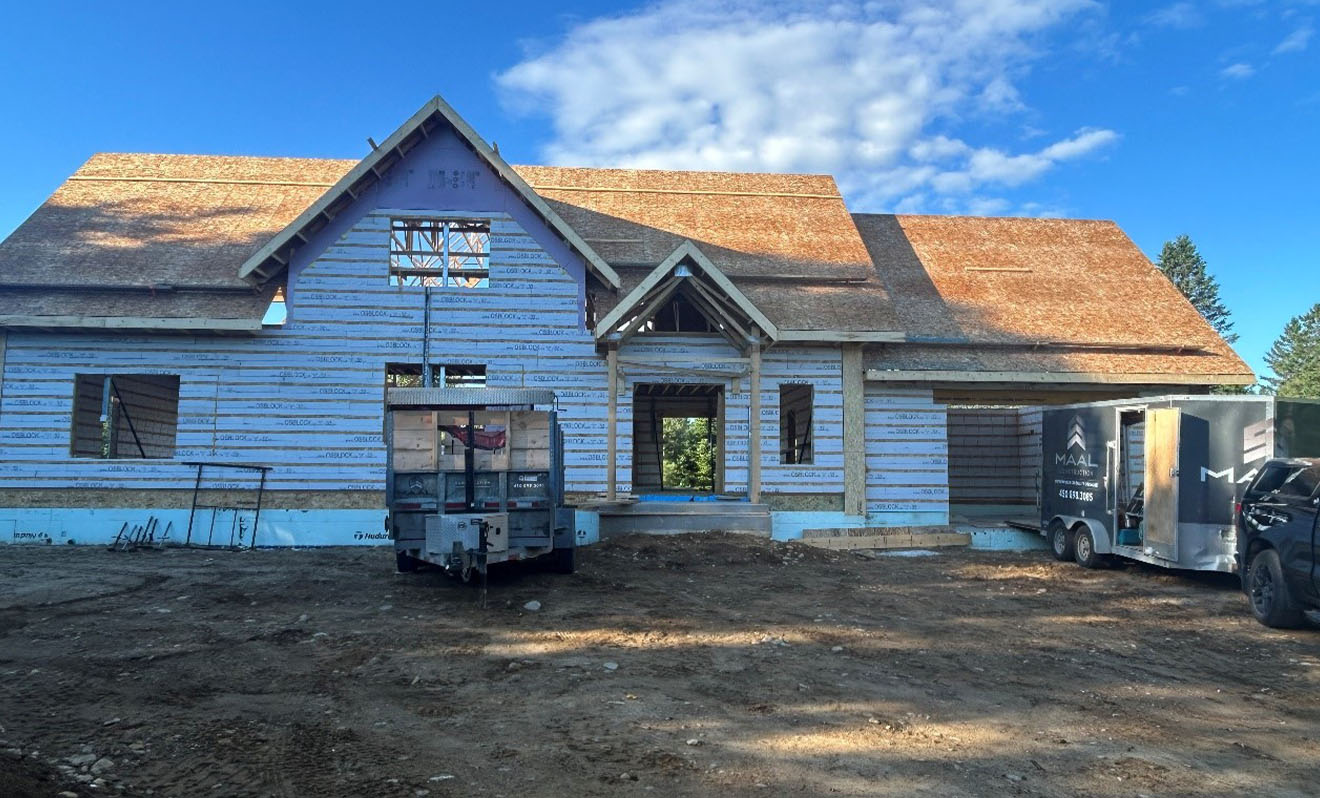
OSBLOCK is moving forward with the same conviction it had when it started: to make construction simpler, faster and more sustainable. The business is continuing to refine its blocks and exploring new recycled materials, and it wants its expertise to be of use elsewhere around the world.
For Marco Tremblay, innovation truly matters only when it crosses borders and helps other communities build better using their own resources.
“We want to build differently—in a more straightforward and sustainable way. Our goal is to give contractors a tool that changes the way they work and give people homes that are better insulated and more durable.”