
Outaouais Business Office: contrasting territories
Through its 12 business offices connected to their communities, Canada Economic Development for Quebec Regions (CED) is on the ground working directly with businesses and communities across Quebec, supporting their development while taking into account the realities of each region.
Below we present the Outaouais Business Office.

Between urban hubs, natural resources and local expertise
At the crossroads of a structuring urban hub and vast rural areas rich in natural resources, the territory of the Outaouais Business Office (BO) covers a range of economic realities that are both contrasting and profoundly complementary. It encompasses the Outaouais region and part of the Laurentides region, two territories where economic development hinges as much on innovation and services as on the promotion of communities, local expertise and tourism.
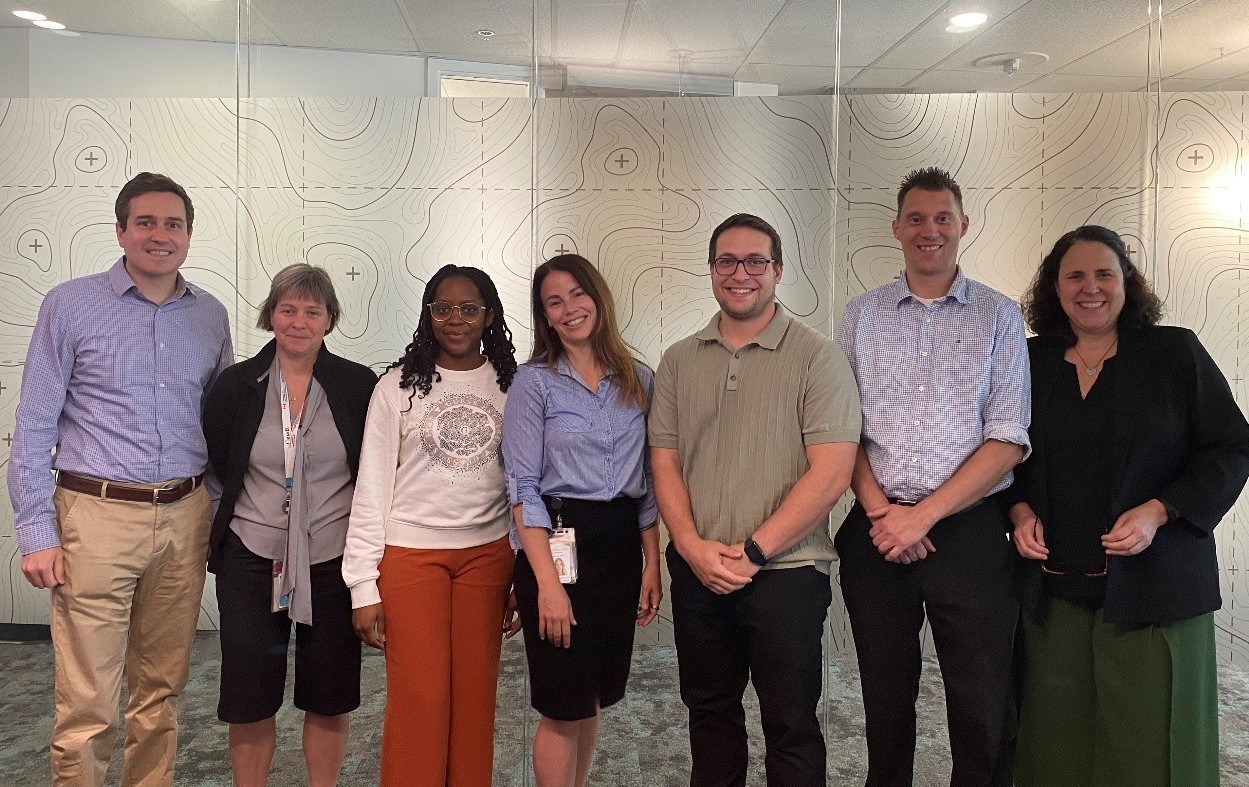
Navigating multiple realities
In the Outaouais region, this duality is particularly pronounced. Gatineau acts as a true regional metropolis, driven by a largely service-oriented economy, public administration and a fast-growing ecosystem in cybersecurity, information technology and urban tourism. For example, Tyto Robotics, a CED-supported business, is a world leader in manufacturing tools for testing and optimizing drones. Ottawa’s immediate proximity influences the dynamics in employment, wages, talent attraction and business establishment, contributing to a more resilient and diversified economy.
However, the reality is different a few kilometres away. In the rural regional county municipalities (RCMs) of Pontiac, Papineau, La Vallée-de-la-Gatineau and, to a lesser extent, Les Collines-de-l’Outaouais, the economy is based more on forestry, agri-food, holiday retreats and outdoor tourism. These areas face cross-cutting challenges: an aging population, youth out-migration, low manufacturing diversification and increased dependence on the public sector. Yet they do have undeniable assets: exceptional landscapes, abundant forest resources, significant maple syrup production potential, and growth in adventure and nature tourism.
The Laurentides region has a clear regional signature that is well recognized outside Quebec. The economy is largely structured around year-round tourism (outdoor, mountain, holiday retreat, major event) with iconic hubs such as Mont-Tremblant, Saint-Sauveur and Le P’tit Train du Nord. The region therefore combines a robust tourism economy with urban and industrial hubs, particularly around Saint-Jérôme, which plays a key administrative and manufacturing role.
The Laurentides region also counts on a well-established innovation ecosystem, including three college centres for technology transfer, two CEGEPs and a recognized transportation electrification technology hub led by the CED-supported Innovative Vehicle Institute, among others. Moreover, there are leading businesses in the forestry and manufacturing sectors such as Libellule Monde and Maison et roulotte Usitech, as well as a fast-growing circular economy. However, several northern RCMs require special attention.
It is precisely within this contrast—between administrative metropolis and forested areas, between urban innovation and regions seeking diversification—that the Outaouais Business Office deploys its know-how with agility and relevance.
Intervening where it matters

The team is extraordinarily responsive and embodies the proximity to the field that characterizes the BO’s work. This was demonstrated in a recent temporary initiative to support Quebec’s economically vulnerable RCMs.
Customized funding approach for Quebec’s economically vulnerable RCMs
Although CED has already eased the requirements for assistance to Quebec’s 75 RCMs with low growth potential, additional flexibility makes it possible to expand the types of assistance offered and the nature of the projects supported in the eight most economically vulnerable RCMs until June 2027. These eight RCMs are the Kativik Regional Government, MRC Avignon, MRC de La Haute-Gaspésie, MRC La Tuque, MRC de La Vallée-de-la-Gatineau, MRC du Golfe-du-Saint-Laurent, MRC du Rocher-Percé and MRC de Pontiac.
The BO’s team takes the time to understand local dynamics, align with partners’ priorities and clarify each party’s role. Throughout the process, it acts as a point of convergence and coherence, facilitating the financing package and aligning interventions so they remain adapted to local realities.
This collaborative approach not only maximizes the available levers but also strengthens project leads’ capacity to support their projects in the long term. The objective goes beyond simply funding a project: CED also helps the community structure itself and become more self-reliant.
Supporting the transformation: the Chutes Coulonge example
With this in mind, the work began with Chutes Coulonge, a non-profit organization located in the MRC de Pontiac. Held back in its growth by capacity constraints, the organization sought to structure an investment project to increase traffic and expand its activities beyond the summer season.
“We worked with both the proponent and the partners to clarify the scope of the project, prioritize investments and draw up realistic financial forecasts,” explains Nancie Villeneuve, Regional Director of the Outaouais BO. Through its work, the BO united stakeholders around a shared vision (MRC de Pontiac, SADC Pontiac, Services Québec, Outaouais Tourism and sponsors), adapted the funding terms to the reality of a growing NPO and provided coherent support aligned with the sector’s needs.

The result: enhanced reception capacity, an improved customer experience and activities that are now available year-round. These are concrete benefits for the Pontiac, which has seen this iconic site gain in appeal and the regional offering become more diverse, thanks to a coordinated, structured effort.
A catalytic role
Like CED’s other business offices, the Outaouais office fully embodies its mandate. It is a strategic partner, a neutral guide and, above all, a catalyst for innovation and sustainable development. In regions with significant gaps but immense potential, this ability to work with finesse, coherence and proximity makes all the difference. After all, CED’s role is precisely this: to ensure the economic development of all Quebec regions.