
2024-2025 Report to Parliament – Category-Based Selection in Express Entry
Contents
- List of Figures
- Acronym Glossary
- Introduction
- Category-Based Selection: Legislative Requirements
- How Does Category-Based Selection Work in Express Entry?
- List of Categories Established for Category-Based Selection in 2024
- Criteria for the Establishment of Categories
- Process Applied for the Establishment of Categories
- Conclusion
- Annex A: Category-Based Selection – 2024 List of Eligible Occupations
- Annex B: Category-Based Selection – 2025 List of Eligible Occupations
List of Figures
Acronym Glossary
- CEC
- Canadian Experience Class
- COPS
- Canadian Occupational Projection System
- CRS
- Comprehensive Ranking System
- ESDC
- Employment and Social Development Canada
- FSTP
- Federal Skilled Trades Program
- FSWP
- Federal Skilled Worker Program
- IRCC
- Immigration, Refugees and Citizenship Canada
- IRPA
- Immigration and Refugee Protection Act
- MEC
- Minimum Entry Criteria
- NOC
- National Occupational Classification
- STEM
- Science, Technology, Engineering and Math
- TEER
- Training, Education, Experience and Responsibilities
Introduction
Launched in January 2015, Express Entry is Canada’s flagship application management system for three Federal High Skilled (FHS) permanent economic immigration programs, i.e., the Federal Skilled Worker Program (FSWP), Federal Skilled Trades Program (FSTP) and Canadian Experience Class (CEC) and a portion of the Provincial Nominee Program (PNP). Express Entry provides the Government of Canada with the means to manage the intake of applications for permanent residence under the key economic immigration programs listed above, while facilitating the selection of individuals who are most likely to succeed economically in Canada.
On June 23, 2022, legislative amendments were made to the Immigration and Refugee Protection Act (IRPA) that authorize the Minister of Immigration, Refugees, and Citizenship (the Minister) to invite foreign nationals to apply for permanent residence through Express Entry on a new basis – their eligibility to be members of a category that supports an identified economic goal. This authority, referred to as “category-based selection,” enables Express Entry to be more responsive to the changing economic and labour market needs, while building on the human capital approach that has been a hallmark of the country’s successful economic immigration system.
In accordance with subsection 10.5(3) of the IRPA, this report provides an overview of the categories that were established, the selection criteria, and the process applied for the establishment of the categories in fiscal year 2024-2025.
Category-Based Selection: Legislative Requirements
Category-based selection increases flexibility to select candidates in the Express Entry pool whose profiles respond to Canada’s evolving economic needs and Government priorities. Categories are based on key criteria, such as the ability to communicate in an official language or work experience in a specific occupation, and will change over time.
IRPA sets out three key legislative requirements that underpin the Minister’s authority to use category-based selection:
- Economic goal, as specified in subsection 10.3 (1.1):
- “If the Minister establishes a category in an instruction […] the Minister shall set out, in the instruction, the economic goal that the Minister seeks to support in establishing the category.”
- Public consultation process, as specified in subsection 10.5 (1):
- “For the purpose of establishing categories of eligible foreign nationals […] the Minister must engage in a public consultation process with stakeholders, including provinces and territories, industry, unions, employers, workers, worker advocacy groups, settlement provider organizations and immigration researchers and practitioners, to obtain information, advice and recommendations in respect of the labour market conditions, including occupations expected to face shortage conditions, as well as on how categories can be formed to meet economic goals.”
- Annual Reporting, as specified in subsection 10.5 (3):
- “The Minister shall cause to be tabled before each House of Parliament […] a report containing the list of categories of eligible foreign nationals established in an instruction […] and the selection of criteria and the process applied for the establishment of those categories.”
The legislative requirements govern the process of establishing a category and the responsibility to report on the process of category-based selection following the end of each fiscal year.
How Does Category-Based Selection Work in Express Entry?
The additional flexibility derived through category-based selection comes from the introduction of category-based invitation rounds. Category-based selection allows IRCC to use the Express Entry system to invite a candidates for permanent residence, whose profile corresponds to identified economic goals. Candidates in the Express Entry pool who are eligible for one of the programs managed by Express Entry, and who meet category-specific criteria for a given round, are ranked based on their Comprehensive Ranking System (CRS) score. Top-ranking candidates are invited to apply for permanent residence.
Figure 1 illustrates how category-based selection works in Express Entry.
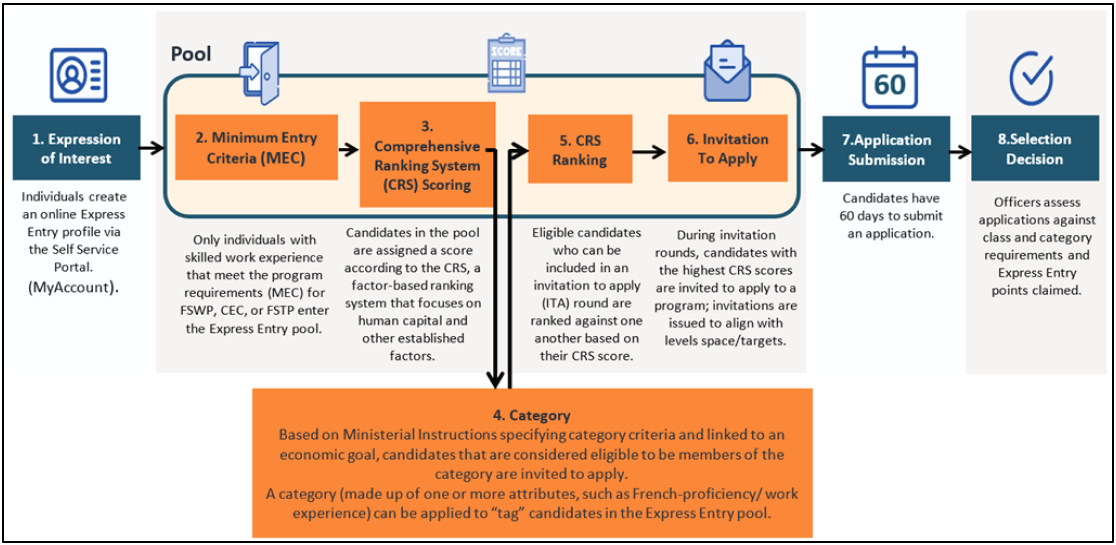
Figure 1: How category-based selection works in Express Entry
Profile Submission
1. Expression of Interest
Individuals create an online Express Entry profile.
Express Entry Pool
2. Minimum Entry Criteria (MEC)
Only individuals with skilled work experience that meet the program requirements (MEC) for FSWP, CEC, or FSTP enter the Express Entry pool.
3. Comprehensive Ranking System (CRS) Scoring
Candidates in the pool are assigned a score according to the CRS, a factor-based ranking system that focuses on human capital and other established factors.
4. Category
Based on Ministerial Instructions specifying category criteria and linked to an economic goal, candidates that are considered eligible to be members of the category are invited to apply.
A category (made up of one or more criteria, such as French-language proficiency or work experience) can be applied to ‘tag’ candidates in the Express Entry pool.
5. CRS Ranking
Eligible candidates who can be included in a given invitation to apply (ITA) round are ranked against one another based on their CRS score.
6. Invitation To Apply (ITA)
During invitation rounds, candidates with the highest CRS scores are invited to apply to a program; invitations are issued to align with levels space/targets.
Application for Permanent Residence
7. Application Submission
Candidates have 60 days to submit an application.
8. Selection Decision
Officers assess applications against program and category requirements and verify Express Entry points claimed.
As Figure 1 demonstrates, to qualify for a category-based invitation round, individuals must submit an Expression of Interest, and meet the Minimum Entry Criteria (MEC) for one of the programs managed by Express Entry in order to enter the Express Entry pool and receive a CRS score. At the time of a category invitation round, candidates who are eligible for a category are ranked against one another based on their CRS scores. During the invitation round, candidates eligible for the category and with the highest CRS scores are invited to apply for permanent residence.
List of Categories Established for Category-Based Selection
Since the introduction of category-based selection in 2023, priorities and categories have been reviewed and established on an annual basis, early in the calendar year. This report discusses categories established in both 2024 and 2025, to meet the obligation to report on the process for categories in place in fiscal year 2024-2025.
Categories established in 2024
The Minister established six categories of eligible foreign nationals in instructions made under paragraph 10.3(1)(h.1)(iii) and 10.3(1)(h.2) of IRPA. These categories were the same as those in place in 2023:
- French-language proficiency
- Healthcare occupations
- Science, Technology, Engineering and Math (STEM) occupations
- Trade occupations
- Transport occupations
- Agriculture and agri-food occupations
The list of occupations that were eligible under each of the categories in 2024 can be found in Annex A. The processes by which these categories were -identified and established is explained in the next two sections of this report.
Categories established in 2025
The Minister established six categories for eligible foreign nationals in 2025, in instructions made under paragraph 10.3(1)(h.1)(iii) and 10.3(1)(h.2) of IRPA.
- French-language proficiency
- Healthcare and social services occupations
- Science, Technology, Engineering and Math (STEM) occupations
- Trade occupations
- Agriculture and agri-food occupations
- Education occupations
The list of occupations that were eligible under each of the categories in 2025 can be found in Annex B. The transport category that had been in place in 2024 was sunsetted while an education category was introduced in 2025. These changes are explained in the next two sections of this report.
Criteria for the Establishment of Categories
Categories are established for the purpose of responding to specific, identified economic goals. In establishing the 2024 and 2025 categories, the Department reviewed government economic priorities, the Policy on Francophone Immigration, and labour market data, and consulted and engaged government departments, provincial and territorial partners, stakeholders and the public.
Labour Market Information and Data
Labour market information and data help to identify the current context of economic and labour needs. Such data can, for instance, indicate risks of long-term labour shortages in specific occupations, particularly those that are structural in nature due to demographic shifts.
To determine categories for 2024 and 2025, a focus was placed on occupations anticipated to be at risk of facing long-term labour shortages in Canada, according to data from Employment and Social Development Canada (ESDC), through its Canadian Occupational Projection System (COPS). The ESDC COPS projections take into account existing openings (e.g., vacancies) and labour supply (e.g., unemployment), as well as new labour demand (e.g., retirements, economic growth) and supply (e.g., school leavers, new immigrants, etc.). In 2024, COPS labour market projections reflected the state of the labour market covering the period from 2022-2031. By 2025 these projections had been updated to cover the period from 2024-2033 and reflected more recent shifts in the labour market. The newly updated projections informed category establishment for 2025 as well as the list of eligible occupations within each category. It is expected that prioritizing the selection of economic immigrants with work experience in these occupations anticipated to face long-term shortages will increase the likelihood of addressing these shortages.
In addition to the robust projections provided by COPS, other labour market data was also evaluated such as Statistics Canada’s job vacancy, wage, and employment data to help identify current trends for the occupations considered under category-based selection. This type of data informed considerations of how many invitations to apply should be issued in support of an economic priority of addressing labour shortages in the context of limited levels space.
The Department also reviewed relevant information related to labour market conditions for French-speaking workers, including reports from other government departments, past consultations, and IRCC’s ongoing dialogue with Francophone community stakeholders.
Engagement and Consultations
Prior to the establishment of a category in Express Entry, IRPA requires the Minister to gather feedback from provinces and territories, as well as members of industry, unions, employers and workers, worker advocacy groups, settlement provider organisations, and immigration researchers and practitioners.
Input from partners and stakeholders informs whether and how IRCC uses category-based selection as a tool to address particular needs and priorities, and whether other immigration tools may be more appropriate (such as temporary programs, federal pilots, regional immigration programs, etc.).
Consultations on 2024 categories
The Department held a public consultation on immigration levels from July 10 to August 16, 2023, which included questions specific to Express Entry and category-based selection to inform the review and establishment of categories for 2024. An online survey was made available to the public on IRCC’s website, and 4,780 stakeholder organizations across Canada were invited by email to take part, marking a substantial increase from the 2,867 stakeholders invited in 2022.
In parallel, IRCC engaged on potential priorities, needs and categories with provincial and territorial representatives. Through the Forum of Ministers Responsible for Immigration (FMRI), IRCC invited provincial and territorial partners to provide their input and advice in writing.
A summary of input received from stakeholders is available on IRCC’s website, and includes a list of participating organizations. Findings from these consultations supported the use of category-based selection to address long-term labour market shortages. The labour needs most often mentioned were in healthcare, skilled trades, and transportation and related occupations.
While a question specific to the French-language proficiency category in Express Entry was not asked, findings on a broader question indicated that improved selection mechanisms for Francophone and bilingual immigrants was one of the top 3 aspects considered most useful to support increased Francophone immigration. The department was also informed by earlier consultation findings on Francophone immigration.
This input informed the establishment of 2024 categories.
Consultations on 2025 categories
The Department held a public consultation from June 27 to July 28, 2024 on Express Entry economic priorities and categories under consideration for category-based selection in 2025. Three economic priorities were consulted on: two related to a continued focus on addressing structural labour market shortages and supporting economic growth through Francophone immigration outside Quebec, while a third new priority focused on addressing emerging labour needs across a number of key industries and sectors that could help Canada achieve its goal of working towards a sustainable, growing, and resilient economy. Possible areas of focus for this new economic priority were natural resources, new technologies, and applied sciences. An online survey was made available to the public on IRCC’s website, and just over 6,000 email invitations were sent to organizations across Canada.
In parallel, provincial and territorial counterparts were invited to provide written input on potential economic priorities, needs and categories. This request was again part of broader and ongoing collaboration between the federal government and provinces and territories through the Forum of Ministers Responsible for Immigration (FMRI).
A summary of input received from stakeholders is available on IRCC’s website, and includes a list of participating organizations. Findings from these consultations validated the continued relevance, for 2025, of the 2024 economic priority on addressing long-term labour market shortages, along with the associated occupational categories being considered for 2025, particularly in sectors such as healthcare, trades, and STEM. A new category to address labour shortages in education received similar levels of support to other occupational categories, and particularly in relation to addressing shortages in daycares.
Views on the use of Express Entry to support economic growth through Francophone immigration outside Quebec were more ambivalent, with mixed responses on its value and a minority of respondents agreeing with the need to focus selection on candidates with strong French-language proficiency skills in 2025.
Overall, support for the new economic priority and areas of focus under consideration for 2025 was moderate, with many respondents considering this focus could drive innovation and help build a more resilient and competitive economy, and others suggesting there were limited labour needs in these areas.
This input informed the establishment of 2025 categories.
Category Analysis and Impact Simulations
Category analysis and simulations exercises were conducted in 2024 and 2025, using data from the Express Entry pool. These exercises aimed to assess how categories may impact candidate selection, and understand equity and diversity implications, complementarity with other initiatives, as well as any potential trade-offs related to the attainment of other economic goals and priorities.
Process Applied for the Establishment of Categories
Categories established in 2024
Based on the input gathered through consultation and labour market information, category-based selection sought to support two economic goals in 2024:
- Supporting economic growth through Francophone immigration outside Quebec; and
- Contributing to Canada’s long-term economic success by improving the responsiveness of federal skilled immigration to the labour market.
Category #1: French-language proficiency
The French-language proficiency category was continued to support economic growth through Francophone immigration outside of Quebec, a commitment under the Department’s policy on Francophone immigration in January, 2024. Francophone immigration plays a crucial role in supporting Canada’s economic growth by helping meet labour needs for French-speaking and bilingual workers across the country, as well as by enhancing the economic vitality of Francophone minority communities.
To qualify for the French-language proficiency category, candidates must have French language test results demonstrating a competency of Niveaux de competence linguistique canadiens (NCLC) 7 or above in all four language abilities, in addition to meeting the eligibility requirements for one the Express Entry programs.
Categories #2-6: Workers with experience in occupations that are in shortage
The following occupation-based categories were continued to contribute to Canada’s long-term economic success by improving the responsiveness of federal skilled immigration to the labour market:
- Healthcare and social services occupations
- Science, Technology, Engineering and Mathematics (STEM) occupations
- Trade occupations
- Transport occupations
- Agriculture and agri-food occupations
The eligible occupations for each category were anticipated to be at risk of facing long-term labour shortages in Canada between 2022 and 2031, according to the robust labour market projections by COPS. The list of occupations that were eligible under each of the categories can be found in Annex A.
To qualify for the occupation-based categories, candidates needed to have at least six months of continuous work experience, obtained within the preceding three-year period, in one of the eligible occupations that were part of the categories.
Categories established in 2025
In 2025, the French-language proficiency category was renewed to continue supporting economic growth and meeting labour market needs for French-speaking and bilingual workers outside Quebec. Based on ESDC’s COPS data on long term labour shortages between 2024 and 2033, four occupational categories (Healthcare and social services, Science, Technology, Engineering and Math (STEM), Trades, Agriculture and agri-food) were re-established in 2025, but comprised of a new list of occupations to align with the recent COPS update that reflects shifting trends in the labour market.
Consultations held in 2024 validated the continued relevance of the economic priority focused on addressing long-term labour market shortages, along with the associated occupational categories for 2025, particularly in sectors such as healthcare, trades, and STEM.
In addition to the renewal of four 2024 categories, there were two changes to category-based selection in 2025. An Education category was introduced. Consultations held in 2024 showed support for the new education category. Sunsetting the transport category provided more immigration space to increase Canadian Experience Class (CEC) invitations that support the transition of temporary residents with high human capital to permanent residence.
Conclusion
The Minister has the authority to invite foreign nationals to apply for permanent residence through category-based selection in Express Entry. Through analysis of labour market information and data, and engagement and consultations with partners and stakeholders, the Minister continued five categories from year 2024 and introduced a new education category in 2025. These categories aimed to strengthen Canada’s ability to address for long-term labour shortages and specifically for the French-language proficiency category, to support economic growth through Francophone migration outside of Quebec.
IRCC continues to review labour market information and engage with provincial and territorial partners and stakeholders to determine whether selected categories remain relevant or new categories must be introduced to respond to changing labour market conditions. IRCC will continue to monitor Express Entry and category-based selection to examine different ways the system could be used to ensure that Canada continues to derive maximum benefit from economic immigration in a rapidly changing environment.
Annex A: Category-Based Selection – 2024 List of Eligible Occupations
| Occupation | 2021 NOC Code | 2021 TEER Level |
|---|---|---|
| Engineering managers | 20010 | 0 |
| Architecture and science managers | 20011 | 0 |
| Computer and information systems managers | 20012 | 0 |
| Architects | 21200 | 1 |
| Landscape Architects | 21201 | 1 |
| Urban and land use planners | 21202 | 1 |
| Land surveyors | 21203 | 1 |
| Mathematicians, statisticians and actuaries | 21210 | 1 |
| Data scientists | 21211 | 1 |
| Cybersecurity specialists | 21220 | 1 |
| Business systems specialists | 21221 | 1 |
| Information systems specialists | 21222 | 1 |
| Database analysts and data administrators | 21223 | 1 |
| Computer systems developers and programmers | 21230 | 1 |
| Software engineers and designers | 21231 | 1 |
| Software developers and programmers | 21232 | 1 |
| Web designers | 21233 | 1 |
| Web developers and programmers | 21234 | 1 |
| Civil Engineers | 21300 | 1 |
| Electrical and electronics engineers | 21310 | 1 |
| Computer engineers (except software engineers and designers) | 21311 | 1 |
| Industrial and manufacturing engineers | 21321 | 1 |
| Metallurgical and materials engineers | 21322 | 1 |
| Natural and applied science policy researchers, consultants and program officers | 41400 | 1 |
| Occupation | 2021 NOC Code | 2021 TEER |
|---|---|---|
| Specialists in clinical and laboratory medicine | 31100 | 1 |
| Specialists in surgery | 31101 | 1 |
| General practitioners and family physicians | 31102 | 1 |
| Veterinarians | 31103 | 1 |
| Dentists | 31110 | 1 |
| Optometrists | 31111 | 1 |
| Audiologists and speech language pathologists | 31112 | 1 |
| Dieticians and nutritionists | 31121 | 1 |
| Psychologists | 31200 | 1 |
| Chiropractors | 31201 | 1 |
| Physiotherapists | 31202 | 1 |
| Occupational therapists | 31203 | 1 |
| Kinesiologists and other professional occupations in therapy and assessment | 31204 | 1 |
| Other professional occupations in health diagnosing and treating | 31209 | 1 |
| Nursing co-ordinators and supervisors | 31300 | 1 |
| Registered nurses and registered psychiatric nurses | 31301 | 1 |
| Nurse practitioners | 31302 | 1 |
| Physician assistants, midwives and allied health professionals | 31303 | 1 |
| Licensed practical nurses | 32101 | 2 |
| Paramedical occupations | 32102 | 2 |
| Respiratory therapists, clinical perfusionists and cardiopulmonary technologists | 32103 | 2 |
| Other technical occupations in therapy and assessment | 32109 | 2 |
| Medical laboratory technologists | 32120 | 2 |
| Medical radiation technologists | 32121 | 2 |
| Medical sonographers | 32122 | 2 |
| Traditional Chinese medicine practitioners and acupuncturists | 32200 | 2 |
| Massage therapists | 32201 | 2 |
| Other practitioners of natural healing | 32209 | 2 |
| Medical laboratory assistants and related technical occupations | 33101 | 3 |
| Nurse aides, orderlies and patient service associates | 33102 | 3 |
| Pharmacy technical assistants and pharmacy assistants | 33103 | 3 |
| Other assisting occupations in support of health services | 33109 | 3 |
| Occupation | 2021 NOC Code | 2021 TEER |
|---|---|---|
| Agricultural service contractors and farm supervisors | 82030 | 2 |
| Contractors and supervisors, landscaping, grounds maintenance and horticulture services | 82031 | 2 |
| Butchers - retail and wholesale | 63201 | 3 |
| Occupation | 2021 NOC Code | 2021 TEER |
|---|---|---|
| Contractors and supervisors, other construction trades, installers, repairers and servicers | 72014 | 2 |
| Welders and related machine operators | 72106 | 2 |
| Electricians (except industrial and power system) | 72200 | 2 |
| Plumbers | 72300 | 2 |
| Carpenters | 72310 | 2 |
| Construction millwrights and industrial mechanics | 72400 | 2 |
| Heating, refrigeration and air conditioning mechanics | 72402 | 2 |
| Machine fitters | 72405 | 2 |
| Elevator constructors and mechanics | 72406 | 2 |
| Residential and commercial installers and servicers | 73200 | 3 |
| Occupation | 2021 NOC Code | 2021 TEER |
|---|---|---|
| Managers in transportation | 70020 | 0 |
| Railway carmen/women | 72403 | 2 |
| Aircraft mechanics and aircraft inspectors | 72404 | 2 |
| Air pilots, flight engineers and flying instructors | 72600 | 2 |
| Air traffic controllers and related occupations | 72601 | 2 |
| Deck officers, water transport | 72602 | 2 |
| Engineer officers, water transport | 72603 | 2 |
| Railway traffic controllers and marine traffic regulators | 72604 | 2 |
| Transport Truck Drivers | 73300 | 3 |
| Aircraft assemblers and aircraft assembly inspectors | 93200 | 3 |
Annex B: Category-Based Selection 2025 – List of Eligible Occupations
| Occupation | 2021 NOC Code | 2021 TEER Level |
|---|---|---|
| Architecture and science managers | 20011 | 0 |
| Civil Engineers | 21300 | 1 |
| Cybersecurity specialists | 21220 | 1 |
| Electrical and electronics engineers | 21310 | 1 |
| Geological Engineers | 21331 | 1 |
| Industrial and manufacturing engineers | 21321 | 1 |
| Mechanical Engineers | 21301 | 1 |
| Civil engineering technologists and technicians | 22300 | 2 |
| Electrical and electronics engineering technologists and technicians | 22310 | 2 |
| Mechanical Engineering Technologists and Technicians | 22301 | 2 |
| Insurance agents and brokers | 63100 | 3 |
| Occupation | 2021 NOC Code | 2021 TEER |
|---|---|---|
| Audiologists and speech language pathologists | 31112 | 1 |
| Chiropractors | 31201 | 1 |
| Dentists | 31110 | 1 |
| Dieticians and nutritionists | 31121 | 1 |
| General practitioners and family physicians | 31102 | 1 |
| Nurse practitioners | 31302 | 1 |
| Nursing co-ordinators and supervisors | 31300 | 1 |
| Occupational therapists | 31203 | 1 |
| Optometrists | 31111 | 1 |
| Other professional occupations in health diagnosing and treating | 31209 | 1 |
| Pharmacists | 31120 | 1 |
| Physician assistants, midwives and allied health professionals | 31303 | 1 |
| Physiotherapists | 31202 | 1 |
| Psychologists | 31200 | 1 |
| Registered nurses and registered psychiatric nurses | 31301 | 1 |
| Social workers | 41300 | 1 |
| Specialists in clinical and laboratory medicine | 31100 | 1 |
| Specialists in surgery | 31101 | 1 |
| Therapists in counselling and related specialized therapies | 41301 | 1 |
| Veterinarians | 31103 | 1 |
| Animal health technologists and veterinary technicians | 32104 | 2 |
| Cardiology technologists and electrophysiological diagnostic technologists | 32123 | 2 |
| Dental hygienists and dental therapists | 32111 | 2 |
| Licensed practical nurses | 32101 | 2 |
| Massage therapists | 32201 | 2 |
| Medical laboratory technologists | 32120 | 2 |
| Medical radiation technologists | 32121 | 2 |
| Medical sonographers | 32122 | 2 |
| Other medical technologists and technicians | 32129 | 2 |
| Other technical occupations in therapy and assessment | 32109 | 2 |
| Paramedical occupations | 32102 | 2 |
| Pharmacy technicians | 32124 | 2 |
| Respiratory therapists, clinical perfusionists and cardiopulmonary technologists | 32103 | 2 |
| Social and community service workers | 42201 | 2 |
| Medical laboratory assistants and related technical occupations | 33101 | 3 |
| Nurse aides, orderlies and patient service associates | 33102 | 3 |
| Pharmacy technical assistants and pharmacy assistants | 33103 | 3 |
| Occupation | 2021 NOC Code | 2021 TEER |
|---|---|---|
| Butchers - retail and wholesale | 63201 | 3 |
| Occupation | 2021 NOC Code | 2021 TEER |
|---|---|---|
| Home building and renovation managers | 70011 | 0 |
| Construction managers | 70010 | 0 |
| Contractors and supervisors, oil and gas drilling and services | 82021 | 2 |
| Other technical trades and related occupations | 72999 | 2 |
| Water well drillers | 72501 | 2 |
| Electrical mechanics | 72422 | 2 |
| Heating, refrigeration and air conditioning mechanics | 72402 | 2 |
| Heavy-duty equipment mechanics | 72401 | 2 |
| Construction millwrights and industrial mechanics | 72400 | 2 |
| Bricklayers | 72320 | 2 |
| Cabinetmakers | 72311 | 2 |
| Carpenters | 72310 | 2 |
| Gas fitters | 72302 | 2 |
| Plumbers | 72300 | 2 |
| Industrial electricians | 72201 | 2 |
| Electricians (except industrial and power system) | 72200 | 2 |
| Welders and related machine operators | 72106 | 2 |
| Sheet metal workers | 72102 | 2 |
| Machinists and machining and tooling inspectors | 72100 | 2 |
| Construction estimators | 22303 | 2 |
| Floor covering installers | 73113 | 3 |
| Painters and decorators (except interior decorators) | 73112 | 3 |
| Roofers and shinglers | 73110 | 3 |
| Concrete finishers | 73100 | 3 |
| Cooks | 63200 | 3 |
| Occupation | 2021 NOC Code | 2021 TEER |
|---|---|---|
| Elementary school and kindergarten teachers | 41221 | 1 |
| Secondary school teachers | 41220 | 1 |
| Instructors of persons with disabilities | 42203 | 2 |
| Early childhood educators and assistants | 42202 | 2 |
| Elementary and secondary school teacher assistants | 43100 | 3 |