
Evaluation of the Migration Cooperation and Engagement Envelope (MCEE)
Evaluation Division
Audit and Evaluation Branch
Immigration, Refugees and Citizenship Canada
May 2025
Certain sections containing sensitive information have been redacted in accordance with the principles of the Access to Information Act and the Privacy Act.
Table of Contents
Executive Summary
Background
This report presents the findings from the Evaluation of Immigration, Refugees and Citizenship Canada’s (IRCC) Migration Cooperation and Engagement Envelope (MCEE). The evaluation was conducted in fulfillment of requirements under the Treasury Board’s Policy on Results and covered the period between fiscal years 2019-20 and 2023-24.
The evaluation primarily assessed the results of MCEE-funded projects and the extent to which they incentivized support for Canada’s removals objectives, specifically the timely issuance of travel documents. The evaluation also examined MCEE's broader support for the Border Enforcement Strategy and its role in advancing Canada’s migration diplomacy efforts.
Summary of key findings
The risks and pressures that led to the establishment of the MCEE persist, with the number of asylum claims in Canada and the annual level of removals continuing to rise. The evaluation found that there is a continued need for migration engagement efforts with countries deemed recalcitrant on removals, and that MCEE projects have proven effective on two levels:
- Individual projects have aligned with the self-identified needs of targeted countries and have made notable contributions to their migration and border management capacities.
- Projects have generated positive narratives that can be leveraged to strengthen bilateral relations, facilitate removals cooperation, and advance broader GC priorities. However, interdepartmental communication and coordination challenges have prevented relevant GC departments from fully capitalizing on available opportunities.
There have been no demonstrable improvements in removals cooperation across any of the targeted countries that can be attributed to the MCEE. The envelope’s effectiveness in influencing removals cooperation was constrained by both the limited leveraging of capacity building efforts in discussions with relevant foreign governments, and the indirect engagement approach employed under the MCEE.
Several challenges affecting MCEE implementation stem from the complex network of stakeholders involved, including three key GC departments: CBSA, GAC and IRCC. The absence of a coordinated interdepartmental approach to diplomatic engagements made it difficult to establish strong accountability mechanisms and ensure that all departments clearly understood their respective roles and responsibilities. Another factor was IRCC’s limited presence abroad, which hindered its ability to fully deliver on the MCEE’s migration diplomacy objectives, particularly in leveraging capacity building projects.
The MCEE was included in the Border Enforcement Strategy as a pilot initiative to test whether capacity building could act as a positive incentive to encourage removals cooperation. The evaluation could not fully assess project outcomes or attribute them to the MCEE due to the absence of a consistently used system to track whether projects were leveraged in diplomatic engagements, much less capture the outcomes of those discussions. Overall, it remains inconclusive whether an incentive-based approach could effectively improve removals cooperation.
Although the MCEE concluded on March 31, 2025, removals cooperation remains a priority for the Government of Canada. Several MCEE-funded projects are still active, with results continuing to emerge. These results offer strategic value and can still be leveraged to support Canada’s removals objectives and enhance bilateral relations with recipient countries – provided that certain challenges are addressed. Furthermore, the evaluation findings regarding the envelope’s design and implementation offer important lessons that can inform and strengthen future programming. Two recommendations are proposed.
Recommendations
Recommendation theme 1: Support for Canada’s removals objectives
The lack of cooperation from some foreign governments in issuing TDs represents a key risk to the CBSA’s timely removal of inadmissible foreign nationals – a challenge that may be further exacerbated by the increasingly fluid and complex migration landscape. Given IRCC’s mandate and role in the area of migration, the evaluation found a demonstrated and ongoing need for the Department’s continued support for Canada’s removals objectives.
Recommendation 1: In recognition of IRCC’s mandate and specific responsibilities, the Department should develop an internal, forward-looking approach to:
- Explore options for its continued migration engagement efforts with countries deemed recalcitrant on removals or at risk of becoming recalcitrant; and
- Review available options and tools to support Canada’s broader removals objectives.
Recommendation theme 2: Diplomatic leveraging of MCEE results
A theme in the evaluation findings is the absence of clearly defined interdepartmental roles and responsibilities. This lack of clarity has hindered the diplomatic leveraging of projects and the application of escalation protocols when positive incentives fall short. It has also made it difficult to establish robust accountability mechanisms.
Recommendation 2: To strengthen the dissemination and utilization of MCEE project results and reiterate the value of capacity building initiatives, IRCC should:
- In consultation with CBSA and GAC, clarify interdepartmental roles and responsibilities for the leveraging of MCEE projects both in Canada and abroad, establishing clear connections between these roles to ensure stronger coordination; and
- Establish a plan for the continued dissemination of project results to relevant GC partners (CBSA and GAC) in a consistent and timely manner. In so doing, IRCC should capitalize on existing formalized mechanisms (e.g., ADM RWG), while also exploring avenues at the working-level for more effective dissemination.
Summary of lessons
Three lessons were identified for consideration in future capacity building programming, where applicable:
- Lesson 1: Program terms and conditions for Vote 10 funding for capacity building initiatives may need to be restructured to allow for investments in projects that effectively support both direct and indirect objectives and priorities.
- Lesson 2: Longer project timelines may be needed to more realistically account for the time required for capacity building projects to achieve their desired outcomes.
- Lesson 3: The department would benefit from limiting reporting requirements for implementation partners to the most essential activities and results, avoiding unnecessary complexity and administrative burden.
Management Response Action Plan (MRAP)
Recommendation 1
Support for Canada’s removals objectives
The risks and pressures that led to the establishment of the MCEE persist, with the number of asylum claims in Canada and the annual level of removals continuing to rise. The lack of cooperation from some foreign governments in issuing travel documents represents a key risk to the CBSA’s timely removal of inadmissible foreign nationals – a challenge that may be further exacerbated by the increasingly fluid and complex migration landscape. Given IRCC’s mandate and role in the area of migration, the evaluation found a demonstrated and ongoing need for the Department’s continued support for Canada’s removals objectives.
In recognition of IRCC’s mandate and specific responsibilities, the Department should develop an internal forward-looking approach to:
- Explore options for its continued migration engagement efforts with countries deemed recalcitrant on removals or at risk of becoming recalcitrant; and
- Review available options and tools to support Canada’s broader removals objectives.
Response: IRCC agrees with this recommendation.
Given the sunsetting of MCEE funding and the need to confirm the Department’s role in the removals file moving forward, IRCC will develop a strategy for consideration that outlines a clear framework and tools for future engagement with recalcitrant on removals and at-risk countries, and for supporting their increased cooperation with removals processes.
| Action | Accountability | Completion Date |
|---|---|---|
Action 1A: Develop a detailed strategy that defines IRCC’s mandate on removals and outlines forward-looking options for:
|
Lead: DG IAB |
Q2 2026-2027 |
Recommendation 2
Diplomatic leveraging of MCEE results
Several challenges affecting MCEE implementation stem from the complex network of stakeholders involved, including three key GC departments: CBSA, GAC and IRCC. A theme in the evaluation findings is the absence of clearly defined interdepartmental roles and responsibilities. This lack of clarity has hindered the diplomatic leveraging of projects and the application of escalation protocols when positive incentives fall short. It has also made it difficult to establish robust accountability mechanisms.
To strengthen the dissemination and utilization of MCEE project results and reiterate the value of capacity building initiatives, IRCC should:
- In consultation with CBSA and GAC, clarify interdepartmental roles and responsibilities for the leveraging of MCEE projects both in Canada and abroad, establishing clear connections between these roles to ensure stronger coordination; and
- Establish a plan for the continued dissemination of project results to relevant GC partners (CBSA and GAC) in a consistent and timely manner. In so doing, IRCC should capitalize on existing formalized mechanisms (e.g., ADM RWG), while also exploring avenues at the working-level for more effective dissemination.
Response: IRCC agrees with this recommendation.
In light of the critical role of CBSA and GAC in leveraging MCEE results to advance removals cooperation and broader bilateral relations, IRCC will work with these partner departments to clarify and reaffirm the roles and responsibilities of each department in leveraging MCEE projects (both existing and recently ended) for removals objectives. This will be supported by a plan to strengthen the dissemination to, and utilization of, MCEE project results across key GC partners, leveraging existing coordination mechanisms where available.
(It is important to note that the completion for Actions 2a and 2b may be dependent on decisions from Action 1 regarding direction and confirmation of IRCC's role and mandate on removals.)
| Action | Accountability | Completion Date |
|---|---|---|
Action 2A: Brief CBSA and GAC on the MCEE evaluation findings, recommendations, and MRAP. Organize and host a workshop with CBSA, GAC, and other relevant GC stakeholders to define and confirm roles and responsibilities on leveraging MCEE project results. Drawing on information from the workshop and other consultations (e.g., IRCC Comms), develop a framework that outlines communication protocols and defines accountability measures. Present the framework and implementation plan to key OGD partners, using the RWG working group structure where possible. |
Lead: DG IAB |
Q2 2026-2027 |
Action 2B: Develop a communications strategy to effectively convey the outcomes of MCEE projects to GC partners. This strategy will include:
Leverage established formal mechanisms, including various levels of RWG groups when possible, to ensure information is communicated efficiently to senior leadership. Implement a corresponding Tracking and Monitoring System, as circumstances allow. |
Lead: DG IAB |
Q2 2026-2027 |
List of Acronyms
- ADM RWG
- Assistant Deputy Minister - Level Removals Working Group
- BES
- Border Enforcement Strategy
- CBSA
- Canada Border Services Agency
- GAC
- Global Affairs Canada
- GC
- Government of Canada
- IMCBP
- International Migration Capacity Building Program
- IOM
- International Organization for Migration
- IRB
- Immigration and Refugee Board of Canada
- IRCC
- Immigration, Refugees and Citizenship Canada
- IRPA
- Immigration and Refugee Protection Act
- MCEE
- Migration Cooperation and Engagement Envelope
- MCET
- Migration Cooperation and Engagement Team
- OGD
- Other Government Department
- PMF
- Performance Measurement Framework
- PS
- Public Safety Canada
- RREP
- Removals and Repatriation Engagement Plans
- TD
- Travel Document
- UNHCR
- The Office of the United Nations High Commissioner for Refugees
- UNODC
- United Nations Office on Drugs and Crime
- WoG
- Whole of Government
Background and Program Overview
MCEE establishment
In February 2019, in response to increased irregular migration and historically high asylum claim levels, Cabinet approved the Border Enforcement Strategy (BES), alongside other asylum reform measures. Among other components, the BES established a Whole of Government (WoG) Strategy, led by the CBSA, GAC, and IRCC, for increasing removals cooperation with targeted countries deemed recalcitrant on removals.Footnote 1
In support of this Strategy, the BES established an IRCC-managed $21 million/six-year grant envelope (FY2019-20 to FY2024-25)Footnote 2 known as the Migration Cooperation and Engagement Envelope (MCEE). The purpose of this envelope was to deliver capacity-building to enhance migration and border management cooperation with select countries (i.e. countries who have a significant impact on the integrity of Canada's immigration and asylum systems). This, in part, was intended to serve as a positive incentive for increased removals cooperation.
The ADM-Level Removals Working Group
An Interdepartmental ADM-Level Removals Working Group (RWG)Footnote 3 was established under the BES to provide overall direction for the WoG Strategy for engagement with recalcitrant on removals countries. This includes selecting which recalcitrant on removals countries to target, approving country-specific engagement plans, tracking progress, and deciding on the potential transition to negative measures when progress has stalled.
If positive engagement efforts, including those delivered by the MCEE through its capacity building projects, fail to achieve progress, the ADM RWG has authority to consider negative measures. This includes increasing diplomatic pressure, escalating to a firmer tone when engaging with targeted countries, reducing or scaling down positive incentive measures, and publicly rebuking the country as being recalcitrant on removals.
Additionally, through the Budget Implementation Act, 2019, IRCC received authority to pause, stop the processing of, or stop the intake of, certain temporary resident visas and study or work permit applications. The application of this measure is to be considered only as a last resort and would require Cabinet approval.
MCEE-targeted countries
Targeted countries were selected for MCEE engagement during the evaluation-reference period:
- Recalcitrant on removals countries: [Redacted]
- Preventative countries: [Redacted]
For key recalcitrant on removals countries, Removals and Repatriation Engagement Plans (RREP) were developed by the CBSA in close consultation with IRCC, incorporating negative escalation levers, such as visa sanctions, if cooperation remains stalled.
Program overview
The MCEE is one of five sub-grant envelopes under IRCC’s International Migration Capacity Building Program (IMCBP). The IMCBP is the Department’s only international migration capacity building program able to provide Grants and Contributions (Vote 10) funding to eligible grant beneficiaries with the objective of strengthening migration and refugee protection systems and policies globally.
The MCEE is managed by the Migration Cooperation and Engagement Team (MCET) within IRCC’s Intergovernmental Relations Branch. In addition to managing MCEE funded capacity building projects, the team also:
- Engages with like-minded countries to exchange best practices and assess collaboration opportunities to improve removals cooperation (i.e. The Five Eyes);
- Supports joint IRCC – CBSA – GAC Director and Director General (DG) level engagement with Ottawa-based Heads of Mission of targeted countries in Ottawa on removals cooperation and irregular migration issues;
- Works with other government department (OGD) partners to develop and deliver language about MCEE projects’ successes, which are to be leveraged in diplomatic engagements with targeted countries as positive incentives for removals cooperation; and
- Participates in and supports the ADM-RWG, including through the provision of policy support on escalation protocols for non-cooperative or recalcitrant countries (e.g., pausing temporary visa applications).
The MCET receives project proposals through Targeted Calls for Proposals, which include outreach to established organizations, as well as Unsolicited Proposals, which are sporadically received from interested organizations.
Approved projects are implemented through third party organizations, including IOM, UNODC, ARK Group DMCC, and UNHCR. Approved projects can be either:
- Small discrete initiatives (<$250K/3 years) including study tours, training programs, and/or workshops; or,
- Larger grants to implement capacity building assistance ($250K-3M/3 years), including, but not limited to, equipment and human resources.
MCEE projects aim to achieve two objectives:
- Assist national governments, based on self-identified needs, strengthen capacity in priority areas of migration/immigration management and administration
- Act as a positive incentive to support Canada’s removals objectives, including the increased and timely provision of travel documents to facilitate removals
Program Profile
As of March 31, 2025, IRCC has disbursed the entire $21M Vote 10 budget to support 13 projects in identified countries.
- As a program requirement, each capacity building project aligned with one or more of the MCEE priority areas outlined in Table 1.
- Planned and disbursed funding was spread across recalcitrant on removals countries and preventative countries, as presented in Figure 1.
[Redacted]
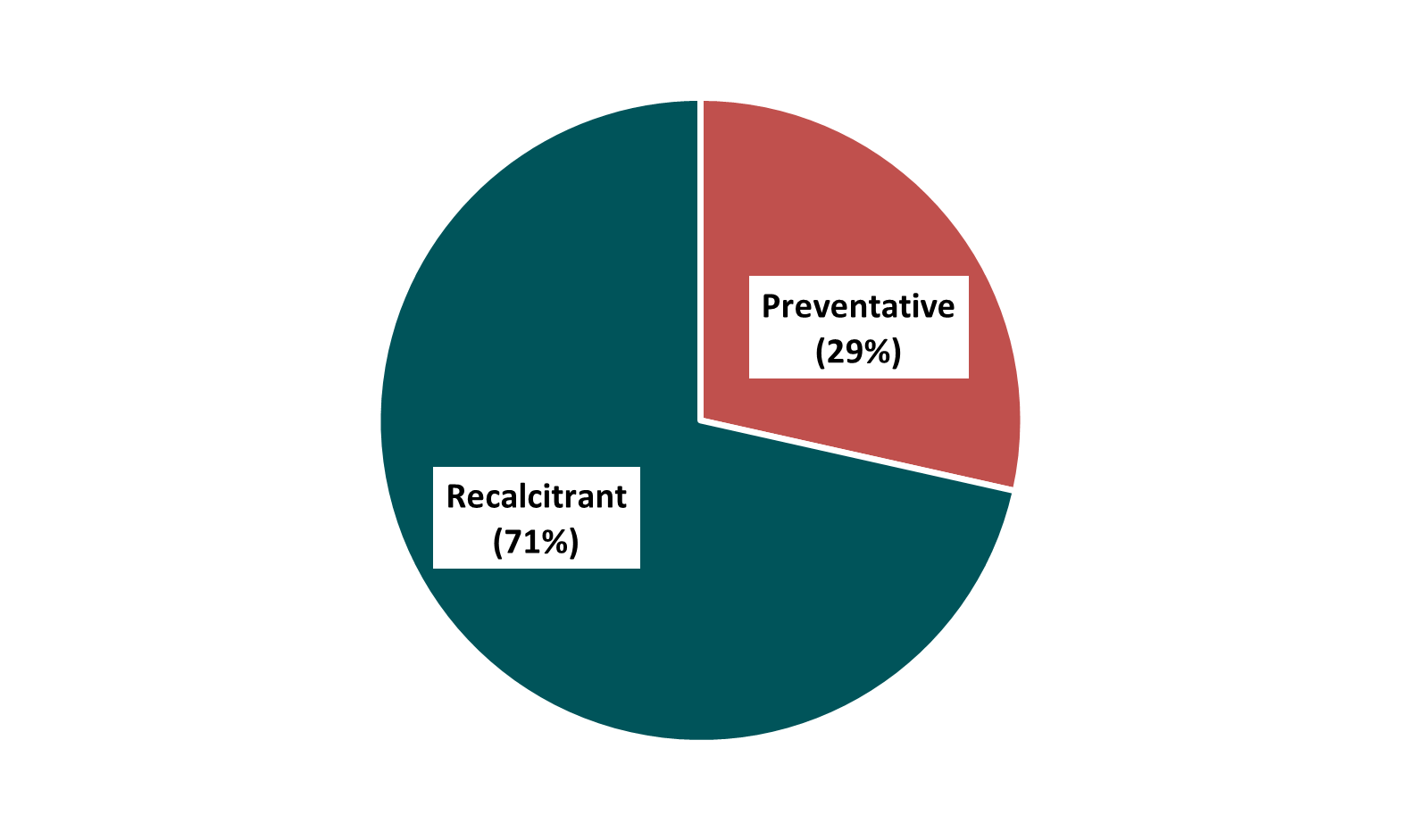
Text version of figure 1
The figure presents a pie chart showing the proportions of funding by country type from fiscal year 2019-2020 to 2023-2024. The figure presents the following data: preventative countries 29% and recalcitrant on removals countries 71%.
| Priority Areas | # of Projects |
|---|---|
| Strengthening policies and proceduresTable footnote * | 10 |
| Reinforcing regular migration | 9 |
| Improving border management | 7 |
| Deterring irregular migration | 7 |
| Other migration related priorities | 4 |
| Improving identity management | 1 |
| Assisting voluntary returns | 0 |
Evaluation Context
Overview
Conducted between January 2024 and March 2025 in fulfilment of evaluation requirements under the Treasury Board’s Policy on Results, the Evaluation of the MCEE was designed to assess the relevance and effectiveness of the envelope. The evaluation’s design and approach were determined in consultation with IRCC branches involved in the program’s design, management, and delivery.
Evaluation scope
The evaluation covered the activities undertaken by IRCC in the context of MCEE-funded capacity building projects and associated diplomatic engagements between February 2019 and December 2023. It also included the work of implementation partners responsible for individual project design and delivery in all targeted countries. Finally, the contributions of the CBSA and GAC were also in scope given the WoG nature of the MCEE’s intended implementation.
Evaluation focus
This evaluation primarily focused on the results of MCEE-funded projects, examining their role in strengthening the capacity of select national governments in areas of migration/immigration management and administration. It also assessed the extent to which MCEE projects acted as a positive incentive to support removals objectives, including their role in contributing to the increased and timely provision of travel documents for removals facilitation.
Additionally, the evaluation examined the MCEE’s broader support for objectives outlined in the Border Enforcement Strategy and its role in advancing the Government of Canada’s (GC) bilateral cooperation with targeted countries.
Evaluation questions
- To what extent is there an ongoing need for the MCEE?
- To what extent does the MCEE support government objectives in the area of migration diplomacy?
- To what extent is the MCEE effectively managed and coordinated among program partners?
- To what extent has the MCEE assisted select national governments with strengthening capacity in priority areas of migration/immigration management and administration?
- To what extent does the MCEE act as an incentive to support removals objectives?
Methodology
Document review
An in-depth review of documents relevant to the MCEE was undertaken. This includes foundational documents, mandate letters, briefing notes, and decks. It also included project proposals and performance reports, ADM RWG meeting notes and records of decision, program guidance and standard operating procedures, academic research, and others.
Key informant interviews
Semi-structured interviews (n=26) were conducted with representatives from IRCC branches, OGDs (CBSA, GAC, PS), implementing partner organizations (UNHCR, IOM, UNODC), and the US Immigration and Customs Enforcement (ICE) Agency.
Formal interviews were supplemented by ad hoc consultations and requests for additional insights and information.
Focus group discussions
Evaluative focus group discussions (n=8) were conducted with project beneficiaries. [Redacted]
Data review
An analysis of CBSA’s removals inventory data was conducted, particularly with respect to the number of travel documents requested and received between 2019 and 2024 for key recalcitrant on removals countries.
An analysis of Immigration and Refugee Board of Canada’s (IRB) refugee claims statistics and IRCC’s asylum claimant statistics were also performed to ascertain asylum claim trends during the evaluation-reference period.
Limitations and Mitigation Measures
The evaluation encountered some limitations, outlined below. Limitations were largely addressed through triangulation, which supported the development and validation of robust evaluation findings and conclusions.
- Limited familiarity with the MCEE across relevant OGDs hindered the identification of suitable interviewees, leading to an imbalance of insights across departments. Some key informants declined to participate in the evaluation or did not respond to requests for interview. Of those who agreed to participate, few OGD key informants knew the full context of the envelope and its associated projects. The evaluation mitigated the low participation rate by using a snowball technique to identify additional interviewees.
- Due to each project’s distinct activities, expected outcomes, staggered timelines, and geo-political contexts, it was difficult to aggregate the overall results of capacity building into a coherent narrative.
- Limited and inconsistent tracking and reporting of diplomatic engagements across GC departments (within Canada and abroad) presented challenges in assessing the effectiveness of the MCEE as a diplomatic tool.
- [Redacted]
- [Redacted]
- Program data, specifically on the removals inventory, was only available up to 2023-2024 Q4.
Evaluation Findings
Ongoing Need
Finding 1: There is a demonstrated and ongoing need for enhanced migration engagement with recalcitrant on removals countries.
Ongoing pressures on Canada’s asylum system
The risks and pressures that led to the establishment of the MCEE, and the BES more broadly, persist, with the number of asylum claims in Canada continuing to rise. In 2024, a total of 171,900 asylum claimants were processed by the CBSA and IRCC, surpassing the 2023 record of 143,355.Footnote 4 The 2024 figure shows a 186% increase compared to 2019 (64,020), the year the envelope was established. [Redacted]
[Redacted]
Persisting lack of cooperation
Canada’s annual level of removals saw notable increases during the evaluation-reference period in both key recalcitrant and preventative countries. The removals in progress inventory remains high [Redacted]. Travel document (TD)-related impediments continue to be a major obstacle preventing the timely enforcement of removal orders [Redacted]. Interviews and document review further demonstrate these challenges, consistently highlighting the lack of cooperation from some foreign governments in issuing TDs as a key risk for the CBSA's timely removal of inadmissible foreign nationals.
In light of current asylum claims trends, the working inventory is expected to expand further, particularly in key recalcitrant on removals countries.
These issues have gained increasing attention, becoming a central focus of public and political discourse in Canada. In late-2024, Canada's Border Plan introduced new and strengthened measures to improve the rate of removals and reduce existing immigration enforcement inventories.Footnote 5
[Redacted]
An increasingly fluid and complex migration landscape
The global migration and international protection landscape is growing more complex and unpredictable, driven by multiple crises, rising displacement, and shifting public perceptions of migrants and refugees. As a result, countries are placing greater emphasis on improving their processes and policies for managing irregular migration and mixed movement flows. These dynamics could also heighten resistance among some recalcitrant on removals countries to facilitate the return of inadmissible foreign nationals. This evolving situation presents both challenges and significant opportunities for Canada to engage with foreign governments in the areas of migration and border management.
Alignment with IRCC’s mandate and expertise
Migration-related engagements align with IRCC's foundational legislation and support the effective delivery of the Department’s mandate, particularly in addressing global migration challenges and maintaining public support for immigration. Such engagements contribute to IRCC’s broader efforts to deter irregular migration and support returns, thereby reinforcing the integrity of Canada’s migration and asylum systems. This helps preserve public confidence in Canada's ability to effectively manage migration while also upholding its international obligations to refugees.
Need for IRCC-led capacity building assistance
Beyond a continued need for engagement in this space, the evaluation identified an ongoing need for IRCC-led capacity building assistance. Documentation, interviews and focus group discussions all demonstrate that, given the Department’s mandate and expertise, IRCC is well-suited to help other countries develop tools and policies to manage migration, strengthen asylum systems, and address migration-related challenges.
Outcomes
Finding 2: MCEE projects were widely considered to have strengthened the capacity of targeted government authorities, though results were varied across individual projects.
Document review, interviews, and focus group discussions indicate that individual projects aligned with the self-identified needs of targeted government authorities. [Redacted]
Highlights of capacity building results
- In one recipient country, MCEE funding contributed to officials identifying two human traffickers and extraditing a third for prosecution. Furthermore, it supported the identification and rescue of 100 victims of human trafficking.
- MCEE support has contributed to a recipient country’s refugee agency more than doubling its capacity to register asylum claims. Specifically, it contributed to an increase in capacity from an average of 1,380 cases per month in 2022 to 2,900 cases per month in 2023.
- MCEE funding has supported the broader efforts of law enforcement officials in a recipient country to investigate and prosecute over 1,000 human trafficking and migrant smuggling cases.
Focus group participants expressed strong satisfaction with the results and progress of the capacity building projects implemented in their respective countries. They indicated a strong desire to continue collaborating with the GC on migration and border management, expressing optimism that the projects will meaningfully and sustainably enhance their capacities.
Nuance in the overall results story
Projects that funded the procurement of technological and physical infrastructure demonstrated tangible impacts on the capacity of migration and border authorities in their respective countries.
Other projects were more abstract in nature and focused on the development of national policies, frameworks, processes, information sharing, and training, without the procurement of physical or technological infrastructure to bolster operational capacities. Limited tangible evidence of improved migration and border management was attributable to those projects. Nevertheless, interviewees and focus group participants were not discouraged, recognizing that projects of this nature naturally take longer to yield results.
While several examples of project progress and enhanced capacities were noted, most MCEE projects are still ongoing or take a phased approach. At the time of the evaluation, only projects in one country had been completed. Given the ongoing or phased nature of most MCEE projects and the limited time that has passed, it is too early to fully assess project outcomes or attribute them to improved migration and border management.
Interviews with IRCC, OGDs, and implementation partners produced further insights on capacity building support, presenting short project timelines (2-3 years) and relatively small funding amounts as factors that could impede tangible results.
External factors impacting project outcomes
Evidence from document review, interviews, and focus groups noted several external factors that impacted the implementation and outcomes of capacity building projects. [Redacted]
Key factors contributing to success
Evidence from interviews and focus groups indicates that maintaining strong communication and coordination between IRCC, implementing partners, and project beneficiaries is key to navigating any challenges that arise. Implementation partners and project beneficiaries also acknowledged the importance of aligning capacity building projects with the self-identified needs of recipient countries, which helped foster ownership and buy-in, and supports the future sustainability of project impacts. This also supports the autonomy and empowerment of beneficiary organizations.
[Redacted]
Finding 3: The MCEE has effectively supported IRCC’s migration diplomacy efforts, creating space for constructive partner dialogue in the areas of migration and border management.
As outlined in the logic model (Annex A), the MCEE aimed to create WoG opportunities for constructive partner dialogue on migration issues of concern. Overall, the evaluation found that while the MCEE created these opportunities, its effectiveness as a diplomatic tool was constrained by relevant GC departments not fully leveraging the projects in their respective engagements with targeted governments.
Bilateral engagements
Interviewees generally supported the premise that MCEE projects could help establish or strengthen bilateral relations, emphasizing how they could foster goodwill and promote more balanced dialogue. The MCEE is widely seen as a collection of “good news stories” that can be leveraged to facilitate deeper engagement and more challenging discussions. Foreign government authorities consulted through focus groups confirmed this perception, expressing appreciation for MCEE funding and speaking highly of project results. They also stressed the importance of their relationships with Canada, recognizing the GC as a trusted and reliable partner.
The evaluation found strong evidence of IRCC efforts to leverage the MCEE abroad, particularly through project scoping and monitoring missions led by MCET. Interviews and documentation highlight examples of these visits being used to establish relations and facilitate discussions, while also providing valuable data and insights to inform broader IRCC and OGD policy considerations.
Evidence of how OGDs are leveraging the MCEE, however, is negligible. [Redacted] The evaluation found no specific reference to or confirmation of the MCEE being leveraged or otherwise factoring into CBSA-led discussions with the Ottawa-based diplomatic staff of targeted countries.
There was limited evidence of interdepartmental coordination in developing diplomatic language about the projects and determining how it should be used. Furthermore, interviews with IRCC and OGD staff reveal a lack of sufficient and consistent mechanisms for tracking and reporting both upcoming and completed engagements. Interviewees also pointed to communication and coordination challenges that hindered the timely sharing of key messages and project results, impacting their familiarity with the envelope and limiting opportunities to utilize the MCEE as a diplomatic tool.
International engagements
The evaluation identified several examples of IRCC’s engagement with like-minded countries, which presented opportunities to exchange information, share lessons learned, and discuss best practices. In particular, interviewees highlighted the value of meetings with M5 partners in learning about their removals positions and strategies, and in aligning language and approaches to ensure consistent messaging when engaging with recalcitrant on removals countries. However, there is limited evidence regarding whether or how IRCC or OGDs have used this information in practice.
Additionally, interviews and documentation demonstrate that the MCEE, and capacity building broadly, has been featured in multilateral discussions on asylum, returns, and labour mobility. It has also been used to demonstrate Canadian leadership in international fora, such as the Los Angeles Declaration and the Global Refugee Forum.
Finding 4: The MCEE was largely unsuccessful at incentivizing removals cooperation with targeted countries.
Evidence from document review, administrative data, and interviews demonstrate that removals cooperation with countries recalcitrant on removals has not improved since the MCEE’s establishment.
Persistent recalcitrance
Document review and interviews indicate that removals are consistently delayed due to bottlenecks at various stages of the process. These delays are caused by slow correspondence from the respective High Commissions / Embassies or consulates in Ottawa, requirements for in-person interviews, the short validity period of TDs, and other factors. Interviewees from the CBSA and Public Safety (PS) expressed frustration with the persistent barriers and setbacks in obtaining TDs from some foreign governments, noting that the MCEE has not incentivized the timely or predictable issuance of travel documents. This is corroborated by CBSA data on the year-over-year movement and timeliness of travel document issuance.
Indirect approach
The MCEE took an indirect approach to communicating Canada’s expectations for removals cooperation to avoid “quid pro quo” discussions and engagements with targeted counties. Many interviewees from IRCC and OGDs acknowledged that this has not yielded the desired results, with most advocating for a more direct approach. They further suggested that even if there had been progress towards removals objectives, it would be difficult to attribute it to the MCEE.
Uncoordinated diplomatic engagement
As previously noted, the MCEE has not been fully utilized as a diplomatic tool. The evaluation highlighted a lack of synchronization between in-country engagements – those with government authorities aware of the projects – and staff at targeted country consulates and High Commissions / Embassies in Ottawa, where travel documents are issued. This misalignment emerged as a significant challenge, further compounded by the insufficient leveraging of capacity building efforts by relevant GC departments in their interactions with targeted countries, as well as inconsistent tracking of engagements and outcomes. Interviews indicate that these challenges were partly driven by issues related to interdepartmental coordination.
Some interviewees reflected on the short timeline of the MCEE and the time needed to enhance diplomatic relationships. They acknowledged the timeline might have been too short to see meaningful results from both the capacity building projects and any associated diplomatic engagements, consequently limiting potential improvements in removals cooperation with targeted countries.
However, there could be promising developments with some targeted countries, as non-binding agreements on removals cooperation are being negotiated. [Redacted]
Other influencing factors
Interview data indicates other factors that could impact the effectiveness of a positive incentives approach. For example, some interviewees reflected that IRCC lacks the necessary physical presence abroad to fully deliver on the MCEE’s migration diplomacy objectives – particularly in leveraging capacity building projects. IRCC reportedly must depend on GAC, whose mandate and priorities may not place emphasis on these projects or broader removals objectives. Similarly, some acknowledged that Canada lacks the same level of diplomatic influence on the international stage that some like-minded countries have. It should also be noted that the MCEE was intended to be one of several tools in support of addressing challenges with removals.
Finally, interviewees from the CBSA and PS noted that some of IRCC’s public policies have undermined removals efforts and send a contradictory message to recalcitrant countries (i.e., TRV Public Policy 2023).
Design and Implementation
Finding 5: A significant portion of MCEE funding was not directed to countries with the greatest potential to achieve the intended outcomes.
[Redacted]
The evaluation raised questions about the design and strategic utilization of funding. Specifically, there was ambiguity around why preventative countries were prioritized despite other recalcitrant on removals countries presenting more tangible opportunities to advance Canada’s removals objectives.
Preventative countries
The MCEE, as outlined in the Treasury Board Submission, was designed to include funding for capacity building support and engagement with countries at risk of becoming recalcitrant.
The prioritization of the selected preventative countries was supported by three key metrics: total asylum claims and rank, IRB-rejection rates, and three-year asylum claim trends. [Redacted] The rationale for including preventative countries in the broader envelope at all, however, is neither clear nor well-documented. Interviewees generally struggled to explain or justify both their inclusion and intended outcomes.
Activities in preventative countries were found to deviate from the standard MCEE approach. Projects in these countries do not require ADM RWG review or approval. As a result, country specific action plans and RREPs were not developed for preventative countries. The evaluation found no clear objectives for preventative engagements, nor baseline metrics or data to track progress. In contrast to recalcitrant on removals countries, data on TD issuance for preventative countries is not tracked.
Furthermore, a key function of the MCEE is its ability to be leveraged diplomatically to incentivize removals cooperation, namely, the issuance of travel documents. Since preventative countries are not recalcitrant, there is uncertainty around how these projects can be leveraged and to what end. Specifically, it’s unclear what action or response the GC is requesting from these countries when leveraging the projects.
[Redacted]
Finding 6: The selected implementation partners successfully drove the coordination and delivery of individual capacity building projects.
Effectiveness of implementation partners
Evidence from document review, interviews, and focus group discussions confirmed the ways in which IOM, UNHCR, and UNODC were effective implementation partners for MCEE capacity building projects.
As UN agencies, the selected implementation partners have both the expertise and capacity to support the MCEE’s targeted proposal and scoping approach, which helped ensure alignment with the self-identified needs of targeted countries and complemented relevant initiatives funded by other donors in the respective countries. Implementation partners also leveraged their longstanding relationships with the project beneficiaries, which facilitated their buy-in and the progression of capacity building projects, even when slow bureaucratic processes caused delays.
Coordination and cooperation with IRCC
Interviewees generally highlighted a positive relationship between implementation partners and IRCC staff, characterized by clearly defined roles and responsibilities, open and effective communication channels, and mutual trust. This strong collaboration was said to have contributed to the smooth execution of projects, fostering productive and coordinated working relationships.
Key challenges identified
Both implementing partners and IRCC staff, however, described the application and approval processes as lengthy and meticulous, with some highlighting unnecessary and avoidable back and forth. Some interviewees expressed that the reporting requirements were more burdensome than those typically encountered with other donor countries, particularly if ad-hoc reporting requests were made. This was said to have increased administrative workload, diverting attention and resources from core project activities.
While recognizing the comprehensive nature of these requirements, IRCC interviewees explained that this stems from their need to report on both project-specific results and demonstrate alignment with broader GC priorities.
[Redacted]
Finding 7: Challenges in interdepartmental communication and coordination, combined with differing mandates, hindered aspects of the overall implementation process.
The successful implementation of the MCEE was envisioned as a WoG effort, reliant on the input and activities of various GC departments, particularly in leveraging the funding in diplomatic engagements. Document review, along with insights from both IRCC and OGD interviewees, identified several factors that impeded full and effective implementation.
Differing mandates and departmental priorities
The various GC departments involved in MCEE implementation, specifically, in leveraging projects diplomatically, have differing priorities, mandates, operational approaches, and bilateral relations with the targeted countries. Interview data reveals that CBSA and GAC often struggled to align on a shared vision of "success" and the most effective approach to achieve intended outcomes, a challenge associated with the MCEE as a component of the broader BES. This was largely attributed to CBSA’s operational focus and GAC’s emphasis on maintaining bilateral relations. This challenge was presented in the context of both the utilization of MCEE projects as a diplomatic tool and the effective use of escalation protocols.
Unclear roles and responsibilities
Interviews and document review demonstrate an initial push for a WoG approach to implementing the MCEE. This was supported through the inclusion of MCEE projects in individual RREPs and country-specific action plans for key recalcitrant on removals countries. Developed and endorsed jointly by relevant ADMs, these documents outline departmental roles and responsibilities related to MCEE implementation.
However, these documents were not found to effectively guide efforts at the working-level, and over time, OGD familiarity with the MCEE has waned. Interviewees frequently linked this decline to high staff turnover at CBSA and GAC, which created a gap in the transfer of knowledge regarding the envelope’s intended objectives and departmental roles and responsibilities in achieving them. This led to a lack of ownership and accountability, as departments were unsure of their specific responsibilities and how their roles aligned with the broader effort.
The evaluation found significant uncertainty over which department – GAC or IRCC – holds the overall responsibility for migration diplomacy. In practice, this has led to confusion and missed opportunities for engagement in this space. It has also limited IRCC’s ability to ensure sufficient representation at migration-related engagements in Canada and internationally.
Insufficient communication and coordination
There was a general lack of familiarity with the MCEE and its funded projects across OGD interviewees. This was, in part, attributed to the absence of centralized communication channels and shared tools for tracking activities and outcomes.
Information from the ADM RWG and related working-level meetings was not effectively reaching those responsible for leveraging projects and driving diplomatic engagement with targeted countries. The evaluation found minimal evidence of formal communication channels or coordination mechanisms for the MCEE beyond the ADM RWG itself.
Although evidence suggests that interdepartmental working groups were established to share information and coordinate migration-related capacity building efforts, these groups reportedly met infrequently and lost momentum in the post-COVID period.
Gaps in performance measurement and relevant data
The main performance measurement mechanism designed to track and assess MCEE results is the Performance Measurement Framework (PMF), which outlines the envelope’s intended outcomes and the key performance indicators used to measure them. One key data source that was underutilized for performance measurement was the CBSA-led country specific RREPs. Many of the indicators in the RREPs, which are meant to collect data points from GAC, CBSA, and IRCC, could have been incorporated into the MCEE’s PMF in order to streamline the collection of performance measurement data for the MCEE.
The evaluation, however, found limited evidence of coordinated data collection across the GC departments for the RREPs’ performance indicators. This hindered effective performance monitoring, outcome assessment, and overall accountability. As discussed in Finding 5, RREPs were not developed for preventative countries, further contributing to significant gaps in the overall results story.
The MCEE was intended to incentivize removals cooperation, largely measured by the volume and timeliness of TD issuance, which is included in the RREPs. Interviews, data analysis, and documentation identified the data available to assess changes in TD issuance – and thus the effectiveness of the MCEE as a positive incentive – as insufficient. Notably, gaps were found in the year-by-year data tacking the number of individuals added to the working inventory, making it difficult to determine the pace at which countries are issuing TDs. Data on TD issuance was not tracked at all for preventative countries.
Finally, although the effectiveness of the MCEE relies on interdepartmental collaboration to leverage projects diplomatically, the evaluation found no central repository for tracking or reporting GC engagements or upcoming opportunities at the working-level. This was found to hinder streamlined coordination and create challenges in effectively managing and capitalizing on opportunities to leverage the MCEE across departments. The absence of this data also limited the ability to correlate project results and diplomatic engagements with data on TD issuance and broader removals cooperation.
Conclusions and Recommendations
Conclusions
The risks and pressures that led to the MCEE’s establishment persist and continue to evolve, presenting a clear and demonstrated need for enhanced migration engagement and deterrence efforts with recalcitrant on removals countries.
MCEE projects have proven effective on two levels. First, individual projects have aligned with the self-identified needs of targeted countries and have made notable contributions to their migration and border management capacities. This, in part, is a result of IRCC’s effective selection of implementation partners, who have the requisite country and subject matter expertise and networks.
Secondly, MCEE projects have generated positive results and narratives that can be leveraged to strengthen bilateral relations, facilitate removals cooperation, and advance broader GC priorities. However, relevant GC departments have not fully leveraged these opportunities or capitalized on project results in bilateral engagements in Canada or abroad.
There have been no tangible improvements in the removal inventory across any of the targeted countries attributable to the MCEE. Targeted governments remain uncooperative in providing or issuing TDs, which continues to have considerable impacts on the CBSA’s ability to remove inadmissible foreign nationals in a timely manner.
This was linked to the limited leveraging of projects by relevant GC departments in their interactions with targeted countries, which interviewees associated with challenges in interdepartmental communication and coordination. Implementation was further restricted by the MCEE’s indirect approach to diplomatic engagement with targeted countries and the envelope’s broad objectives and scope.
Furthermore, there was some ambiguity surrounding the use of MCEE funding for preventative countries, which presented less tangible opportunities to advance Canada’s removals objectives.
The MCEE was included in the Border Enforcement Strategy as a pilot initiative to test whether capacity building could act as a positive incentive to encourage removals cooperation. Overall, it remains inconclusive whether an incentive-based approach could effectively improve removals cooperation, as several key activities critical to its success were not carried out and various program design and implementation issues influenced overall results.
Although the MCEE officially sunset on March 31, 2025, removals cooperation remains a priority for the GC. Several MCEE-funded projects are still being implemented, with results continuing to emerge. These results offer strategic value and can still be leveraged to support Canada’s removals objectives and enhance bilateral relations with recipient countries, even after their full implementation – provided that certain identified challenges are addressed. Furthermore, the evaluation’s findings regarding the design and implementation of the MCEE offer important lessons that can inform and strengthen future programming. Two recommendations are proposed.
Recommendations
Recommendation theme 1: Support for Canada’s removals objectives
Given IRCC’s mandate and role in the area of migration, the evaluation found a demonstrated and ongoing need for IRCC’s continued support for Canada’s removals objectives.
Recommendation 1: In recognition of IRCC’s mandate and specific responsibilities, the Department should develop an internal, forward-looking approach to:
- Explore options for its continued migration engagement efforts with countries deemed recalcitrant on removals or at risk of becoming recalcitrant; and
- Review available options and tools to support Canada’s broader removals objectives.
Recommendation theme 2: Diplomatic leveraging of MCEE results
Several challenges affecting MCEE implementation stem from the complex network of stakeholders involved, including three key GC departments: CBSA, GAC and IRCC. A theme in the evaluation findings is the absence of clearly defined interdepartmental roles and responsibilities. This lack of clarity has hindered the diplomatic leveraging of projects and the application of escalation protocols when positive incentives fall short. It has also made it difficult to establish robust accountability mechanisms.
Recommendation 2: To strengthen the dissemination and utilization of MCEE project results and reiterate the value of capacity building initiatives, IRCC should:
- In consultation with CBSA and GAC, clarify interdepartmental roles and responsibilities for the leveraging of MCEE projects both in Canada and abroad, establishing clear connections between these roles to ensure stronger coordination; and
- Establish a plan for the continued dissemination of project results to relevant GC partners (CBSA and GAC) in a consistent and timely manner. In so doing, IRCC should capitalize on existing formalized mechanisms (e.g., ADM RWG), while also exploring avenues at the working-level for more effective dissemination.
Summary of lessons
Three lessons were identified for consideration in future capacity building programming, where applicable:
- Lesson 1: Program terms and conditions for Vote 10 funding for capacity building programming may need to be restructured to allow for investments in projects that effectively support both direct and indirect objectives and priorities.
- Lesson 2: Longer project timelines may be needed to more realistically account for the time required for capacity building projects to achieve their desired outcomes.
- Lesson 3: The department would benefit from limiting reporting requirements for implementation partners to the most essential activities and results, avoiding unnecessary complexity and administrative burden.
Annex A: MCEE Program Logic Model (2019)
Ultimate outcomes
Promote/advance Canada's international humanitarian standards on protection and safe and orderly migration.
Intermediate outcomes
Enhanced engagement, cooperation, relations and dialogue on removals with targeted countries.
Immediate outcomes
Strengthened national and global knowledge sharing on best practices on migration and removals management.
Increased capacity of local migration authorities of targeted countries in response to their migration needs and aligned to Canada's positions on migration.
Target countries are incentivized to issue appropriate travel documents.
Outputs
Collaborated and coordinated information sharing on best practices in removals management with like-minded countries and inter/intra departments.
Supported the Department's consideration and application of negative incentive measures if/as required.
Provided capacity building assistance to migration officials from targeted countries based on their national needs and priorities.
Delivered targeted communication campaigns to deter irregular migration and/or promote regular pathways in targeted countries.
Established, maintained or increased cooperation on migration issues of mutual interest with targeted countries.
Activities
Collaborate with like- minded countries to share experiences in targeted countries on improving removals cooperation.
Conduct Inter/intra departmental coordination on removals cooperation, including through the Removals Working Group (RWG).
Coordinate escalation protocols as required for un-cooperative recalcitrant countries.
Deliver of capacity building assistance/equipment/IT based on targeted countries needs.
Provide study tours for mid-level country officials to learn from Canada's experiences in migration management.
Conduct targeted communication campaigns to assist selected governments in deterring irregular migration and promote regular pathways.
Hold bilateral discussions with targeted government authorities in Canada and/or abroad to build support for removals cooperation.
MCEE's indirect impact in deterring irregular migration lies in generating opportunities that benefit the Whole-of- Government (WoG) to create space for constructive dialogue on migration issues of concern, including removals, and promote Canada's positions on migration management. Also, each individual project is a stand-alone intervention that aims to build the capacities of targeted countries' officials in the area of migration and in itself have an impact in deterring irregular migration and supporting Canada's ability to manage flows of irregular migration.