How human trafficking works
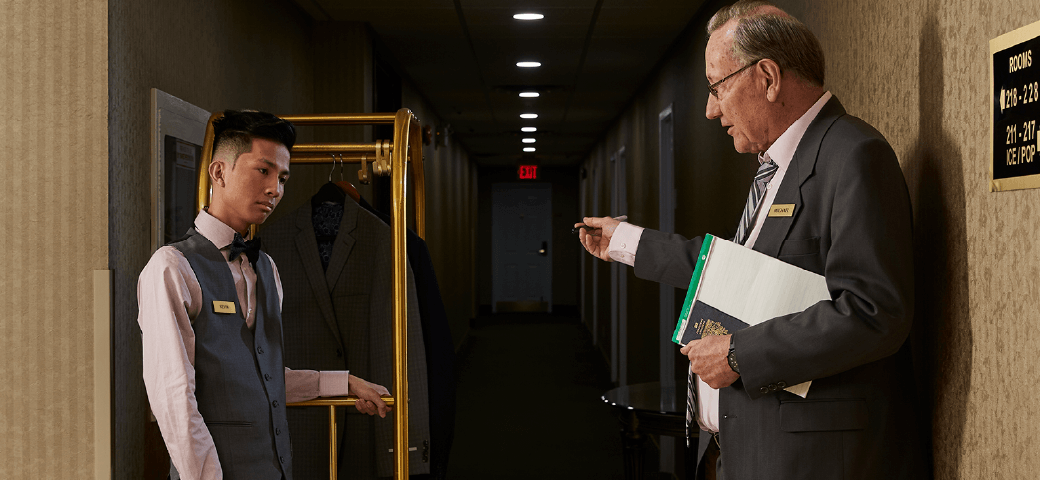
Human trafficking is the act of recruiting, transporting, or holding victims, often to coerce them into providing manual labour or sexual services. Traffickers can pressure victims in a range of ways to get someone to do something that they are unwilling to do. It can involve physical force or threats of violence, but in many cases it doesn't have to. Other forms of intimidation can be used, like threats of deportation, emotional abuse, manipulation, and abuse of trust or power. Victims can often be isolated from family and friends as well, and living and working in unsafe conditions can make it difficult to escape.
The first step in combating this crime is to understand what motivates traffickers, how they recruit victims, and what warning signs to look for.
Need help?
If you or someone you know may be a victim of human trafficking, contact the Canadian Human Trafficking Hotline confidentially. Support is available 24/7.
Hear from Survivors about how traffickers target victims
The following video features real testimonies from Survivors of sex trafficking, sharing some of the ways traffickers can target and recruit their victims, based on their lived experiences.
If you have difficulties playing video, please let us know using the feedback tool at the bottom of this page.
A described video version is also available.
Transcript
The following video contains topics that may be distressing to some audiences including sexual exploitation, drug use, and violence. Viewer discretion is advised.
The following video contains testimonies from Survivors of sex trafficking and their family members.
They've shared their experiences to help Canadians understand the problem of human trafficking in this country.
How can traffickers target victims?
Mallory
I don't really know how to identify a trafficker. A predator, somebody who is willing to sacrifice you for their own gains. Sacrifice your spirituality, your mental health, your safety, your identity, your connection with the world. All of it.
Through friendships
Brenda
My daughter was 16. She met a girl on Facebook, and they became friends. And maybe whatever she was going through with her partner that I didn't know about was creating this new change of new friends.
Her friend invited her to Toronto. We were going to a Blue Jays game as a family. She had mentioned that her girlfriend was in Toronto. She's going to go shopping, "so can I just go hang out and shop with her?"
And so I said, "Well, you know, let your friend meet us here." And her friend did. Her friend did, and she looked her age, and she seemed fine. We all took a picture before she walked away... because we were doing a family thing. And then she left.
They had her for two days. Yeah.
It was the worst two days of my life. I've never been so scared in my life. I don't know how many girls that that other girl brought in, right. She's-- my daughter is probably just one of many girls that that young lady destroyed, right.
Through relationships
I met my trafficker.....when I was 19. Yeah, we got really close because he was funny, and he was charming, and he was approachable, and-- and he hung out with some very interesting people, but he seemed like he was different from the rest.
It helped him gain my trust even faster.
It started the first night that I was with him. He took my money, and he said it was to pay for the hotel room and to pay for the gas to come pick me up, and to pay for the outfits that he bought me.
And he just kept taking money.
He would come into the hotel room after my client had left, and he would take the money and...... he would say, "Thank you," and give me a kiss. It was almost presented to me as a relationship. I just thought that's what falling in love was. And really, it was what brainwashing was. All the promises, all the things that I thought I could trust weren't true.
Through family
Charlie
I think a lot of people don't understand that it happens within families, and that's something that needs to improve. When I was eight years old, it was my birthday
and a family member took me out and said that I can get lots of candies and, like,
teddy bears if I was a good girl and did what I was told. I didn't understand I was being trafficked. But now as an adult, I understand what was happening. I was told to lie, and I was told I'd be taken away if I told them anything.
My granny was, like, my main care provider. She would ask me questions, but I was told not to tell anybody, so I didn't tell anyone for a long time.
By fulfilling a need
Raine
It's about power and control. Human trafficking just isn't only about working the streets and exchanging sex for money, it's also exchanging sex for drugs and alcohol. It's also exchanging--exchanging sex for a place of safety, right, because maybe that house is safer than whatever's going on at home.
There's a lot of exploitation happening within the younger community.
However, it's not on the streets anymore. It's moved indoors.
We call them "trap houses". Trap houses is, like, an urban term we use for houses that are a drug house,
and a lot of exploitation happens there.
With job opportunities
Text: Augusta
I met this person in November, and he randomly added me on Snapchat and messaged me about, like, a job opportunity.
Like, it's a tactic and he had it down perfectly.
He then started to, like, try and get to know me, like, be like more so, like, my friend.
Because the more that they get to know you, the more they know how to manipulate you.
The experiences shared reflect some of the ways traffickers can recruit, but it's not an exhaustive list. Traffickers use a variety of ways to recruit and exploit potential victims.
If you or someone you know may be a victim or Survivor of sex trafficking, call the Canadian Human Trafficking Hotline at 1-833-900-1010
His Majesty the King in Right of Canada, as represented by the Ministers of Public Safety and Emergency Preparedness, 2025.
PS18-96/1-2025E-MP4
ISBN 978-0-660-75677-6
Public Safety Canada
Securite publique Canada
Canada
Low-risk, high reward
Human traffickers are typically motivated by:
Low-risk

Since many people don't understand the crime or what signs to look for, human trafficking can often go unnoticed. Victims are often unwilling or afraid to take action against their traffickers, making human trafficking cases hard to prosecute.
High reward
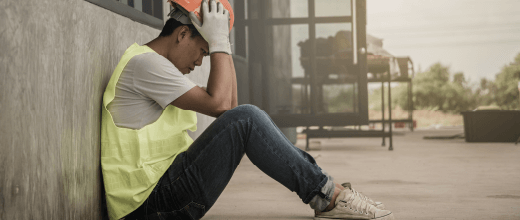
Human traffickers make big profits. They pay their victims little to nothing for their services and keep most of the money for themselves.
Where human traffickers find victims
Human traffickers are strategic in how they recruit victims. They may go to places they can meet young, vulnerable, or in-transit people, like bus stations, youth shelters, group homes, malls, or even outside of schools. They may also target people online so they can hide their identities while trying to find out personal information. Often, traffickers target someone they know like an intimate partner, family member, friend, or co-worker.
How traffickers take control
Traffickers may use forceful means, but often they will seek to establish trust with their victim first. Once they gain control, they can often find ways manipulate and apply pressure on victims to cooperate. Here's how recruitment could happen:
Luring

Traffickers often look for unmet needs in a persons life and try to fill them. Whether it's love, money, self esteem, or even supporting their family financially, traffickers may appear to fill these voids to gain their victim's trust. This can be done through establishing friendship, showing romantic interest, or even offering job opportunities.
Grooming

Traffickers may make false promises that respond to their targets' needs and isolate them from family and friends. Some traffickers pressure their victim(s) into providing services to earn love, pay back a favour or gifts or show their gratitude. Less subtle traffickers can force people or trap them through blackmail, confinement, moving from place to place, supplying drugs, through physical and mental abuse, withholding pay, or identification documents, and threats of deportation.
Exploitation

Traffickers insert themselves into the centre of victims' lives and take full control. Victims are often slowly pushed into doing things they might be uncomfortable with, for example, being asked to have sex with a friend to make quick money or accepting work in a remote location with little to no information up front. Victims may begin to feel frightened or isolated, and over time become increasingly reliant on their trafficker. Once a trafficker establishes control, the aim is to keep victims stuck in a trafficking situation. This can involve physical threats to them or their loved ones, threats of deportation, control through aiding drug addiction, or even withholding pay, making it extremely difficult for victims to seek help.
Warning signs to look for
Human trafficking can be hard to spot. Victims are often forced to maintain a low-profile in public – which is why it's so important to learn how to recognize the signs of someone being trafficked. By raising your awareness and knowing what to look for, you could help save someone's life. Here are some situations, behaviours, and visible warning signs to look out for:
Situation
Someone that has recently been offered work, but:
- They receive a contract in a language they do not understand
- They have to pay for the 'opportunity'
- The job seems too good to be true
- They must relocate, but are given few details
Or someone who is:
- Suddenly showered with gifts or money
- Developing a close, fast-moving relationship (possibly over social media)
- Distancing themselves from friends and family
- In a controlling relationship
Behaviour
Someone who is trafficked may:
- Have another person speak for them
- Talk in a rehearsed way
- Be escorted at all times
- Not control their own mobile phone
- Be unable to contact family or friends
- Move often
- Be anxious, submissive, withdrawn
- Appear afraid of making their partner/boss mad
- Fear authorities
- Avoid eye contact
Appearance
Trafficking victims may:
- Dress to look older
- Not dress appropriately for the season
- Show signs of abuse or confinement
- Have untreated medical issues
- Seem underfed or tired
- Show signs of addiction
Possessions
Trafficking victims may have:
- Few or no personal belongings
- No bank account or financial records
- No passport or ID, or a false ID
- No cash, or excessive amounts of cash
- No mobile phone, or more than one
- Several hotel keys
As part of organized crime
Human traffickers may act alone or as part of a criminal organization such as a gang.
Human trafficking has been linked to helping fuel street gang operations that are also involved in other criminal activities, like illegal gun trafficking and drug sales. Traffickers may force their victims to commit crimes on their behalf, like shoplifting, mailbox theft, recruiting other victims, or filing fraudulent refugee or social assistance claims, all to benefit the trafficker.
Who human trafficking affects

Learn more
Anybody can be a victim, but some people are at higher risk.
Myth or fact
Many people in Canada don't fully understand the issue of human trafficking. Learn more about some of the common myths surrounding this problem.
Myth: Human trafficking involves being willingly smuggled across borders in shipping containers.
Fact: Human trafficking is not the same as human smuggling. Human trafficking happens without victims consent and can occur both within borders or across borders, or without transporting victims at all. Learn more about the differences.
Myth: Human trafficking doesn't happen in Canada.
Fact: Human trafficking is happening in communities across Canada. Between 2014-2024, the highest average annual rates were reported in Nova Scotia and Ontario, with most incidents concentrated in cities like Toronto, Ottawa, Montréal, Thunder Bay and Halifax.Footnote 1
Myth: Human traffickers only target strangers.
Fact: While traffickers can target strangers, victims are often trafficked by someone they know, like a past or current intimate partner, family member, friend, co-worker, or boss.
Myth: Human trafficking only happens to women and girls.
Fact: No one is immune to human trafficking. While most victims of reported cases are women and girls, men and boys are also victims of trafficking. People of all gender identities and expressions can be trafficked.
Myth: Human trafficking always involves physical violence.
Fact: Human trafficking can involve physical violence, but in many cases it doesn't. Human traffickers may control victims through other means like threats of deportation, emotional abuse, manipulation, and abuse of trust or power.
Myth: Human trafficking victims can always just leave.
Fact: In many cases, victims are controlled and monitored by traffickers. Threats of violence, intimidation and fear of punishment or further isolation often prevent victims from leaving the situation.
Are you seeing warning signs

How to respond if you think someone you know is being trafficked
Anybody can be a victim, but some people are at higher risk.