
A woman’s triumph in the world of engineering
"Are you here to take notes?"
This was a remark once addressed to mechanical engineer Ivana Arambasic at a project meeting where she was the only woman. Comments like these highlight the challenges female engineers can face in the workplace.

Arambasic found a different world, and a highly rewarding role, when she joined Public Services and Procurement Canada (PSPC) in 2022. She's now part of a diverse and talented PSPC team changing the experience for female engineers while transforming Government of Canada buildings to meet Canada's climate change commitments.
From student to specialist
Arambasic and her family immigrated to Ottawa in 1997 from Bosnia and Herzegovina. Despite having to learn English and adapt to her new life in Canada, she excelled in school and went on to study mechanical engineering at Carleton University. There weren't many women in the program in the early 2000s. "Young girls weren't commonly encouraged to pursue engineering or sciences, and some, including me, were even discouraged," Arambasic points out. She has certainly proven the skeptics wrong.
She became a licensed professional engineer in the province of Ontario, where women currently comprise less than 20% of the licensed members. Arambasic didn't stop there. She continued to upgrade her skills and obtained Certified Risk Management and Project Management Professional designations.
Her career took her into both the private and public sectors, where she supported and led high-profile projects. When she accepted a position with PSPC, a department that manages one of the largest and most diverse portfolios of real estate in the country, she looked forward to even more exciting challenges.
The PSPC job presented a rare opportunity. Arambasic, a senior project manager, would be involved in delivering the Energy Services Acquisition Program (ESAP) in Ottawa, which will contribute to a significant reduction in the federal government's greenhouse gas emissions. Under ESAP, we're modernizing 4 central plants and the heating and cooling systems in many of our federal buildings in the National Capital Region, which share 14 kilometres of underground piping. The buildings include iconic landmarks like the National Arts Centre.
Specifically, 61 Government of Canada facilities in the National Capital Region have heating and cooling components that need to be replaced, to allow the mechanical systems to connect to the updated plant infrastructure down the road. Arambasic is part of this User Building Conversion Plan (UBCP) team, which has mainly female leadership and many female engineers carrying out the implementation on the ground.
As she's Team Lead on the UBCP project, Arambasic's work is critical to the delivery of the program. Her multidisciplinary team is responsible for the integration of all the projects in the buildings undergoing conversion, to ensure a cohesive approach and alignment with the broader ESAP aims. Specifically, the team's role includes providing technical advice and guidance, and managing project requirements and risks.
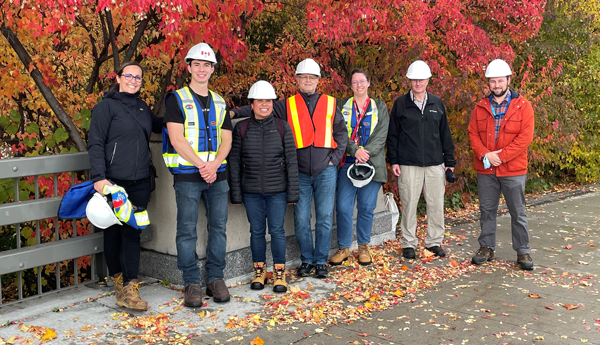
"There's still a misconception in the industry that female engineers aren't technically adept," Arambasic says. "But, day after day, my team proves that those beliefs are wrong, as we excel in both technical and leadership positions. At times throughout my career, it felt like an uphill battle to have my skills and experience recognized and respected," she adds. There were notable inequities, like being overlooked for promotions. While she found some champions and supportive colleagues in every workplace, Arambasic says she's particularly comfortable at PSPC. "Here, I feel like my expertise is acknowledged and valued, and that I'm treated fairly and with respect."
A role model and mentor
Through the determination and hard work of female leaders and engineers like Arambasic, fulfilling career paths for young women in technical disciplines are very achievable within PSPC. Providing guidance, mentorship and culture change in the workplace are some of the ways women engineers are ensuring that PSPC is welcoming and open, not just today but into the future. "I'm proud to work with, coach and contribute positively to the careers of our diverse team members," Arambasic remarks.
Barriers still exist, and there's work to be done. Arambasic encourages everyone, including parents and teachers, to invite girls to explore the vast possibilities within science, technology, engineering and mathematics (STEM). Women can add value in these fields while building fun and meaningful careers.
The Government of Canada strives to lead the way in creating inclusive workplaces for these and other professionals. To learn more about the interesting people and projects at PSPC, check out Our stories.