
2026 Canadian Collaborative Procurement Initiative year in review and look ahead
Overview of the Canadian Collaborative Procurement Initiative (CCPI) for the 2025 to 2026 fiscal year (April 1, 2025, to March 31, 2026) and future plans.
On this page
- About the initiative
- Highlights: 2025 to 2026
- Key numbers
- Spotlight: Featured procurement solutions
- The year ahead: 2026 to 2027
- More information
About the initiative
Public procurement
Public procurement accounts for approximately 13.4% of Canada’s gross domestic product. It amounts to over $310 billion annually. Of this amount, the federal government accounts for approximately $37 billion in goods and services.
The majority of public procurement activity, approximately 88%, is carried out by provinces, territories and the broader public sector, including municipalities, academic institutions, schools and hospitals (MASH).
Canadian Collaborative Procurement Initiative
Established in 2015, the CCPI supports public sector organizations in jointly purchasing goods and services.
By combining their purchasing power, participants can reduce costs, streamline procurement processes and achieve greater value. CCPI provides access to ready-to-use procurement tools at no cost and with no obligation.
The initiative continues to evolve to meet the changing needs of participants, offering access to a growing range of commodities and supporting more efficient and effective procurement practices across Canada.
Video: Overview of the Canadian Collaborative Procurement Initiative
For a quick overview of how CCPI works and the value it provides, watch the Video: Buying together—Overview of the Canadian Collaborative Procurement Initiative.
Who can participate
CCPI participants include:
- provinces and territories (PTs)
- MASH
- Canadian public health organizations
- Canadian aid agencies
- federal Crown corporations
- intergovernmental organizations
Benefits for buyers
Participants have access to a wide range of procurement tools and commodities.
By purchasing through CCPI, participants can:
- meet their procurement needs efficiently
- benefit from competitive pricing and reduced costs
- achieve better overall value
- advance socioeconomic objectives
- reduce administrative and legal burden
- avoid lengthy procurement processes
All suppliers are subject to a rigorous prequalification process to ensure fairness, transparency and best overall value.
Benefits for suppliers
CCPI supports supplier diversity by promoting opportunities for:
- women-owned businesses
- Indigenous-owned businesses
- small and medium-sized enterprises
Through CCPI, these suppliers gain access to a broader market and increased opportunities to provide goods and services to the public sector.
Collaboration across jurisdictions
Collaboration remains a core element of CCPI.
Ongoing engagement with procurement professionals across federal, provincial, territorial and international jurisdictions supports:
- alignment of priorities
- sharing of best practices
- identification of opportunities to strengthen procurement approaches
These efforts are supported through working groups and knowledge-sharing sessions, where participants exchange insights and explore innovative approaches in areas such as accessibility and sustainable procurement.
Highlights: 2025 to 2026
During the 2025 to 2026 fiscal year, CCPI continued to evolve to better support participants across Canada. Efforts focused on improving the participant experience, expanding outreach, strengthening collaboration with provincial and territorial partners and providing access to high-impact procurement solutions that address operational needs across the public sector.
Enhancing the participant experience and accessibility
CCPI continued to improve the participant experience by making information and procurement tools easier to access and use. Efforts focused on enhancing guidance materials, streamlining onboarding support and improving the organization and accessibility of information available to participants.
These improvements are intended to help reduce administrative burden, support organizations with varying levels of procurement expertise, and make it easier for participants to identify and leverage available procurement opportunities.
Expanding awareness across Canada
Increasing awareness of CCPI remained a priority throughout the year. In collaboration with Canada Post, a national outreach campaign targeted MASH sectors across Canada.
The campaign helped raise awareness of CCPI among eligible organizations across Canada, enabling more public sector entities to learn about the initiative and the benefits of collaborative procurement.
Supporting “Buy Canadian” through collaboration
CCPI maintained collaborative procurement agreements with 12 provinces and territories, supporting ongoing access to federal procurement tools and strengthening procurement collaboration across jurisdictions.
CCPI continued to engage with provinces and territories through established governance and collaboration mechanisms. These discussions supported information sharing on procurement priorities, including the implementation of the federal government's Buy Canadian approach.
Engagement with provincial and territorial partners also provided valuable insights into regional priorities and operational realities, helping to inform ongoing discussions and support collaborative procurement opportunities for stakeholders.
Delivering high-impact procurement solutions
CCPI continued to expand access to procurement solutions that support public safety, health and operational readiness.
During the year, participants accessed a range of procurement tools, including:
- body-worn cameras and digital evidence management system
- naloxone nasal spray
- hyper-realistic medical training equipment
- automated external defibrillators
Several jurisdictions have already leveraged these solutions to support operational requirements and service delivery objectives.
These offerings demonstrate CCPI's commitment to providing participants with access to innovative, high-value procurement solutions that respond to evolving public sector needs.
Key numbers
Summary of CCPI activities and successes during the 2025 to 2026 fiscal year.
At a glance
CCPI continues to grow, welcoming new participants, expanding its commodities and adapting to participants' evolving needs. This year, 2 public health organizations, 2 aid agencies and several MASH sector entities joined the initiative. As of March 31, 2026, there were a total of 505 participants, including:
- 12 provinces and territories
- 4 Canadian public health organizations
- 2 Canadian aid agencies
- 2 federal Crown corporations
- 485 MASH sector organizations
This is a 5% increase over last fiscal year. The true reach of the initiative is even greater, since some participants, such as school boards, represent multiple schools under a single membership.
Available commodities
The number of available commodities fluctuates from year to year. As some expire, others are combined or retendered under a different method of supply. As of March 31, 2026, 63 commodities were available, supplied by approximately 300 vendors, 69% of which are small and medium enterprises. CCPI aims to include commodities that consider reducing the environmental impacts of procurement processes and increasing supplier diversity. Of the 63 commodities:
- 30 included sustainable or green procurement considerations
- 21 were procurement set asides for Indigenous businesses
New commodities added this year include:
- laboratory chemicals and reagents
- screening devices for alcohol
- electric vehicle supply equipment (EVSE)
- approved breath analysing instruments
- handheld Raman systems
- high visibility personal protective equipment
- military tires
- packaging material
Of these 8 new commodities:
- 6 included green procurement considerations
- 2 targeted the participation of small and medium enterprises
- 2 were procurement set-asides for Indigenous businesses
Results
Participation has grown steadily since CCPI was launched in 2015, reflecting sustained interest in collaborative procurement. In 2025 to 2026, participants collectively spent $29.9 million through the initiative, continuing the overall spending trend observed in recent years (Figure 1).
Figure 1: Evolution of Canadian Collaborative Procurement Initiative overall spending by fiscal year, starting in 2017 to 2018 and ending in 2025 to 2026
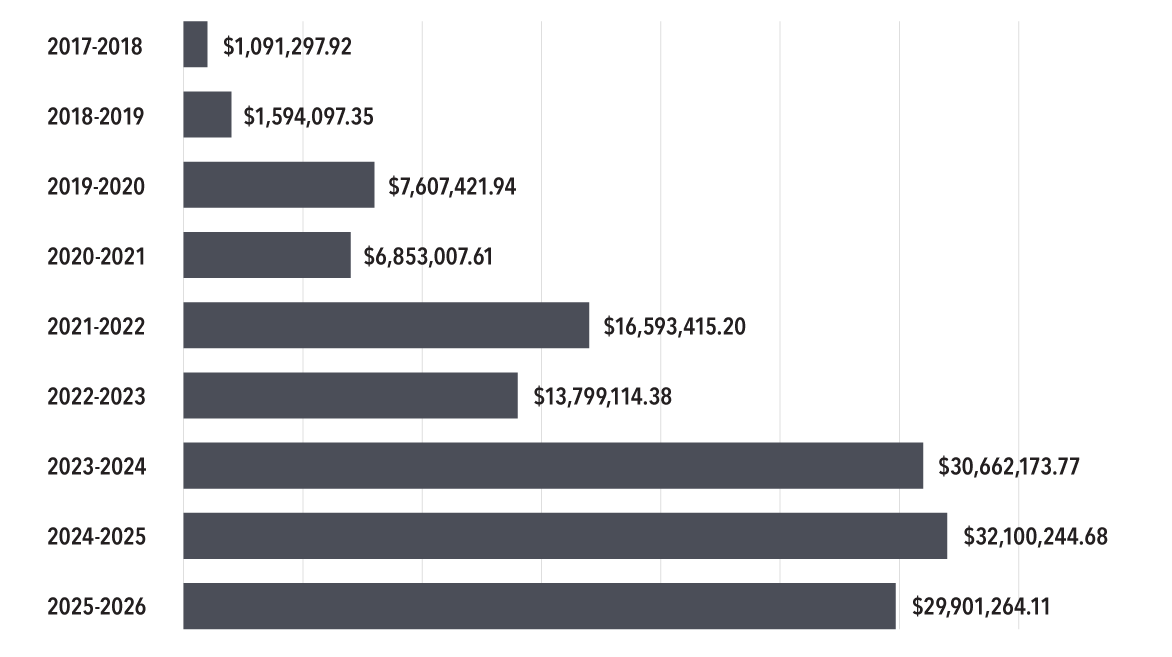
Figure 1: Text version
Evolution of Canadian Collaborative Procurement Initiative overall spending by fiscal year, starting in 2017 to 2018 and ending in 2025 to 2026 Fiscal year Total purchase 2017 to 2018 $1,091,297.92 2018 to 2019 $1,594,097.35 2019 to 2020 $7,607,421.94 2020 to 2021 $6,853,007.61 2021 to 2022 $16,593,415.20 2022 to 2023 $13,799,114.38 2023 to 2024 $30,662,173.77 2024 to 2025 $32,100,244.68 2025 to 2026 $29,901,264.11
| Commodity name | Total expenditure |
|---|---|
| P25 portable and mobile radio equipment | $9,783,105 |
| Commercial tires | $7,443,674 |
| Electronic fingerprinting devices | $4,049,180 |
| Office supplies | $3,977, 244 |
| Office paper | $1,395,010 |
| Motorola radio | $1,163,678 |
| Alcohol screening devices | $518,290 |
| Pursuit tires | $460,798 |
| Fire, safety and rescue equipment | $281,466 |
| Body-worn cameras and digital evidence management system | $277,648 |
| Plumbing and heating supplies, Western region | $94,837 |
| All-terrain vehicles | $86,523 |
The total amount spent on goods purchased by participant type for the most popular commodities are as follows:
- all-terrain vehicles
- PTs: $86,523
- total spending: $86,523
- plumbing and heating supplies, Western region
- academic institutions: $60,649
- municipalities: $25,797
- PTs: $4,463
- schools: $3,928
- total spending: $94,837
- body-worn cameras and digital evidence management system
- municipalities: $277,648
- total spending: $277,648
- fire, safety and rescue equipment
- municipalities: $168
- PTs: $280,040
- others: $1,258
- total spending: $281,466
- pursuit tires
- municipalities: $358,507
- PTs: $102,291
- total spending: $460,798
- alcohol screening devices
- municipalities: $39,290
- PTs: $479,000
- total spending: $518,290
- Motorola radio
- municipalities: $22,930
- PTs: $1,140,748
- total spending: $1,163,678
- office paper
- academic institutions: $279,700
- health: $149
- municipalities: $10,056
- PTs: $402,476
- schools: $702,629
- total spending: $1,395,010
- office supplies
- academic institutions: $44,348
- health: $5,330
- municipalities: $22,354
- PTs: $1,768,912
- schools: $2,151,901
- others: $4,399
- total spending: $3,977,244
- electronic fingerprinting devices
- municipalities: $824,457
- PTs: $3,224,723
- total spending: $4,049,180
- commercial tires
- academic institutions: $12,462
- municipalities: $2,594,121
- PTs: $4,431,697
- schools: $405,394
- total spending: $7,443,674
- P25 portable and mobile radio equipment
- municipalities: $4,099,341
- PTs: $5,674,454
- others: $9,310
- total spending: $9,783,105
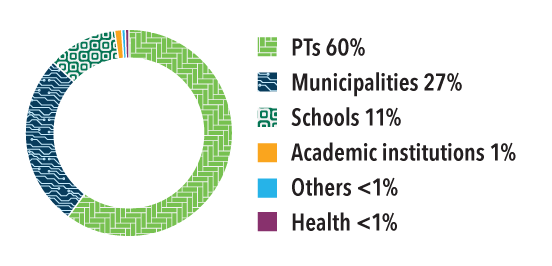
Figure 2: Percentage of total spending by participant type
Note
Percentages do not total 100% due to rounding.
Figure 2: Text version
Percentage of total spending by participant type Participant type Percentage PTs 60% Municipalities 27% Schools 11% Academic institutions 1% Others Less than 1% Health Less than 1%
Spotlight: Featured procurement solutions
Featured high-demand procurement tools available through CCPI during the 2025 to 2026 fiscal year.
High-visibility personal protective equipment
CCPI now offers a comprehensive range of high-visibility and protective clothing designed to help organizations keep employees safe in a variety of operational environments.
The offering includes commercial off-the-shelf apparel and accessories such as:
- safety vests
- shirts
- rainwear
- winter outerwear
- flame resistance and certified arc flash coveralls
- work gloves
- headwear
- other protective gear
Designed for employees working indoors and outdoors, including:
- around vehicles
- equipment
- warehouses
The products provide durability, weather protection, comfort and enhanced visibility to support safe day-to-day operations.
Automated external defibrillators
CCPI now offers standing offers (SO) for automated external defibrillators (AEDs), providing eligible organizations across Canada with streamlined access to commercially available defibrillators, accessories and related services.
In addition to the supply and delivery of equipment, the standing offer includes services such as:
- medical oversight
- inventory management
- training programs
- technical support
- extended warranty services
This comprehensive approach helps organizations establish and maintain effective AED programs while reducing the administrative effort associated with procurement.
By making these life-saving devices more accessible through a ready-to-use procurement tool, CCPI continues to support the health, safety and operational readiness of public sector organizations.
Body-worn cameras and digital evidence management system
The body-worn camera (BWC) and digital evidence management system (DEMS) procurement solution provides eligible organizations with access to a fully managed service for BWC and DEMS.
Available through CCPI, the solution includes a range of licensing options, such as:
- combined BWC and DEMS
- DEMS-only
- cellular enablement
- live streaming
- digital evidence storage
It also provides access to professional services and training resources to support implementation and ongoing operations.
Building on the successful deployment of the solution by the Royal Canadian Mounted Police, CCPI participants, including provincial and municipal law enforcement organizations, can now leverage this procurement tool to modernize evidence management, improve operational efficiency and strengthen public safety capabilities.
Impaired driving enforcement tools
CCPI continues to expand its support for public safety by introducing procurement solutions that assist law enforcement agencies in impaired driving enforcement.
The SO for alcohol screening devices (ASD) provides accredited law enforcement agencies with streamlined access to approved ASD, consumables and related services. These devices are used by police officers during roadside checks to screen drivers for the presence of alcohol and determine whether further testing is indicated.
CCPI also offers an SO for approved breath analysis instruments are sophisticated devices, typically used at a police station following a positive roadside screening. They are exclusively available to accredited law enforcement organizations. This procurement tool will provide access to evidentiary breath analysis instruments, consumables, training, warranty and maintenance services. Unlike roadside screening devices, analysis instruments are used to conduct official evidentiary testing, with results that are admissible in court during impaired driving investigations. Complementing this offering, CCPI offers a SO for ethyl alcohol standard solution, a wet bath solution used in conjunction with analysis instruments.
Together, these procurement solutions strengthen law enforcement capabilities while providing eligible organizations with efficient access to specialized equipment through CCPI.
The year ahead: 2026 to 2027
CCPI continues to expand its portfolio of procurement solutions to meet the evolving needs of participants.
Upcoming procurement solution: Responsible divestment of textiles and uniforms
Public Services and Procurement Canada’s Clothing Advisory Group is developing a procurement tool for the responsible divestment of uniforms and textile products. The initiative aims to provide CCPI-eligible organizations with access to qualified service providers offering environmentally preferable end-of-life solutions for textiles that cannot be resold.
By prioritizing alternatives to landfill disposal, such as recycling, repurposing and other innovative recovery methods, this instrument will help organizations reduce textile waste, support circular economy objectives and simplify access to sustainable divestment services through pre-established procurement arrangements.
This innovative procurement solution is currently in the research and consultation phase, with implementation anticipated in future fiscal years.
Continued outreach and expansion
CCPI will continue to explore opportunities to increase awareness of collaborative procurement among eligible organizations across Canada. As opportunities arise, the initiative will seek to engage with existing and prospective participants to promote available procurement solutions and support continued growth.
Supporting evolving procurement priorities
Collaboration will remain at the centre of CCPI's work in the year ahead. The initiative will continue engaging with federal, provincial and territorial partners, as well as MASH sectors and other participating organizations, to identify emerging procurement priorities and share best practices across the public sector.
Advancing “Buy Canadian”
Collaborative procurement is a natural fit with the Government of Canada's Buy Canadian approach. In the year ahead, CCPI will continue to support this priority by sharing information with partners on its implementation and by offering procurement tools that create opportunities for Canadian businesses to supply the public sector.
Exploring new procurement approaches
CCPI will continue to explore opportunities to enhance the initiative and better respond to the evolving needs of participants. This includes exploring new procurement approaches that could improve flexibility, accessibility and the overall participant experience, while supporting the long-term growth of the initiative. For example, CCPI is considering the feasibility of introducing supply arrangements as a complementary procurement tool, where feasible and aligned with participant needs.