
Chapter 17: Commission’s mandate and process
On this page
- The Future of Sport in Canada Commission Terms of Reference
- Reflecting on the Commission’s work
In this chapter we describe the work and process undertaken by the Future of Sport in Canada Commission. We begin with a reminder of the Commission’s Terms of Reference followed by a description of the creation of the Commission team. Thereafter, we review the Commission’s activities and provide an overview of those with whom we met over the course of our mandate.
The Future of Sport in Canada Commission Terms of Reference
On December 11, 2023, the Government of Canada announced the creation of the Future of Sport in Canada Commission.Footnote 1959 The announcement provided that:
“The Commission will consist of three individuals: an Independent Commissioner and two Special Advisors. The Commissioner will be a legal expert who is external to the Canadian sport system. One Special Advisor will be an expert with lived experience and/or expertise in victims’ rights and trauma-informed processes. The other Special Advisor will be an expert on the Canadian sport system.”Footnote 1960
The Commission’s mandate, as provided in its Terms of Reference, was two-fold. It was tasked to review the sport system and make recommendations on concrete and effective actions with respect to:
- Improving safe sport in Canada, including trauma-informed approaches to support sport participants in the disclosure of and healing from maltreatment.
- Improving the sport system in Canada, including but not limited to policy, funding structures, governance, reporting, accountability, conflicts of interest, systems alignment, culture, and legal considerations.Footnote 1961
The Terms of Reference expressly provided that the Preliminary and Final Reports would contain recommendations for the Government of Canada. The Terms of Reference also provided that the reports “[…] may be of assistance to all governments and sport participants to use in both joint and independent efforts to improve sport systems in Canada.”Footnote 1962
The Terms of Reference provided that the Commission would function independently. To achieve the objectives of its mandate, the Commission was required, as part of its activities, to:
- Engage victims and survivors of maltreatment in sport, as well as subject-matter experts, academics, and advocates to bring to light the experiences, causes, and impacts of inappropriate behaviour and maltreatment; support healing; and seek input to inform recommendations.
- Engage a broad group of experts, academics, stakeholders, and sport participants and examine how to improve the sport system in Canada, including but not limited to issues related to policy, funding structures, governance, reporting, accountability, conflicts of interest, systems alignment, culture, and legal considerations.Footnote 1963
The Commission could also draw on existing literature and reports to guide its work. The Terms of Reference also required the Commission, from the outset of its work, to engage and seek input from provinces and territories to foster collaboration and constructive engagement.Footnote 1964
The Commission was required to deliver two reports to the Government of Canada: a Preliminary Report in advance of a National Summit on the Future of Sport and a Final Report. This Final Report builds on the Preliminary Report and reflects insights and deliberations from the National Summit organized by the Commission.Footnote 1965
The Terms of Reference also outlined a list of required and suggested activities including regional and subject-specific round tables and meetings, a public online survey, and the creation of an online submission portal. We describe these activities in what follows.
In fulfilling its mandate and conducting its activities, the Commission had to be victim- and survivor-centred, trauma- and violence-informed. Its work was to be human-rights based, intersectional, inclusive, accessible, responsible, respectful, transparent, flexible, and forward-looking.Footnote 1966
The Future of Sport in Canada Commission was not a commission of inquiry.Footnote 1967 Its mandate explicitly precluded it from making findings of misconduct or liability or determining the civil or criminal responsibility of individuals or organizations. The Commission’s framework and the outcome of its unique features are explored at the end of this chapter.
Setting up the Future of Sport in Canada Commission
On May 9, 2024, Lise Maisonneuve, former Chief Justice of the Ontario Court of Justice, was appointed as the independent Commissioner to lead the Future of Sport in Canada Commission. Noni Classen was appointed as the Special Advisor with expertise in victims’ rights and trauma-informed processes. Andrew Pipe was appointed as the Special Advisor with expertise within the Canadian sport system.Footnote 1968 The Commission’s initial 18-month mandate began on May 9, 2024, with a deadline to publish its Final Report by November 9, 2025. As outlined below, the Commission’s mandate was extended to March 31, 2026.
Following this announcement, the Commission began building its team and establishing its office. The Commissioner and Special Advisors were supported by two co-executive directors and a director working alongside a legal, research, communications, and operations team. Appendix 16 provides the full list of the Commission’s team members.
Establishing a victim- and survivor-centred and trauma- and violence-informed framework
The Commission’s Terms of Reference required that it conduct its activities in a victim- and survivor-centred and trauma-and violence-informed manner.Footnote 1969 The Commission acted expeditiously to ensure the entire team received training from a consultant in psychological health and well-being and an expert in psychological health in the workplace.
We developed and implemented a protocol of trauma-informed practices to guide the Commission’s activities. These practices were designed to support participants, including victims and survivors, in their interactions with the Commission. We also developed an array of mechanisms to facilitate the participation of a wide range of Canadians who had personal experiences of abuse and maltreatment. Participants came from within the physical activity and sport communities and beyond.
The Commission engaged health support workers to accompany and provide support to participants before, during, and after any meetings or other Commission activities as needed. Participants were informed that this service was available to them upon request.
The Commission underscored its victim- and survivor-centred and trauma-informed approach by ensuring a safe space for people to speak candidly and share their stories. Our communications were personalized, timely, and responsive, aiming to establish a positive rapport from the first contact. Throughout our activities, Commission staff remained available to respond to participants’ questions or concerns. Prior to a meeting with the Commission, participants were provided with a document describing what to expect. The document provided information on the meeting structure and format and Commission attendees. It also reminded participants that the Commission’s health support workers were available upon request.
Confidentiality and privacy
According to its Terms of Reference, and consistent with its commitment to transparency and accessibility, the Commission was required to inform participants that the information they provided to the Commission would be handled in accordance with the requirements of the Access to Information Act and the Privacy Act. The Commission was also required to explain to participants how the information we sought from them would be used and to obtain explicit permission from each participant for this use.
We spent considerable time and effort developing a trauma-informed approach that complied with the Access to Information Act and the Privacy Act and the Commission’s Terms of Reference.
The Commission developed a privacy notice that was provided to all participants before they agreed to engage with the Commission. We ensured their consent was obtained before any participation in Commission activities. Considering the difficult and sensitive nature of the information participants might wish to share with the Commission, and to ensure a safe space where such conversations could occur, the Commission offered in-camera sessions.
We were inspired by the Truth and Reconciliation Commission’s approach to gathering information and experiences from participants within in-camera settings.Footnote 1970 The Truth and Reconciliation Commission’s Terms of Reference explicitly provided for the possibility of in-camera sessions. For example, when a participant’s statement contained the name or other identifying information of the person alleged of wrongdoing, those names and identifiers would not be recorded unless the individual had been convicted of the alleged wrongdoing.Footnote 1971
The Truth and Reconciliation Commission’s Terms of Reference also set out that any information that could be used to identify these individuals would be anonymized to the extent possible.Footnote 1972 The Future of Sport in Canada Commission followed a similar approach.Footnote 1973 When a participant wished to proceed with an in-camera meeting or to proceed in-camera for a portion of their, their information was shared confidentially and without certain information being recorded.
Communications and research
The Commission’s communications and research teams played a key role in supporting its activities throughout its mandate.
On May 9, 2024, the Commission’s website was launched and served as the primary tool for sharing information about our work. The website hosted the Commission’s public online submission portal and therefore also served as a platform for participant engagement. Since the website’s launch, there have been over 15,000 views of its landing page.
The Commission shared information through news releases and the Commissioner’s messages. These were posted to our website and with hundreds of reporters covering Canadian sport and shared via the site CISION®. This information was also shared using the Commission’s social media accounts. We also sent important updates by email to participants who took part in our activities and interested parties. Over the course of its mandate, the Commission developed a contact list of over 1,600 individuals. This list included sport organization representatives, government officials, academics, experts, athletes, and others within the sport and physical activity communities. We communicated with participants to keep them informed of the Commission’s progress, shared promotional materials, and invited them to participate in our activities.
The research team supported and guided the Commission’s work through research on topics related to its Terms of Reference. The Commission also contracted the Sport Information Resource Centre to conduct several literature reviews, comparative analyses, and other primary research to complement our research and address identified gaps in knowledge.
We established a multidisciplinary academic guidance panelFootnote 1974 to provide guidance on the Commission’s research efforts. The panel identified existing literature relevant to the Commission’s mandate and provided feedback on our research. Over 100 academic publications were identified by the Academic Guidance Panel for consideration by the Commission.
Fulfilling the Commission’s mandate: our activities
The Commission’s Terms of Reference required the Commission to undertake certain activities, which we describe in what follows.Footnote 1975 Thef Commission provided a variety of options for participant engagement throughout its mandate. In all our activities, participants could engage in the official language of their choice.
The Commission successfully engaged with participants from various backgrounds including athletes, sport participants, coaches, officials, sport administrators, academics, advocates, and members of the public. We heard from victims and survivors of maltreatment in sport as well as academics, advocates, and experts with specific experience in maltreatment in sport and sport systems in Canada and beyond. We also heard from those with personal experience in sport and physical activity organizations and programs from across Canada. The Commission engaged with provinces and territories in the early stages of its activities. Figure 17.1 provides an overview of the Commission’s activities timeline.
Figure 17.1. Future of Sport in Canada Commission timeline of activities
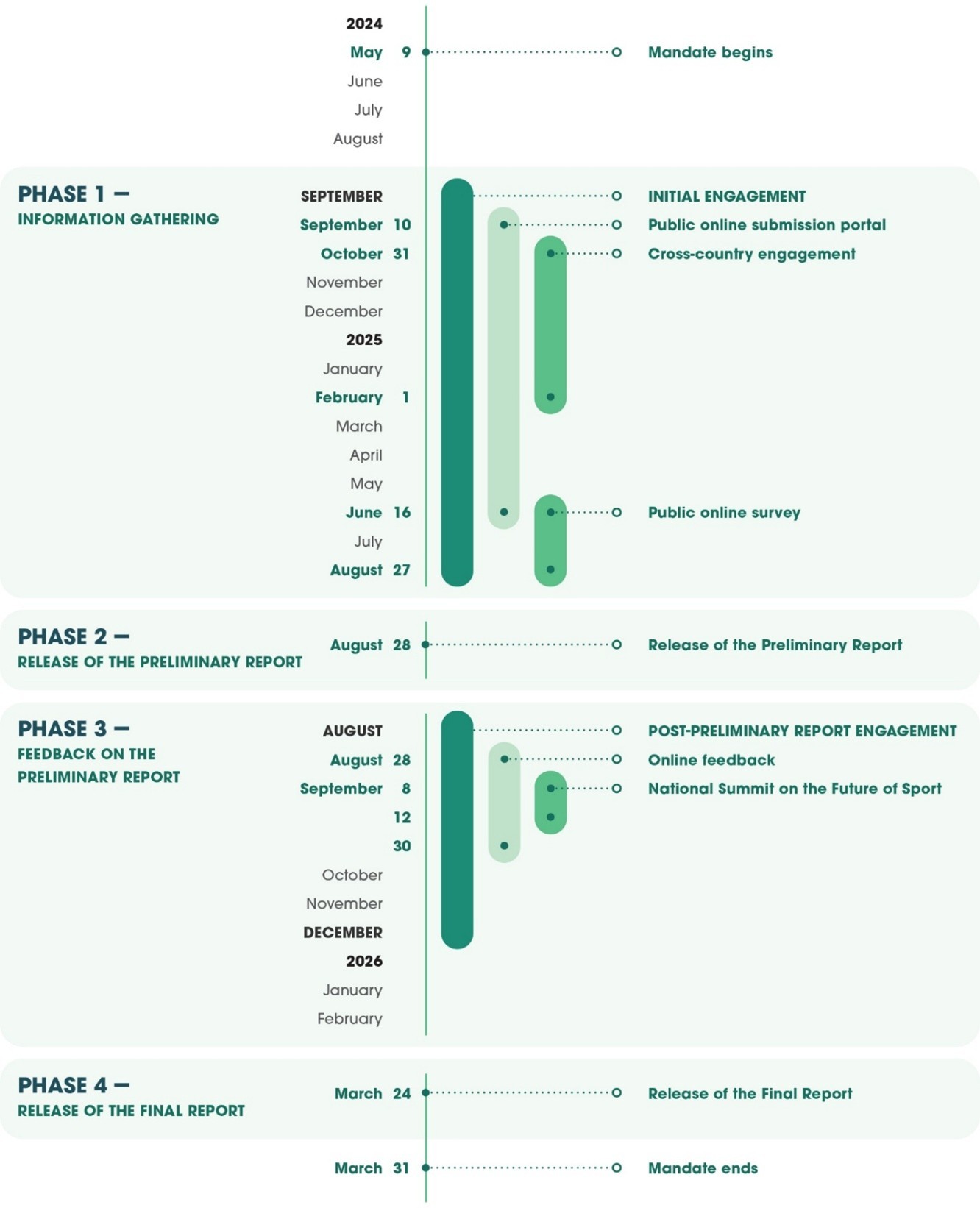
Figure 17.1. Future of Sport in Canada Commission timeline of activities – text version
Mandate begins: May 9, 2024
Phase 1 – Information gathering
- Initial engagement: September 2024 to August 2025
- Public online submission portal: September 10, 2024, to June 16, 2025
- Cross-country engagement: October 31, 2024, to February 1, 2025
- Public online survey: June 16, 2025, to August 27, 2025
Phase 2 – Release of the Preliminary Report
- Release of the Preliminary Report: August 28, 2025
Phase 3 – Feedback on the Preliminary Report
- Post-Preliminary Report engagement: August 2025 to December 2025
- Online feedback: August 28, 2025, to September 30, 2025
- National Summit on the Future of Sport: September 8 to 12, 2025
Phase 4 – Release of the Final Report
- Release of the Final Report: March 24, 2026
Mandate ends: March 31, 2026
Phase 1: gathering information
Outreach and engagement
Prior to the launch of the Commission’s online submission portal, we made sustained efforts to initiate contacts, build relationships, and develop momentum.
In August 2024, the Commission began the initial phase of its participant outreach and engagement efforts. Early in our activities, we engaged with advocacy groups that support victims and survivors of maltreatment in sport to explain the Commission’s engagement process and obtain their feedback on trauma-informed approaches.
The Commission was committed to learn from the perspective and experiences of Indigenous people and groups. The Commission’s commitment to inclusivity was also reflected in its effort to engage with a broad range of participants, including participants from equity-deserving groups. To support its outreach and engagement efforts, the Commission sought advice from Indigenous communities and individuals with experience and expertise in equity-deserving communities in sport.
Public online submission portal
In accordance with its Terms of Reference, the Commission launched its public online submission portal on September 10, 2024. It facilitated input from athletes, parents, coaches, officials, administrators, academics, victims and survivors, and members of the public interested in contributing to the Commission’s examination of approaches to improving safe sport and the sport system in Canada. The portal provided three options for individuals and organizations to engage with the Commission. They could submit information in writing, request a meeting with the Commission, and/or indicate their willingness to participate in its public online survey. The public online portal closed on June 16, 2025.
Over the course of its mandate, the Commission received over 1,400 documents and submissions from participants. These contributions were received via the online portal and by email.
The Commission received hundreds of requests through its portal with additional requests received via email. Everyone who requested to meet the Commission received an invitation to meet. Meetings with the Commission were held both in person and virtually. Some meetings had several attendees; in others we met with an individual. The Commission also hosted regional and subject-specific round tables.
Cross-country engagement
Guided by principles of diversity, intersectionality, regional representation, and linguistic duality, and to engage further with Canadians across the country, the Commission developed a cross-Canada engagement plan.
On October 24, 2024, and November 14, 2024, the Commission announced that it would host meetings, regional and subject specific roundtables in: Toronto, Regina, Quebec City, Montreal, Winnipeg, Calgary, Halifax, Victoria, and Vancouver.Footnote 1976 These announcements were shared broadly using traditional media, social media, mass emails, and the Commission’s website. The Commission also granted a few interviews to Canadian media to present its cross-country engagement plan to the public and invite them to participate.
In addition to the cities we visited as part of our cross-country engagement activities, the Commission visited the following 9 cities: Sarnia, Iqaluit, Edmonton, Gatineau, Moncton, St. Johns (Newfoundland and Labrador), Ottawa, Mississauga and Windsor. During these additional visits, it participated in 20 sport-related events and met with participants in one-on-one meetings or roundtable settings.
Figure 17.2. Cities visited by the Commission
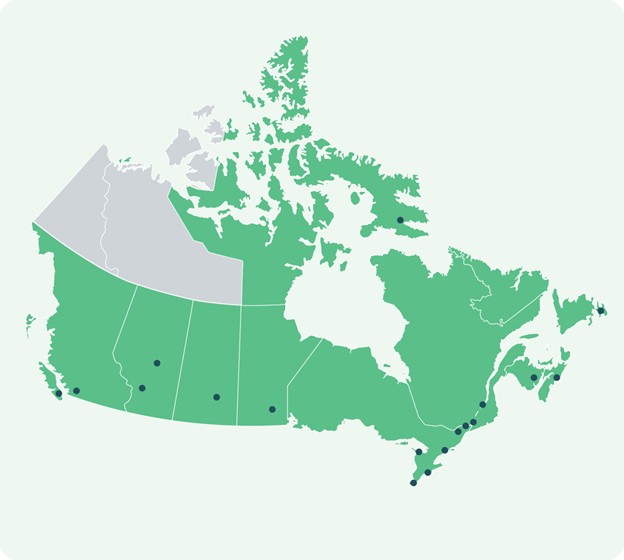
Figure 17.2. Cities visited by the Commission – text version
- Calgary, Alberta
- Edmonton, Alberta
- Gatineau, Quebec
- Halifax, Nova Scotia
- Iqaluit, Nunavut
- Mississauga, Ontario
- Moncton, New Brunswick
- Montreal, Quebec
- Ottawa, Ontario
- Quebec City, Quebec
- Regina, Saskatchewan
- Sarnia, Ontario
- St. John’s, Newfoundland and Labrador
- Toronto, Ontario
- Vancouver, British Columbia
- Victoria, British Columbia
- Windsor, Ontario
- Winnipeg, Manitoba
Commission meetings in figures
Through a combination of outreach and portal requests, the Commission held 591 meetings and met with over 1,000 individuals.Footnote 1977 Of these individuals, 175 identified themselves or their child as being a victim or survivor of maltreatment in sport. They accounted for 17.3% of all meeting participants, or about 1 in 6 participants. During these 591 meetings, the Commission met with representatives from 270 sport organizations.
Participants the Commission met with
The Commission met with individuals and organizations from all levels of the sport system, from the community to the provincial, territorial, and national levels of sport. The individuals we met reflected a range of experiences, positions and roles within the sport system. Some played multiple roles in the sport system, simultaneously and over the course of their careers. For example, a sport administrator may have also participated in sport as a parent, coach, or as an athlete themselves. It was also not uncommon for individuals to be engaged in sport at multiple levels. For this reason, an individual may be counted in our data in multiple categories and levels of sport. The Commission also engaged with individuals and organizations from other countries, including Norway, Australia, New Zealand, France, the United Kingdom, the Netherlands, and the United States.
Participants’ roles and positions in the sport ecosystem
As Table 17.1 outlines, the Commission met with individuals who occupied a variety of positions in the sport ecosystem. As the Commission came to learn, individuals who identified as victims or survivors of maltreatment were found in each of these positions. In other words, victims and survivors were not only athletes, but also coaches, officials and referees, and sport administrators.
The Commission met with a variety of sport administrators who contributed to the delivery of sport programming. This group included executive directors, chief executive officers, or directors general, members of boards of directors, program coordinators, and administrative assistants. We met with current and former athletes from all levels of sport, and with coaches, government officials, parents or guardians, officials, and referees. We also met with a variety of experts and academics from disciplines including kinesiology, psychology, medicine, engineering, sociology, law, and Indigenous studies. Those playing roles in the “other” category included Indigenous Elders, media personnel, sport support staff, and spectators.
| Roles | Proportion of all participants |
|---|---|
| Academics | 5.3% |
| Athletes | 23.5% |
| Coaches | 12.7% |
| Experts | 13.8% |
| Government officials | 11.4% |
| Officials and referees | 1.4% |
| Parents or guardians | 11.0% |
| Sport administrators | 54.8% |
| Other | 5.2% |
Participants who identified as a victim or survivor of maltreatment in sport
As Table 17.2 indicates, individuals who identified themselves or their child as being a victim or survivor of maltreatment in sport, were present in all role categories. While victims and survivors may have experienced maltreatment in one role or level of sport, they may have also been involved in sport in other capacities. Therefore, the total of all categories is higher than 100%.
| Role in the sport system | % of individuals in the role who identified as victims or survivors |
|---|---|
| Academics | 14.8% |
| Athletes | 46.4% |
| Coaches | 27.3% |
| Experts | 18.7% |
| Government officials | 0.9% |
| Officials and referees | 35.7% |
| Parents or guardians | 50.5% |
| Sport administrators | 9.4% |
| OtherFootnote 1978 | 24.5% |
Although the Commission engaged with individuals who identified as victims and survivors of maltreatment in each of these roles, it is important to note that 46.4% of all athletes we engaged with identified themselves as victims and survivors of maltreatment in sport. Similarly, 35.7% of officials, 50.5% of parents, and 27.3% of coaches identified themselves or their child as victims and survivors.
Participants by level of sport
As table 17.3 shows, the Commission engaged with individuals in diverse roles from all levels of sport, including victims and survivors of abuse in sport. However, given our national scope of work, national-level organizations, athletes, and other national sport bodies represented a large proportion of those we met. Some participants were not engaged at a particular or specific level of sport. For example, some academics, experts, Elders, or non-sport organizations did not report as being engaged at a particular level of sport.
| Level of sport | % of all meeting participants | % of victims and survivors who met with the Commission, by level of sport |
|---|---|---|
| National | 46.2% | 44.0% |
| Provincial | 27.4% | 18.3% |
| Local/regional | 19.5% | 32.6% |
| University/college | 5.8% | 10.3% |
| N/AFootnote 1979 | 13.3% | 16.6% |
Demographics of meeting participants
Following its trauma-informed approach and respect for privacy, the Commission did not ask participants for demographic information. The information we share here is what participants volunteered during meetings and communication with us. In some cases, their demographic details were unknown. The Commission held meetings with individuals from all 13 provinces and territories.
Equity-deserving communities
The Commission hosted several round tables examining equity and diversity in sport and met with a number of academics who research these issues. As a result, the Commission met with over 100 individuals (10.2% of all participants) who identified as belonging to a racialized group and over 30 organizations from across Canada with a specific focus on inclusion and serving racialized or marginalized communities.
More than one-fifth (22.1%) of the individuals we met identified as belonging to an equity-deserving group. Among those, 46.2% identified as belonging to a racialized group (non-Indigenous), 40.4% were Indigenous, 10.3% had a disability, and 5.4% were part of the 2SLGBTQI+ community. Women represented 45.9% of all individuals the Commission engaged with, 45.0% were men, 0.2% were nonbinary, and 8.8% were of undeclared gender. To learn more about the needs and experiences of equity-deserving groups, the Commission also met with advocates and organizations focused on serving these groups.
Indigenous people and Indigenous groups
The Commission committed to engage with Indigenous individuals and organizations involved in sport, physical activity, and well-being. The Commission met with over 20 Indigenous organizations including nations and governments as well as almost 90 individuals who identified as Indigenous.
Governments
The Commission met with politicians and public servants involved with sport and physical activity at the federal, provincial, and territorial levels of government. We met with ministers as well as senior government officials. In addition, meetings were held with officials and leaders of Indigenous governments. We also invited all provincial and territorial ministers responsible for sport to provide feedback on the Commission’s Preliminary Report.
Sport organizations
To gain an understanding of the sport system’s complexities and of safe sport issues, the Commission engaged with organizations from all levels of sport and who played a variety of roles within the sport system. We met with other organizations that contribute to sport’s operation and oversight. Appendix 17 outlines the number of sport organizations the Commission met with.
The Commission reached out to all National Multisport Service Organizations in receipt of funding from Sport Canada and engaged with those who responded. We met with 20 such organizations and received a written submission from one. Through proactive outreach and in response to requests received via the online submission portal, the Commission engaged and met with Multisport Service Organizations at every level of sport. We met with at least one such organization from each province and territory.
Similarly, the Commission reached out to all National Sport Organizations in receipt of Sport Canada funding and met with 58 that responded. We also engaged and met with National Sport Organizations that do not receive Sport Canada Funding.
Acknowledging that it would not be possible to meet with every Provincial and Territorial Sport Organization across Canada, the Commission shared an online form with these organizations seeking their input. We asked about their perspectives on the challenges the sport system faces and solicited their thoughts on potential solutions to these issues. The Commission held meetings with Provincial and Territorial Sport Organizations from 10 provinces and territories, governing more than 30 different sports. To further expand its reach, the Commission invited Provincial and Territorial Sport Organizations to share with us their contact lists for Community Sport Organizations.
We also met with Community Sport Organizations delivering a range of sports at the local level in six provinces and territories. Many of these organizations work with specific populations or communities. For example, some deliver adaptive sport programming, or target their services to women, marginalized youth, or new Canadians. The Commission met with both private and for-profit sport organizations, such as competitive and professional sport leagues, and public and non-profit sport organizations.
Other participants
Other organizations’ mandates included sport funding, hosting events and games, safe sport education, providing professional services to sport organizations, and athlete development and mentorship. Beyond sport organizations, the Commission met with others who influence or contribute to the delivery of sport, physical activity, and well-being at all levels — and sometimes multiple levels — of the sport system. These organizations’ mandates are diverse. Given the centrality of safe sport to the Commission’s mandate, we made efforts to meet with and learn from individuals with legal expertise in complaint management, mediation, and arbitration. For example, we met with independent third-party organizations and advocacy and research groups, including experts in safe sport, inclusion, and accessibility in sport.
Figure 17.3. Commission by the numbers
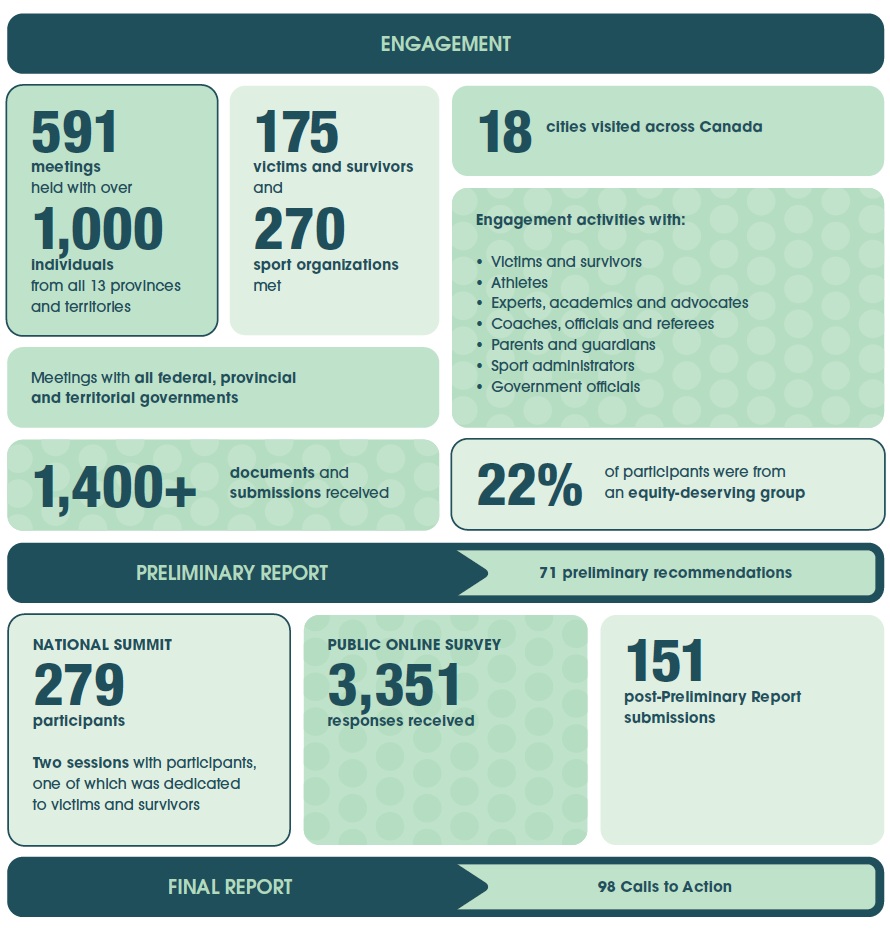
Figure 17.3. Commission by the numbers – text version
Engagement
- 591 meetings held with over 1,000 individuals from all 13 provinces and territories
- Meetings with all federal, provincial and territorial governments
- Engagement activities with victims and survivors, athletes, academic experts and advocates, coaches, officials and referees, parents and guardians, sport administrators and government representatives
- 175 victims and survivors and 270 sport organizations met
- 22% of participants were from an equity-deserving group
- 18 cities visited across Canada
- Over 1,400 documents and submissions received
Preliminary Report
- 71 preliminary recommendations
- 3,351 responses to the online public survey
- National Summit: 279 participants, two sessions with participants, one of which was dedicated to victims and survivors
- 151 post-Preliminary Report submissions
Final Report
- 98 Calls to Action
Public online survey
On June 16, 2025, according to its Terms of Reference, the Commission launched a public online survey. It was designed to gather public perspectives on improving safe sport and the broader sport system in Canada. More specifically, it was developed to gather data related to the Commission’s preliminary findings and collect additional detailed data on specific topics. The survey closed on August 27, 2025, two months after it was launched. Its closure coincided with the Preliminary Report’s release and the launch of an online feedback form.
The survey was organized to include four distinct sections: screening questions, two core sections aligned with the Commission’s mandate of improving safe sport in Canada and improving the sport system in Canada, and demographic questions. Survey respondents were given the opportunity to answer either one of the core sections or both. The total number of questions posed to a participant was variable and driven by conditional logic based on three factors: their chosen path (answering one or both core sections), the type of sport participation identified during screening, and their self-reported experience. It was also dependent on the respondent’s willingness to answer optional questions presented throughout the survey. This ensured that individuals received questions tailored to their specific experiences in the Canadian sport system. This sequencing and interdependence of questions led to natural variations in response rates. The survey was designed for data collection across key areas, including safe sport issues, complaint mechanisms, sanctions and registries, safe sport education, maltreatment prevention, leadership and governance, funding, and the benefits of sport. Appendix 18 lists the survey questions.
The survey was administered online via the Commission’s website as a self-administered questionnaire. Most questions were optional. Respondents could complete the questionnaire at their own time and pace. The anonymity provided by this format is consistent with a victim- and survivor-centered as well as trauma- and violence-informed approach, prioritizing respondents’ safety and comfort.Footnote 1980 To ensure a broad and relevant range of participation from both organized sport and non-organized sport participants, including the public at large, the survey employed a combination of sampling techniques.
The survey was posted on the Commission’s website, making it easily accessible. It was shared with specific groups to encourage their participation, thereby ensuring input from key sport stakeholders (e.g., coaches, athletes, sport administrators, officials). The survey was shared with those who had previously provided their email addresses via the online portal to be notified of its launch (over 500 email addresses). The Commission also shared the survey with relevant networks (such as survivor support groups). Additionally, we used a mailing list for direct outreach and sent out reminders to boost participation. To broaden the survey’s public profile, we also initiated media engagement. A digital promotional kit was developed and circulated, encouraging people to share the survey information within their respective networks.
The survey received a total of 3,351 responses.Footnote 1981 The analysis of the survey data followed a two-step approach, beginning with an overall analysis of the aggregated data. This involved a question-by-question frequency analysis to establish the pattern and prevalence of answers for every item surveyed, providing a broad overview of all responses. The next step involved a cross-tabulation analysis. By comparing relationships between responses across different questions, this method allowed for a deeper understanding of how different groups of participants responded. It also indicated how their perspectives on safe sport correlated with their views on the broader sport system.
The vast majority of respondents (88.8%) reported having participated in organized sport in Canada over the past 10 years. In other words, a large proportion of respondents had been involved in formal sport settings. More than two thirds (70.3%) of respondents reported participating in general recreational activity or exercise, and 61.5% identified as a spectator or fan. Slightly more than half of the respondents (53.3%) participate in non-organized sport.
The survey asked respondents how they participated in Canada’s organized sport system over the past 10 years. The three most frequently selected roles were: coaches or instructors (67.0%), athletes (65.5%), and parents or guardians of an athlete (57.2%). Nearly half of respondents who were organized sport participants (48.7%) identified as administrators (including as a board member), indicating significant participation at the organizational leadership level.
Nine demographic questions were included to segment the data. This information was collected to allow for a more detailed analysis, making it possible to identify differences in opinions among various groups. These questions were asked of all respondents but were not mandatory. In total, 87.6% of respondents answered at least one of the demographic questions in the survey. Appendix 19 provides an overview of the demographic results.
Respondents could answer questions about improving safe sport, improving the sport system in Canada, or both. Table 17.4 gives an overview of respondent agreement rates by question category.
| Type of participant | Questions about both improving safe sport and improving the sport system in Canada | Questions only about improving safe sport in Canada | Questions only about improving the sport system in Canada |
|---|---|---|---|
| Participated in organized sport | 70.9% | 4.2% | 24.9% |
| Did not participate in an organized sport | 71.4% | 6.6% | 22.0% |
The results of the Commission’s public online survey are not reflective of the broader Canadian population and are intended to describe the experiences and views of voluntary respondents only. The data we collected allowed us to draw valuable, specific conclusions about the experiences and perceptions of those who chose to provide answers. To uphold the integrity of the analysis and ensure respondent anonymity, results from subgroups with a limited sample size were excluded from this report. Throughout this report, we only refer to survey results deemed sufficiently large to allow for meaningful interpretation.
Commission mandate extended
The response to the Commission’s engagement and outreach strategy was significant. It was clear that many wished to contribute to our work and meet with us. The Commission’s mandate was therefore extended by the Government of Canada to March 2026.Footnote 1982
Phase 2: Preliminary Report
In accordance with its Terms of Reference, the Commission released its Preliminary Report in both official languages on August 28, 2025, ahead of its National Summit. The Report was published on the Commission’s website and disseminated by email to all involved in our engagement processes. The Commission held a news conference to present the Preliminary Report after which the Commissioner participated in a number of media interviews.
Because its preliminary findings and recommendations would form the basis of the National Summit discussions, the Preliminary Report was detailed and comprehensive. It drew on research, documents shared with the Commission either proactively or upon request, and our engagement efforts with participants.
The Preliminary Report presented 71 recommendations to improve Canada’s sport system by addressing issues related to leadership, governance, funding, system alignment, and safe sport. It also highlighted the widespread presence of maltreatment and abuse in sport. It advocated for stronger prevention and response mechanisms, standardized training and background checks, better complaint processes, and a national registry of sanctioned individuals to build a safer, more inclusive environment for all participants. Some of the preliminary recommendations were presented as options to allow for deliberation and discussion at the National Summit organized by the Commission.
Phase 3: feedback on the Preliminary Report
From August 28 to September 30, 2025, the Commission launched and made available on its website an online feedback form. Through this form, the Commission welcomed feedback on the findings and recommendations found in its Preliminary Report. In addition to the feedback we received at the National Summit, the Commission received 151 submissions through the online feedback form and by email about its Preliminary Report.
Commission’s National Summit
As provided in its Terms of Reference, the Commission’s activities included hosting a National Summit which took place September 8 to 12, 2025. The National Summit aimed to provide an opportunity for participants in our engagement process and other interested parties to deliberate on the Commission’s preliminary findings and recommendations.Footnote 1983 The National Summit was an occasion for the Commission to observe, listen, and obtain feedback to inform the preparation of the Final Report.
In accordance with its victim- and survivor-centered and trauma- and violence-informed approach, the Commission hosted the National Summit in two parts. The first session was reserved for victims and survivors of maltreatment in sport (September 8–9, 2025). The second session was open to all participants including athletes, parents and guardians, coaches, officials and referees, administrators, support personnel, sport organizations, government officials, academics, advocates, and subject matter experts, as well as victims and survivors (September 11–12, 2025). The programming for the two sessions was identical.
The selection of National Summit participants was done following a call for expression of interest. On April 8, 2025, an expression of interest form was posted on the Commission’s website and shared broadly through a news release, on the Commission’s “X” accounts, and via email to those who had engaged with the Commission. The expression of interest form closed on April 29, 2025. The Commission received close to 500 expressions of interest.
The Commission’s Terms of Reference set out how the National Summit was meant to give participants who engaged with the Commission and other interested parties a chance to deliberate on the Commission’s preliminary findings and recommendations.Footnote 1984 As such, in selecting National Summit attendees we considered whether an individual participated in the Commission’s engagement activities. The Commission also ensured National Summit attendees represented a wide range of perspectives including those of victims and survivors of maltreatment in sport, subject-matter experts, academics, advocates, athletes, sport participants, coaches, administrators, and sport leaders.
A total of 279 people attended the National Summit session one or session two. For both sessions we had participants attending in person or virtually.
The Summit agenda included a combination of plenaries and breakout sessions. The specific topics, content, and key questions of each breakout session aligned with the findings and recommendations the Commission made in its Preliminary Report. Discussion topics included: the Centralized Sport Entity, Canadian sport system alignment, sport governance, sport funding, safe sport policies, complaint mechanisms and complaint-management processes, safe sport and maltreatment-prevention measures, and public registries of sanctioned individuals. Professional facilitators managed facilitation in the breakout sessions.
The Commission also developed “principles of engagement” for the National Summit. This document was shared with participants ahead of the summit asking them to follow principles that promote safety and respectful, inclusive, and supportive environments. As with all other Commission activities, health support services were also available to participants. The Commission team also received additional training on trauma-informed practices in advance of the National Summit.
As this Final Report illustrates, the National Summit allowed for meaningful engagement with participants and shaped and informed the Commission’s Calls to Action to the Government of Canada.
Phase 4: Final Report
According to our mandate, the Final Report was to build on the Preliminary Report and reflect insights garnered from the discussions and deliberations that occurred at the National Summit.Footnote 1985 This comprehensive Final Report was developed by building on the Preliminary Report and the feedback we received about it, and integrating additional research along with the results of the public online survey.
Reflecting on the Commission’s work
When we began our work, we quickly realized how complex the sport system is and, by extension, the complexity of the Commission’s mandate. It also became clear that the two parts of the mandate — improving safe sport and improving the sport system in Canada — were deeply interconnected.
While previous reviews and studies have looked at specific issues such as maltreatment in sport, governance, high-performance culture, and safe sport complaints, the Commission’s mandate was both broad and unprecedented.
The Future of Sport in Canada Commission’s Final Report is the first comprehensive review of the Canadian sport system that includes safe sport and the first time that such a wide-ranging and holistic assessment and review has been undertaken.
Two defining features distinguished this Commission: its trauma-informed approach and the organization of a National Summit for participants to deliberate on the preliminary findings and recommendations.
We recognize that many people originally called for this Commission to be a commission of inquiry. As we outline throughout our report, we believe that the trauma-informed framework of this Commission was central to earning the confidence of participants, many of whom had previously lost trust in the sport system. The Commission developed protocols that both protected sensitive information and minimized the risk of trauma. This approach created a safe environment in which participants could share their experiences openly, while complying with the Access to Information and Privacy Act. Not only did this approach strengthen engagement with participants it also enhanced the quality of the information we collected. The outcomes of this Commission would not have been the same had it been a commission of inquiry.
The National Summit provided a unique forum for dialogue. For the first time, representatives from across the sport system, who otherwise often work in isolation, came together to discuss the findings and recommendations from the Preliminary Report. This process allowed participants to exchange perspectives and contribute to shaping the Final Report. Many described the National Summit as a turning point and the beginning of an ongoing national conversation on safe and inclusive sport and the structure of the Canadian sport system.
The Commission had a broad mandate. But by carefully balancing the scope of our work with the time and resources we were allocated, and by combining a trauma-informed methodology with open national deliberation, the Commission successfully fulfilled its Terms of Reference.