
Canada Arts Presentation Fund Evaluation 2018-19 to 2022-23
Evaluation Services Directorate
December 8, 2024
On this page
- List of Tables
- List of Figures
- List of Acronyms and Abbreviations
- Executive summary
- 1. Introduction
- 2. Program profile
- 3. Evaluation approach and methodology
- 4. Findings
- 5. Conclusions
- 6. Recommendations and management response and action plan
- Appendix A: Evaluation Matrix
- Appendix B: Detailed Achievement of Outcomes Tables
- Appendix C: Additional Tables and Figures
- Appendix D: Bibliography
List of Tables
- Table 1: Canada Arts Presentation Fund description
- Table 2: Canada Arts Presentation Fund expected outcomes
- Table 3: Canada Arts Presentation Fund reference levels, 2018-19 to 2022-23 (in millions $)
- Table 4: Canada Arts Presentation Fund actual expenditures, 2018-19 to 2022-23 (in millions $)
- Table 5: Canada Arts Presentation Fund full-time equivalents, 2018-19 to 2022-23
- Table 6: Evaluation questions by core issue
- Table 7: Summary of methodology
- Table 8: Methodological limitations and mitigation strategies
- Table 9: Canada Arts Presentation Fund funding – regular funds, 2018-19 to 2022-23
- Table 10: Recommendation 1 – Action plan
- Table 11: Recommendation 2 – Action plan
- Table 12: Recommendation 3 – Action plan
List of Figures
- Figure 1: Canada Arts Presentation Fund funding as a proportion of total project expenditures, 2018-19 to 2022-23
- Figure 2: Evolution of funding to organizations mandated to serve Indigenous communities and other equity groups, 2018-19 to 2022-23
- Figure 3: Percentage of funds allocated by discipline, 2018-19 to 2022-23
- Figure 4: Average service standards achievement of Canada Arts Presentation Fund Programming and Development components, 2018-19 to 2021-22
List of Acronyms and Abbreviations
- GBA Plus
- Gender-Based Analysis Plus
- 2SLGBTQI+
- Two-spirit, lesbian, gay, bisexual, transgender, queer, intersex and additional sexually and gender diverse people
- Portable Document Format
Alternate format

Canada Arts Presentation Fund Evaluation 2018-19 to 2022-23 [PDF version - 1.68 MB]
Executive summary
Created in 2001, the Canada Arts Presentation Fund is a grants and contributions program designed to give Canadians access to a variety of professional artistic experiences in their communities. It provides direct funding to professional arts presenters for arts festivals and performing arts series, and to organizations that support arts presenters. This funding facilitates artistic programming, community engagement and professional development activities in the performing arts sector. Support is provided through three components: Programming, Development and the Fathers of Confederation Buildings Trust.
The evaluation was conducted in accordance with the requirements set out in the Financial Administration Act and the Policy on Results (2016). The evaluation covers the period from 2018-19 to 2022-23 and examines the Program’s relevance, effectiveness and efficiency. In addition to the Program’s permanent budget, it covers temporary supplemental funding delivered during the evaluation period, including the emergency funds related to COVID-19 and the Creative Export Strategy Fund.
Findings
Relevance
The Canada Arts Presentation Fund remains relevant by continuing to meet the financial and professional development needs of the arts presentation sector. The federal government's support for the arts presentation sector helps to sustain the not-for-profit performing arts sector and promotes Canadians’ access to artistic experiences in their communities. Considering the magnitude of the financial pressures facing the arts presentation sector, the Program is part of a continuum of public interventions where there is more complementarity than overlap.
In response to the restrictions imposed by the COVID-19 pandemic, the emergency funds delivered by the Canada Arts Presentation Fund met important financial needs of organizations in the arts presentation sector by granting $74 million over a 3-year period. While funding is important for stabilizing the not-for-profit arts presentation sector, the Program faces challenges in adapting to rapidly changing and new needs and priorities. Key factors are its broad scope and high recurrence of recipients.
Arts presentation remains a priority for the federal government. The Program has strengthened its alignment with government-wide priorities by improving access to and delivery of its services to Indigenous communities and other equity groups. However, barriers to accessing funding remain, and there are opportunities to strengthen alignment with inclusion, diversity, equity and accessibility and environmental priorities.
Effectiveness
The Canada Arts Presentation Fund has reached most of its expected results in the short, medium and long term. In particular, it contributed to the professional development of arts presenters and to Canadians’ involvement, participation in and appreciation of artistic experiences. While restrictions related to COVID-19 had negative impacts on the achievement of some results, the emergency funds allowed many recipients to maintain and resume their activities. Some were able to innovate by offering virtual experiences.
The evaluation indicates that the Canada Arts Presentation Fund’s contribution to the visibility of the country’s diversity in artistic experiences is limited, in particular because of gaps in the current definitions and criteria surrounding these requirements. Moreover, the Program’s impact on the financial health of the arts presentation sector has been modest, with results below its established target for all the years covered by the evaluation.
There are some issues with certain expected outcomes and performance indicators that affect results measurement and reporting.
Efficiency
Overall, the Canada Arts Presentation Fund’s delivery is efficient. The Programs’ administrative costs are stable. It uses grants and multi-year agreements to reduce the administrative burden and, overall, has met the established service standards. The Program is recognized for its exemplary collaboration between the national and regional teams, as well as the quality of its client service. Although the delivery of emergency funds meant high operational pressures, it introduced simplifications specific to the emergency context to ensure rapid and timely delivery.
Some aspects of its design, such as building professional capacity for art presenters, support Program sustainability. However, while stable funding is important, its ability to generate lasting results is based on an ongoing funding approach. The recurrence of funding among recipients creates certain challenges and risks, including expectations for continued funding and saturation of the budget. It limits access to funding for new recipients and the ability of the Program to better respond to changing needs and priorities.
There are also challenges with the application and analysis processes, which creates additional workload for employees and applicants.
Recommendations
In light of the findings and conclusions, the evaluation offers 3 recommendations to the Senior Assistant Deputy Minister, Cultural Affairs.
Recommendation 1
Review the Canada Arts Presentation Fund’s priorities and funding strategies to clarify and refocus its intervention, increase equitable access to funding and its capacity to generate sustainable impact in the arts presentation sector.
Recommendation 2
In collaboration with the regions and the Centre of Excellence, review the internal mechanisms and processes for analyzing and delivering Canada Arts Presentation Fund’s grants and contributions to continue to alleviate the administrative burden on employees and applicants.
Recommendation 3
Improve the performance measurement of the Canada Arts Presentation Fund to support better reporting and decision-making by reviewing and updating its logic model, expected results and indicators.
1. Introduction
This report presents the findings, conclusions and recommendations of the evaluation of the Canada Arts Presentation Fund. The evaluation was conducted in accordance with the evaluation requirements set out in the Treasury Board Secretariat’s Policy on Results (2016), the requirements of the Financial Administration Act and the information needs identified by the Program’s management. It was carried out according to the 2024-25 to 2028-29 Evaluation Plan.
The evaluation covers the 5-year period from 2018-19 to 2022-23 and examines the Canada Arts Presentation Fund’s relevance, effectiveness and efficiency. In addition to the Program’s permanent budget, it covers temporary additional funding delivered during the evaluation period, including the COVID-19 Emergency Support Funds and the Creative Export Strategy funding.
2. Program profile
This section summarizes the Canada Arts Presentation Fund’s history, expected outcomes, governance and management, as well as resources.
2.1. Program history
Created in 2001-02Footnote 1, the Canada Arts Presentation Fund is a grants and contributions program designed to give Canadians access to a variety of professional artistic experiences in their communities. The ProgramFootnote 2 recognizes that arts presenters are key partners in achieving this goal. It provides direct funding to professional arts festivals and performing arts series presenters as well as to presenter support organizationsFootnote 3 to facilitate their artistic programming, community engagement and professional development activities. Support is provided through 3 components: Programming, Development and the Fathers of Confederation Buildings Trust.
The Confederation Centre of the Arts is located in Charlottetown, Prince Edward Island. It was established in 1964 as part of a joint initiative of the federal government and all provincial governments to mark the centennial of the Charlottetown Conference of 1864, which led to the creation of Canada. The Fathers of Confederation Buildings Trust is responsible for the operation and maintenance of the building, which houses theatre stages, an art gallery, a lecture hall, a memorial hall, a restaurant and a gift store, and serves as a national and regional cultural centre for the performing arts. The Canada Arts Presentation Fund’s Fathers of Confederation Buildings Trust component supports the Centre’s operations and artistic programming.
2.2. Program objectives, activities and expected outcomes
The Canada Arts Presentation Fund’s ultimate objective is to provide Canadians with access to a variety of professional artistic experiences in their communities. Table 1 provides a description of the Program, and Table 2 presents its expected outcomes.
| Components | Programming | Development | Fathers of Confederation Buildings Trust |
|---|---|---|---|
| Objectives | Support the presentation of professional arts festivals or the presentation of programming and performing arts series by professional presenters | Support the emergence of arts presenters and presenter support organizations for underserved communities or artistic practices | Support the operations and artistic programming of the Charlottetown Confederation Centre of the Arts |
| Funded activities | Shows or performances, community engagement or professional development activities | Operating expenses and programming | |
| Target recipients | Arts presenters and presenter support organizations | Confederation Centre of the Arts | |
Source: Program documents
| Level of outcome | Programming and Development | Fathers of Confederation Buildings Trust |
|---|---|---|
| Short-term outcomes | The Program supports recipients to present a variety of artistic disciplines | The Confederation Centre of the Arts offers visual and performing arts and heritage programming that reflects Canada’s cultural, linguistic and regional diversity |
| Medium-term outcomes |
|
Canadians engage and participate in professional arts and heritage experiences through the Confederation Centre of the Arts programming. |
| Long-term outcomes | Canadians value and engage with professional artistic experiences. | |
Source: Canada Arts Presentation Fund Performance Information Profile, 2023
2.3. Program management and governance
The Canada Arts Presentation Fund is under the responsibility of the Senior Assistant Deputy Minister, Cultural Affairs, and is administered by the Arts and Culture Sector Strategy Branch. Delivery is mainly provided by Canadian Heritage’s 5 regional officesFootnote 4 with the exception of some projects that are national in scope, which are delivered by the National office.
Applications are analyzed and funds are allocated on a regional basis. The mechanism for determining the regional allocation formula was established at the time of the Program’s creation, taking into consideration the number of arts presentation activities, the number of professional artists, and the general population.
2.4. Program resources
In addition to its permanent annual grants and contributions budget of $32.3 million, the Canada Arts Presentation Fund delivered many additional funds during the evaluation period:
- $8 million per year in temporary additional funding beginning in 2019-20;
- $74 million through 5 emergency funds related to COVID-19Footnote 5 from 2020-21 to 2022-23;
- $500,000 per year under the Creative Export Strategy funding from 2018-19 to 2022-23.
These funds are not fully reflected in the reference levels below, as they have sometimes been obtained via additional budget cycles. They are included in actual expenditures and are covered by the scope of the evaluation.
Tables 3 and 4 show the Program’s reference levels and actual expenditures for the period from 2018-19 to 2022-23.
| Fiscal Year | Salaries, EBPFootnote 6 and O&MFootnote 7 | Grants & Contributions | Total |
|---|---|---|---|
| 2018-19 | 6.0 | 32.0 | 37.9 |
| 2019-20 | 5.5 | 32.5 | 38.0 |
| 2020-21 | 6.0 | 40.3 | 46.3 |
| 2021-22 | 6.1 | 32.5 | 38.6 |
| 2022-23 | 7.6 | 64.6 | 72.2 |
| TOTAL | 31.2 | 201.9 | 233.0 |
Source: Canadian Heritage Financial Management Branch
| Fiscal Year | Salaries, EBPFootnote 8 and O&MFootnote 9 | Grants and Contributions– Regular Funding | Grants and Contributions – Emergency Funding Footnote 10 | Total |
|---|---|---|---|---|
| 2018–19 | 6.3 | 29.6 | - | 35.9 |
| 2019-20 | 6.4 | 40.0 | - | 46.4 |
| 2020–21 | 6.5 | 38.9 | 7.6 | 53.0 |
| 2021-22 | 7.0 | 40.1 | 37.5 | 84.7 |
| 2022–23 | 8.2 | 40.5 | 28.9 | 77.6 |
| TOTAL | 34.4 | 189.2 | 73.9 | 297.5 |
Source: Canadian Heritage Financial Management Branch
Note: Funding amounts are rounded, which explains the difference in some totals
The Program is operated by Canadian Heritage employees at the national office and in the 5 regional offices. Table 5 provides an overview of full-time equivalent resources during the period covered by this evaluation.
| Full-time equivalents | 2018-19 | 2019-20 | 2020-21 | 2021-22 | 2022-23 |
|---|---|---|---|---|---|
| Planned | 63.7 | 58.9 | 65.5 | 63.0 | 73.9 |
| Actual | 62.0 | 64.2 | 58.7 | 70.3 | 80.2 |
Source: Canadian Heritage Financial Management Branch
3. Evaluation approach and methodology
Canadian Heritage’s Evaluation Services Directorate led the evaluation with targeted support from a consulting firm in the data collection and analysis phases.
3.1. Scope and calibration
The evaluation covers the period from 2018-19 to 2022-23 and examines the Program’s relevance, effectiveness and efficiency. To meet the information needs of Program management, this evaluation addresses the following aspects:
- Program alignment with the current and emerging needs of the arts presentation sector;
- Overlap or complementarity with other programs;
- Progress achieved in terms of inclusion, diversity, equity and accessibilityFootnote 11;
- Viability of recipient funding model and priorities; and,
- Lessons learned from temporary initiatives related to the COVID-19 pandemic.
The evaluation was calibrated as follows to be carried out in a timely manner:
- Alignment with priorities focused on government-wide priorities, since alignment with departmental roles and responsibilities had already been demonstrated several times in previous evaluations.
- Data collection methods were used strategically to build on existing data.
3.2. Evaluation questions
Table 6 presents the evaluation questions by core issue. The complete evaluation matrix is available in Appendix A.
| Core Issue | Evaluation Question |
|---|---|
| Relevance |
|
| Effectiveness |
|
| Efficiency |
|
3.3. Data collection methods
The evaluation was carried out using a combination of qualitative and quantitative data collection methods to answer the questions and indicators in the evaluation matrix. It was based on primary and secondary sources of information.
| Methodology | Description |
|---|---|
| Literature review | Analysis of research and academic publications as well as public data from Statistics Canada. |
| Key informant interviews | 27 interviews with key stakeholders,Footnote 12 including 15 internal and 12 external |
| SurveysFootnote 13 | Surveys were sent to:
The results of the surveys already carried out for the COVID-19 Emergency Support Funds, Reopening Fund and Recovery Fund delivered in response to the pandemic were used |
| Documentary review | Analysis of approximately 100 Program and Government of Canada key documents |
| Administrative review | Analysis of administrative data from various sources:
|
| Project review | Analysis of a random sample of 50 projects, including websites, application forms, contribution agreements, and recipients’ final reports |
3.4. Evaluation limitations and mitigation strategies
Table 8 presents the main evaluation challenges, and the mitigation strategies used to minimize their impact.
| Limitations | Mitigation Strategies |
|---|---|
| Given the size of the non-recipient sample, the 33% response rate results in a 15% margin of error. | The survey of non-recipients was mainly used to compare and triangulate the results of the recipients’ survey. |
| Only some funded projects have financial data, which affected the analysis of outcomes and indicators of financial health. | TriangulationFootnote 14 of findings and clear identification of data source weaknesses in the report. |
| As data collection took place prior to the announcement of the renewal of temporary additional funding, some views may have been influenced by the anticipated possible end of this funding. | Triangulation of multiple data sources and collection methods to validate findings and conclusions. |
| Gaps in the relevance and methodology of some expected outcomes and indicators limited the evaluation of effectiveness. | Use of mixed methods and triangulation to complement information sources and enhance analysis. |
4. Findings
4.1. Relevance
This section presents findings relating to the Canada Arts Presentation Fund’s response to current and emerging needs in the sector, the issue of complementarity with other programs, as well as the level of alignment with government priorities.
4.1.1. Canada Arts Presentation Fund’s response to current and emerging sector needs
Evaluation question: To what extent does the Canada Arts Presentation Fund meet current and emerging needs relating to arts presentation?
Key findings:
- By funding arts presenters and their support organizations, the Program addresses some of the important financial and professional development needs of the performing arts presentation sector.
- The 5 emergency funds delivered in response to COVID-19 were generally able to meet the needs of artists and organizations in the performing arts presentation sector, granting close to $74 million over a 3-year period.
- The Program’s ability to adapt to sectoral changes, financial pressures or emerging needs and priorities is limited, particularly due to its broad scope of intervention and high recurrence of recipients.
- Given the scale of financial needs, the Canada Arts Presentation Fund’s contribution is part of a continuum of public intervention where there is more complementarity than overlap. However, the large number of funding programs causes a burden for both applicants and recipients.
The Canada Arts Presentation Fund meets part of the sector’s important financial and labour force needs
Funding from the Program met important needs in the arts presentation sector. Although funding was not sufficient to address all financial pressures, 89% of the applications received and 55% of the requested amounts were approved from 2018 to 2023 (Table 9).
40% of recipients surveyed felt the level of funding adequately met their needs; however, 49% felt it was inadequate.
| Fiscal Year | Applications Received (#) |
Applications Approved (#) |
Applications Approved (%) |
Requested Amounts Approved (%) |
|---|---|---|---|---|
| 2018–19 | 442 | 430 | 97 | 49 |
| 2019-20 | 350 | 304 | 87 | 57 |
| 2020–21 | 459 | 403 | 88 | 62 |
| 2021-22 | 476 | 409 | 86 | 57 |
| 2022-23 | 526 | 468 | 89 | 57 |
| Total | 2,253 | 2,014 | - | - |
| Average | - | - | 89 | 55 |
Source: Grants and Contributions Information Management System data
The temporary additional funding of $8 million per year beginning in 2019-20 enabled the Canada Arts Presentation Fund to increase the total number of projects funded each year from 691 in 2018-19 to 826 in 2022-23Footnote 15. On average, 722 arts presenter projectsFootnote 16 received direct funding each year, which accounted for 91% of the amounts allocated. The Program also contributed to professional development by funding an average of 33 presenter support organizations projects each year, which accounted for 8%Footnote 17 of the amounts allocated (Table C-2, Appendix C).
The performing arts presentation sector was hit hard by the restrictions imposed by the COVID-19Footnote 18 pandemic and continues to face financial pressures. It is experiencing a general increase in expenses due to inflation, particularly in rent, supplies and salaries, combined with stagnating or declining income from public, philanthropic and private sources.
Following the COVID-19 pandemic, the majority of Canadians generally felt very or somewhat comfortable attending outdoor arts events Footnote 19, though the comfort level was split when it came to indoor events. Moreover, venues have yet to see a recovery in ticket and concession sales equivalent to pre-pandemic levels. These presenters are facing major changes in consumer habits, including:
- a decrease in season ticket purchases, particularly among youth and older generations;
- late, last-minute purchases;
- a disruption to economic activity and reduced attendance of shows and events in city centres due, among other things, to telework;
- purchasing platforms that are not always adapted to the attendance of shows in groups by younger generations.
The sector is also experiencing an increase in the number of presenters, which, combined with rising costs in the sector, is contributing to an increase in Canada Arts Presentation Fund applications. Between 2015 and 2019, the number of businesses in the sector as a whole rose by 26%, from 12,040 to 15,170. Numerous closures followed as a result of the COVID-19 pandemic. Nevertheless, by 2023, the sector was already on track to recover pre-pandemic levelsFootnote 20.
As a result, the Program is experiencing increased demand as the total number of applications has risen from 442 in 2018 to 526 in 2023Footnote 21. The application rejection rate has also seen a certain increase over the same period, rising from 3% to 11% (Table 9).
Emergency funds helped meet needs
In response to the COVID-19 pandemic, the Canada Arts Presentation Fund delivered 5 emergency initiativesFootnote 22, for a total of nearly $74 million to over 1,800 approved applications (93% approval rate). Surveys distributed to Recovery Fund and Reopening Fund recipients show that, on average, 90% of recipients were satisfied with the amounts they received. The Program also helped to ensure that needs were met equitably, by prioritizing recipients from Indigenous communities and other equity groups that were deemed to be particularly affected by COVID-19 restrictions.
These funds were essential in helping artistsFootnote 23 and the arts presentation sector to cope with the effects of the COVID-19 pandemic. Gross domestic product in the live performance sector saw a 48% decrease between the last quarter of 2019 and the second quarter of 2020, while employment in the performing arts and the festivals and celebrations sectors saw a 46% decrease over the same periodFootnote 24. Indeed, the sector has suffered a loss of workers who found employment opportunities in other sectors during venue closures and festival cancellations.
Today, the sector continues to face human and financial resource pressures. Performing arts presenters face challenges in recruitment, retention, training and professional development to meet their labour needs. Financial pressures make it difficult for them to offer competitive wages compared to other industries to attract and retain employees.
The Canada Arts Presentation Fund’s ability to adapt to its environment is limited
The performing arts presentation sector is changing rapidly. The arts are becoming increasingly multidisciplinary and integrate more technology. While in-person presentations remain the preferred model, presenters must adapt and compete with increasing online options. Faced with a rapidly evolving sector and increased demand, the evaluation finds that the Program’s ability to adapt to a changing environment and changing needs is limited.
The scope of the Program’s intervention is broad and covers a wide range of festivals, performing arts disciplines and recipients. In a context of high demand, this situation encourages the Program’s over-subscription.
The Canada Arts Presentation Fund also provides recurrent funding to existing recipients and makes extensive use of 2- to 5-year multi-year agreements. While this approach helps to stabilize the sector, it also saturates its funding envelope and considerably limits its ability to respond to new needs or new clients. In 2022-23, 77% of recipients were recurringFootnote 25 and obtained 88% of the funding envelope. On average, 82% of funding was allocated in the form of multi-year agreements during the evaluation period. As a result, its areas of intervention has remained similar over time, with 65% of its support going to major urban centres, and mainly to the same 3 disciplines: music (61%), theatre (39%) and dance (35%).
In recent years, the Program has made efforts to better adapt to new clients, needs and priorities, but the ah hoc basis approach has not ensured sustainable access for new applicants in a structuring manner. In particular, it has used the temporary additional funds obtained from 2019 onwards to fund new clients, which ultimately places it in a position of financial vulnerability since these funds are not permanent. It has also made use of the more flexible requirements of the Development component to meet the needs of clients from Indigenous communities and other equity groups, but the financial capacity of this component remains limited.
The Program has also reallocated budgets from existing recipients to new recipients. However, this approach remains ad hoc and limited. It also encourages the dispersal of available funding by funding a larger number of recipients but allocating increasingly smaller amounts.
From 2018 to 2023, 30% of the funded projects received amounts that represented less than 5% of their total project costs (Figure 1).

Figure 1: CAPF funding as a proportion of total project expenditures, from 2018-19 to 2022-23 – text version
- 30% of projects received < 5% of their total project expenditures from the CAPF
- 41 % of projects received 5% - 15% of their total project expenditures from the CAPF
- 23 % of projects received 16% - 30% of their total project expenditures from the CAPF
- 5 % of projects received 31% -50% of their total project expenditures from the CAPF
- 2 % of projects received > 50% of their total project expenditures from the CAPF
Source: Grants and Contributions Information Management System data
Note: Percentages are rounded, which is why the total percentage is 101%.
Other data indicates that about 20 projects shared 10% of the Program funding, and that in most cases, the approved funding amount did not represent a large proportion of their total project costs. These issues contribute to budget saturation and lack of flexibility, raising questions about the need for, and the impact of funding these projects.
Given the regional allocation of funding and the existence of regional investment strategies, regional offices should have the flexibility to adapt to new needs and a changing environment. They are known to have a better understanding of the unique needs of each region of the country. However, given that existing and recurring recipients take a large share of the funding greatly limits the ability of regional offices to respond to the needs and priorities identified in their strategies.
The Canada Arts Presentation Fund contributes to the continuum of public intervention in arts presentation
The Program is part of a continuum of public funding consisting of a number of funders. In general, overall public funding represents less than 50% of projects’ total budget, with the remainder coming mainly from own-source revenues (ticket or concession sales) and philanthropy. Public funders come from all levels of government, but funding varies from one province or municipality to another. Some provinces, such as Quebec and Ontario, offer more funding programs for this sector, and municipal funding is more prevalent in urban centres.
At the federal level, several funders are involved in the performing arts presentation sector, particularly festivals, including Canadian Heritage, the Canada Council for the Arts and regional development agencies. Moreover, a major revision of the Canada Council for the Arts programs in recent years has led to confusion between its role and that of the Canada Arts Presentation Fund within the arts presentation sector. Historically, the Canada Council for the Arts had more of a direct funding relationship with artists, but it now offers programs to support the sector as a whole, including presenters and presenter support organizations.
Within Canadian Heritage itself, a variety of programs can be accessed by Canada Arts Presentation Fund eligible recipientsFootnote 27. In fact, although the Building Communities Through Arts and Heritage Program has distinct objectives and guidelines, the introduction of flexibilities to the Canada Arts Presentation Fund’s Development component has led to growing confusion between the programs. In particular, the removal of the criterion requiring organizations to be registered non-profit organizations effectively increased the number of recipients eligible for both programs. However, to avoid double funding, program guidelines include a condition making projects already receiving financial support from the other program ineligible.
Given the financial pressures facing the arts presentation sector, the existence of multiple funding sources is seen as an advantage. Overall, there is more complementarity than overlap in the continuum of public funding. However, the presence of many separate funders with different requirements, deadlines, forms and processes generates an administrative burden for applicants and recipientsFootnote 28.
4.1.2. Canada Arts Presentation Fund alignment with government priorities
To what extent is the Canada Arts Presentation Fund aligned with government priorities, including those relating to inclusion, diversity, equity and accessibility, GBA Plus, Reconciliation and the environment?
Key findings:
- Arts presentation has remained a priority for the federal government, and the Canada Arts Presentation Fund has strengthened its alignment with government-wide priorities.
- However, there is still room for improvement, particularly to strengthen alignment with priorities related to inclusion, diversity, equity and accessibility and the environment.
Arts presentation has remained a priority for the federal government
Various references in Speeches from the Throne and Ministers’ mandate letters demonstrate that investment in Canada’s creative and cultural industries has remained a priority for the Government of Canada since 2015Footnote 29. In 2019, the government specified that access to artists would be encouraged via support for festivals and performing arts series across the countryFootnote 30. Consequently, it increased its support for arts presentation through the annual allocation of a temporary additional $8 million to the Canada Arts Presentation Fund as of 2019-20. These funds were renewed and increased to $15.5 million for a 2-year period in April 2024. Finally, the additional allocation of over $70 million in emergency funds to the Canada Arts Presentation Fund from 2020-21 to 2022-23Footnote 31 demonstrate the importance of governmental support for this sector through the challenges of the COVID-19 pandemic.
The Canada Arts Presentation Fund has strengthened its alignment with government-wide priorities
The Program has undertaken various efforts to improve access to and delivery of its services for Indigenous communities and other equity groups. Following a recommendation stemming from a 2019 grouped arts evaluationFootnote 32, 2 research studiesFootnote 33 were carried out that identified barriers and challenges specific to racialized communities and Indigenous peoples with regard to arts presentation. The Program also participated in an internal review of equity, diversity and inclusion, which identified recommendations and an action plan. The Arts and Culture Sector Strategy Branch also developed a 3-year Inclusion, Diversity, Equity and Accessibility Action Plan for 2023-2025, aimed at strengthening the alignment of the entire Branch with this government priority.
Starting in 2020, the Canada Arts Presentation Fund incorporated flexibilities to the Development component guidelines, such as the addition of unincorporated Canadian not-for-profit organizations and ad hoc community groups as eligible recipients. This has reduced barriers to Program access for Indigenous communities and other equity groups. Various operational measures were also implemented, such as:
- improving the self-identification process in the application formFootnote 34;
- testing pilot projects such as oral applications for remote communities or communities facing barriers, and developing and piloting the inclusion, diversity, equity and accessibility evaluation tool;
- strengthening regional outreach strategies to Indigenous communities and other equity groups.
The temporary additional funds obtained in 2019 were partly used to increase the support for Indigenous communities and other equity groups. The Program’s overall efforts have resulted in a steady increase in the share of the budget allocated to organizations whose mandates reach these groups from 37% in 2018-19 to 41% in 2022-23 (Figure 2).

Figure 2: Evolution of funding to organizations mandated to serve Indigenous communities and other equity groups – text version
| Fiscal year | 2018-19 | 2019-20 | 2020-21 | 2021-22 | 2022-23 |
|---|---|---|---|---|---|
| $ distributed to organizations mandated to serve Indigenous communities and other equity groups | $10,499,657 | $13,136,355 | $16,975,372 | $14,643,918 | $15,118,396 |
| $ total distributed by the CAPF | $28,643,920 | $35,308,851 | $42,863,328 | $36,723,571 | $36,788,556 |
| % of funding distributed to organizations mandated to serve Indigenous communities and other equity groups | 37% | 37% | 40% | 40% | 41% |
Source: Program administrative data
In 2022-23, the Canada Arts Presentation Fund began identifying funded women-led organizations whose primary mandate is to promote the work of female artists. To this end, the Program’s website indicates that special consideration may be granted to these organizations, in addition to organizations coming from or supporting Indigenous, Black, racialized, official language minority and 2SLGBTQI+ communities and organizations serving deaf people and people living with disabilities. The impact of this change can be studied in a future evaluation.
Improvements are possible regarding inclusion, diversity, equity and accessibility and environmental priorities
The allocation of funding is more supportive of traditional recipients funded since the Program’s inception. This has the effect of limiting access to new recipients from equity groups or communities, including racialized groups, official language minority groups, Indigenous communities, 2SLGBTQI+ communities and people with disabilities.
Some of the criteria in the Programming component are also considered to be Eurocentric. This includes the professional nature of the organizations or artists presented, the representation of more than one province or territory as defined by the historically colonial division and the ticketing policy, in contradiction with certain non-European cultural traditionsFootnote 36. Also, while the Program has improved its self-identification process for recipients in its most recent application form, there is still no clear definition for properly identifying recipients or projects from inclusion, diversity, equity and accessibility groups, either at the Program level or at the Department level.
At the operational level, there are discrepancies in the understanding and implementation of this priority, which affect the degree of access for Indigenous communities and other equity groups from one region to another. In particular, some regional offices prioritize applicants from Indigenous communities and other equity groups, while others place greater emphasis on diversifying the programming of existing traditional recipients.
Interviews and the literature review show that there may be a feeling of exploitation among artists from these groups or communities. These artists sometimes feel like they are included in a project only to meet reporting requirements. While it is understood that different regional realities affect the ability to fully address priorities related to inclusion, diversity, equity and accessibility, regions may not have enough guidance or orientation from the National Office on implementation.
Finally, while funding allocated to recipients from Indigenous communities and other equity groups has increased, support for people with disabilities has remained marginal, representing less than 0.1% of funding allocated over 5 years. There are specific challenges related to the availability of artists with disabilities within the sector and to the level of accessibility of presentation facilities.
The environment and the fight against climate change are also an important priority for the government and for Canadians. Some Canada Arts Presentation Fund recipients, especially outdoor festivals, are facing increasingly frequent climate challengesFootnote 37. Despite this context, the Program has no formal guidance concerning the environment or climate change. There is no procedure for cancelling projects following a climate event, and there are no environmental requirements for recipients. Furthermore, the criterion relating to interprovincial representationFootnote 38 in the Programming component may contradict environmental priorities because of the impact of artists’ travel.
4.2. Effectiveness
This section presents a summary of the achievement of the Program’s intended outcomes for permanent and temporary funding delivered from 2018-19 to 2022-23, including Creative Export Strategy funding. Detailed results by outcome and indicator are presented in Appendix B.
4.2.1. Achievement of outcomes
To what extent has the Canada Arts Presentation Fund achieved its expected outcomes?
Key findings:
- Setting aside the impact of restrictions related to the COVID-19 pandemic, most expected outcomes and targets were achieved. In particular, the Canada Arts Presentation Fund contributed to Canadians’ involvement in, participation in and appreciation of artistic experiences.
- However, the Program fell short of its targets in terms of diverse artistic experiences and the financial health of the arts presentation sector.
- Emergency funds enabled recipients to maintain and resume their activities, and even to innovate with virtual projects.
- There are methodology issues as well as gaps in certain outcomes or indicators, which hamper the measurement of certain outcomes and reporting.
Canada Arts Presentation Fund consistently supports 8 artistic disciplines annually
Over the 5 years, the Program supported recipients through 3,808 funded projects, with a total of $180 million in funding, mostly through the Programming component. The projects presented 8 different disciplines per year during the evaluation period, meeting the Program’s annual target. Figure 3 shows that the main disciplines supported are still music, theatre and danceFootnote 39 and that the percentage of funds allocated to each discipline remained stable.

Figure 3: Percentage of funds allocated by discipline, 2018-19 to 2022-23 – text version
| Fiscal year | Music | Theater | Dance | Humour | Visual Arts | Circus | Literature | Media arts |
|---|---|---|---|---|---|---|---|---|
| 2018-19 | 69 | 47 | 45 | 20 | 13 | 13 | 9 | 8 |
| 2019-20 | 69 | 47 | 44 | 20 | 12 | 11 | 9 | 7 |
| 2020-21 | 63 | 40 | 36 | 15 | 10 | 10 | 5 | 6 |
| 2021-22 | 51 | 31 | 26 | 11 | 7 | 6 | 4 | 4 |
| 2022-23 | 53 | 30 | 27 | 10 | 8 | 8 | 4 | 4 |
Source: Program administrative data
Creative Export Strategy funds helped expand international markets
Prior to the renewal of the Canada’s Creative Export Strategy in 2023, a portion of its funds were delivered through the Canada Arts Presentation Fund. These funds, delivered between 2018-19 and 2022-23, supported the participation of an average of 638 international arts presenters and 88 Canadian arts presenters in international events each year, contributing in the short term to the expansion of international markets. On average, 74% of recipients surveyed who had received Canada’s Creative Export Strategy funding indicated that the funds had contributed to the achievement of these outcomes. However, no targets had been set for the Canada Arts Presentation Fund indicators for this Initiative.
Development opportunities were offered to arts presenters, and Canadians engaged and participated in a variety of artistic experiences across the country
The Canada Arts Presentation Fund provides funding to presenter support organizations so that they can provide professional development opportunities to strengthen the practices of arts presenters and the presenting community. Between 31 and 40 presenter support organizations were supported each year, thus meeting annual planned targets. Presenter support organizations play a supportive role within the sector and promote professional development, including through workshops, training and mentoring programs.
The Canada Arts Presentation Fund also aims to ensure that Canadians from all regions engage and participate in professional artistic experiences and can access and experience the work of Canadian artists. Many Canadians got involved in Program-funded projects and the number of volunteers remained greater than 80,000 every year. The number of visitors to these projects remained between 19 million and 20 million, except in 2020-21 and 2021-22, which were greatly impacted by COVID-19 restrictions. According to the interviews, funding provided by the Program enables presenters to take greater risks in their programming choices, enabling Canadians to discover new professional artists and a wider variety of artistic works.
The majority of recipients surveyed indicated that the Canada Arts Presentation Fund had helped them increase the number of volunteers involved in their activities (66%), and that this funding had supported audience growth (72%).
Diversity of artistic experiences remains limited
The Canada Arts Presentation Fund aims to ensure that Canadians have access to artistic experiences that reflect Canada’s diversity. By having inclusion, diversity, equity and accessibility requirements on application forms, it helps to promote a diversity of artistic experiences. However, while its staff believe that progress is being made in this direction, gaps in the definitions and criteria relating to these requirements limit the effectiveness of these measures and the reliability of related data. On average, only 62%Footnote 40 of supported recipients offered programming that reflected the country’s diversity, whereas the target for 2023 was 70%. People with disabilities also remain underrepresented, with only 0.1% of the budget allocated to this group.
The Canada Arts Presentation Fund’s impact on the financial health of the arts presentation community has been modest
The Program also aims to ensure that performing arts presenters operate in what is considered a financially healthy presenting environment by maintaining combined own-source and private revenues of at least 70%. The combined percentage of own-source and private revenues was less than 60% for 2018-19 and 2019-20Footnote 41. However, this data is based on 7% of funded projects for which project financial data was compiled by the Program and available for analysis.
Just over half (53%) of the recipients surveyed consider that the Canada Arts Presentation Fund supports them in increasing their own-source or private revenues.
Canadians engage and participate in artistic experiences offered by the Confederation Centre of the Arts
The Canada Arts Presentation Fund supports the Confederation Centre of the Arts in offering programming that reflects Canada’s cultural, linguistic and regional diversity, and that promotes an engagement and participation by Canadians. During the evaluation period, the Confederation Centre of the Arts offered an average of 108 activities annually, representing 11 of the country’s 13 provinces and territories, and carried out an average of 14 outreach (awareness) activities per year. Over 200 volunteers contributed to these activities each year, and more than 150,000 visitors participated. Average visitor satisfaction with programming exceeded the 80% target every year except in 2021-22.
It is difficult to assess the degree of cultural or linguistic diversity in programming, as the Program’s performance measurement strategy does not include any data collection to this effect. However, interviews indicate a certain diversification of the Centre’s programming, notably as a result of partnerships with the Indigenous communities in the area. Still, further efforts are required to continue advancing inclusion, diversity, equity and accessibility and official languages priorities in the Centre’s programming.
Canadians appreciate professional artistic experiences
The Program’s ultimate goal is to help ensure that all Canadians can appreciate and engage in professional arts experiences. The 2020-21 Arts and Heritage Access and Availability Survey shows that 70% of Canadians consider arts and cultural activities to be somewhat or very important for their quality of life. In addition, 59% of Canadians attended at least one in-person arts event in the year before the pandemic.
Emergency funds enabled recipients to maintain and resume their activities
Although the 5 emergency funds results were not systematically documentedFootnote 42, the data available shows that, overall, the amounts invested through the Canada Arts Presentation Fund have had a beneficial impact. Indeed, 66% of respondents to the survey for the COVID-19 Emergency Support Fund delivered in 2020-21 indicated that the Fund had helped them remain in operation. Also, 99% of Recovery and Reopening Fund recipients indicated that they were still in operation and planned to remain so at the time of the survey. The interviews also suggested that, in many cases, the funds have enabled recipients to integrate new technologies to work in a virtual context, and to innovate in their practices.
There are gaps in the Program logic model and performance measurement
The evaluation identified gaps in the relevance of certain outcomes and indicators, as well as methodology issues in the Program’s performance measurement.
The following gaps were noted in the logic model:
- The degree of access to professional artistic experiences in the communities and the degree of variety of these experiences are not measured even though this is the objective of the ProgramFootnote 43.
- The wording of the outcomes, particularly in the medium term, is vague and does not make it easy to understand the Program’s intentions in terms of the desired changes.
- The logic model does not integrate the outcomes generated by presenter support organizations towards presenters or their impact on the arts presentation sector.
- The degree of diversity of artistic experiences offered to Canadians through the Programming and Development components is measured over the medium term, while the same element is measured over the short term for the Fathers of Confederation Buildings Trust component.
The following methodology issues were identified:
- Discrepancy between the wording and the methodology of the indicator “Percentage of funding to projects in rural and remote regionsFootnote 44.
- No accounting of project financial data.
- Gaps in definitions and identification of culturally diverse recipients or recipients whose programming is diverse.
- No indicators to measure the degree of linguistic and cultural diversity in the Confederation Centre of the Arts programming.
4.3. Efficiency
4.3.1. Canada Arts Presentation Fund efficiency and sustainability
To what extent is the Canada Arts Presentation Fund efficient and sustainable?
Key findings:
- The Canada Arts Presentation Fund was delivered efficiently, but some challenges remain, particularly in the application and analysis process.
- The delivery of emergency funds resulted in operational pressures and higher than normal workloads, as funding almost doubled during this period. Delivery was made possible by simplifications specific to the emergency context.
- While certain aspects of the Program support its sustainability, in particular the professional development of presenters, its ability to generate lasting benefits relies on a recurrent funding approach.
- Some inconsistencies observed between the Program’s design and delivery model create strong expectations among recipients for ongoing funding.
The Canada Arts Presentation Fund’s delivery is efficient
Despite the operational challenges generated by the delivery of emergency funds from 2020 to 2023, the delivery of regular funds remained efficient over the evaluation period. The Program maintained an average administrative ratio of 12%, compared to 17% at the time of the last evaluation. This is mainly due to the 5 additional funds, which were delivered with similar operational resources.
The Program uses grants and multi-year funding agreements to reduce the administrative burden of monitoring and reporting, lightening the workload for both staff and recipients. Overall, the majority of recipients surveyed (74%) were satisfied with the various aspects of delivery, and particularly emphasized the quality of client service they received from program officers. The service standards targetFootnote 45 was generally met for the funding decision, except in 2021-22, when turnaround times were impacted by the delivery of emergency funds (Figure 4). Outcomes by component can also be found in Figure C-1, Appendix C.
“We are incredibly thankful for the excellent support and guidance we receive from our granting officers. The support we received during and immediately after the pandemic was absolutely instrumental to our regrowth.”
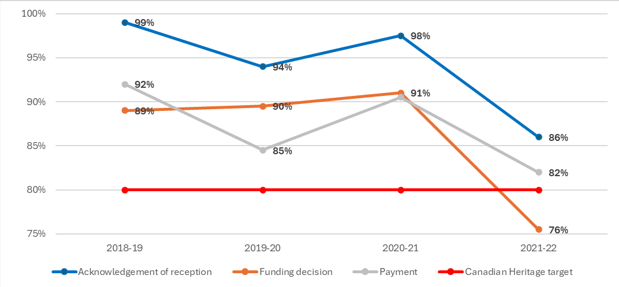
Figure 4: Achievement of CAPF Programming and Development service standards, average for 2018-19 to 2021-22 (%) – text version
| Fiscal year | Acknowledgement of reception | Funding decision | Issuance of payment | PCH target |
|---|---|---|---|---|
| 2018-19 | 99 | 89 | 92 | 80 |
| 2019-20 | 94 | 90 | 85 | 80 |
| 2020-21 | 98 | 91 | 91 | 80 |
| 2021-22 | 86 | 76 | 82 | 80 |
Source: PCH published data
The Canada Arts Presentation Fund’s regional delivery has proven to be a good model for targeting and considering the specific needs of the regions. During the evaluation period, exemplary collaboration between the national team and regional offices had been established through the sharing of expertise and ideas, the development of pilot projects or the creation of inter-regional committees on issues the regions are faced with.
Delivery of funding was efficient, but involved high operational pressures
The Canada Arts Presentation Fund delivered 5 emergency funds in an efficient manner, greatly simplifying Footnote 47 the application and analysis processes to ensure rapid and timely delivery, specific to the emergency context. It also established various monitoring mechanisms with other Canadian Heritage programs or other funders to avoid duplication of fundingFootnote 48. Applications related to emergency funds accounted for almost half of all applications processed by the Program from 2020 to 2023.
Despite simplification efforts, the delivery of emergency funds created operational pressure, leading to stress and fatigue among staff. Nonetheless, quality service was provided thanks to the Program’s efforts; recipient satisfaction with the deliveryFootnote 49 of the Recovery and Reopening Funds averaged 90%.
“Over the years, we have really developed collaboration and a climate of trust between the regions and the central administration, which led to a lot of regional flexibility. We talk to each other, we trust each other. We have a guideline, but we can adjust according to our reality, which works well.”
Challenges remain in the application and analysis process
While delivery was efficient, the Program still faces some challenges in delivery. The application and analysis process does not take into account the level of risk and complexity of projects or the level of funding requested. Each application requires the same processing effort, which puts pressure on operations and an administrative burden on applicants, particularly for smaller-scale projects.
Also, the relatively low $25,000 maximum per-grant amount for the Development component somewhat limits efficiency. Indeed, in cases where additional funding requests result in the maximum allowable amount being exceeded, there is an additional workload involved in converting existing grants into contribution agreements.
Applicants also face technological constraints, as the PDF format of forms is not accessible to all. Each year, the Program deploys resources to create an application form in Word format that all applicants can access. Finally, the survey of non-recipients revealed that nearly half were dissatisfied with the length of time it took to receive notification of funding refusal.
These pressures are coupled with an additional workload generated by the implementation of regional office outreach strategies and activities.
The Canada Arts Presentation Fund’s ability to generate lasting benefits relies on a recurrent funding approach
Some aspects of the Program’s design support the sustainabilityFootnote 50 of its intervention, such as providing support for presenters’ professional capacity–building. However, while some predictable funding provides recipients with stability to achieve their outcomes, the high level of recurrent funding raises other issues and risks.
According to the literature, the main factors that promote program sustainability are:
- clarity of intervention (theory of change of the program and its various components);
- existence of an exit strategyFootnote 51;
- consideration of the organizational capacity and the variety of funding sources of recipients; and
- intervention focused on strengthening capacity and systems.
By helping to build presenters’ professional capacities by funding presenter support organizations, the Canada Arts Presentation Fund generates a lasting impact in the arts presentation sector. However, this activity is not reflected in the Program’s logic model, which limits its ability to measure and report on this outcome. During the application analysis process, consideration of the need for funding, the organizational and financial health of projects, and the ability of recipients to maintain their activities beyond the funding period should also support the sustainability of the Program. But in the current funding approach, this analysis becomes less meaningful.
In terms of its design, the lack of clarity in its scope and components makes intervention difficult. The Development and Programming components are very similar in their terms and conditions,Footnote 52 whereas the Program works with a wide range of recipients, such as professional arts festivals, performing arts series presenters, and presenter support organizations, at all stages of development. This limits the clarity and effectiveness of its intervention, which remains generic in the way it responds to different recipients.
From an operational point of view, the Program does not have an exit strategy for certain disciplines or categories of recipients who, for example, may become able to continue their projects and activities beyond the funding period without the Program’s support, or who no longer meet the Program’s objectives. Instead, the funding approach assumes that funded projects must be sustained year after year to last and generate benefits for communities. This places many organizations and projects in a vulnerable position in a changing economic and political context.
Some inconsistencies are noted between Canada Arts Presentation Fund design and delivery
At various levels, the Program delivery is no longer consistent with its original design. Through the Programming and Development components, the Program was designed to help recipients gradually progress through a development stage to one of professional maturity. This rationale is no longer as apparent today, particularly in light of the saturation of the Programming component’s budget envelope. The Development component is mainly used to provide priority support to arts presentation organizations from Indigenous communities and other equity groups that do not meet the eligibility criteriaFootnote 53 of the Programming component, irrespective of their level of development or maturity. The components’ names themselves are therefore no longer adapted to their use.
Lastly, although the Program’s main component is called “Programming,” its design is based on a funding-by-projectFootnote 54 rather than a funding-by-programming Footnote 55approach. Yet eligible activities and expenses are essentially ongoing, rather than one-off and are directly linked to the recipients’ mandates, which means the funding approach is more like a programming model. The recurrent aspect of the funding is itself rather inconsistent with a project-based funding approach. The granting of recurrent funding for several years and confusion in the use of the 2 funding models have led to expectations among existing recipients that their funding will be renewed, to the detriment of the eligibility of other potential recipients.
5. Conclusions
In recent years, the arts presentation sector has faced unprecedented challenges due to festival cancellations and venue closures following COVID-19 restrictions. To support the sector in overcoming these difficulties, the Canada Arts Presentation Fund delivered 5 emergency funds that enabled a significant proportion of organizations and the artists that they employ in the performing arts presentation sector to maintain and resume their activities.
In a post-pandemic context, rising costs and stagnating public, philanthropic and private revenues are creating financial pressures for art presenters. They also face challenges in recruiting and developing a professional workforce. Through its direct funding to presenters and presenter support organizations, the Program helps meet these needs and support the arts presentation sector. Other Canadian Heritage programs and funders complement the Program in supporting this sector, particularly festivals.
In terms of outcomes, despite the challenges posed by COVID-19, the Canada Arts Presentation Fund achieved most of its targets. It has contributed to Canadians’ involvement in, participation in and appreciation of artistic experiences across the country. However, the evaluation raised methodological gaps and issues in the Program’s performance measurement, which could be improved to support better reporting and decision-making.
Concerted efforts have enabled a collaborative approach between the national and regional teams, promoting Program efficiency and excellent client service. It would be helpful if this collaboration could be developed with other Canadian Heritage programs or other federal funders supporting the same sector, to reduce the administrative burden on applicants and recipients. While this collaborative approach is not the sole responsibility of the Canada Arts Presentation Fund, other elements under the Program’s control could help alleviate the administrative burden on staff and applicants, such as the review of internal analysis mechanisms and processes.
Although the Canada Arts Presentation Fund is designed to provide project funding, for many years it has largely provided funding to recipients on a recurring basis. The Program has not investigated integrating exit strategies that would enable certain types of recipients to continue their activities independently beyond the Program funding. The Canada Arts Presentation Fund is important for supporting the arts presentation sector. However, the Program’s ability to generate lasting benefits greatly relies on ongoing funding, which creates further challenges and limits its ability to adapt to emerging needs and priorities. These factors also lead to equity issues, as funding tends to support the same, better known Program recipients, to the detriment of new applicants or projects that could potentially better align with new needs and priorities.
In a sector where needs are great and demand is constantly rising, the Program would benefit from better defining and even targeting its support. This would avoid an overly broad scope of intervention that encourages over-subscription, saturates the funding envelope and limits its lasting impacts in communities. It would also be an opportunity for the Program to reposition itself within the sector’s range of public intervention.
The Canada Arts Presentation Fund is a program that operates in a dynamic and creative environment that is constantly evolving. The presentation sector will continue to evolve in the coming years to meet the challenges of the post-pandemic period and of climate change. As a federal program in a continuum of funders, the Program will need to adapt to continue to provide strategic and sustainable support to recipients in Canada’s performing arts presentation sector.
6. Recommendations and management response and action plan
In light of the findings and conclusions presented in this report, the evaluation offers 3 recommendations to the Senior Assistant Deputy Minister, Cultural Affairs.
Recommandation 1
Review Canada Arts Presentation Fund priorities and funding strategies to clarify and refocus its intervention, increase equitable access to funding and its capacity to generate sustainable impacts in the arts presentation sector.
Management response
The Canada Arts Presentation Fund accepts this recommendation.
The Program has already started taking steps to address this recommendation, including through the updating of Program tools (i.e. the application and budget form), engaging in discussions about regional and national investment strategies to identify priorities, and potentially revising the eligibility criteria to allow more flexibility within the Development Component.
Along with the review of the regional investment strategies, the Program will engage the regions through a working group to generate recommendations related to Program guidelines and delivery, which will aim to ensure equitable access to Program funds.
| Action Plan Item | Deliverable | Timeline | Lead |
|---|---|---|---|
| 1.1. Updated Regional Investment Strategies | 1.1.1. Inventory on file of approved regional investment strategies | April 2025 | Director, Arts Presentation and Training Directorate, Arts and Cultural Sector Strategy Branch, in consultation with Regional Directors |
| 1.2. Review of the Development Component | 1.2.1. Report on current Development Component outcomes and recommendations for clarifying the component’s role, approved by DG | October 2025 | Director General, Arts and Culture Sector Strategy Branch |
| 1.3. Update Program Guidelines, application forms, and terms and conditions (if needed) | 1.3.1. Facilitate a national working group to explore areas requiring clarification, especially as it relates to equitable access to Program funds | May 2025 | Director, Arts Presentation and Training Directorate, Arts and Cultural Sector Strategy Branch |
| 1.3.2. Identify changes needed to the Program guidelines (Programming and Development Component), associated Program materials, and terms and conditions (if needed) | October 2025 | Director, Arts Presentation and Training Directorate, Arts and Cultural Sector Strategy Branch | |
| 1.3.3. Consult with Centre of Excellence on proposed changes and/or other potential delivery models | October 2025 | Director, Arts Presentation and Training Directorate, Arts and Cultural Sector Strategy Branch | |
| 1.3.4. Present recommendation report findings at the appropriate level for the changes proposed | January 2026 | Director General, Arts and Cultural Sector Strategy Branch | |
| 1.3.5. Implement proposed changes to Program guidelines, forms and terms and conditions (if needed) | April 2026 | Director General, Arts and Cultural Sector Strategy Branch |
Full implementation date: April 2026
Recommendation 2
In collaboration with the regions and the Centre of Excellence, review the internal mechanisms and processes for analyzing and delivering Canada Arts Presentation Fund grants and contributions to continue to alleviate the administrative burden on employees and applicants.
Management response
The Canada Arts Presentation Fund accepts this recommendation.
This recommendation is a continuation of the ongoing work that the Program has undertaken with the Regions and Centre of Excellence to increase efficiency and reduce the administrative burden on both staff and applicants. These efforts include an attempt to simplify the application and assessment processes, application form review and first set of changes, including alternate formats for greater accessibility.
Moving forward, the Program will endeavor to engage in existing working groups related to efficiency across Grants and Contributions programs, and to make changes that reduce administrative burden on staff and applicants alike.
| Action Plan Item | Deliverable | Timeline | Lead |
|---|---|---|---|
| 2.1. In collaboration with COE and Regions, identify processes in Program delivery that could be improved in order to reduce administrative burden | 2.1.1. Meet with Regions and COE to discuss potential efficiencies | April 2025 | Director General, Arts and Culture Sector Strategy Branch and Centre of Excellence (COE) |
| 2.1.2. Report outlining key recommendations, responsibilities and timeline for implementation | September 2025 | Director General, Arts and Culture Sector Strategy Branch | |
| 2.1.3. Implementation of proposed changes | May 2026 | Director General, Arts and Culture Sector Strategy Branch | |
| 2.2. Revisions to the Canada Arts Presentation Fund workbook | 2.2.1. Recommendation report and implementation plan for workbook revisions | September 2025 | Director, Arts Presentation and Training Directorate, Arts and Cultural Sector Strategy Branch |
Full implementation date: May 2026
Recommendation 3
Improve the performance measurement of the Canada Arts Presentation Fund to support better reporting and decision-making by reviewing and updating its logic model, expected outcomes and indicators.
Management response
The Canada Arts Presentation Fund accepts the recommendation.
The Program recognizes the benefit of a coherent performance measurement framework to support decision-making, reporting and strategic planning.
The Program will review its performance measurement indicators, expected results and its logic model to ensure that these critical pieces are aligned, and consistent with the Program’s overall objectives.
| Action Plan Item | Deliverable | Timeline | Lead |
|---|---|---|---|
| 3.1. Review and update Program’s performance indicators and expected results | 3.1.1. Updated Performance Information Profile (PIP) for Canada Arts Presentation Fund, approved by DG | May 2026 | Senior Assistant Deputy Minister, Cultural Affairs |
| 3.2. Review and update Canada Arts Presentation Fund’s logic model to reflect Canada Arts Presentation Fund’s activities and expected outcomes | 3.2.1. Updated logic model, approved by DG | November 2026 | Senior Assistant Deputy Minister, Cultural Affairs |
Full implementation date: November 2026
Appendix A: Evaluation Matrix
| Indicator | Interviews | Survey | Administrative review | Documentary review | Project review | Literature review |
|---|---|---|---|---|---|---|
| 1.1. Identification of current and emerging/changing needs of Canadians in arts presentation | Yes | Yes | Yes | Yes | No | Yes |
| 1.2. Evidence of alignment between the Program’s objectives and model/structure and the needs of the arts presentation sector | Yes | Yes | Yes | Yes | No | No |
| 1.3. Evidence of overlap or complementarity with other programs (Building Communities Through Arts and Heritage, Canada Council for the Arts) | Yes | Yes | No | Yes | Yes | No |
| Indicator | Interviews | Survey | Administrative review | Documentary review | Project review | Literature review |
|---|---|---|---|---|---|---|
| 2.1. Degree of alignment of Canada Arts Presentation Fund measures with government priorities, particularly inclusion, diversity, equity and accessibility, and remaining barriers | Yes | Yes | Yes | Yes | No | No |
| 2.2. Evidence that emergency funds met needs during the pandemic | Yes | Yes | Yes | No | No | No |
| Indicator | Interviews | Survey | Administrative review | Documentary review | Project review | Literature review |
|---|---|---|---|---|---|---|
| 3.1 Level of achievement of expected outcomes in the short, medium and long term | Yes | Yes | Yes | Yes | Yes | No |
| 3.2 Evidence of unexpected outcomes or effects, including on GBA Plus–related groups | Yes | Yes | No | No | No | No |
| 3.3 Level of achievement of expected outcomes for emergency funds | No | Yes | Yes | No | No | No |
| Indicator | Interviews | Survey | Administrative review | Documentary review | Project review | Literature review |
|---|---|---|---|---|---|---|
| 4.1 Evidence that design and delivery support the Program’s financial viability | Yes | Yes | Yes | Yes | Yes | Yes |
| 4.2 Evidence of efficiency-enhancing practices and mechanisms | Yes | Yes | Yes | Yes | No | No |
| 4.3 Lessons learned in delivering emergency funds during the pandemic | Yes | Yes | No | No | No | No |
Appendix B: Detailed Achievement of Outcomes Tables
| Indicator | 2023 PIP Target | 2018-19 | 2019-20 | 2020-21 | 2021-22 | 2022-23 |
|---|---|---|---|---|---|---|
| Number of artistic disciplines supported | 8 | 8 | 8 | 8 | 8 | 8 |
| Indicator | 2023 PIP Target | 2018-19 | 2019-20 | 2020-21 | 2021-22 | 2022-23 |
|---|---|---|---|---|---|---|
| Number of presenter support organizations funded for professional development activities | 32 | 31 | 32 | 33 | 31 | 40 |
| Indicators | 2023 PIP Target | 2018-19 | 2019-20 | 2020-21 | 2021-22 | 2022-23 |
|---|---|---|---|---|---|---|
| Percentage of unique communities supported in rural or remote areasFootnote 56 | 60% | 70% | 71% | 71% | 71% | 72% |
| Number of volunteers involved in funded activities | 70,000 | 81,897 | 89,072 | 89,959 | 88,297 | 84,477 |
| Indicator | 2018-19 | 2019-20 | 2020-21 | 2021-22 | 2022-23 |
|---|---|---|---|---|---|
| Annual target | 19,500,000 | 21,500,000 | 21,500,000 | 20,000,000 | 20,000,000 |
| Number of attendees reported by recipients to arts events funded by the Canada Arts Presentation Fund | 20,200,000 | 19,771,626 | 2,853,977 | 1,900,365 | 19,270,245 |
| Indicator | 2023 PIP Target | 2018-19 | 2019-20 | 2020-21 | 2021-22 | 2022-23 |
|---|---|---|---|---|---|---|
| Percentage of funded recipients whose activities reflect Canada’s diversity | 70 % | 65 % | 64 % | 64 % | 56 % | 61 % |
| Indicator | 2023 PIP Target | 2018-19 | 2019-20 | 2020-21 | 2021-22 | 2022-23 |
|---|---|---|---|---|---|---|
| Percentage of combined earned revenue and private revenue | 70% | 55% | 58% | 11% | 25% | 38% |
| Indicator | 2018-19 | 2019-20 | 2020-21 | 2021-22 | 2022-23 |
|---|---|---|---|---|---|
| Annual targets | 50 | 50 | 50 | 100 | 100 |
| Number of programming activities offered at the Confederation Centre of the Arts that reflect Canada’s cultural, linguistic and regional diversity | 108 | 102 | 62 | 70 | 113 |
| Indicator | 2018-19 | 2019-20 | 2020-21 | 2021-22 | 2022-23 |
|---|---|---|---|---|---|
| Annual targets | 75 | 75 | 75 | 300 | 300 |
| Number of Confederation Centre of the Arts volunteers | 240 | 311 | 231 | 219 | 224 |
| Annual targets | 125,000 | 125,000 | 125,000 | 60,000Footnote 57 | 60,000 |
| Total attendance to programming at the Confederation Centre of the Arts | 165,135 | 150,940 | 13,948 | 37,013 | 172,222 |
| Indicator | Survey 2017 | Survey 2021 |
|---|---|---|
| Annual targets | 83 | 87 |
| Percentage of Canadians that participate in artistic events | 87 | 70 |
| Annual targets | 66 | 69 |
| Percentage of Canadians that value artistic experiences | 69 | 59 |
Appendix C: Additional Tables and Figures
| Emergency Fund | Actual Expenditures |
|---|---|
| COVID-19 Emergency Support Fund (Phase 1 and 2) | 7.6 |
| Support for Workers in Live Arts and Music Sectors Fund | 19.3 |
| Reopening Fund | 18.2 |
| Recovery Fund for Arts, Culture, Heritage and Sport Sectors | 24.2 |
| Canada Arts and Culture Recovery Program | 4.72 |
| TOTAL | 73.9 |
Source: Canadian Heritage Financial Management Branch
| Fiscal Year | Presenter Support Organization Projects (#) |
Art Presenter Projects (#) |
Total ProjectsFootnote 59 (#) |
Total Amounts Allocated (millions of $) |
|---|---|---|---|---|
| 2018-19 | 31 | 660 | 691 | 28.6 |
| 2019-20 | 32 | 696 | 728 | 35.3 |
| 2020-21 | 33 | 732 | 784 | 42.9 |
| 2021-22 | 31 | 740 | 779 | 36.7 |
| 2022-23 | 40 | 783 | 826 | 36.8 |
| Total | 167 | 3611 | 3808 | 180.3 |
Source: Program administrative data

Figure C-1: Achievement of Programming and Development component service standards, average for 2018-19 to 2021-22 – text version
| Acknowledgement of reception | Funding decision | Issuance of payment | |
|---|---|---|---|
| PCH target | 80% | 80% | 80% |
| Programming | 98% | 84% | 87% |
| Development | 91% | 88% | 88% |
Source: PCH published data
Appendix D: Bibliography
“Speech From The Throne 2015.” Government of Canada, August 31, 2020.
“Speech From The Throne 2020.” Government of Canada, October 2, 2020.
“Archived – Budget 2019: Investing in the Middle Class.” Government of Canada, March 19, 2019.
“Indigenous Arts and Heritage Organizations: Barriers, Needs, and Successes.” Canadian Heritage. Archipel Research and Consulting Inc, 2022.
“Support for and Access to Funding by Ethnocultural and Racialized Arts and Heritage Organizations.” Canadian Heritage. Archipel Research and Consulting Inc, 2023.
“Grouped Arts Evaluation: Canada Arts Presentation Fund, Canada Cultural Spaces Fund, and Canada Cultural Investment Fund 2013-14 to 2017-18.” Evaluation Services Directorate, August 20, 2019.
“Le Climat bouleverse l’organisation Des Festivals.” Le Devoir, n.d. Lalonde, Catherine, and Annabelle Caillou.
“Minister of Economic Development and Official Languages Mandate Letter.” Government of Canada, August 31, 2021.
“Minister of Canadian Heritage Supplementary Mandate Letter.” Government of Canada, January 15, 2021.
“Canadian Business Counts, with employees, December 2015.” Statistics Canada, February 19, 2016.
“Canadian Business Counts, without employees, December 2015.” Statistics Canada, February 19, 2016.
“Canadian Business Counts, with employees, December 2019.” Statistics Canada, February 6, 2020.
“Canadian Business Counts, without employees, December 2019.” Statistics Canada, February 6, 2020.
“Canadian Business Counts, with employees, December 2021.” Statistics Canada, February 10, 2022.
“Canadian Business Counts, without employees, December 2021.” Statistics Canada, February 10, 2022.
“Canadian Business Counts, with employees, December 2023.” Statistics Canada, February 13, 2024.
“Canadian Business Counts, without employees, December 2023.” Statistics Canada, February 13, 2024.
“Financial impacts of the pandemic on the culture, arts, entertainment and recreation industries in 2020.” Statistics Canada, August 17, 2021.
“COVID Impact Statistics.” Canadian Association for the Performing Arts, August 29, 2023.
“Archived – Minister of Canadian Heritage and Multiculturalism Mandate Letter.” Office of the Prime Minister, August 28, 2018.
“Minister of Canadian Heritage Mandate Letter.” Office of the Prime Minister, December 16, 2021.
© His Majesty the King in Right of Canada, as represented by the Minister of Canadian Heritage, 2024
Catalogue No. CH7-76/2025E-PDF
ISBN: 978-0-660-75818-3