
Biennial Report on the State of the Canadian Armed Forces Grievance System 2024-2025


Message from the Chief of the Defence Staff
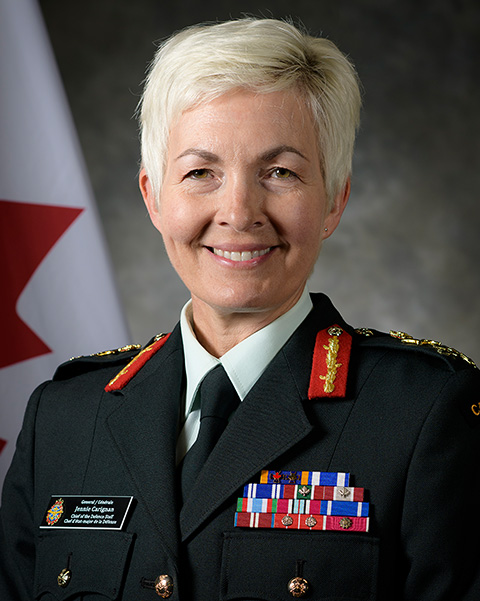
The Canadian Armed Forces (CAF) grievance system is a cornerstone of our commitment to fairness, accountability, and the well-being of our members. It provides a formal mechanism through which CAF personnel can raise concerns about their conditions of service, ensuring that their voices are heard, their rights are respected, and the chain of command is held accountable for its decisions. But it also contributes to a healthy organizational culture by helping identify systemic issues related to administrative policies and professional conduct. The CAF grievance system is part of a suite of tools within the broader CAF complaints system. By strengthening fairness and trust within teams, it contributes significantly to operational effectiveness. Building strong and cohesive teams depends on our ability to use complaints as opportunities for improvement, thereby contributing meaningfully to a healthy organizational culture and to the improvement of administrative policies.
Over the past two years, the CAF has made significant changes to its grievance system to better serve our members and support institutional goals of transparency and efficiency.
A significant component of this transformation was the launch of the Digital Grievance Form (DGF) in early 2024. This innovation has removed real and perceived barriers to submitting grievances, making the process more accessible, intuitive and inclusive. The result has been a marked increase in the number of grievances submitted, clear evidence that members feel more empowered to seek resolution and that our efforts to eliminate procedural obstacles are paying off.
This improved access, however, has brought with it new challenges. The initial authority (IA) level has seen an increase in files, underscoring the need for continued investment in capacity and process efficiency. Despite this, we have seen notable improvements in compliance rates, with more grievances being processed within mandated timelines, which is an encouraging sign of progress.
At the Final Authority (FA), the backlog of grievances has been reduced through targeted reforms and the expansion of the Canadian Forces Grievance Authority (CFGA). The creation of the position of Director General Canadian Forces Grievance Authority, along with the allocation of additional personnel and resources, has contributed to improving our ability to process grievances more efficiently and thoroughly.
We recognize that every grievance reflects a member's pursuit of fair treatment, and we remain committed to maintaining the operational effectiveness of the CAF, including its efficiency and morale.
As part of our ongoing commitment to modernize and strengthen the grievance system, I remain confident that these efforts will contribute to enhancing transparency, efficiency and accountability in the armed forces.
Chief of the Defence Staff
From Submission to Resolution: A New Era for Military Grievances
Over the past two years, the Canadian Armed Forces (CAF) grievance system has undergone a profound transformation, driven by a commitment to fairness, transparency, and responsiveness. This biennial period marks a pivotal chapter in our modernization journey—one that reflects our commitment to strengthening trust within the CAF and ensuring that grievances are addressed with compassion and urgency.
In February 2024, the Digital Grievance Form (DGF) was launched, marking a pivotal step in improving access to the grievance process. This new tool simplifies submissions and standardizes data collection. It enables early identification of systemic issues and grievances related to serious misconduct, reinforcing our commitment to mitigating harm and supporting affected members. The DGF has been designed to provide CAF members with direct access to the grievance system. It aims to eliminate the perception that a member of the chain of command can prevent a CAF member from submitting a grievance. The introduction of the DGF has significantly increased the number of grievances submitted each year, partly due to its user-friendly interface and partly due to the removal of the optional Notice of Intent to Grieve (NOI) step from the process.
Also in early 2024, the CFGA established the Grievance System External Council, a quarterly forum that brings together grievance system managers and key stakeholders from the Defence Team. This includes representatives from the Department of National Defence and the CAF. The Council is an essential platform for sharing information, gathering feedback and collaboratively addressing system-level challenges, as well as to identify systemic and administrative issues linked to policies. No individual cases are discussed at this Council. By engaging the broader grievance community through this structured and inclusive approach, the CAF is fostering consistency and continuous improvement at all levels of the grievance system.
In the spring of 2025, the creation of the position of Director General Canadian Forces Grievance Authority marked a strategic shift in leadership. This was quickly followed by the allocation of additional resources, enabling the CFGA to expand its capacity and better serve CAF members.
Feedback on the DGF sparked the launch of the DGF 1.2, which introduced a more intuitive user interface, improving the experience for grievors. In September 2025, the NOI process was re-introduced and a new digital NOI form was developed to meet the demand for this tool which supports early and local resolution of grievances.
Over the last two years, the CFGA has significantly increased the number of grievances that have been considered and determined by the Final Authority (FA). Changes to FA delegations by the Chief of the Defence Staff (CDS), as well as improved responsiveness among FA delegates, have significantly reduced the backlog of grievances at the FA level. These achievements reflect an unwavering commitment to making the system more relevant, efficient and fair for all members. By increasing its capacity and streamlining processes, the CFGA is ensuring that grievances are resolved more quickly and consistently, particularly at the FA level, where the backlog has been significantly reduced.
As the volume of decisions made at the IA level has increased, the number of grievances considered and determined at this level has not kept pace with the increase in submissions, resulting in a growing backlog at the initial level. Understanding this challenge will help guide future efforts in the grievance community.
The CAF is currently conducting a comprehensive review of grievance policies to ensure that they are consistent with the recommendations of the Independent External Comprehensive Review conducted by former Supreme Court Justice Louise Arbour. A key focus of this review was to prevent further harm to those affected by serious misconduct and to improve access to justice. As part of these changes, grievances involving sexual misconduct, harassment, or crimes of a sexual nature are now prioritized. In addition, when received at the FA, they are referred to the independent Military Grievances External Review Committee (MGERC) for impartial review. Furthermore, specialized assignments at the IA level have been introduced to ensure that these cases receive the attention and expertise they require.
Following recommendations from an internal evaluation of the Assisting Member Course covering fiscal years 2019–20 to 2024–25, the CFGA is implementing measures to improve its training programs. Eleven key deliverables in three core areas have been developed, and seven of these have been achieved. These include updating training guidance, implementing mandatory certification for assisting members, and integrating feedback mechanisms to support continuous improvement. The remaining items are currently being addressed and are scheduled for completion in 2026. This includes improving communications for grievors to better understand the grievance system and the development of scenario-based training. These efforts ensure that those who support members throughout the grievance process are well prepared and equipped to provide meaningful assistance.
The Grievance Centre of Expertise was established in the fall of 2025 with the aim of improving the understanding and efficiency of the commanding officer (CO), redress authorities, and their supporting staff in carrying out their obligations once a grievance is submitted. Its mandate includes providing expert advice, conducting systemic analyses, modernizing processes, and facilitating strategic integration in order to enhance the efficiency of the CAF grievance system. Through a combination of reactive and proactive activities, the Grievance Centre of Expertise is expected to achieve initial operating capacity in early 2026.
The CFGA is currently working on a comprehensive regulatory and policy update that is scheduled to come into force in the spring of 2026. This will include updates to the Queen's Regulations and Orders for the Canadian Forces (QR&O) Chapter 7 (Grievances), a refresh of Defence Administrative Order and Directive (DAOD) 2017-0 (Military Grievance Policy), and a full repeal of DAOD 2017-1 (Military Grievance Process (Instructional)). The content of DAOD 2017-1 will be incorporated into a new internal policy document entitled "Canadian Armed Forces Grievance Policy", which will further strengthen and modernize the grievance framework. As we move towards the full implementation of regulatory and policy amendments, we continue to focus on establishing a grievance system that is accessible, fair, efficient and trauma informed.
Status of the CAF Grievance System
Between January 2024 and December 2025, the CAF grievance system underwent substantial change. The introduction of the DGF, the allocation of additional resources to the CFGA, and changes to FA delegations are key initiatives that have been implemented to improve the grievance system. The increase in the number of backlogged grievances at the IA level, the substantial reduction in the number of backlogged grievances at the FA level are key outcomes of these change initiatives, but it is important to recognize that much more work remains to be done.
Active Grievances
The number of active grievances is the number of backlogged files that the IA and the FA decision-makers must address. More importantly, the number of active files awaiting decision is also the number of unresolved cases for grievors. There will always be active files at both the IA and FA levels to allow time to analyze the matter grieved and render a decision. However, grievance analysts and decisions-makers should be aware that timely decision-making helps to build confidence in the grievance system and that delays in addressing grievances can diminish that confidence. Figure 1 shows the number of active grievances at the IA and FA levels over a four-year period.
Figure 1: Active Grievances with the IA and the FA from 2022 to 2025

Caption
Figure 1 is a bar chart comparing the number of active grievances at the Initial Authority (IA) and Final Authority (FA) levels from December 2022 to December 2025. Each year displays two bars: a light blue bar representing IA and a dark blue bar representing FA.
In December 2022, the dark blue FA bar is noticeably taller than the light blue IA bar. Both bars increase in height in December 2023, with the dark blue FA bar rising more significantly than the light blue IA bar, further widening the visible difference between them.
By December 2024, both bars reach their highest levels across all years. The dark blue FA bar is the tallest of all FA bars in the entire chart, standing prominently above the December 2024 light blue IA bar.
In December 2025, the pattern shifts. The light blue IA bar continues its upward trend and becomes the tallest light blue bar across all years. Meanwhile, the dark blue FA bar decreases sharply, becoming shorter than the light blue bar. This is the only year in the chart where the IA bar surpasses the FA bar.
Overall, the colors make the trends clear: the light blue IA bars rise steadily each year, while the dark blue FA bars rise until 2024 and then drop significantly in 2025, reversing the earlier pattern.
Adherence to decision-making deadlines
The data in Table 1 shows the average number of days required to render decisions at the IA and FA levels between 2022 and 2025. The IA's timelines fluctuate somewhat over the four years, rising from 239 days in 2022 to a peak of 262 days in 2023, before improving to 198 days in 2024 and then increasing slightly to 211 days in 2025. In contrast, FA timelines remain consistently much longer, exceeding 990 days each year. Overall, the table shows that, while IA decision timelines show some variation and modest improvement in 2024, FA decisions take significantly longer. The CFGA is in the process of creating a new section of FA analysts to reduce the processing time for grievances at the FA level.
| December 2022 | December 2023 | December 2024 | December 2025 | |
|---|---|---|---|---|
| IA | 239 | 262 | 198 | 211 |
| FA | 993 | 1003 | 1074 | 1001 |
Caption
Table 1 presents the decision‑making timelines, measured in days, for both the Initial Authority (IA) and Final Authority (FA) levels from December 2022 to December 2025. Across all four years, FA timelines remain significantly longer than those at the IA level.
At the IA level, decision‑making times fluctuate moderately over the period. Timelines increase from 239 days in December 2022 to 262 days in December 2023, before dropping to 198 days in December 2024. In December 2025, the timeframe rises slightly to 211 days, remaining below the 2022 and 2023 levels.
At the FA level, timelines remain consistently high, ranging from 993 to 1074 days throughout the four years. The FA timeframe increases from 993 days in December 2022 to 1003 days in December 2023, then peaks at 1074 days in December 2024. By December 2025, the FA timeline decreases to 1001 days, though it remains close to earlier levels.
Overall, the table shows that while IA timelines vary within a narrower range, FA timelines are substantially longer and more stable over the 2022–2025 period.
Matters Grieved
Understanding what members are grieving is an important indicator of areas of dissatisfaction within the CAF. Figure 2 shows the types of grievances submitted between January 2024 and December 2025. The largest portion, 26%, relates to career management, followed by grievances related to Performance and Competency Evaluation (PaCE), at 23%. Compensation and benefits account for 17% of submissions, with an additional 12% specifically related to pay issues. Other grievance topics include harassment (6%), training and education (4%), release (4%), health care (4%), conduct and performance (2%), and miscellaneous issues (3%). This breakdown provides insight into the most common areas of concern raised during this period. Understanding these areas of dissatisfaction is not only informative but also provides a critical opportunity to make changes and improvements within the CAF. By implementing proactive and targeted strategies that address the most common grievance categories, such as career management and PaCE, the CAF can enhance member satisfaction and foster a more positive and supportive environment.
Figure 2: Matters Grieved from 2024 to 2025

Caption
Figure 2 is a pie chart that displays the proportion of grievances across several categories. Each category is represented by a different color, with percentage values indicating its share of the total.
- The purple segment for Career Management is the largest portion, representing 26% of all grievances.
- The blue segment corresponding to Performance and Competency Evaluation (PaCE) accounts for 23%, forming the second-largest section.
- The teal segment for Compensation & Benefits makes up 17% of the chart.
- The lime green segment for Pay represents 12%.
- The yellow segment for Harassment accounts for 6%.
- The light orange segment for Training & Education represents 4%.
- The dark orange segment for Health Care accounts for 4%.
- The red segment for Release represents 4%.
- The dark pink segment labeled Other accounts for 3%.
- Finally, The pink segment for Conduct & Performance represents 2%.
Overall, the chart shows that most grievances fall into Career Management, PaCE, and Compensation-related categories, while areas such as Harassment, Release, and Health Care represent much smaller proportions of the total.
Judicial Review of CAF Grievance Decisions
Section 29.15 (Decision is final) of the National Defence Act (NDA) states that the decision of an FA in the grievance process is final and binding, except for judicial review under the Federal Courts Act, and is not subject to appeal or to review by any court. The Federal Court's jurisdiction over the CAF grievance process is an important component in ensuring the reasonableness and procedural fairness of the system, and it promotes confidence in the grievance system.
CAF members who pursue judicial review are solely responsible for all aspects of their judicial review and do not receive the support of an assisting member or legal assistance of the CAF. Judicial review of FA decisions is available and can be accessed through the Federal Court listing of Court files and decisions.
Systemic Issues
A systemic issue is a policy gap, a problem with an existing policy, or the interpretation of departmental policies or Treasury Board of Canada Secretariat (TBS) instructions that has caused, or may result in, apparent prejudice to CAF members. In 2025, the CFGA identified the following systemic issues:
Clarification of Pay Equity in Special Operations Forces and Search and Rescue Occupations
The implementation of the pay policy for Special Operations Forces (SOF) and Search and Rescue (SAR) Specialist under Compensation and Benefits Instruction (CBI) 204.31 (Pay – Special Forces and Search and Rescue Specialists) has revealed a systemic issue affecting equitable compensation. An initial analysis identified a possible difficulty in interpreting how certain occupations are targeted within the policy, which may have led to inconsistencies in pay rates, particularly when subordinates with the same military occupational structure identification and less seniority receive higher monthly pay than their supervisors.
It appears that CBI 204.31 could benefit from additional clarification and guidance, especially regarding how pay rates are determined across the affected occupations. To promote consistency and transparency, comprehensive guidelines would be useful to help administrators and members to understand and effectively apply the policy.
In light of the above, the Director General Compensation and Benefits will consider conducting a systemic evaluation of the pay for these occupations as part of the scheduled policy review within the next three to five years. This approach reflects our commitment to ensuring that compensation policies remain fair, equitable, and responsive to evolving organizational needs. Information gathered from grievances will be carefully reviewed and incorporated into this process to promote transparency and consistency.
Challenges in Implementing the New Pilot Pay Scale
In 2021, the Royal Canadian Air Force (RCAF) introduced a new pay scale for pilots in order to retain skilled pilots by aligning compensation with experience, qualifications and career goals. While this initiative was a major step forward, several challenges have emerged that may have affected fairness and clarity in how pilots are paid.
Some pilots have expressed concern that the 6% economic increase was not applied to the new pay scale. Others have noted that pilot captains earn less than their peers in general service officer roles until they reach a certain level. There have also been inconsistencies in how majors have been placed on the new scale, with similar service histories resulting in different pay levels depending on promotion dates. In addition, some pilots are concerned that promotions may actually reduce their earning potential due to slower pay growth at higher ranks.
These issues show that, while the new system is well-intentioned, it has created confusion and unintended consequences for some members. To ensure the system has time to mature as intended, a comprehensive review of the pilot pay scale is planned in 2–3 years. This deliberate approach allows us to assess real, long-term impacts and make well-informed adjustments where required. Feedback received through the grievances remain an essential part of this process, and it will be carefully considered as we work to maintain a fair, equitable, and sustainable compensation framework for all pilot career paths.
Role of the Military Grievances External Review Committee
The MGERC was established on 1 March 2000, through legislation enacted in December 1998 that included amendments to the NDA. These amendments were introduced to establish an organization that would play a role in the grievance review process, in keeping with the Government of Canada's public policy values of equity, transparency and fairness.
The MGERC is accountable to Parliament and provides its findings and recommendations to the CDS on CAF grievance files that are mandatorily referred to it in accordance with QR&O Chapter 7 article 7.21 (Types of Grievances to be Referred to Grievances Committee) (e.g., issues related to pay and allowances, reversion to a lower rank, release, freedom of expression, harassment, medical or dental care, and CDS decisions). The CDS and specific FA delegates may also refer additional files to the MGERC on a discretionary basis.
The MGERC is an administrative organization with quasi-judicial powers, independent from the CAF. The MGERC brings real added value to the CAF grievance process. It challenges the departmental interpretation of TBS policies and other Orders in Council and makes recommendations to the CDS on ways to make policies more consistent with Canadian society. The trend analysis conducted by the MGERC also helps to identify systemic issues that require further investigation by departmental authorities. When accepted, the systemic issues identified by the MGERC are added to the FA's list of systemic issues and are tracked to ensure that the deficiencies are addressed.
The MGERC is an important component of the CAF grievance system. It provides the CDS with independent advice through detailed findings and recommendations. The FA is then in a better position to compare and contrast this advice with the institution's position and render a fair decision.
More information on the MGERC, including its annual report and case summaries, can be found on the MGERC website.
Frequently Asked Questions
What is the procedure for submitting a grievance?
As a member of the CAF, you have the right under the NDA to submit a grievance about any decision, act, or omission that affects you personally in the course of your service. Common issues that may be the subject of a grievance include compensation and benefits (pay, allowances), career management decisions (postings, promotions), and access to or denial of health services. It is strongly recommended that you begin by submitting a digital NOI to your CO, who will assign an assisting member and attempt to resolve the issue at the lowest level. If the issue is not proactively resolved following the NOI, you are encouraged to submit a formal grievance using the CAF Digital Grievance Form within three months of the incident. If you do not have access to the DGF, you may submit your grievance in writing directly to your CO. You can seek assistance from your local Conflict and Complaint Management Services (CCMS) office.
Can I choose someone to help me with my grievance, and what qualifications must that person have?
Yes, as a grievor, you may request a specific assisting member to support you throughout the grievance process. This individual can help you prepare your grievance and guide you through each step. Assisting members must complete formal certification training, the Assisting Member Course, to be eligible. This certification must be renewed every five years.
What is a Notice of Intent to Grieve, and how can I file one? Does it extend the time limit within which I can submit a grievance?
A Notice of Intent to Grieve (NOI) is a declaration by a CAF member to their chain of command, expressing their desire to resolve an issue at the lowest possible level before submitting a formal grievance. It is important to note that filing an NOI does not extend the time limit for submitting a grievance. Members still have a three-month time limit from the date of the act, decision, or omission to submit their grievance. It is therefore crucial that COs address NOIs expeditiously and that members be aware of the time limit for submitting a grievance.
What can I do if I am not satisfied with the outcome of my grievance?
If you are not satisfied with the decision made by the IA regarding your grievance, you may request a review by the FA. In some cases, your grievance may be referred to the MGERC for independent review. The FA will make a final decision on your grievance. If you are still not satisfied, you may seek a judicial review of the decision through the Federal Court under subsection 18.1(2) (Time limitation) of the Federal Courts Act, within 30 days of receiving the decision.